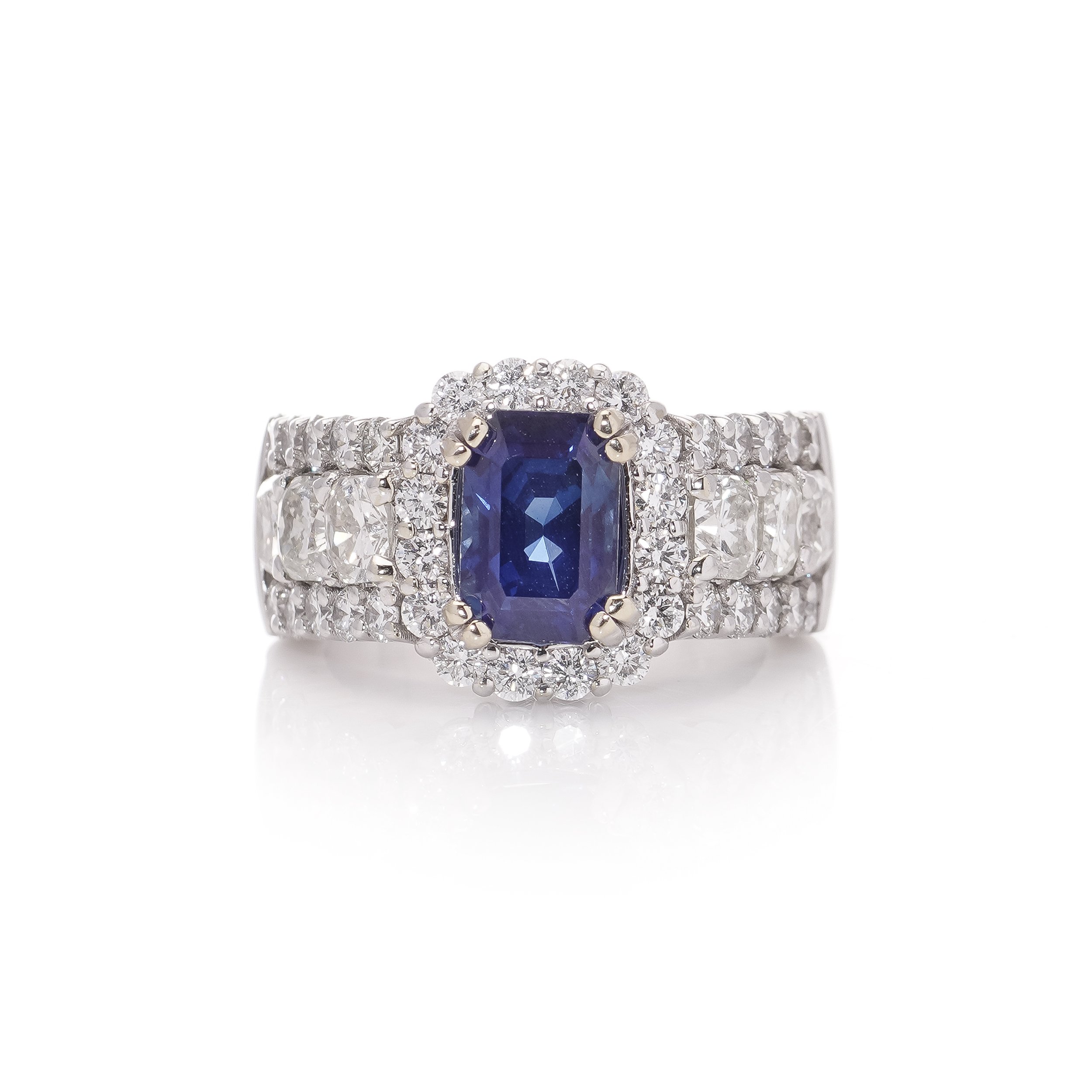
Sapphire Engagement Rings: A Buyer's Guide
Royal, durable and available in every colour from cornflower blue to teal and parti — the sapphire is the most practical of the great coloured engagement stones, and one of the most beautiful.
The most famous engagement ring in the world isn't a diamond solitaire — it's a sapphire, worn first by Princess Diana and now by the Princess of Wales. If you want a coloured engagement stone you can wear every day without a second thought, the sapphire is the answer. Hard, brilliant and steeped in royal history, it comes in a spectrum far wider than the famous blue — and antique sapphire rings are among the most charming jewels you can buy.
Why choose a sapphire
Sapphires have been the choice of royalty for centuries, and never more visibly than today: the sapphire-and-diamond cluster worn by Princess Diana and now the Princess of Wales is the most famous engagement ring in the world, and it single-handedly keeps the style in demand. Beyond the romance, there is hard practicality — sapphire is 9 on the Mohs scale, second only to diamond, which makes it superbly suited to a ring worn daily for a lifetime.
Sapphire colour: far more than blue
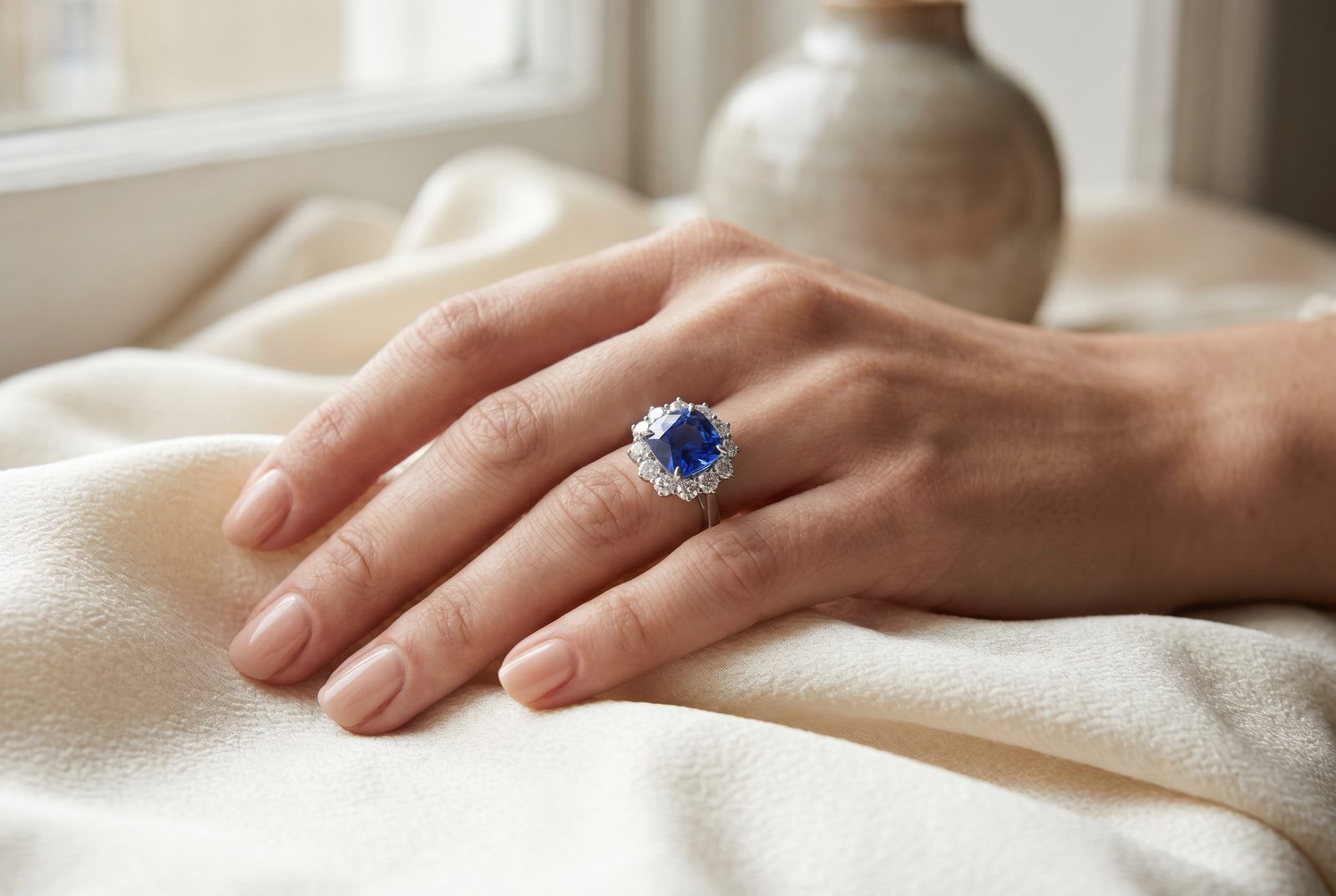
Sapphire is the gem variety corundum, and while blue is the classic, it occurs in almost every colour (red corundum is simply called ruby). The fashionable range now runs well beyond cornflower and royal blue:
Classic blue
From cornflower to deep royal blue. The Ceylon (Sri Lankan) blue is the historic ideal — vivid but not too dark.
Teal & green
Blue-green sapphires have surged in popularity for their unusual, modern colour and excellent value.
Parti
Single stones showing two or more colours — often blue and green or yellow — utterly individual.
Pink, yellow & white
Fancy sapphires for those who want sapphire durability without classic blue.
Antique sapphire rings and Ceylon stones
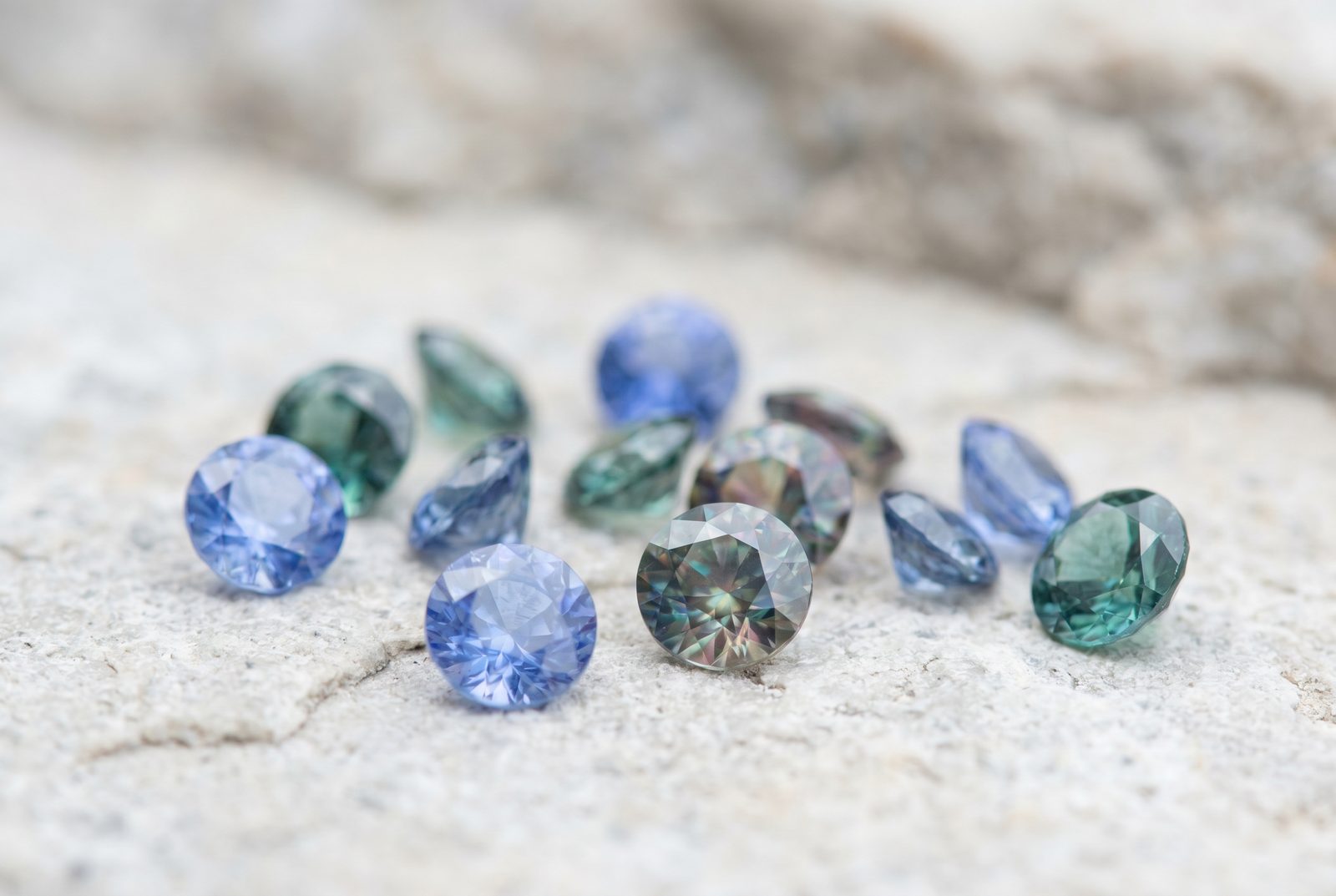
Many of the finest antique sapphire rings are set with Ceylon stones — sapphires from Sri Lanka prized for their bright, lively blue. Antique and vintage settings show sapphires beautifully: Victorian five-stone and gypsy rings, Edwardian platinum clusters, and Art Deco geometry with calibré-cut sapphire accents. An older, untreated or "no heat" sapphire carries a particular premium, as most modern sapphires are heat-treated to improve colour. Explore the wider antique ring and Art Deco collections to see the range of settings.

What Drives a Sapphire's Value
As with all coloured stones, colour leads — but origin and treatment matter too:
- Colour — A vivid, even blue (or fine fancy colour) is the primary value driver.
- Origin — Ceylon, Burma and Kashmir stones command premiums; Kashmir is the rarest of all.
- Treatment — Untreated 'no heat' sapphires are worth markedly more than heated stones.
- Cut & carat — A lively cut and good size raise value, especially once colour is fine.
We disclose treatment on every stone, and highlight no-heat and origin-certified sapphires where present.
The sapphire-and-diamond classic
No combination is more enduring than a sapphire centre framed by white diamonds — the Diana/Catherine cluster in miniature. Diamonds sharpen the blue and add the sparkle that makes the ring read as fine jewellery from across a room. Three-stone designs (sapphire flanked by diamonds) and diamond halos are the perennial favourites. To understand how the diamond cut affects the look, see our guide to gemstone cuts.
Natural vs lab-grown sapphires
You may see very cheap "sapphire" rings online; many are lab-grown or synthetic. A lab-grown sapphire is chemically real corundum, but it is mass-produced and holds little to no resale value. A natural sapphire formed over millions of years, and its rarity is the point — especially in an antique ring, where the stone was mined and cut long before synthetics were common. Every sapphire we sell is natural, and we are clear about origin and any treatment. If long-term value as well as beauty matters to you, natural is the only answer.
Sapphire meaning and heritage
Beyond fashion, the sapphire carries centuries of symbolism. It is the birthstone of September and has long stood for wisdom, loyalty, faithfulness and nobility — which is part of why it became the royal engagement stone par excellence. Medieval clergy wore sapphires as a symbol of heaven; monarchs prized them for protection. Choosing a sapphire for an engagement is, in a quiet way, choosing the most historically loaded of the coloured stones.
Sapphire engagement rings in stock
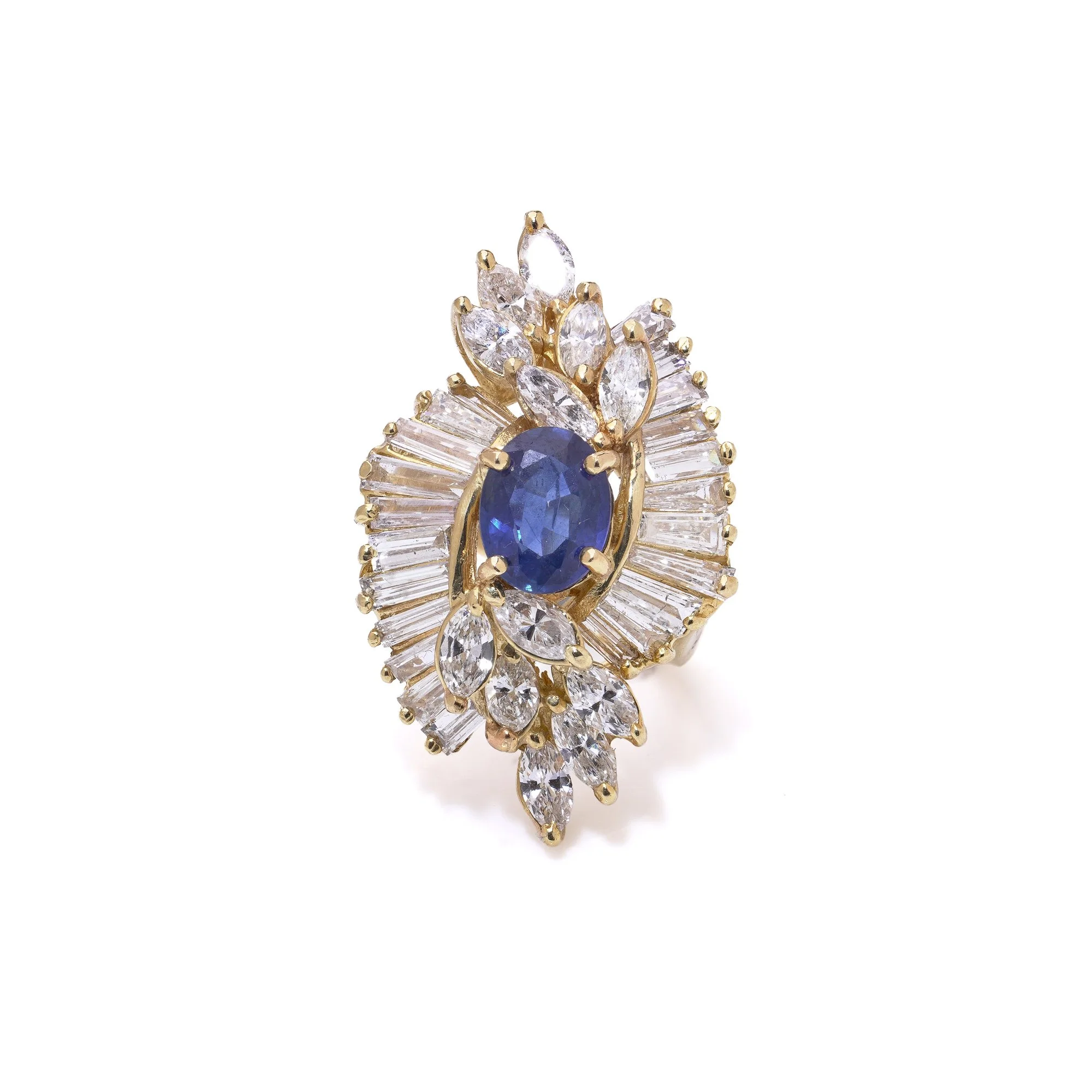
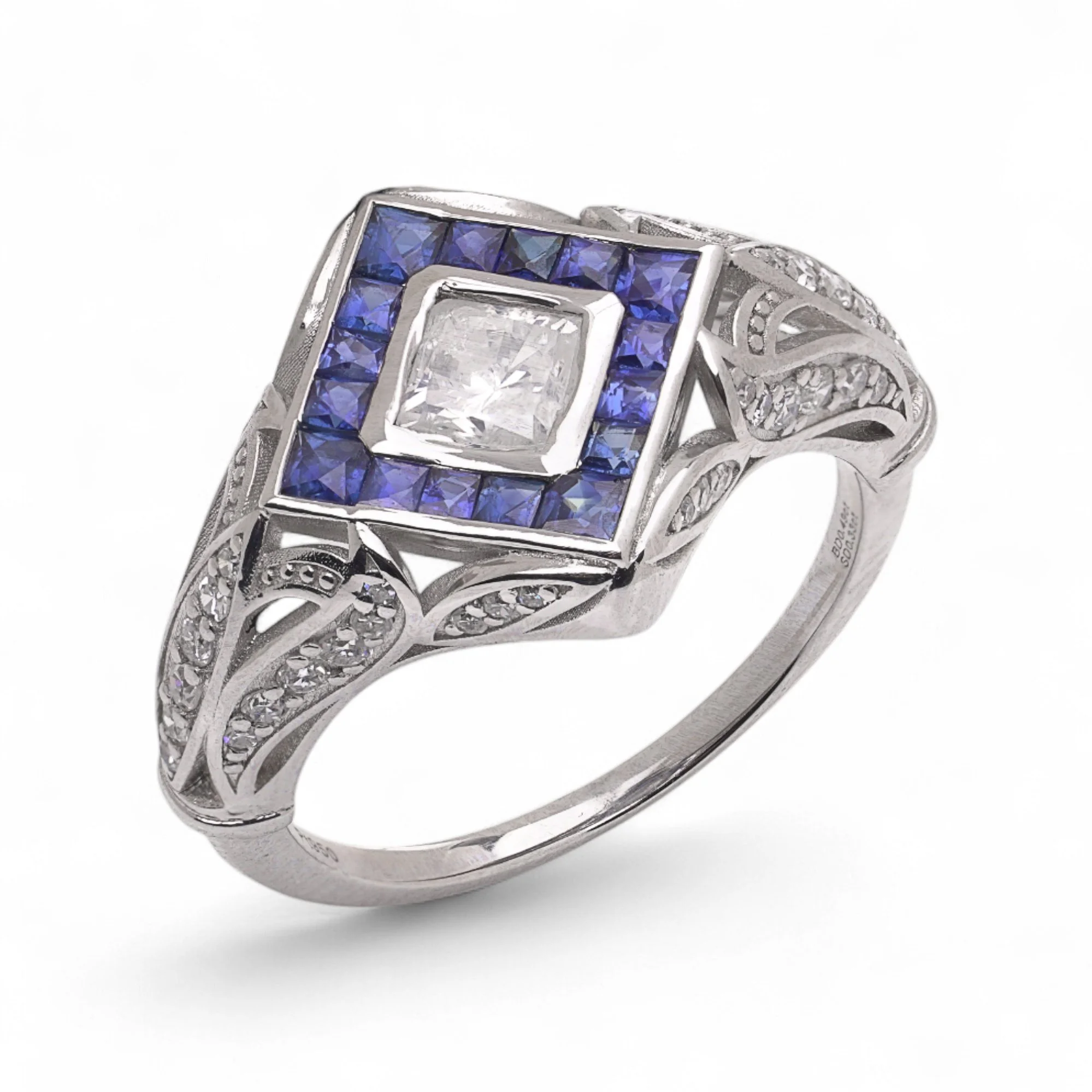
A live cross-section of our sapphire rings, from Art Deco-style to important natural stones:




UK price guide
Sapphire rings span an enormous range. Elegant Art Deco-style sapphire-and-diamond rings begin under £2,000; fine antique Ceylon clusters sit in the mid four figures; and important untreated stones — a no-heat Burma sapphire, say — reach well into five figures and beyond. The variables are colour, origin, treatment and size, so as ever it pays to view in person.
Caring for a sapphire ring
- Very low maintenance — at 9 on the Mohs scale, sapphire resists scratches better than almost any stone bar diamond.
- Clean easily with warm water, mild soap and a soft brush; ultrasonic cleaning is usually safe for untreated stones (check first).
- Still remove for heavy work to protect the setting and avoid knocks to the diamonds.
- Have claws checked periodically, especially on antique mounts.
Explore Further
Frequently Asked Questions
Choosing a sapphire engagement ring.
Are sapphire engagement rings a good choice?
Excellent. Sapphire is 9 on the Mohs scale — second only to diamond in hardness — so it withstands daily wear beautifully, while offering real colour and centuries of royal heritage. It is the most practical of the great coloured engagement stones.
What colour sapphires are available?
Far more than blue. Sapphires range from cornflower and royal blue (Ceylon being the classic) to teal, green, parti (multi-colour), pink, yellow and white. Red corundum is called ruby.
What is a 'no heat' sapphire and why does it matter?
Most sapphires are heat-treated to improve colour. An untreated, or 'no heat', sapphire is natural and rarer, and so commands a higher price. We disclose treatment on every stone we sell.
Why are sapphire and diamond rings so popular?
Partly the famous Diana and Catherine cluster, and partly because diamonds sharpen a sapphire's blue and add sparkle. The sapphire centre with a diamond halo or diamond shoulders is a timeless, hard-wearing classic.
How do I care for a sapphire engagement ring?
Very little is needed — clean with warm soapy water and a soft brush. Sapphire is highly scratch-resistant, but still remove the ring for heavy work and have the setting's claws checked periodically, especially on antique rings.