The Princess of Wales's Amethyst Necklace, and How to Buy Antique Amethyst
The Queen Mother's 103-year-old sautoir came out for the Digger premiere. Here is its sourced history, then a dealer's guide to antique amethyst: eras, Siberian colour, dating, fakes, values and care.
What is the Princess of Wales's amethyst necklace?
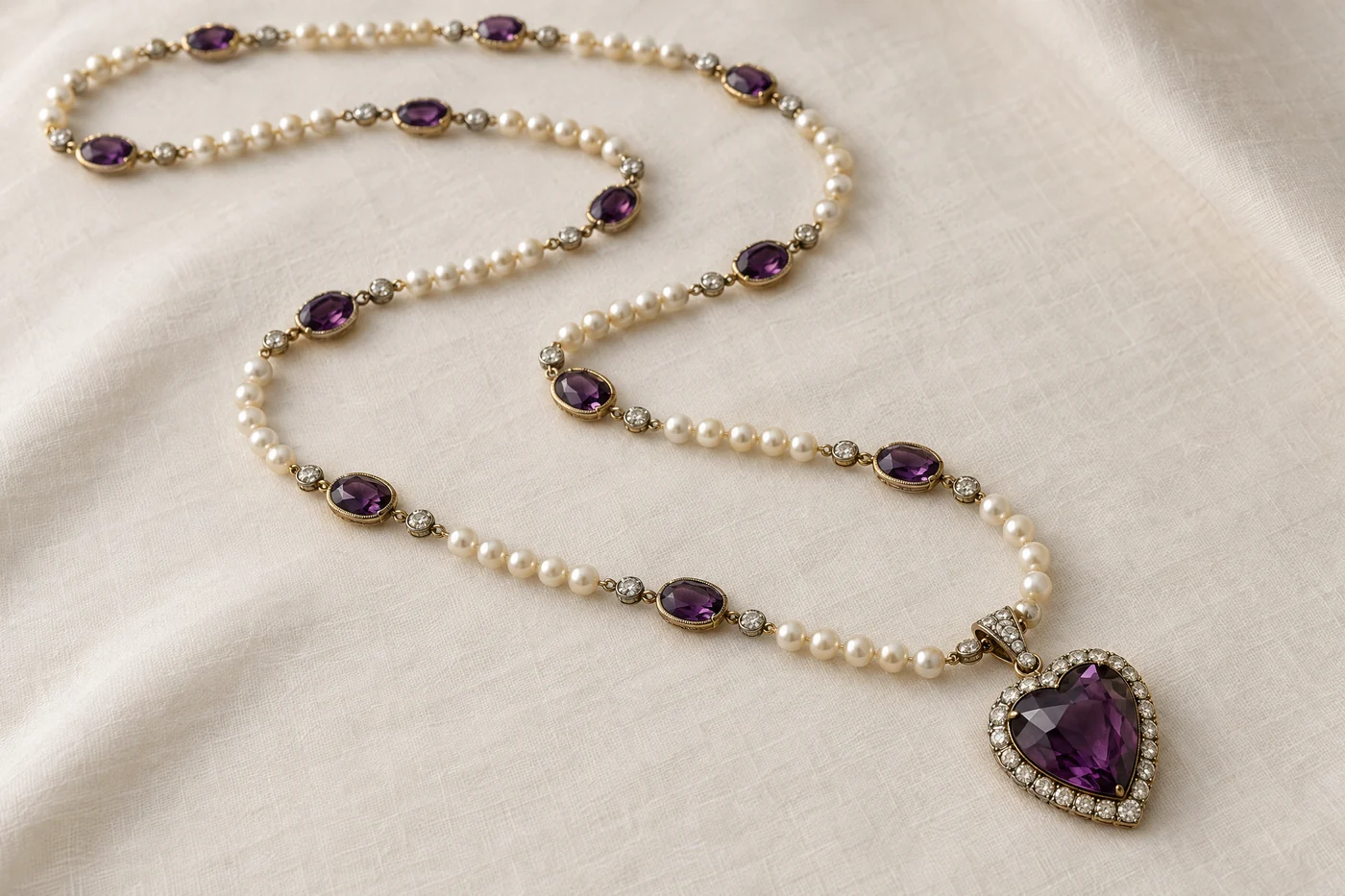
- It is the Queen Mother's amethyst sautoir, a 1923 wedding present from Queen Alexandra: pearls, diamonds and amethysts with a heart-shaped amethyst and diamond pendant.
- The Princess of Wales wore it to the Digger premiere on 22 September 2026; Queen Camilla last wore it in 2012.
- A sautoir is a long necklace ending in a pendant or tassel, at its height in the 1920s and 30s.
- Antique amethyst is valued on colour, matching, workmanship, condition and completeness, not on the stone alone.
In this article
The necklace: what the record says
On 22 September 2026 the Princess of Wales wore a purple Jenny Packham gown to the world premiere of Digger at the Odeon Luxe, Leicester Square, the Royal Film Performance for the Film and TV Charity (HELLO!, September 2026). Around her neck was one of the least seen jewels in the royal collection: the Queen Mother's amethyst sautoir.
| Date | What happened |
|---|---|
| April 1923 | Queen Alexandra gives the necklace to Lady Elizabeth Bowes-Lyon as a wedding present, before her marriage to the Duke of York, later George VI |
| 1923 | It is shown with the wedding presents at Buckingham Palace |
| 1925 | Elizabeth wears it during the court mourning after Queen Alexandra's death |
| October 2012 | Queen Camilla, then Duchess of Cornwall, wears it to the Skyfall premiere |
| 22 September 2026 | The Princess of Wales wears it to the Digger premiere |
Sources: The Court Jeweller; IBTimes UK, September 2026.
A heart of amethyst
The sautoir is made of pearls, diamonds and amethysts, and ends in a large heart-shaped amethyst and diamond pendant. It arrived in a fitted heart-shaped box with Alexandra's handwritten note: "For my dear future grand daughter Elisabeth", as The Court Jeweller records it.
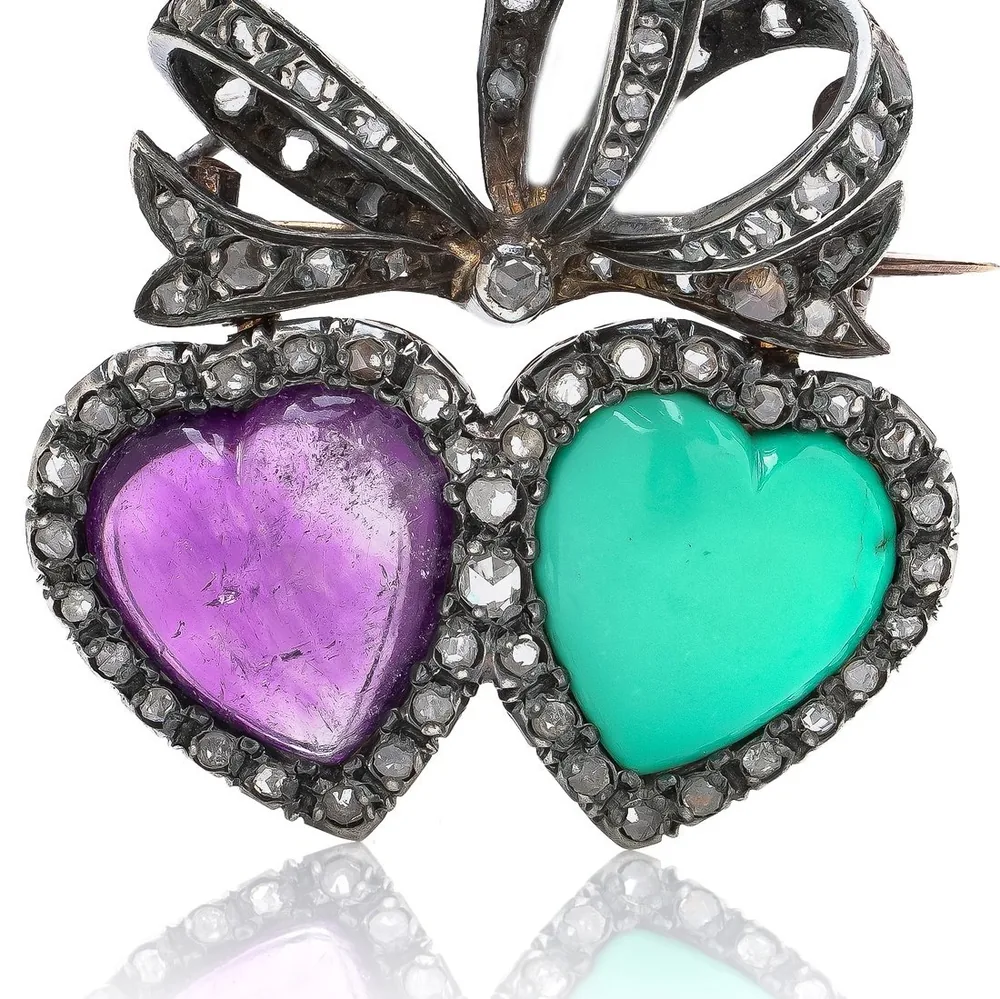
Heart-shaped amethysts turn up in Victorian sentimental jewellery too: our Victorian double heart brooch pairs an amethyst heart with a turquoise one.
IBTimes UK reports that it was first made with two strands and later reconfigured, and The Court Jeweller notes that by 2012 it had been shortened from its original sautoir length. There are no known photographs of the Queen Mother herself wearing it. The Princess wore it with Diana, Princess of Wales's Collingwood pearl drop earrings, a 1981 wedding present to Diana (IBTimes UK).
IBTimes UK (September 2026) quoted one specialist estimate of more than $66,000, about £49,000, and noted that there is no confirmed official valuation. The piece is not for sale.
The royal collection's older amethysts
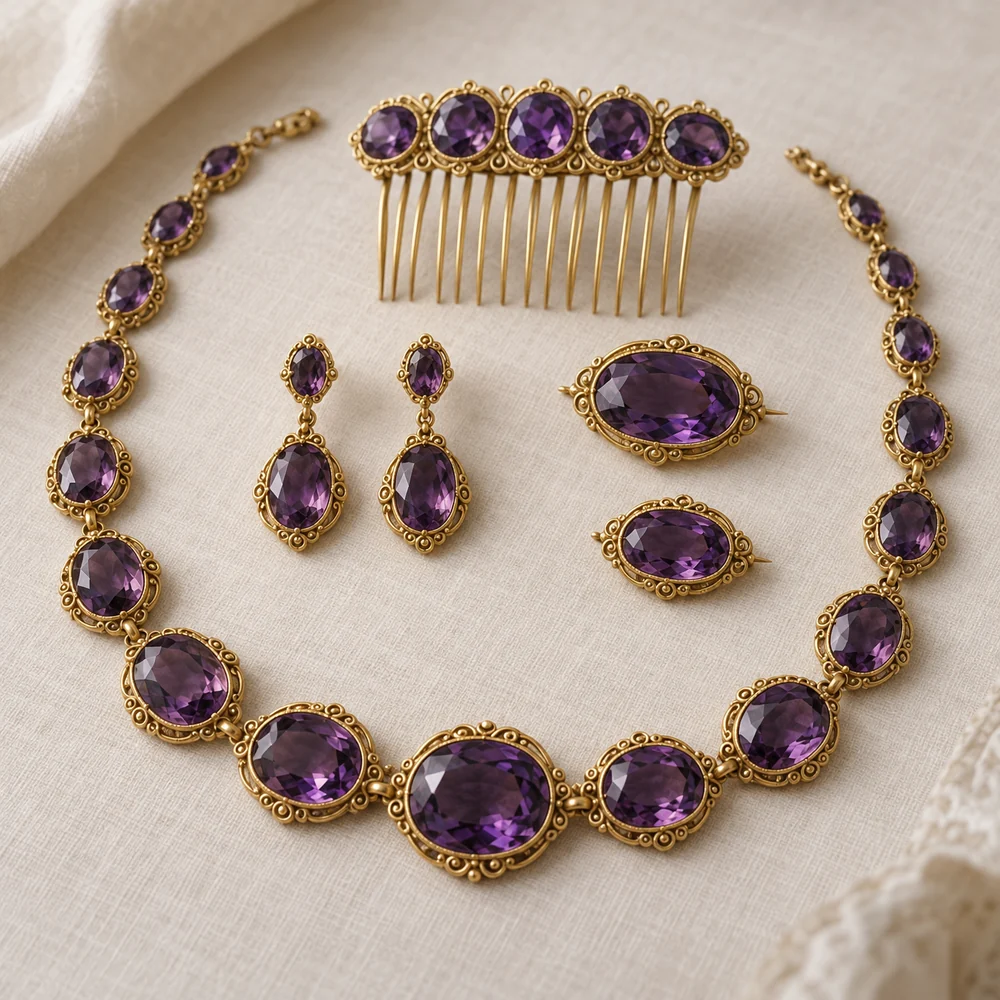
The Kent demi-parure, made in the first half of the 19th century, belonged to Queen Victoria's mother, the Duchess of Kent. After her death in 1861 Victoria made the amethysts heirlooms of the crown. It is a necklace, a pair of hair combs, a pair of earrings and three brooches.
- March 1985: Elizabeth II wears the full set, the only recorded time, at a state banquet in Portugal.
- Recent decades: she wore the Kent brooch often, usually with purple or blue.
- April 2026: Queen Camilla wears the necklace and earrings at a White House state banquet.
Latest, October 2026: coverage of the premiere called the sautoir rarely seen; its last widely reported appearance was in 2012. We will update this page when it is next worn. For what the stone has meant over the centuries, read what amethyst symbolises.
Antique amethyst by era, from Georgian to the sautoir
Amethyst is purple quartz. It was once ranked with ruby and emerald in price, until large deposits were found in Brazil in the 19th century, GIA notes. That is why so much antique amethyst jewellery survives, and why much of what is found today is 19th century.
PeriodStyle or technique
Georgian, 1714 to 1837: foiled backs and cannetille
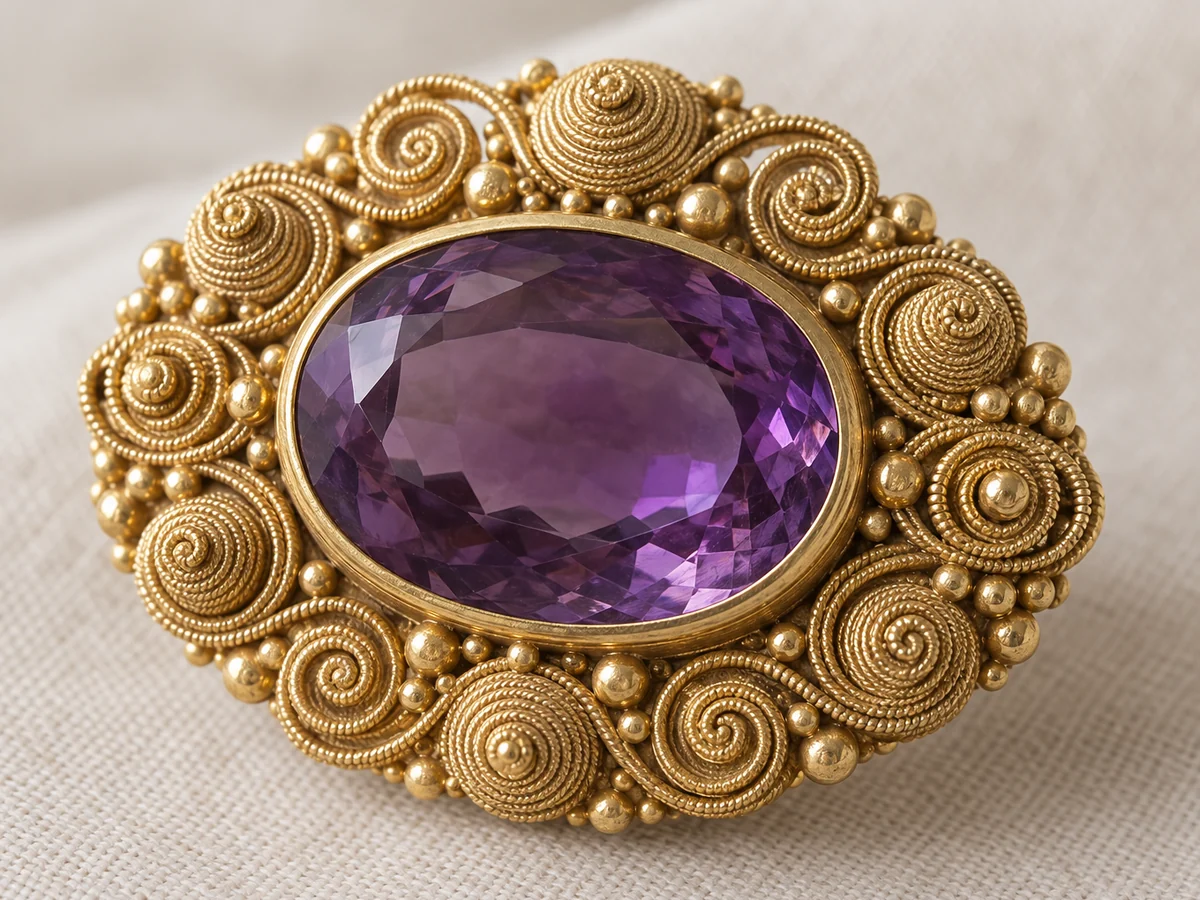
Closed-back settings, often with a foil behind the stone to brighten it by candlelight (International Gem Society), and suites, or parures, of necklace, earrings and brooch.
In the 1820s and 30s came cannetille: gold wire coiled into spirals, with granules. The V&A has a French necklace of about the 1820s in this style, set with amethysts and pearls. See Georgian jewellery.
Victorian, 1837 to 1901: big stones, pearls and fringes
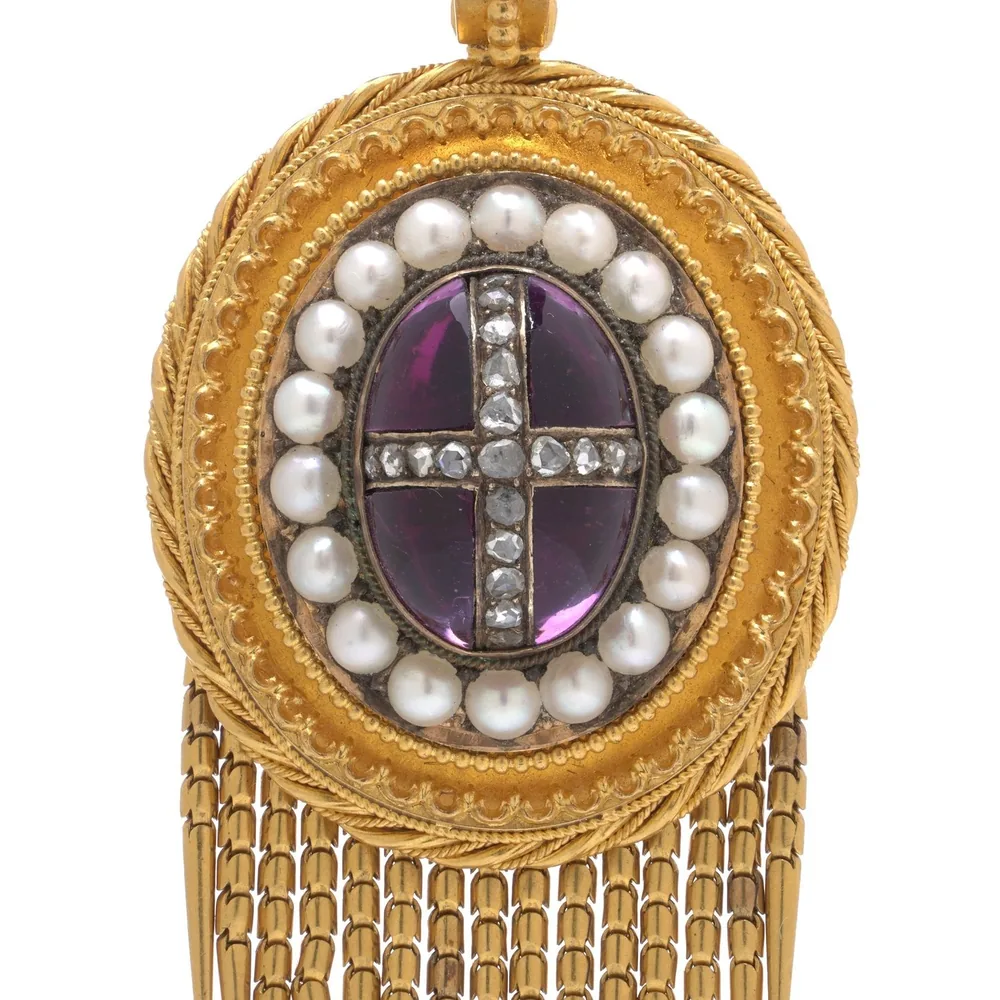
Big oval and cushion stones in collet settings, rivières and fringe necklaces, amethyst with seed pearls, gold fringes and granulation.
Our 21KT gold pendant shows several at once: a cabochon amethyst with a rose diamond cross, a frame of pearls, rope-twist gold and a gold fringe, and we have 19th century earrings in the same style. See the periods of Victorian jewellery.
Edwardian, 1901 to 1910: lighter mounts
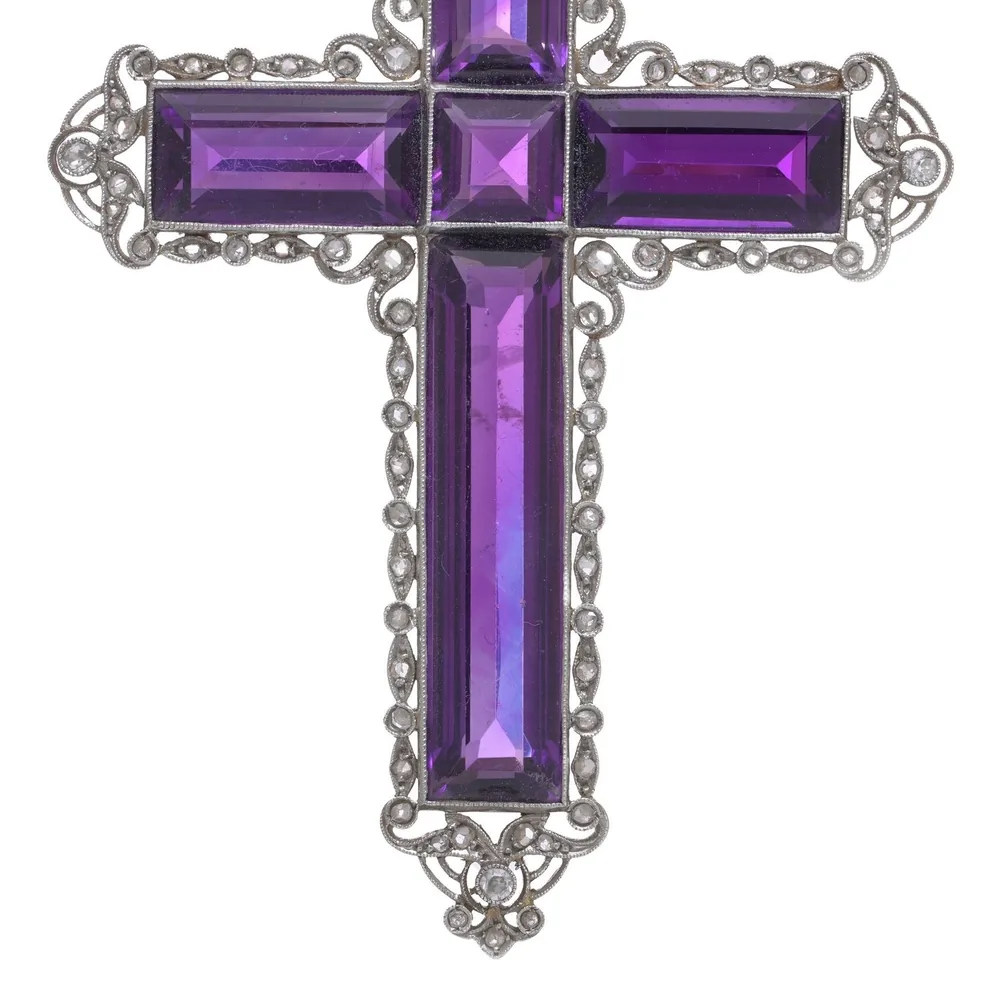
Lighter mounts, platinum or silver over gold with small diamonds, long chains and pendants. Our Edwardian cross sets deep purple step-cut amethysts in a frame of 18KT gold and silver, edged with small diamonds.
1920s and 30s: the sautoir
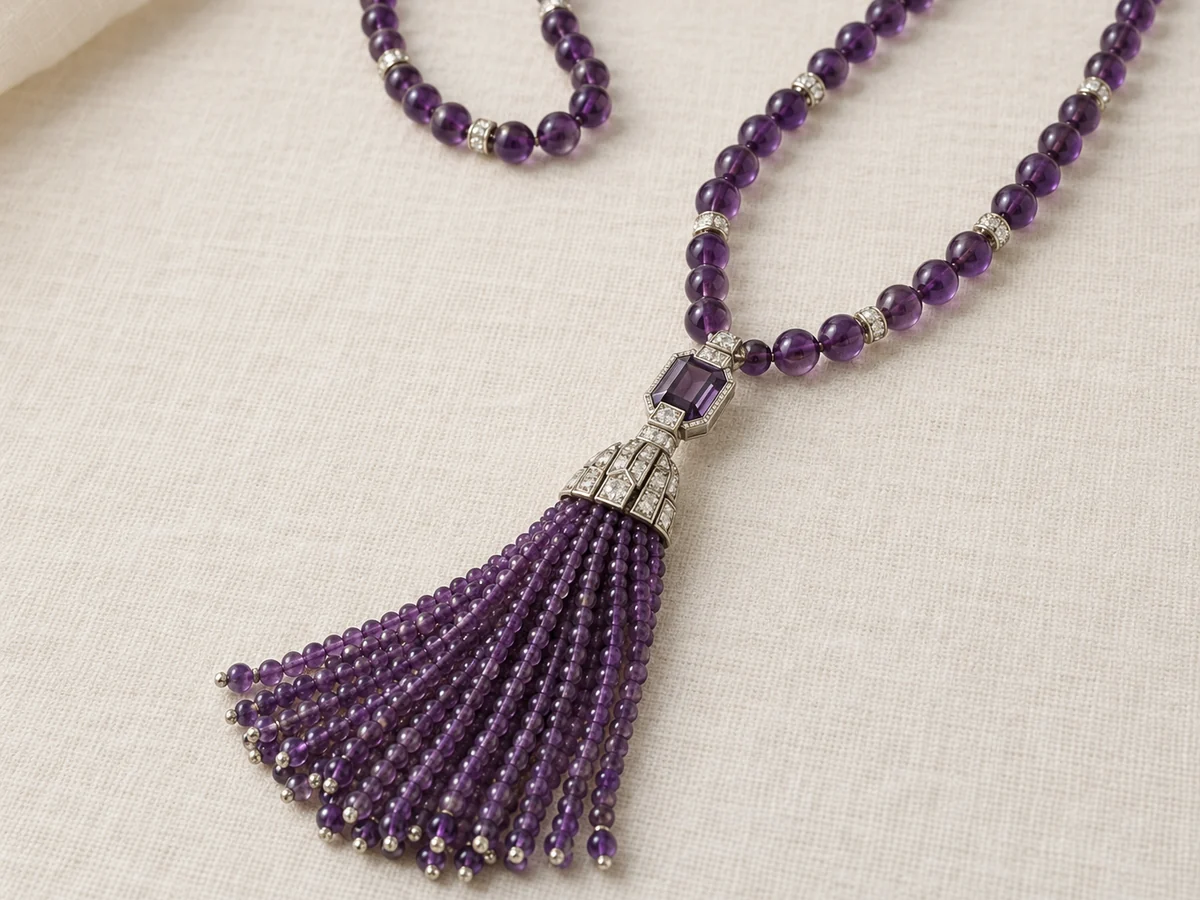
A sautoir is a long necklace that suspends a tassel or other ornament, in the words of Lang Antiques. It came into its own when long, straight dresses suited a necklace that fell below the bust, and was at its height in the 1920s and 30s, alongside geometric step cuts and amethyst with diamonds in platinum.
Many were made to convert into bracelets, shorter necklaces or head ornaments, so a royal sautoir that was shortened later is following a long tradition.
Necklace lengths, approximately: choker 35 to 40 cm, princess 43 to 48 cm, matinee 50 to 60 cm, opera 70 to 90 cm, sautoir over 90 cm.
More on our sautoir page, on matching sets in our guide to the parure, and on the period in our Art Deco buying guide.
Siberian amethyst and colour grading
Amethyst owes its colour to iron and other trace elements together with natural radiation.
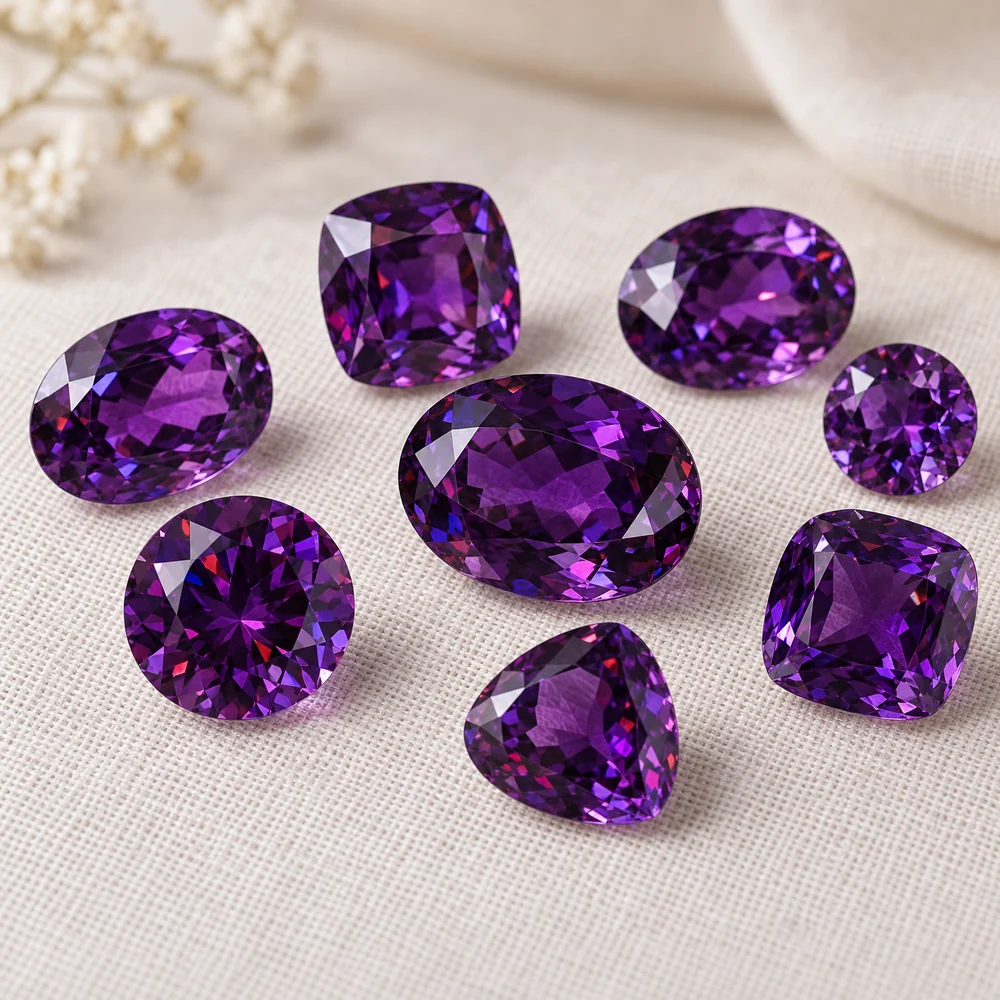
Siberian: a colour, not a place
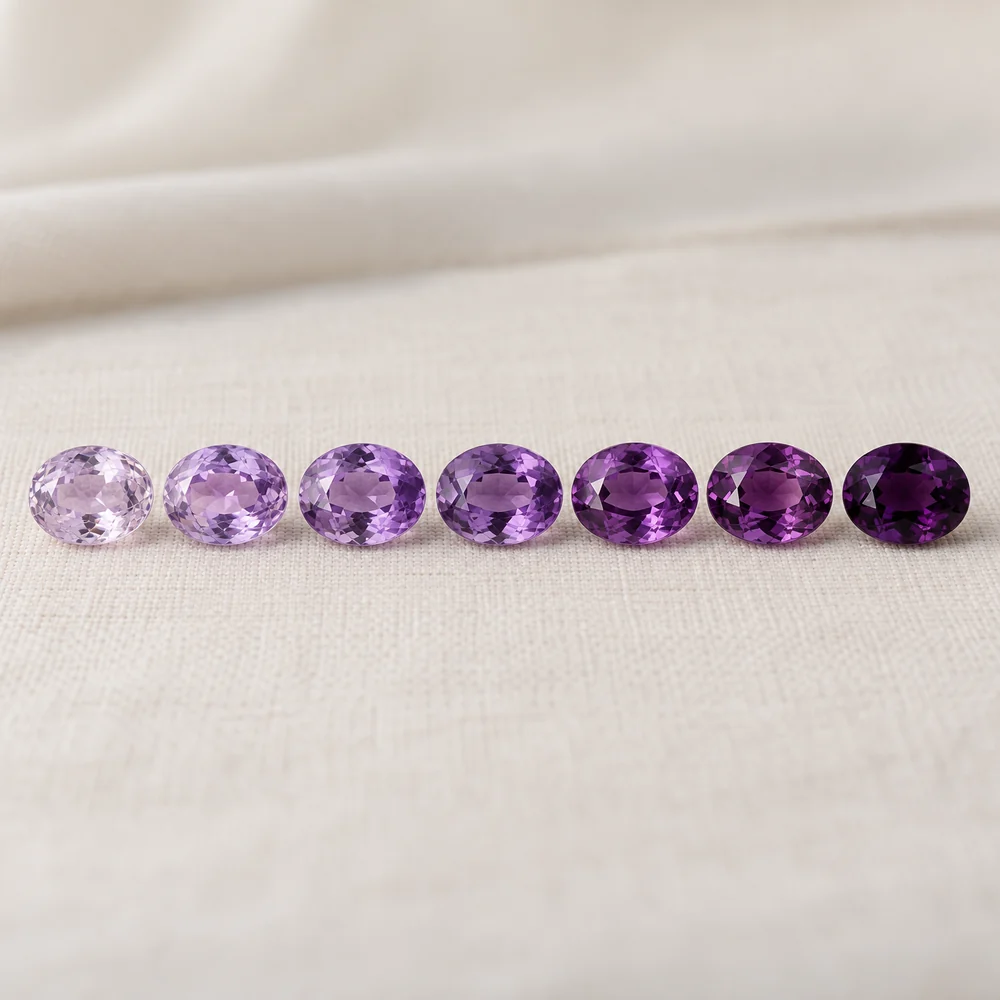
You will hear the word Siberian. Russia's Siberian mines once produced the finest amethyst, and the International Gem Society explains that Siberian is now a trade and grade term for that colour: rich purple with red and blue flashes.
It describes colour, not where a stone was mined.
How the colour is graded
The best colour, GIA says, is a strong reddish purple to purple with no visible colour zoning. Paler stones run to lilac; some show a pinkish "raspberry" tone. What we look at:
- Hue: purple to reddish purple beats brownish or greyish purple.
- Depth: saturated mid to dark tones, unless so dark the stone looks black.
- Zoning: visible bands of lighter and darker colour lower the value.
- Cut: old cuts are kept; re-cutting loses the stone's history.
- Size: amethyst comes large, so price per carat rises gently.
More on facet styles in our guide to gemstone cuts.
Send us photos of your amethyst jewellery
How to date it, and how to spot glass
Five clues to the date
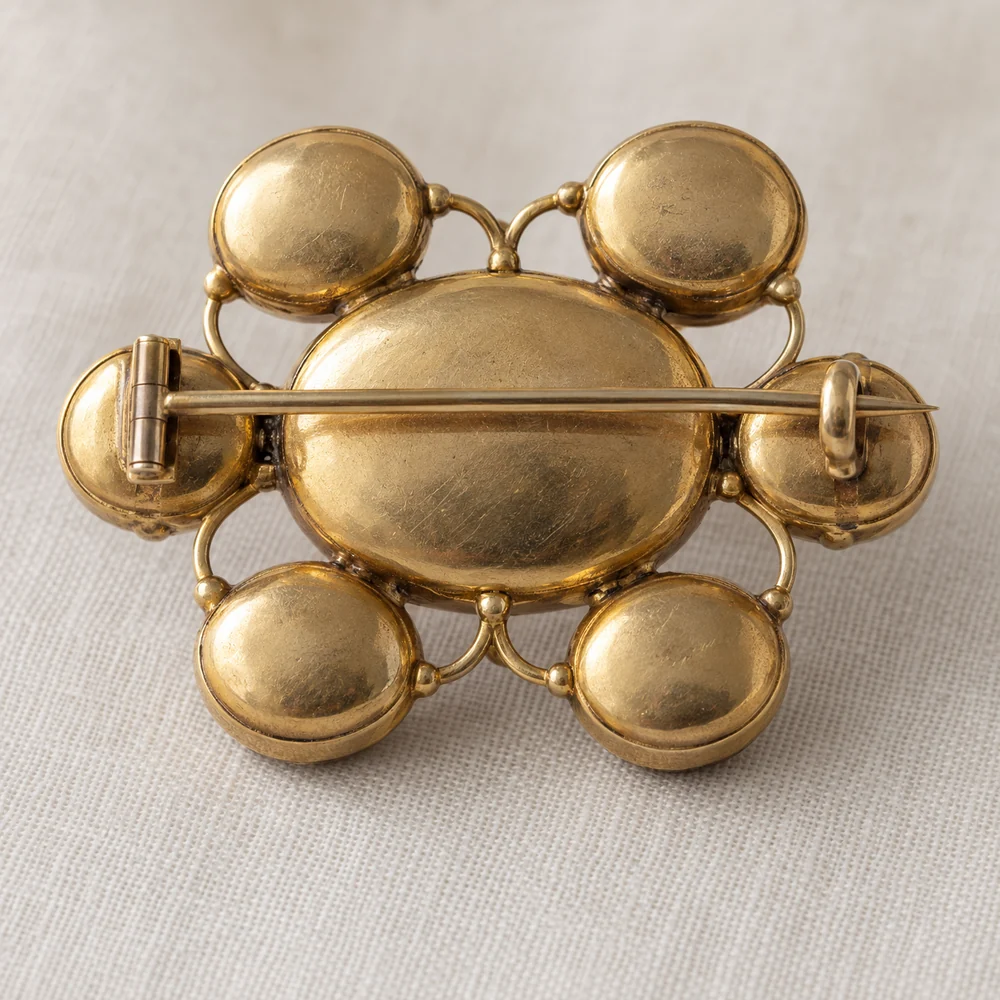
- Turn it over
A closed back, sometimes with a coloured foil inside, points to the Georgian period. Open backs that let light through the stone are later.
- Read the gold
Look for marks on the clasp, the loop and the back. Much antique jewellery is not hallmarked, so no mark is normal. See hallmarks and makers' marks.
- Look at the work
Cannetille spirals, granulation, seed pearls on fine wire and gold fringes each belong to particular decades.
- Check the fittings
Clasps are often original and easy to date: see antique necklace clasps.
- Look for the case
A fitted case with a jeweller's name, like Alexandra's heart-shaped box, can date and attribute a piece. See our necklace boxes.
Glass and synthetic amethyst
Two things imitate antique amethyst. Glass, called paste, was set in good gold settings in the 18th and 19th centuries.
Synthetic amethyst is real quartz grown in a high-pressure autoclave, so ordinary tests will not separate it. By the 1980s it was enough of a problem that GIA's journal published a test based on twinning (Gems & Gemology, Fall 1986).
| Sign | Points to |
|---|---|
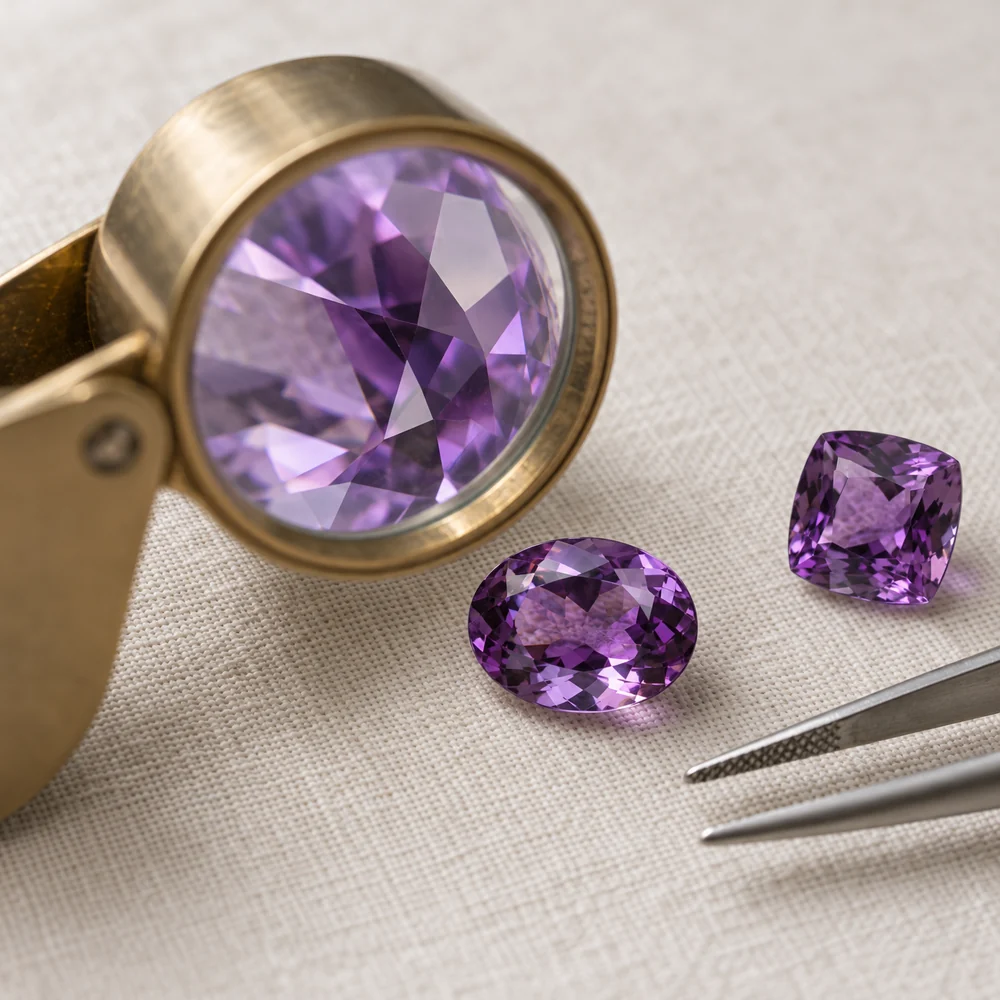
| Round gas bubbles or swirl marks under a loupe | Glass |
| Worn, rounded facet edges | Often glass, which is softer than amethyst at 7 on the Mohs scale |
| Warms up quickly against the skin | Often glass; quartz stays cool a little longer. A rough test only |
| Angular bands of lighter and darker purple | Natural amethyst, which commonly shows angular colour zoning |
| Perfectly even colour and no inclusions in a large stone | Ask for a laboratory test before paying a natural-stone price |
A foiled, closed-back stone hides its own back, so these checks are harder. Do not lever a setting open to look: ask someone who handles Georgian jewellery.
Value, care, buying and selling
What antique amethyst necklaces sell for
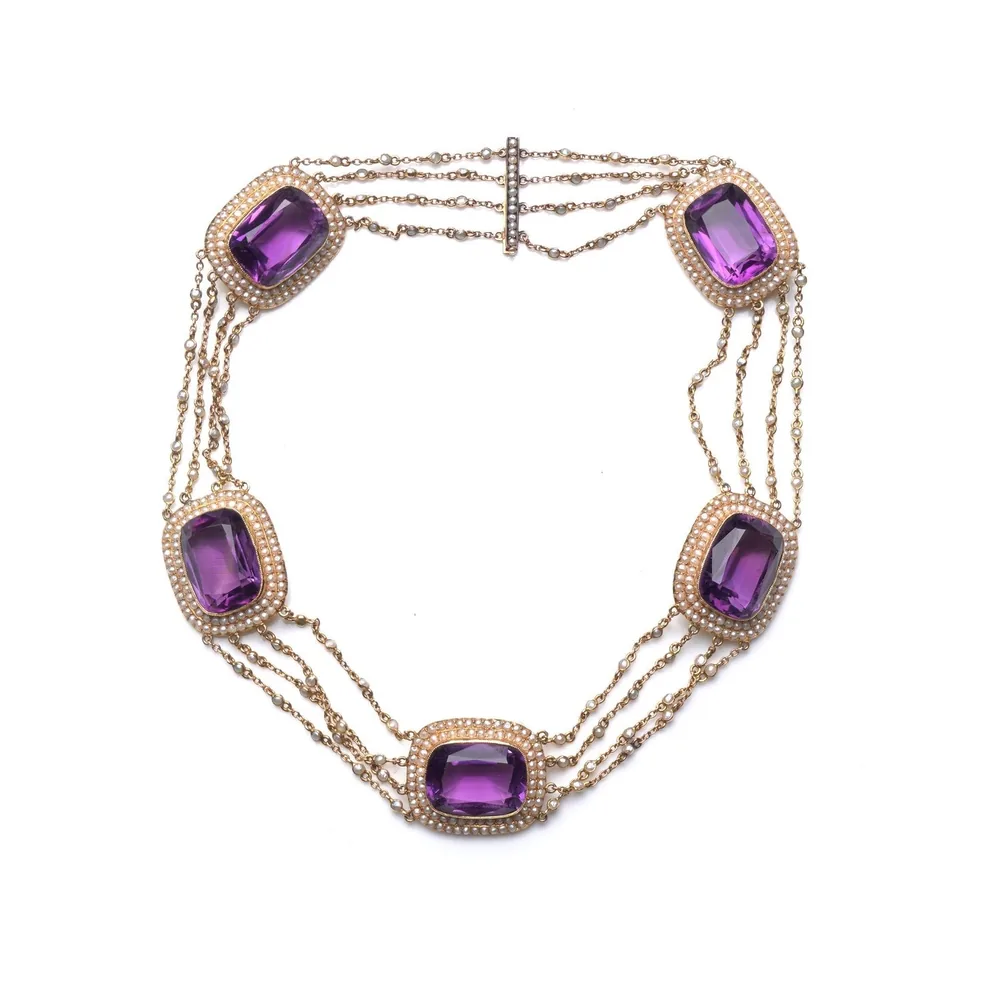
Amethyst itself is not expensive, so the value of an antique necklace comes from the whole piece:
- the quality and match of the stones
- the gold and the workmanship
- the condition
- a maker or a fitted case
- whether a set is complete
Three recent results at Bonhams show the top of the market:
| Piece | Sale | Price with premium |
|---|---|---|
| Amethyst parure, late 18th or early 19th century: rivière and drop, two bracelets, brooch, earrings, fitted case | Bonhams London, 5 December 2024 | £20,480 |
| Amethyst fringe necklace, 19th century: about 340 ct, Garrard & Co case | Bonhams London, 27 April 2022 | £12,750 |
| 14K gold amethyst and pearl necklace, about 1850: about 73 ct | Bonhams Los Angeles, 26 September 2025 | US$11,520 |
Most antique amethyst jewellery sells for much less: single pendants, brooches and earrings, or necklaces with paler stones, replaced parts or missing elements. Colour, completeness and the original case make the difference. See also coloured gemstones at auction in 2026 and how to tell if jewellery is worth money.
Caring for it
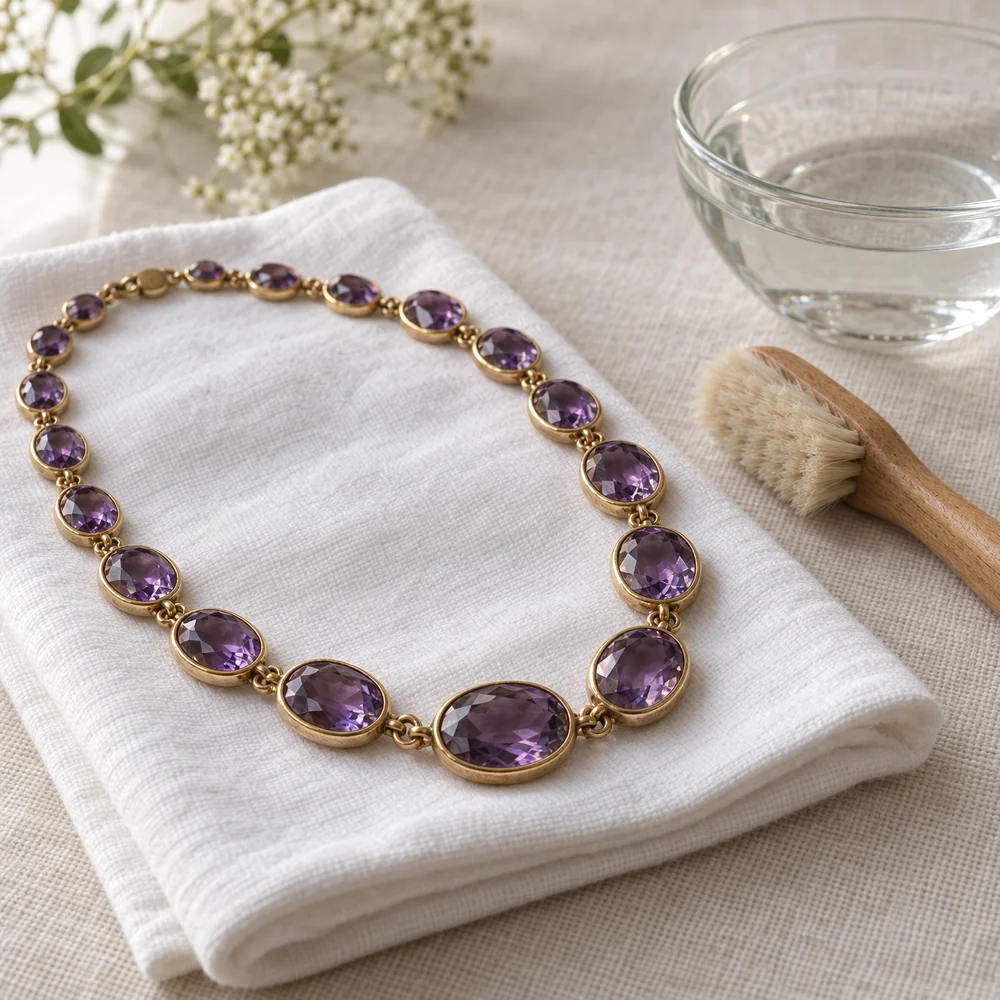
- Clean gently: soft brush, mild detergent, warm water. No ultrasonic cleaners: inclusions can make amethyst shatter in them (International Gem Society).
- Keep foil dry: never wet a closed-back or foiled setting; water ruins the foil.
- Keep it out of sun and heat: amethyst can fade if overexposed to light (Wikipedia), and heat changes its colour.
- Mind the pearls: wipe them with a soft cloth, away from scent and hairspray. See seed pearls and natural and cultured pearls.
- Store flat or in the fitted case, so a long chain does not kink.
Buying
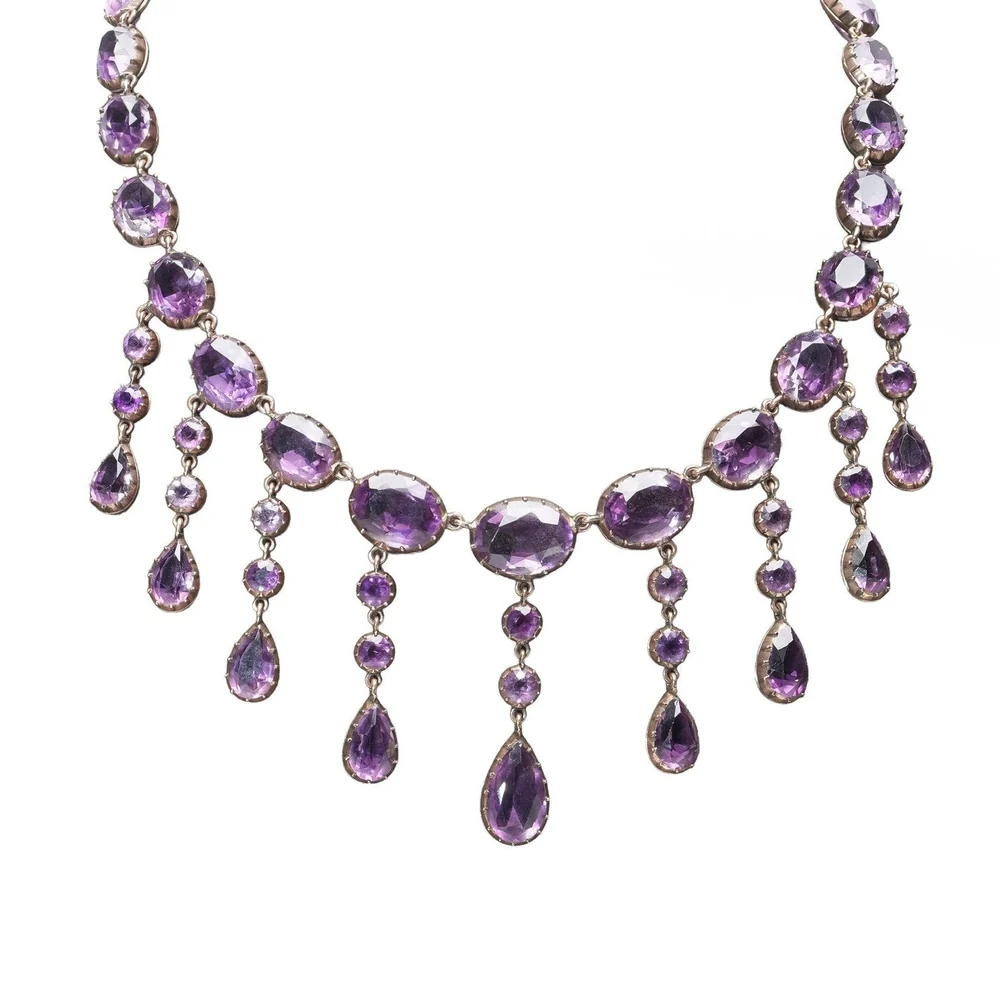
Look at the colour in daylight, check that the stones match, ask what has been replaced, and ask for photos of the back and the clasp.
Our amethyst necklaces and amethyst pendants are described with their era, metal and condition, like the Victorian fringe necklace pictured and our amethyst and pearl cluster pendant. Browse all necklaces and pendants or our antique gemstone jewellery.
Selling
Do not take antique amethyst jewellery to a scrap buyer: a gold-weight price ignores the stones, the age and the workmanship. Keep the case and any paperwork with it, and do not polish or re-string it before it is seen. We buy antique and vintage jewellery directly and value from photographs, free.
- Sell Georgian jewellery and sell Victorian jewellery
- Sell Edwardian jewellery and sell Art Deco jewellery
- Dealer or auction? The trade-offs explained
Request a free valuation
- The royal sautoir is a 1923 wedding present from Queen Alexandra, worn by Queen Camilla in 2012 and the Princess of Wales in 2026.
- Antique amethyst is common, so the piece matters more than the stone: colour, matching, work, condition, case.
- Closed backs and cannetille mean early; fringes, seed pearls and big collet stones mean Victorian.
- Glass and synthetics exist: use a loupe, and a laboratory for a valuable stone.
Questions we are asked
What necklace did the Princess of Wales wear to the Digger premiere?
The Queen Mother's amethyst sautoir: pearls, diamonds and amethysts with a heart-shaped amethyst and diamond pendant. Queen Alexandra gave it to Lady Elizabeth Bowes-Lyon as a wedding present in 1923.
How old is the Queen Mother's amethyst necklace?
It was given in April 1923, so it was 103 years old when the Princess of Wales wore it in September 2026.
Who wore the amethyst sautoir before the Princess of Wales?
The Queen Mother wore it in 1925, during court mourning for Queen Alexandra. Queen Camilla wore it to the Skyfall premiere in October 2012.
What is a sautoir necklace?
A long necklace, usually falling below the bust, that ends in a tassel, pendant or other ornament. Sautoirs were at their most fashionable in the 1920s and 30s, and many convert into shorter necklaces or bracelets.
What is Siberian amethyst?
A trade and grade term for the finest amethyst colour: rich purple with red and blue flashes. It began with Russian stones but now describes colour, not origin.
How can I tell if my antique amethyst is real?
Under a loupe, glass often shows round bubbles, swirls and worn facet edges, and it warms quickly against the skin. Natural amethyst often shows angular colour zoning. Synthetic amethyst needs a laboratory test.
Is antique amethyst jewellery valuable?
The stone itself is modest in price, but well-made antique pieces can be valuable. At Bonhams a 19th century amethyst fringe necklace sold for £12,750 in 2022 and a late 18th or early 19th century parure for £20,480 in 2024, with premium.
How should I clean an antique amethyst necklace?
With a soft brush, mild detergent and warm water, but never wet a closed-back or foiled setting, and avoid ultrasonic cleaners. Keep it out of strong sun.
Want to know what your amethyst jewellery is worth?
Send photos of the piece, its back and its clasp. We buy antique and vintage jewellery directly, and the valuation is free.
- We buy directly
- Free valuation from photos
- Appointments in Mayfair and Braintree
- Insured postage or collection
New pieces reach our list first: join the Mozeris list.