The Art Deco Buying Guide: What to Look For, What to Pay
A century after the Jazz Age, Art Deco is still the most requested era in our Mayfair showroom. Here's how to buy it well — and what a fair price looks like.
Ask us which era clients request most and the answer hasn't changed in years: Art Deco. It tops every 2026 trend report, it suits modern dressing, and its geometry still looks strikingly current a hundred years on. But "Art Deco" is also the most imitated label in the trade — so buying well means knowing the genuine article from the "in the style of". Here's how.
Quick answer: how do I buy Art Deco well?
Look for genuine period hallmarks, geometric symmetry, platinum, calibré-cut coloured stones and old/transitional-cut diamonds — and buy from a dealer who lists only authenticated period pieces, not 'Deco style' reproductions.
Prices run from under £3,000 for signed period pieces to five figures for exceptional figural Deco.
Where the style came from — and why it matters for buying
Art Deco takes its name from the 1925 Paris Exposition Internationale des Arts Décoratifs, but the style runs roughly 1920–1939: the machine age translated into jewellery — geometry, symmetry, contrast, platinum. Knowing the dates matters practically, because the market is full of pieces from adjacent eras sold as Deco, at Deco prices. The style before it (Edwardian/Belle Époque, to c.1915) is lacy, garlanded and romantic; the style after (Retro, 1940s) is bold rose gold and volume. If a "Deco" piece is naturalistic and lacy, or chunky and rose-gold, it probably belongs either side of the period.
The hallmarks of genuine Art Deco
Geometry
Crisp, symmetrical, architectural lines — the Jazz Age look. Flowing, naturalistic curves usually mean a different era.
Platinum
The period's signature metal, worked fine and lace-like, often with millegrain edging.
Calibré-cut colour
Small, custom-cut sapphires, emeralds and rubies fitted precisely into the design.
Period diamond cuts
Old European, transitional and single cuts — not modern brilliants.
Spotting reproductions
The market is full of "Art Deco style" pieces made decades later or yesterday. The tells: modern brilliant-cut diamonds where old cuts should be; casting bubbles and soft detail instead of hand-finishing; white gold posing as platinum; and hallmarks that date the piece well after the 1930s. A genuine period piece shows its age honestly in the wear and the workmanship. We list only genuine period jewellery and verify every piece — see how we authenticate.
Condition notes specific to Deco
- Calibré stones are the expensive problem. Those tiny custom-cut sapphires and emeralds were each cut to fit their exact slot — a missing one can't be replaced from stock; it must be custom-cut, which costs real money. Check every channel and border under a loupe, and price gaps accordingly.
- Millegrain wear: the beaded edging rubs flat with wear. Crisp millegrain is a strong originality signal; smoothed edges mean heavy wear or re-polishing.
- Platinum fatigue: the period's fine knife-edge work is strong but brittle at stress points — check thin gallery work and claw tips for hairline cracks and old repairs.
- Mechanisms: on double-clips and convertibles, test the fittings work crisply and match the frame — replacements should be disclosed and priced in.
- Later brooch pins and safety catches are common and acceptable on unsigned pieces if disclosed; on signed pieces originality carries a premium.
What the price tiers look like in practice
What should you pay? Concrete examples beat abstractions — three genuine period pieces we currently hold, across the range:
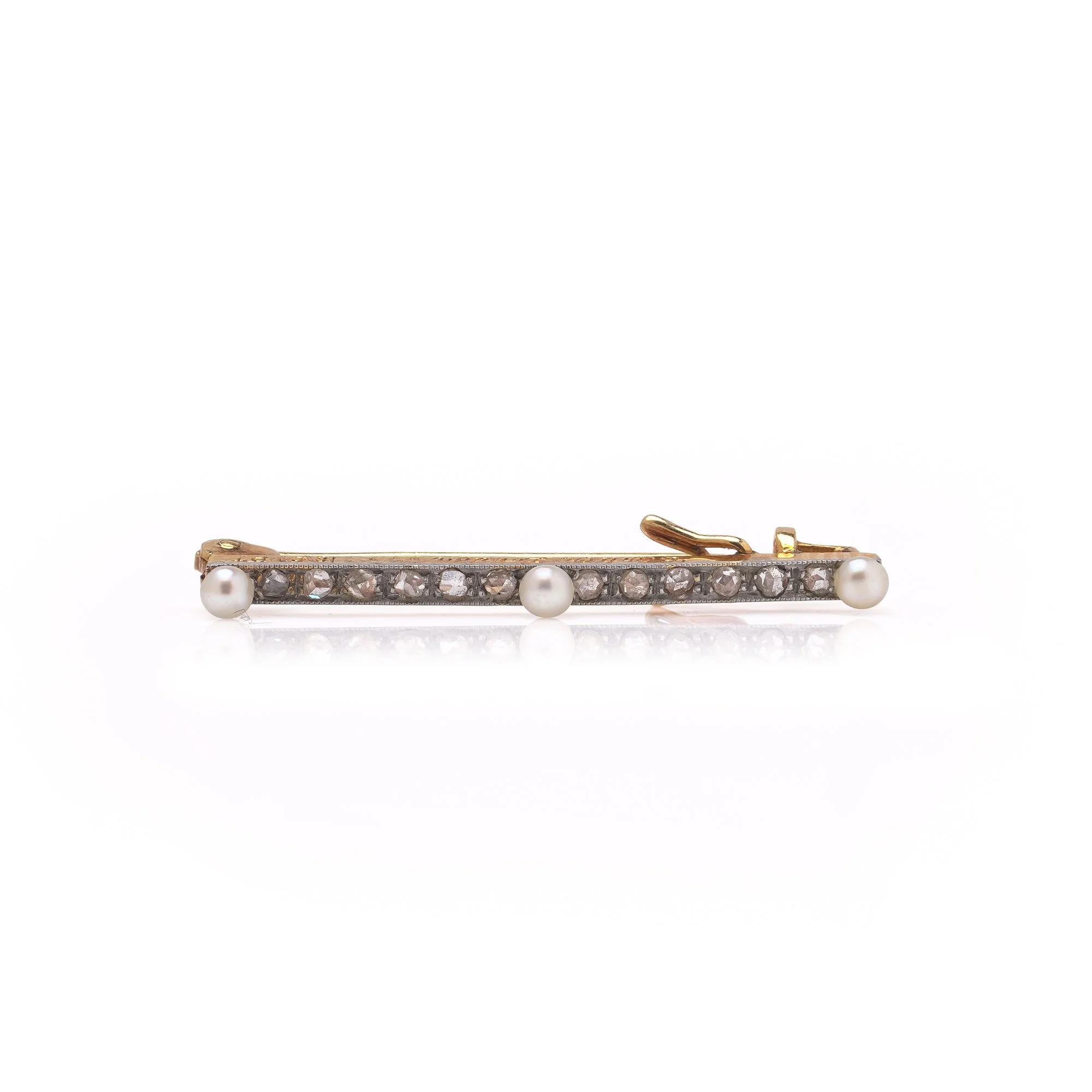

Entry — from £2,950
Our Cartier London 1920s pearl & diamond brooch: genuine, signed period Deco at an accessible price.
Mid — signed diamond
The Adler diamond double-clip (£26,500): serious signed Deco-form diamond work.
Exceptional — £34,950
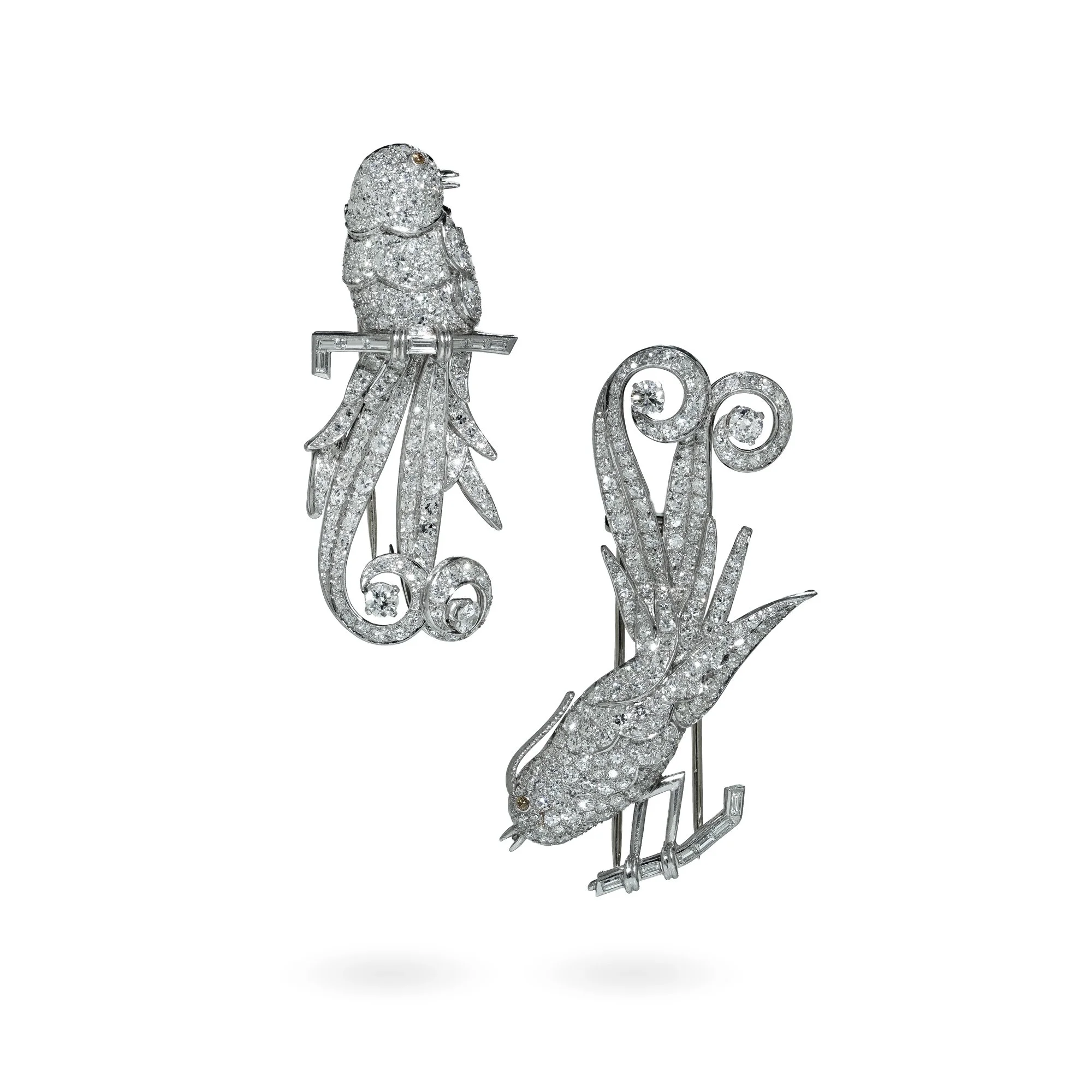
The Art Deco platinum bird brooches: figural Deco, a matched clip pair — the tier that's rising fastest.
Think you own one? Find out what it’s worth.
Own an Art Deco piece? Genuine period Deco is in high demand and we buy as well as sell. Send a photo for a free, specialist valuation.
✓ Free expert valuation in 24h ✓ Same-day payment ✓ 10,000+ items traded · 5★ rated
First look at new arrivals
Join our list to see new antique and signed jewellery before it reaches the site — one email when something worth your time arrives, nothing more.
Get first look →What's rising: figural Deco (birds, animals, stylised forms) and signed Deco from the great houses. Browse the full Art Deco collection, our Art Deco engagement rings, or read why brooches are back in 2026.
Explore Further
Frequently Asked Questions
Buying genuine Art Deco.
How do I know it's genuine Art Deco?
Look for geometric symmetry, platinum, calibré-cut coloured stones, old/transitional-cut diamonds and period hallmarks. Modern brilliants, casting bubbles and post-1930s marks signal a later 'Deco style' reproduction.
What's a fair price for Art Deco jewellery?
It ranges widely: genuine signed period pieces start under £3,000, while exceptional figural or important signed Deco reaches five figures. Rarity, signature, stones and condition set the price.
What are the best Art Deco pieces to start with?
An accessible signed period piece — like a 1920s Cartier London brooch — is a sound first buy: genuine provenance, period design and a name that holds value.
Why is Art Deco jewellery usually platinum?
Platinum was the period's prestige metal — strong enough to hold diamonds in fine, lace-like settings with millegrain detail. Its use is one of the clues to a genuine period piece.