Amethyst Jewellery
Amethyst Necklaces and Pendants
Antique and vintage amethyst necklaces and pendants in gold: Victorian fringe necklaces and high-carat gold pendants set with amethyst, pearls and diamonds, cluster pendants, and later gold necklaces pairing amethyst with other coloured stones.
Explore our Antique gemstone jewellery and Necklaces & pendants collections, or read about the February birthstone.
4 pieces available · antique & vintage · UK based, worldwide shipping
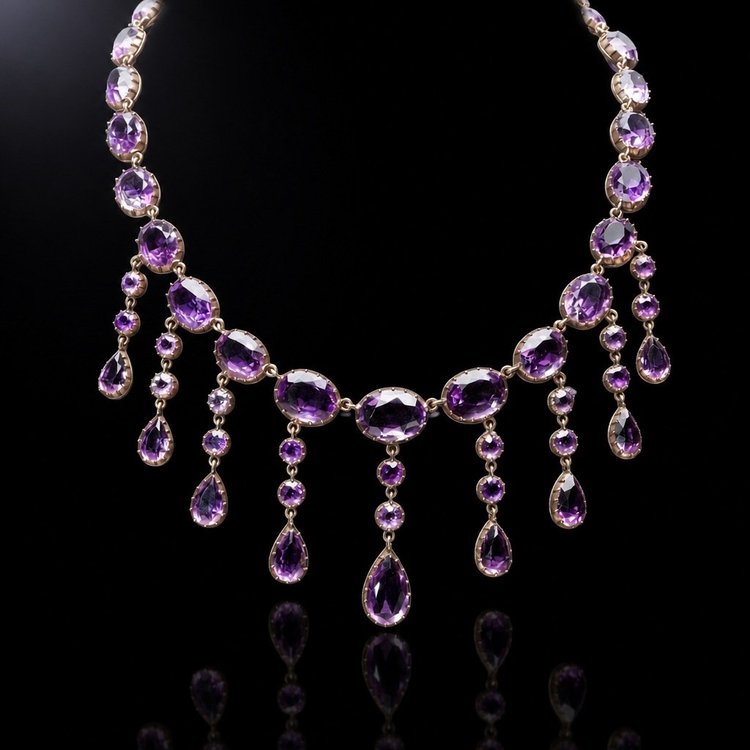
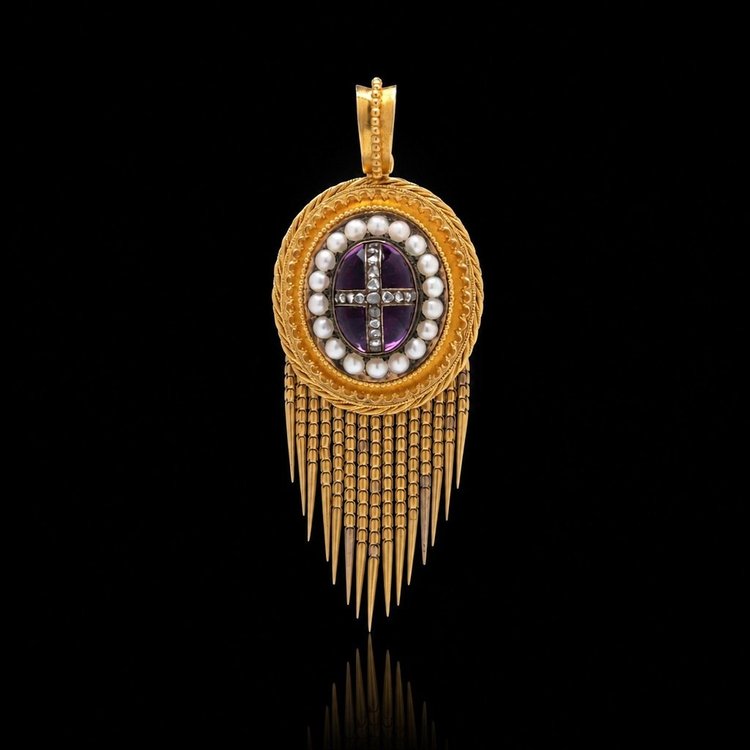
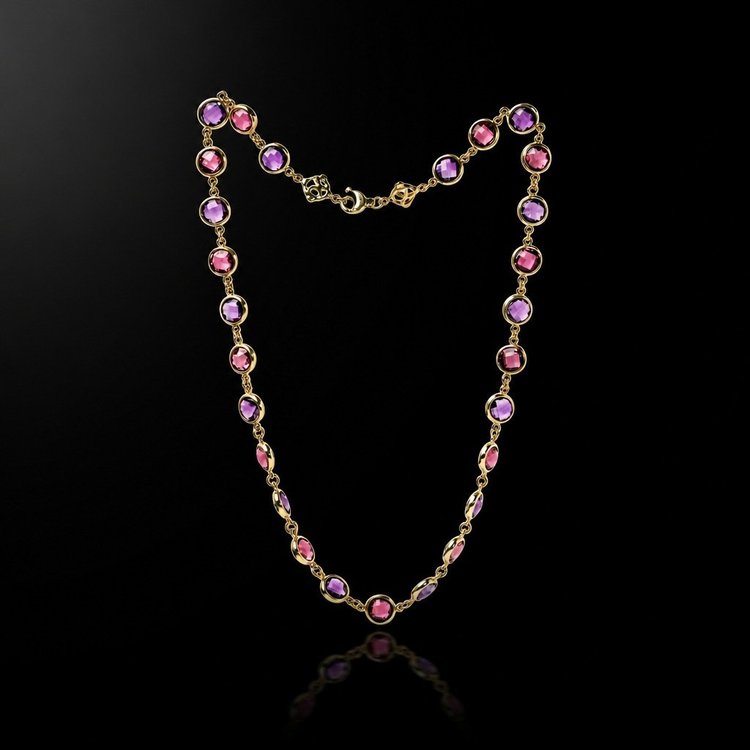
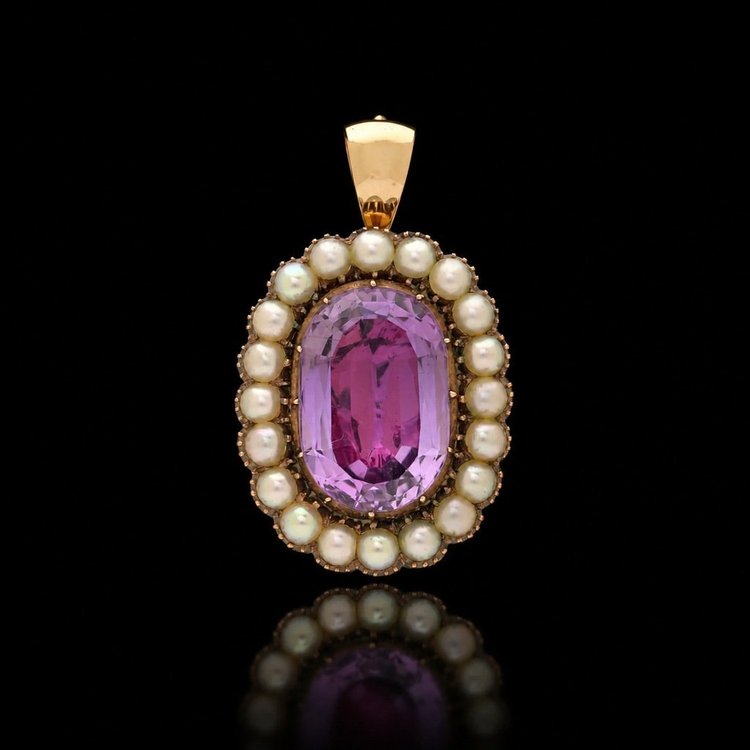
Listings give the amethysts' cut, colour and estimated weight.
Also searched as: amethyst pendants, Victorian amethyst necklaces, purple gemstone necklaces, estate amethyst necklaces (US).
Amethyst in the 19th century
Amethyst is purple quartz, and until large deposits were found in Brazil in the 19th century it was a costly stone. The Victorians loved it in rich gold settings: fringe necklaces of graduated drops, rivières of oval stones, and pendants framed with seed pearls or diamonds. Deep purple amethyst also suited half-mourning, when colours were reintroduced after a period of black.
Colour
The most admired amethysts are a deep, saturated purple with flashes of red and blue, a shade the trade sometimes calls Siberian after the Russian mines that once supplied it. Paler lilac stones are also used, especially in later jewellery. The colour comes from traces of iron and natural irradiation. Some amethyst can fade if left for long periods in strong sunlight.
Natural, heated and synthetic
Heating amethyst can turn it yellow or orange, which is how much commercial citrine is made. Synthetic amethyst has been produced since the late 20th century and can be hard to separate from natural without laboratory testing. Antique necklaces were made before synthetic amethyst existed in quantity, which supports their stones being natural.
Setting styles
Victorian amethysts are usually set in closed-back gold collets, sometimes foiled, or in claw settings with open backs. Fringe necklaces hang each drop on a small jump ring. Later pieces use claw settings that let more light through the stone.
What to check
Amethyst is 7 on the Mohs scale, so it resists everyday wear well, but facet edges can chip. Check each drop on a fringe necklace is secure, the clasp closes firmly and closed-back settings show no damp or discolouration.
Care
Clean amethyst with warm soapy water and a soft brush, unless the necklace has closed-back settings or pearls; wipe those with a damp cloth. Store it away from strong sunlight.
Antique Amethyst Pendants
This collection includes amethyst pendants: a single stone or cluster hung from its own bail, sold with a chain or ready for one you already own. Victorian amethyst pendants are often set in gold with seed pearl or diamond borders, and some open at the back as lockets.
Frequently asked questions
Real amethyst usually shows slight colour zoning, bands of deeper and paler purple, and natural inclusions under a loupe. Glass imitations often contain round bubbles and feel warmer to the touch. A gemmologist can confirm the stone; separating natural from synthetic amethyst may need a laboratory.
It is better not to. Water does not harm amethyst itself, but soap dulls it, and closed-back settings and any pearls in the necklace can be damaged by moisture.
A pendant set with one or more amethysts, worn on a chain. Victorian amethyst pendants are often framed with seed pearls or diamonds in gold, and some are lockets or brooch-pendants.