Lab-Grown vs Natural Diamonds: The Differences Explained
A dealer's guide to lab-grown and natural diamonds: what each is, how they are made, how laboratories tell them apart, what GIA reports say since 2025, and why the original stones in antique rings are natural.
Both are diamond: carbon with the same crystal structure, hardness, brilliance and fire. A natural diamond formed deep in the earth over millions of years and was mined; a lab-grown diamond is made in a factory in weeks. They look the same, and only a gem laboratory can tell them apart reliably.
- Lab-grown diamonds are real diamond: same carbon, hardness and sparkle as natural diamonds.
- A standard tester reads both as diamond; only a gem laboratory separates them reliably.
- Since October 2025 GIA describes colourless lab-grown diamonds as premium or standard.
- The original diamonds in antique and Art Deco rings are natural.
In this article
Lab-grown and natural diamonds: what is the difference?
A lab-grown diamond is diamond. GIA describes laboratory-grown diamonds as having essentially the same chemical, physical and optical properties as natural diamonds (GIA). The difference is origin: one formed in the earth and was mined, the other was made in a factory.
| Natural diamond | Lab-grown diamond | Moissanite / CZ | |
|---|---|---|---|
| What it is | Carbon, formed in the earth | Carbon, made in a factory | Different materials, not diamond |
| Hardness (Mohs) | 10 | 10 | About 9.25 / 8 to 8.5 |
| Standard diamond tester | Diamond | Diamond | Moissanite reads diamond; CZ does not |
| Separated by | A gem laboratory | A loupe or a multi tester | |
| In antique jewellery | Yes | Only as a replacement | Only as a replacement |
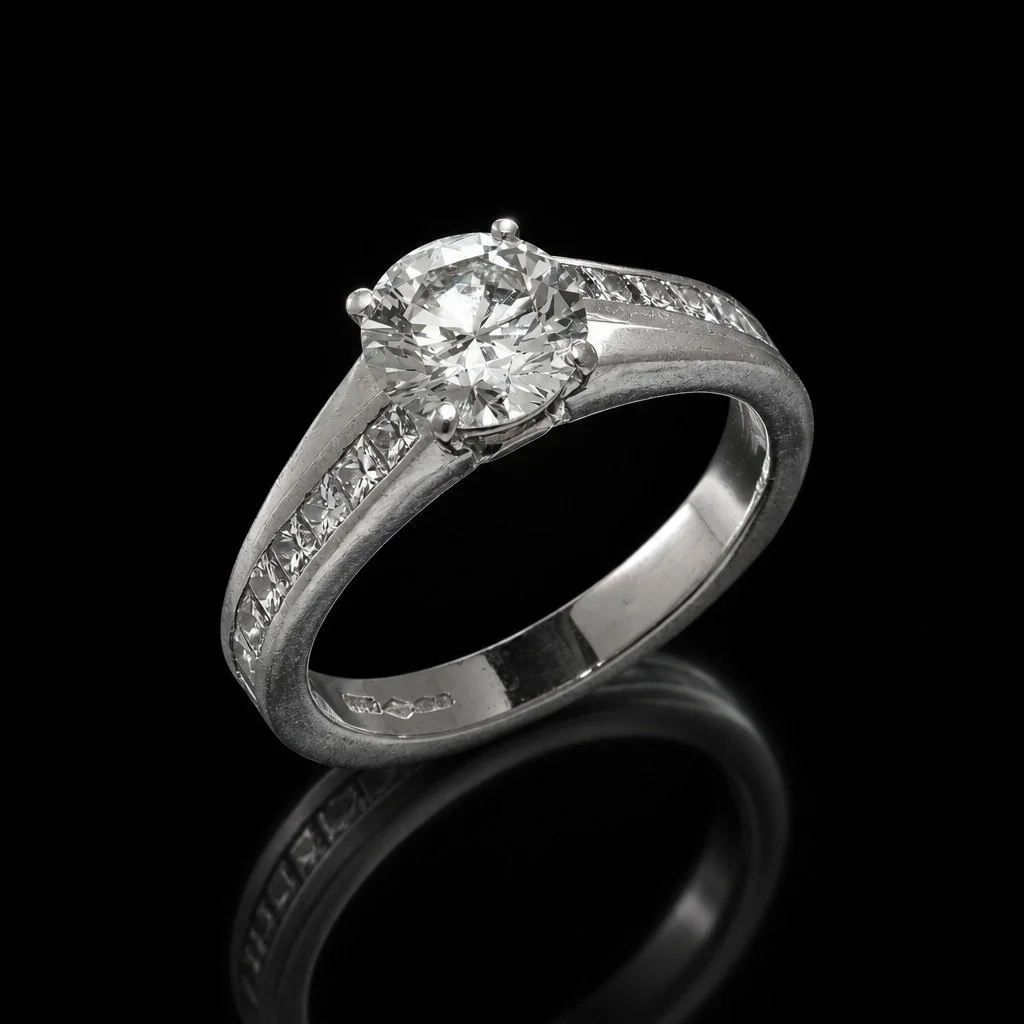
They look the same
Two diamonds of the same cut, colour and clarity sparkle in exactly the same way whether they were mined or grown. Sparkle depends on the cut.
For the simulants, see moissanite vs diamond and is my diamond real?.
How lab-grown diamonds are made, and when it began
| Method | How it works | Typical signs in the laboratory |
|---|---|---|
| HPHT | A press recreates the pressure and heat deep in the earth around a diamond seed, with molten metal as a solvent | Metallic flux inclusions; some stones glow briefly after UV light |
| CVD | Carbon from a gas builds up layer by layer on a thin diamond seed plate in a vacuum chamber | Layered growth patterns; often treated after growth to improve colour |
General Electric made the first reproducible synthetic diamonds in December 1954, in work led by H. Tracy Hall, and grew the first gem-quality crystals around 1970. Lab-grown diamonds became common in jewellery much later (International Gem Society).
Telling lab-grown from natural, and grading reports
A standard diamond tester measures heat conduction and reads every diamond, natural or lab-grown, as diamond. Separating them needs a gem laboratory, which looks at growth structure, fluorescence and trace elements.
- Report: a GIA or other laboratory report states natural or laboratory-grown.
- Inscription: many lab-grown stones are laser inscribed on the girdle; look with a 10x loupe.
- Setting and period: old cuts in an antique mount point to natural diamonds.
From 1 October 2025 GIA describes colourless lab-grown diamonds as premium or standard instead of giving colour and clarity grades, because more than 95% of them fall in a narrow range (GIA). Natural diamonds are still graded on the 4Cs.
More on grading in the four Cs explained.
Natural diamonds in antique and vintage rings
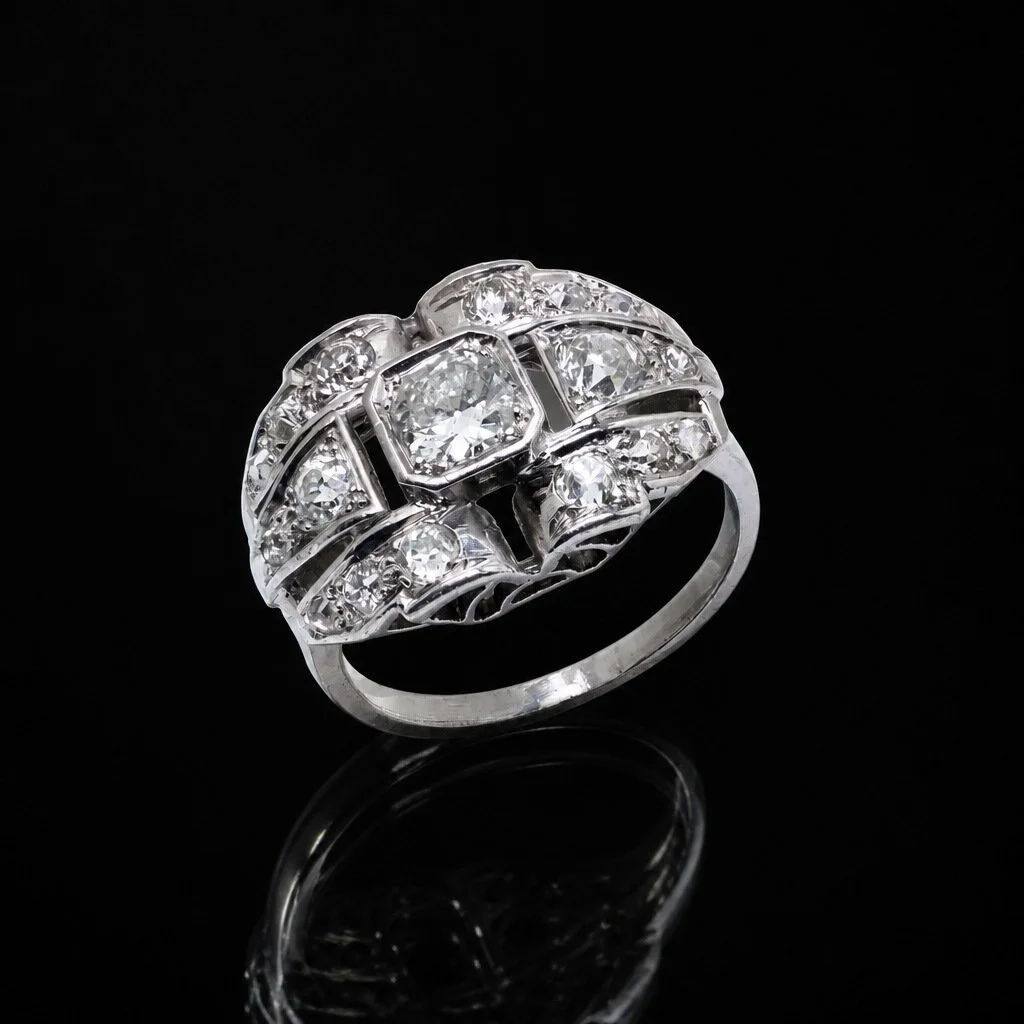
Original stones are natural
Gem-quality lab-grown diamonds came long after the Art Deco period, so the original diamonds in Georgian, Victorian, Edwardian and 1920s jewellery are natural. Old mine and old European cuts, cut by hand, are a strong sign of an original stone (old cut diamonds guide).
Browse old cut diamond jewellery and diamond engagement rings, each described with its cut, weight and period.
Antique diamonds also need no new mining or manufacture, which is why many buyers choose them on ethical grounds (sustainable engagement rings).
Other lab-grown gemstones
| Gem | Made in a laboratory? |
|---|---|
| Opal | Yes, synthetic opal since the 1970s |
| Amethyst | Yes, as grown quartz |
| Aquamarine | Yes, as grown beryl |
| Ruby and sapphire | Yes, since the early 1900s |
| Tanzanite | Usually imitated with glass or other materials |
| Pearl | No: cultured pearls grow in molluscs; others are imitations |
See opal jewellery and pearl jewellery.
Value and selling
A diamond's value second hand depends on what buyers pay for it. Lab-grown diamonds can be made in any quantity, so they are valued very differently from natural diamonds, and many buyers value them mainly on the mount. Natural diamonds are valued on the 4Cs, any certificate, the cut's period, the setting and the maker.
Every ring is different. Send us photos of the ring, the hallmark and any laboratory report, and we will tell you what it is and what it is worth, free and with no obligation. Request a free valuation.
- Sell a diamond ring
- Appointments are available at our Mayfair and Braintree offices.
Sources
- GIA, laboratory-grown diamonds
- GIA, new descriptive terminology for laboratory-grown diamonds (2025)
- International Gem Society, a brief history of lab-grown diamonds
- Lab-grown and natural diamonds are both diamond; origin is the difference.
- HPHT and CVD are the two ways lab-grown diamonds are made.
- Laboratories separate them; reports and girdle inscriptions tell you which you have.
- Antique rings' original diamonds are natural.
Questions we are asked
What is the difference between a lab-grown diamond and a natural diamond?
Both are diamond: carbon with the same crystal structure, hardness, brilliance and fire. A natural diamond formed deep in the earth over millions of years and was mined; a lab-grown diamond is made in a factory in weeks. They look the same, and only a gem laboratory can tell them apart reliably.
How are lab-grown diamonds made?
There are two methods. HPHT, high pressure and high temperature, recreates the conditions deep in the earth in a press. CVD, chemical vapour deposition, builds diamond layer by layer from a carbon-rich gas onto a thin diamond seed in a vacuum chamber. Both produce real diamond crystals that are then cut and polished.
When were lab-grown diamonds first made?
General Electric made the first reproducible synthetic diamonds in December 1954, a process led by H. Tracy Hall and announced in 1955. Those were tiny industrial stones. GE grew the first gem-quality crystals around 1970, and lab-grown diamonds became common in jewellery much later, as CVD and HPHT production grew.
Can lab-grown diamonds be told apart from natural diamonds?
Not by eye or with a standard diamond tester, which reads both as diamond. Gem laboratories use instruments that detect growth patterns, fluorescence and trace elements. Many lab-grown diamonds are also laser inscribed on the girdle as laboratory-grown, and a GIA report states whether a diamond is natural or laboratory-grown.
Does GIA grade lab-grown diamonds?
Yes. Since 1 October 2025 GIA issues a Laboratory-Grown Diamond Report that describes colourless lab-grown diamonds as premium or standard, instead of giving colour and clarity grades, because almost all fall in a narrow quality range. Coloured lab-grown diamonds receive a separate report. Earlier GIA lab-grown reports remain valid.
Are lab-grown diamonds durable? Do they scratch, fade or cloud?
Lab-grown diamonds are 10 on the Mohs scale, like natural diamonds, so they cut glass, resist scratching and do not fade, cloud or wear out. Only another diamond can scratch them. Like any diamond, they can chip from a hard knock on a thin edge, and grease on the back dulls their sparkle until cleaned.
Can lab-grown diamonds be coloured, fluorescent or included?
Yes. Lab-grown diamonds can be grown or treated in blue, pink, yellow and other colours. Many contain small inclusions from the growth process, such as metallic flux in HPHT stones. Some fluoresce under UV light, and some HPHT stones keep glowing for a moment after the light is switched off, which helps laboratories identify them.
Can an antique or vintage engagement ring have a lab-grown diamond?
Only if a stone has been replaced or the ring is a modern copy. Gem-quality lab-grown diamonds did not reach jewellery until long after the Art Deco period, so the original diamonds in a Georgian, Victorian, Edwardian or 1920s ring are natural. Old mine and old European cuts are a strong sign of an original natural stone.
Can other gemstones be lab grown, such as opal, amethyst, aquamarine, tanzanite or pearl?
Many can. Synthetic opal has been made since the 1970s, synthetic amethyst is grown quartz, and synthetic aquamarine is grown beryl. Tanzanite is usually imitated with glass or other materials. Pearls are not made in laboratories: cultured pearls grow inside molluscs, and anything else is an imitation.
Are lab-grown diamonds more ethical than mined diamonds?
Lab-grown diamonds need no new mining, which avoids its land use and the risk of conflict stones. They do use a lot of energy, so their footprint depends on how the factory is powered. Antique and vintage diamonds are another choice: they reuse stones that were mined long ago and need no new production at all.
Do lab-grown diamonds have resale value?
A diamond's resale value depends on what buyers will pay second hand. Lab-grown diamonds can be made in any quantity, so buyers value them very differently from natural diamonds, and many specialist buyers value them mainly on the gold or platinum mount. Ask before selling; we give free valuations from photographs.
How do I know if my diamond ring is natural or lab-grown?
Look for a laboratory report and check the girdle with a loupe for a laser inscription. If there is neither, a gem laboratory can test the stone. The setting helps too: an antique ring with old cut diamonds and period hallmarks points to natural stones. Send us photographs and any report for a free opinion and valuation.
Are lab-grown diamonds cut as old mine or old European cuts?
Yes. Lab-grown diamonds are now also cut in old mine and old European styles to look antique. An old-looking cut therefore does not prove an old diamond: genuine old cuts were shaped by hand, with slightly uneven facets, and a laboratory report states whether any diamond is natural or laboratory-grown.
Which is better, HPHT or CVD lab-grown diamond?
Neither method is better in itself: both HPHT and CVD produce real diamond, and the quality depends on the individual stone. CVD diamonds are often treated after growth to improve colour. Judge a lab-grown diamond on its cut, colour, clarity and report rather than the growth method.
Should a lab-grown diamond come with a certificate?
It is wise to buy any important lab-grown diamond with a report from a recognised laboratory such as GIA or IGI, stating that it is laboratory-grown and describing its quality. Many lab-grown diamonds are also laser inscribed on the girdle. Check that the report number matches the inscription.
Can sapphires be lab grown?
Yes. Synthetic sapphire has the same chemistry and hardness as natural sapphire and has been made since the early 1900s by flame fusion, and later by flux and other methods. It is used in jewellery and for watch crystals. A laboratory separates natural from synthetic sapphire.
Shop natural diamond rings, or find out what yours is worth
Browse antique and vintage diamond rings set with natural stones. Selling? The valuation is free, from photographs.
- We buy directly
- Free valuation from photos
- Appointments in Mayfair and Braintree
- Insured postage or collection
New pieces reach our list first: join the Mozeris list.