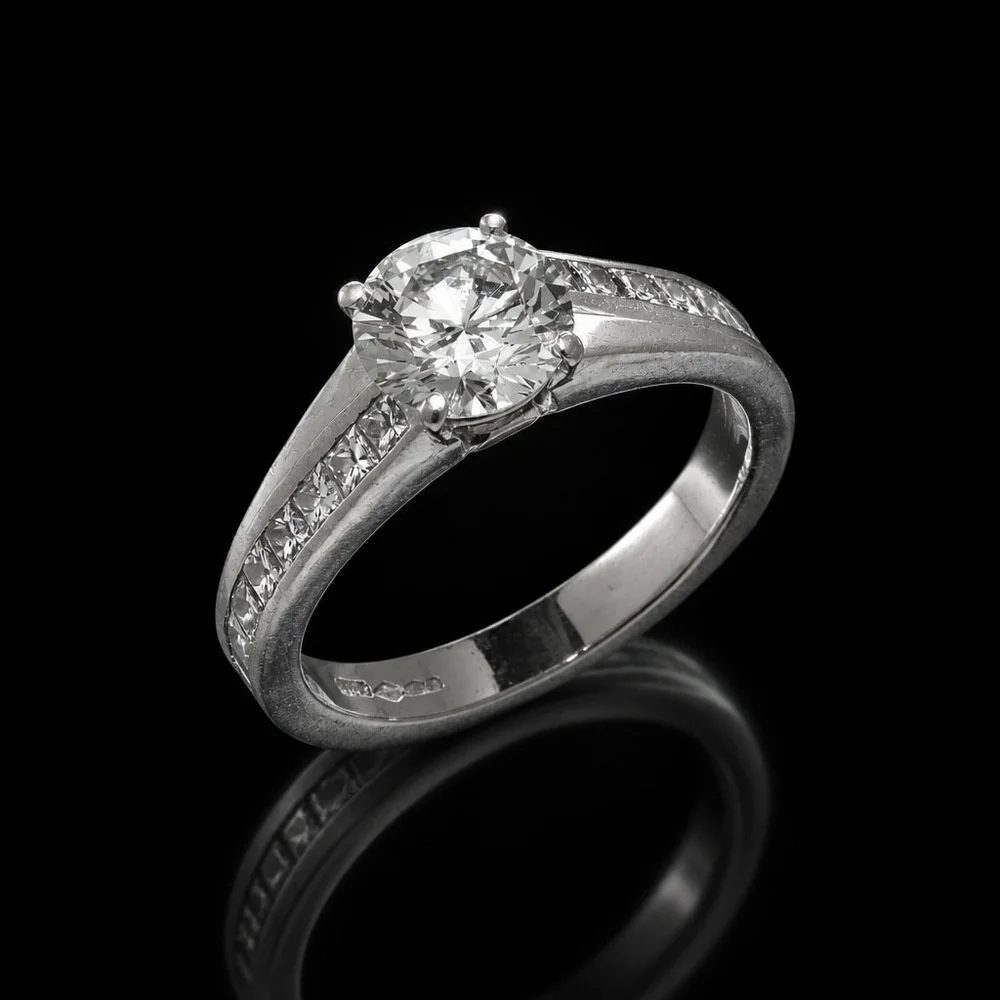
What are the Four Cs?
The Four Cs are cut, colour, clarity and carat weight. The system was set out by the Gemological Institute of America (GIA) in the 1950s so that any diamond could be described in the same terms anywhere in the world. Laboratories such as GIA, IGI and HRD grade each C and record the results on a report.
No single C makes a diamond beautiful. A well-cut diamond of slightly lower colour often looks livelier than a poorly cut stone of higher colour, so the Cs are best weighed together, with the diamond in front of you.
Cut: the C that decides the sparkle
Cut means how well a diamond's facets are proportioned, aligned and polished, which decides how much light it returns as brilliance (white light), fire (flashes of colour) and scintillation (sparkle as it moves). GIA grades the cut of round brilliants from Excellent to Poor. Shape is a separate matter: round, oval, cushion, emerald, pear and marquise are shapes.
Antique cuts
Before modern cutting machines and the round brilliant, diamonds were cut by hand to keep as much weight as possible from the rough. The old mine cut, made from the eighteenth century to about 1900, is cushion shaped with a high crown, a small table and a large open culet. The old European cut, from about 1880 to the 1930s, is round with the same deep crown and open culet. The rose cut has a flat base and a domed top of triangular facets. These cuts give broader, softer flashes than a modern brilliant, and no laboratory gives them a cut grade.
Read more in our guide to old mine cut diamonds.
Old cut diamond rings in stock
Shop all 20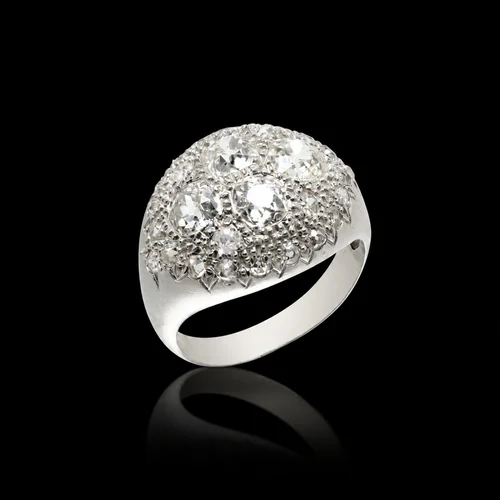
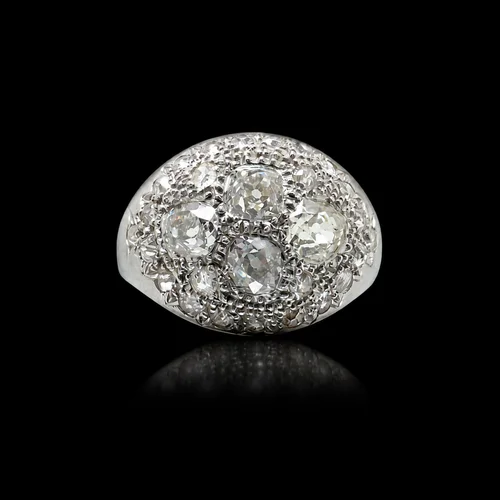 Platinum Old Cut Diamond Bombé Cluster Ring, 2.00 ct£4,650
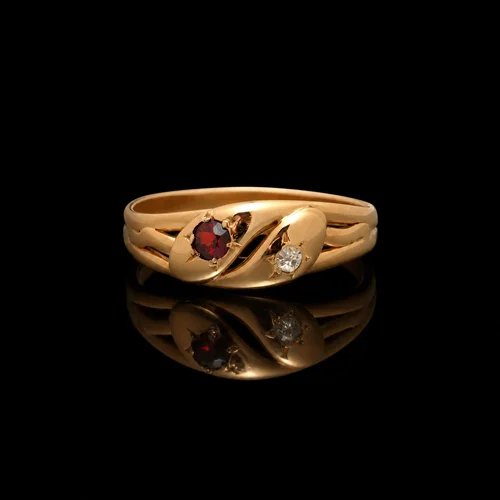
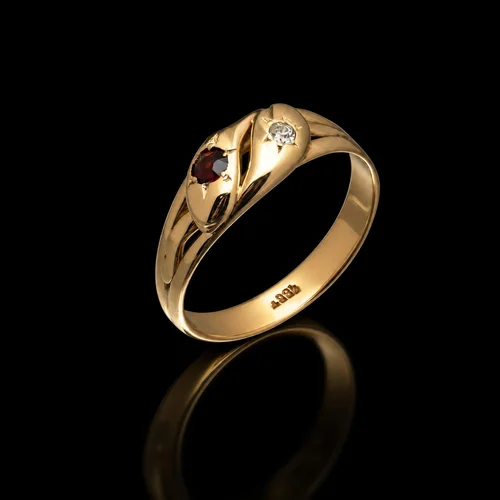 Antique 18KT Gold Garnet and Diamond Twin Head Snake Ring£1,850
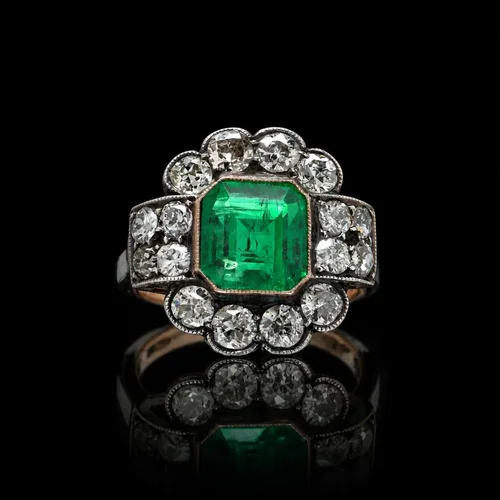
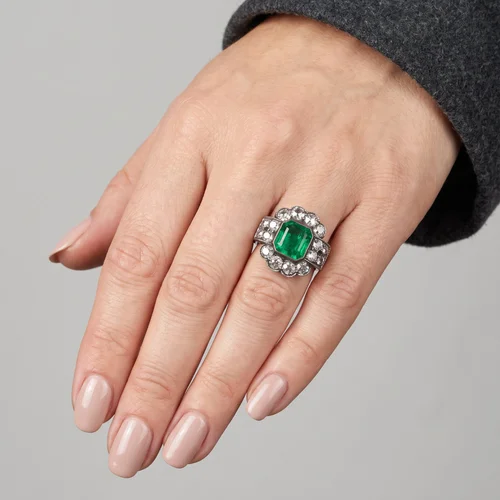 Victorian Russian (Ural) Emerald and Diamond Cluster Ring, 9KT Gold and Silver£13,445
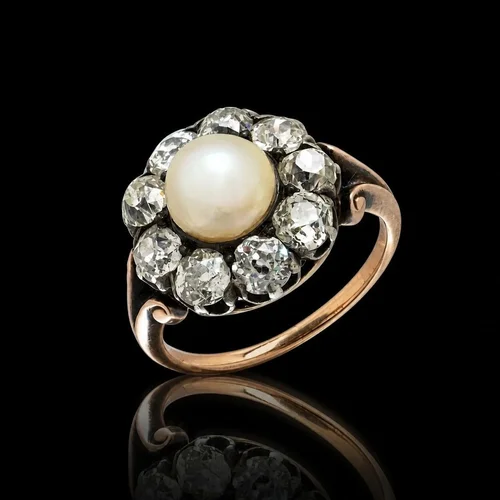
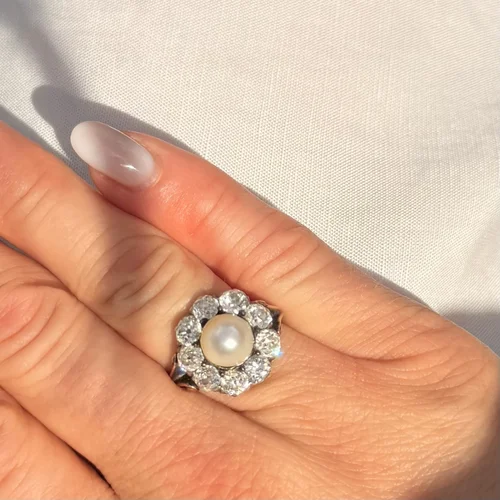 Victorian Natural Pearl & 2.70ct Old European Cut Diamond Cluster Ring, 18KT Gold£8,950
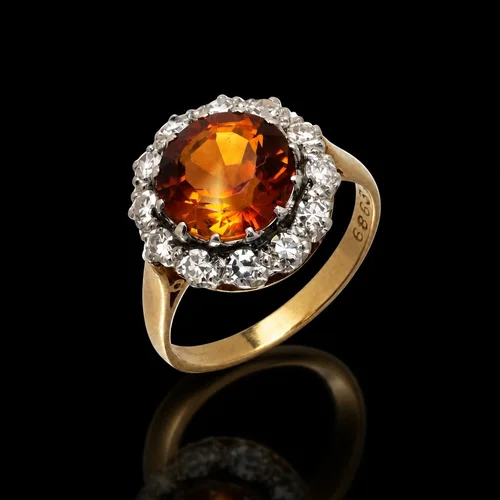
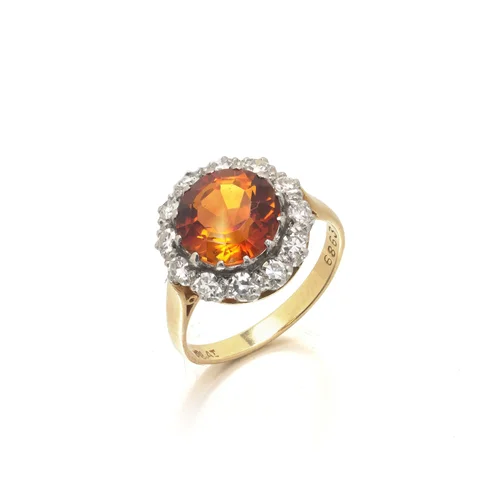 Antique Topaz & Diamond Cluster Ring, 18KT Gold & Platinum£2,650
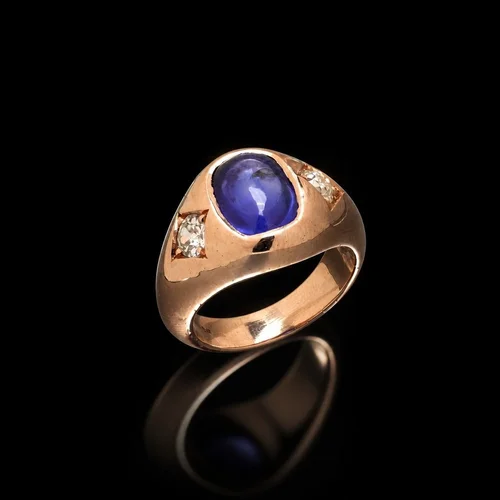
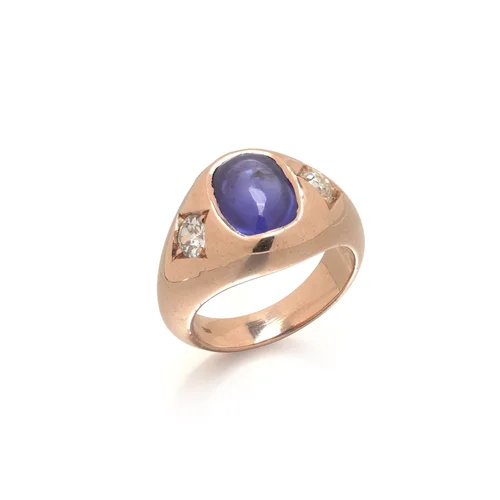 Antique Sapphire & Diamond Ring, Cabochon Sapphire, 18KT Rose Gold£8,950
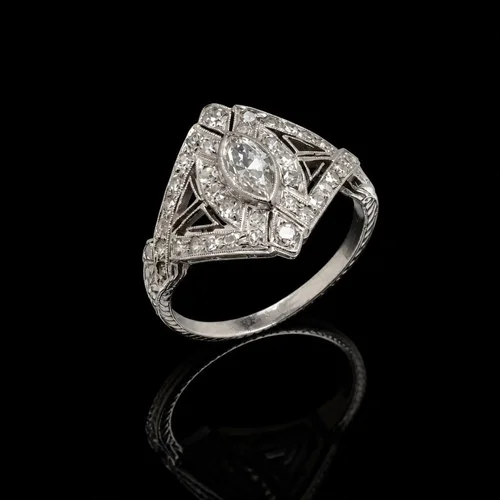
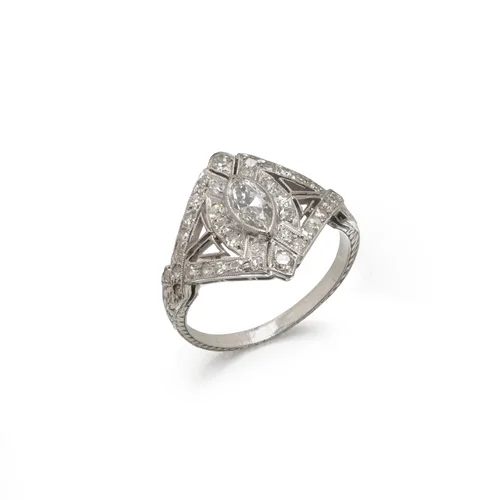 Art Deco Marquise Diamond Plaque Ring, Platinum, Old Cut£5,950
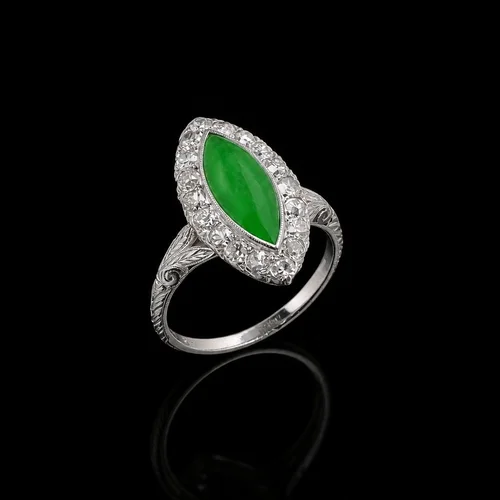
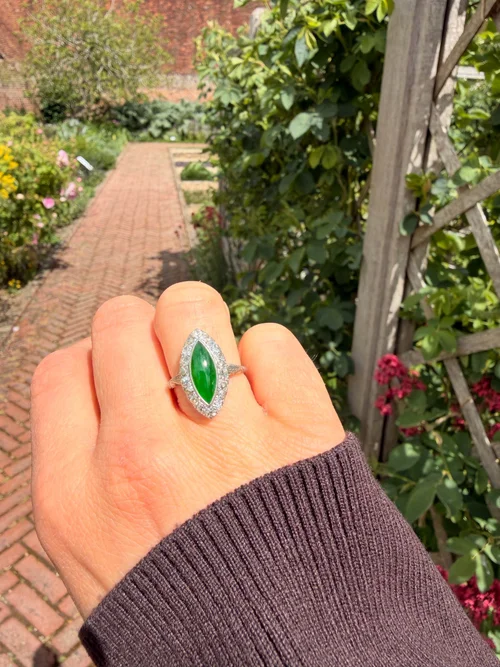 Art Deco Chinese Jade and Diamond Ring, Platinum, Marquise Jade£4,650
Colour: from D to Z, and fancy colours
White diamonds are graded on a scale from D, completely colourless, to Z, light yellow or brown. D to F is colourless, G to J near colourless, and K and below show a faint warm tint. Differences of one grade are very hard to see once a diamond is set, and a yellow gold setting makes a warmer stone look whiter.
Many antique old cut diamonds sit in the near colourless to faint range, and their warmth suits the candlelit settings they were cut for. Diamonds with strong, even colour, such as yellow, pink or blue, are graded on a separate fancy colour scale.
Clarity: inclusions and blemishes
Clarity measures the tiny natural features inside a diamond (inclusions) and on its surface (blemishes), seen under 10x magnification. GIA's scale runs:
| Grade | Meaning |
|---|---|
| FL / IF | Flawless / internally flawless |
| VVS1, VVS2 | Very, very slightly included |
| VS1, VS2 | Very slightly included |
| SI1, SI2 | Slightly included |
| I1, I2, I3 | Included, often visible to the eye |
Most VS and many SI diamonds look clean to the naked eye. Step cuts such as emerald and Asscher cuts show inclusions more clearly than brilliants, so clarity matters more for them.
Carat weight: weight, not size
A carat is a unit of weight: 0.2 grams, divided into 100 points, so 0.50 ct is 50 points. How big a diamond looks depends on its cut as well as its weight; a deep antique cut carries more weight below the girdle and can face up smaller than a modern brilliant of the same weight.
| Weight (round brilliant) | Approx. diameter |
|---|---|
| 0.50 ct | 5.2 mm |
| 1.00 ct | 6.5 mm |
| 2.00 ct | 8.2 mm |
| 3.00 ct | 9.4 mm |
| 5.00 ct | 11 mm |
Do not confuse diamond carats with gold carats: a 9 carat ring in the UK usually means 9KT gold, not a 9 ct diamond.
Diamond engagement rings in stock
Shop all 124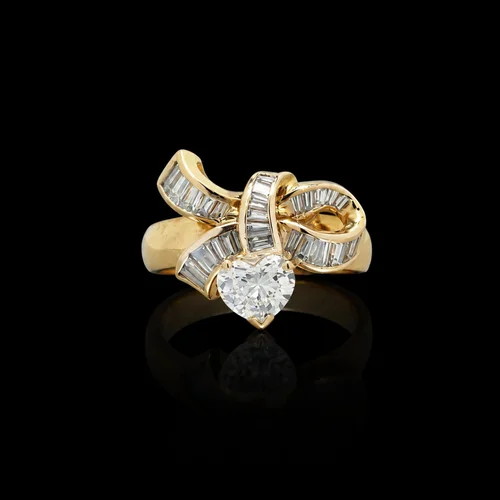
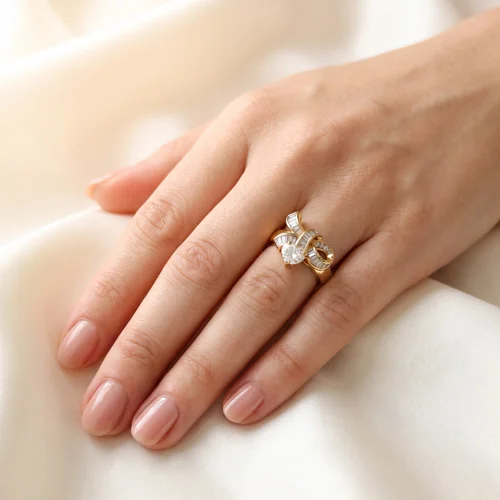 David Morris 18KT Gold Heart Diamond and Baguette Bow Ring, 1.70 ct£7,300
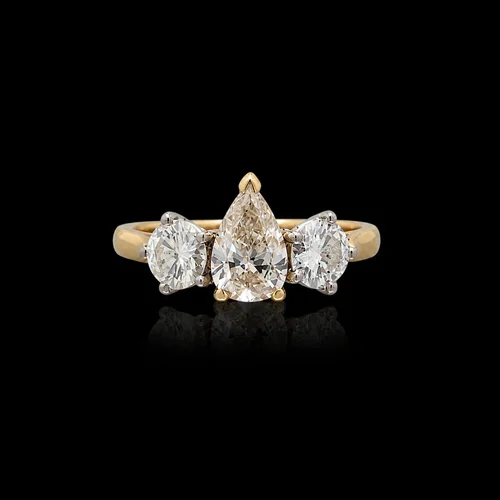
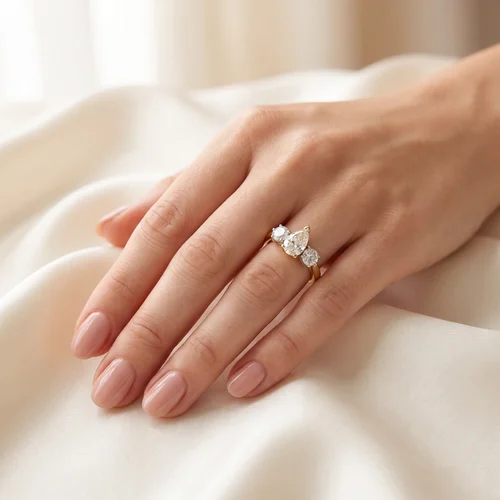 Theo Fennell 18KT Gold Pear and Round Diamond Three-Stone Ring£6,780
- Platinum Old Cut Diamond Bombé Cluster Ring, 2.00 ct£4,650
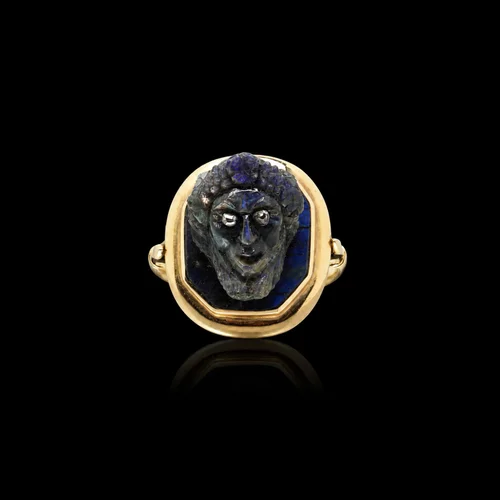
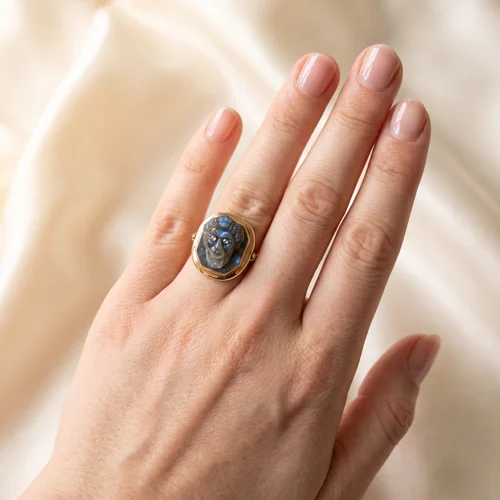 18KT Gold Carved Labradorite Satyr Ring with Diamond Eyes£9,850
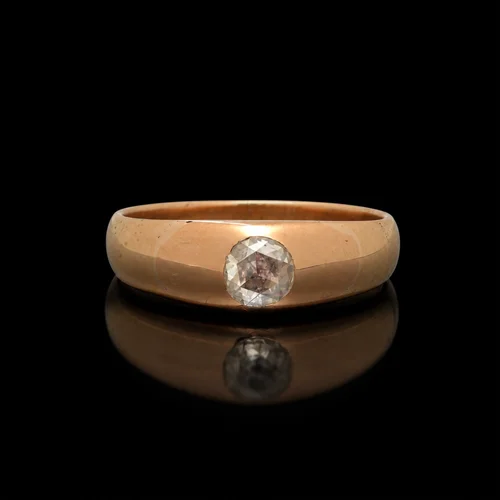
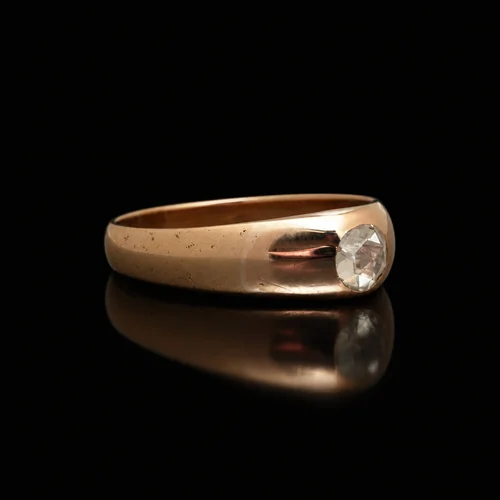 Antique 14KT Gold Rose Cut Diamond Gypsy Ring, 0.50 ct£1,650
- Antique 18KT Gold Garnet and Diamond Twin Head Snake Ring£1,850
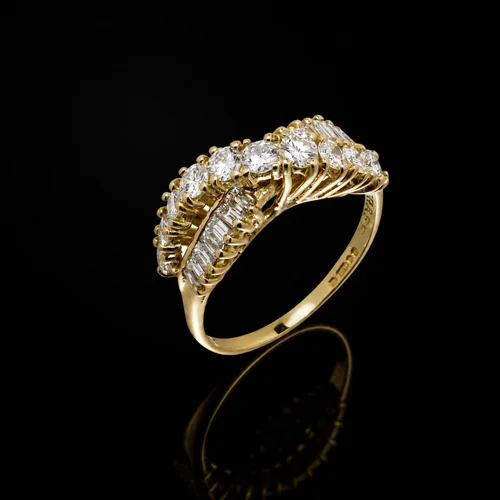
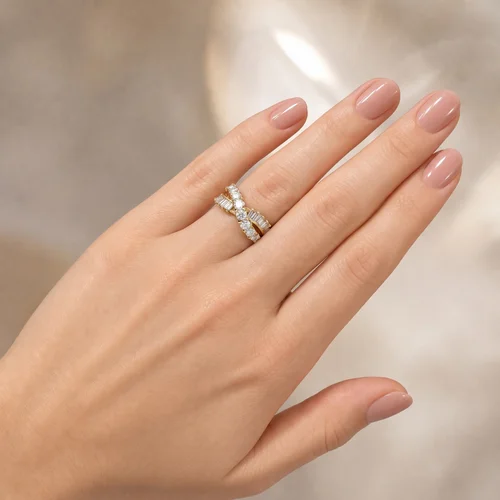 Graff 18KT Gold Baguette and Brilliant Cut Diamond Crossover Ring, 1.00 ct£4,950
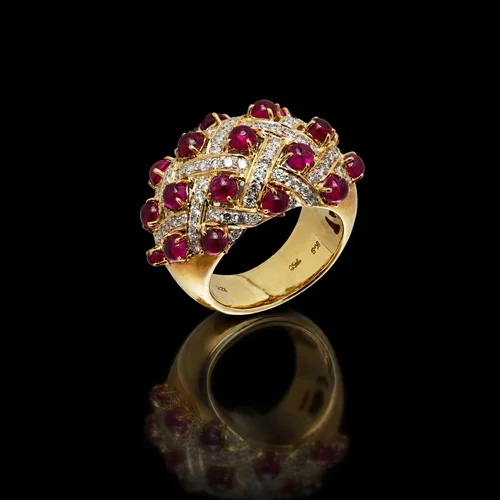
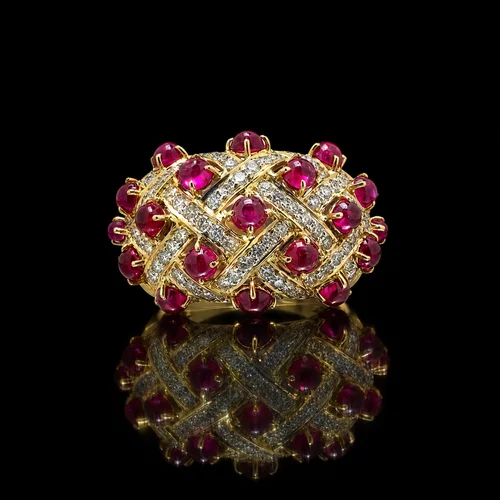 18KT Gold Cabochon Ruby and Diamond Woven Bombé Ring£4,300
Certificates and our descriptions
A grading report from a laboratory such as GIA, IGI or HRD records the Four Cs, the measurements and any treatment. Where a diamond in our stock has a report, the listing names the laboratory and the report number. Most antique diamonds were set long before laboratory grading existed and have never been removed from their mounts; for those, our listings give careful estimates of weight, colour and clarity made in the setting.
Choosing a diamond: putting the Cs together
- Start with the shape and the setting you love: a round brilliant solitaire, an old cut cluster, an emerald cut Art Deco ring.
- Put cut first. A lively, well-proportioned stone flatters the other Cs.
- Look for eye-clean clarity rather than the highest grade on paper.
- Match colour to the metal: near colourless stones look white in yellow gold; platinum and white gold show colour more.
- Balance carat against the rest. A slightly smaller, brighter diamond often looks better than a larger, duller one.
You are welcome to view any ring by appointment in Mayfair or Braintree, or ask us for more photographs and a video.