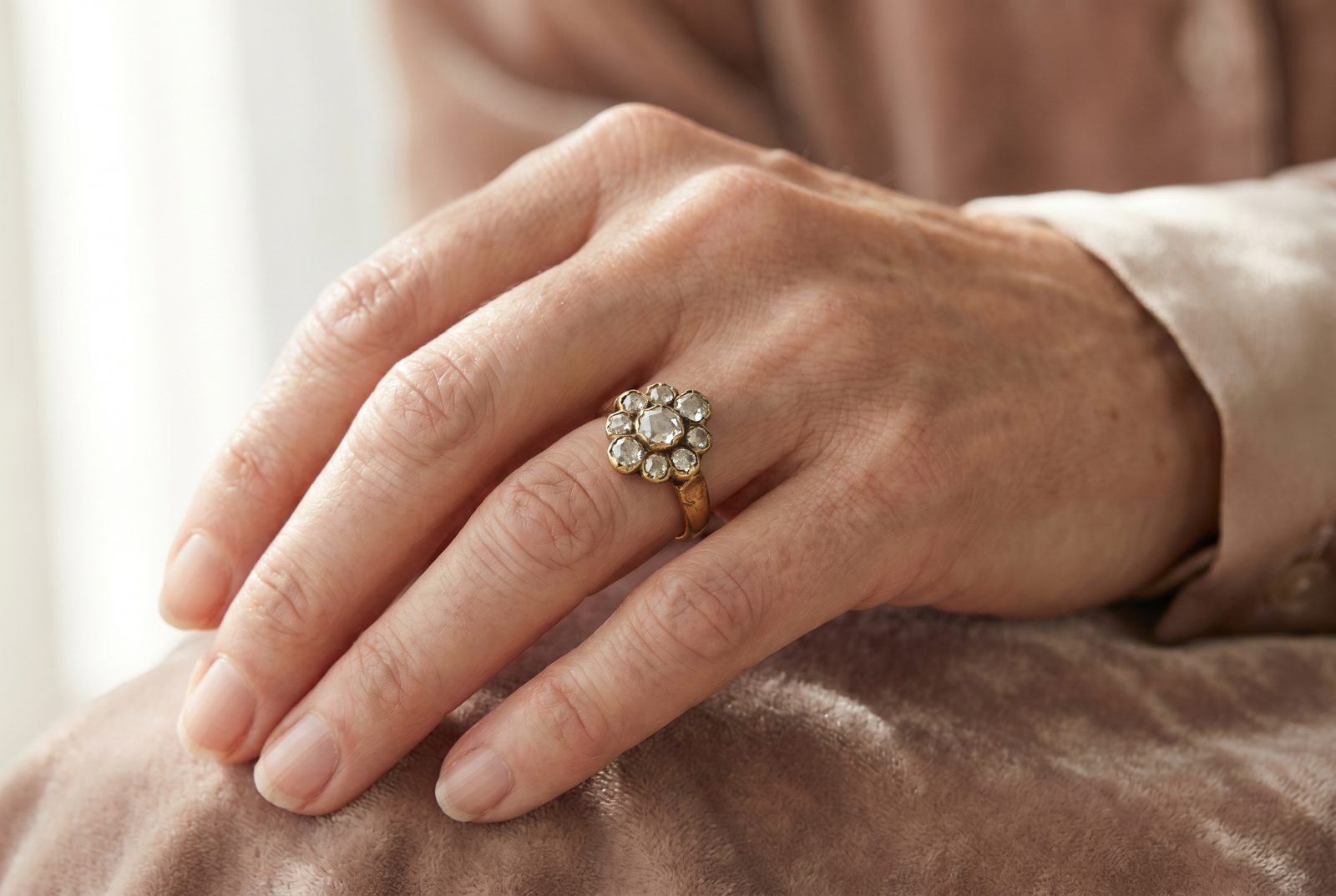
Old-Cut Diamonds: Why Collectors Pay a Premium for Less Sparkle
Modern diamonds are cut by computer for maximum fire. Old cuts were cut by hand for candlelight — and that's exactly why collectors want them.
Show a modern buyer an old-cut diamond next to a new brilliant and they'll often pick the new one — it flashes harder. Show the same two stones to a collector and they'll pick the old cut every time, and pay more for it. That inversion is one of the most interesting things in the diamond market, and it comes down to how — and why — the two stones were cut.
Quick answer: are old-cut diamonds worth more?
Increasingly, yes. Old mine and old European cuts were shaped by hand before 1930 to glow in candlelight, not to flash under electric light. Collectors prize that soft, warm character — and because none have been made in a century, supply only shrinks.
An original old-cut stone in its period setting is often worth more left exactly as it is than recut into a modern shape.
Cut for candlelight, not computers
A modern round brilliant is optimised by computer for maximum white sparkle under bright light. An old cut was optimised by a human hand, by eye, for the light of its day: candle and gas flame. The result is a bigger, softer, warmer flash — what collectors call the "candlelight glow". It isn't worse; it's different, and it has soul that a machine-perfect stone can't fake. Our full old mine cut guide goes deeper on identifying them.
Old mine vs old European vs modern brilliant
| Cut | Era | Shape | Light behaviour |
|---|---|---|---|
| Old mine cut | c.1700s–1890s | Cushion / squarish, open culet | Big, slow, warm candlelight flashes |
| Old European cut | c.1890s–1930s | Round, high crown, open culet | Softer glow than modern, more fire |
| Modern brilliant | c.1950s–today | Round, 58 precise facets | Constant bright white sparkle |
Old cuts were hand-made, so each is unique — part of their appeal. See our old mine cut guide for identification.
The supply story — and why it matters
Here's the collector's logic in one line: they stopped making old cuts around the 1930s, and every year more are recut into modern shapes and disappear forever. Rising demand, shrinking supply. That's why an original old-cut stone — especially in its original antique mount — commands a premium, and why you should never let anyone recut an antique diamond without an antique specialist seeing it first. Our Victorian tremblant brooch is set throughout with exactly these hand-cut stones.
How to spot an old cut by eye
- Look down through the table: an open culet — the small flat facet at the stone's point — shows as a tiny "hole" or dot in the centre. Modern brilliants come to a sharp, closed point.
- Watch the light move: old cuts give big, slow, chunky flashes; modern cuts give constant fine sparkle. Tilt the stone under a lamp and the difference is obvious once seen.
- Check the outline: old mine cuts are cushiony and slightly uneven — hand-cut stones are never perfectly round. A dead-round outline usually means old European or modern.
- Profile: a high crown and small table (the top facet) are period tells; modern stones are comparatively flat-topped and spready.
Buying old cuts: what to check
- Chips at the girdle and culet — the most common damage on hand-cut stones; small ones are period-normal, large ones affect value and safety in the setting.
- Colour behaves differently: old cuts were often cut from warmer rough, and a little warmth suits the candlelight character — a J–L colour old cut can look wonderful where the same grade in a modern cut looks yellow. Don't apply modern grading prejudice to period stones.
- Original setting: an old cut in its period mount is worth more than the same stone loose or re-set. Prise history and stone apart and both lose.
- Certification: larger old cuts can be certificated (GIA grades them like any diamond) — worth having above roughly a carat, and any honest seller will arrange it.
On price: good old European cuts typically trade at a premium per carat over equivalent modern rounds at the same grades, and fine old mine cuts more still — the reverse of the position twenty years ago, when they were bought cheaply as "recut fodder". That reversal is the whole story of this market.
Think you own one? Find out what it’s worth.
Own an old-cut diamond or an antique ring? A generalist may price it as 'recut weight' and undervalue it badly — collectors pay a premium for original old cuts. Send a photo for a proper valuation.
✓ Free expert valuation in 24h ✓ Same-day payment ✓ 10,000+ items traded · 5★ rated
First look at new arrivals
Join our list to see new antique and signed jewellery before it reaches the site — one email when something worth your time arrives, nothing more.
Get first look →Where to find them
Old-cut stones are the heart of antique jewellery — you'll find them across our antique rings, diamond engagement rings and vintage engagement rings. Buying a ring? Our antique engagement ring buying guide walks you through cut, condition and price.
Explore Further
Frequently Asked Questions
Old-cut diamonds, explained.
What is an old-cut diamond?
A diamond cut by hand before roughly 1930 — old mine (cushion-shaped) or old European (round) — with a small table, high crown and open culet, made to glow in candlelight rather than flash under electric light.
Are old-cut diamonds worth more than modern ones?
Carat for carat, a fine original old cut increasingly matches or beats an equivalent modern brilliant, because supply is fixed and collector demand is rising. Beware buyers who price them as 'recut weight' — that undervalues them.
Can old-cut diamonds be certified?
Yes, labs will grade them, though many antique stones are sold uncertificated and assessed by a specialist. The antique cut itself is part of the value — it should be preserved, not recut.
Do old-cut diamonds suit engagement rings?
Beautifully. Their warm glow and hand-made character make them a favourite for couples who want something with soul and history rather than machine perfection. Antique settings protect them well.