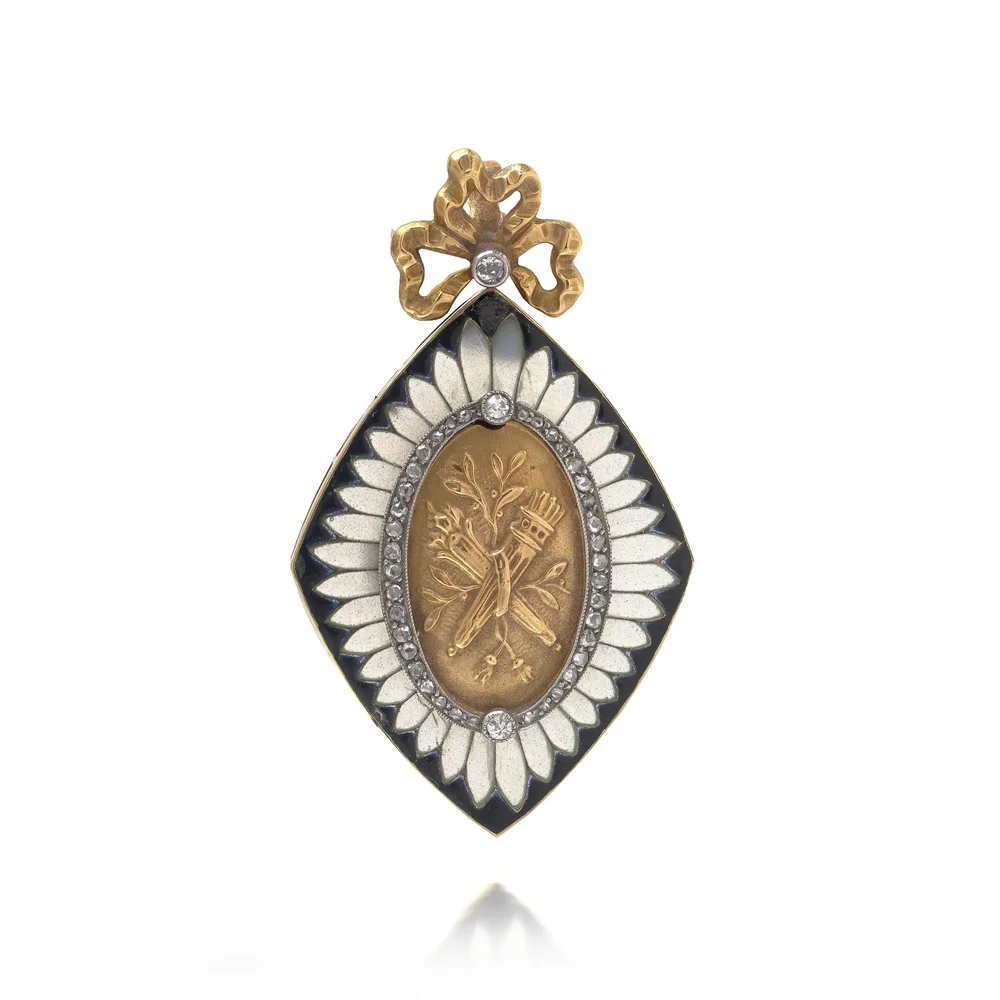
What is an antique locket?
A locket is a pendant that opens on a hinge to hold something private: a portrait miniature, a photograph, a lock of hair or a keepsake (Wikipedia). Antique lockets are at least 100 years old, which today means Georgian, Victorian and Edwardian pieces; vintage lockets date from about the 1920s to the 1990s.
Before photography, lockets held painted miniatures or hair. Photography arrived in 1839 with the daguerreotype (Wikipedia), and photographs cut to fit became the usual contents of Victorian lockets. Around 1860, memento lockets began to replace mourning rings as the main mourning jewel.
| Period | Typical lockets |
|---|---|
| Georgian, 1714 to 1837 | Small gold lockets and locket rings with hair or miniatures, often glazed at the back |
| Victorian, 1837 to 1901 | Gold and silver ovals, hearts and books, engraved, enamelled or set with stones; mourning lockets with hair; double photo lockets |
| Edwardian, 1901 to 1910 | Lighter, round and oval lockets, often engraved with initials, worn on fine chains |
| 1920s to 1990s (vintage) | Engine-turned and engraved gold and silver lockets, hearts, and chunkier gold lockets from the 1970s |
Types of locket
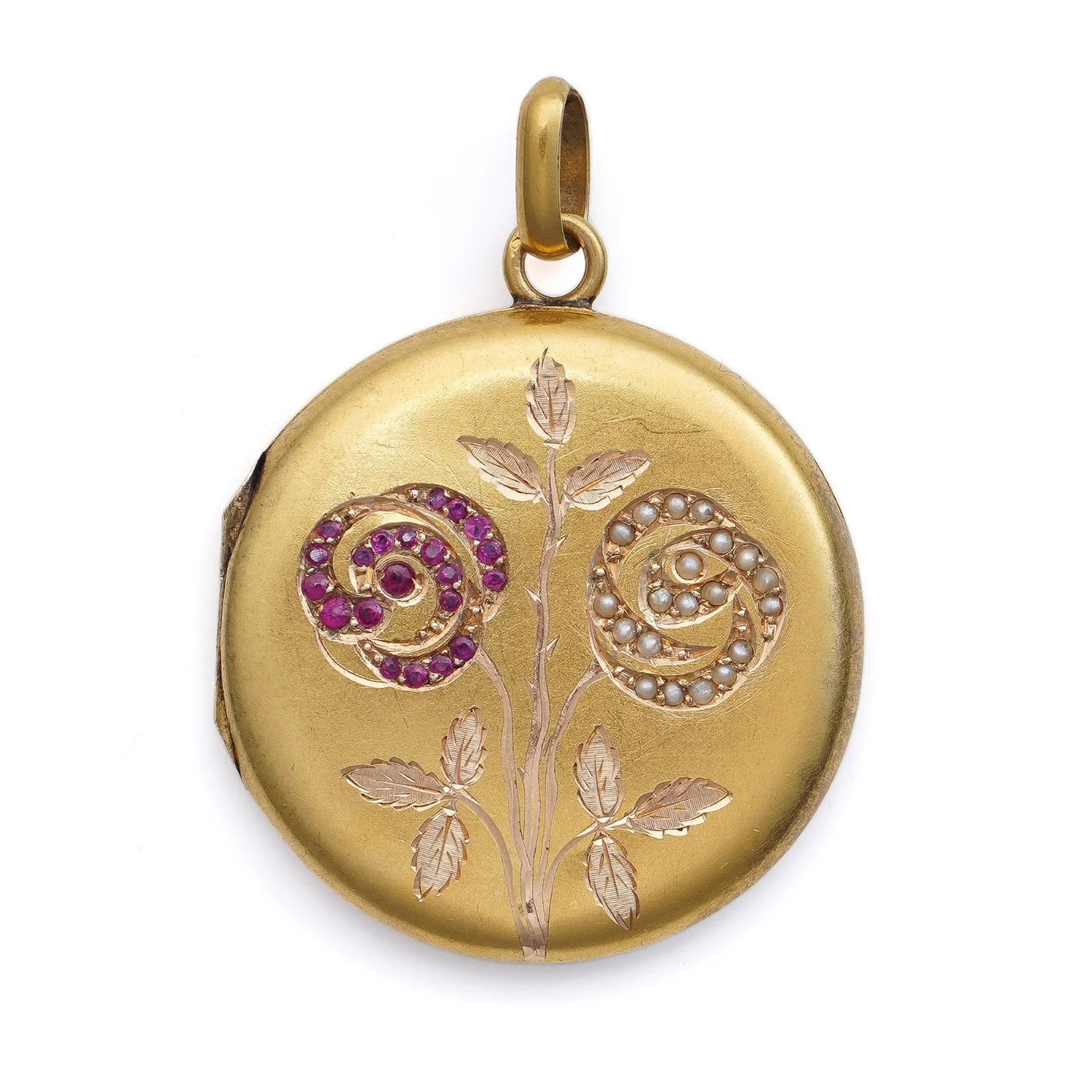
Photo lockets
The classic Victorian locket opens to two glazed frames for a pair of photographs, often of a couple or a parent and child. Original photographs add to a locket's story.
Our Victorian double photo locket is high-carat gold.
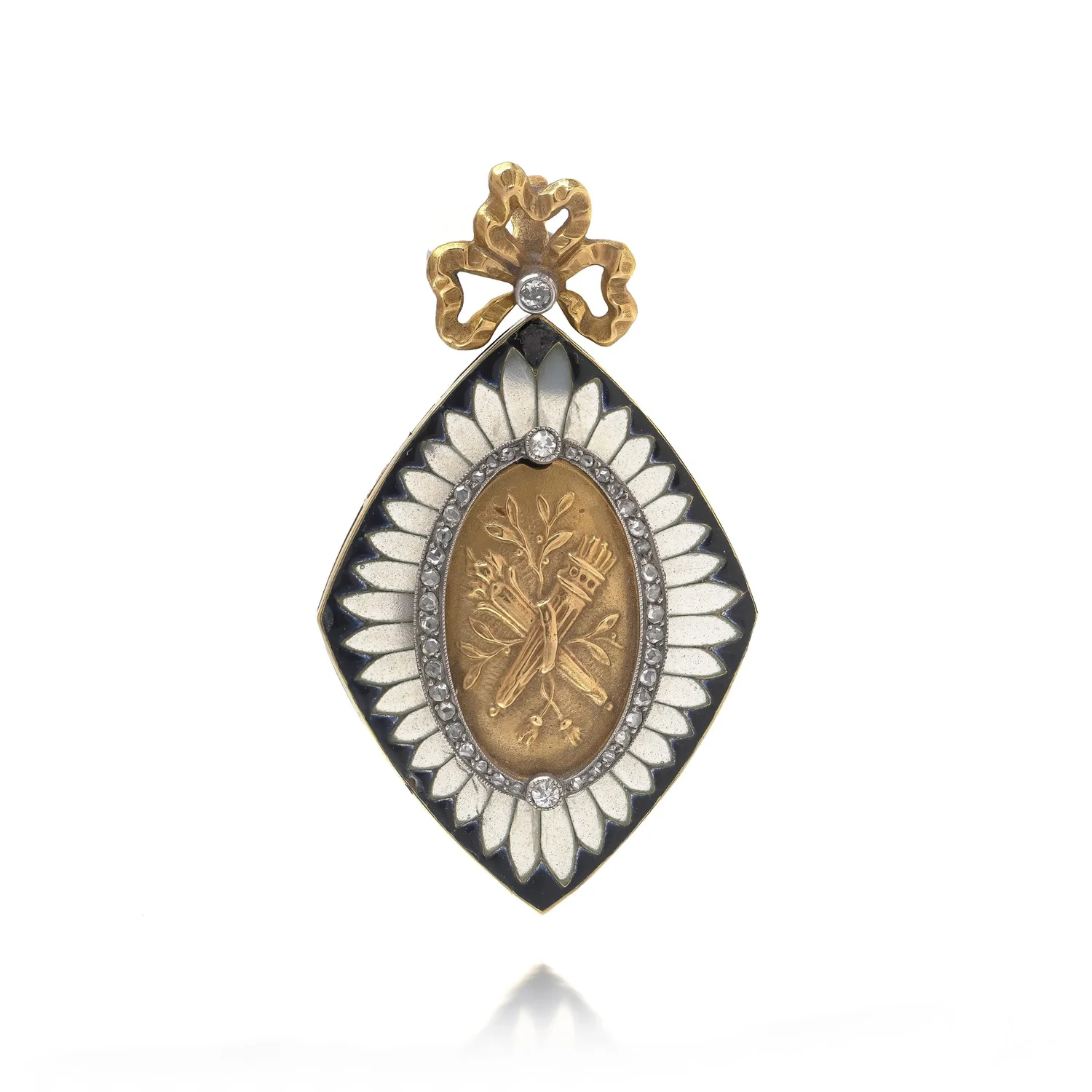
Hair and mourning lockets
A lock of hair, plaited or laid flat behind glass, kept the memory of someone living or dead. Mourning lockets often have black enamel, jet or onyx, and an inscription with a name and date.
See Victorian mourning jewellery and our sentimental locket, still in its box.
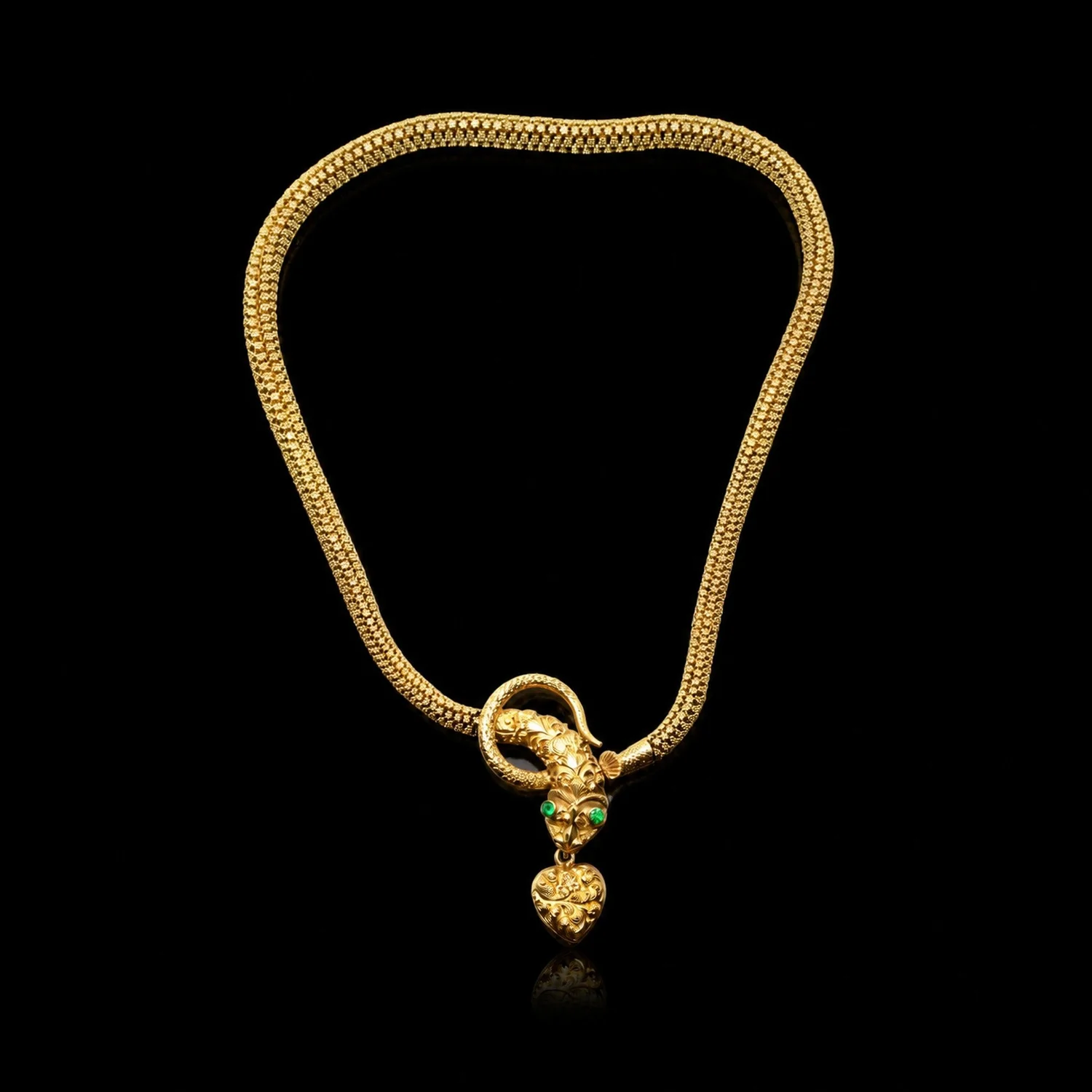
Heart lockets
Heart lockets in gold and silver were made throughout the 19th and 20th centuries, from Georgian hearts on snake chains to engraved Edwardian and vintage silver hearts.
Our Georgian snake necklace carries a gold heart locket.
Book lockets, locket rings and men's lockets
- Book lockets: rectangular lockets shaped like a small book, opening at the spine, usually engraved on the covers.
- Locket rings: rings with a hinged compartment under the bezel for hair, a portrait or scent, made from the Georgian period onwards.
- Men's lockets: worn as a fob on a watch chain; see Albert chains.
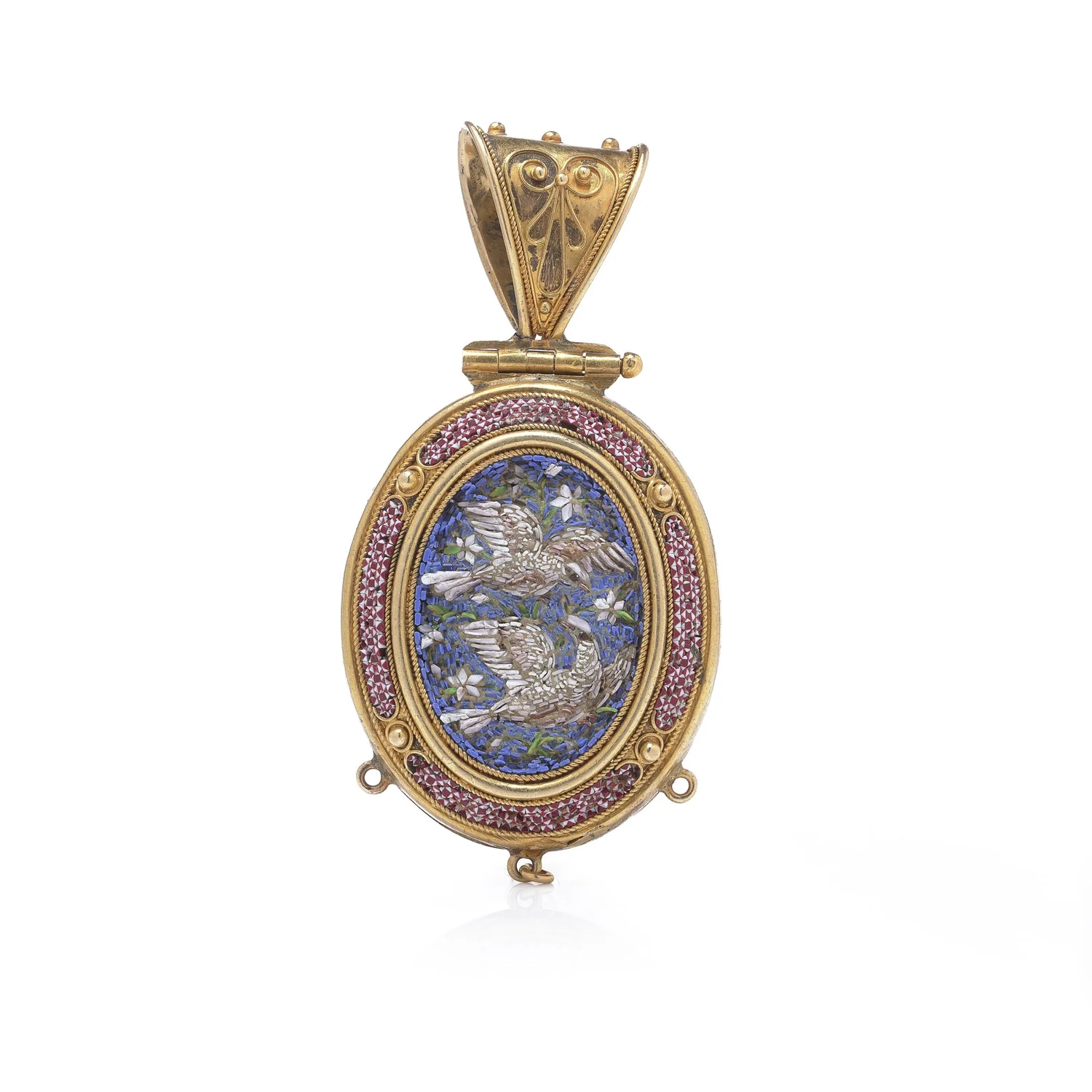
- Decorative lockets: micromosaic, enamel, lapis and gem-set fronts; see the enamelling techniques.
Italian micromosaic lockets
Roman workshops of the 19th century set tiny pieces of glass into scenes and birds, sold to Grand Tour visitors and mounted in gold as lockets and brooches.
Our micromosaic dove locket is Italian gold.
Antique lockets in stock
Shop all 5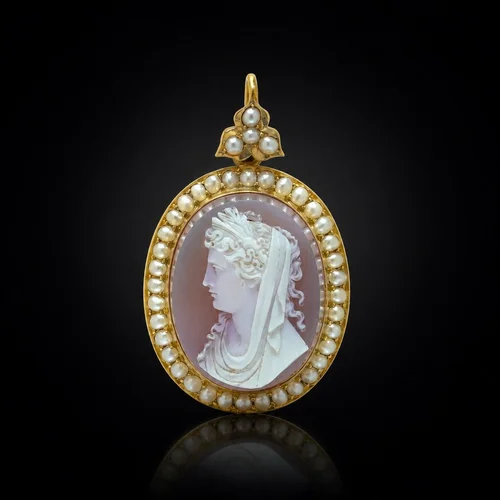
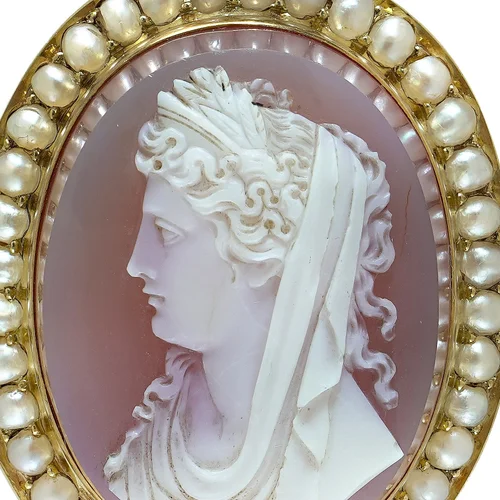 19th Century 20KT Gold Carnelian Cameo and Pearl Pendant Locket£3,850
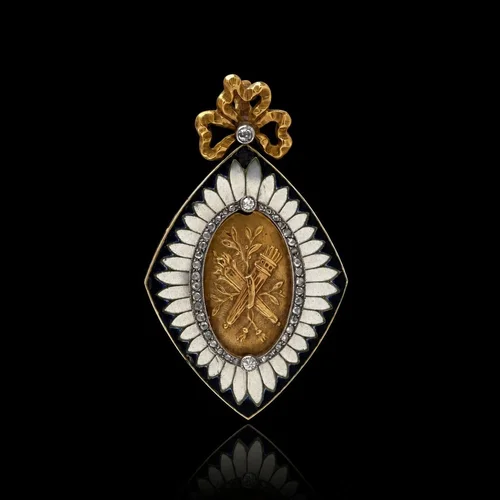
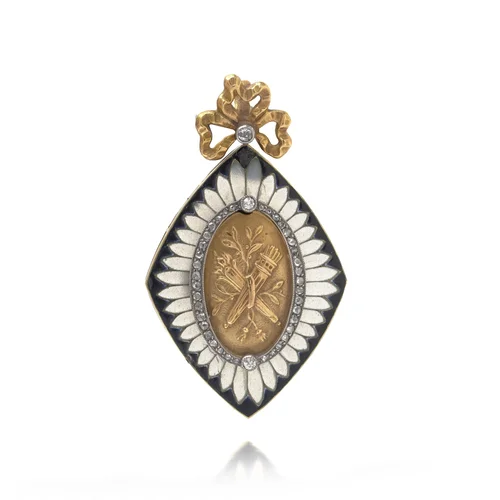 Victorian 18KT Gold Diamond and Enamel Sentimental Locket Pendant in Original Box£5,950
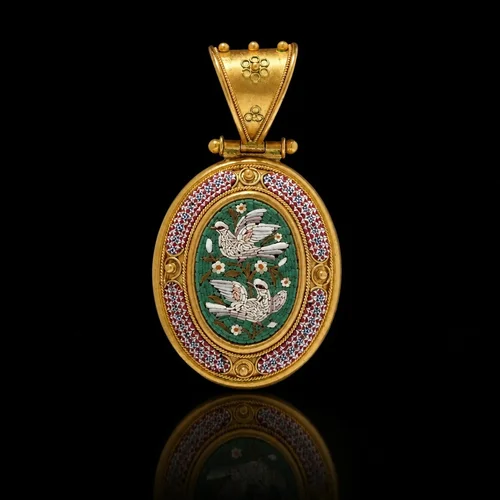
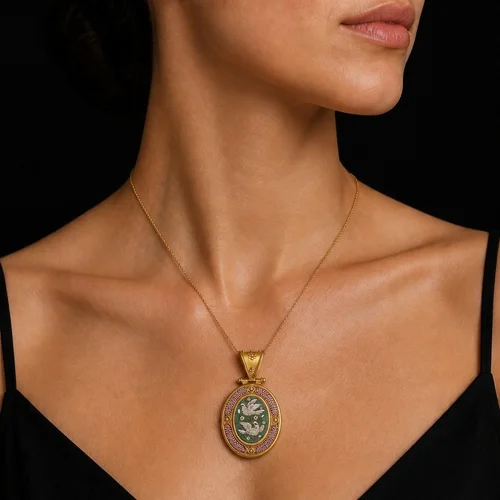 Antique 19th Century 23KT Gold Micromosaic Mourning Pendant£4,950
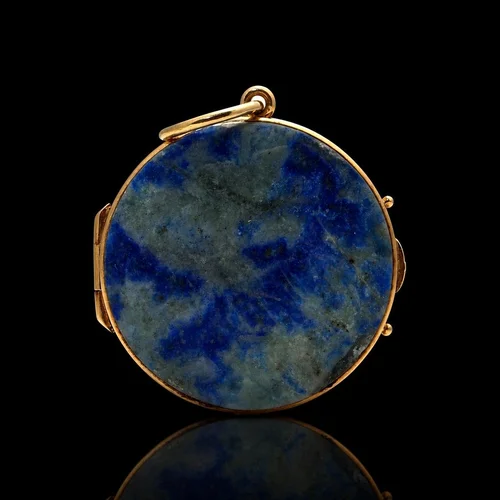
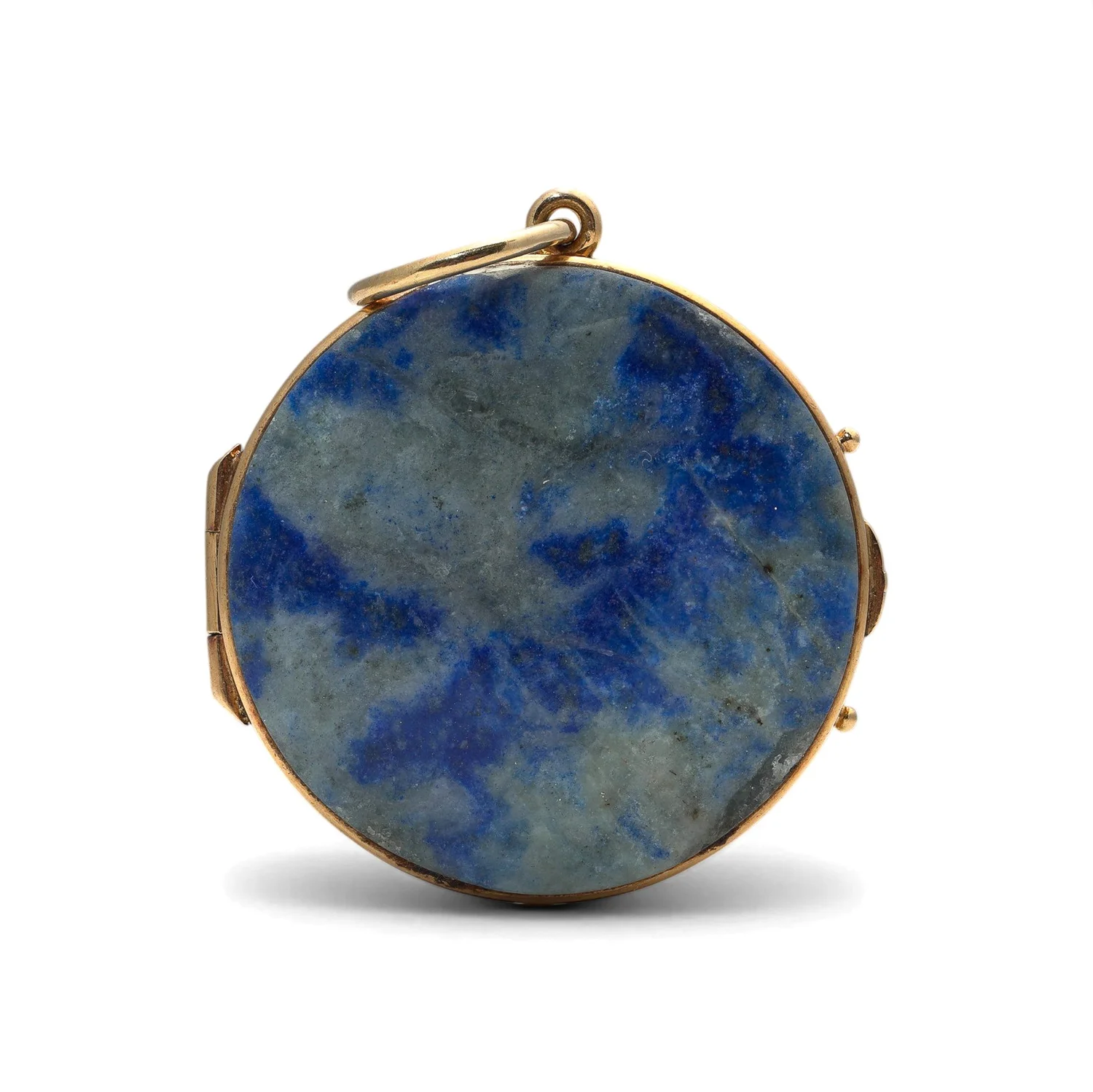
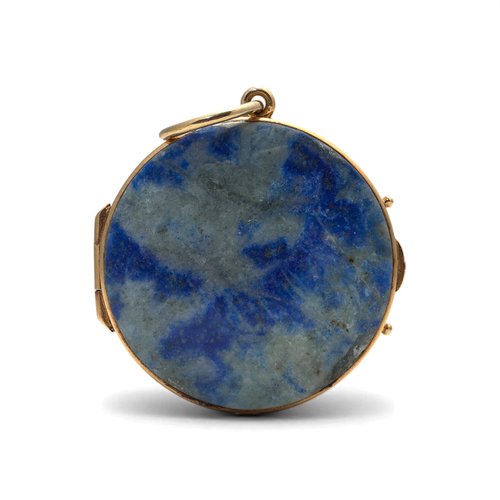 Antique 18KT Gold Lapis Lazuli Religious Icon Locket Pendant£2,985
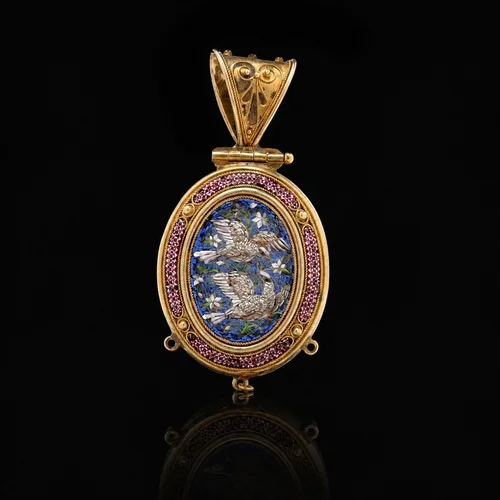
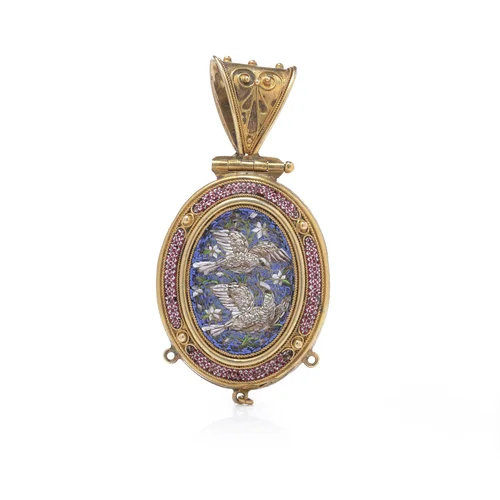 Italian 21KT Gold Micro Mosaic Dove Locket, 19th Century£8,995
How to identify and date a locket
- Look for a hallmark
On British lockets it is usually inside the rim, on the bale or on the back. A date letter gives the year (hallmarking).
- Read any stamp
9CT, 15CT, 18CT, 375 or 750 mean gold; STERLING, 925 or a lion passant mean silver. BACK & FRONT means gold front and back panels on a base metal frame (Navette)
- Check the hinge and catch
A hand-made hinge with a sprung catch fits an older locket; machine pressings and soldered jump rings suggest later.
- Look at the decoration
Hand engraving has crisp, varied cuts; stamped patterns repeat exactly.
- Look inside
Original glass, photographs, hair and inscriptions help date and value it.
Many Victorian lockets carry no full hallmark, because jewellery was often exempt from hallmarking at the time. A specialist dates them by construction and style: see how to date antique jewellery.
Request a free valuation
Value, care and selling
What decides value
The metal (solid gold, back-and-front, silver or gilt), the size, the decoration and stones, the maker, the period and condition, especially the hinge, catch and glass. Original contents and boxes add to the story.
Our lapis icon locket is set in 18KT gold.
Caring for a locket
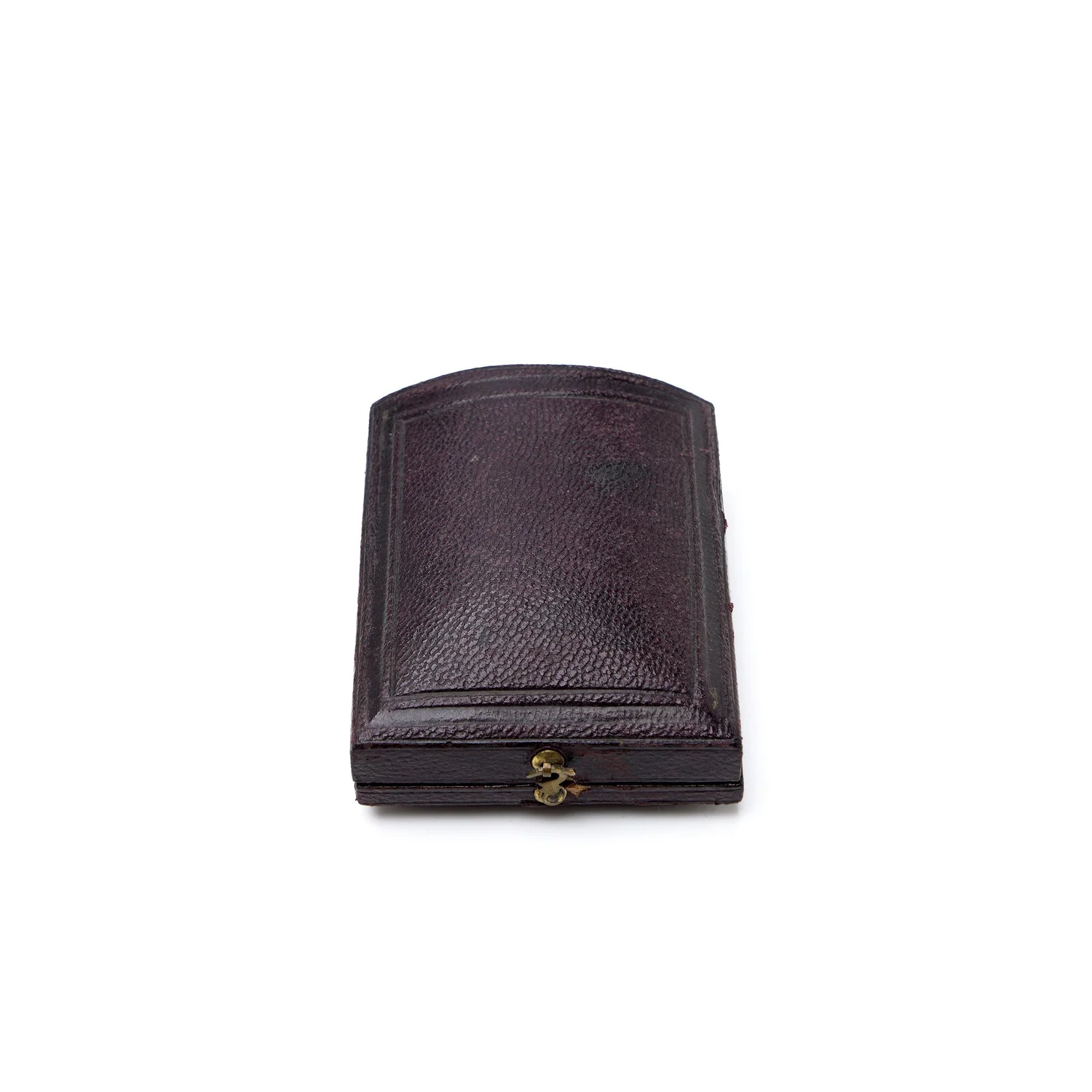
Open it gently by the catch, never by prising the edge. Keep it dry: damp can spoil photographs and hair. Clean the outside with a soft cloth only, and keep any original box.
See our antique boxes for period locket cases.
Every locket is different. Send us photos of the front, the back, the inside and any marks, and we will tell you what yours is worth, free and with no obligation. Request a free valuation.
Selling? Sell antique jewellery or book a free FedEx collection.
Send us photos for a valuation