Mourning Jewellery: How to Identify Georgian and Victorian Mourning Rings, Hairwork and Jet
Skull rings, black and white enamel, sepia miniatures, hair and jet: how to read and date a mourning jewel, and where Nelson's Trafalgar rings are today.
Mourning jewellery is jewellery made to remember the dead, worn in Britain from the 1600s to the First World War:
- 1600s to early 1700s: memento mori skulls and skeletons, then rings naming the dead.
- Georgian: black enamel rings with name, date and age; white enamel mainly for children; sepia urns and willows.
- Victorian: after Prince Albert died in December 1861, jet, black enamel and hairwork.
- Jet or not: real Whitby jet is light and warm; glass is cold, vulcanite fades brown.
- Nelson: 58 Trafalgar rings were ordered from John Salter; our register traces 18.
In this article
- What is mourning jewellery?
- How to identify a mourning ring, era by era
- Reading the inscription: ob, aet and “In memory of”
- Hairwork: how to recognise hair jewellery
- Queen Victoria, Prince Albert and the Victorian black
- Whitby jet, French jet, vulcanite or bog oak: how to tell them apart
- Nelson's Trafalgar mourning rings: a register
- Sweetheart brooches and Remembrance
- Valuing, selling or buying mourning jewellery
- Questions
What is mourning jewellery?
Mourning jewellery was made to remember someone who had died. It was worn in Britain from the 1600s to the First World War, and it often holds the dead person's hair, name or date of death.

Remember that you will die
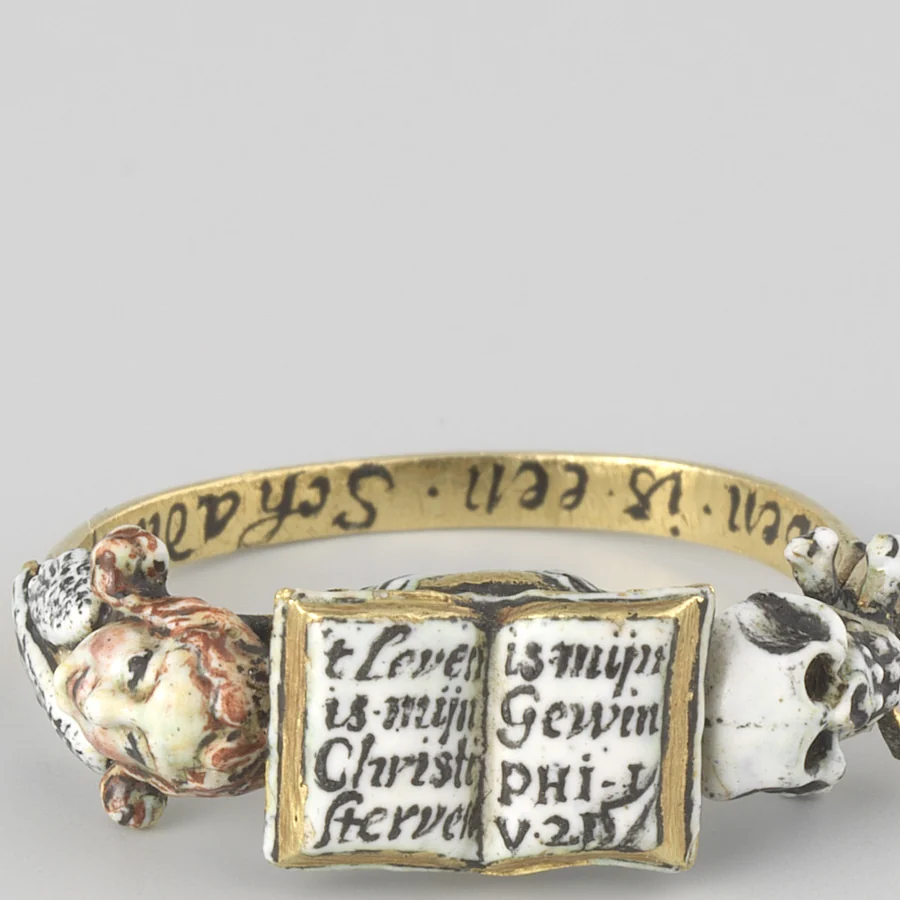
The earliest pieces are memento mori jewels, Latin for “remember you must die”: skulls and skeletons worn as a general reminder of death.
In the 1600s rings began to name a person and the date they died, and wills set money aside for them. Shakespeare left 26s 8d each to three fellow actors to buy rings.
- 1500s to 1600sMemento mori jewels: skulls, skeletons and coffins remind the wearer that life is short.
- 1616Shakespeare's will leaves 26s 8d each to three fellow actors “to buy them rings”.
- 1600s to 1700sMourning rings name the dead and give the date of death. Wills list who should receive one.
- Late 1700sNeoclassical taste: urns, willows and mourning women painted in sepia, set with hair.
- 1805 to 1806Nelson's family orders 58 gold and enamel rings from John Salter of the Strand.
- 1861Prince Albert dies in December. Queen Victoria's long mourning makes black jewellery the fashion.
- Early 1870sThe Whitby jet trade reaches its peak.
- 1914 to 1918Sweetheart brooches go to wives and mothers. After the war, mourning jewellery fades away.
How to identify a mourning ring, era by era
Mourning rings followed fashion closely, which makes them easier to date than most jewellery.
Memento mori: skulls and skeletons (1600s to early 1700s)
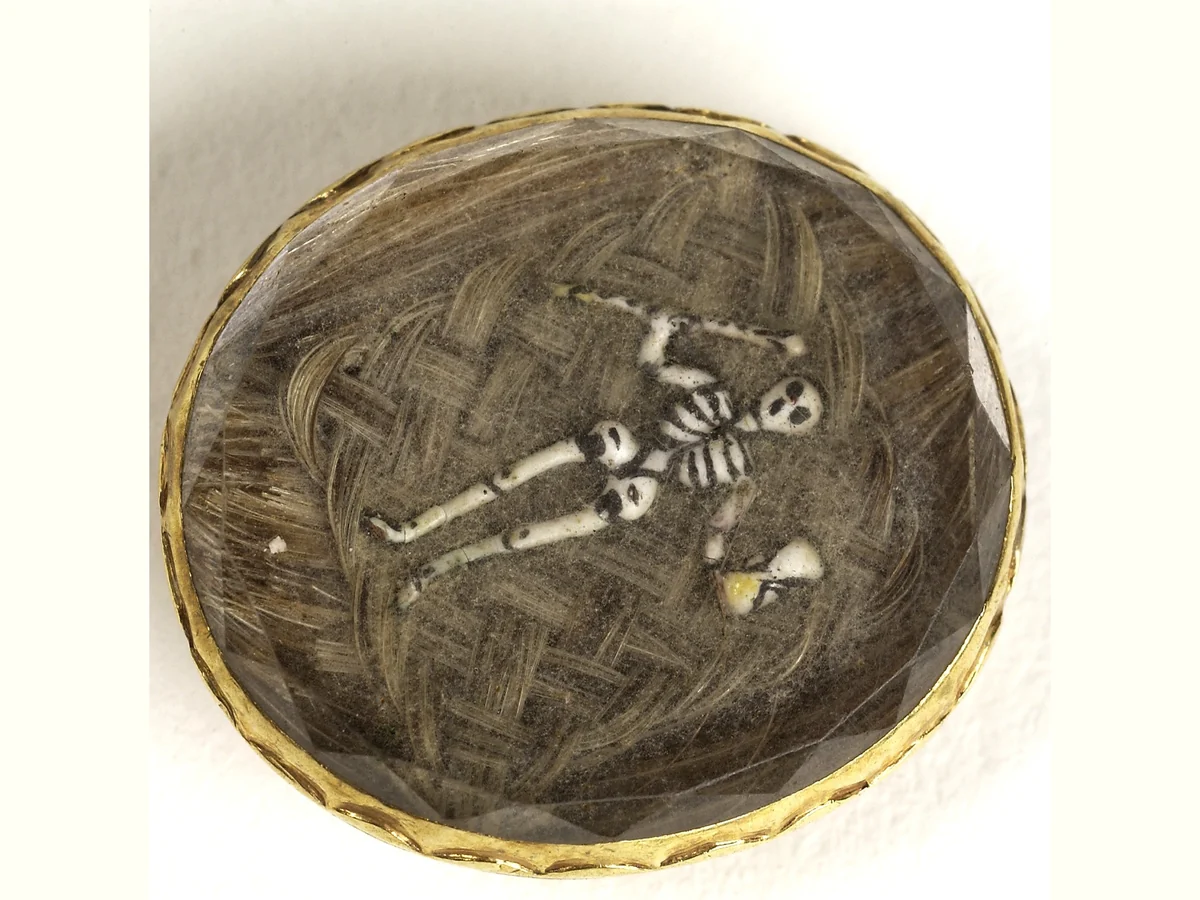

Look for white enamel skulls, crossed bones, skeletons, coffins and hourglasses, often on a plain gold hoop with a motto inside. Detectorists find many; see found buried treasure.
Black enamel, a name and a date (Georgian)
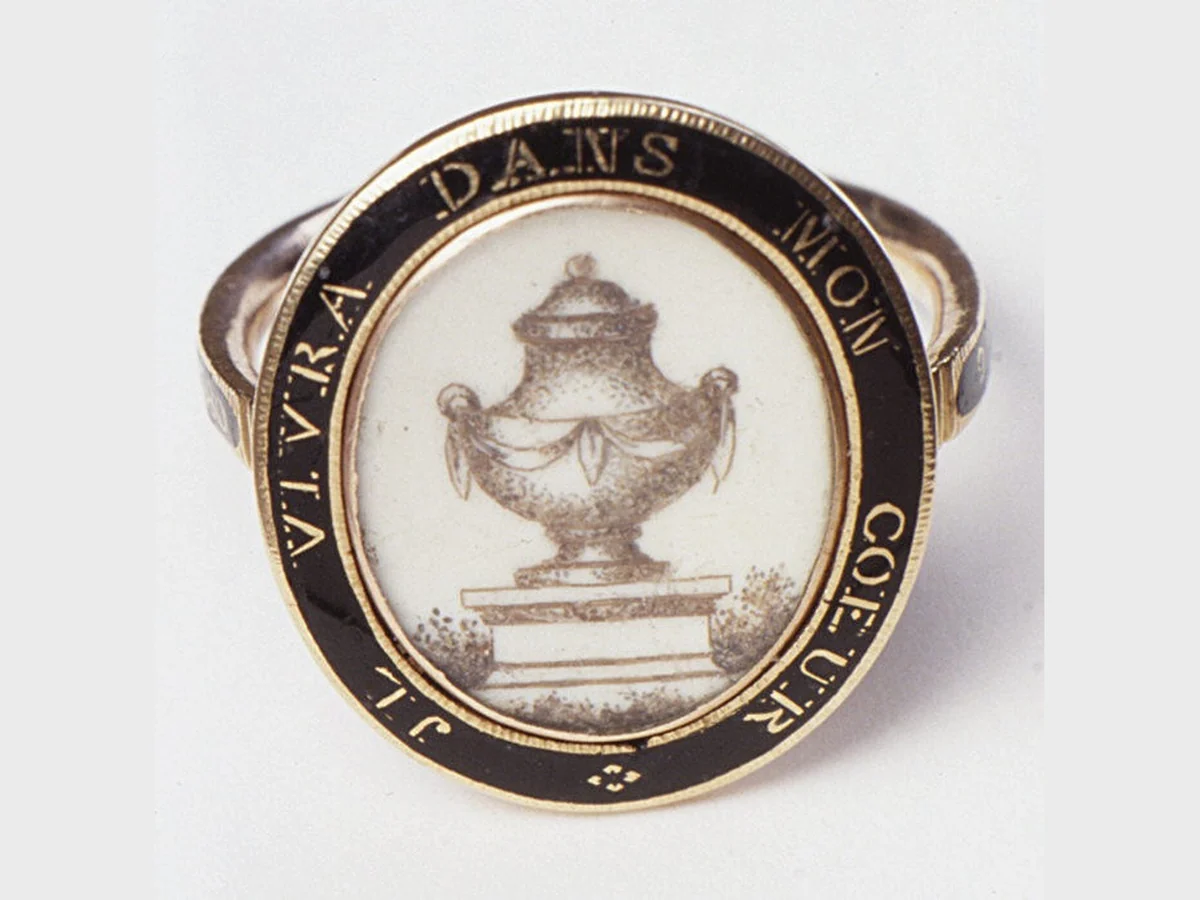

The classic Georgian ring has black enamel with the name, date of death and age in gold. Later rings add a bezel painted with an urn, a willow or a mourning woman, under crystal. See enamelling techniques.
White enamel: a child or an unmarried person
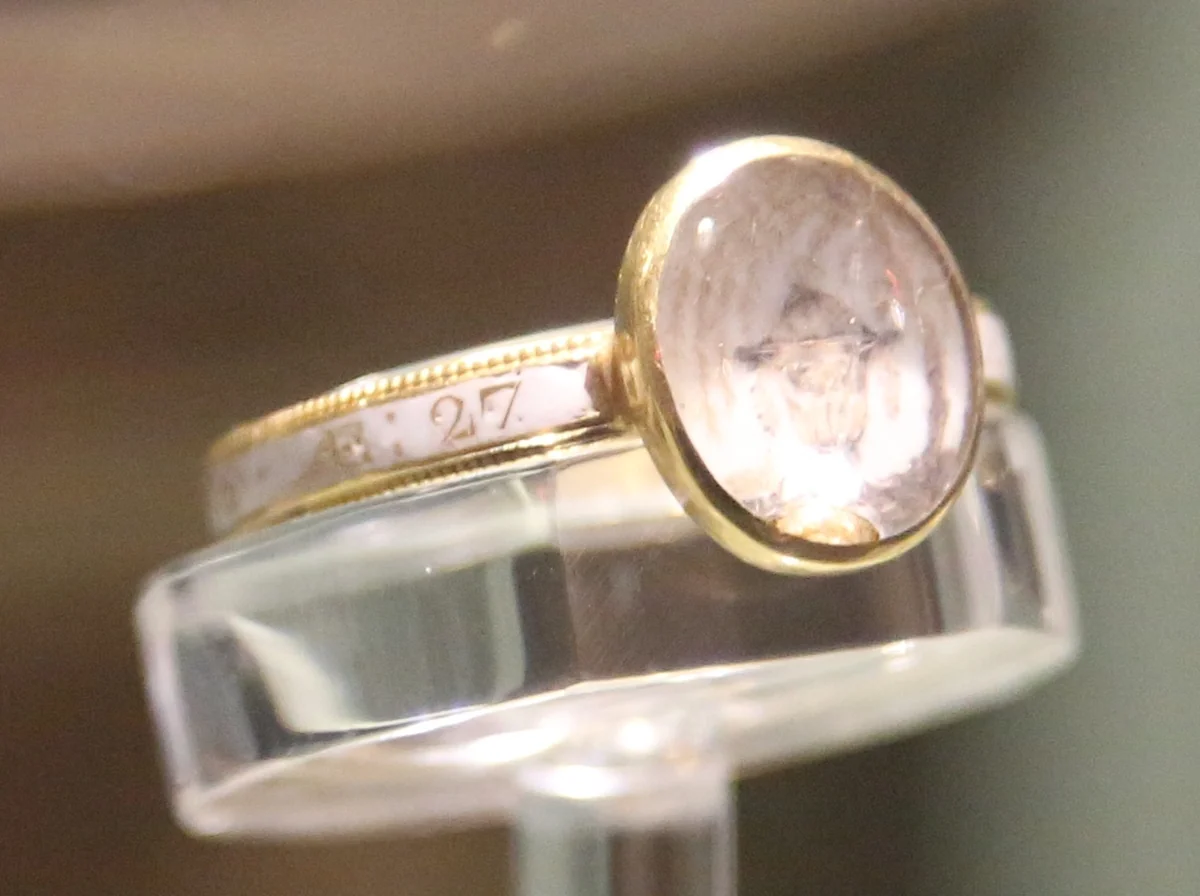

White enamel replaced black for some deaths, especially of children and, less often, of unmarried adults. Check the enamel closely: it chips easily.
Victorian: hair in the band, hallmarks inside
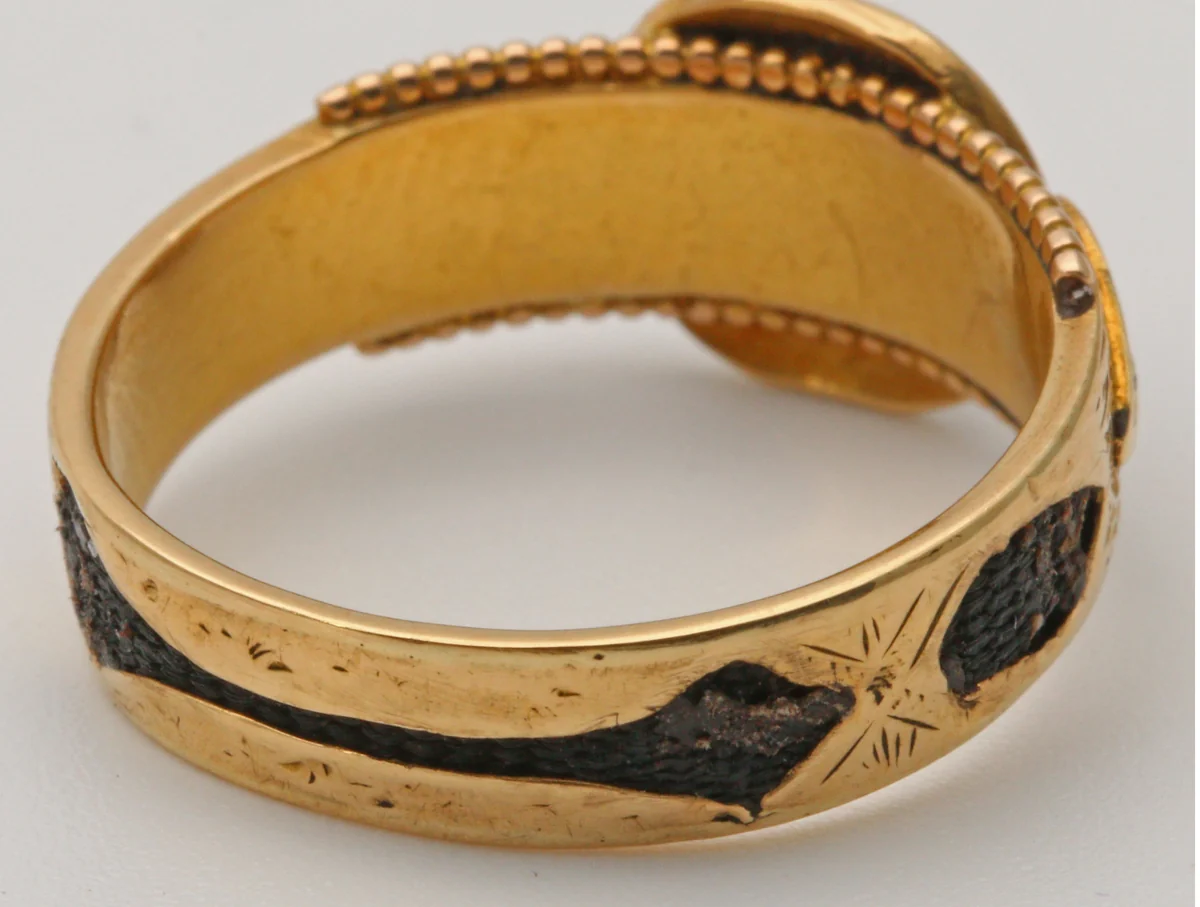

Victorian rings are often 15ct or 18ct gold, with hair set into the band, lettering such as IN MEMORY OF, and hallmarks that give the year. Compare antique rings by era.
Reading the inscription: ob, aet and “In memory of”
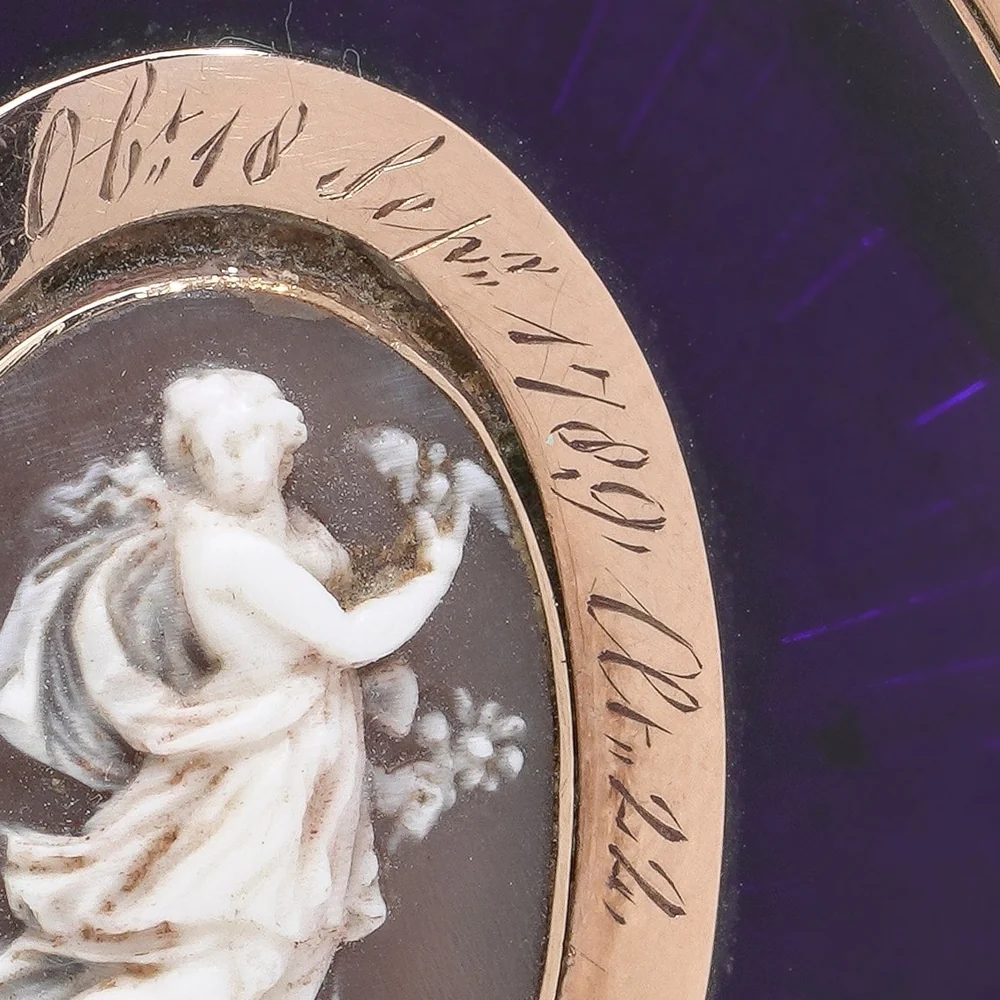
A short Latin code
- Ob. or obt. obiit, “died”, then the date.
- Aet. or aetat. aetatis, “aged”, then the age.
- IMO or In memory of, often in gold on black enamel.
- Initials or a monogram where there was no room for a name.
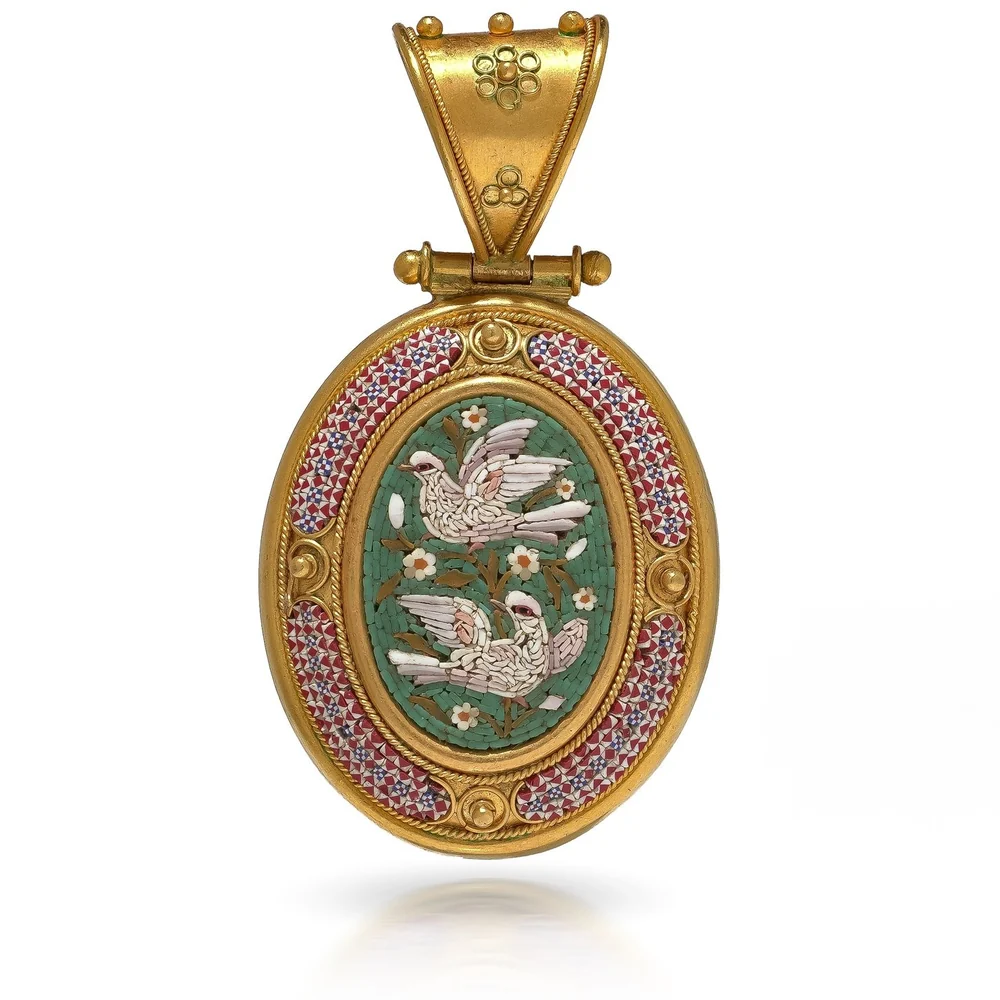
The pendant shown records a death on 18 September 1789, aged 22.
In August 2024 a detectorist near Catforth, Lancashire, found a gold ring inscribed “Ri Busby STP ob 5 Ap 95 aet 89”: Richard Busby, Head Master of Westminster School, who died in 1695. His funeral bills show 110 mourning rings ordered. The ring is now in the school library.
Hairwork: how to recognise hair jewellery
Hair became steadily more common in mourning jewellery from the 1700s, and by the late 19th century it was its defining feature. It was worked in three ways.
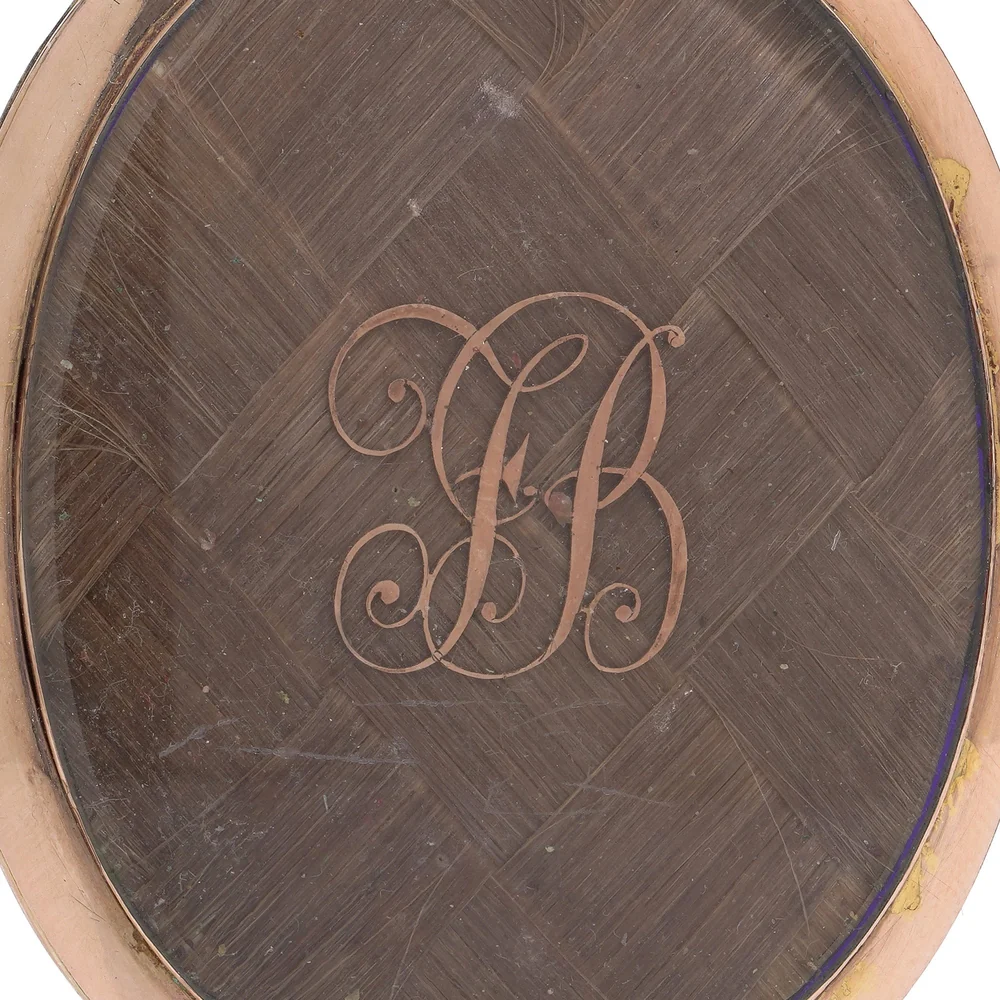
Laid flat under glass
A lock is kept as a curl, or woven into a lattice, and sealed under glass at the back of a ring, pendant or brooch. Gold wire initials and seed pearls were often laid on top. Under a loupe you see single hairs, not paint.
Plaited into bands
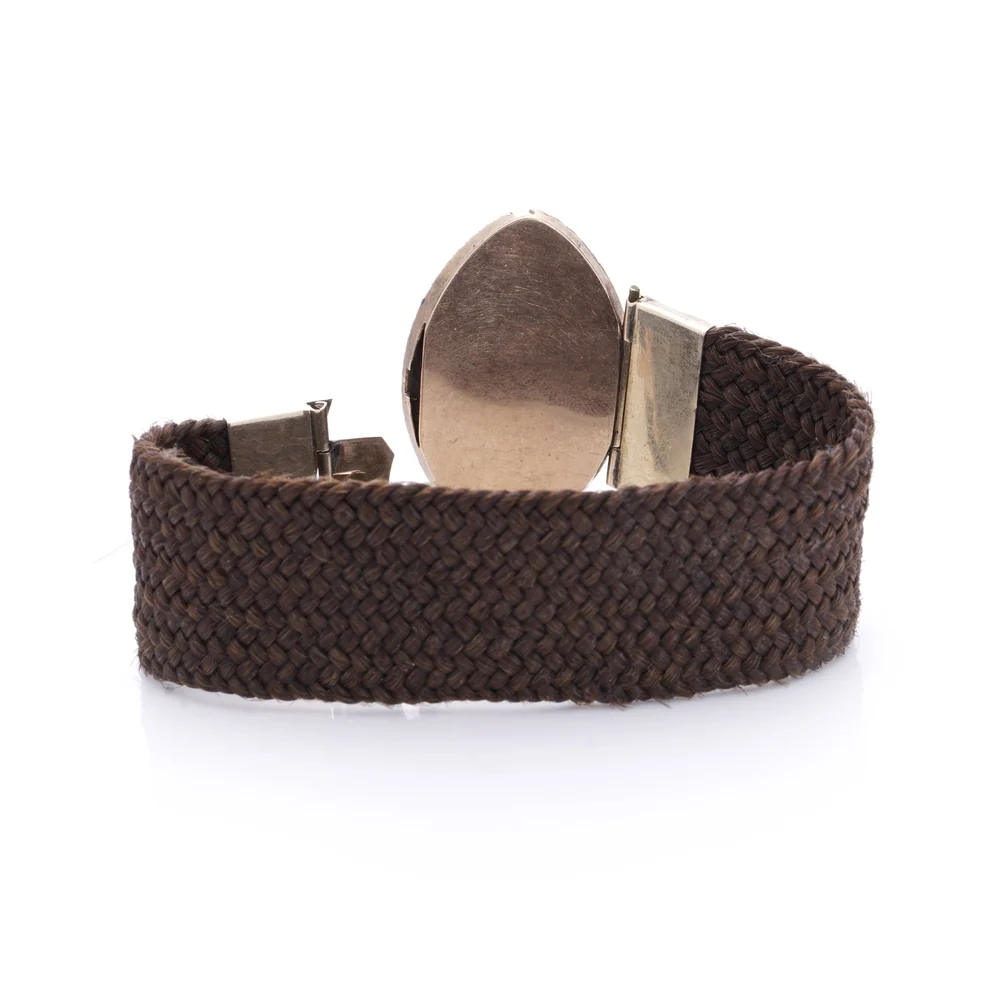
In table work, hair was braided on a round table with weighted bobbins, like lace, into cords and straps. A goldsmith added the clasps. Look for an even, tight weave and fittings of the right age.
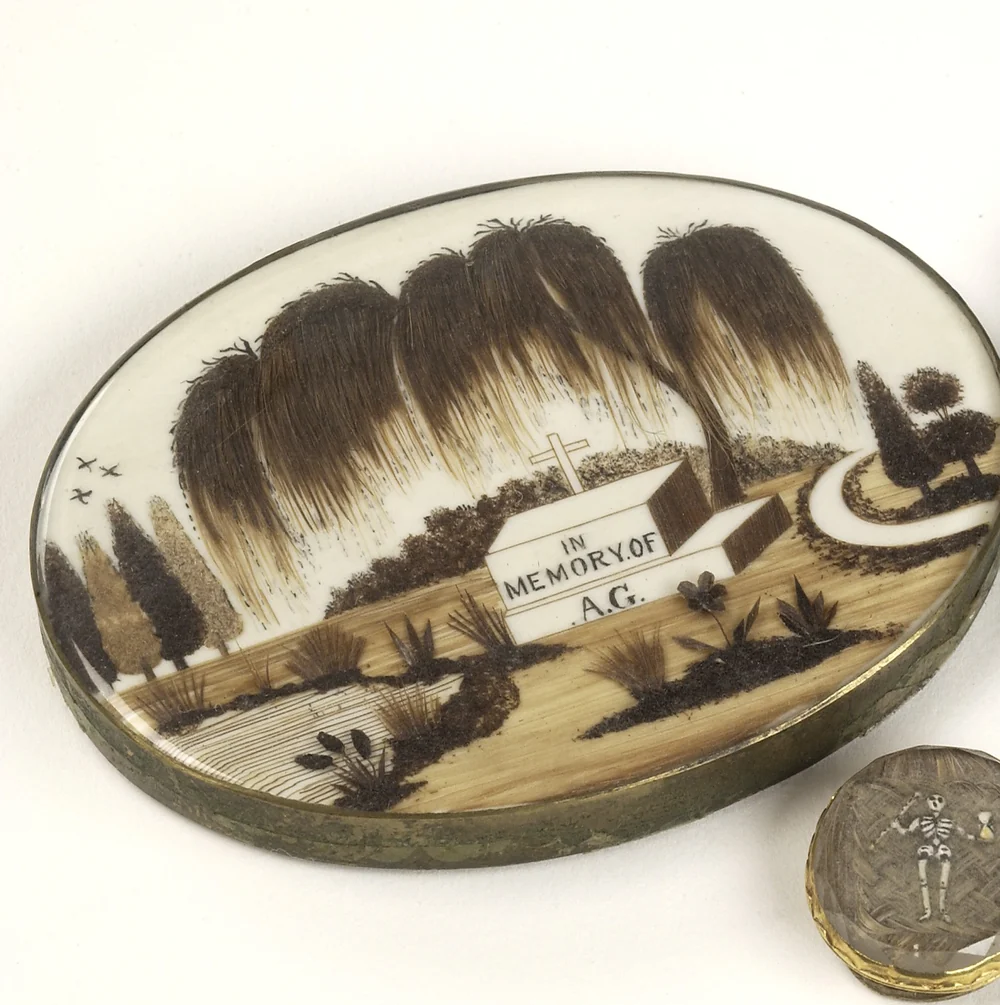

Painted: the Georgian sepia miniature
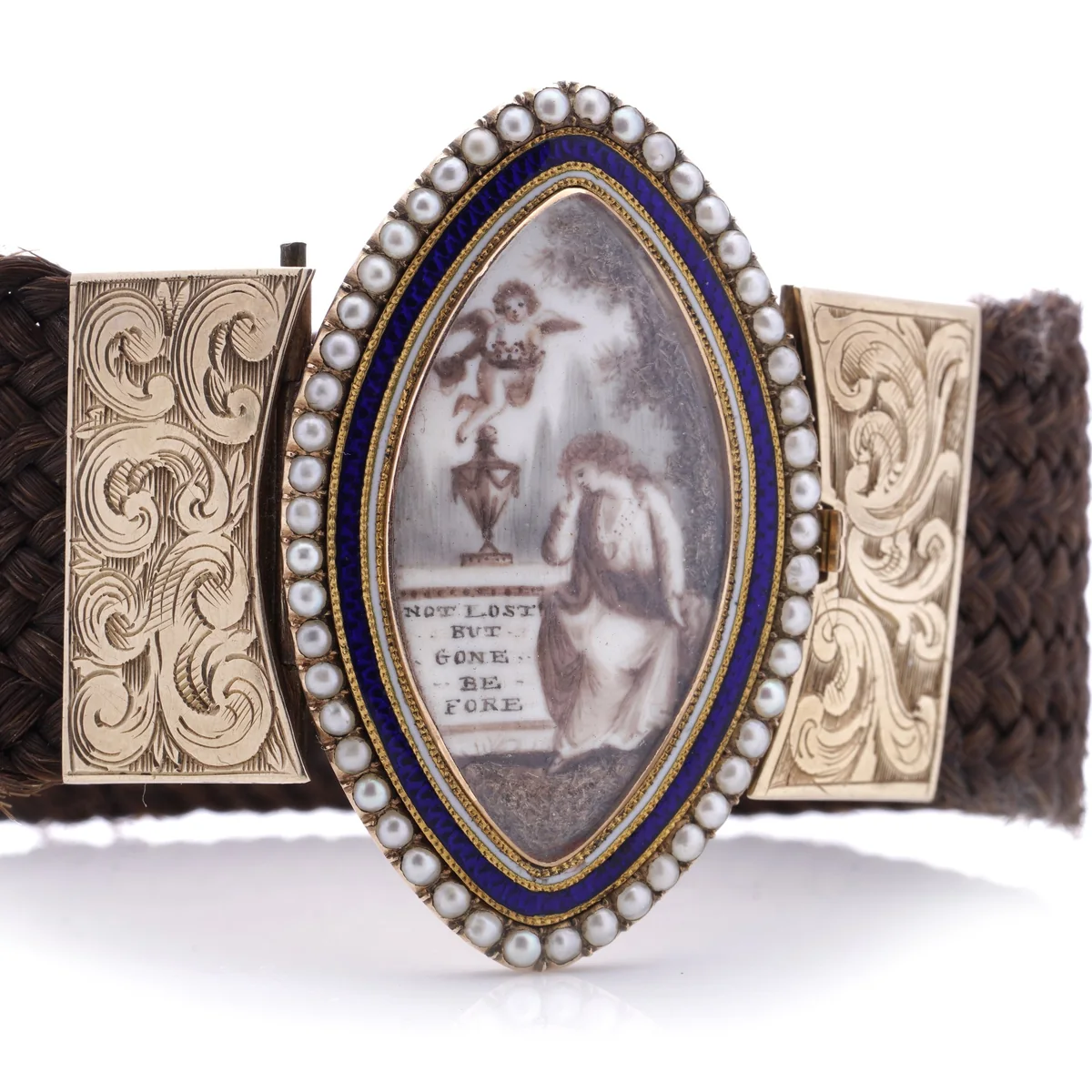
In the late 1700s and early 1800s mourning scenes were painted in sepia on ivory: a woman by an urn, an obelisk, a willow. The V&A notes that hair was kept as a curl inside, or cut up and used in the design. Mottos such as “Not lost but gone before”, on our hero bracelet, are typical.
Every piece is different. Send us a few photos and we will tell you what yours is worth, free and with no obligation.
Have a mourning ring or hair brooch? Get a free valuation
Queen Victoria, Prince Albert and the Victorian black
.jpg)
December 1861
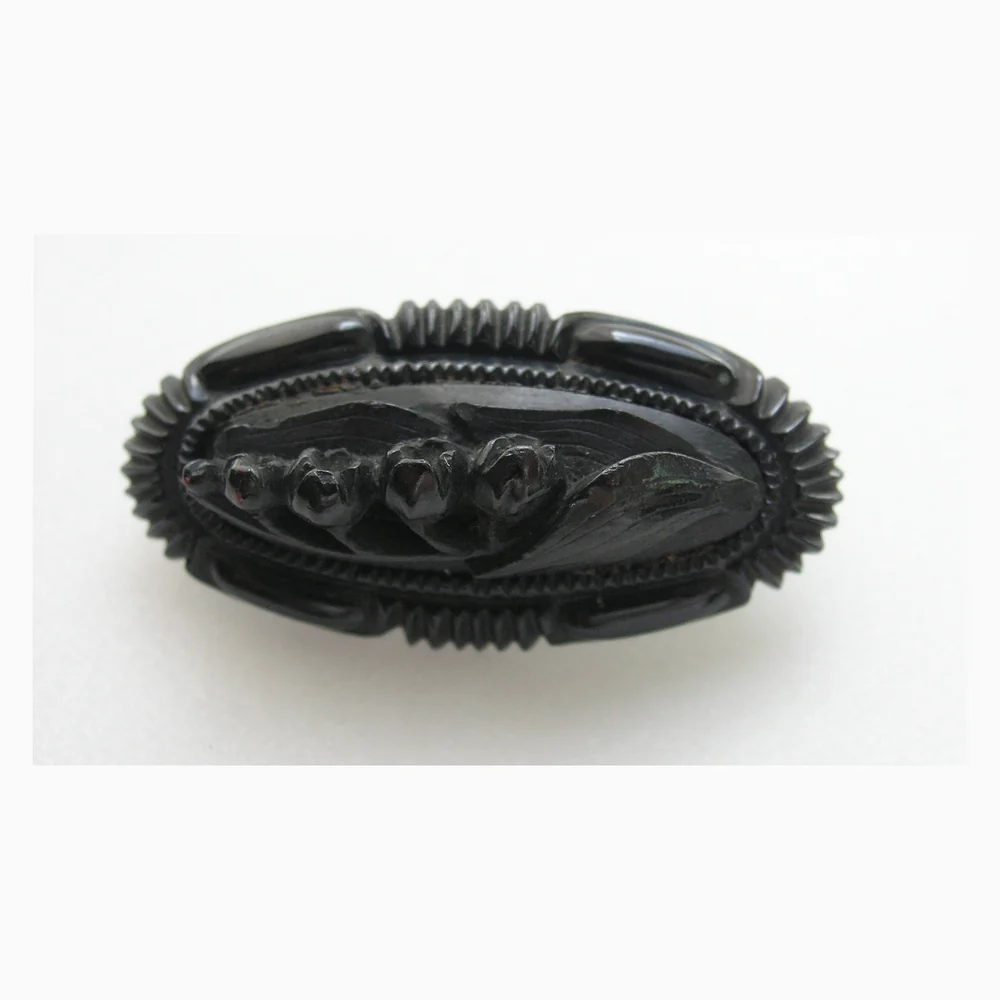
Prince Albert died in December 1861 and Queen Victoria mourned him for the rest of her life. Her long mourning made black dress, and black jewellery, a formal part of British life.
She wore Whitby jet, and jet became the mourning material for anyone who could afford it. For the period, read the periods of Victorian jewellery.
Whitby jet, French jet, vulcanite or bog oak: how to tell them apart

Real jet
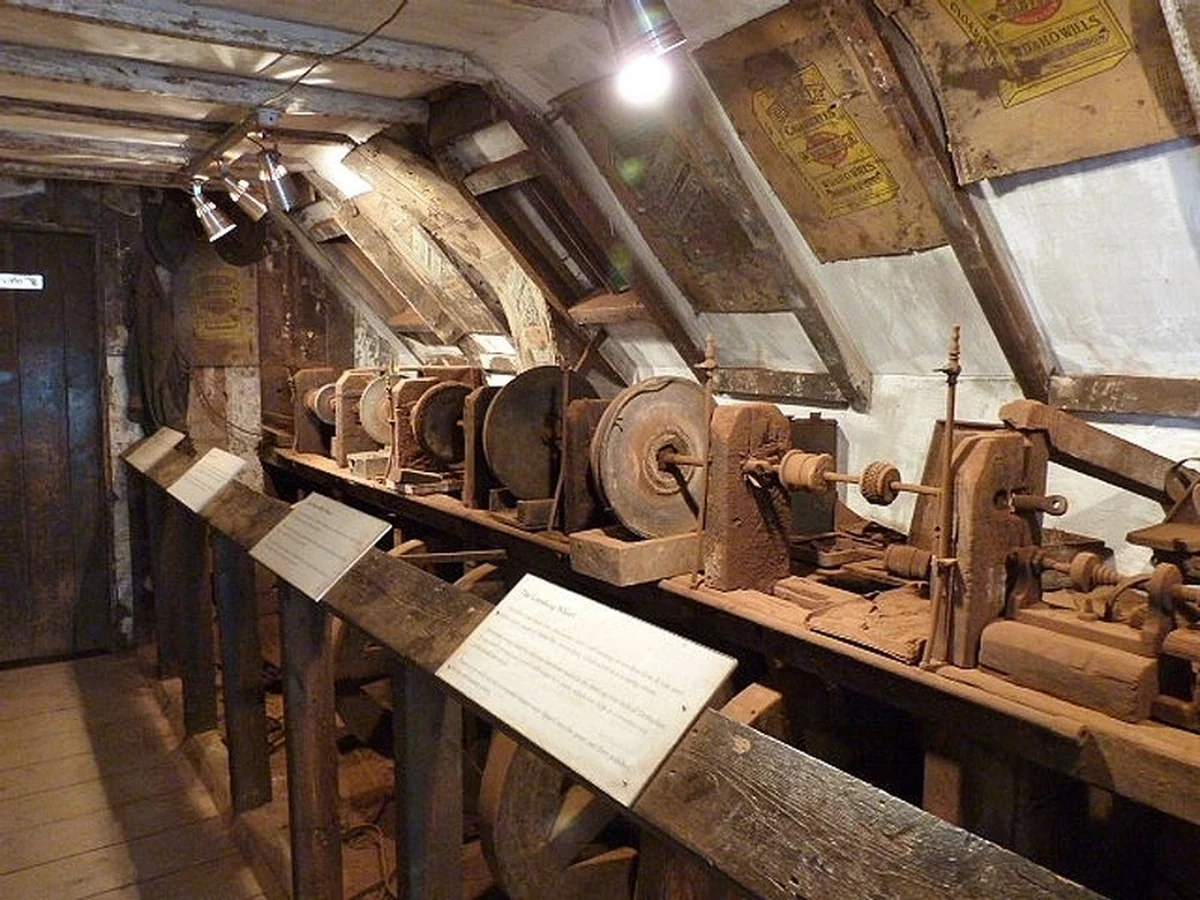
Jet is fossilised wood. Whitby jet, from the Yorkshire coast, is about 181 million years old. More than a thousand people worked it in Whitby at the peak in the early 1870s; by 1884, about 300.
Demand outran supply, so look-alikes filled the gap. See also our jet entry.
| Material | What it is | Feel | Tell-tale signs |
|---|---|---|---|
| Whitby jet | Fossilised wood | Very light, warm | Deep black, liquid lustre |
| French jet | Black glass | Heavier, cold | Glassy shine, moulding marks |
| Vulcanite | Hardened rubber | Light, like plastic | Fades khaki brown; smells of sulphur when rubbed; screwed pins |
| Bog oak | Bog-preserved wood | Light | Dull lustre; lathe rings on the back |
| Horn | Pressed horn | Light | Layers split at the edges |
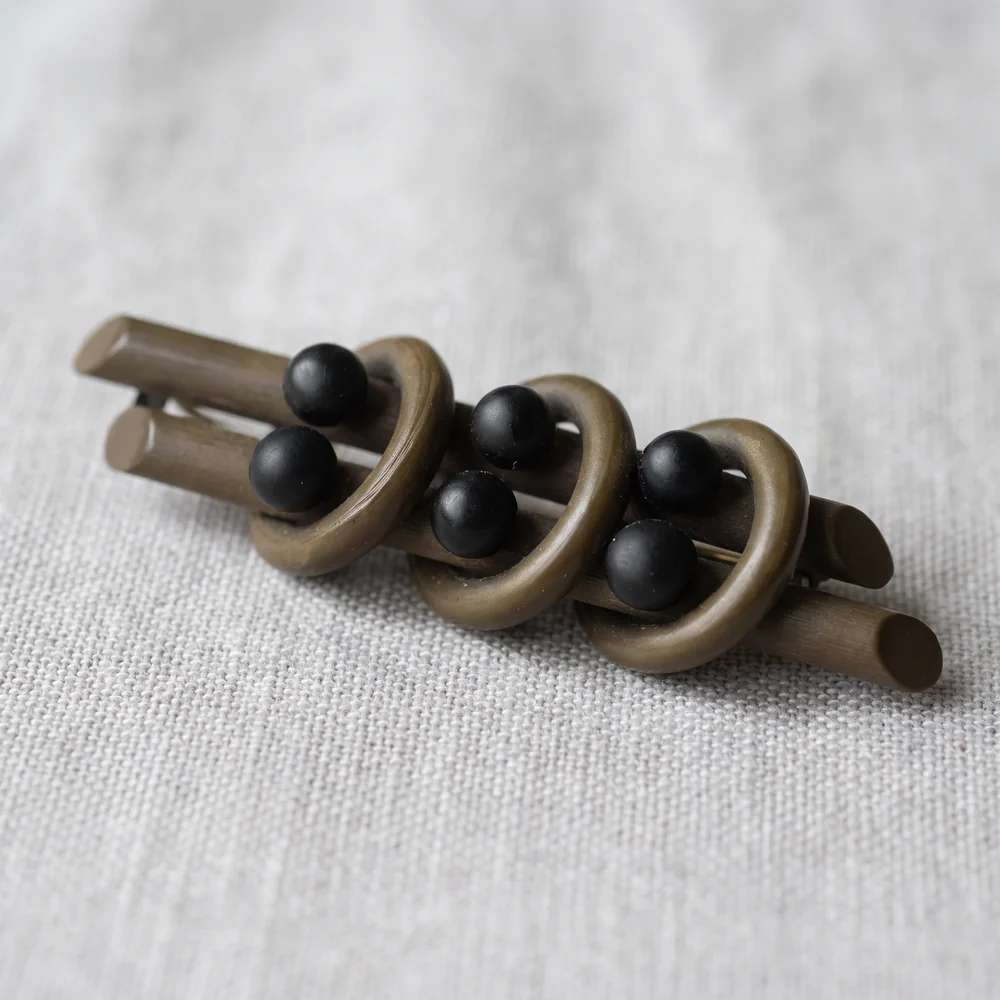
The colour test
Vulcanite was moulded, often from jet originals, so the design can look right. In light it turns khaki brown, while glass beads stay black. A streak test does not settle it: jet, vulcanite and bog oak all leave a brown line.
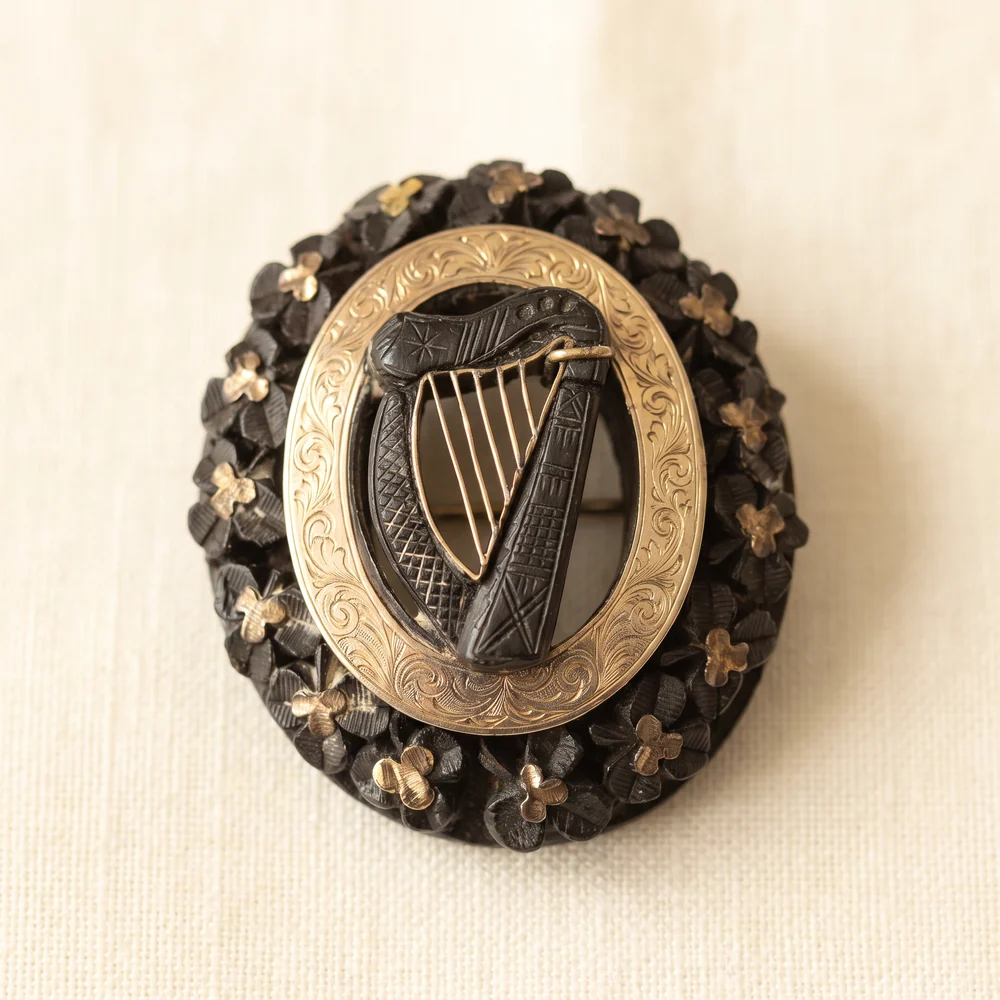
Bog oak, the Irish alternative
Bog oak is oak preserved in peat, younger than jet, carved into brooches with harps and shamrocks. Turn it over: lathe rings on the back and a dull, woody surface point to bog oak. Another dark material of the age was Berlin iron.
Nelson's Trafalgar mourning rings: a register
After Nelson was killed at Trafalgar on 21 October 1805, his brother and heir, Dr William Nelson, ordered 58 gold and enamel rings from the jeweller John Salter of the Strand, for family, friends and every admiral and post-captain in the battle.
- Bezel: black enamel, two coronets over N and B, for Nelson and Bronté, and TRAFALGAR.
- Hoop: his motto, PALMAM QUI MERUIT FERAT.
- Inside: “Lost to his Country 21 Oct 1805 Aged 47”.
- Recipients: a British Library manuscript names 54. The British Museum estimates at least a hundred rings were given out.
Where the rings are now
Every ring we could trace to a museum, a sale with a family history or a documented owner. Rings sold with no history are left out, because they cannot be told apart.
| No. | Where it is now | Recorded history | Source |
|---|---|---|---|
| 1 | National Maritime Museum, Greenwich (JEW0167) | Owned by Thomas Bolton, 2nd Earl Nelson. The bezel opens on plaited hair. On display. | RMG |
| 2 | National Maritime Museum, Greenwich (JEW0165) | Caird Fund. | RMG |
| 3 | National Maritime Museum, Greenwich (JEW0166) | Nelson-Ward Collection. | RMG |
| 4 | V&A, London (M.234-1975) | Given by Dame Joan Evans. On display, Room 91. | V&A |
| 5 | British Museum, London (1879,0519.1) | Given by the Rev. W. P. Haslewood, 1879. On display, Room 47. | British Museum |
| 6 to 11 | Stratfield Saye House, Hampshire | Six rings, per a 1971 letter from the Duke of Wellington quoted by the V&A. | V&A |
| 12 | Norwich Castle Museum | Stolen in February 2012. No recovery reported. | Museums Association |
| 13 | Sold, Bonhams London, September 2011 | By descent from Rear Admiral Maurice Horatio Nelson (1832 to 1914), son of the 2nd Earl. | Bonhams |
| 14 | Offered, Bonhams London, April 2012 | By repute from Surgeon Beatty of HMS Victory, then the Scott family of Arkinholm. | Bonhams |
| 15 | Sold, Bonhams Knightsbridge, September 2012 | By descent from Nelson's sister Susannah Bolton. Much altered. | Bonhams |
| 16 | London dealer, 2026 | The ring of the Rev. Alexander John Scott, Nelson's chaplain and secretary on Victory. | Pushkin Antiques |
| 17 | Hampshire dealer, on 1stDibs | Given as made for Nelson's aunt, Mrs Thomasine Goulty. | 1stDibs |
| 18 | Private collection | Engraved “VI”; by descent in the Matcham family of Nelson's sister Catherine. | Collectors Weekly |
18 rings have a published home or history. Against the 58 ordered, about 40 are untraced, and more if the British Museum's estimate is right. If you hold one, we would be glad to hear from you.
Not counted: a Salter ring with a different inscription that belonged to Sir John Franklin (RMG, JEW0163). In September 2008 a Salter ring sold at Bonhams in London for £18,000, about half as much again as its estimate.
From Trafalgar Day, 21 October, to 28 October 2026, Sotheby's in Bond Street shows the Clive Richards collection: 415 Nelson letters and documents, 168 in his own hand, offered as one lot by sealed bid, estimate £4 million to £6 million. Viewing on weekdays.
Sweetheart brooches and Remembrance
Sweetheart brooches are miniature regimental badges that servicemen gave to wives, girlfriends and mothers before leaving for the front. By the middle of 1914 there was one for every regiment, the Royal Flying Corps and the Navy. Some were gold or silver set with stones; most were mass-produced, mainly in Birmingham and London. After the war many were kept as memorials.
Remembrance Sunday is 8 November 2026. We value gold and silver sweetheart brooches free from photos.
Valuing, selling or buying mourning jewellery
Mourning rings, hair brooches and lockets are common in inherited jewellery boxes, and many are gold. What matters:
- Date and type: memento mori, Georgian enamel and sepia, or Victorian jet and hair.
- Condition: complete enamel and an intact crystal.
- Inscription: a legible name and date can be researched.
- Materials: gold, pearls and fine hairwork, rather than base metal or vulcanite.
Please do not open sealed backs or remove hair. Read what to do with inherited jewellery.
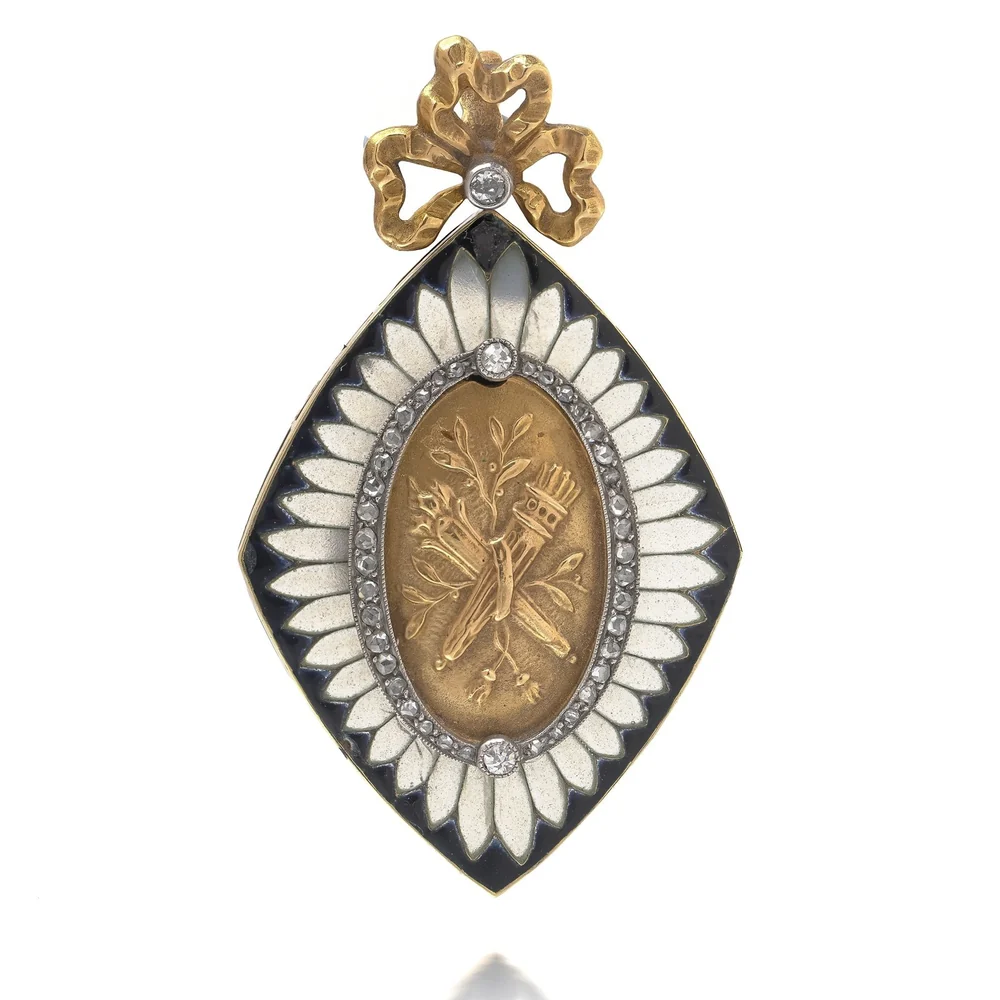
Mourning or sentimental?
Black enamel and hair compartments were used for love tokens too. Urns, willows and skulls mourn; hearts, bows and arrows love. See posy rings and gimmel rings.
- Photograph
Front, back, any inscription and hallmarks, in daylight.
- Send
Use the form below, call 01376 334482 or WhatsApp us.
- Visit
47 Maddox Street, Mayfair (by appointment) or Braintree, Essex. Contact us.
See also selling Georgian jewellery and selling Victorian jewellery.
Request a free valuation
- Mourning jewellery remembers a particular person: look for hair, a name, a date and the words ob. or aet.
- Skulls point to the 1600s, black enamel and sepia urns to the Georgians, jet and woven hair to the Victorians.
- Real jet is light and warm; glass is cold, vulcanite fades brown and bog oak shows lathe rings.
- Of Nelson's 58 Trafalgar rings, 18 have a published home or history.
- We value mourning jewellery free from photos, with no obligation.
Questions we are asked
What is mourning jewellery?
Jewellery made to remember someone who has died. In Britain it runs from 17th century memento mori skull rings, through Georgian black enamel rings and sepia miniatures, to Victorian jet and hairwork, and it often holds the dead person's hair, name or date of death.
What does white enamel on a mourning ring mean?
White enamel was used instead of black for some deaths, especially of children and, less often, of unmarried adults.
What do 'ob' and 'aet' mean on a mourning ring?
'Ob' or 'obt' is Latin obiit, 'died', followed by the date. 'Aet' or 'aetat' is aetatis, 'aged', followed by the age at death.
How can I tell if my mourning brooch is real Whitby jet?
Real jet is very light and always feels warm. Black glass (French jet) is heavier and cold; vulcanite fades to khaki brown and smells of sulphur when rubbed; bog oak shows lathe rings on the back. A brown streak test alone does not prove jet.
Is the hair in Victorian mourning jewellery real?
Yes, mourning jewellery was made with real human hair, laid flat under glass, woven or plaited into bands, or worked into painted scenes. Under a loupe you can see individual hairs.
How many Nelson mourning rings were made?
Nelson's brother ordered 58 from John Salter of the Strand. A British Library manuscript lists 54 recipients, and the British Museum estimates that at least a hundred were given out. Our register traces 18.
Are mourning rings worth anything?
Many are gold, and date, enamel condition, a legible inscription and fine hairwork all matter. Every piece is different: send us photos for a free, no-obligation valuation.
Do you buy mourning jewellery?
Yes. We buy Georgian and Victorian mourning rings, hair brooches, lockets and jet. Send photos of the front, back and any inscription, or visit us in Mayfair or Braintree.
Value your mourning jewellery
Send photos of the front, back and any inscription for a free valuation, or visit us in Mayfair or Braintree.
- We buy directly
- Free valuation from photos
- Appointments in Mayfair and Braintree
- Insured postage or collection
New pieces reach our list first: join the Mozeris list.