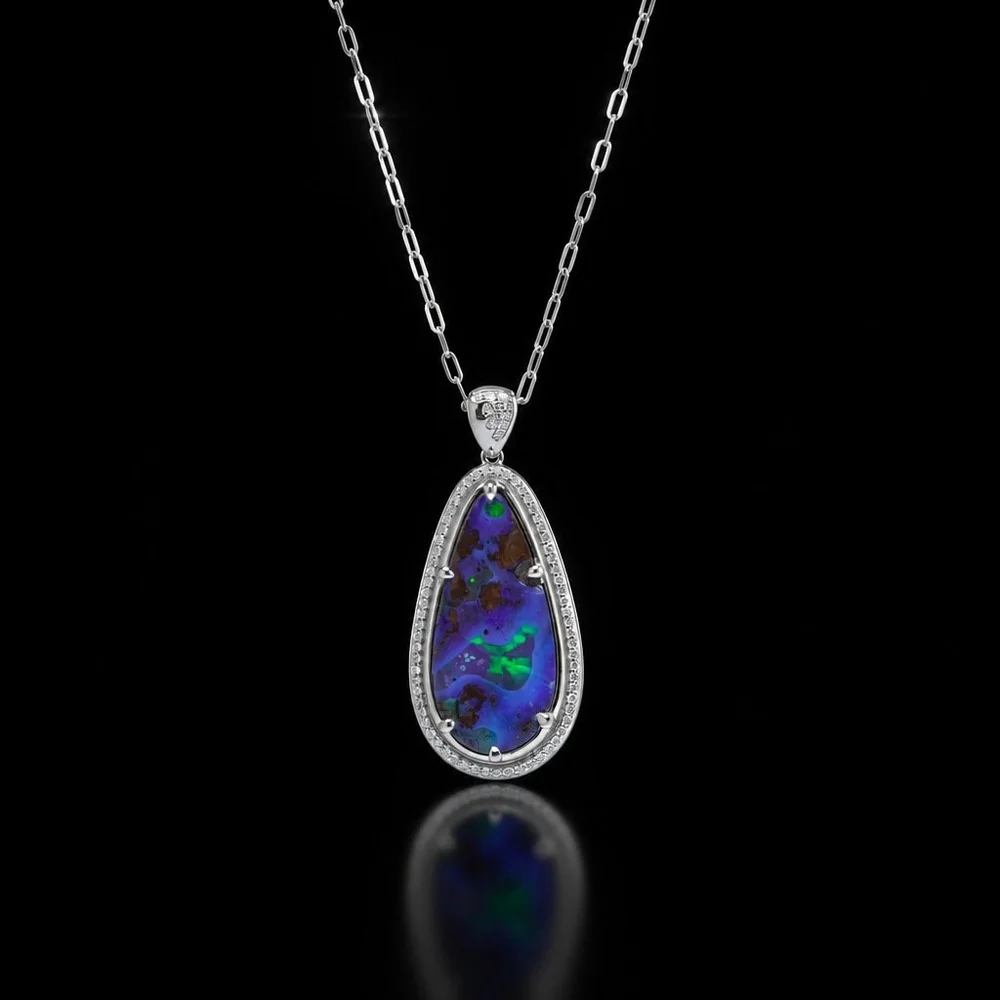
What opal is, and how it forms
Opal is hydrated silica, SiO2 with up to about 20% water. In precious opal, tiny silica spheres about 0.2 microns across are stacked in rows, and light diffracting between them produces play of colour (GIA). The spacing of the spheres decides which colours appear: wider spacing allows red, the rarest.
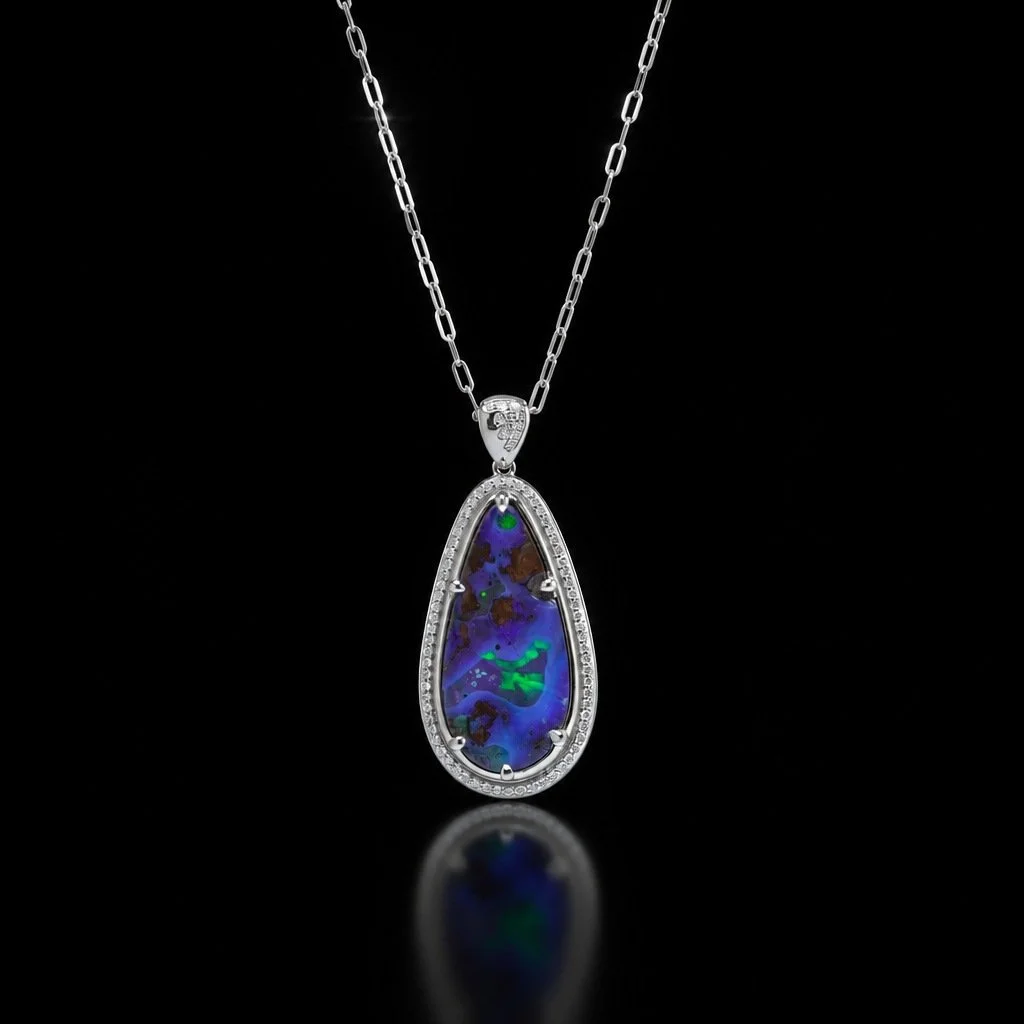
Play of colour
Play of colour moves across the stone as it turns, in patches of blue, green and, in the finest stones, orange and red. Our 16.17 ct opal pendant shows blue and green.
Types of opal and where they come from
| Type | Looks like | Main source |
|---|---|---|
| Black opal | Dark body, bright play of colour | Lightning Ridge, Australia (from about 1905) |
| White opal | Pale, milky body | Coober Pedy, Australia (from about 1915) |
| Crystal or water opal | Transparent body with colour | Australia, Ethiopia, Mexico |
| Boulder opal | Opal seams on brown ironstone | Queensland, Australia |
| Fire opal | Yellow, orange or red body | Mexico (Querétaro, Hidalgo) |
| Ethiopian opal | Often bright crystal or white, much is hydrophane | Wollo, Ethiopia (from 2008) |
| Common opal | No play of colour: blue, pink, brown | Peru and many others |
Sources: International Gem Society; GIA.
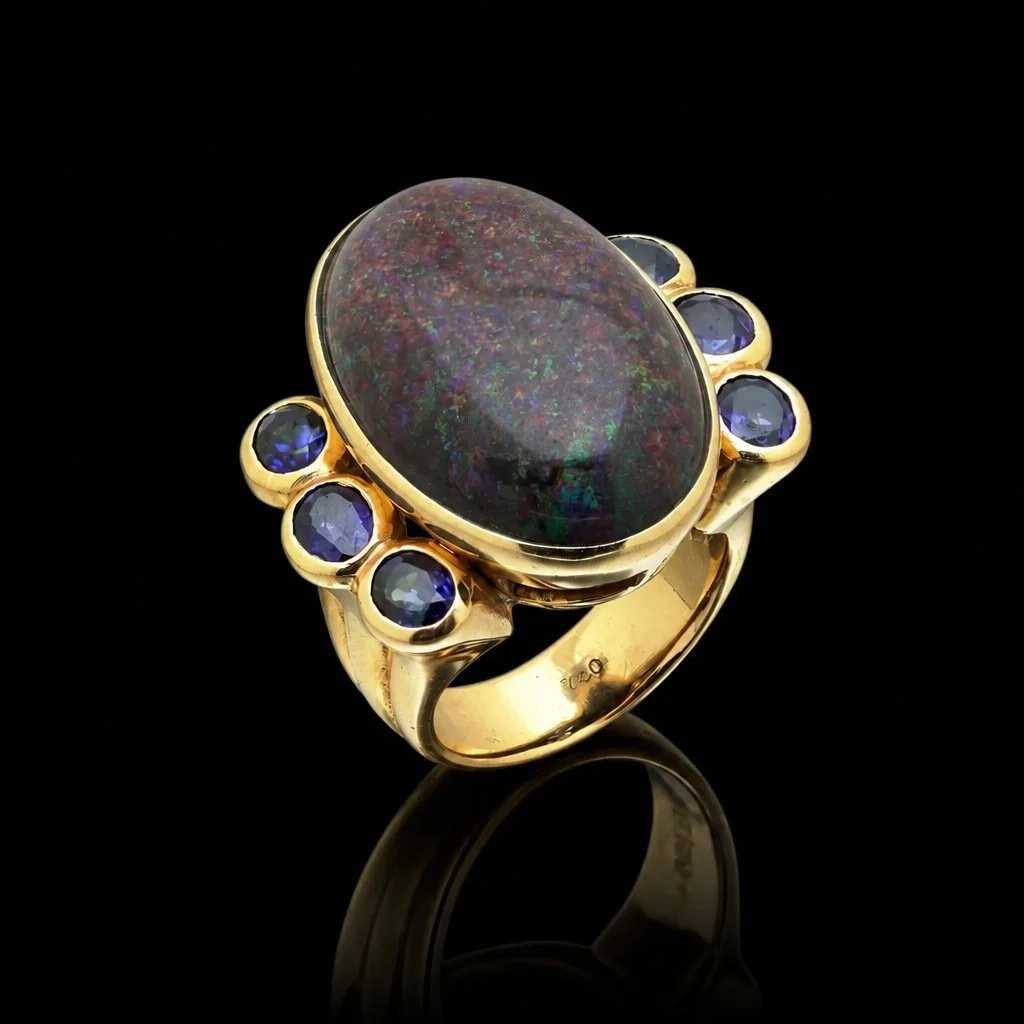
Body tone
Body tone runs from black to white. A dark body makes the colours look more intense, as in the 25 x 15 mm opal of our 1970s gold and sapphire cocktail ring.
What decides opal quality
- Play of colour: brightness, the range of colours (red is rarest) and how much of the stone it covers.
- Body tone: dark bodies show colour most strongly.
- Pattern: broad flashes and named patterns such as harlequin are prized.
- Solid or assembled: a solid opal is cut from one piece; doublets and triplets are layered.
- Cracks: crazing or cracks lower quality and durability.
GIA sets out these factors in its opal quality factors.
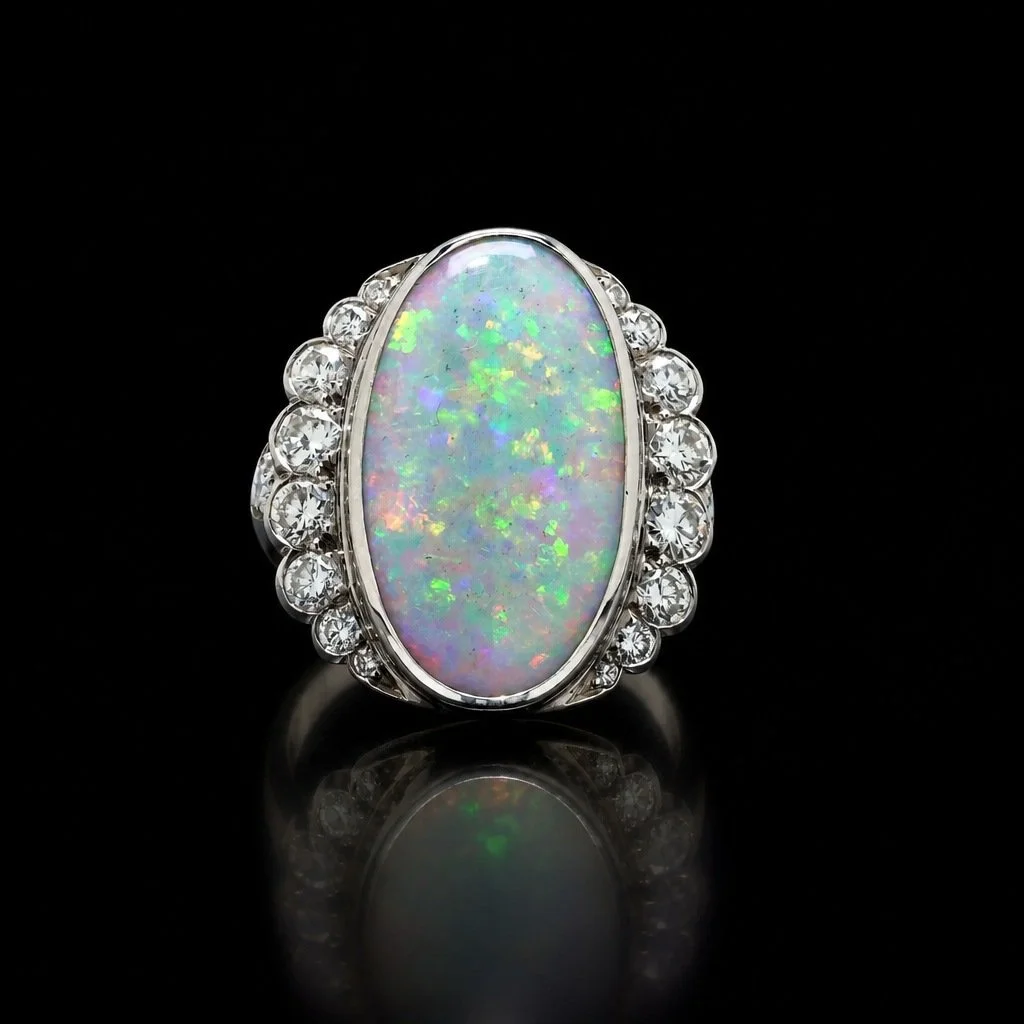
Solid opal
A solid opal is cut from a single piece of rough. Our English 1970s opal and diamond ring has an open gallery that lets light reach the stone from below.
Real, synthetic, assembled and imitation opal
| What it is | How to recognise it |
|---|---|
| Natural solid opal | Irregular patches of colour that shift with the angle |
| Doublet or triplet | A straight join line on the side; a dark back or clear dome |
| Synthetic (Gilson type) | Regular honeycomb or snakeskin pattern in each patch |
| Opalite | Glass or resin with a milky glow, no true play of colour |
Opal in antique and vintage jewellery
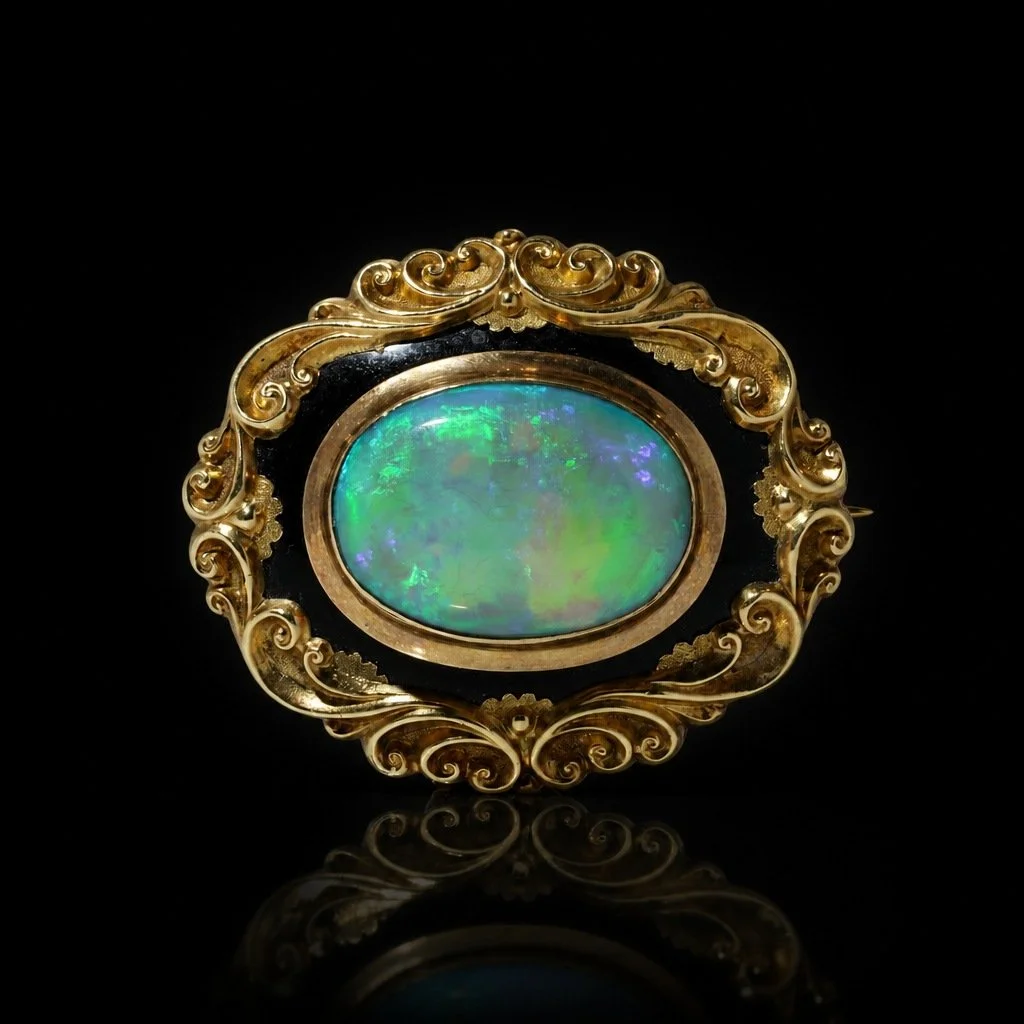
Victorian opal
Australian opal reached Britain in quantity from the 1890s, and late Victorian jewellers set it in brooches, rings and pendants, often framed by diamonds or black enamel, as on our Victorian opal and black enamel brooch.
See Victorian jewellery and brooches.
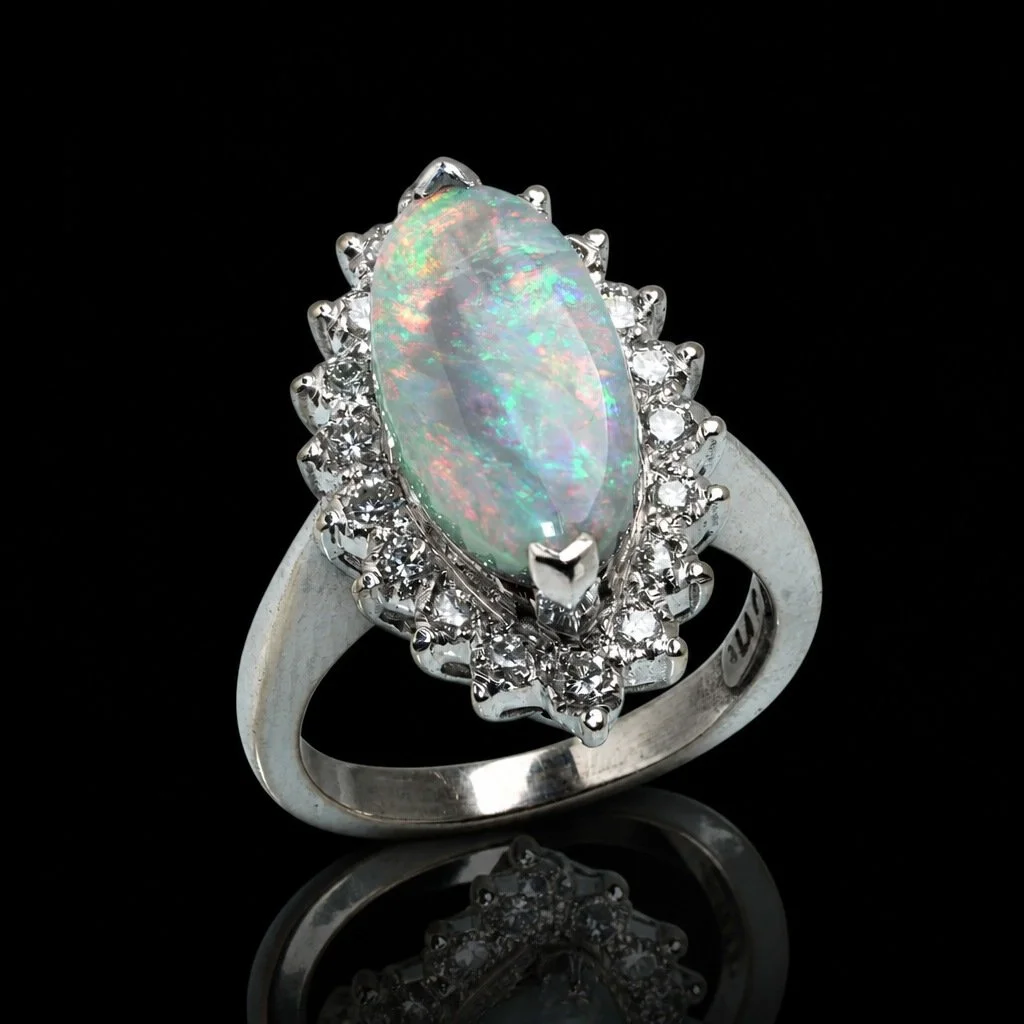
Vintage clusters
Opal and diamond cluster rings were popular through the 20th century; the diamond surround also protects the softer opal. Our vintage opal cluster ring is in 14KT white gold.
Opal jewellery in stock
Shop all 6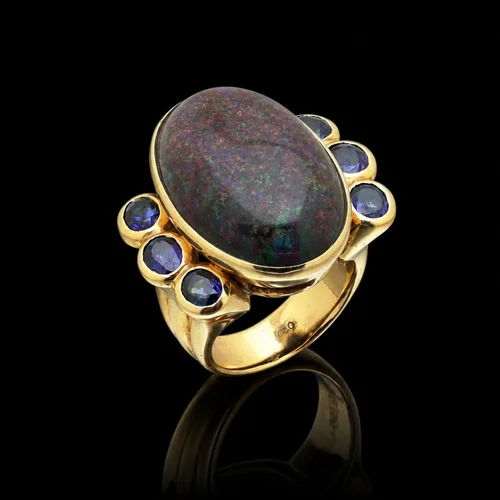
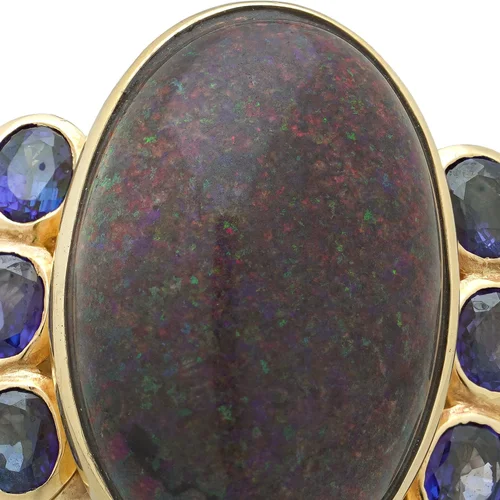 Vintage 1970s 18KT Gold Opal and Sapphire Cocktail Ring£3,950
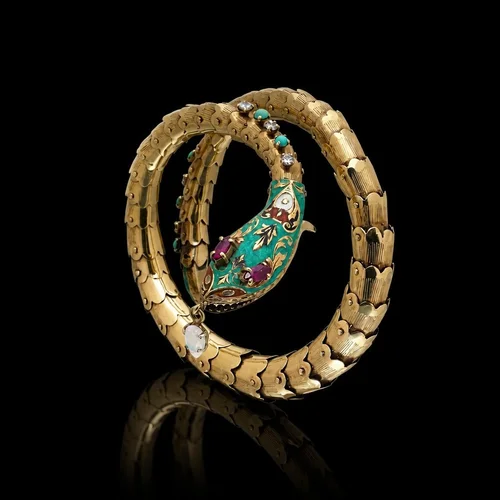
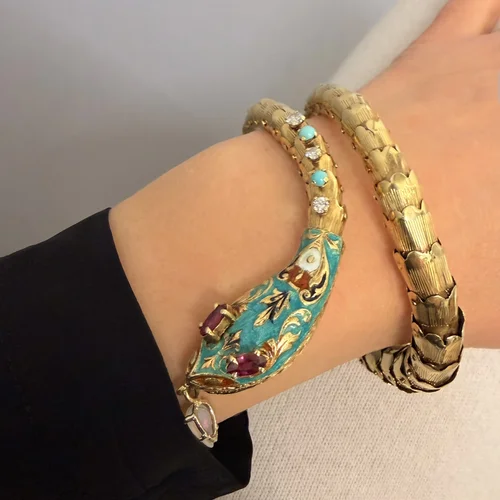 Vintage 14KT Gold Serpent Bracelet, Turquoise Enamel, Ruby, Opal and Diamond£7,850
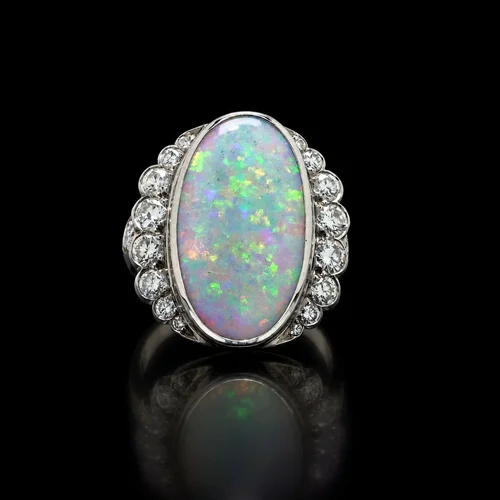
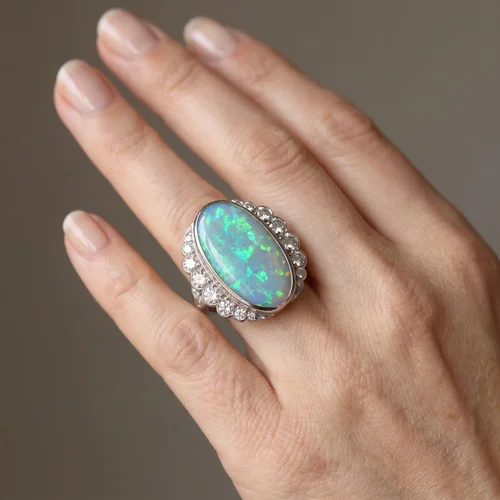 Opal & Diamond Ring, 18KT White Gold, English 1970s£3,950
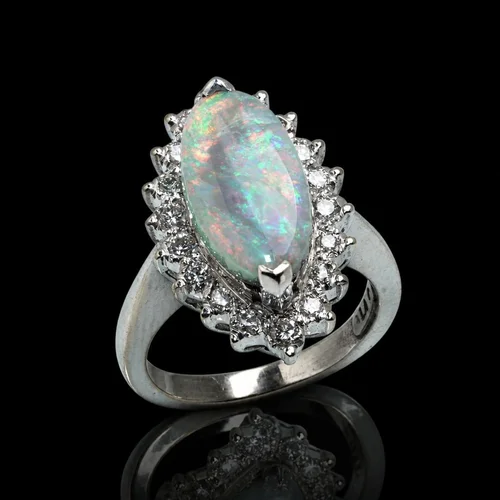
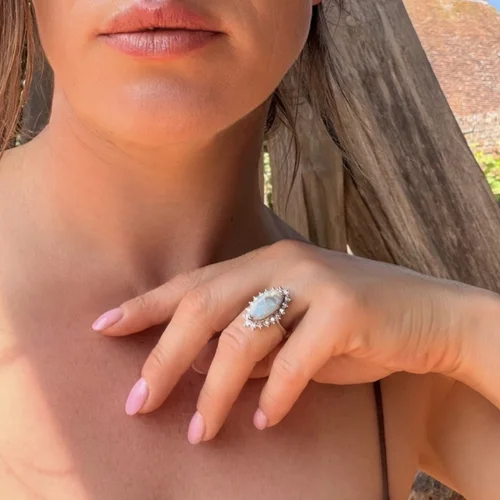 Vintage 14KT White Gold Opal and Diamond Cluster Ring£1,850
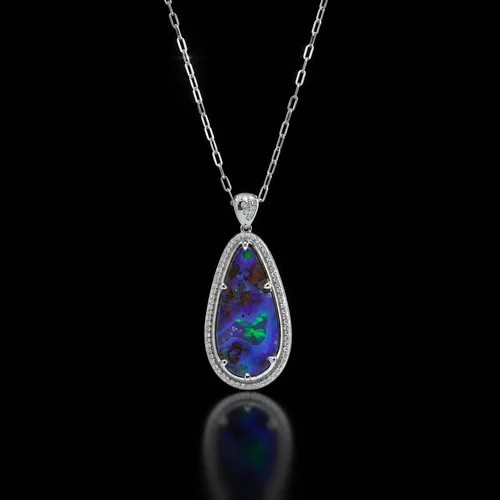
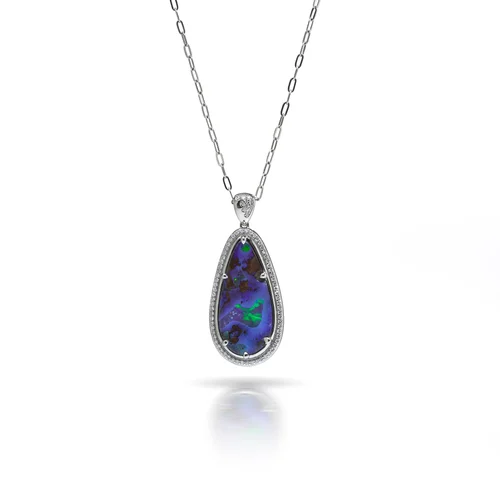 Opal and Diamond Pendant Necklace, Platinum, 16.17 ct Natural Opal£3,950
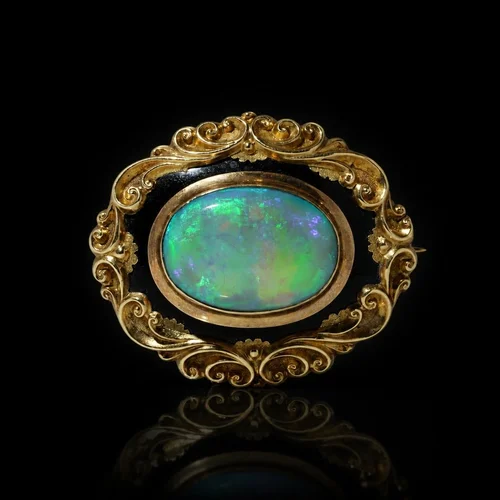
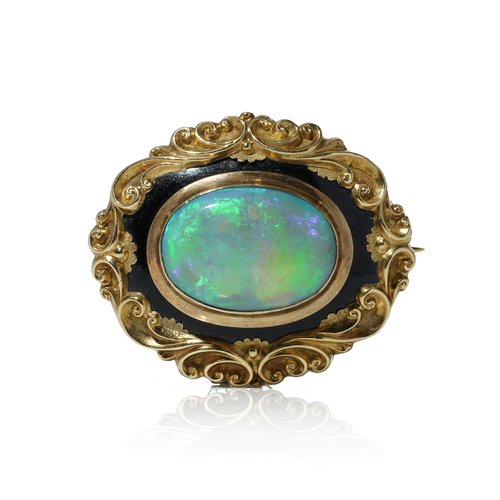 Victorian Opal and Black Enamel Brooch in 9KT Gold£8,675
Care, buying and selling
- Cleaning: warm soapy water and a soft cloth; no ultrasonic, steam or chemicals.
- Water: never soak doublets, triplets or hydrophane opal.
- Heat: avoid sudden temperature changes, which can crack opal.
- Storage: keep opal apart from harder gems that can scratch it.
Shop opal jewellery, or see birthstones and antique gemstone jewellery.
Every opal is different. Send us photos of the front, the side and the back, and we will tell you what yours is worth, free and with no obligation. Request a free valuation.
- Sell antique jewellery
- Appointments are available at our Mayfair and Braintree offices.