Royal Memorabilia Value: What Makes It Valuable
Why most coronation and jubilee china is common, what makes a royal piece valuable, and how to tell an asking price from a real sale.
Royal memorabilia value, in brief:
- The £20,000 eBay figure for a signed Meghan book was an asking price; the listing ended the same day with no reported sale.
- Most coronation, jubilee and wedding china was made in huge numbers, so it is common.
- Value comes from an early date, a named designer, items made for royal use and documented royal ownership.
- Every piece is different: send us a few photos for a free valuation, with no obligation.
In this article
Latest, October 2026: the £20,000 eBay listing
On 2 October 2026 a first edition of The Bench, the 2021 children's book by Meghan, Duchess of Sussex, appeared on eBay with a handwritten inscription addressed to Princess Eugenie and her husband. A London dealer in signed books listed it at £19,999.99 or best offer, which headlines rounded to £20,000.
That figure is an asking price, not a sale. The seller ended the listing the same afternoon and it did not appear to have sold. No certificate of authenticity was offered, and neither household confirmed the inscription.
Source: Newsweek and the Daily Express, 2 October 2026.
Anyone can type any price into a listing. Value is what a buyer actually pays, so the useful evidence for royal items is a completed sale or an auction result for something with the same kind of paperwork.
Why most royal memorabilia is common
Made in millions
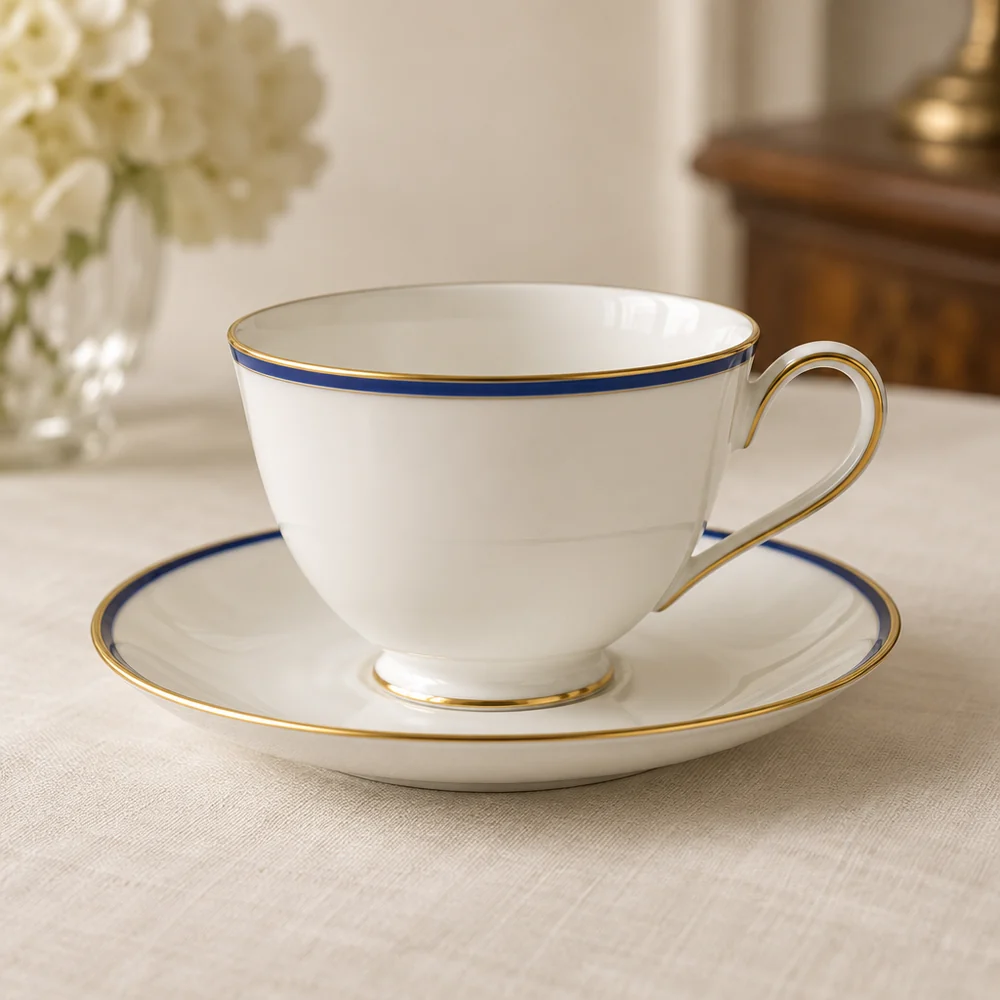
Coronation, jubilee and wedding souvenirs were made for the whole country. Ceramics expert Eric Knowles pointed out that the mugs made for Edward VIII's coronation, which never took place, were produced in huge numbers.
Fergus Gambon, director of British ceramics at Bonhams, made the same point: most royal items brought in for valuation are common souvenirs.
Source: Mail & Guardian, November 2010.
Two things hold value down: supply and condition. Pieces handed to every schoolchild survive by the million, and a chip, crack or worn transfer print takes away most of what value there is. A numbered certificate does not prove rarity either; check the edition size printed on it before assuming a piece is scarce.
Every piece is different. Send us a few photos and we will tell you what yours is worth, free and with no obligation.
The exceptions: what makes a royal piece valuable
A small share of royal material is genuinely valuable. It almost always has one of six things:
The further back, the scarcer. English delftware made to mark the Restoration of Charles II in 1660 is in a different class from anything made in the 20th century.
Wedgwood coronation mugs by Eric Ravilious are collected for the designer, and a rare colourway counts for far more than a common one.
Pieces from services made for the royal household itself, such as plates from a William IV coronation service, are in another league from souvenirs.
A letter, label, card or photograph tying the object to a royal owner or giver, and a clear chain of owners since.
Pieces worth money for their stones, gold, silver and maker, with royal provenance on top.
Original box, wrapping and paperwork. No chips, cracks or worn transfer prints.
Source: Homes & Antiques, June 2022; Mail & Guardian, 2010.
A royal warrant is not royal provenance
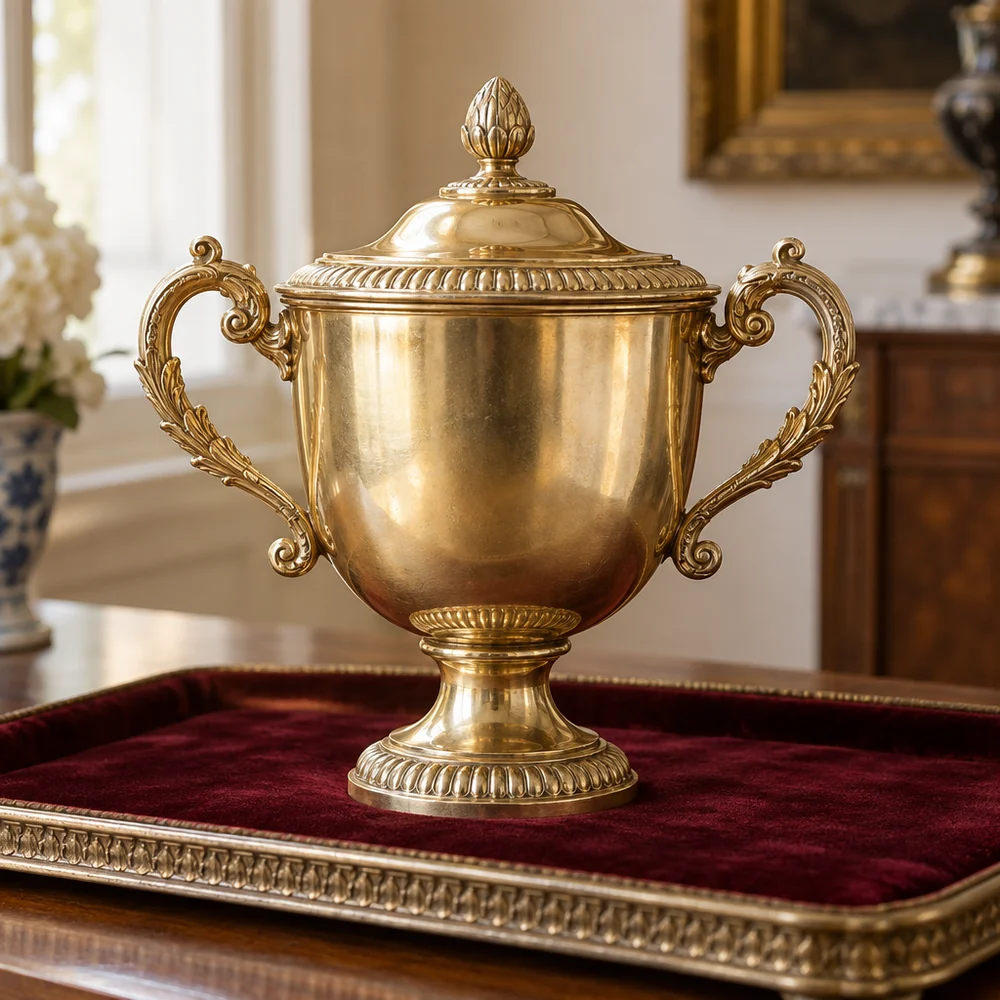
More than 800 businesses hold a Royal Warrant, granted to firms that have supplied the Royal Household for at least five years out of seven. It lets them show the Royal Arms, and the Royal Household says it is not an endorsement.
So a warrant on a box lid shows the firm supplied the household, not that this piece did. Several of our antique jewellery boxes carry warrant marks, and we price them as boxes.
Real provenance is a royal cipher or dated presentation inscription backed by a letter. See silver-gilt and vermeil and how to read silver hallmarks.
Source: royal.uk, Royal Warrants.
Famous sales with royal provenance
With royal provenance, the price follows the paperwork and the story, not the material. The best-known case is Princess Diana's "Black Sheep" jumper, worn in June 1981 months after her engagement. It sold at Sotheby's New York in September 2023 for $1.1 million with fees.
Source: Al Jazeera, September 2023.
Paper is the provenance
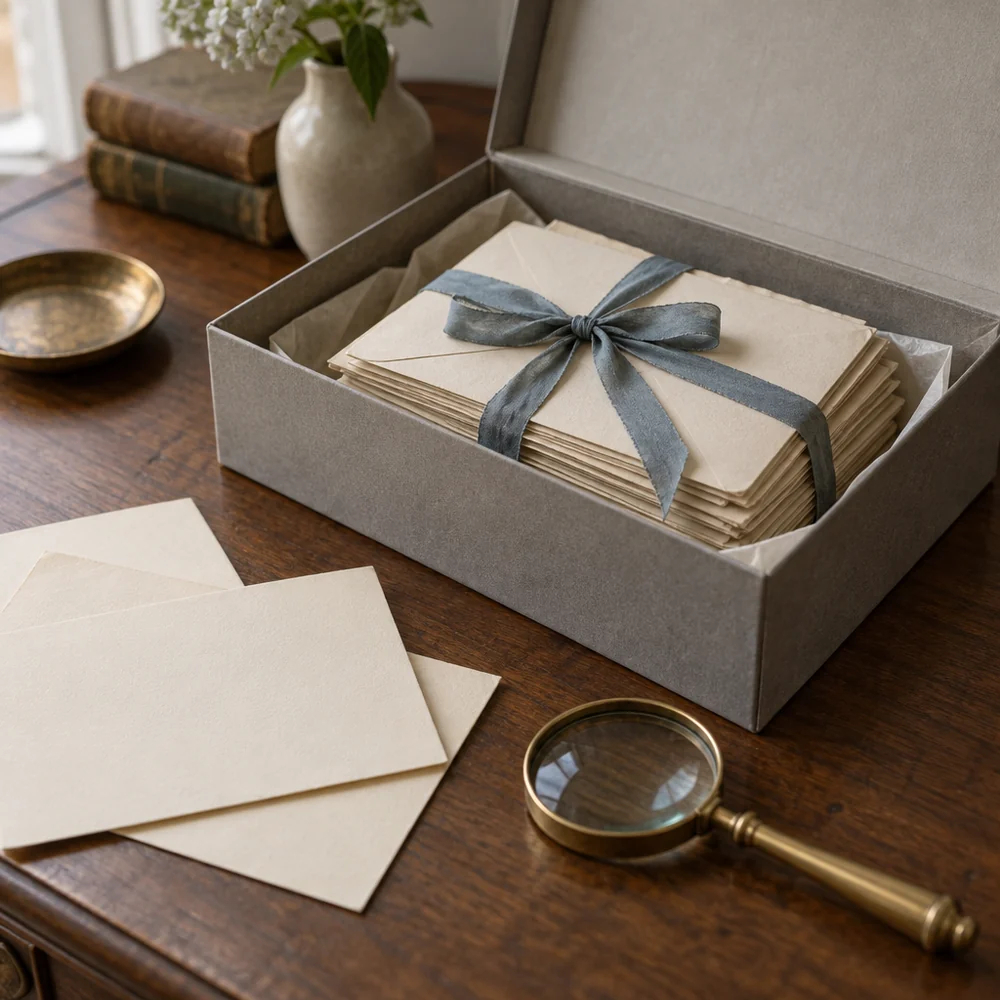
A slice of royal wedding cake is only cake. With a signed, dated label or its original box and a named member of the household behind it, slices have sold at auction well above their estimates.
Letters sold by the people they were written to carry the strongest provenance of all. If you hold a royal item, keep every scrap: letters, cards, envelopes, photographs of it in use, receipts and old catalogue entries.
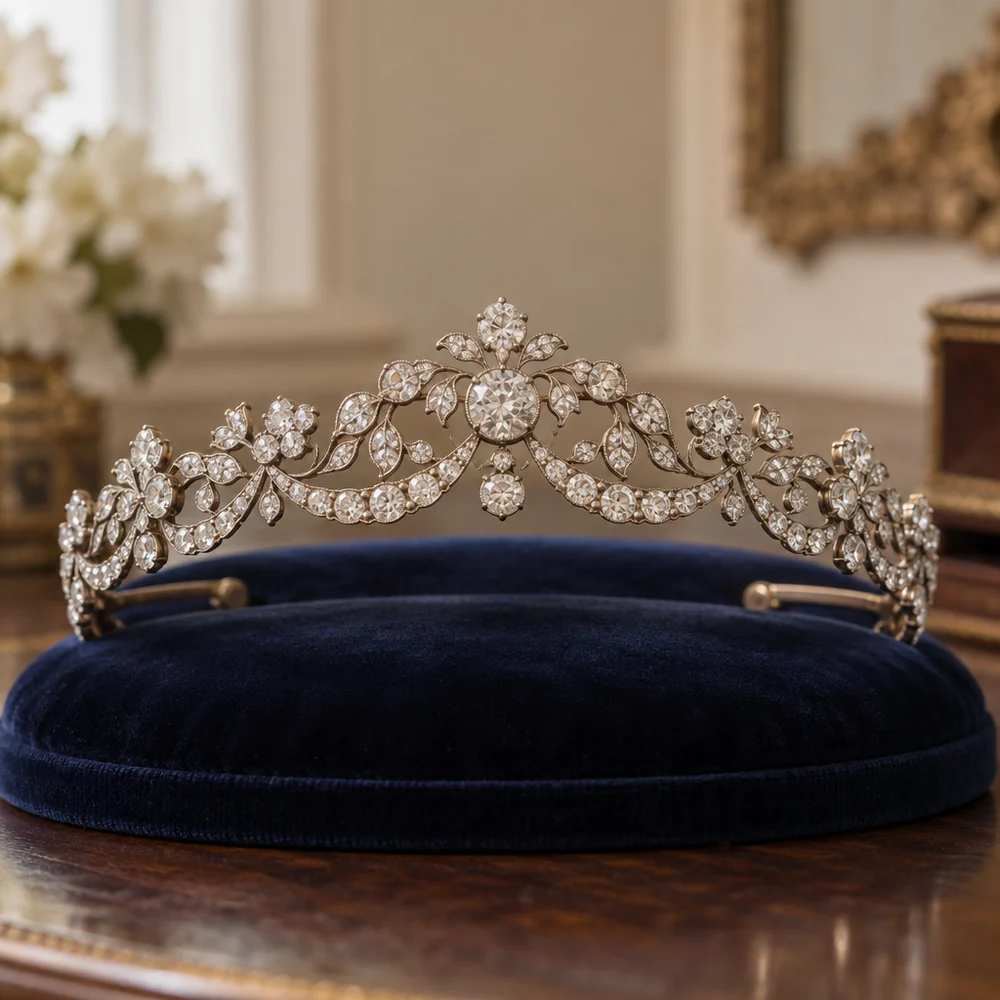
Royal jewellery: two layers of value
A tiara or pendant is worth its diamonds, gold and maker before anyone famous owns it. Royal ownership adds a premium on top: Princess Margaret's Poltimore tiara, made in 1870 and worn at her 1960 wedding, sold for £926,400 at Christie's in June 2006.
Wearing counts too. The Attallah cross, a 1920s Garrard amethyst and diamond pendant, was never Diana's; it was lent to her, and with that documented link it sold for £163,800 at Sotheby's London in January 2023.
Read more in Princess Diana's jewellery and the Princess of Wales's amethyst necklace.
Source: HELLO!, June 2006; HELLO!, January 2023.
Have a royal or antique piece to value? Get a free quote
Asking price or sale price? How to read a number
Royal stories travel with big numbers. Before you trust one, check which of these it is:
- Asking price. What a seller hopes for: an eBay listing, a shop ticket, a marketplace advert. It proves nothing about value.
- Sold price. What a buyer actually paid, such as a published auction result.
- Hammer price and premium. Auction houses add a buyer's premium to the hammer price, so reported results often include fees, as the figure for the Black Sheep jumper did. The seller receives the hammer price less commission.
- Estimate. The auction house's guide before the sale. Some royal lots beat theirs many times over; plenty of lots sell below estimate or do not sell at all.
For the inscribed book, the only fact on record is the asking price. A signed royal book is worth what a buyer pays once the inscription and its history are proven.
Every piece is different. Send us a few photos and we will tell you what yours is worth, free and with no obligation.
How to value and sell royal memorabilia
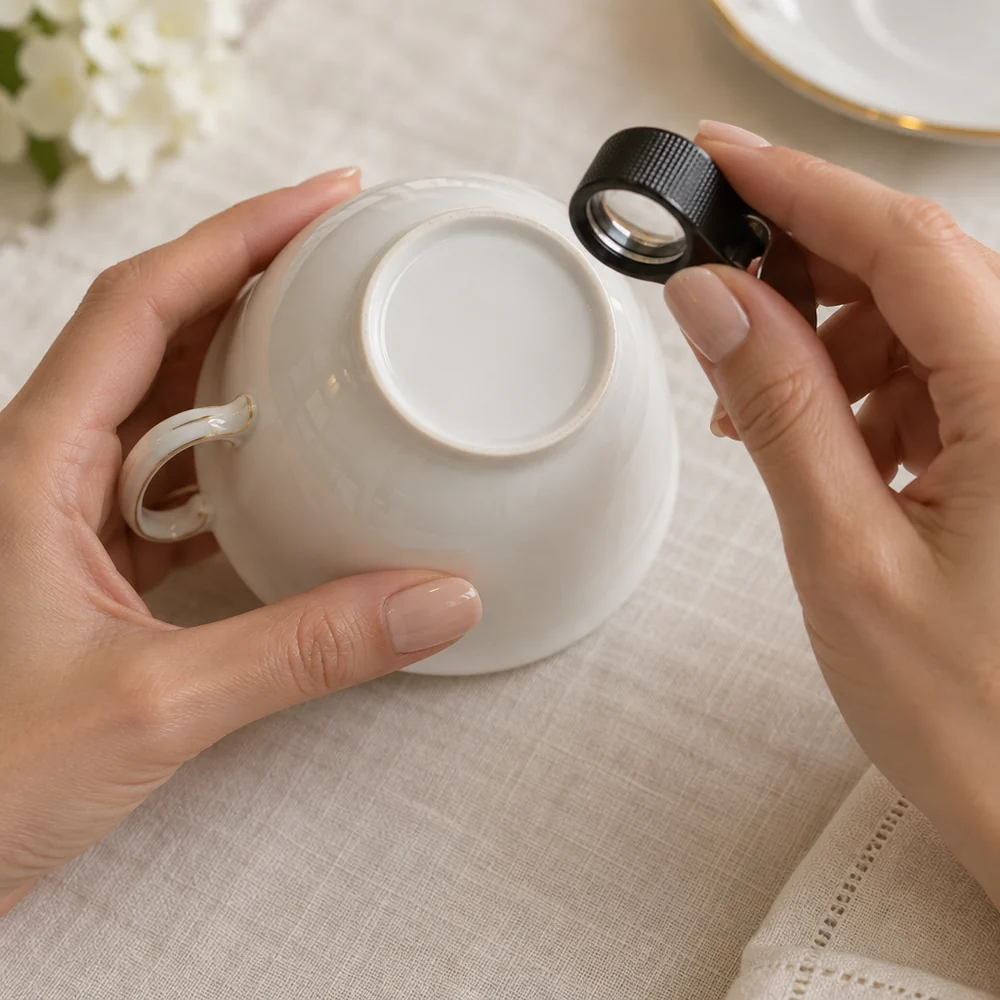
Five steps before you sell
- Identify it. The event, the date, the maker's mark on the base and any edition number.
- Gather the paperwork. Letters, labels, photographs and receipts.
- Get a free valuation. Send us a few photos and we will tell you what it is worth, with no obligation.
- Leave it as it is. Do not clean, polish or repair before a valuation.
- Pick the right buyer. Souvenir china suits a general saleroom; jewellery, silver and gold suit a specialist.
Marks on porcelain work much like hallmarks on silver; our guide to recognising original Meissen shows what to look for. If the piece came to you in an estate, see inherited jewellery: what to do and inheritance tax on jewellery. Coins are a separate case with their own collectors: see our guides to gold sovereigns and Maundy money, given by the monarch each year.
How we can help
We are antique jewellery, silver and gold dealers with showrooms in Mayfair and Braintree. We value and buy jewellery, silver, gold, watches and fine objects, royal provenance or not, directly and paid by bank transfer once checked. For a box of coronation mugs, a general saleroom is usually the better home, and we will tell you so.
- Send photos
Use the form below, or call 01376 334482 or WhatsApp us. Include the marks and any paperwork.
- Get a quote
We tell you what it is and what we would pay. See how we authenticate antique jewellery.
- Visit or post
Book an appointment at 47 Maddox Street, Mayfair, or in Braintree, Essex, or contact us about insured postage.
Browsing rather than selling? See our antique silver, decorative objects, Victorian and Edwardian jewellery, and brooches.
Request a free valuation
- A listing price is what a seller hopes for; only a completed sale shows value.
- Most royal commemoratives were mass produced, so supply keeps them common.
- Early date, named designer, royal use and documented ownership are what lift a price.
- We value and buy jewellery, silver and gold with or without royal provenance, free from photos.
Questions we are asked
Are coronation mugs worth anything?
Most were made in huge numbers, so they are common. The exceptions are early pieces, such as Queen Victoria's 1838 coronation, mugs by named designers like Eric Ravilious for Wedgwood, and pieces with documented royal ownership. Every piece is different: send us a few photos for a free valuation.
Is the signed Meghan book listed for Princess Eugenie worth £20,000?
Nobody knows. £19,999.99 was the seller's asking price on eBay in October 2026. The listing ended the same day without a reported sale, and the inscription was not confirmed by either household.
What royal memorabilia is most valuable?
Pieces with documented royal ownership: jewellery, clothing, letters and objects made for royal use. Princess Margaret's Poltimore tiara sold for £926,400 at Christie's in 2006.
Are Charles and Diana wedding souvenirs valuable?
Ordinary 1981 mugs, plates and coins were made in huge numbers. Items with a documented royal link, such as a labelled slice of the wedding cake kept by a member of the Queen Mother's household, are a different matter. Send us a few photos for a free valuation.
How do I prove royal provenance?
With paper: letters, presentation cards, labels, photographs of the item in use and a clear record of who has owned it since. Family stories without documents add little.
Does a royal warrant make an item valuable?
Not on its own. A warrant shows the maker supplied the Royal Household; it does not show that your piece was ever royal.
Where can I sell royal memorabilia?
Souvenir china suits a general saleroom. Jewellery, silver and gold, royal or not, suit a specialist dealer: send us photos for a free valuation.
Have something with a royal story?
Send photos and any letters or labels. We will tell you what it is, what it is worth and the best place to sell it.
- We buy directly
- Free valuation from photos
- Appointments in Mayfair and Braintree
- Insured postage or collection
New pieces reach our list first: join the Mozeris list.