Is Your Costume Jewellery Actually Real? 10 Home Tests
Sorting a relative's jewellery box? Ten checks you can do at the kitchen table to separate real gold, silver and stones from costume, and to spot the "fakes" that are worth money.
Is my costume jewellery real? Usually it is what it looks like, but not always. Ten minutes and a magnifier sort most boxes:
- Find the stamp first: 375, 585, 750 or 916 means gold, 925 or Sterling means silver, and GF, RGP, HGE, GP and EP mean plated.
- Gold and silver are not magnetic. A piece that jumps to a magnet is not solid precious metal; one that does not is not proven real.
- Real stones are set in claws or collets; glued stones, foil backs, bubbles and worn facet edges point to glass. Georgian paste is the exception worth keeping.
- Signed costume by Miriam Haskell, Trifari, Schiaparelli, Chanel and Dior has collectors, so check the backs for names.
- Never acid-test, scratch, soak or polish a piece. Get a free opinion first.
In this article
Why the costume pile is worth ten minutes
The most upvoted post on Reddit's r/jewelry in September 2026 came from someone asking about a box of "costume jewelry" her nana had been sent from a late friend: 7,843 upvotes by 2 October. A thrift-shop piece bought for $29.99 that turned out to be 14K gold drew 3,572, and a $1 yard-sale find posted to r/Gold drew 2,442.
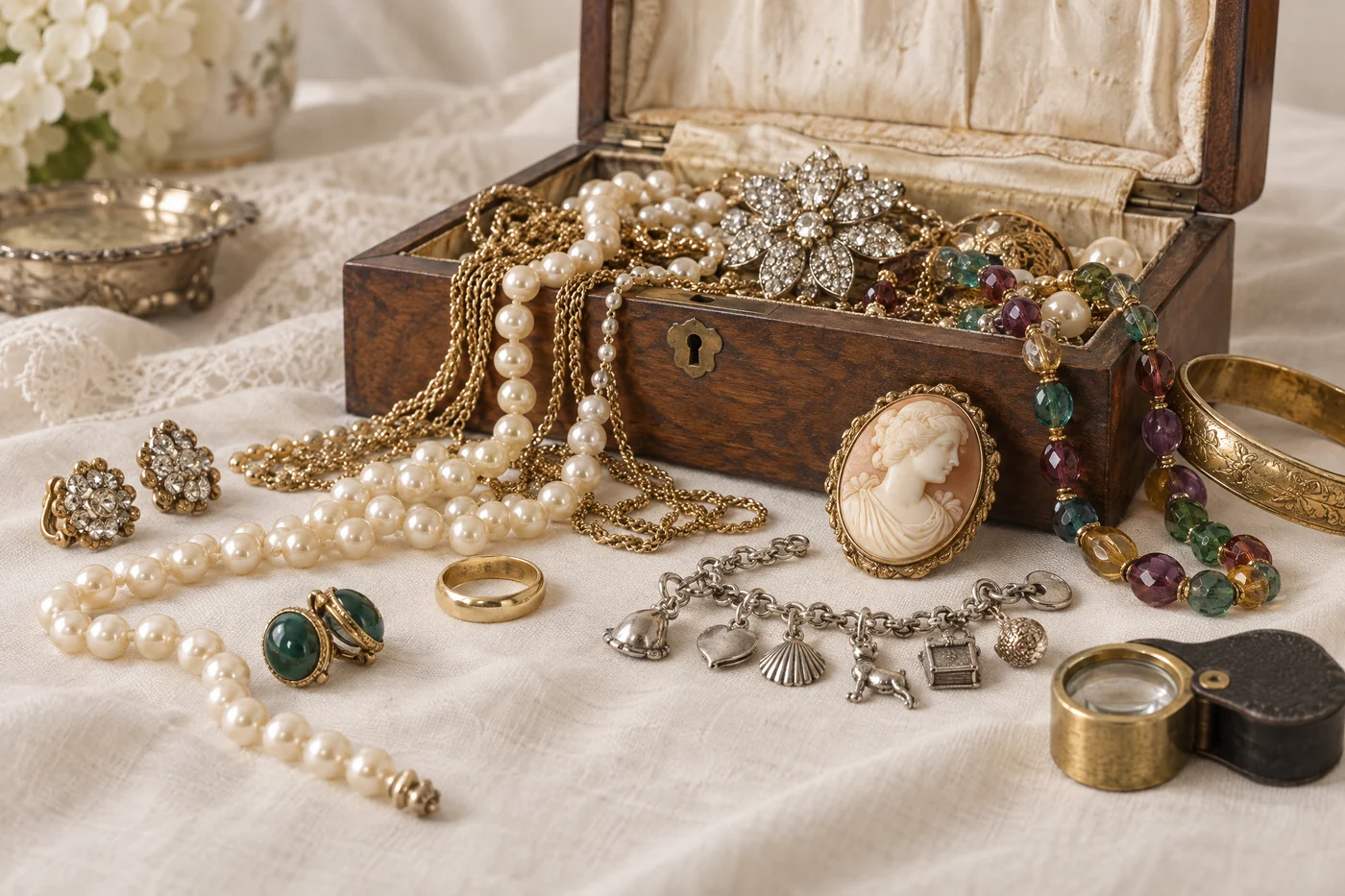
Costume jewellery was made to look like the real thing and families rarely kept the two apart, so a 9ct chain ends up tangled with gilt beads. The ten tests below, in roughly the order a dealer runs them, sort most boxes in an afternoon. You need:
Daylight by a window. Stamps and stone details vanish under a ceiling bulb.
A 10x jeweller's loupe costs a few pounds. A phone camera zoomed in also works.
A small neodymium magnet from a hardware shop. Fridge magnets are too weak.
Ones that read to 0.1 g, so you can weigh anything that turns out to be gold.
The 10 home tests
Tests 1 to 5 sort the metal, test 6 the way a piece was made, tests 7 to 9 the stones, and test 10 the maker.
Read the stamps
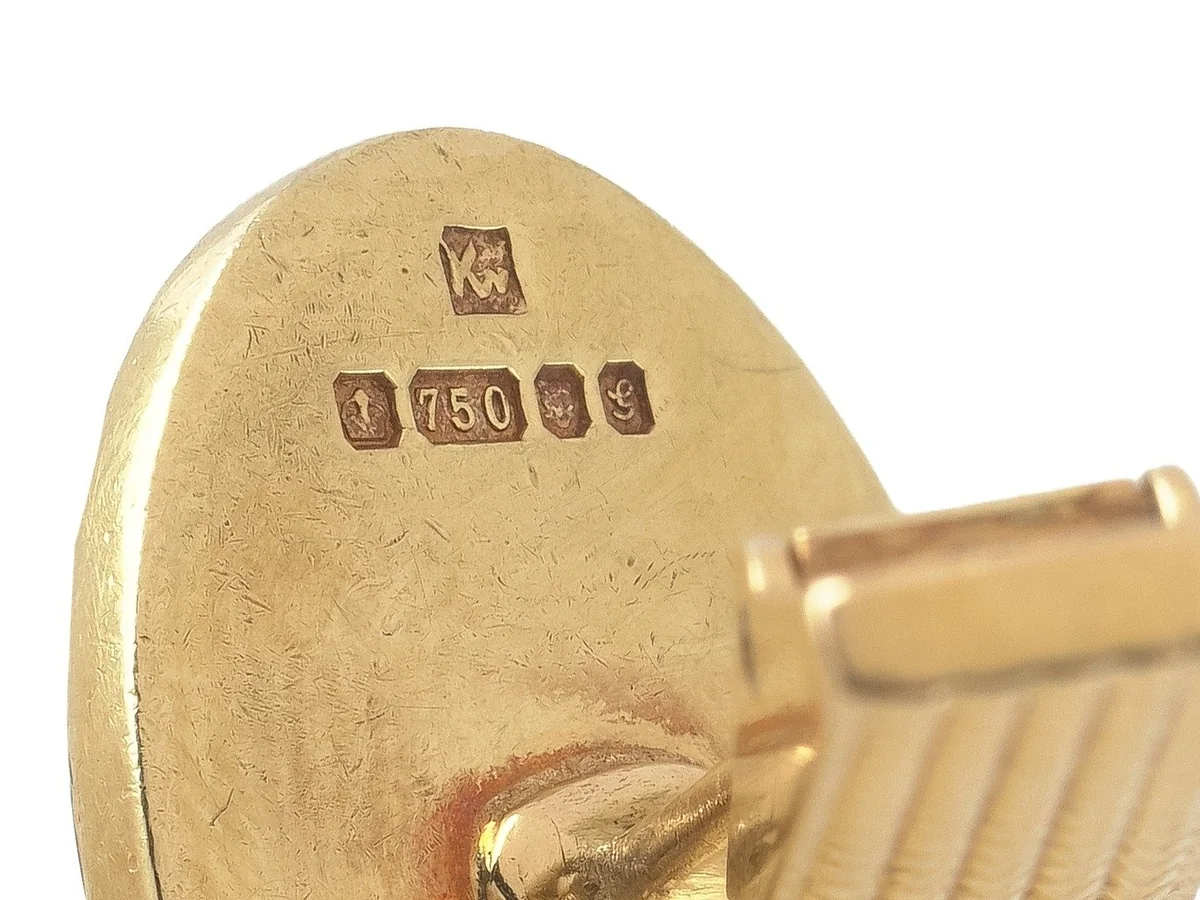
Look inside ring shanks, on clasps, chain ends, brooch pins and earring backs. Plated metal is often marked too, and those are the marks people misread.
Solid gold
Solid silver and platinum
Plated or filled: not solid
- GF (gold filled) is a layer of karat gold bonded to a base metal core; under US rules it must be at least a twentieth of the metal's weight. RGP is the same idea with a thinner layer.
- Nickel silver and alpaca contain no silver at all; EPNS is silver plate on top.
- 9ct back & front means two thin sheets of 9ct gold over a metal core, common on Victorian and Edwardian lockets and bangles.
- 925 on a gold-coloured piece means silver underneath: gilded silver, sold as vermeil.
A stamp is a claim, not a proof. Fakes can carry a 14K or 750 stamp, and plenty of real gold carries none. A full British hallmark, struck by an assay office, carries far more weight than a bare number. More: gold hallmarks explained, how to read silver hallmarks, platinum hallmarks and silver-gilt and vermeil.
Try a magnet
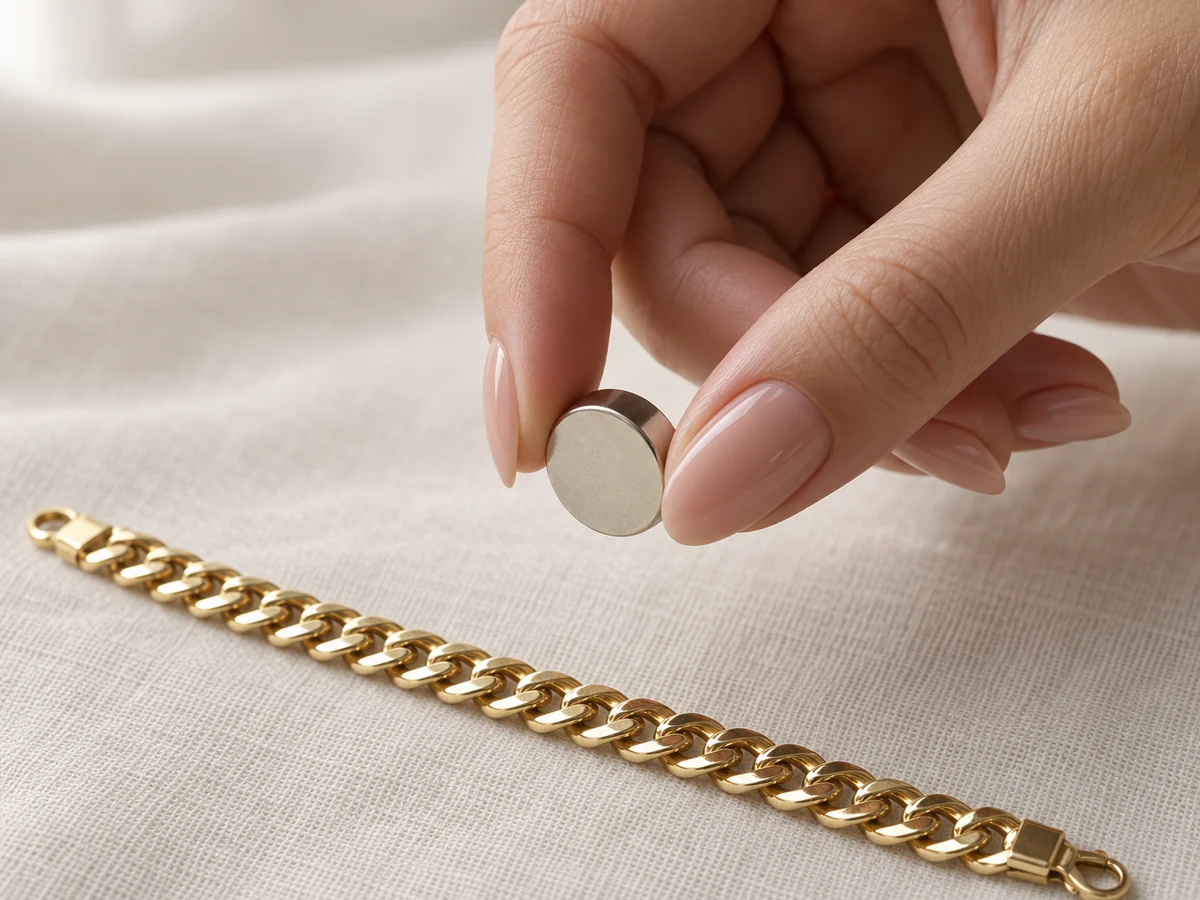
Gold, silver and platinum are not magnetic. If a piece jumps to the magnet, it is steel, iron or nickel under whatever colour it shows. The test only works one way: brass, copper and many plated pieces ignore a magnet too, so no pull does not mean real.
Test the links rather than the clasp, because bolt rings and box clasps hide small steel springs.
Check the colour where it wears
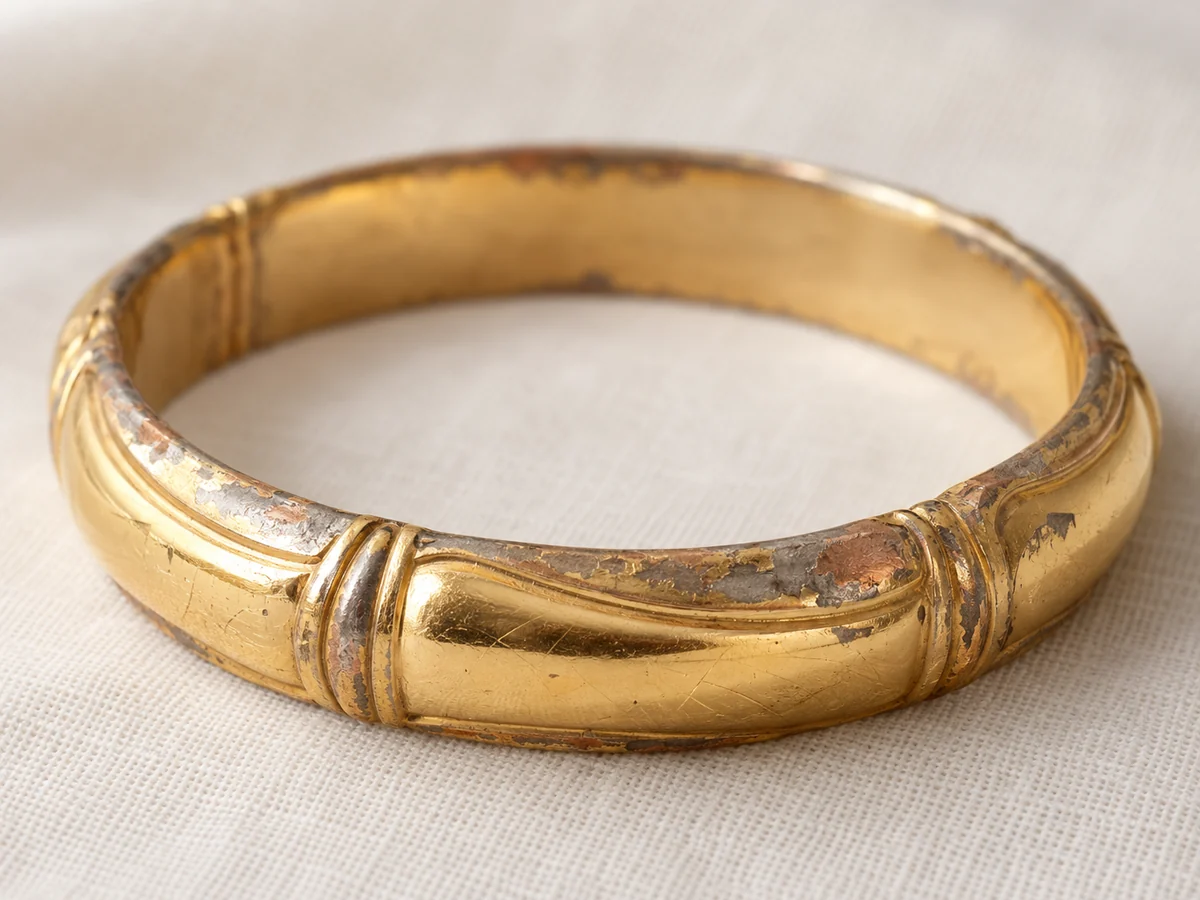
Plating wears through first at edges, ring backs, clasps and the insides of bangles. A brassy, coppery or grey patch under a yellow surface means plate. Solid gold is the same colour all the way down.
Skin and tarnish
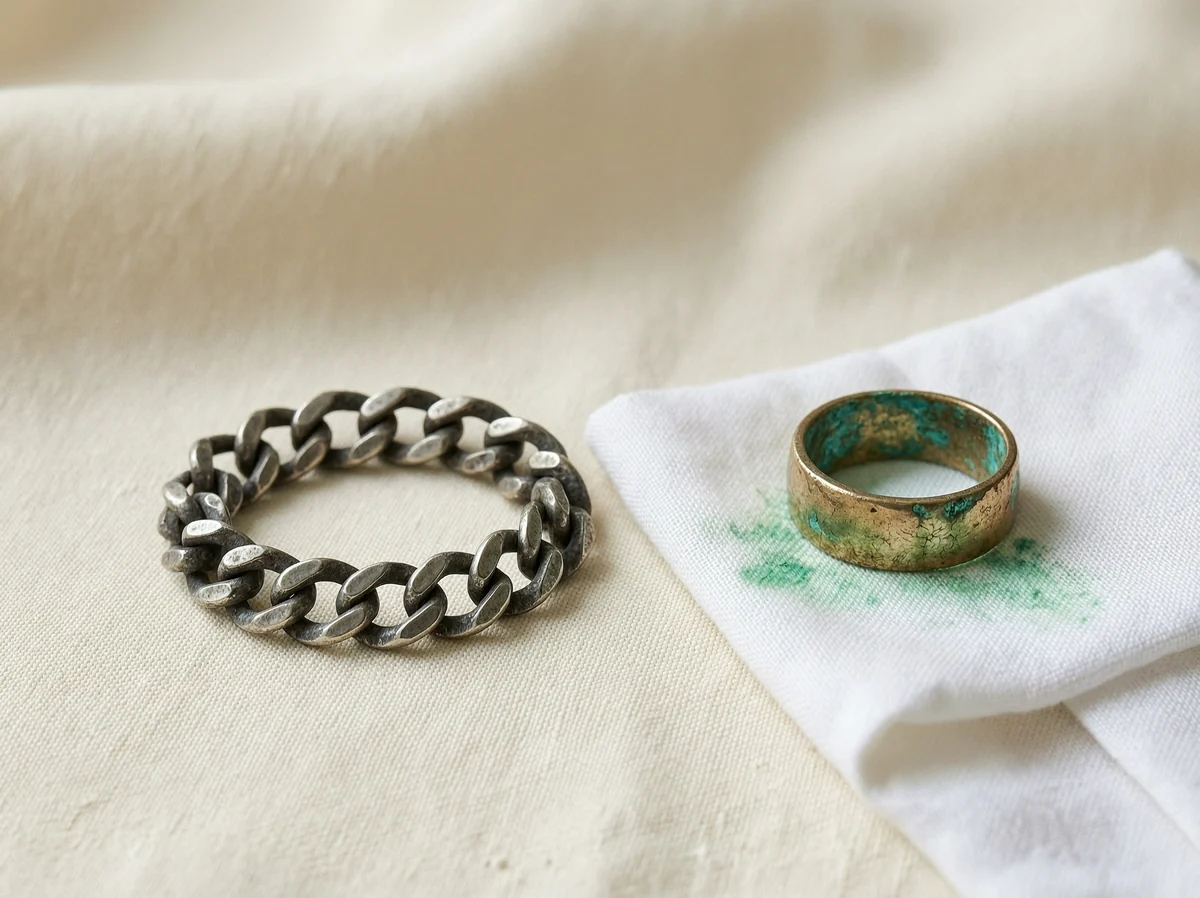
Green or black marks on skin come from copper. Base metal is the usual culprit, though 9ct gold is 62.5% other metals and can mark sensitive skin too. Silver tarnishes grey to black, which is a good sign.
Weight and feel
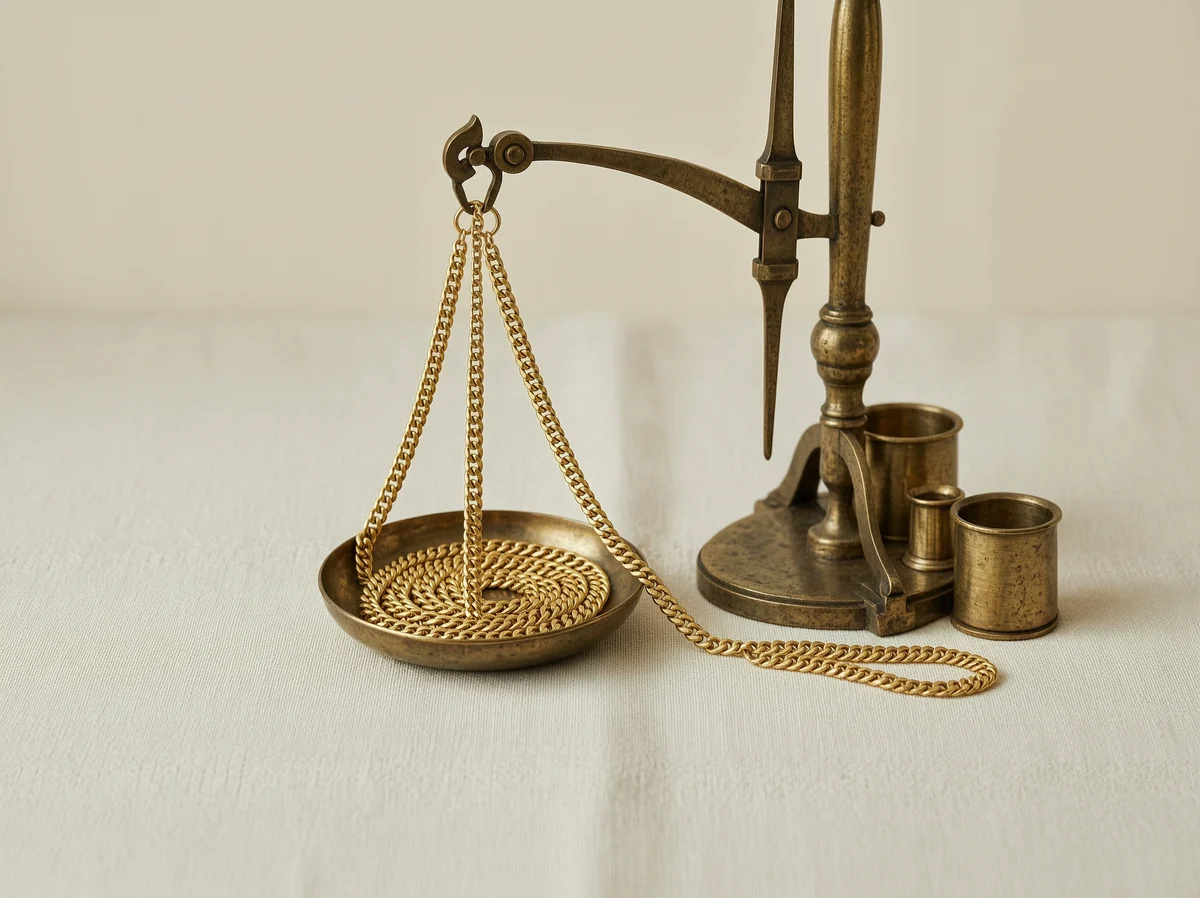
Pure gold is about 19 times heavier than the same volume of water, so a solid chain feels heavier than it looks and plated pieces feel light. Weigh anything gold: weight sets its floor value. As a guide, 10 grams of 9ct gold holds 3.75 grams of pure gold, worth … at today's price.
Loading the live gold price…
The value of the gold content at the spot price, not an offer. Antique and signed pieces are often worth more than their gold.
The gold-only version of these checks: how to tell if gold is real and how to spot fake gold jewellery.
Found some gold? Get a free quote
Turn it over: clasps, pins and backs
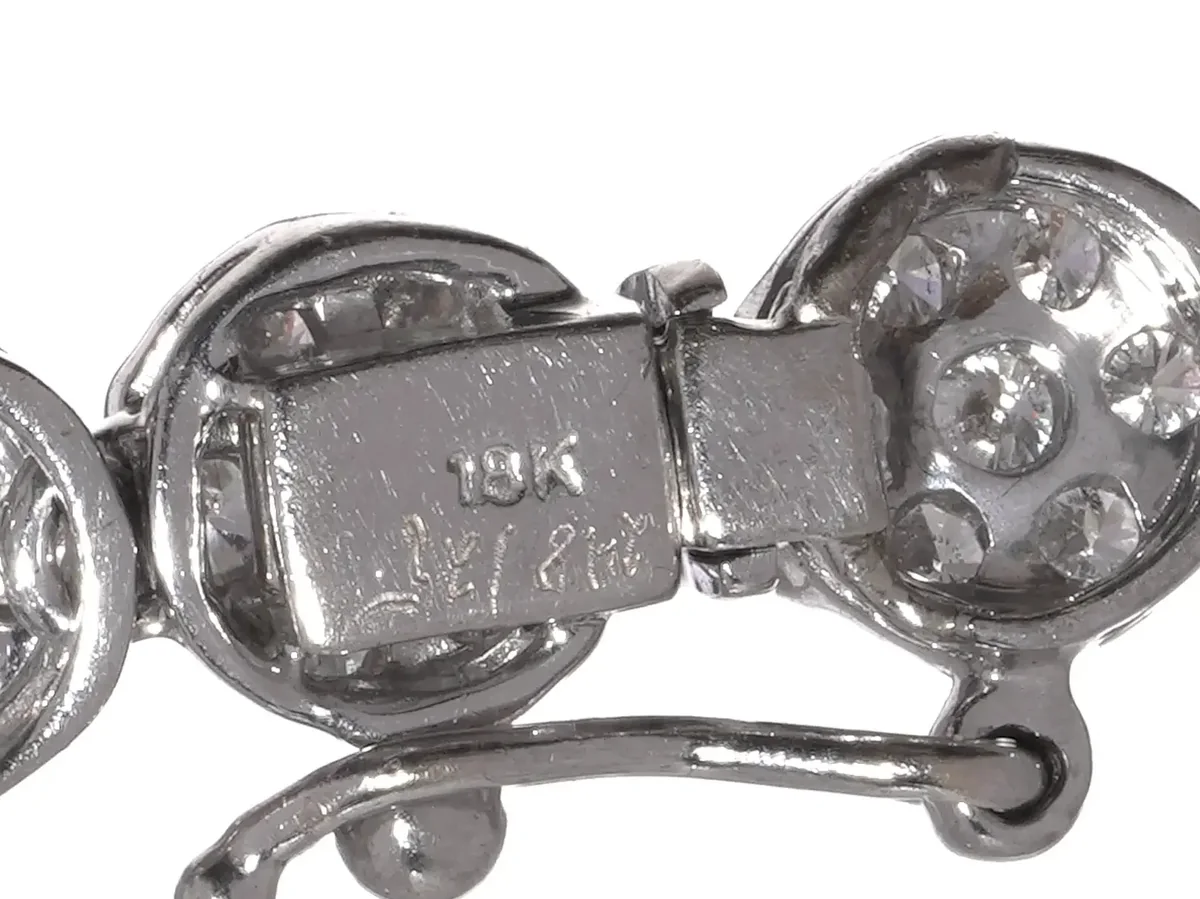
Fine jewellery was made to last and finished where nobody looks. Costume jewellery was made to be bought and finished where everybody looks.
| Look at | Fine jewellery | Costume |
|---|---|---|
| Stones | Held in claws, collets or grain settings | Often glued into cups; glue shows at the edges |
| Back | Hand-finished, often pierced so light reaches the stones | Flat stamped back, mould seams, rough cast surface |
| Clasp | Marked, with a safety catch on bracelets and better necklaces | Unmarked spring ring or hook in plated metal |
| Joins | Soldered links and jump rings | Open jump rings, crimps and wire wraps |
| Brooch pin | Gold or silver pin and catch, often marked | Base metal pin, plain rollover catch |
Screw-back and clip-on earrings were made for unpierced ears, so they are not a sign of costume on their own. More in our guides to dating necklace clasps and dating earrings by their fastenings.
Look into the stone with a loupe
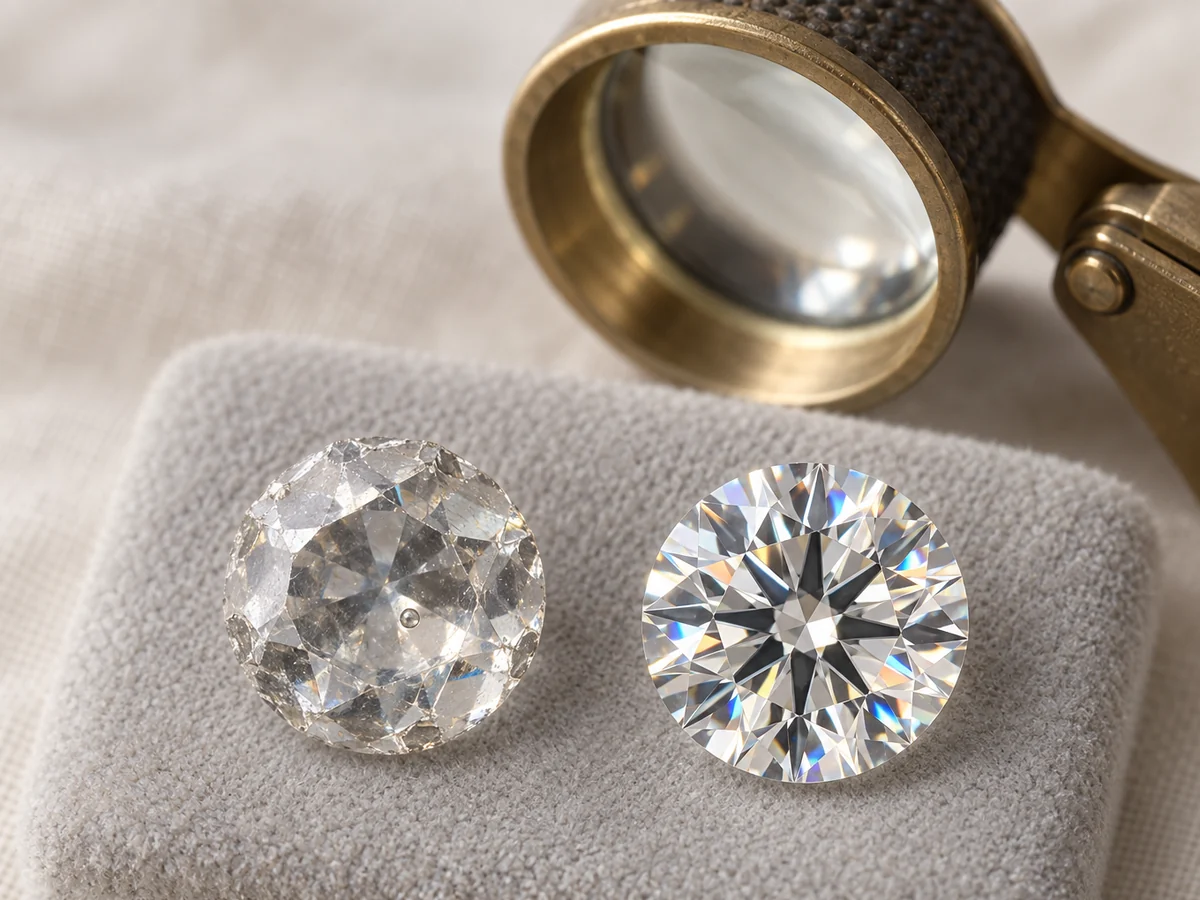
Glass shows round gas bubbles and swirls. Because it is soft (about 5.5 on the Mohs scale, against 9 for sapphire and 10 for diamond) its facet edges round off and chip. Natural stones show crystals and feathery cracks, with sharp edges.
One trap: synthetic rubies and sapphires, made from the early 1900s, can show curved lines and bubbles too.
Look behind the stone
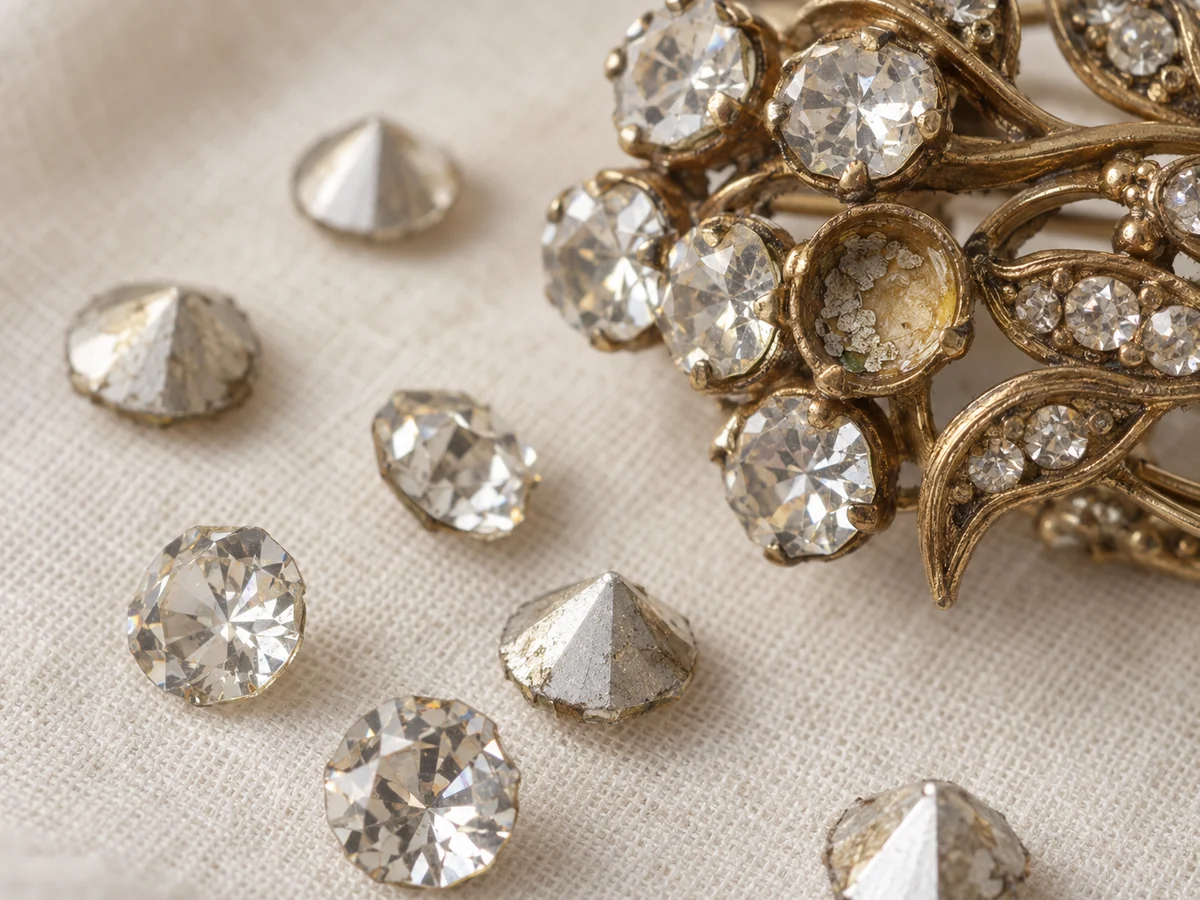
Rhinestones are usually glass with a mirrored foil on the back, glued into a cup. If you can see a silvery or gold-coloured backing glinting through, it is most likely glass.
But a closed back is not always a bad sign: Georgian jewellers closed and foiled the backs of real diamonds and gemstones too, and the paste they set the same way is collected in its own right.
The fog test, and the tooth test for pearls
Breathe on a clean colourless stone. A diamond spreads heat so fast the mist clears in a second or two; glass and cubic zirconia stay misty a moment longer. It is a hint, not a verdict: moissanite clears just as fast, and a greasy stone fogs whatever it is made of.
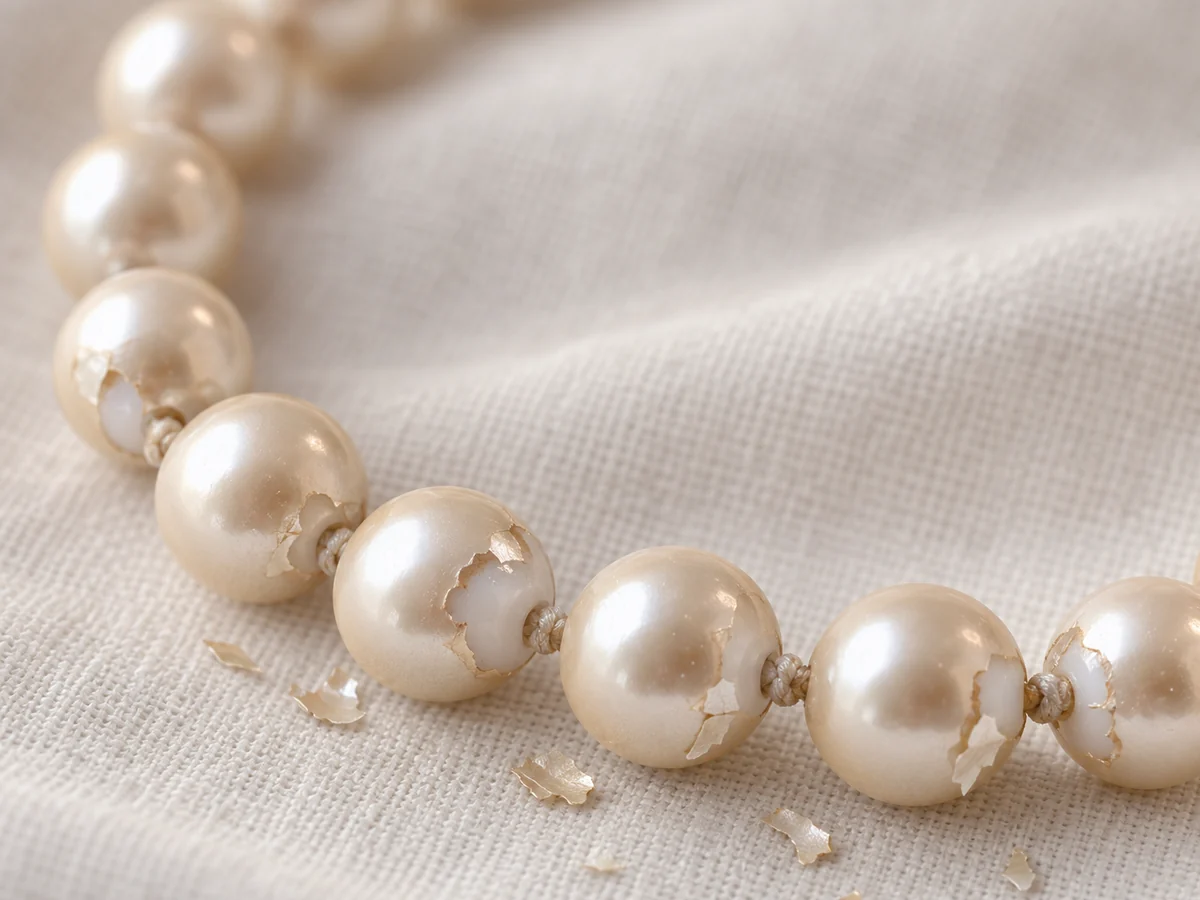
Rub a pearl gently along the edge of your front teeth. Natural and cultured pearls feel gritty; most imitations feel smooth, and their coating often flakes around the drill hole. Next steps: how to tell if a diamond is real and natural vs cultured pearls.
Look for a signature
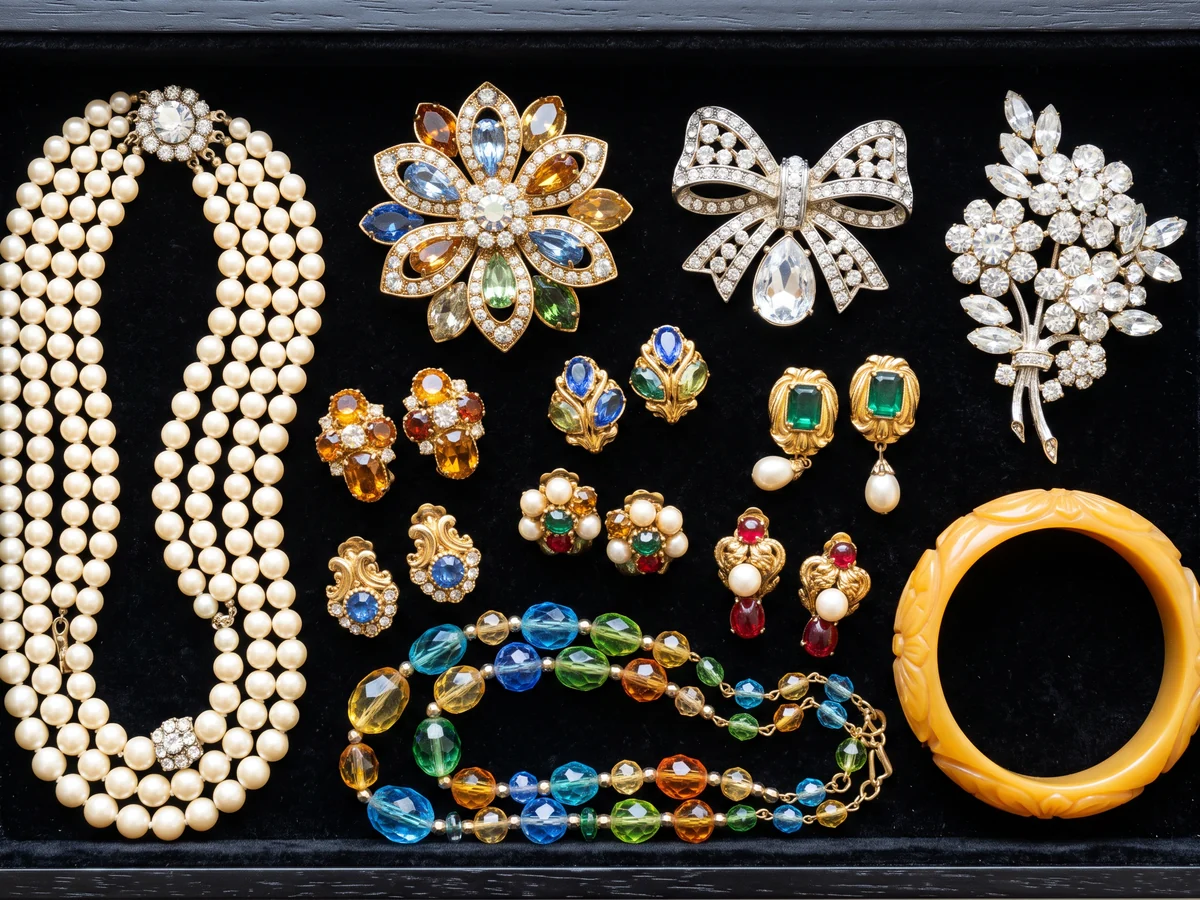
Some costume jewellery is collected for who made it, so a name can matter more than the metal. It is usually stamped on a small plate or directly on the back, the clasp or the earring clip.
| Maker | When | What to look for |
|---|---|---|
| Miriam Haskell | New York, from 1926 | Hand-wired glass beads and faux pearls on filigree. Unsigned until the late 1940s. |
| Trifari | New York, from 1910 | Designs by Alfred Philippe, formerly of Cartier and Van Cleef & Arpels, from 1930. Later marks have a crown above the T. |
| Schiaparelli | Paris and New York | Early pieces are signed SCHIAPARELLI in capitals; later ones in script. |
| Chanel | Paris, from the 1920s | Gripoix poured glass from the early 1920s. CHANEL and the interlocking Cs. |
| Christian Dior | 1950s on | Mitchel Maer made Dior's London costume jewellery from 1952 to 1956; the German firm Henkel & Grosse made it for decades after. |
Signatures are copied too. A real one is crisp and sits in the right place for the maker and the date; a fake is often soft, crooked or on a piece of the wrong quality.
Bakelite is another collected costume material: see is Bakelite worth anything? For fine-jewellery signatures (Cartier, Tiffany, Van Cleef), see signed jewellery values.
When the "fake" is the valuable part
Three kinds of not-quite-gold and not-quite-diamond are collected, so check before anything goes in the charity bag.
Georgian paste
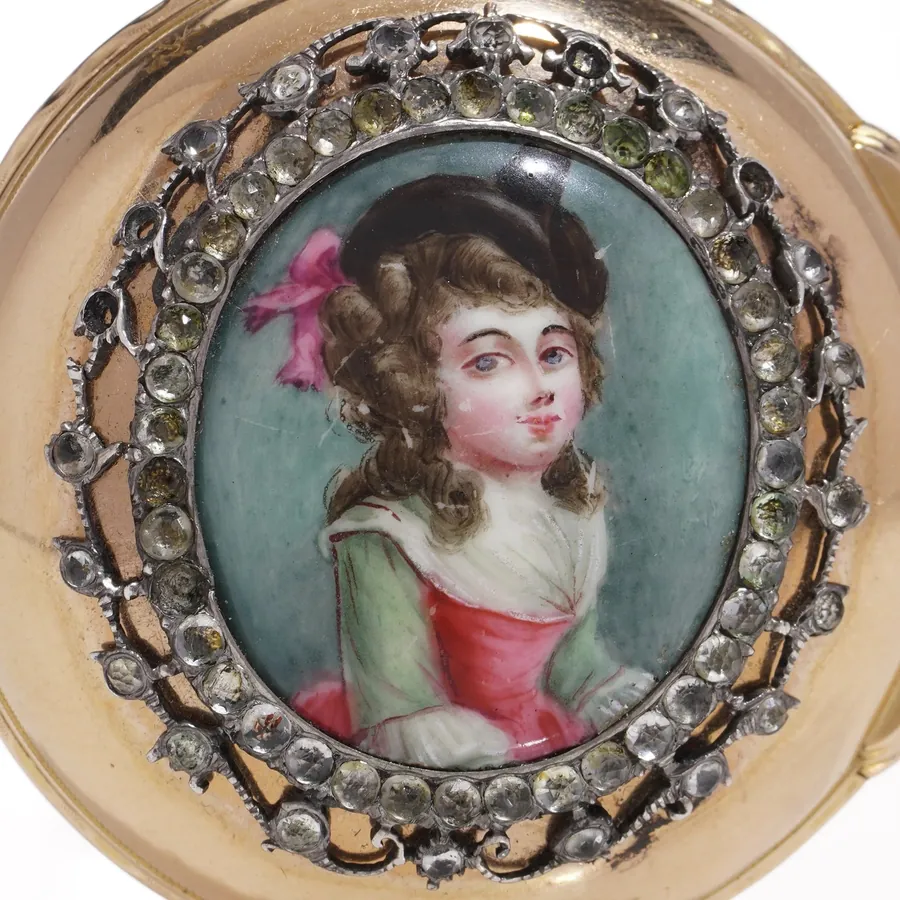
Lead glass hand-cut like diamonds and set over foil in closed backs, perfected by Georg Friedrich Strass in Paris in the 1730s. It sells as antique jewellery, not costume.
Pinchbeck
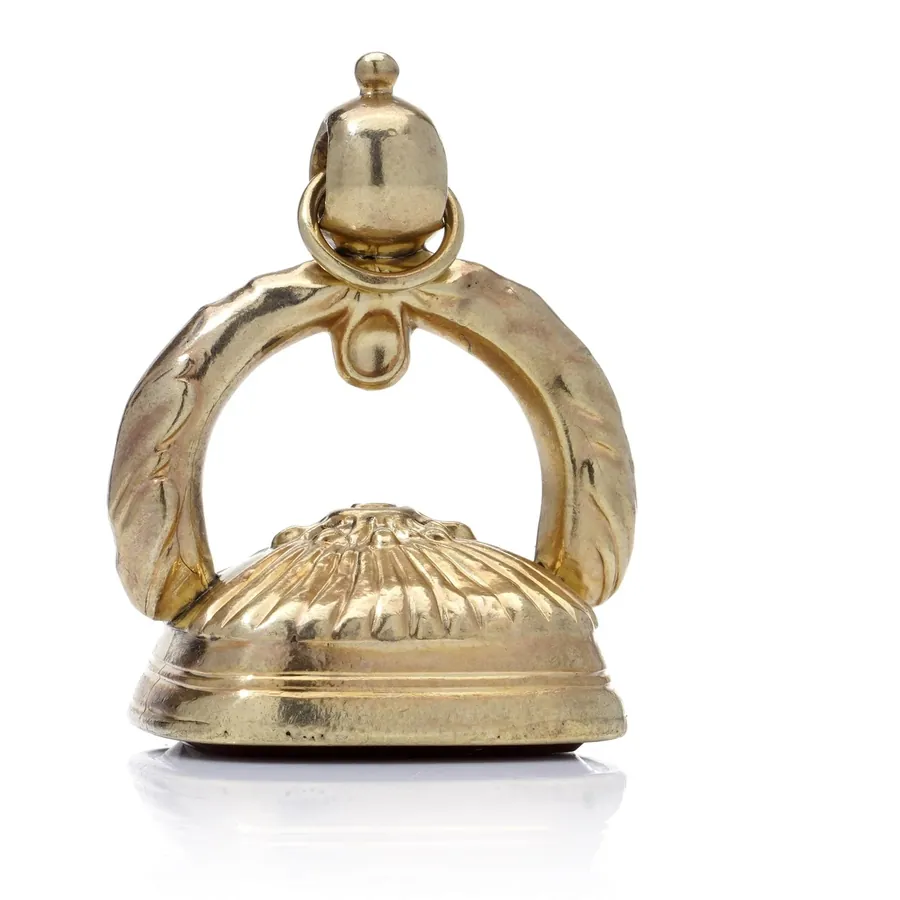
A copper and zinc alloy invented in the 1720s by the London clockmaker Christopher Pinchbeck to look like gold. It fell out of use after 9ct gold became legal in 1854, so it is a sign of age. This seal fob has a carnelian base engraved with a monogram, and no carat mark: pinchbeck carries none.
French rolled gold
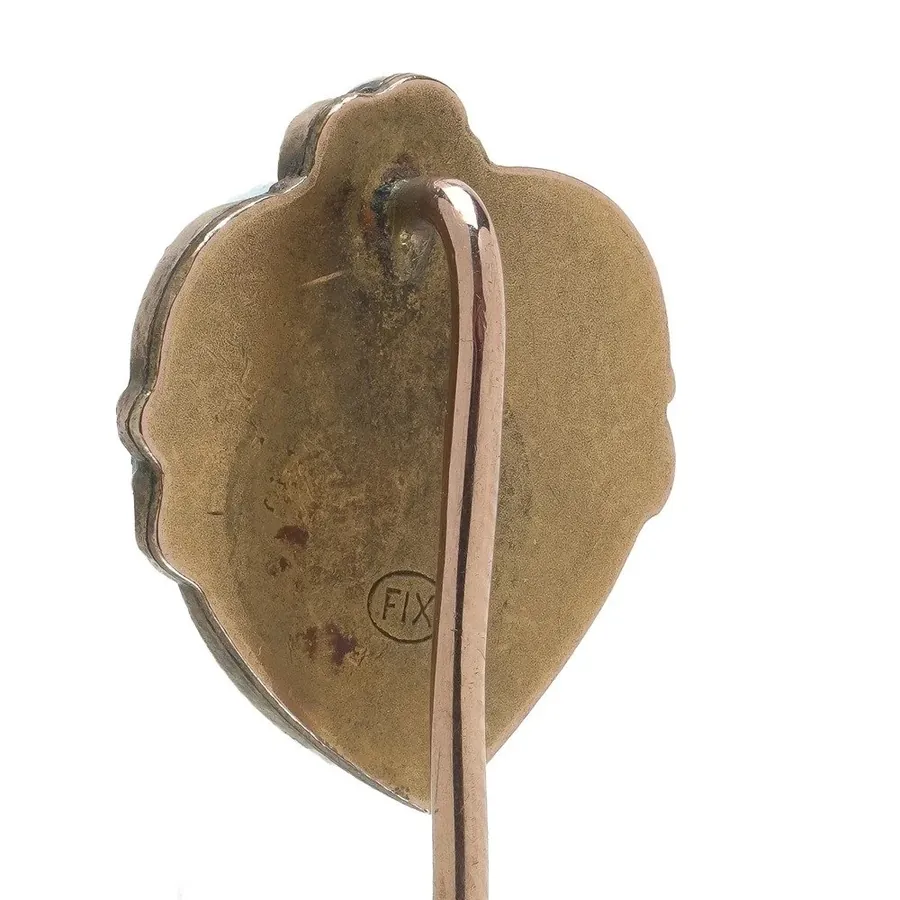
Pieces struck FIX carry a thick layer of gold rolled onto a base core. Good Art Nouveau work in it is collected, like this stick pin with a maiden among irises.
When to get a professional test, and what not to do
Home tests sort a box into "clearly costume", "clearly real" and "not sure". Take the "not sure" pile, and anything heavy, signed or old, to someone with the right equipment.
| Test | What it tells you |
|---|---|
| X-ray fluorescence (XRF) | The metals in the surface and their proportions, without marking the piece. |
| Acid on a touchstone | Gold purity from a streak rubbed on a test stone, not from the piece. |
| Diamond tester | Heat conductivity separates diamond from glass and cubic zirconia. A tester that also reads electrical conductivity separates diamond from moissanite. |
| Gem laboratory report | Natural or synthetic, heated or not, natural or cultured pearl. |
How we check pieces before we buy or sell them: how we authenticate antique jewellery.
What not to do
- Do not use a home acid kit. It is hazardous, marks the piece, and on plate only tests the surface.
- Do not scratch, file or bite it. A notch takes value off a real piece; biting just dents gold.
- Do not soak it or use an ultrasonic cleaner. Water spoils foiled backs and loosens glued stones; pearls, opal, coral and turquoise are easily damaged.
- Do not polish it. Polishing removes plating, patina and the crisp edges of hallmarks.
- Do not throw away the odds and ends. Single earrings, broken chains and lone cufflinks in gold are paid by weight: see selling broken and scrap gold.
- Do not sell the whole box by weight before someone has looked for signed, antique and paste pieces among it.
Sorting a whole estate? Read inherited jewellery: what to do and the probate guide to selling inherited gold.
How we can help
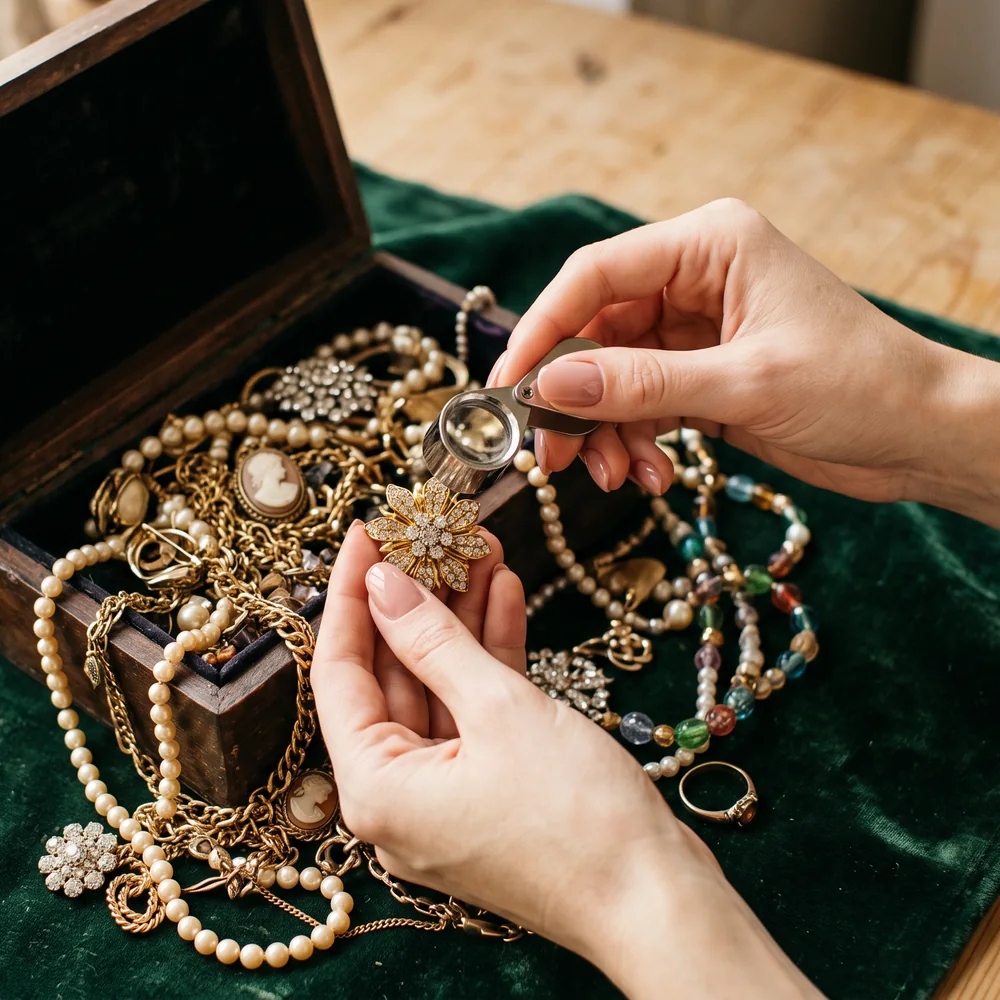
Send us the whole box
We look at mixed jewellery boxes of every size, from a single chain to a whole estate.
We buy gold and silver for their metal, and antique, signed and collectable pieces as jewellery, which is usually worth more.
- Send photos
The front and back of each piece, and close-ups of any stamps, with the form below or our free valuation form.
- Get our view
We tell you what is gold, silver, costume or collectable, and what we would pay. Free and with no obligation.
- Bring it or post it
An appointment at our Mayfair or Braintree showroom, or fully insured postage. Call 01376 334482 or message us on WhatsApp.
- Get paid
By bank transfer once we have checked the pieces.
Send us photos for a quote
More ways to sell: sell gold jewellery, sell antique jewellery and sell vintage jewellery.
- Read the stamps first, then use a magnet and check the colour at worn edges.
- Glued, foiled and bubbly stones are usually glass, but Georgian paste is collected.
- Look for signatures before anything is sold by weight or given away.
- Do not acid-test, scratch, soak or polish. Send photos for a free opinion.
Questions we are asked
Is costume jewellery worth anything?
Most of it sells for small sums, but signed pieces by makers such as Miriam Haskell, Trifari, Schiaparelli, Chanel and Christian Dior have collectors, and Georgian paste, pinchbeck and good French rolled gold are collected as antiques. Real gold and silver are often mixed in with costume, so check every piece.
How can I tell if my jewellery is real gold at home?
Look for a stamp such as 375, 585, 750 or 916, check that a strong magnet does not pull it, and look for a different colour showing through where it wears. None of these is proof on its own; a professional test such as XRF settles it without marking the piece.
What does 925 mean on jewellery?
925 means sterling silver, 92.5% pure. A gold-coloured piece stamped 925 is gilded silver, often sold as vermeil, not gold.
What do GF, RGP and HGE mean on jewellery?
They all mean the piece is not solid gold. GF is gold filled, a layer of karat gold bonded to a base metal core; RGP is rolled gold plate, a thinner layer; HGE is heavy gold electroplate.
Does real gold stick to a magnet?
No. Gold, silver and platinum are not magnetic, so a piece that jumps to a magnet is not solid precious metal. The reverse is not true: brass and copper ignore magnets too. Test the links, not the clasp, which may contain a steel spring.
Which costume jewellery brands are valuable?
Miriam Haskell, Trifari, Schiaparelli, Chanel and Christian Dior are the best known. Look for the name on a small plate or on the back, the clasp or the earring clips. Condition matters: missing stones and worn plating cut the price.
Is old paste jewellery worth money?
Georgian and early Victorian paste, hand-cut lead glass set over foil in closed backs, is collected as antique jewellery. Later moulded glass rhinestones in plated metal are costume.
Sorting a jewellery box?
Send photos of the pieces, backs and stamps. We tell you what is real and what it is worth, free and with no obligation. Call 01376 334482 or WhatsApp us.
- We buy directly
- Free valuation from photos
- Appointments in Mayfair and Braintree
- Insured postage or collection
New pieces reach our list first: join the Mozeris list.