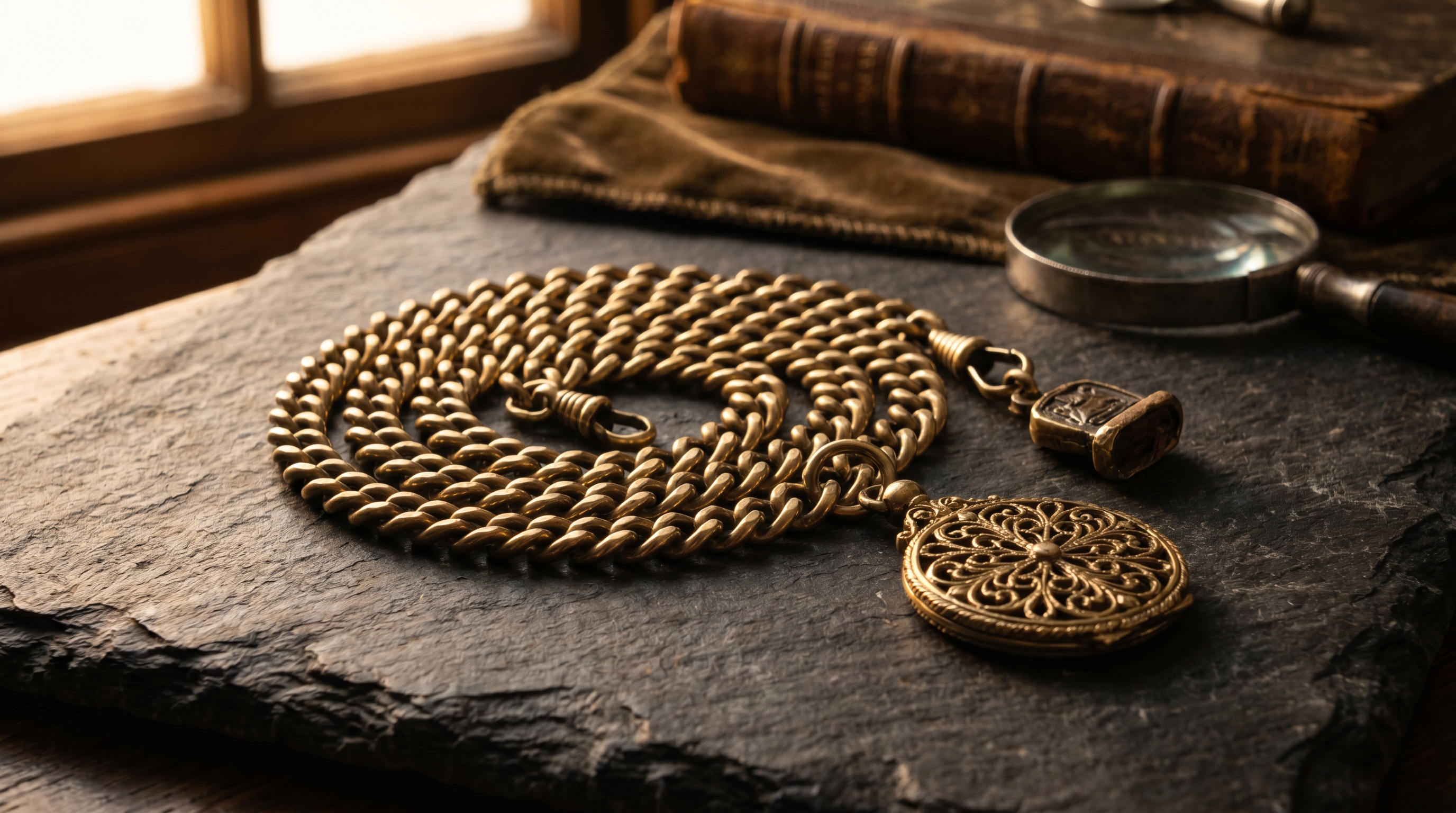
Pinchbeck: What It Is, How to Identify It & What It's Worth
Pinchbeck is the great Georgian impostor — a copper-zinc alloy so convincingly golden that it protected travellers from highwaymen. Genuinely antique pinchbeck is now collectable in its own right. Here's how to identify it.
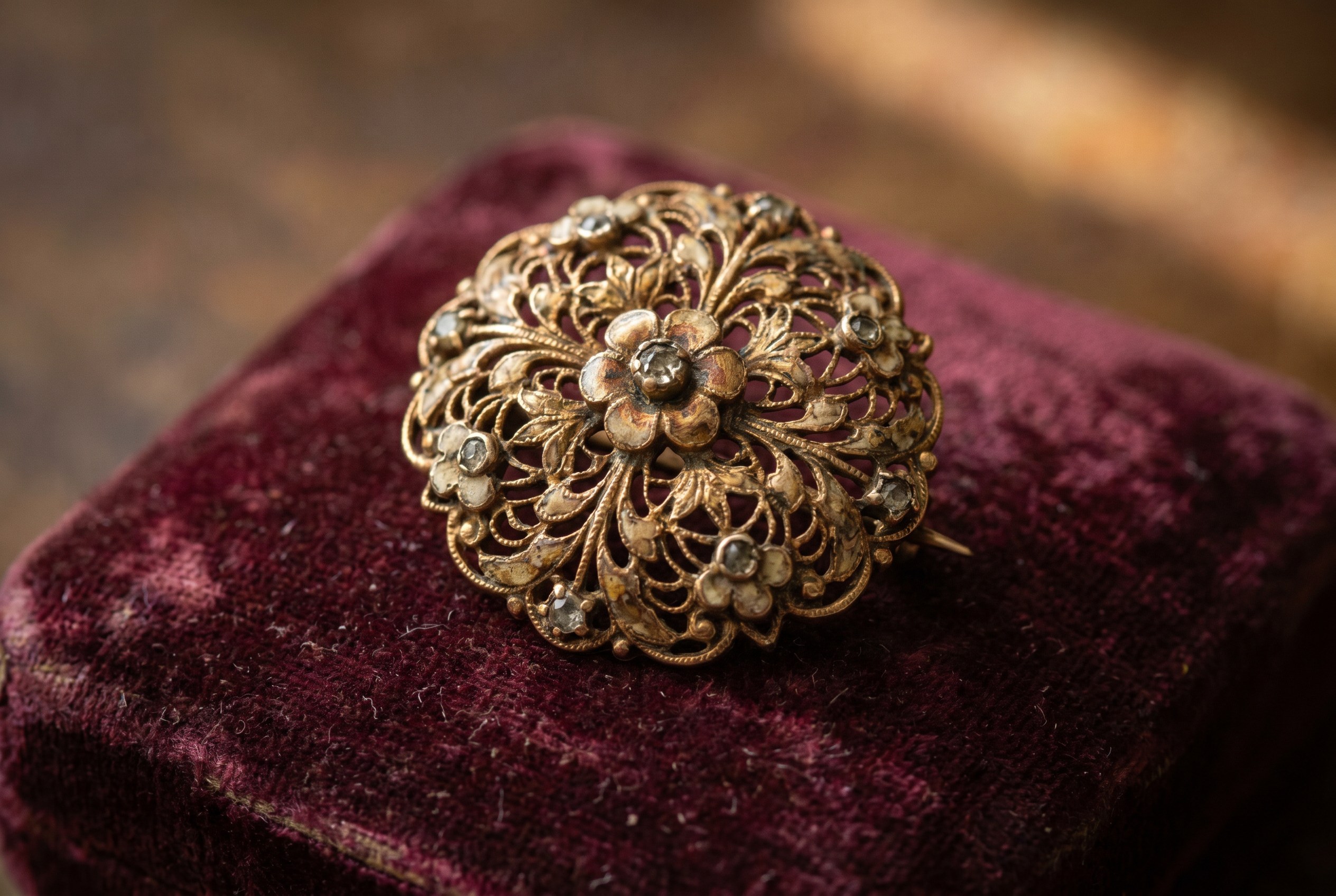
Around 1720, London watchmaker Christopher Pinchbeck perfected an alloy of copper and zinc that looked so like gold it fooled the eye at arm's length. It was never meant as a swindle — it was honest, affordable elegance in a dangerous age — and genuine Georgian pinchbeck has become a collectable material in its own right.
Quick answer: what is pinchbeck?
Pinchbeck is a copper-zinc alloy (roughly 83% copper, 17% zinc) invented by Christopher Pinchbeck c.1720 to imitate gold. It contains no gold at all, yet holds a warm golden colour remarkably well.
True pinchbeck was made only until about the 1840s–50s, when 9ct gold (legalised 1854) and electroplating killed it — so genuine pinchbeck is, by definition, a Georgian or early Victorian antique, and collectors treat it as one.
The history: honest fake gold
Christopher Pinchbeck (c.1670–1732) was a celebrated clock and automaton maker on Fleet Street. His alloy answered a real Georgian problem: travel was dangerous, and highwaymen took what glittered. A gentleman could wear a pinchbeck watch chain, buckles and fob on the road and keep the gold at home — same look, no loss worth robbing. Pinchbeck also opened fashionable jewellery to the growing middle class who could not afford high-carat gold, which then meant 18ct or better. The family guarded the recipe jealously; imitators abounded (Pinchbeck's son advertised against 'counterfeit pinchbeck' — fakes of the fake), and the name became generic for convincing gilt metal. The material died in the mid-19th century: 9ct gold arrived in 1854 as a cheap legal gold standard, and electro-gilding made plating cheaper still.
How to identify pinchbeck
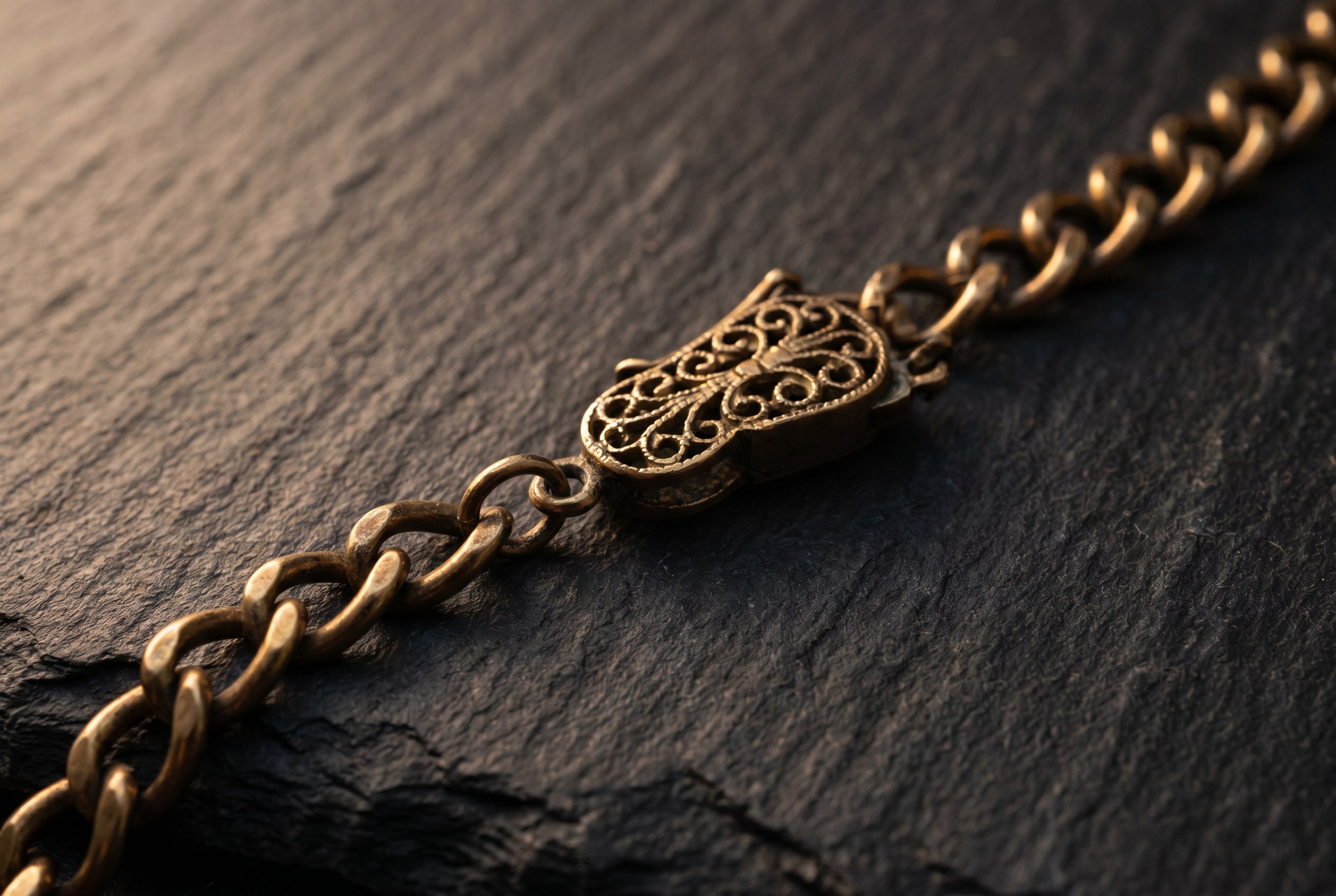
- No hallmarks. Pinchbeck is not gold, so it was never assayed. Any carat or fineness stamp (9ct, 375, 15ct) rules pinchbeck out. See our gold hallmarks guide for what those marks mean.
- Georgian or early Victorian style. True pinchbeck predates c.1850 — long watch chains (muff chains), fobs, buckles, mourning and portrait-miniature frames, repoussé bracelets. A '1920s pinchbeck brooch' is a contradiction; later gilt pieces are rolled gold or plate.
- Warm, mellow colour with honest wear. Pinchbeck holds its colour surprisingly well, but on high points expect a subtle coppery warmth rather than the brassy yellow of worn gilding, and no silvery base metal showing through (that's plating).
- Weight and sound. Pinchbeck is noticeably lighter than gold of the same size — Georgian buyers valued that in big pieces — and feels 'drier' than dense high-carat gold.
- Construction. Hand-made Georgian techniques: stamped repoussé work, hand-cut links, pinned (not soldered-jump-ring) construction. A specialist can also confirm by XRF — copper and zinc, no gold reading.
Pinchbeck vs rolled gold vs gilt
| Material | What it is | Era | Tell |
|---|---|---|---|
| Pinchbeck | Solid copper-zinc alloy, no gold | c.1720–1850s | No marks, Georgian style, colour goes through the metal |
| Rolled gold | Thin gold sheet fused over base metal | Victorian onward | Often marked RG or 'gold front & back'; wear shows base metal |
| Gilt / electroplate | Microscopic gold coating | 1840s onward | Brassy or silvery wear-through; sometimes marked GEP/HGE |
All three imitate gold — but only pinchbeck is a solid, self-coloured antique alloy, which is why collectors treat it differently.
What pinchbeck is worth
Pinchbeck has no melt value — its worth is entirely antique value, and that is real. Genuine Georgian pinchbeck muff chains commonly make £150–£600; fine buckles, fobs and repoussé bracelets similar; and exceptional or documented pieces more. The buyers are collectors of Georgian jewellery who want the look and history at a fraction of gold prices — and because true pinchbeck is scarce (much was discarded as 'fake' over the years), good survivors keep firming. Condition and honest, unpolished surfaces matter; replating a pinchbeck piece destroys its point entirely.
Think you own one? Find out what it’s worth.
Genuine Georgian pinchbeck is scarcer than people think — pieces are routinely dismissed as worthless 'fake gold' and thrown away, when collectors actively seek them. Send us a photo before you decide anything; the valuation is free.
✓ Free expert valuation in 24h ✓ Same-day payment ✓ 10,000+ items traded · 5★ rated
Explore genuine period pieces in antique jewellery and Georgian jewellery, or the related silver gilt & vermeil guide for gold-surfaced silver.
Explore Further
Frequently Asked Questions
Identifying and valuing pinchbeck.
What is pinchbeck made of?
Roughly 83% copper and 17% zinc — a brass-family alloy with no gold content at all, formulated by Christopher Pinchbeck around 1720 to imitate gold's colour and lustre.
How do I tell pinchbeck from gold?
Pinchbeck carries no hallmarks, is lighter than gold of the same size, and only exists in Georgian and early Victorian forms (pre-c.1850). Any carat mark means gold; visible base metal wearing through means plating. XRF testing settles it definitively.
Is pinchbeck jewellery worth anything?
Yes — as antiques, not metal. Genuine Georgian pinchbeck chains, fobs and bracelets typically sell for £150–£600 and more for exceptional pieces, because true pinchbeck is scarce and collected.
Why did people wear pinchbeck?
Georgian travel was dangerous — highwaymen stole gold. Pinchbeck gave the look of gold without the loss, and made fashionable jewellery affordable before cheap gold standards existed.
When did pinchbeck stop being made?
By the 1850s. The legalisation of 9ct gold in 1854 and the rise of electroplating made true pinchbeck obsolete — which is why genuine pieces are always antiques.