Antique Tiaras: How to Identify, Date and Value-Check a Georgian, Victorian, Edwardian or Art Deco Tiara
Silver on gold or platinum, fringe or bandeau, a frame and a little screwdriver: how to read an antique tiara, and every tiara worn at the King's state banquets.
An antique tiara is a jewelled head ornament, open at the back, made before about 1930. To date one:
- Georgian to the 1830s: Neoclassical bands, then diamond flower wreaths in silver on gold.
- Victorian: silver-topped gold, old mine and rose cut diamonds, sprays, stars and fringes.
- Edwardian: platinum garlands with millegrain settings and old European cuts.
- Art Deco: flat geometric bandeaux worn low on the forehead.
- Convertible: many unscrew into necklaces and brooches; keep the frame, fittings and case.
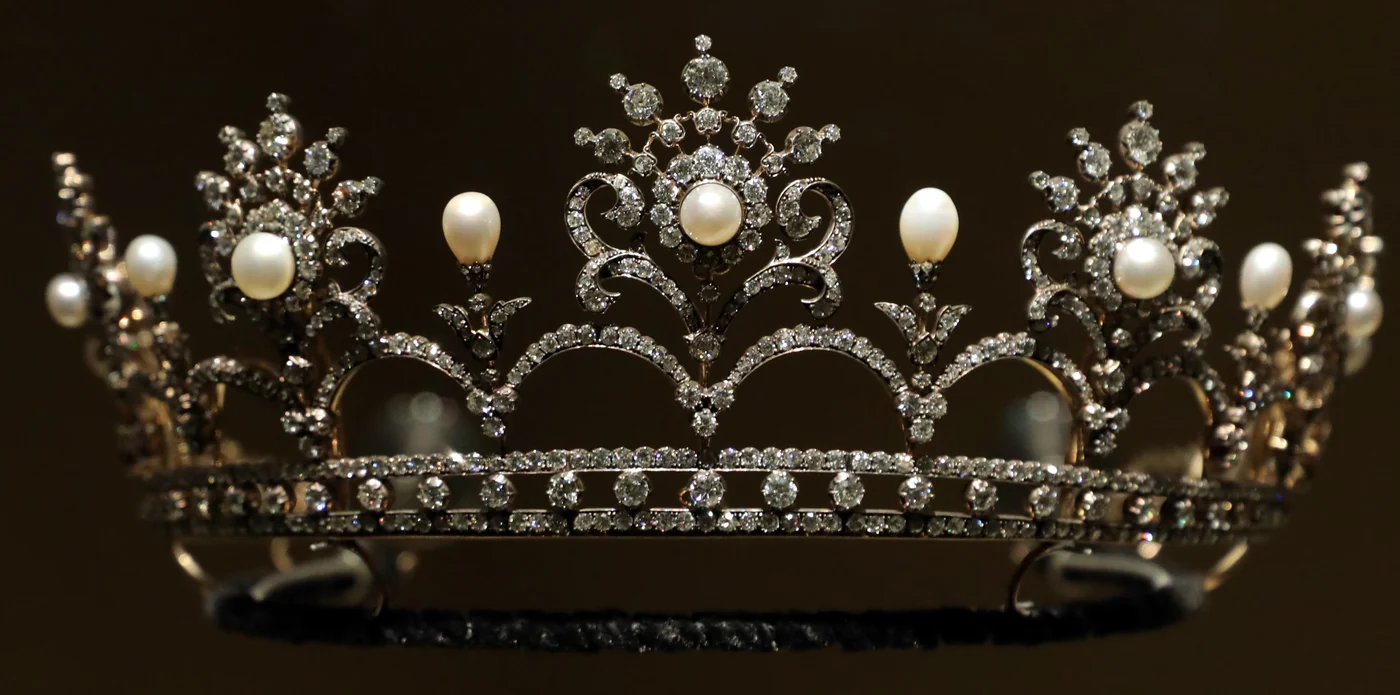

In this article
- Tiara, diadem, bandeau, kokoshnik or fringe: what is the difference?
- How to date an antique tiara, era by era
- How to tell if a tiara is antique: six checks
- Convertible tiaras: frames, fittings and the little screwdriver
- The makers: Cartier, Boucheron, Chaumet, Garrard and Fabergé
- Three tiaras that made headlines at auction
- Every tiara at a King Charles III state banquet: the register
- Inherited a tiara? What to do, and buying antique diamonds
- Questions
Tiara, diadem, bandeau, kokoshnik or fringe: what is the difference?
An antique tiara is a jewelled head ornament, usually made before about 1930. Unlike a crown it is open at the back. “Tiara” and “diadem” are used for the same thing; the other names describe the shape.
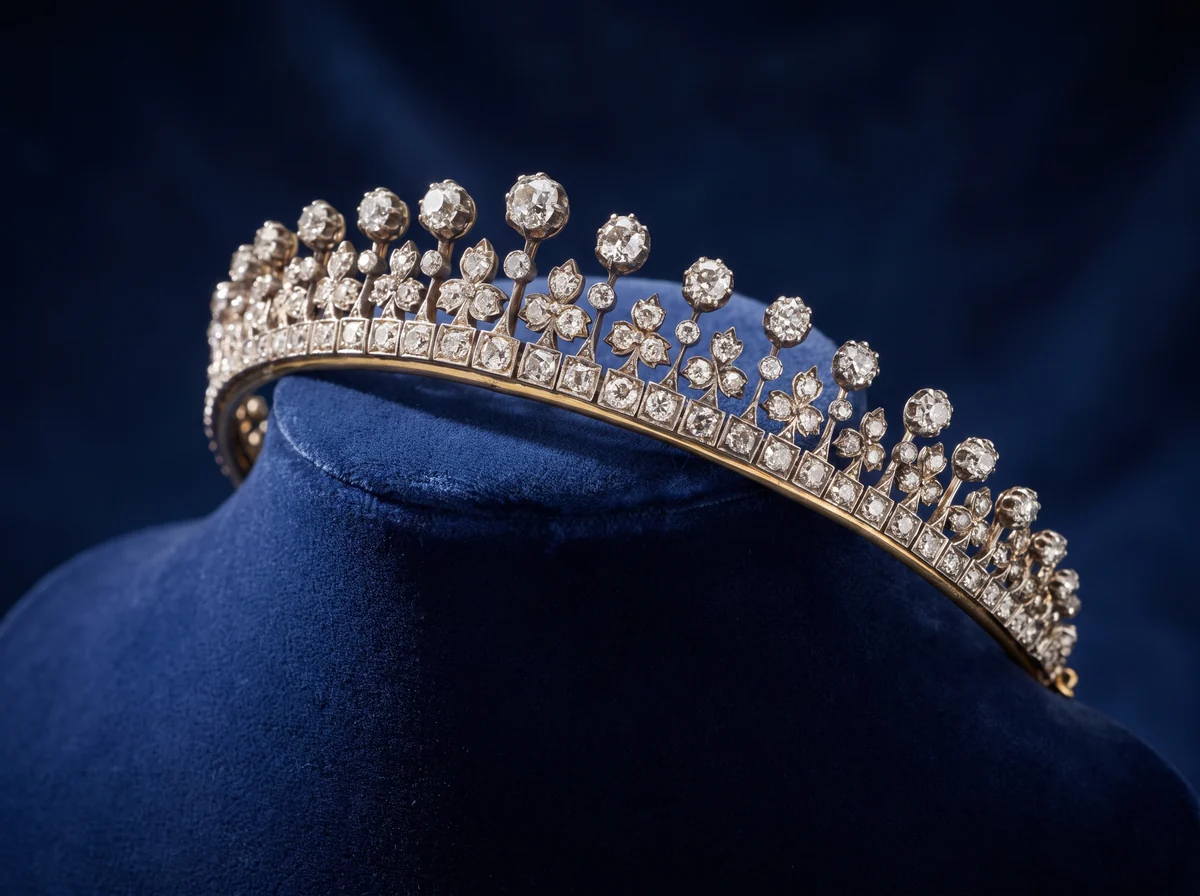
Five shapes to know
- Tiara or diadem: a raised front on a frame that sits on the head.
- Bandeau: a narrow band, like a ribbon or hairband.
- Kokoshnik: a tall wall of stones, after a Russian headdress.
- Fringe: graduated bars or spikes; many also wear as a necklace.
- Circlet: runs all the way round the head.
Tiaras came back into fashion with Napoleon and Joséphine, peaked between 1890 and 1914, and fell from favour after the First World War with shorter hair and less formal dress.
How to date an antique tiara, era by era
A tiara follows the jewellery fashion of its day, so its design, metal and diamond cuts date it.
Georgian and Regency (to the 1830s): nature in diamonds
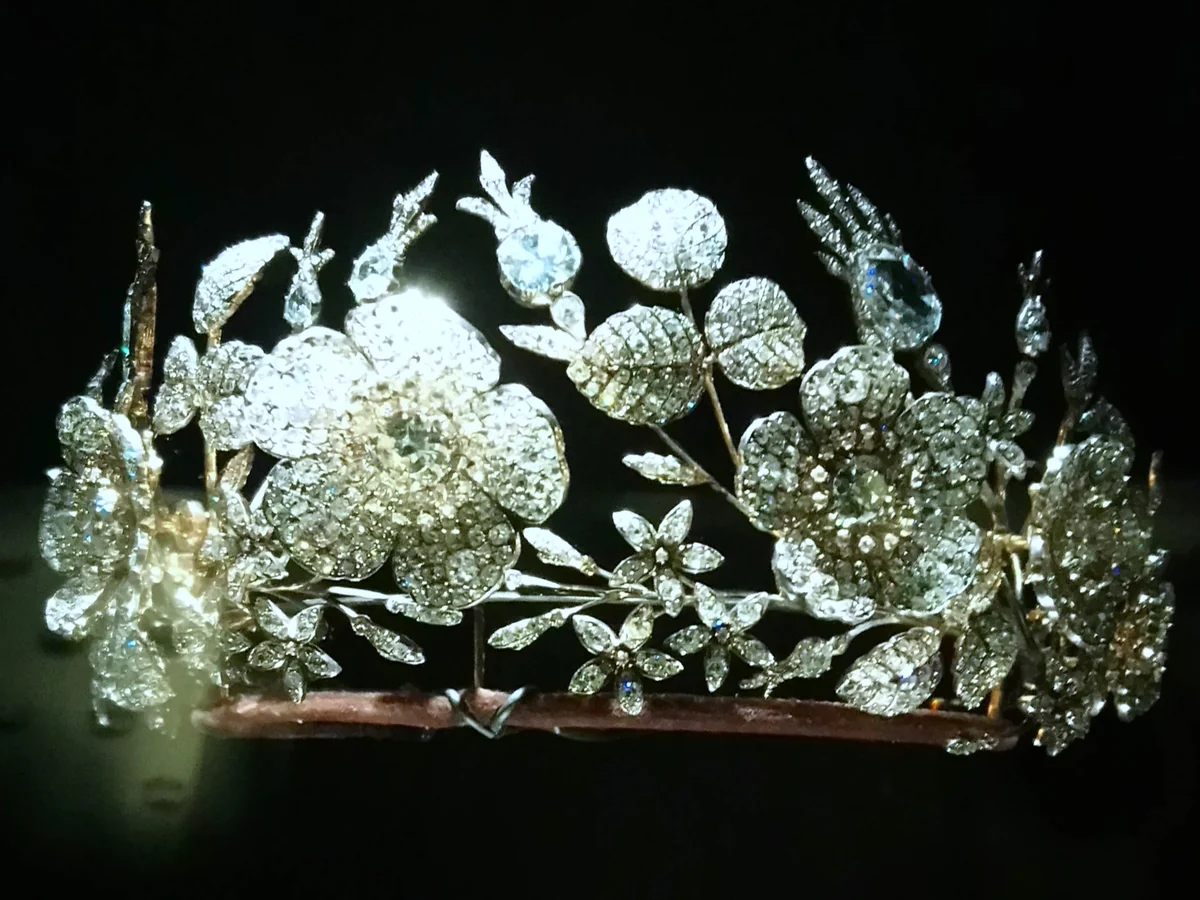

Early tiaras are Neoclassical bands and cameo diadems. By the 1830s they become naturalistic wreaths of flowers, with diamonds set in silver on gold. Few survive whole: the V&A notes that floral tiaras were usually broken into sprays and sold as brooches. See Georgian jewellery.
Victorian (1837 to 1901): silver on gold, old cuts
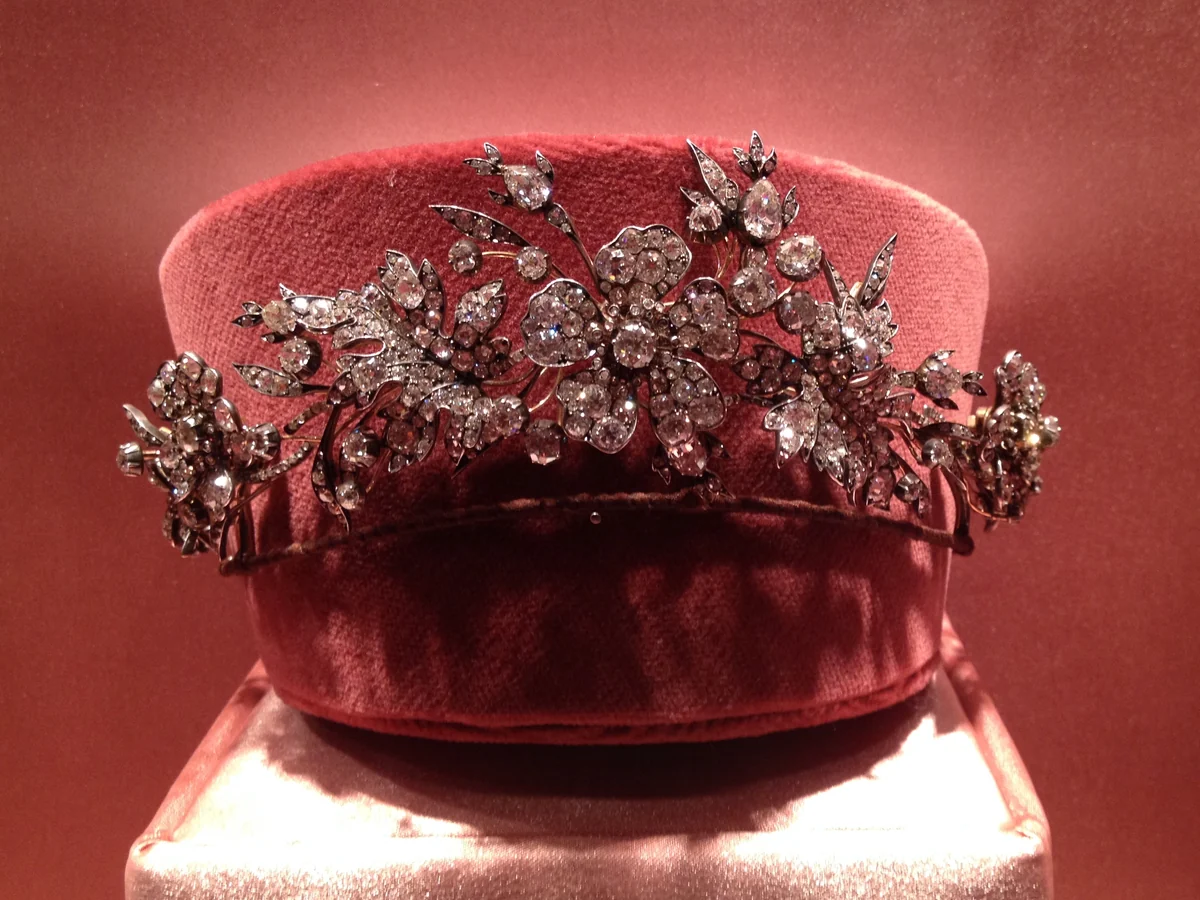

Diamonds sit in silver, which shows white, over a gold back for strength. Expect old mine and rose cut diamonds, flower sprays, stars and, late in the century, fringes. Some flowers are mounted en tremblant, on springs. More in Victorian diamond jewellery.
Edwardian and Belle Époque (about 1900 to 1915): platinum garlands
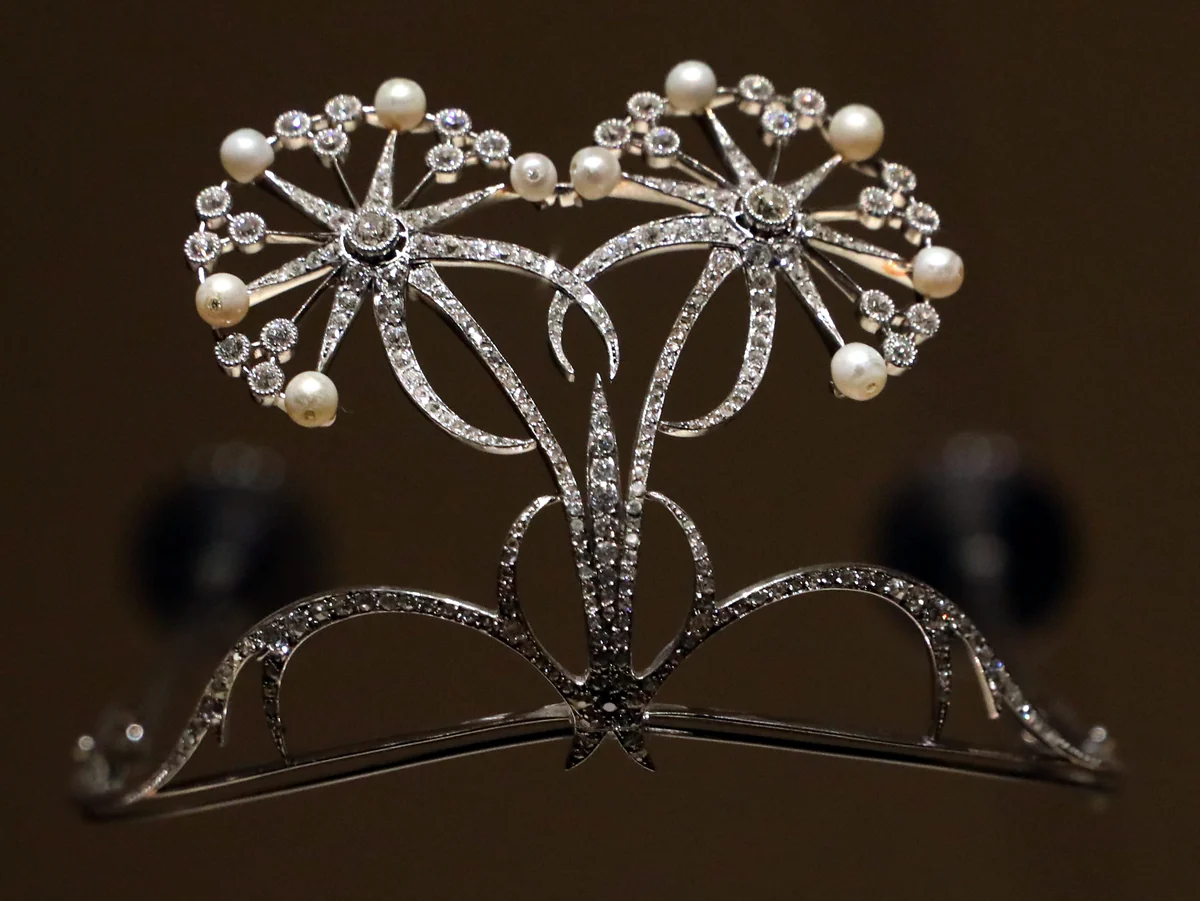

Platinum is the clue. Cartier led the way with thin platinum settings that replaced heavy silver, and the garland style of diamond scrolls and foliage followed. In 1913 Cartier built a tiara on a platinum frame in millegrain settings. Expect old European cut diamonds. See Edwardian diamond jewellery.
Art Deco (1920s and 1930s): the bandeau
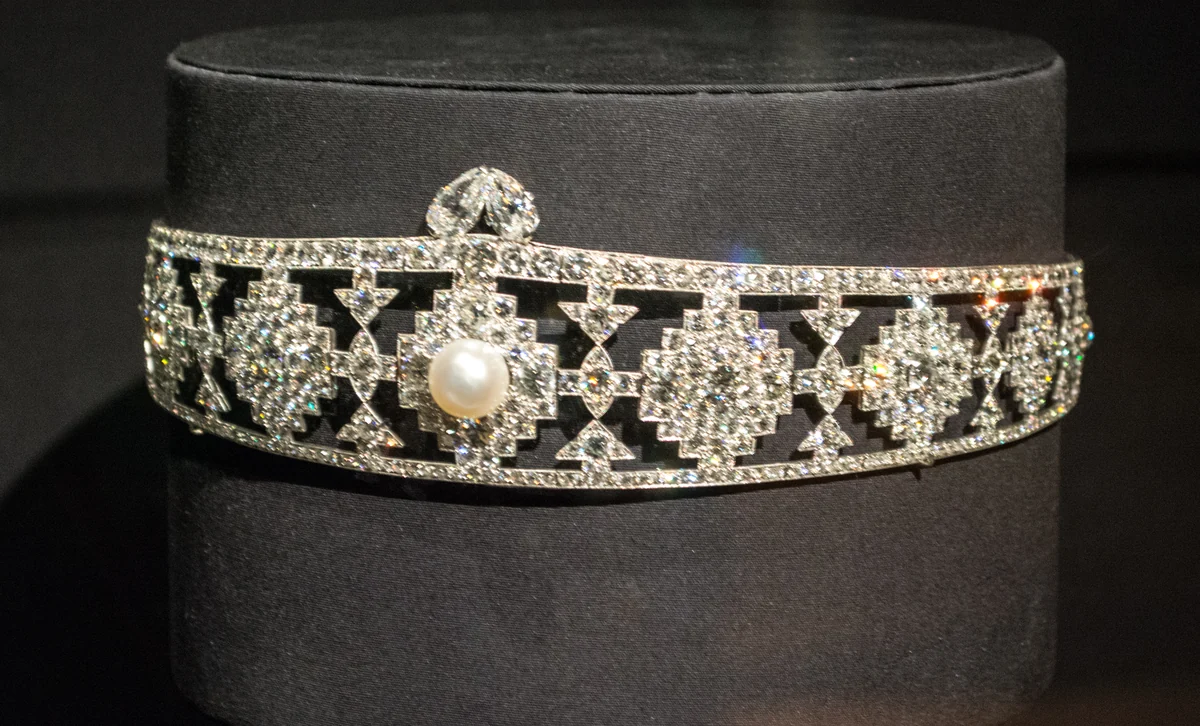
.jpg)
With bobbed hair, the tiara flattened into a bandeau worn low across the forehead, copying the cloth bands of the Jazz Age. Look for straight lines, geometric openwork and platinum. Our Art Deco buying guide explains the style.
How to tell if a tiara is antique: six checks
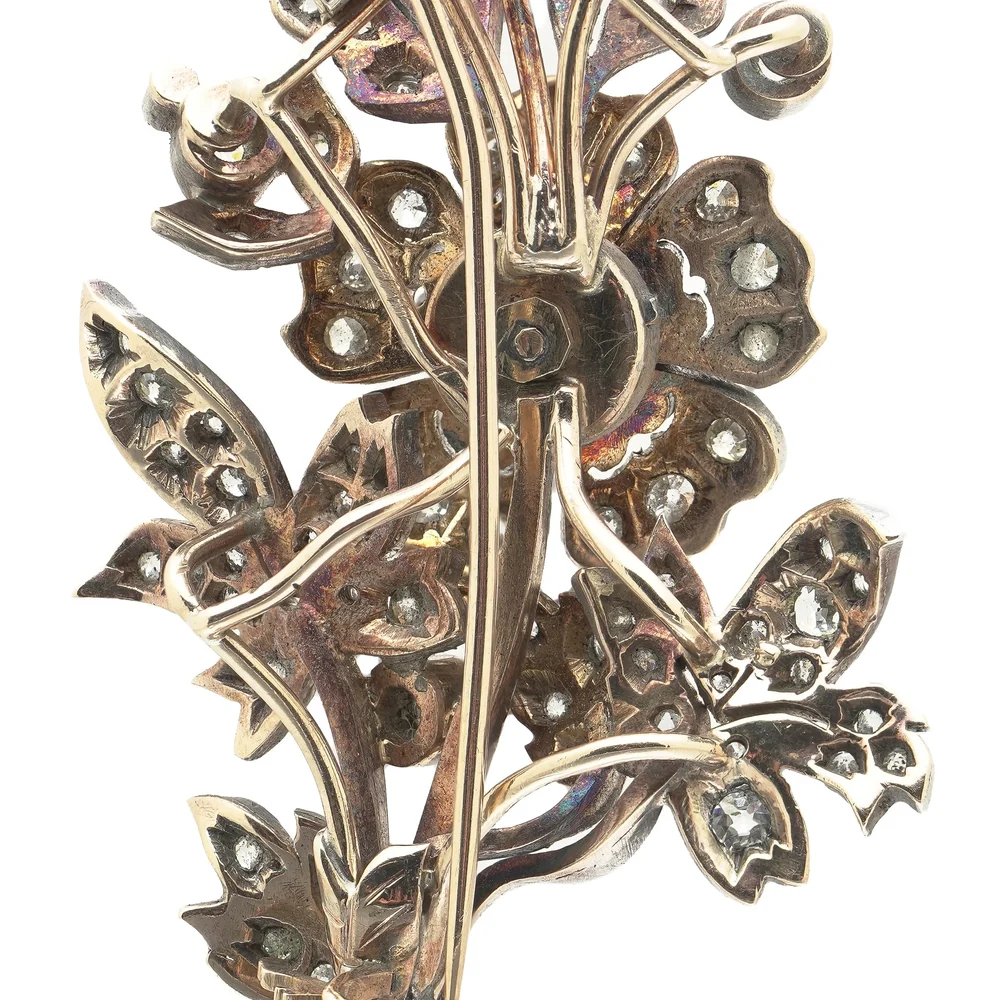
Turn it over
- Metal: silver-topped gold is usual before about 1905, platinum after. Check for marks with our platinum hallmarks guide.
- Cuts: old mine, old European and rose cuts, each cut by hand and slightly uneven.
- Metalwork: hand-pierced galleries and file marks, not cast or laser-perfect.
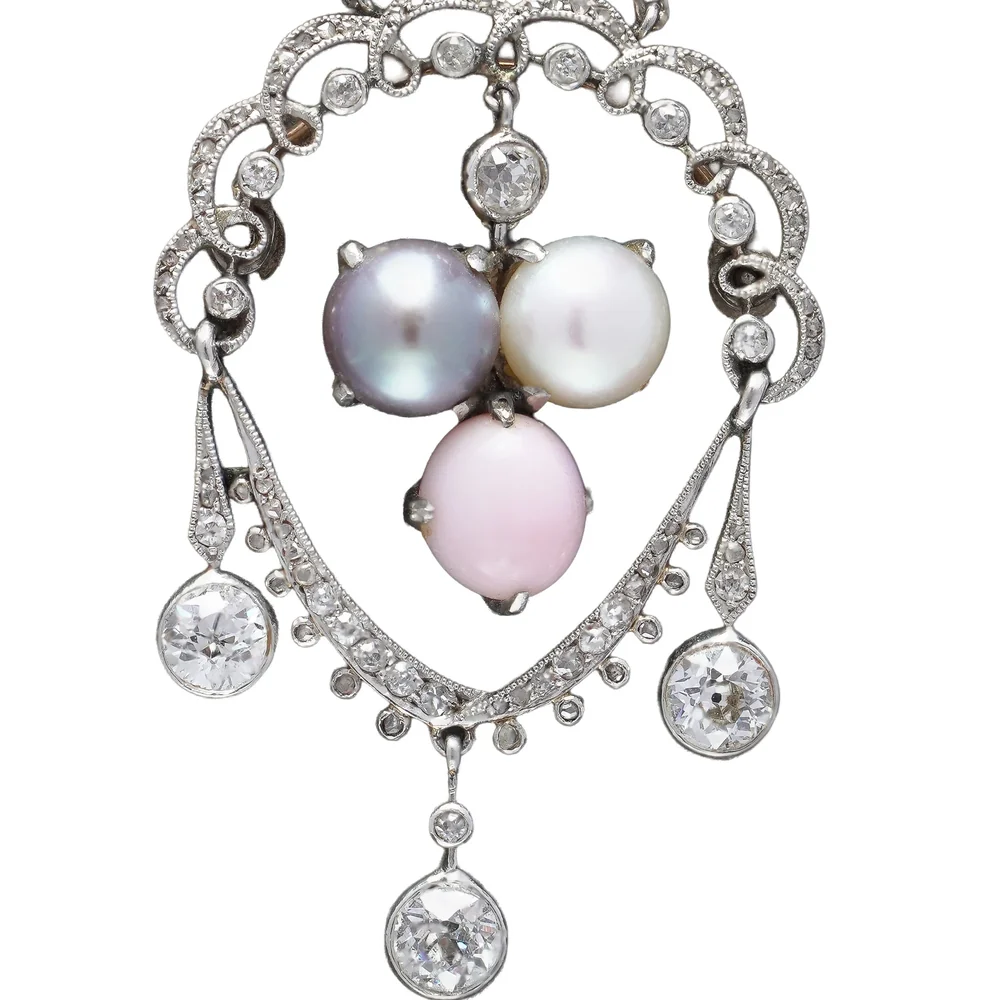
Look closer
- Millegrain: tiny beads along platinum settings mean Edwardian work.
- Fittings: screw holes, sockets and spare clips are signs of a convertible piece.
- Case: a fitted case shaped to the tiara, often holding the frame and tools.
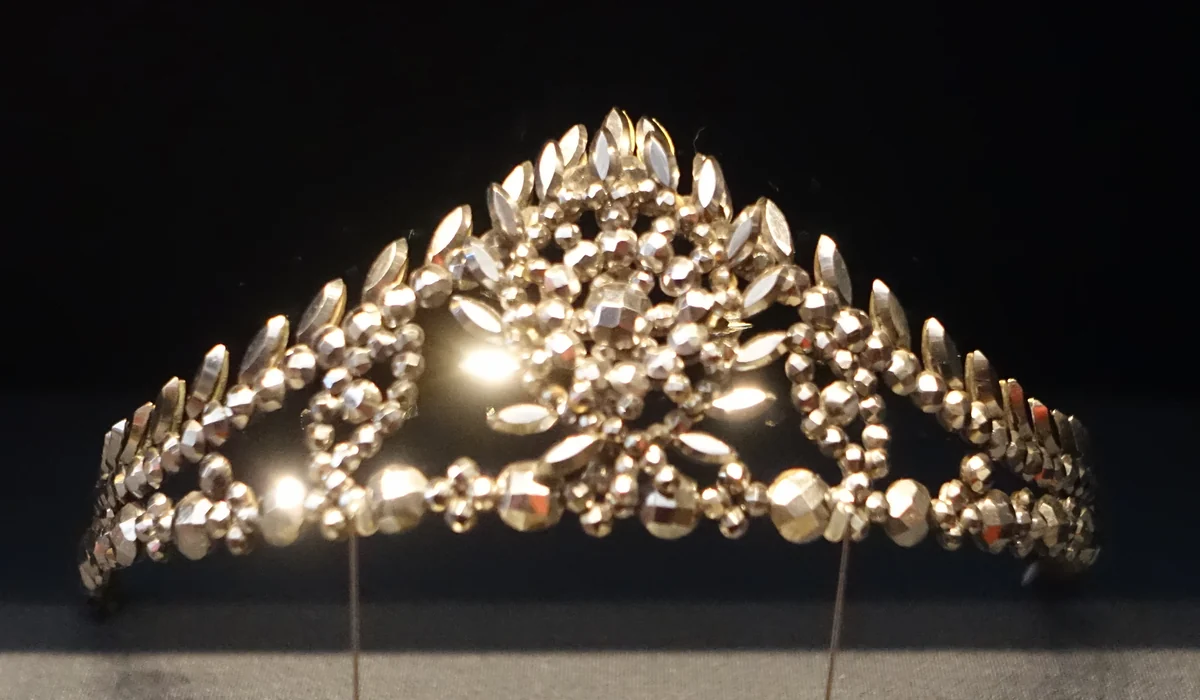

Diamond, paste or steel?
Paste (glass) and cut steel tiaras were made in the 19th century too, and they are antiques in their own right. Even Cartier used paste in the end scrolls of the 1903 Manchester Tiara. Read is my costume jewellery real and how to know if a diamond is real.
Convertible tiaras: frames, fittings and the little screwdriver
Many antique tiaras were made to come apart. The jewelled front unscrews from a plain frame and becomes a necklace, and single sections become brooches, hair ornaments or earrings.
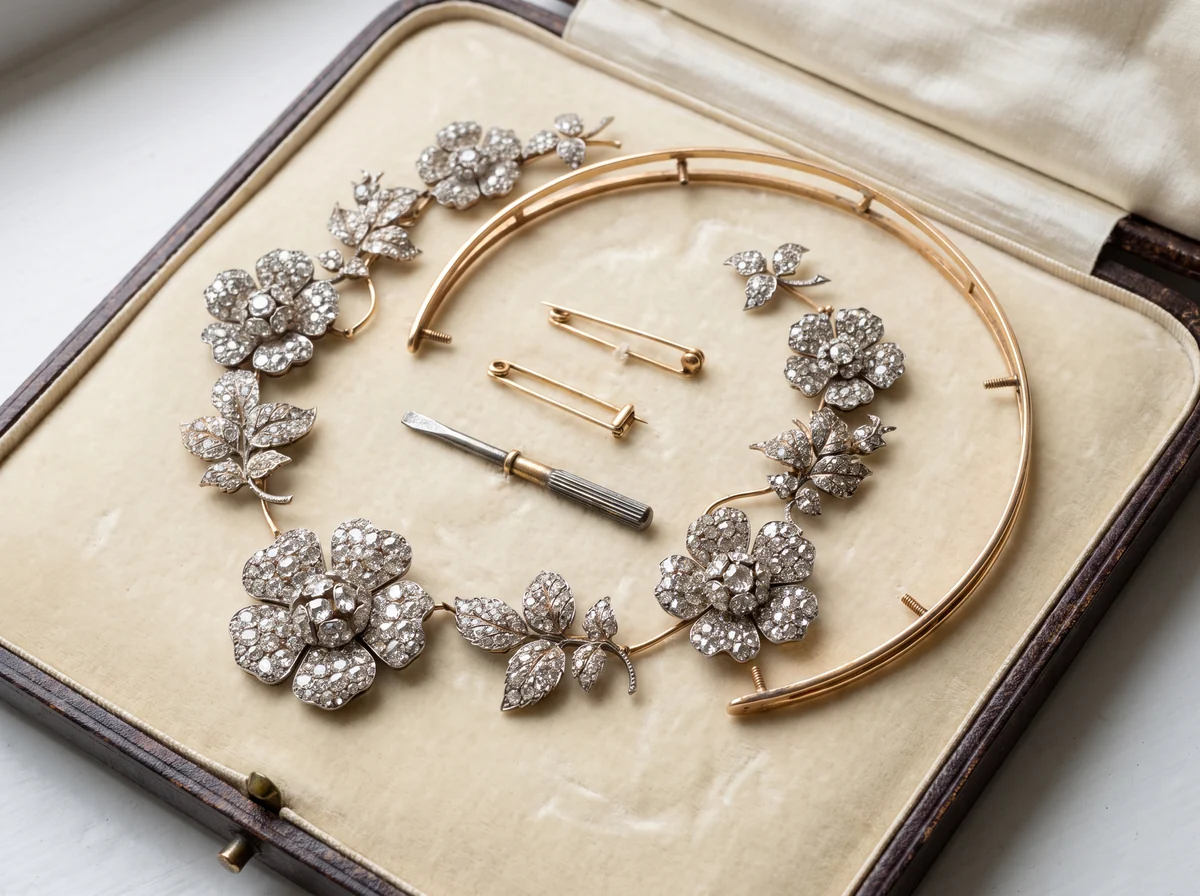
What came in the case
Cartier's 1903 Manchester Tiara has a gold and silver brooch frame with three gold screw fittings, so a heart could be worn on its own. A Cartier jewel of about 1908 in the V&A still has its case, two brooch fittings and a screwdriver.
Keep every part: the frame, case, fittings and tools belong to the tiara and show that it is complete. See our antique necklace cases.
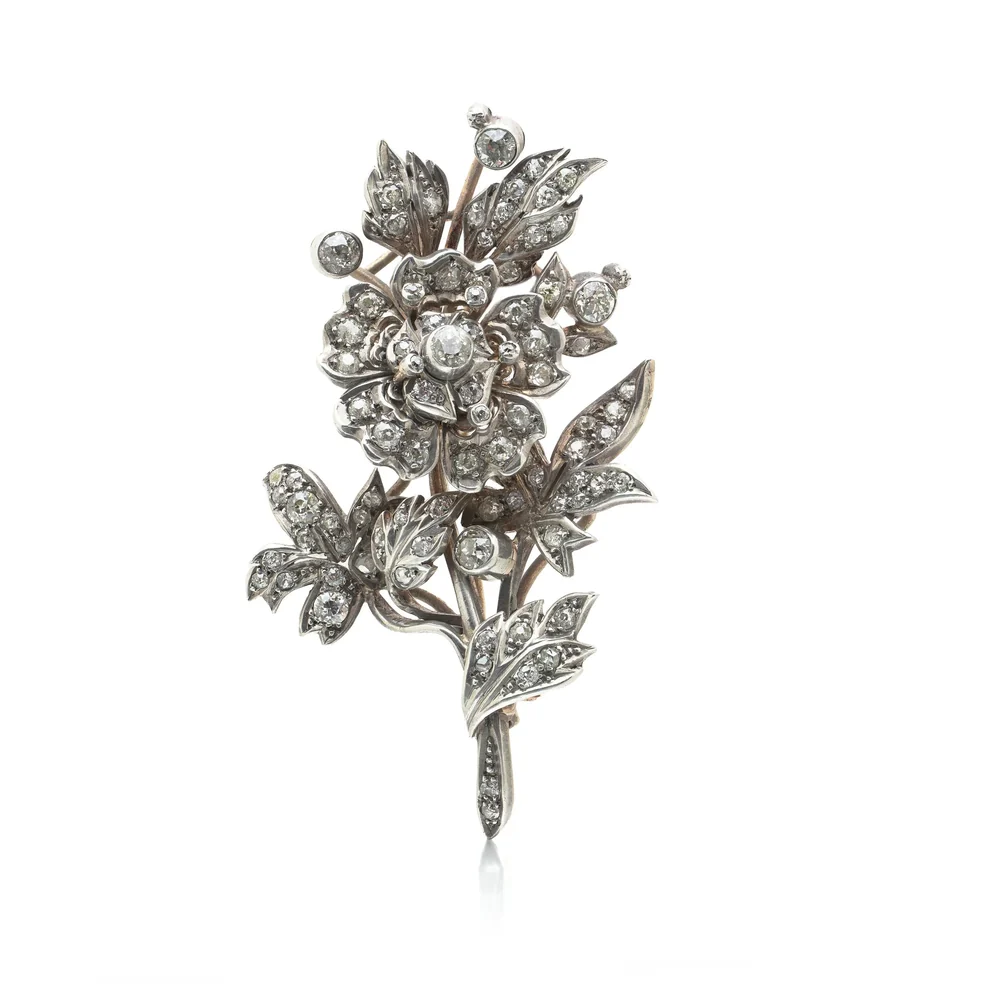
Is your brooch part of a tiara?
Look for a socket, a screw thread or soldered lugs on the back. Our Victorian diamond spray has a socket at the foot of its stem for a tiara or hair frame, and trembles on a spring like a tremblant brooch.
The Belgian Sapphire Tiara began as a necklace; the Strathmore Rose's sprays form separate brooches.
Many tiaras were later broken up for their stones. One element of the Manchester Tiara was removed so that its largest diamond could be set in a ring, and paste took its place.
Every tiara is different. Send us a few photos and we will tell you what yours is worth, free and with no obligation.
Have a tiara, tiara frame or convertible necklace? Get a free valuation
The makers: Cartier, Boucheron, Chaumet, Garrard and Fabergé
Most antique tiaras are unsigned and made by independent jewellers, and an unsigned tiara can still be important. Signed work by the great houses is the exception.
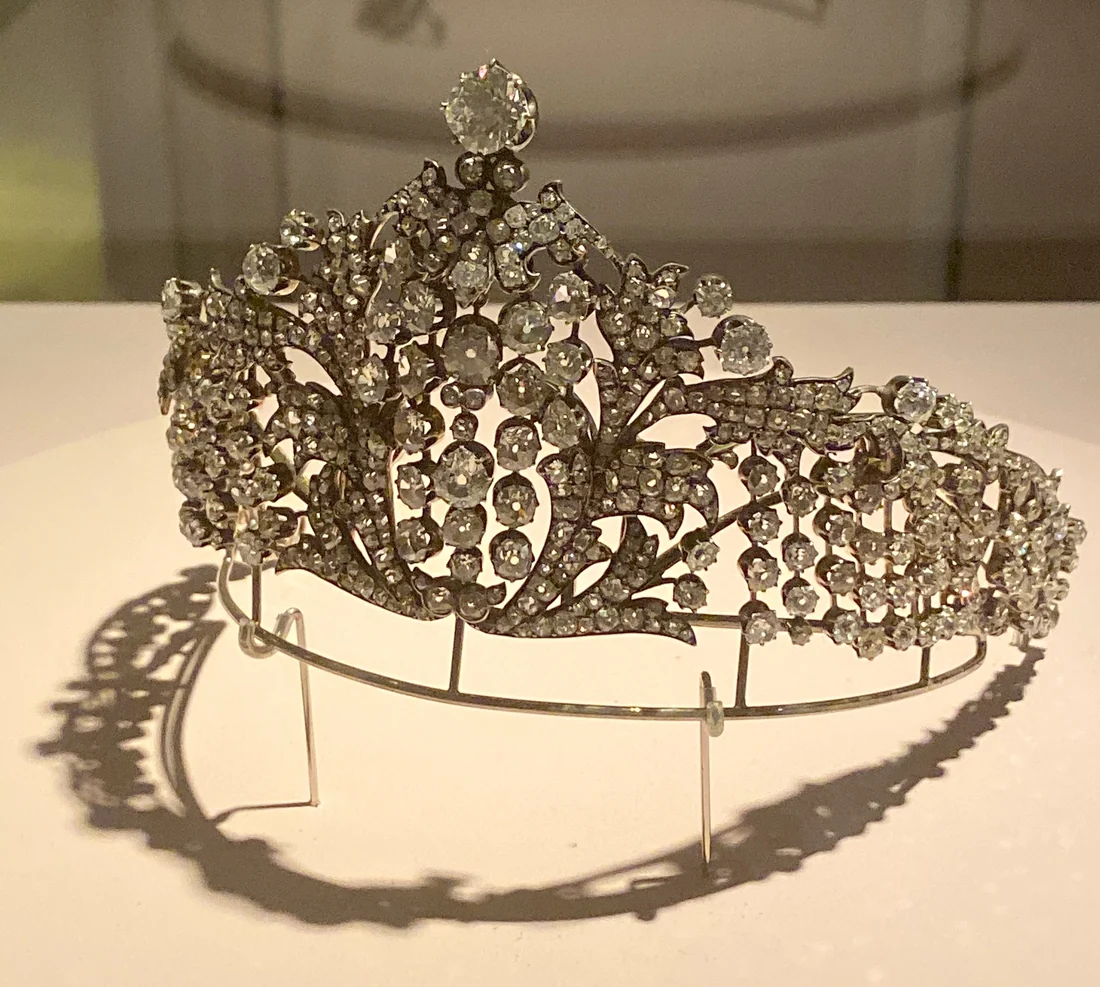

Five names
- Cartier: the Manchester Tiara, 1903; garland tiaras; Art Deco bandeaux.
- Boucheron: the Harcourt bandeau, London, 1924.
- Chaumet: Jean-Baptiste Fossin made the 1830 rose tiara above.
- Garrard: Queen Alexandra's kokoshnik, 1888; the Lover's Knot, 1913.
- Fabergé: diamond tiaras by workmasters such as Michael Perkhin.
A signature and original case matter. Read our signed jewellery guide.
Three tiaras that made headlines at auction
- Geneva, May 2011. The Henckel von Donnersmarck tiara, eleven pear-shaped Colombian emeralds of about 500 carats set in silver and gold around 1900, sold at Sotheby's for CHF 11,282,500, a world record for a tiara.
- Salisbury, October 2016. A late Victorian diamond wild rose tiara that converts into a necklace, brooches and earrings, complete with fittings and its screwdriver, was estimated at £30,000 to £50,000 at Woolley & Wallis and hammered at £150,000.
- London, June 2026. The Harcourt bandeau, made by Boucheron in London in 1924 for a wedding, about 85 carats of diamonds in platinum, sold at Bonhams for £508,400.
From 8 to 18 October 2026 the Harcourt bandeau is on public view at Christie's New York in “Boucheron: In Focus”, an exhibition of about 80 pieces.
Every tiara at a King Charles III state banquet: the register
The King has hosted eight incoming state visits with a banquet since 2022. This register records the tiaras worn by the Queen and the Princess of Wales at each, from published reporting.
| Date and place | Visiting head of state | The Queen | The Princess of Wales | Source |
|---|---|---|---|---|
| 22 Nov 2022 Buckingham Palace | President Cyril Ramaphosa, South Africa | Belgian Sapphire Tiara (her first time) | Queen Mary's Lover's Knot Tiara | Court Jeweller |
| 21 Nov 2023 Buckingham Palace | President Yoon Suk Yeol, Republic of Korea | Burmese Ruby Tiara (her first time) | Strathmore Rose Tiara (first public outing in almost a century) | Court Jeweller |
| 25 Jun 2024 Buckingham Palace | Emperor Naruhito, Japan | Burmese Ruby Tiara | Not at the banquet | Court Jeweller |
| 3 Dec 2024 Buckingham Palace | The Emir of Qatar, Sheikh Tamim bin Hamad Al Thani | Queen Alexandra's Kokoshnik Tiara (her first time) | Not at the banquet | Court Jeweller |
| 8 Jul 2025 Windsor Castle | President Emmanuel Macron, France | Belgian Sapphire Tiara | Queen Mary's Lover's Knot Tiara | Court Jeweller |
| 17 Sep 2025 Windsor Castle | President Donald Trump, United States | Belgian Sapphire Tiara | Queen Mary's Lover's Knot Tiara | Court Jeweller; Hola! |
| 3 Dec 2025 Windsor Castle | President Frank-Walter Steinmeier, Germany | Girls of Great Britain and Ireland Tiara | Oriental (Indian) Circlet (her first time) | Court Jeweller |
| 18 Mar 2026 Windsor Castle | President Bola Tinubu, Nigeria | Belgian Sapphire Tiara | Queen Mary's Lover's Knot Tiara | Court Jeweller |
- Most worn: the Belgian Sapphire (the Queen) and Queen Mary's Lover's Knot (the Princess of Wales), four banquets each.
- Garrard made the Lover's Knot (1913), Queen Alexandra's kokoshnik (1888) and the Burmese Ruby (1973).
- Convertible: the Belgian Sapphire is a necklace set on a tiara frame.
Buckingham Palace has announced a state visit by Sultan Haitham bin Tarik of Oman, 20 to 22 October 2026, hosted by the King and Queen at Windsor Castle. We will add the banquet tiaras here once they are reported.
For the Lover's Knot and the Spencer tiara, see Princess Diana's jewellery; for royal provenance and value, royal memorabilia; for the Louvre theft, the crown jewels heist.
Inherited a tiara? What to do, and buying antique diamonds
Tiaras, and the necklaces and brooches that came off them, turn up in family safes and bank boxes. Before anything else:
- Do not take it apart
Leave screws, frame and fittings as they are, and do not clean or re-set stones.
- Find the parts
Look for the case, frame, spare fittings, screwdriver and any papers or receipts.
- Photograph it
Front, back, every mark and the case lid, in daylight.
- Get it valued
Use the form below, call 01376 334482 or WhatsApp us. Visit 47 Maddox Street, Mayfair (by appointment) or Braintree, Essex. Contact us.
For probate and tax, read what to do with inherited jewellery, the probate guide and inheritance tax and jewellery. We explain how we authenticate antique jewellery.
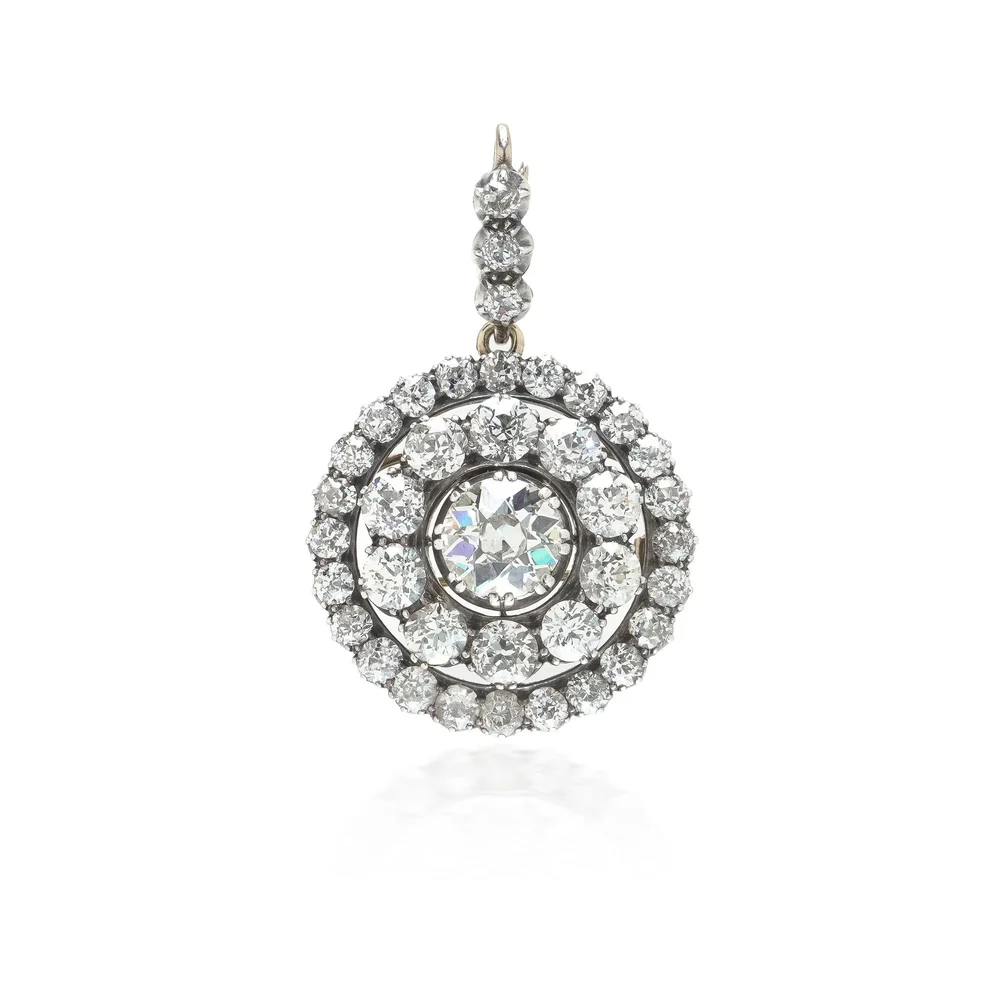
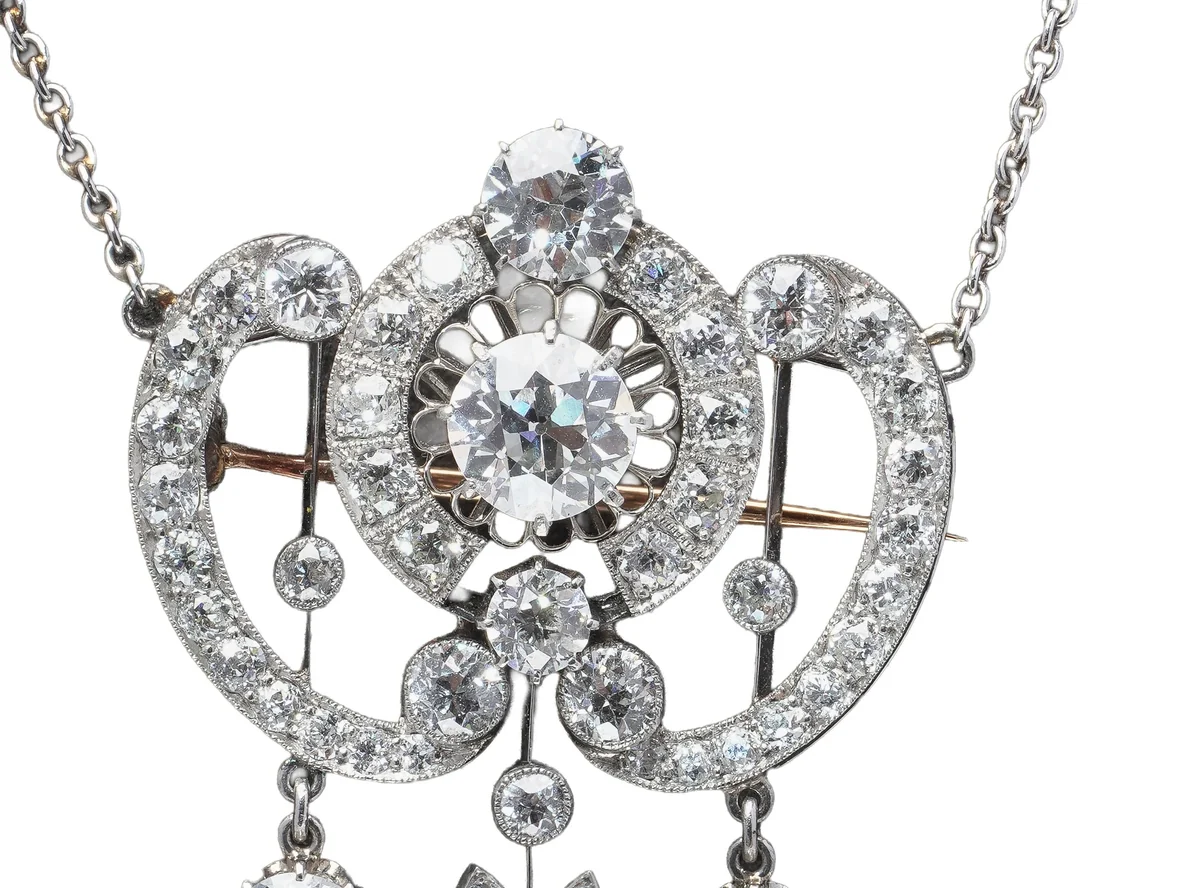
Edwardian platinum
The garland style of the great Edwardian tiaras, millegrain and all, in a convertible pendant brooch. See platinum jewellery and Edwardian jewellery.
Selling? See Edwardian, Victorian, Art Deco, Cartier and Boucheron jewellery.
Request a free valuation
- Silver on gold points to before about 1905; platinum and millegrain to the Edwardian years.
- Flower wreaths point to the 1830s, fringes to the late Victorians, garlands to the Edwardians, flat bandeaux to Art Deco.
- Many tiaras convert into necklaces and brooches: keep the frame, fittings, screwdriver and case.
- Our register lists every tiara worn at King Charles III's state banquets, with sources.
- We value antique tiaras and their parts free from photos, with no obligation.
Questions we are asked
How can I tell if a tiara is antique?
Turn it over. Diamonds set in silver on a gold back point to before about 1905; platinum with millegrain beading points to the Edwardian years or later. Hand-cut old mine, old European or rose cut diamonds, hand-pierced metalwork, screw fittings for conversion and a fitted case are all signs of age.
What is the difference between a tiara and a diadem?
The words are used for the same thing: a jewelled head ornament that is open at the back. A bandeau is a narrow band worn low on the forehead, a kokoshnik a tall wall of stones after a Russian headdress, and a fringe tiara a row of graduated bars or spikes.
What is a convertible tiara?
A tiara whose jewelled front unscrews from a plain frame to be worn as a necklace, with sections that become brooches or hair ornaments. They often came in a fitted case with the frame, brooch fittings and a small screwdriver.
Could my diamond brooch once have been part of a tiara?
Yes. Many tiaras were broken into sprays and sold as brooches. A socket, screw thread or lugs on the back of a brooch can show that it was made to fix onto a tiara frame.
When did tiaras go out of fashion?
They were most popular between 1890 and 1914 and fell from favour after the First World War, when hair was cut short. In the 1920s many became flat bandeaux worn low on the forehead.
Which tiaras has the Princess of Wales worn at state banquets?
Queen Mary's Lover's Knot Tiara at four of King Charles III's state banquets, the Strathmore Rose Tiara for South Korea in 2023 and the Oriental Circlet for Germany in 2025. Our register lists every banquet with sources.
What is my antique tiara worth?
It depends on the diamonds, the maker, whether it is complete with its frame, fittings and case, its condition and its history. Every tiara is different: send us photos for a free, no-obligation valuation.
Do you buy antique tiaras and tiara parts?
Yes. We buy antique tiaras, tiara frames, convertible necklaces and diamond brooches. Send photos of the front, back and any marks, or visit us in Mayfair or Braintree.
Value your antique tiara
Send photos of the front, back, any marks and the case for a free valuation, or visit us in Mayfair or Braintree.
- We buy directly
- Free valuation from photos
- Appointments in Mayfair and Braintree
- Insured postage or collection
New pieces reach our list first: join the Mozeris list.