The Louvre Crown Jewels Heist, One Year On
What was taken from the Galerie d'Apollon, where the case stands, and a dealer's guide to why famous stolen jewels cannot be sold whole and how provenance protects buyers.
The Louvre heist, one year on:
- On 19 October 2025 thieves took eight French crown jewels from the Louvre in under eight minutes, valued at €88 million.
- Only Empress Eugénie's crown, dropped in the escape, was recovered. The rest were still missing on 1 October 2026.
- Four suspects believed to have carried out the raid were charged in late 2025.
- Famous stolen jewels cannot be sold whole; broken up, they lose most of their value.
In this article
- What happened on 19 October 2025
- The eight pieces taken, and their history
- Why stolen historic jewels are almost impossible to sell whole
- How provenance and stolen-art registers protect buyers
- What the French crown jewels were, and the sale of 1887
- 19th-century jewels from our collection
- How we can help
- Questions
What happened on 19 October 2025
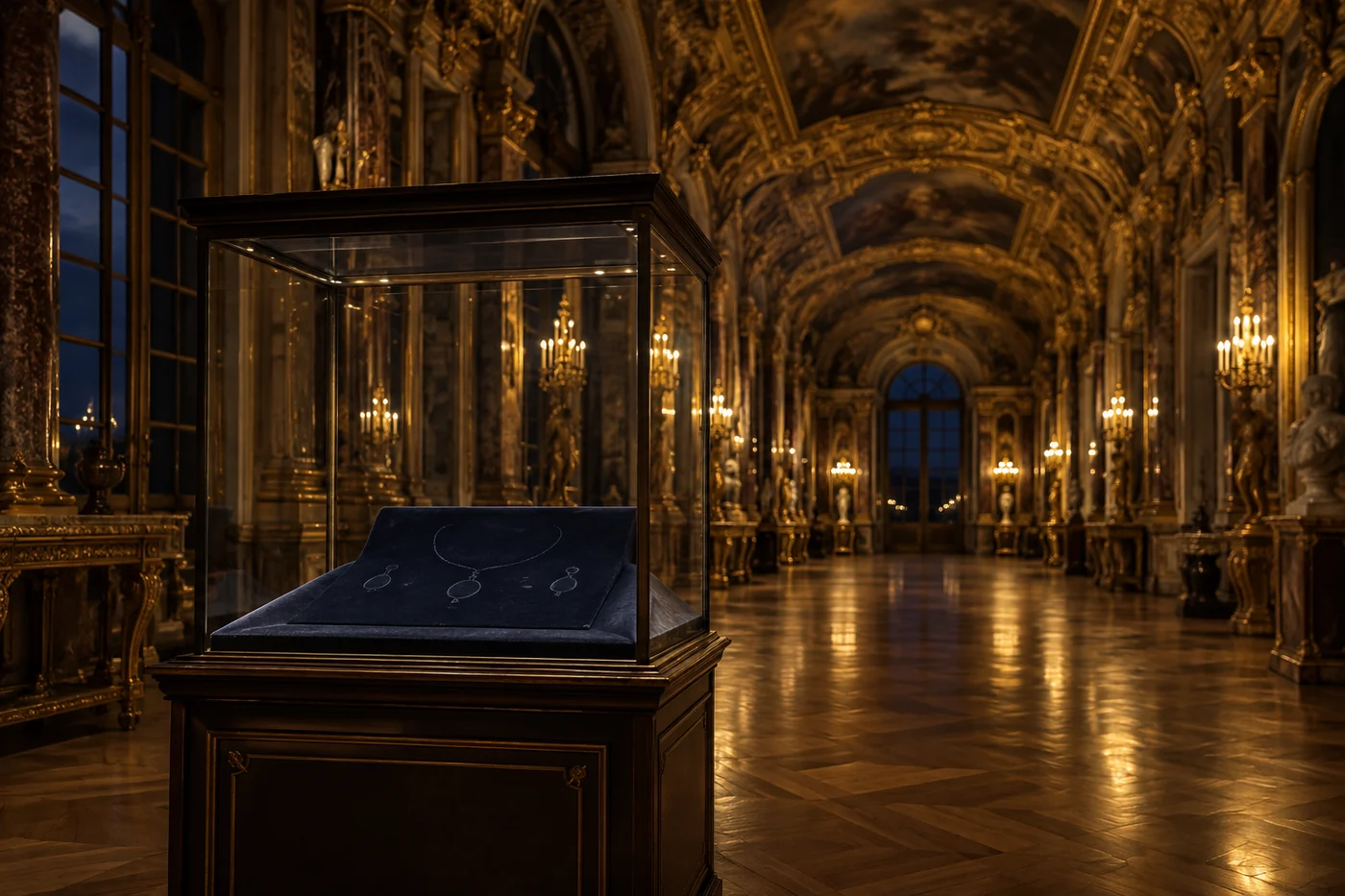
At about 9.30 on Sunday morning, 19 October 2025, a gang parked a truck-mounted lift under the riverside front of the Galerie d'Apollon, the gilded 17th-century gallery that held the French crown jewels. They cut through a first-floor window, broke into two display cases with power tools and were gone on scooters by 9.38, as the Associated Press reconstructed it.
| When | What happened | Source |
|---|---|---|
| 19 Oct 2025 | Eight pieces taken from the Galerie d'Apollon; Empress Eugénie's crown dropped outside | PBS NewsHour / AP, Oct 2025 |
| 21 Oct 2025 | The jewels added to Interpol's Stolen Works of Art database | Interpol, Oct 2025 |
| Oct to Nov 2025 | Arrests; by 28 November the four suspects believed to have carried out the raid were charged with organised theft and criminal conspiracy | Al Jazeera, Nov 2025 |
| 24 Feb 2026 | Director Laurence des Cars resigns; Christophe Leribault takes over | PBS NewsHour / AP, Feb 2026 |
| 22 Jul 2026 | The gallery reopens with no jewels on display | NBC News / AP, Jul 2026 |
| 1 Oct 2026 | The eight pieces are still missing | Azernews, Oct 2026 |
The Louvre's curators put the loss at €88 million, about $102 million. Paris prosecutor Laure Beccuau said after the first charges that the jewels were now unsellable, and that there was still time to give them back. Being charged is not a conviction: the suspects are presumed innocent unless a court decides otherwise.
Of the nine pieces the thieves handled, one came back: Empress Eugénie's 1855 crown, set with 1,354 diamonds and 56 emeralds, dropped during the escape and found crushed. One gold eagle is missing, half the palmettes came away and about ten small diamonds are lost, CNN reported in February 2026. Cartier, Van Cleef & Arpels, Mellerio, Chaumet and Boucheron offered to help restore it.
Source: CNN, 6 February 2026; NBC News / AP, 22 July 2026
The eight pieces taken, and their history
The eight pieces belonged to two queens and two empresses of 19th-century France. Most came to the Louvre between 1985 and 2008, bought or given; the reliquary brooch has been there since 1887. The images are illustrations of the style, not pictures of the real jewels.
The sapphire parure of Queens Marie-Amélie and Hortense: tiara, necklace, one earring
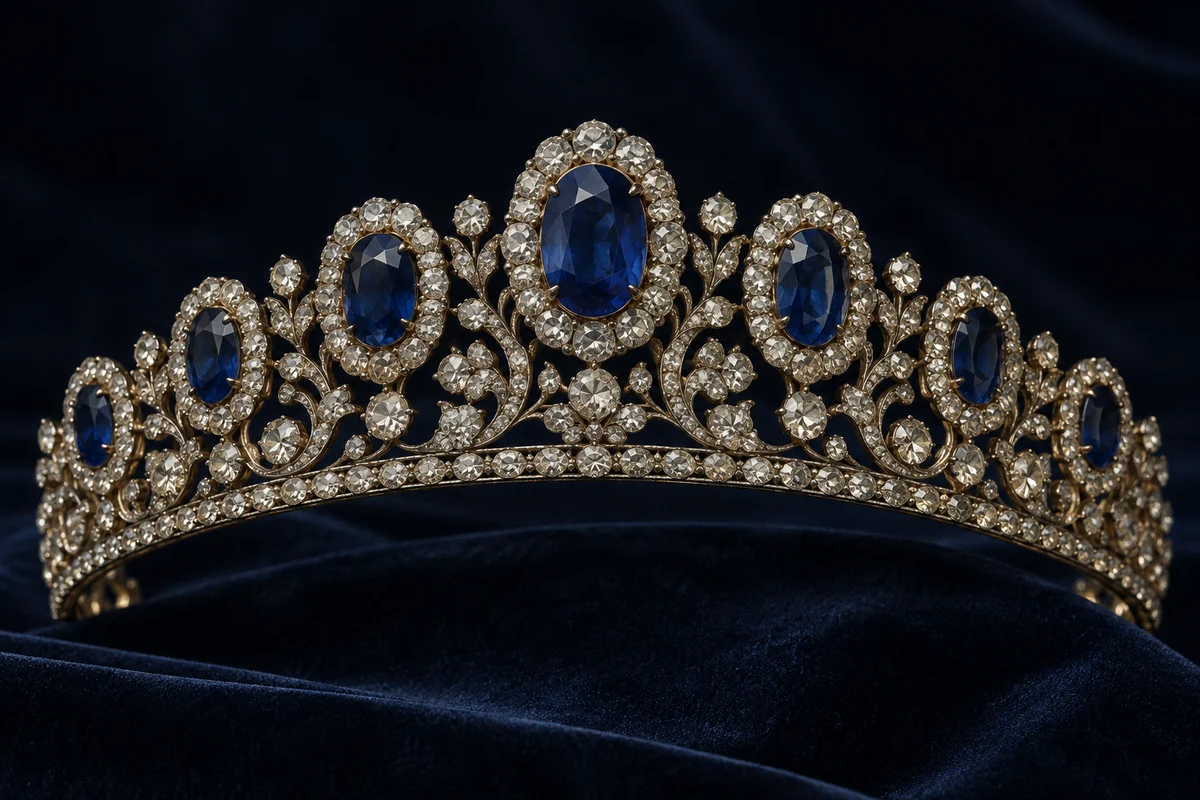
Deep blue sapphires framed in diamonds, a set associated with Queen Hortense, Napoleon's stepdaughter, and with Queen Marie-Amélie, wife of King Louis-Philippe. The Louvre bought the parure from Henri d'Orléans, Count of Paris, in 1985. The thieves took the tiara, the necklace and one of the two earrings.
Source: The Court Jeweller, October 2025
Empress Marie-Louise's emerald necklace and earrings
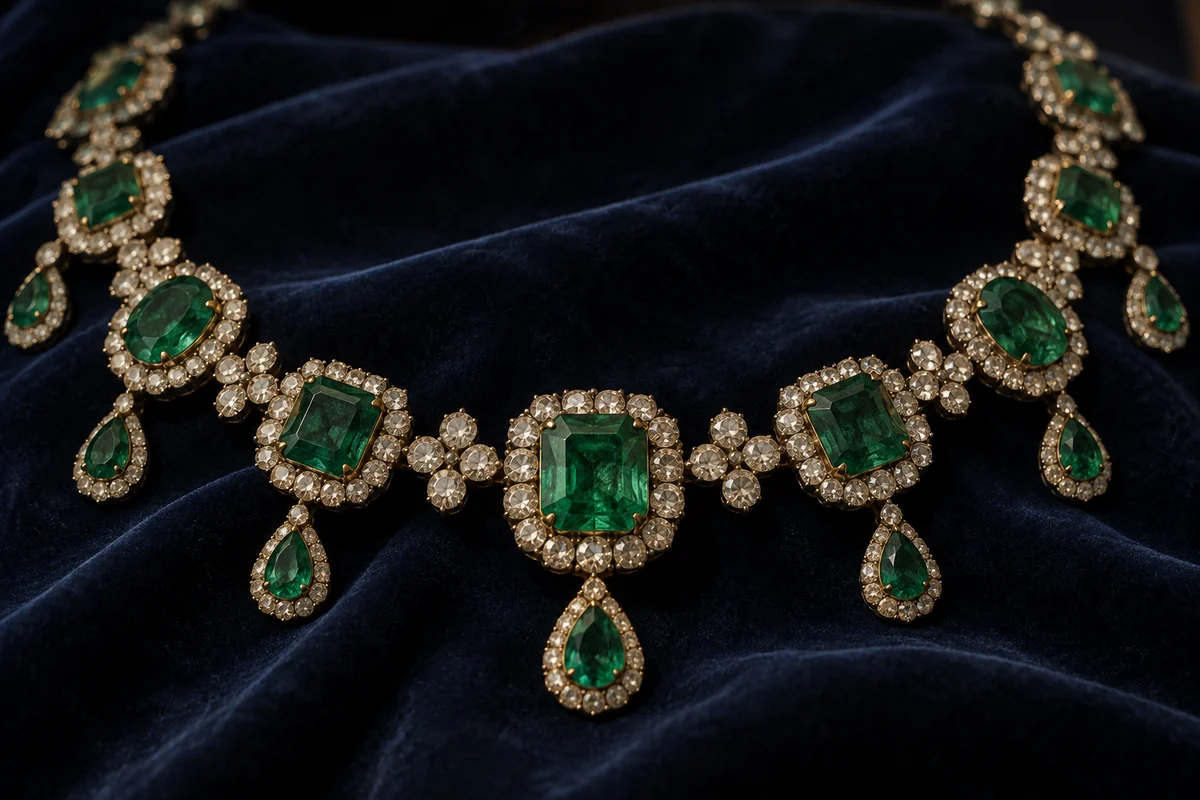
Part of a parure Napoleon gave Marie-Louise of Austria as a wedding present in 1810, made by the Paris jeweller François-Regnault Nitot: large emeralds in frames of diamonds. The Louvre acquired the necklace and earrings in 2004 with help from the Heritage Fund and the Société des Amis du Louvre.
Source: The Court Jeweller, October 2025
Empress Eugénie's pearl and diamond tiara
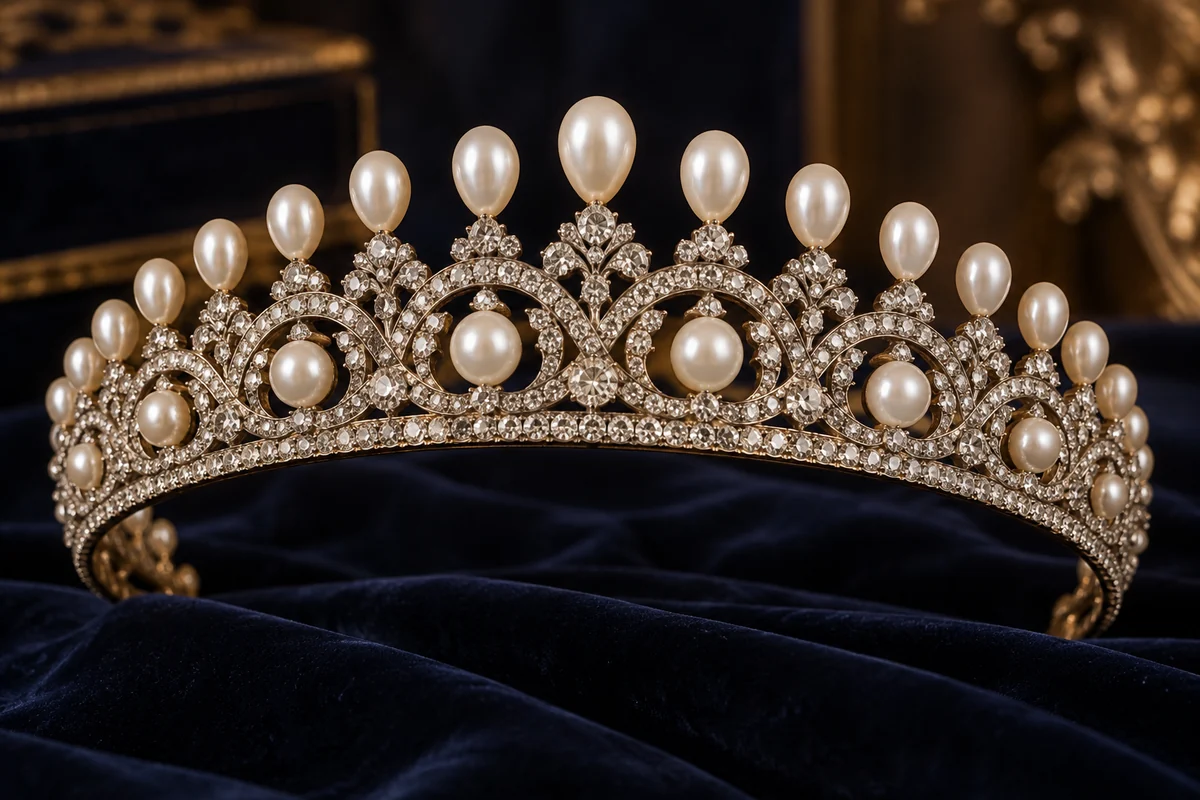
Made by the crown jeweller Alexandre-Gabriel Lemonnier in 1853, the year Eugénie married Napoleon III, with 212 pearls and nearly 2,000 diamonds. The Société des Amis du Louvre gave it to the museum in 1992.
Source: CBS News, October 2025; The Court Jeweller
Empress Eugénie's corsage bow and reliquary brooch
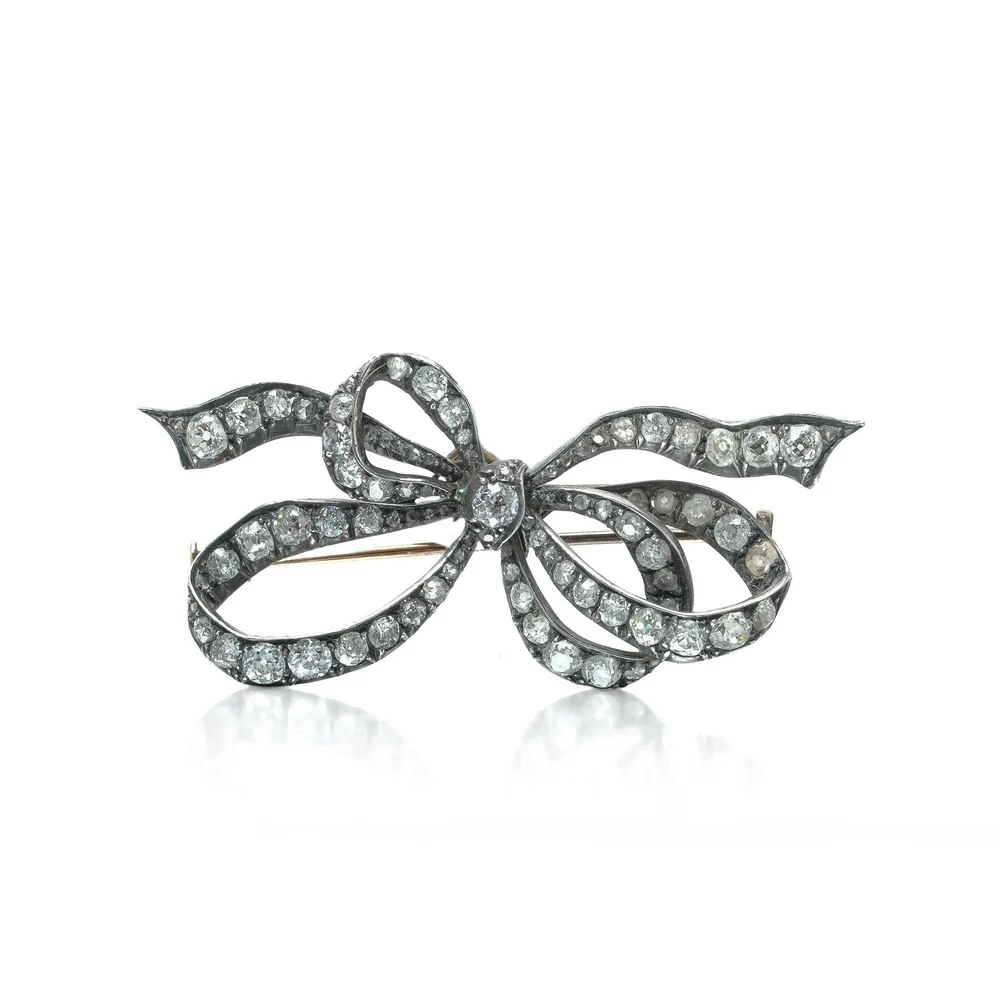
The great bow, made by François Kramer in 1855 to be worn on the bodice, is set with more than 2,000 diamonds; the Louvre bought it back in 2008. The reliquary brooch, made by Alfred Bapst in 1855, holds two of the Mazarin diamonds, numbers 17 and 18, and has been in the Louvre since 1887. See our antique diamond brooches.
Source: The Court Jeweller, October 2025
Why stolen historic jewels are almost impossible to sell whole
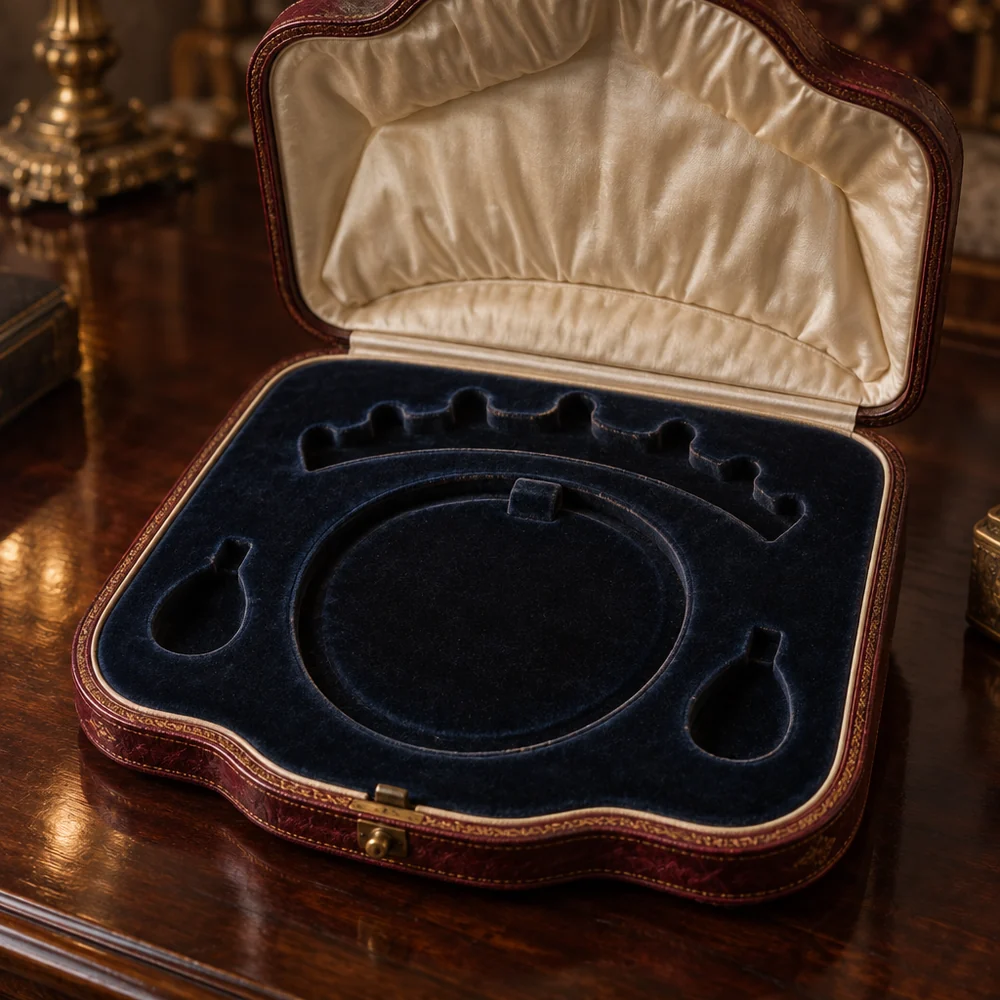
Too famous to sell
These jewels were on public display, and their design, stones and history are photographed and published in detail. Since 21 October 2025 all eight have been on Interpol's database.
No auction house, reputable dealer or serious collector can buy it. "It's nothing that can go through an auction house," Scott Guginsky of the Jewelers' Security Alliance told the AP.
Source: AP, 23 October 2025
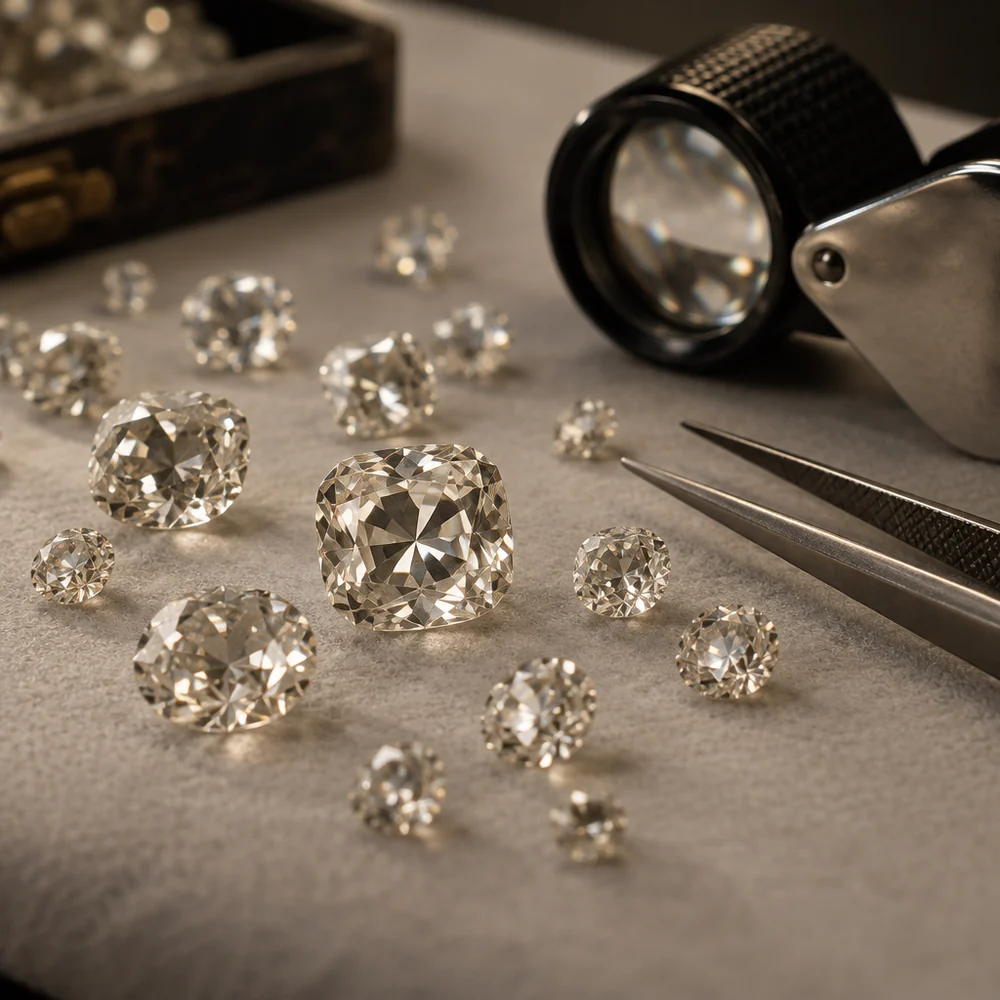
What thieves do instead
Experts quoted by the AP described the usual pattern: the stones are taken out of their settings, the larger ones may be recut so they no longer match their records, and the gold and silver are melted.
Christopher Marinello of Art Recovery International said breaking the pieces apart is how thieves hide a theft. Sara Yood of the Jewelers Vigilance Committee noted that historic stones carry no laser inscriptions, which makes them harder to trace than modern ones.
Source: AP, 23 October 2025
Why breaking them up destroys most of the value
- History is the price. Former FBI art crime investigator Robert Wittman told the AP that melting or breaking up a famous piece wipes out its historical worth. A tiara made for an empress is worth far more than the stones in it.
- Recutting costs weight. Every recut loses carats, and it turns an old mine or old European cut, which collectors seek out, into an ordinary modern stone.
- The metal is the smallest part. Diamond jewels of the period were usually set in silver backed with gold. Melted, the metal is worth little next to the finished jewel.
- The craftsmanship cannot be rebuilt. Once a setting is cut up, the work of Nitot, Lemonnier or Kramer is gone for good.
Selling an antique jewel with a good history? Get a free quote
How provenance and stolen-art registers protect buyers
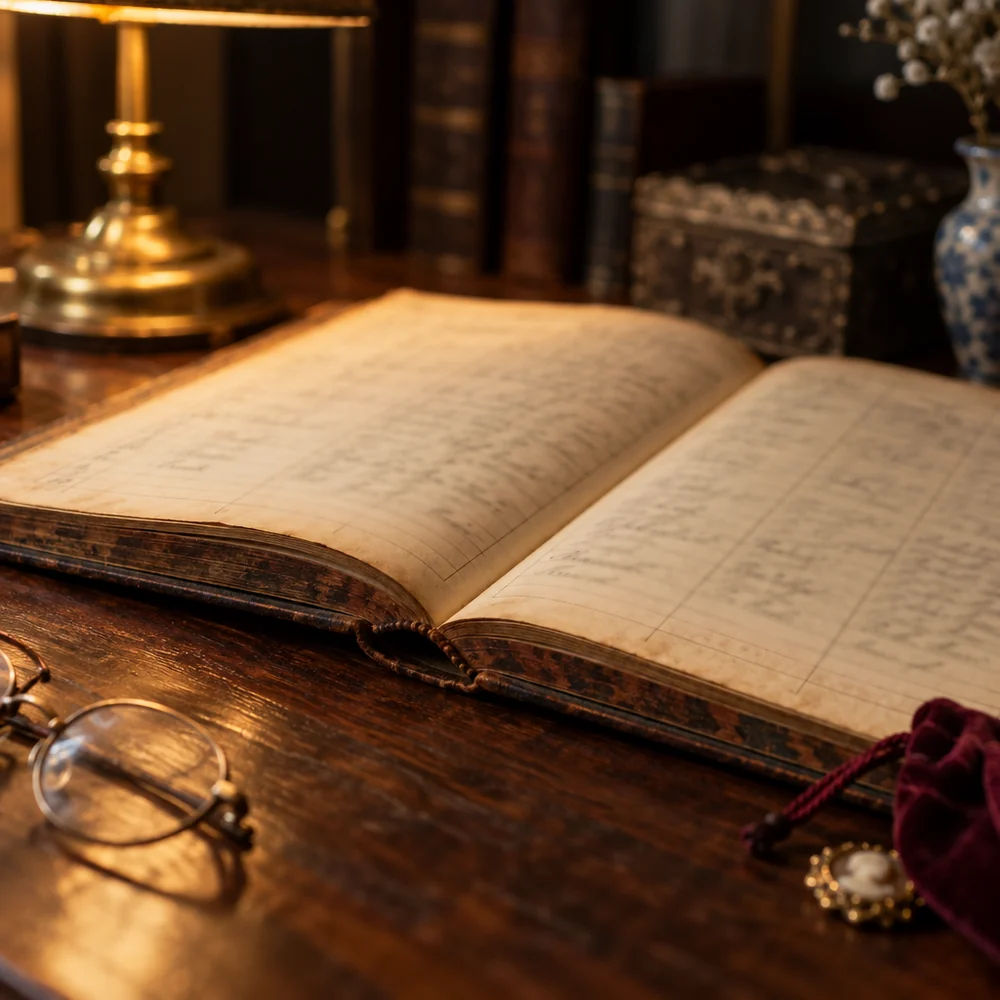
Provenance: the jewel's paper trail
Provenance is the record of who owned a piece and how it changed hands: old receipts, valuations, probate papers, a fitted box from the maker, auction catalogues. A good history adds value, as with the jewels of Princess Diana. A gap is a reason to ask more questions.
See our provenance guide and how a signature affects value.
The registers dealers and auction houses search
- The Art Loss Register. Set up in London in 1990, it lists more than 700,000 lost, stolen and looted items and runs over 400,000 checks a year for auction houses, art fairs and dealers. Its Watch Register does the same for watches.
- Interpol's Stolen Works of Art database. Almost 57,000 items with certified police information, the only database of its kind at international level. Anyone can apply to become an authorised user and check items in real time.
Source: Art Loss Register; Interpol
How a reputable dealer checks before buying
- Know the seller
Larger purchases need photo ID and proof of address, as every HMRC-registered buyer must ask. See when ID is needed.
- Ask where it came from
Inherited, bought, given? When and from whom? Papers, boxes and old photographs all help.
- Examine the piece
Is it complete, are any stones replaced or recently recut, is the setting altered? See how we authenticate antique jewellery.
- Check the registers
For important pieces, a search of the stolen-art registers before purchase.
- Walk away if it does not add up
A reputable dealer would rather lose a purchase than handle a stolen jewel.
What the French crown jewels were, and the sale of 1887
The collection goes back to Francis I in the 16th century, who made his jewels the inheritance of the kings after him. In September 1792 thieves broke into the royal treasury, the Garde-Meuble, and took most of the crown jewels, the Mazarin diamonds among them.
| The 1887 sale | Fact |
|---|---|
| Why | A law of December 1886 ordered the sale, to discourage any return of the monarchy |
| When and where | 12 to 23 May 1887, at the Louvre, in nine sessions |
| How | Many jewels were broken up first and sold as loose stones and parts |
| Raised | 7,221,560 francs |
| Buyers | Tiffany & Co. among the largest; Boucheron bought three of the Mazarin diamonds for 101,000 francs |
| Kept back | The 140.64 carat Regent diamond, the Hortense diamond, Napoleon's crown and other pieces of historic value, including the reliquary brooch |
Source: Russell Shor, Gems & Gemology (GIA), Fall 2020; The Conversation, October 2025
So the crown jewels were broken up once before, by the French state itself. Pieces sold in 1887 still come to market, some in their original cases (JCK, September 2022), and the Louvre has bought several back. See our Boucheron jewellery.
19th-century jewels from our collection
The same stones, and the same silver-topped gold settings, were used for Victorian jewels in Britain, on a scale you can wear and own. Three from our collection:
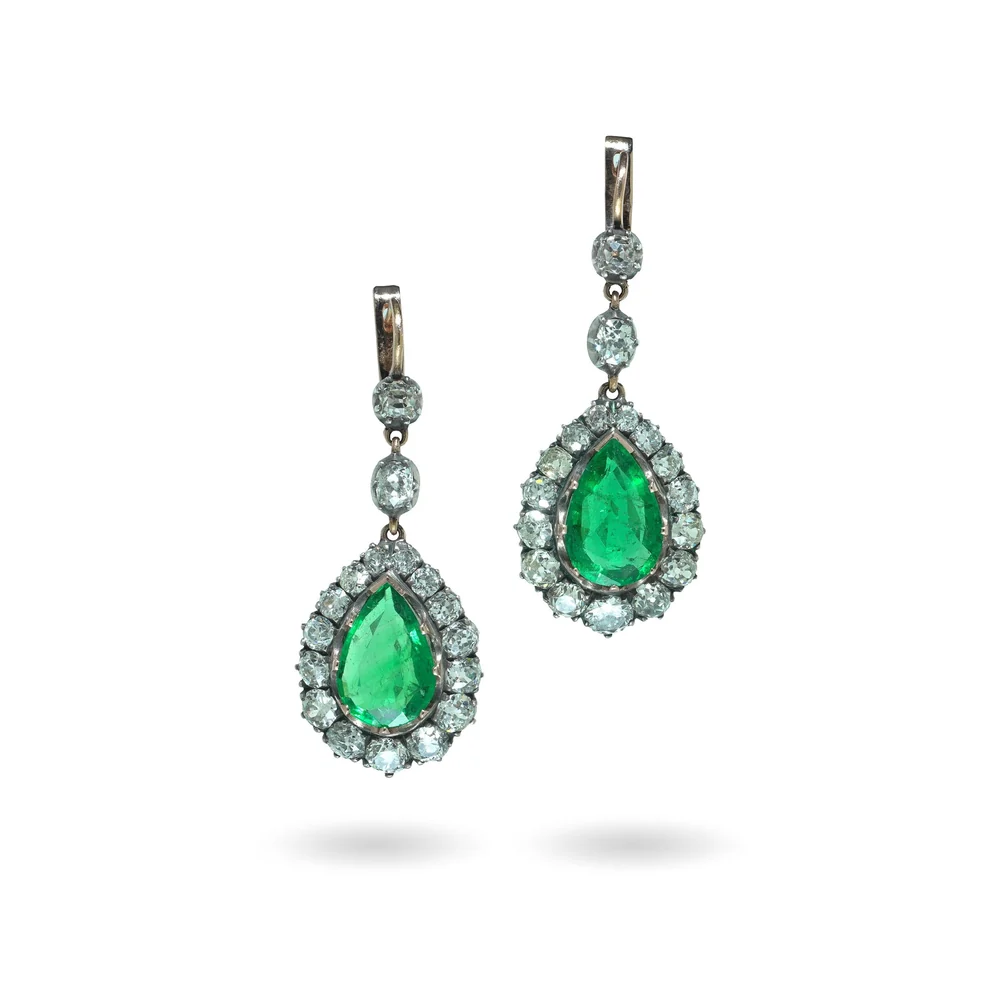
Emeralds in diamond frames
Pear-shaped Colombian emeralds framed in old cut diamonds: the same pairing as Marie-Louise's earrings. See emerald earrings and emerald jewellery.
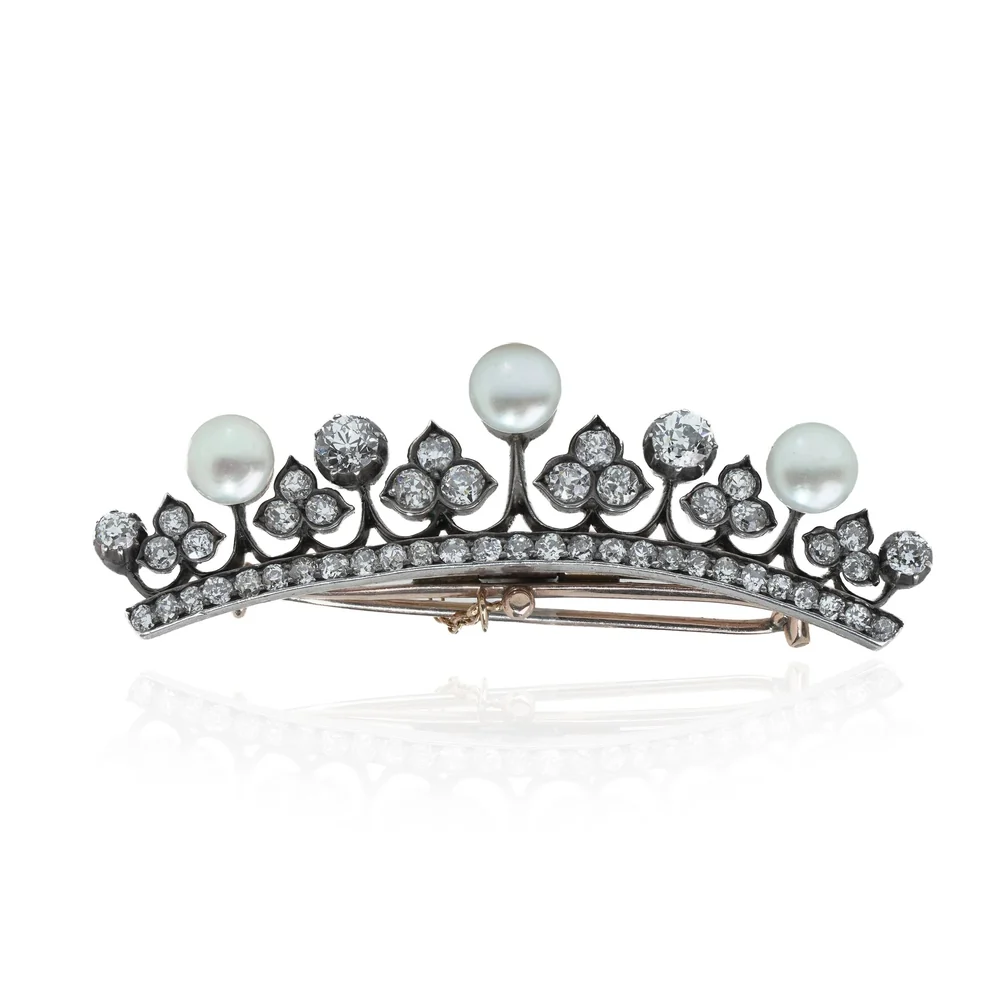
Pearls and diamonds
A crown of diamonds and pearls in gold and silver, from about the 1880s. See pearl brooches and natural versus cultured pearls.
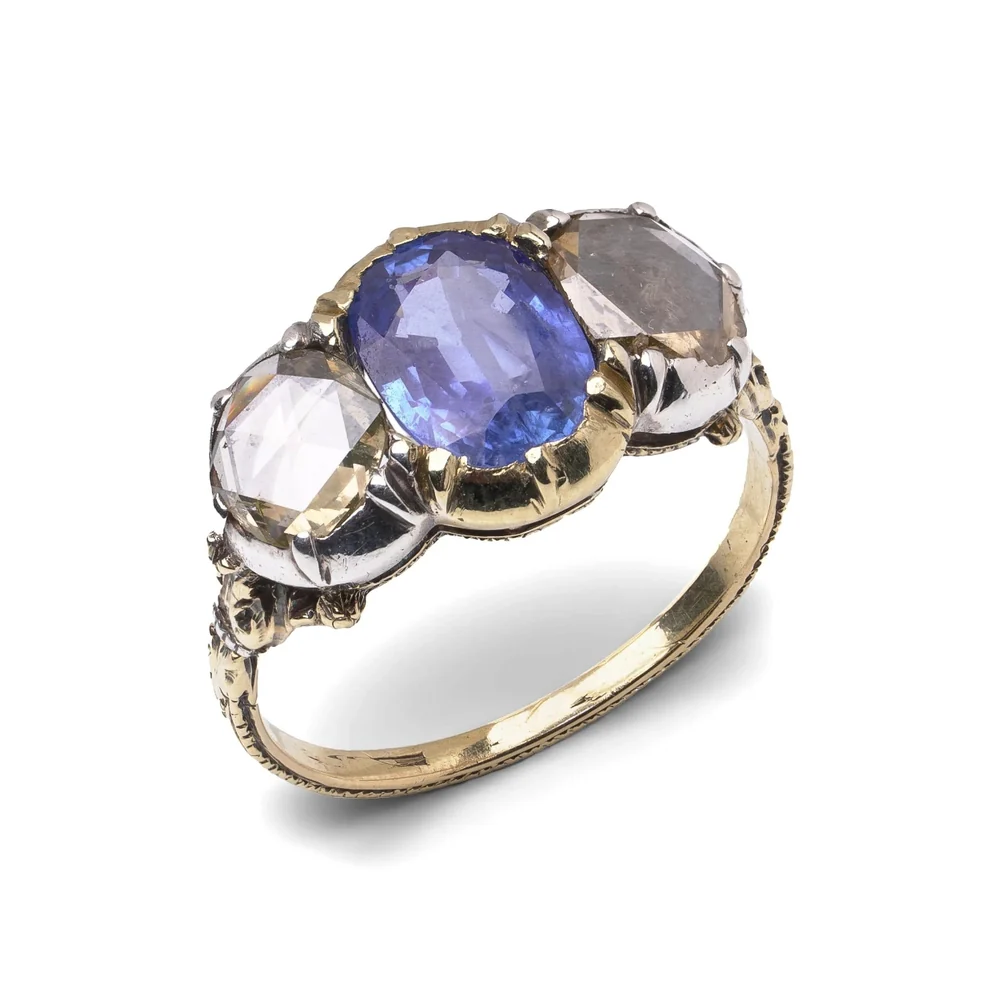
Sapphires and diamonds
A Ceylon sapphire between two rose cut diamonds in 18ct gold. See Victorian sapphire jewellery and sapphire rings.
How we can help
We buy and sell antique jewellery from Georgian to Art Deco, and we check every piece before it is offered for sale.
- Selling a jewel?
Send photos and anything you know about its history. See selling antique jewellery or selling Victorian jewellery.
- Inherited a piece?
Read what to do with inherited jewellery and how to tell if jewellery is worth money.
- See it in person
Book an appointment at 47 Maddox Street, Mayfair, or in Braintree, Essex. Call 01376 334482 or WhatsApp us.
Request a free valuation
- Eight French crown jewels were stolen from the Louvre on 19 October 2025; one year on they have not been found.
- Famous jewels cannot pass through auction houses or reputable dealers, so thieves break them up, which destroys most of their value.
- The Art Loss Register and Interpol's database let buyers check that a piece is not stolen.
- We buy and sell antique jewellery in Mayfair and Braintree, with free valuations from photos.
Questions we are asked
When was the Louvre heist?
On Sunday 19 October 2025, at about 9.30am. The gang was in and out of the Galerie d'Apollon in under eight minutes.
What was stolen from the Louvre?
Eight pieces of the French crown jewels: the tiara, necklace and one earring of the sapphire parure of Queens Marie-Amélie and Hortense; Empress Marie-Louise's emerald necklace and earrings; and Empress Eugénie's pearl and diamond tiara, corsage bow brooch and reliquary brooch.
How much were the Louvre jewels worth?
The Louvre's curators put the loss at €88 million, about $102 million, as reported by AP.
Have the Louvre jewels been found?
No. Only Empress Eugénie's crown, dropped during the escape, was recovered. The other eight pieces were still missing on 1 October 2026.
Has anyone been charged over the Louvre heist?
Yes. By 28 November 2025 the four suspects believed to have carried out the raid had been arrested and charged with organised theft and criminal conspiracy, Al Jazeera reported. They are presumed innocent unless convicted.
Why can't stolen crown jewels be sold?
They are famous, photographed and registered with Interpol, so no auction house or reputable dealer can buy them. Broken up, the stones and metal are worth a fraction of the jewel.
Why were the French crown jewels sold in 1887?
The Third Republic sold most of them at the Louvre in May 1887 to discourage a return of the monarchy. The sale raised 7,221,560 francs.
How do I know an antique jewel I buy is not stolen?
Buy from a dealer who checks the seller's identity and the piece's history, asks for papers and, for important pieces, searches the stolen-art registers.
Buy and sell antique jewellery with confidence
See our 19th-century jewels in Mayfair or Braintree, or send photos of a piece you want to sell for a free valuation.
- We buy directly
- Free valuation from photos
- Appointments in Mayfair and Braintree
- Insured postage or collection
New pieces reach our list first: join the Mozeris list.