How to Change an Antique Clock When the Clocks Go Back
How to put an antique, chiming or pendulum clock back an hour on 25 October 2026, and forward on 28 March 2027, without upsetting the strike.
How to change an antique clock when the clocks go back, in brief:
- When: UK clocks go back one hour at 2am on Sunday 25 October 2026, and forward at 1am on Sunday 28 March 2027.
- Going back: on a pendulum clock, stop the pendulum for exactly one hour, then restart it. No hands touched, nothing goes out of step.
- Going forward: move the minute hand forward only, pausing at every quarter, half and hour until the chime or strike has finished.
- Never move the hour hand on its own or turn the hands backwards on an antique clock.
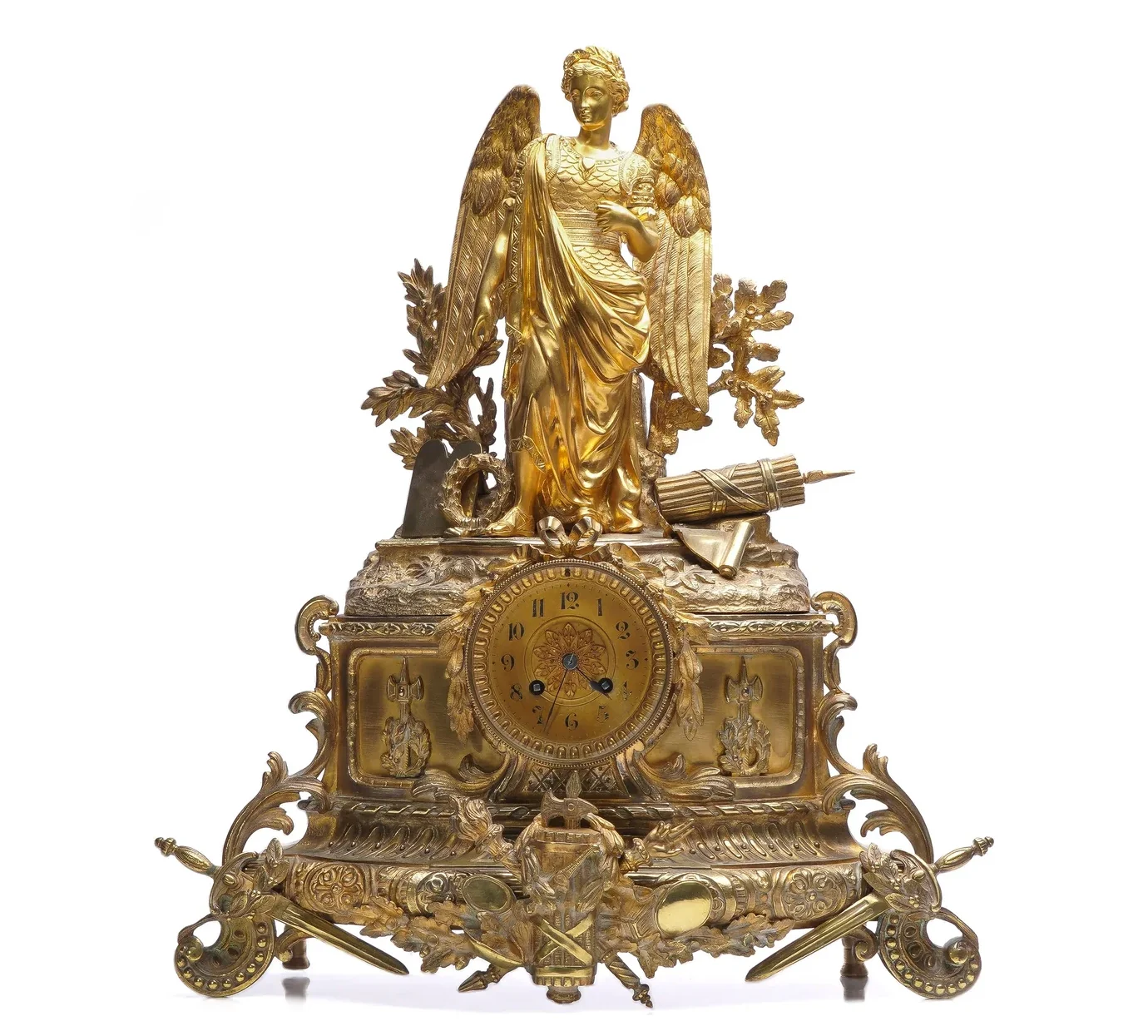
In this article
- When do the clocks go back in 2026?
- Three rules for any antique clock
- Clocks going back: the two safe methods
- Quick reference: what to do with each clock
- Clock by clock: step by step
- Clocks going forward on 28 March 2027
- If it now strikes the wrong hour
- When to call a clock restorer
- Thinking of buying or selling a clock?
- Questions
When do the clocks go back in 2026?
In the UK the clocks go back one hour at 2am on Sunday 25 October 2026, when British Summer Time ends. They go forward again at 1am on Sunday 28 March 2027.
| Change | Date | What happens |
|---|---|---|
| Clocks go back | Sunday 25 October 2026 | At 2am the time becomes 1am |
| Clocks go forward | Sunday 28 March 2027 | At 1am the time becomes 2am |
| Clocks go back | Sunday 31 October 2027 | At 2am the time becomes 1am |
You do not need to be up at 2am. Change your clocks on Saturday evening or Sunday morning: the method is the same.
Parliament's clockmakers do it the same way. For the autumn change they silence the chimes and stop the Great Clock in the Elizabeth Tower, then bring the bells back at 2am. The same team looks after about 2,000 clocks across the estate.
Sources: GOV.UK, When do the clocks change, AFP, October 2025.
Three rules for any antique clock
The hour hand is driven by the minute hand. Moved on its own, it throws a striking clock out of step with its hands.
Many older clocks cannot be turned backwards safely. Unless you know your movement allows it, assume it does not.
Stop at every quarter, half and hour until the chime or strike has ended. If a hand resists, stop: never force it.
Most online advice about turning hands back is written for modern clocks. The Clock Depot, a US retailer, says its backwards-setting instructions are for grandfather clocks built since about 1980, and that older clocks may need a different method. Master Clock Repair in Ohio names early American clocks made until about 1920 among those that cannot be set backwards safely.
Sources: Master Clock Repair, The Clock Depot.
Clocks going back: the two safe methods
Method 1: stop the pendulum for an hour (easiest)
On any clock with a pendulum, this is the simplest and safest way to lose an hour. Nothing is turned, so the strike, chimes, calendar and moon all stay in step.
- Set a timer
Set your phone for exactly one hour.
- Open the door
Open the trunk door, rear door or glass door, whichever gives you the pendulum.
- Still the pendulum
As it reaches the end of a swing, hold the bob still with your fingertips. Do not lift it or push it sideways, and leave the weights alone.
- Restart after one hour
Move the bob a little to one side and let it go. Listen for an even tick-tock, then close the door.
Method 2: go forward eleven hours
For a clock you cannot stop, such as a carriage clock, move the minute hand forward eleven hours, pausing at every hour, half hour or quarter for the clock to finish striking. Slow, but safe.
Sources: Solvang Antiques, Turning Back the Hands of Time.
Quick reference: what to do with each clock
Find your clock, then read its step-by-step below.
| Clock | Going back (October) | Going forward (March) |
|---|---|---|
| Longcase / grandfather | Stop the pendulum for one hour | Minute hand forward, pause at every chime |
| Bracket clock | Stop the pendulum for one hour | Minute hand forward, pause at every strike |
| French mantel clock | Stop the pendulum for one hour | Minute hand forward, pause at hour and half hour |
| Carriage clock | Minute hand forward 11 hours, pausing at every strike | Minute hand forward, pause at every strike |
| Vienna regulator | Stop the pendulum for one hour | Minute hand forward, pause at every strike |
| Cuckoo / Black Forest | Stop the pendulum for one hour | Minute hand forward, let the cuckoo call |
| 400-day / anniversary | Still the pendulum for one hour, or go forward 11 hours | Minute hand forward |
| Atmos | Lock the balance, minute hand forward 11 hours | Lock the balance, minute hand forward |
Clock by clock: step by step
Longcase or grandfather clock
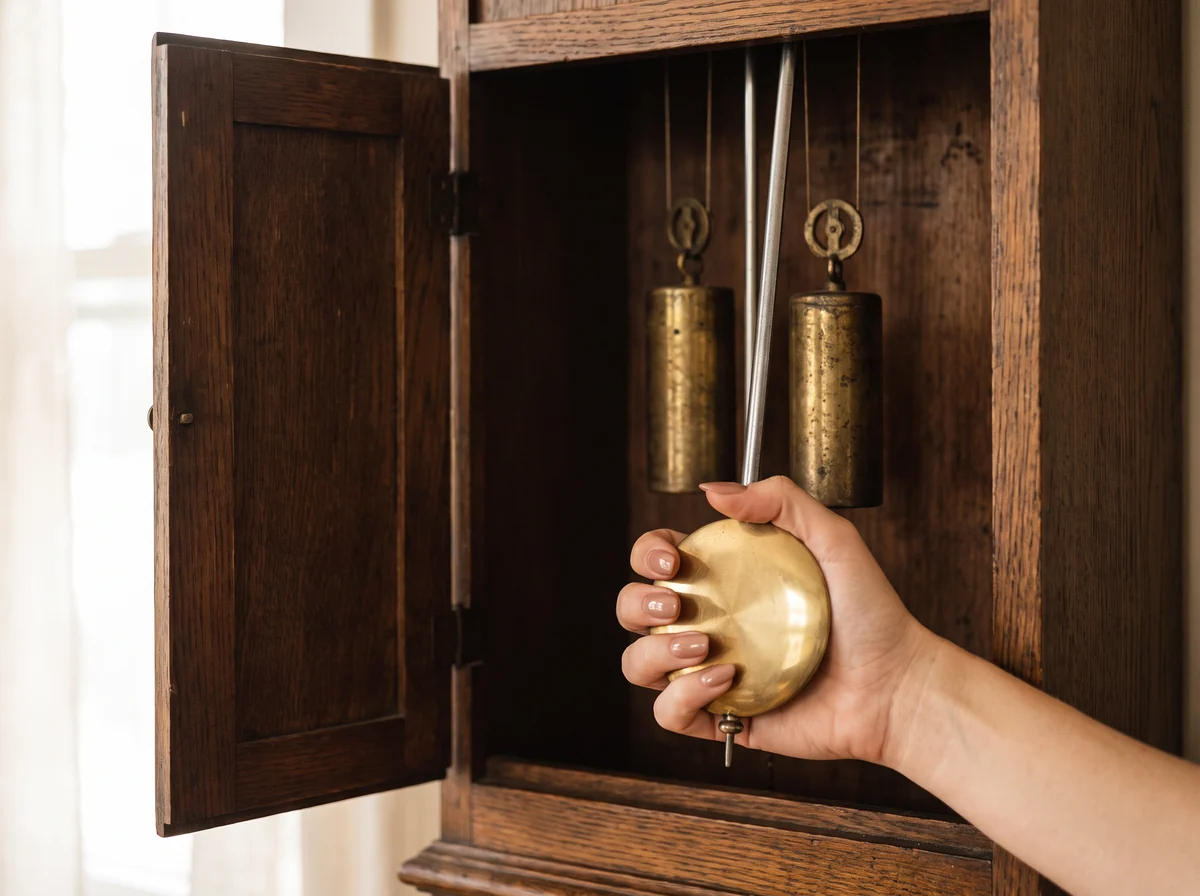
- Going back: open the trunk door and still the bob at the end of its swing. Wait an hour, then restart it with a small push to one side.
- Going forward: move the minute hand forward one hour, stopping at each quarter until the chime has finished.
- Single hand? The earliest longcase clocks have only an hour hand. Stop the pendulum rather than pushing that hand backwards.
- Do not lift or hold the weights. A moon dial needs no attention after an hour's stop.
Bracket clock
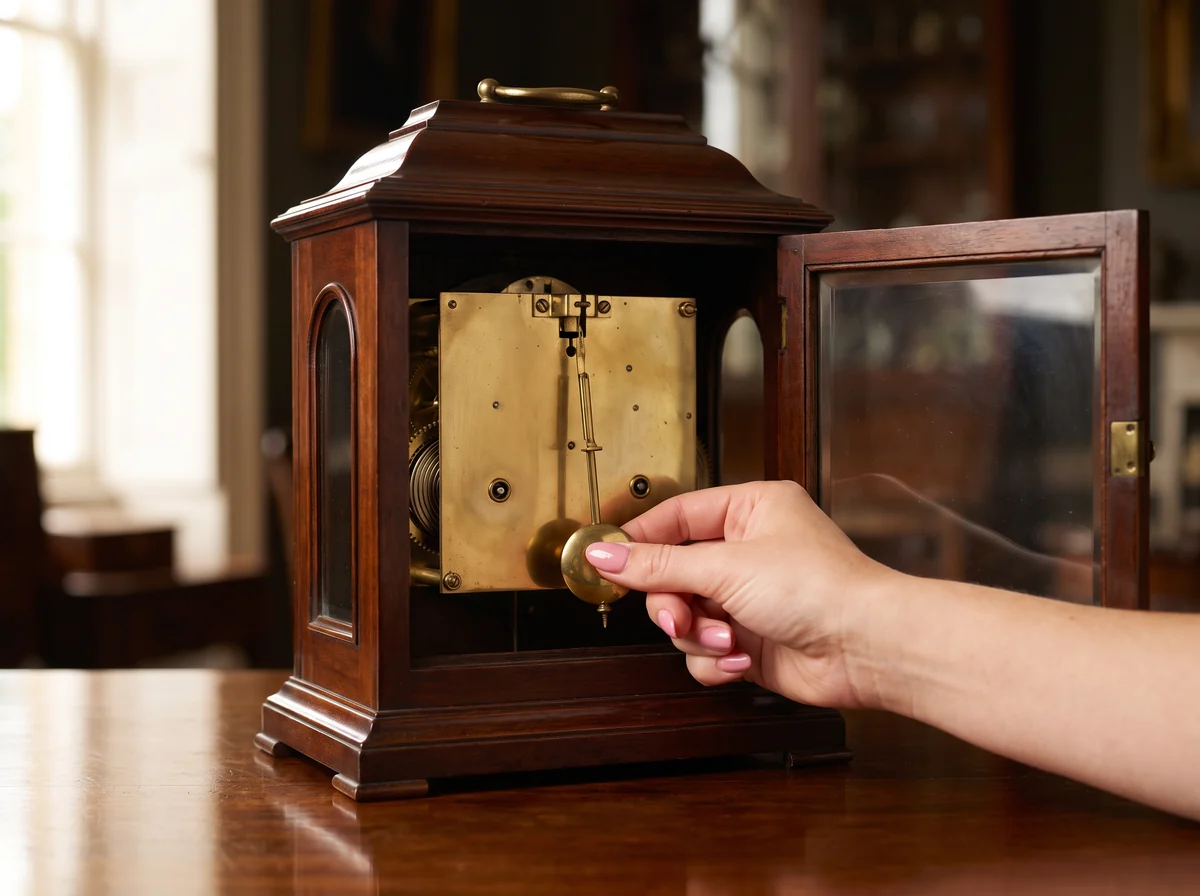
Spring-driven bracket clocks keep their short pendulum behind the movement, reached through the rear door.
- Going back: open the rear door and hold the bob still for an hour, then nudge it gently to restart.
- Going forward: minute hand forward, pausing at every strike or quarter chime.
- Strike/silent dial: many English bracket clocks have a small dial in the arch above the main dial to silence the strike. Never turn it while the clock is striking.
Sources: Bonhams and Christie's lot descriptions.
French mantel clock
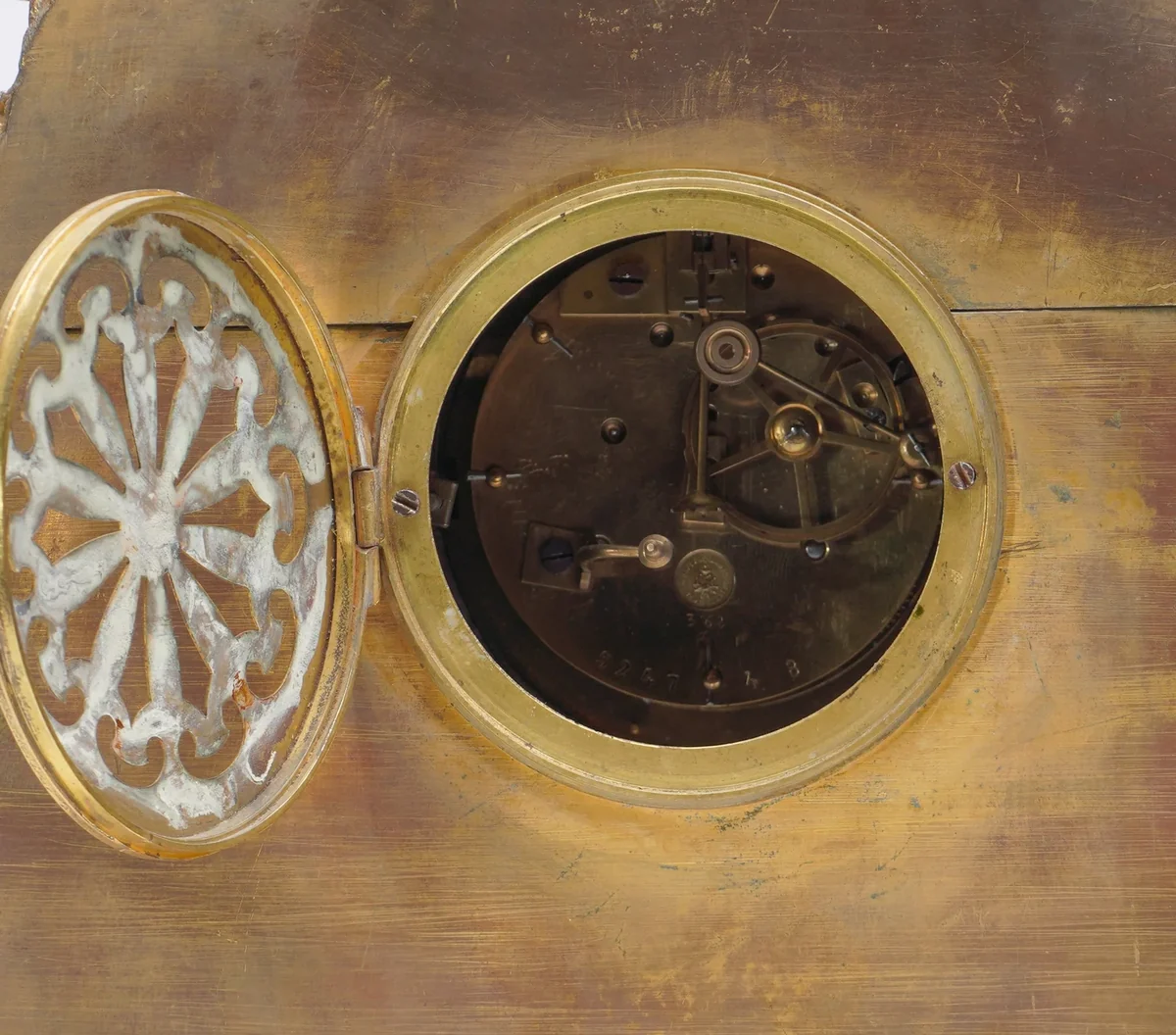
Most 19th-century French mantel clocks, in gilt bronze, marble or slate, have a round hinged door at the back. The short pendulum hangs just behind it.
- Going back: open the back door, still the pendulum for an hour, restart it with a light touch.
- Going forward: minute hand forward, pausing at the hour and half hour, which most French clocks strike.
- Why care: many strike from a count wheel on the back of the movement. A count wheel does not follow the hands, so a hurried change is a common reason they strike the wrong hour.
Sources: Wikipedia, Striking clock, Bonhams lot notes.
Carriage clock
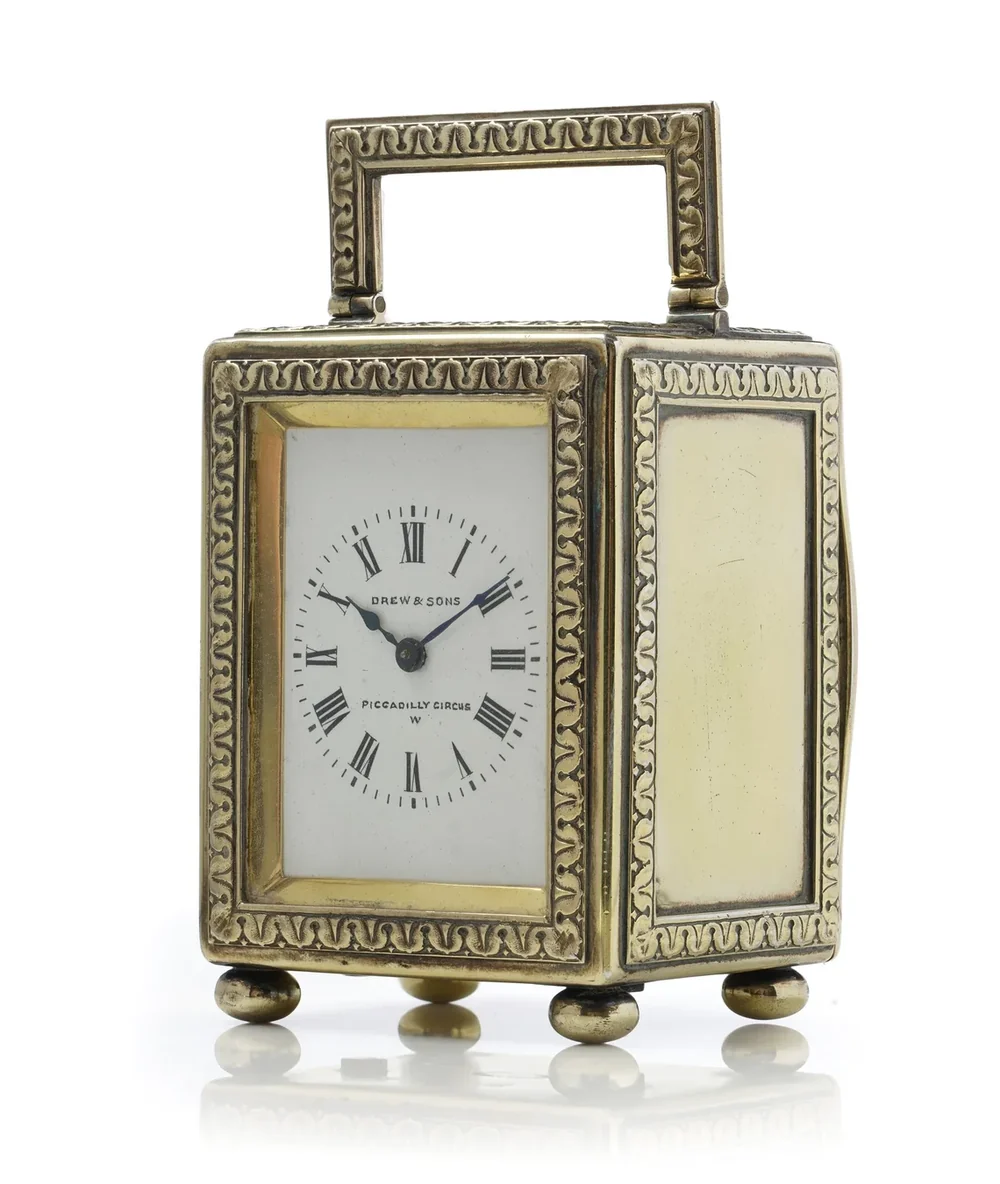
A carriage clock has no pendulum. It keeps time with a small balance wheel in the platform on top of the movement, so you cannot simply stop it.
- Going back: move the minute hand forward eleven hours. If it strikes, pause at every hour and half hour (and quarter, on a grande sonnerie) until it has finished.
- Going forward: minute hand forward one hour, the same way.
- Repeat button: afterwards, press the button on top. A repeating clock strikes the last hour again, a quick check that strike and hands agree.
- Strike selector: finer French clocks have a lever under the base to choose full strike, part strike or silence.
Sources: LAPADA dealer listings.
Vienna regulator
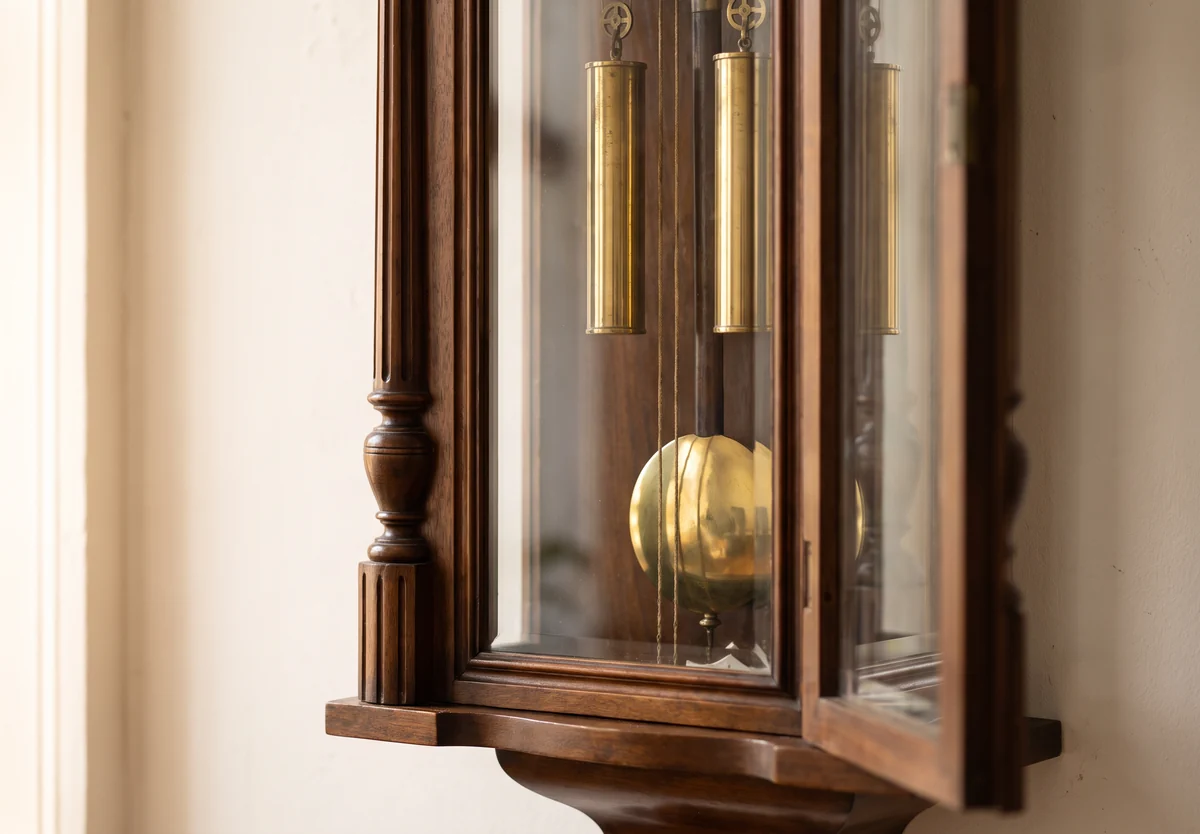
Vienna regulators are wall clocks with a long pendulum and brass-cased weights behind a glass door. Some only keep time; others strike.
- Going back: open the glass door and still the bob for an hour. Restart it with a small swing.
- Going forward: minute hand forward, pausing for every strike.
- Keep your hand off the weights and their lines: a weight jolted off its pulley is a restorer's job.
Cuckoo and Black Forest clocks

- Going back: hold the pendulum still for an hour, then restart it. Or switch the cuckoo to silent and move the minute hand forward eleven hours.
- Going forward: minute hand forward one hour, letting the cuckoo call each time.
- Never touch the hour hand, and do not turn the minute hand backwards: makers' advice differs, so forwards is the safe choice.
- Do not move the silent lever while the cuckoo is calling.
Sources: German Clocks and Gifts, The Clock Depot cuckoo manual.
400-day, Atmos, and clocks with a calendar or moon dial
| Clock | What to do | Why |
|---|---|---|
| 400-day / anniversary clock | Set it with the minute hand only. Going back, you can gently still the turning pendulum for an hour, then restart it with about half a turn and let go. | It does not strike. Its pendulum hangs from a very thin wire or ribbon that is easily damaged, so handle it lightly. |
| Atmos clock | Lock the balance with its lever first, then push the minute hand forward with one finger. Going back means going forward 11 hours. | Jaeger-LeCoultre's own care instructions: never turn the minute hand anticlockwise, never touch the hour hand. |
| Calendar or moon dial | In autumn, stop the pendulum rather than going round the dial. In spring, change it during the day, well away from midnight. | Going round the dial turns the calendar work too and can tip the date over. An hour's stop leaves it alone. |
Sources: Bill's Clockworks, 400-day instructions, Wikipedia, Torsion pendulum clock, Jaeger-LeCoultre, Atmos care instructions.
Inherited a clock? Send photos for a free valuation
Clocks going forward on 28 March 2027
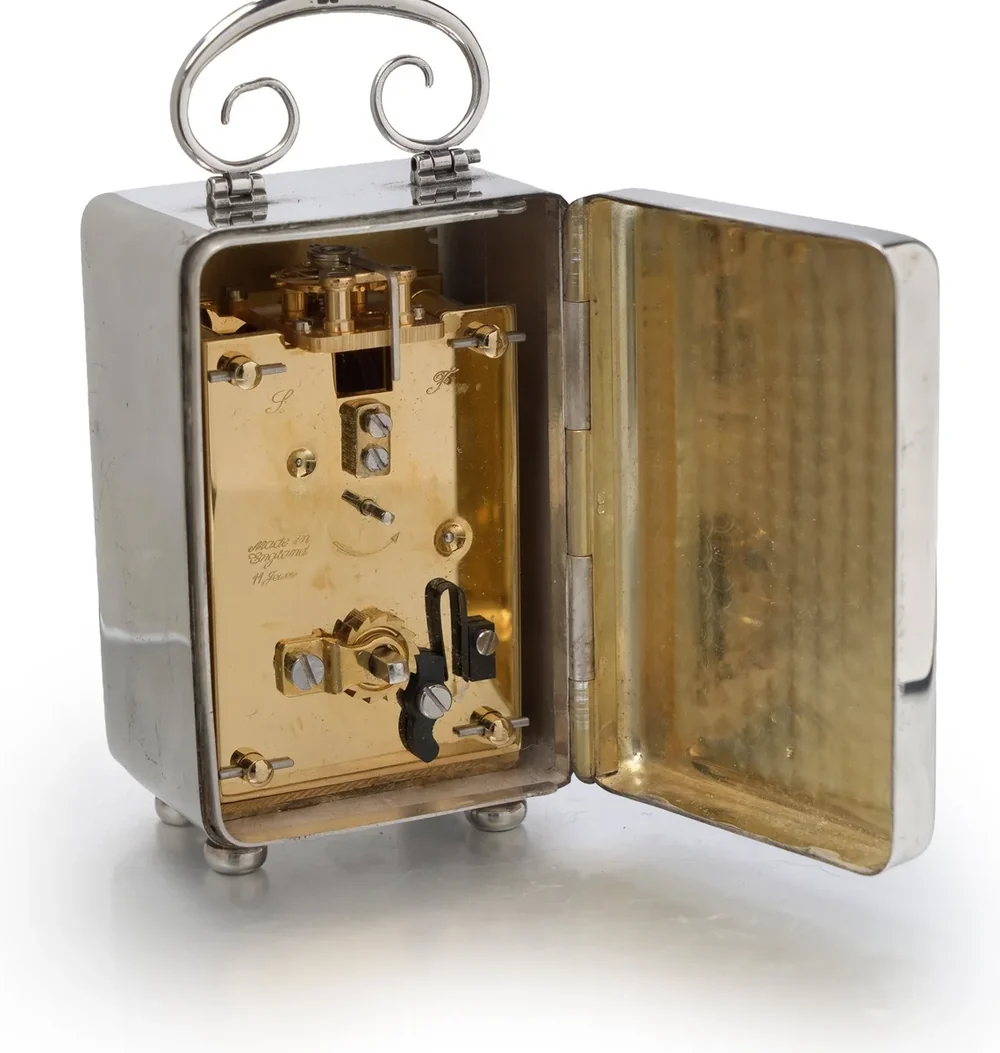
Spring is easier: you only need to gain an hour.
- Minute hand forward
Turn it clockwise, gently.
- Pause at every quarter
On a chiming clock that means four stops; on a striking clock, the half and the hour. Wait for silence each time.
- Check the count
At the next hour, count the strikes. They should match the hour hand.
Clocks with a calendar: do it in daylight, well away from midnight.
If it now strikes the wrong hour
A clock that strikes four when the hands say three has lost step between its strike and its hands. It is rarely serious. There are two kinds of striking work, and it helps to know which one you have.
The standard system since the late 17th century. The number of blows is set by a cam that turns with the hour hand, so it rarely goes wrong unless the hour hand has slipped or been moved.
Found on many French clocks and older English ones. A notched wheel counts the blows on its own, separate from the hands, so it drifts if the strike runs down or a strike is missed.
It does not matter for a home fix. The hour-hand method below puts either system back in step, working from the front of the clock.
How to put it right, in plain steps
- Wind both sides
A striking clock has a separate spring or weight for the strike. If the strike has run down while the clock kept going, the count goes wrong. Wind it fully first.
- Count the next hour
Let the clock reach the next hour on its own and count the strikes. Ignore the quarter chimes.
- Move the hour hand alone
On most clocks the hour hand is a friction fit. Turn it gently, on its own, until it points at the hour the clock just struck. If it will not move with light pressure, stop: it may be pinned.
- Set the time forwards
Now move the minute hand forward to the right time, pausing at every quarter, half and hour until the clock has finished sounding.
A restorer resets a count wheel inside the movement instead, letting the strike run round until the count is right.
Sources: Wikipedia, Striking clock, The Clock Depot, Antique Vintage Clock.
When to call a clock restorer
Stop and ask a qualified restorer if any of these happen. The British Horological Institute keeps a list of accredited repairers.
- The hands feel stiff or catch, or the hour hand will not turn with light pressure.
- The strike keeps running without stopping, or the clock stops every time you restart it.
- The strike count is still wrong after the steps above.
Thinking of buying or selling a clock?
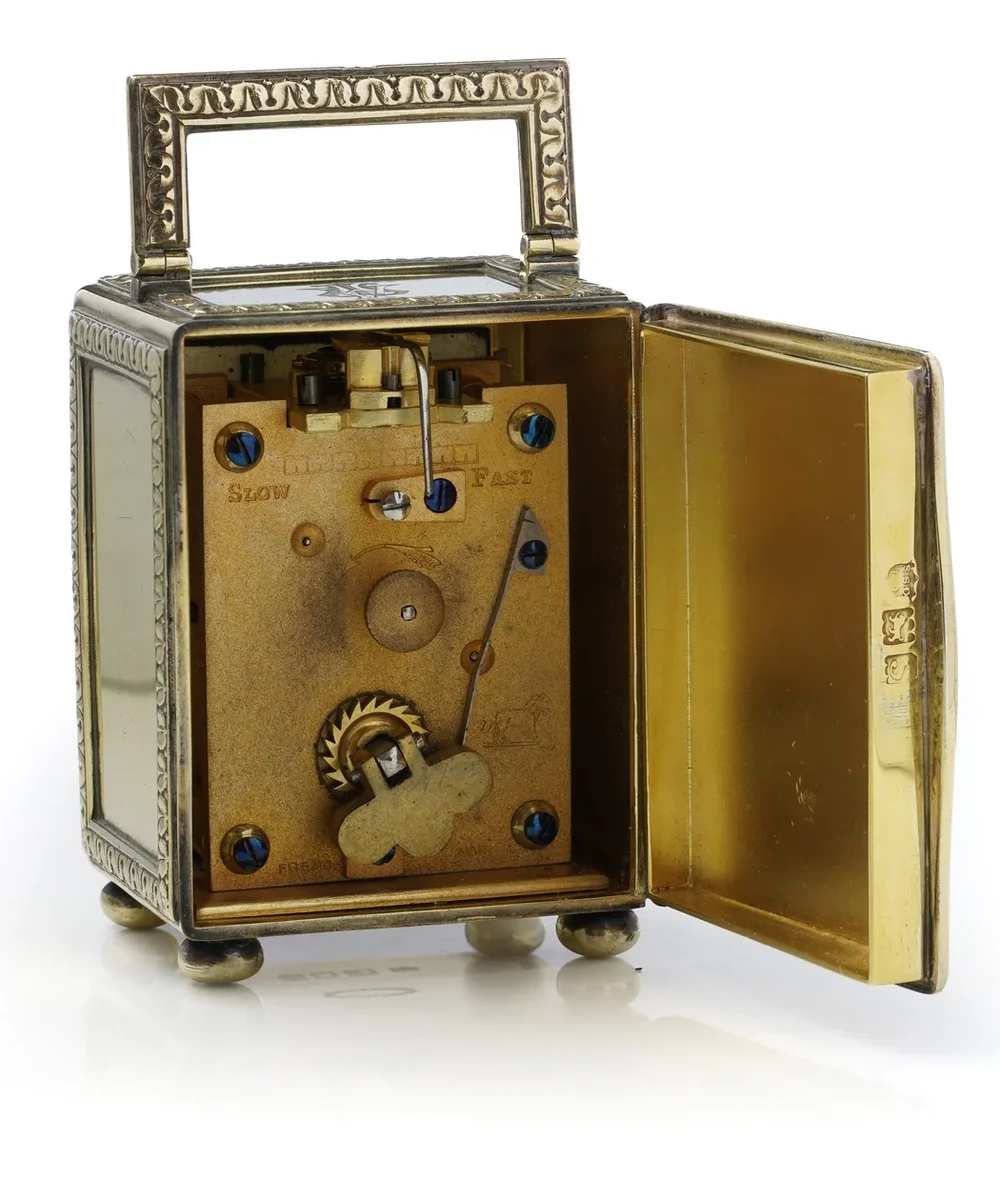
We are antique dealers in Mayfair (47 Maddox Street, by appointment) and Braintree, Essex. If you have an antique clock and want to know more about it or what it is worth, send us photos of the dial, the case and the movement for a free valuation and honest advice.
Buying? See our Edwardian silver-gilt carriage clock by Drew & Sons and the rest of our antique silver.
- Free valuation
Use the form below, call 01376 334482, message us on WhatsApp, or use our contact page.
- Silver clocks
Silver and silver-gilt carriage clocks are hallmarked: see how to read silver hallmarks and silver gilt explained.
- Pocket watches too
Also have a pocket watch? See our pocket watches in stock or sell your pocket watch.
Request a free valuation
- Clocks go back at 2am on 25 October 2026 and forward at 1am on 28 March 2027.
- Going back: stop the pendulum for one hour. No pendulum: go forward eleven hours, pausing at each strike.
- Minute hand only, forwards only, and let every chime or strike finish.
- Wrong hour afterwards: wind, count the next hour, then turn the hour hand alone to match.
Questions we are asked
When do the clocks go back in 2026?
In the UK, at 2am on Sunday 25 October 2026, when 2am becomes 1am. They go forward again at 1am on Sunday 28 March 2027.
Can you turn the hands backwards on an antique clock?
Not safely on many older clocks, so assume you cannot. Move the minute hand forwards only, or stop the pendulum for an hour when the clocks go back.
How do I put a grandfather clock back an hour?
Open the trunk door, gently hold the pendulum still at the end of its swing, wait exactly one hour, then move it to one side and let it go. The hands, chimes and moon dial stay in step.
Is it bad to stop the pendulum for an hour?
No. It is the gentlest way to lose an hour. Still the bob with your fingertips, do not lift it, and restart it with a small push to one side.
Should I move the hour hand?
No, only the minute hand. The one exception is a clock that strikes the wrong hour: then you turn the hour hand alone to match the number of strikes.
How do I change a carriage clock when the clocks go back?
A carriage clock has no pendulum to stop. Move the minute hand forward eleven hours, pausing at every hour and half hour for it to finish striking.
Why is my clock striking the wrong hour after I changed it?
The strike and hands are out of step, often because a hand was moved during a strike or backwards. Wind the clock, count the next hour, then turn the hour hand alone to that hour.
Do I have to change my clocks at 2am?
No. Change them on Saturday evening or Sunday morning. Stopping the pendulum works at any time of day.
An antique clock you would like valued?
Send photos for a free valuation and advice, or see the silver-gilt carriage clock in our collection.
- Free valuation from photos
- Advice from specialist dealers
- Appointments in Mayfair and Braintree
New pieces reach our list first: join the Mozeris list.