Antique Clock Value: What Is My Clock Worth?
What is your old clock worth? The seven things that decide value, how to recognise eleven types of clock, and a free valuation from photos.
Antique clock value depends on type, maker, movement, originality and condition:
- Type sets the ceiling: bracket, skeleton and good carriage clocks have a deep collector market; slate, cuckoo and 20th century factory clocks mostly do not.
- Maker and movement lift a clock: a known name, 8-day work, strike, chime or repeat.
- Great makers and rare work reach six figures, such as a Tompion longcase at £114,700.
- Value killers: quartz conversion, marriage, reproduction, missing parts.
In this article
The seven things that set an antique clock's value
Age alone does not make a clock valuable. A plain 18th century country longcase can be worth far less than a fine 20th century Atmos. These seven points, in roughly this order, decide where a clock sits.
Type
The type sets the ceiling. Bracket, skeleton and good carriage clocks have a deep collector market; black slate mantel clocks, cuckoo clocks and 20th century factory clocks mostly do not.
The guide to clock types below shows how to recognise each one and what adds value within it.
Maker
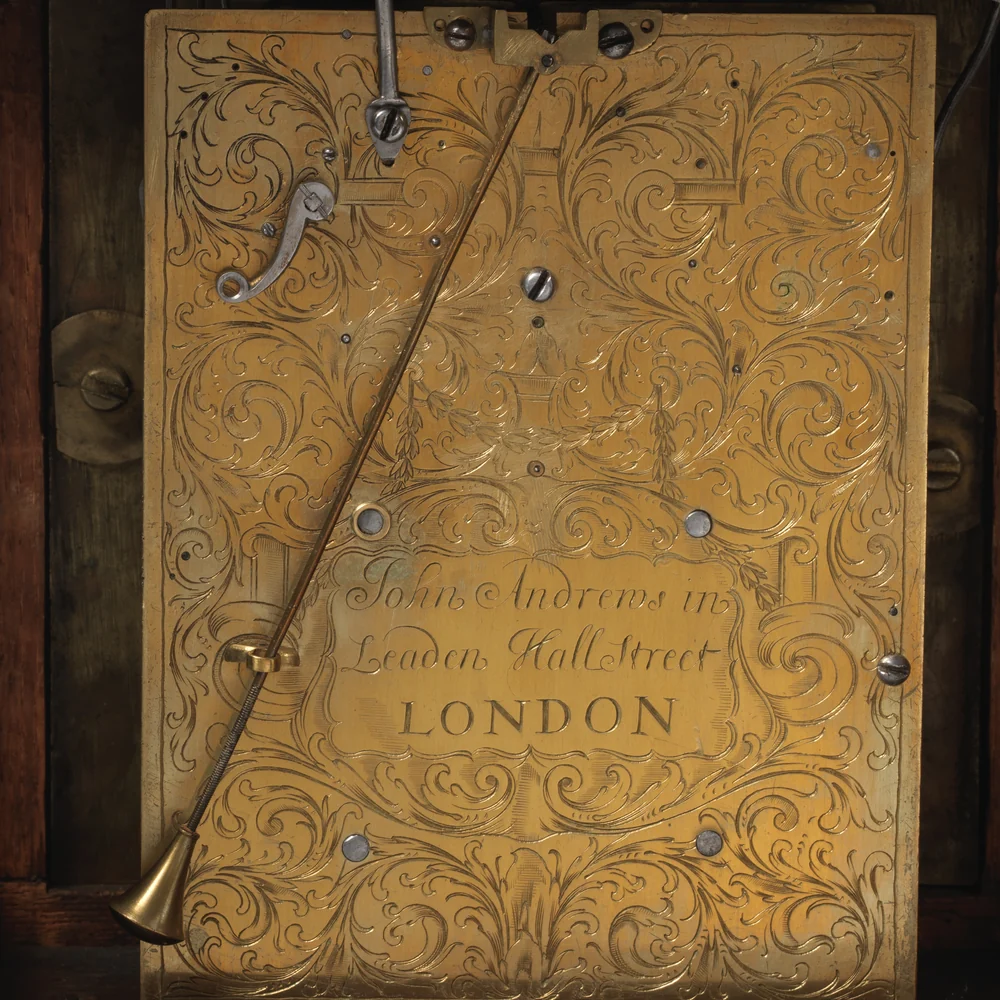
A known maker raises value, and a great one transforms it. Early London names such as Thomas Tompion, Joseph Knibb and Daniel Quare are the most famous of all: a quarter repeating table timepiece by Tompion, made about 1686, sold for £76,600 at Bonhams in July 2025.
Look for a name on the dial and on the backplate. On French clocks the dial name is often the shop that sold it, as our carriage clock guide explains.
Movement: duration and complications
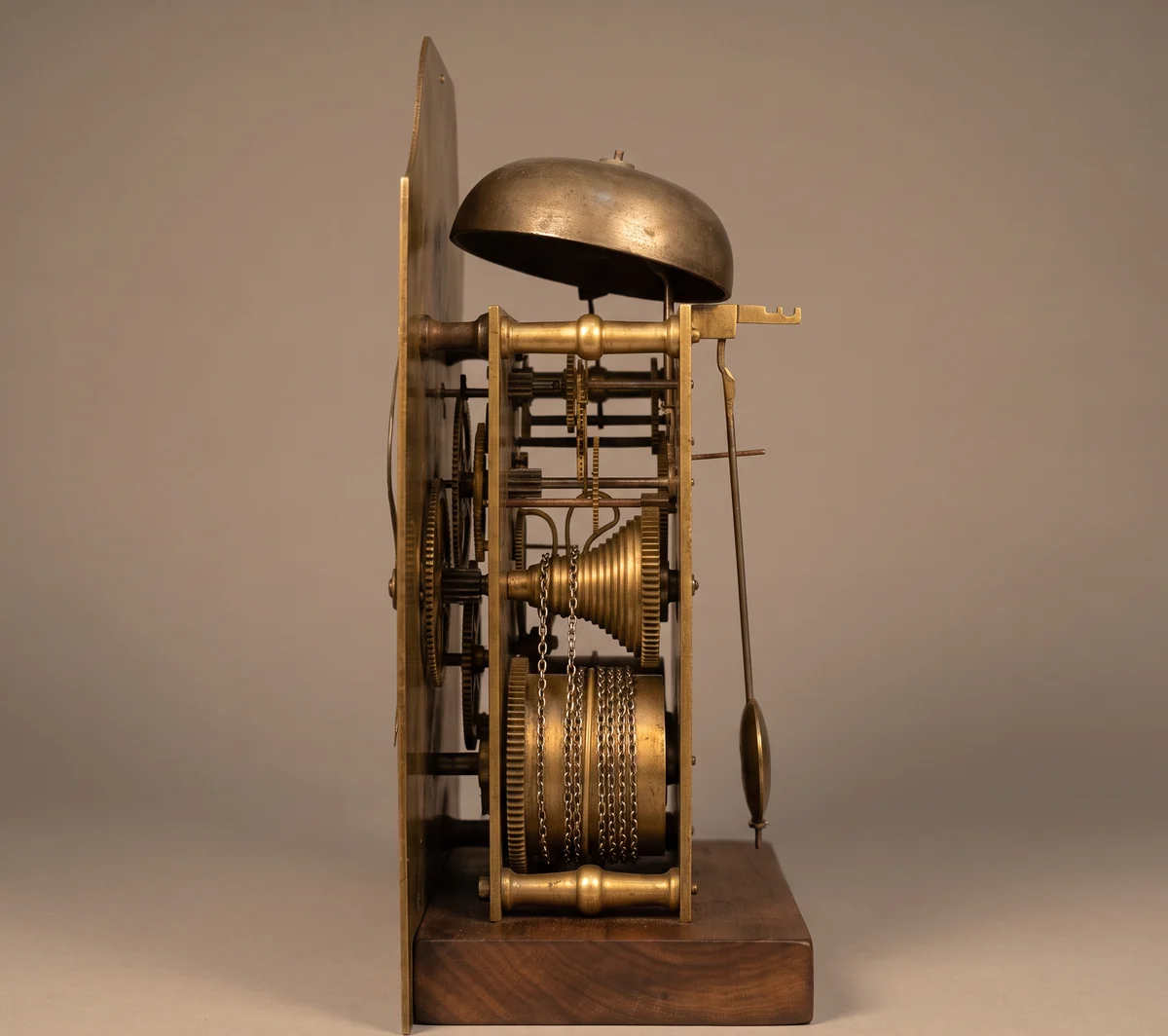
How long a clock runs and what it does both count. An 8-day longcase is generally worth more than a 30-hour one.
Strike, chime, repeat and calendar work add value. A single weight Vienna regulator is a timepiece; a three weight grande sonnerie regulator strikes the hours and quarters, and collectors pay more for it.
Originality
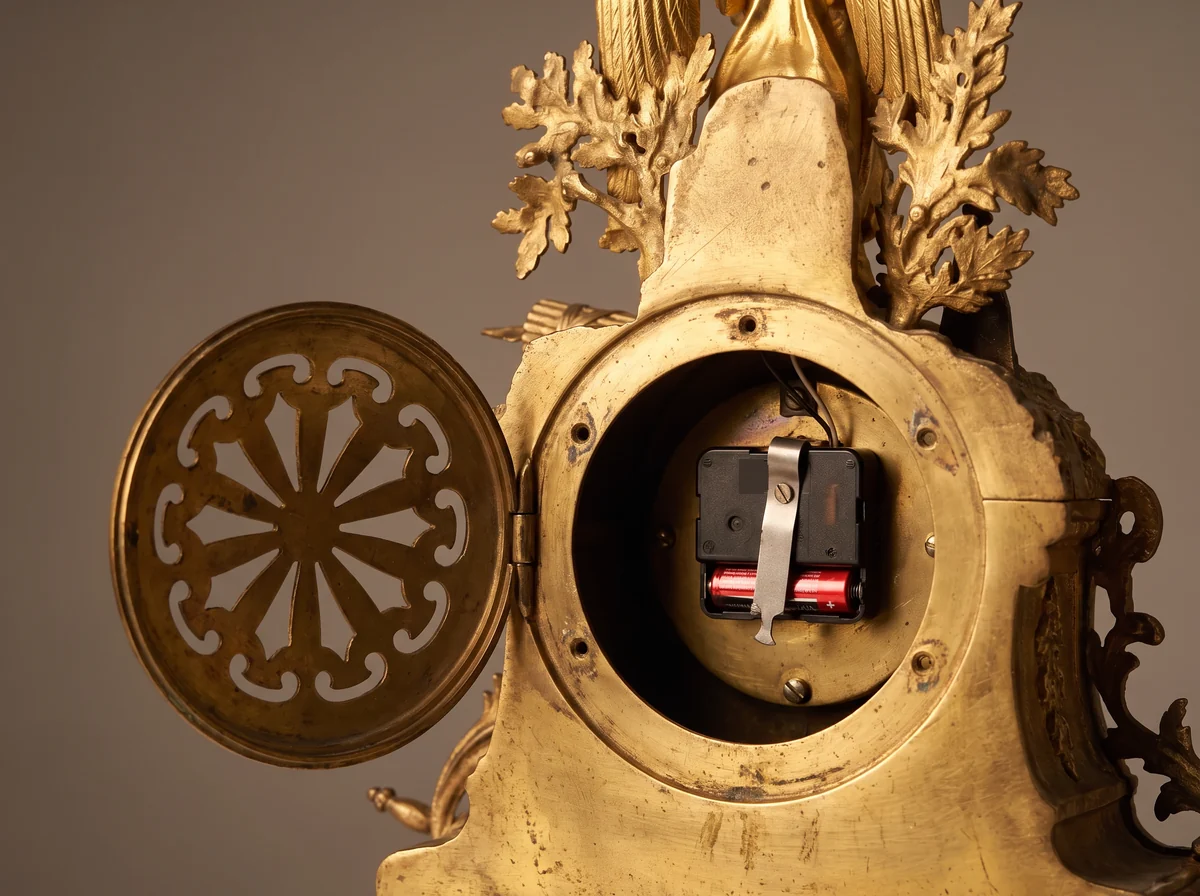
Collectors pay for a clock as it left the maker. Replaced movements, dials, hands or cases all cut the price, and a quartz conversion turns a clock into an ornament.
The clearest proof is a clock that never lost its case. A Tompion longcase in its own olivewood case, with the receipts from its sale in 1942, made £114,700 at Bonhams in November 2023. Tompion movements housed in later or associated cases sell for much less.
Case quality and materials
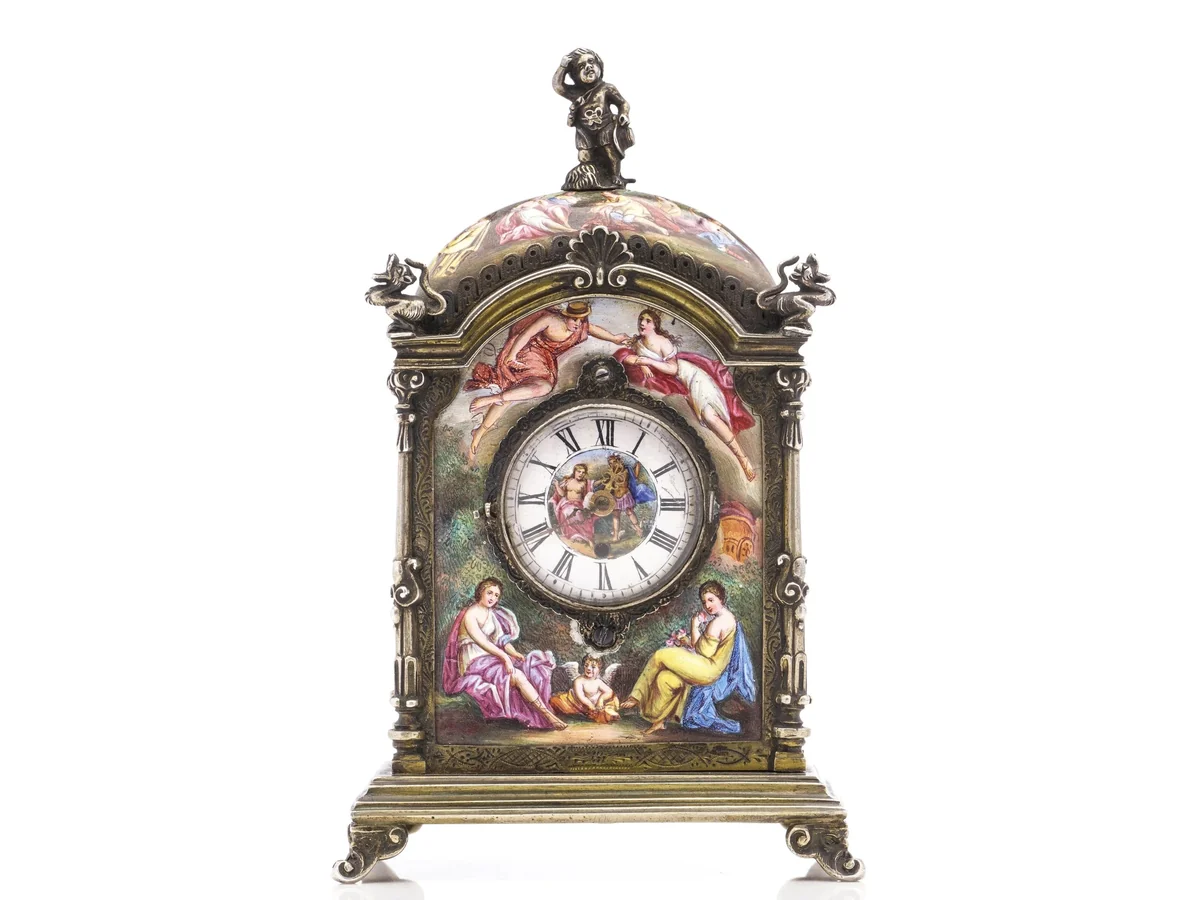
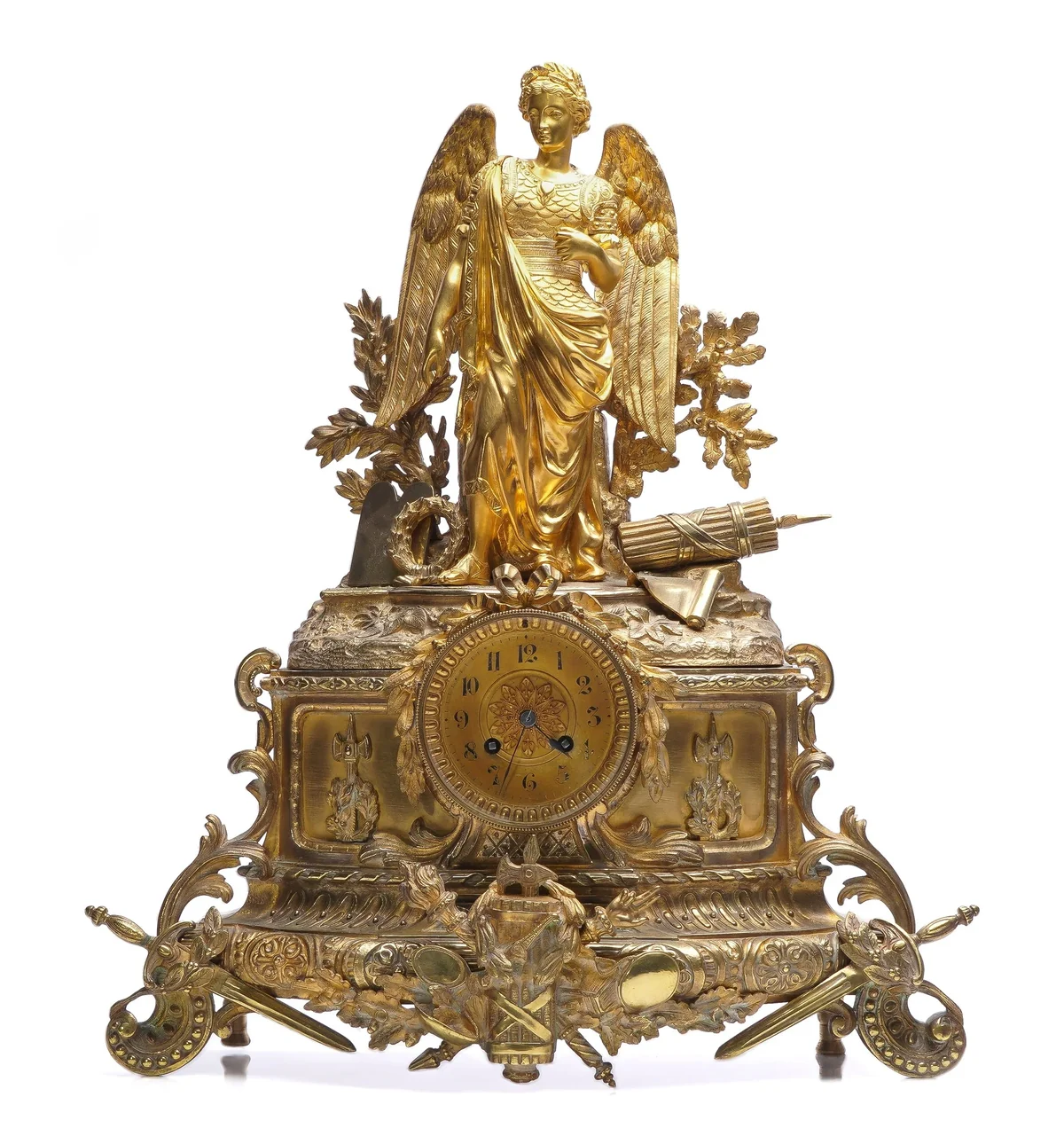
Fine materials and fine work cost more to make and sell for more. Fire-gilt bronze (ormolu), good veneers, silver, painted enamel and crisp casting all help; cast spelter, stained softwood and worn plating hold it down.
Early 19th century Paris ormolu clocks by named makers sit at the top of the French market. Our French mantel clock guide shows how to tell bronze from spelter.
Condition and working order
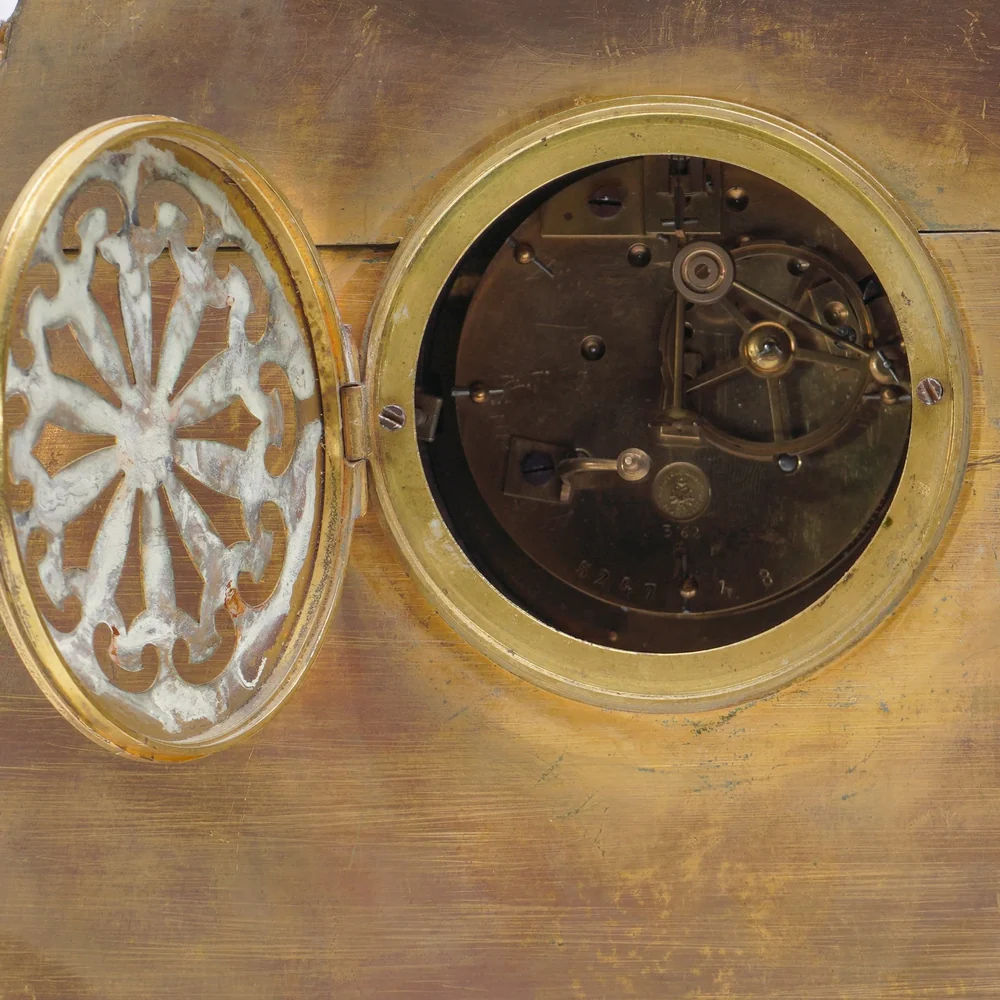
Missing parts, cracked dials, broken glass and poor old repairs all lower the price. So does a clock that does not run: buyers allow for the cost of putting it right.
Saleroom catalogues note when a clock is "ticking and striking", and they spell out losses such as a missing hood dome, finial or pendulum.
Provenance and paperwork
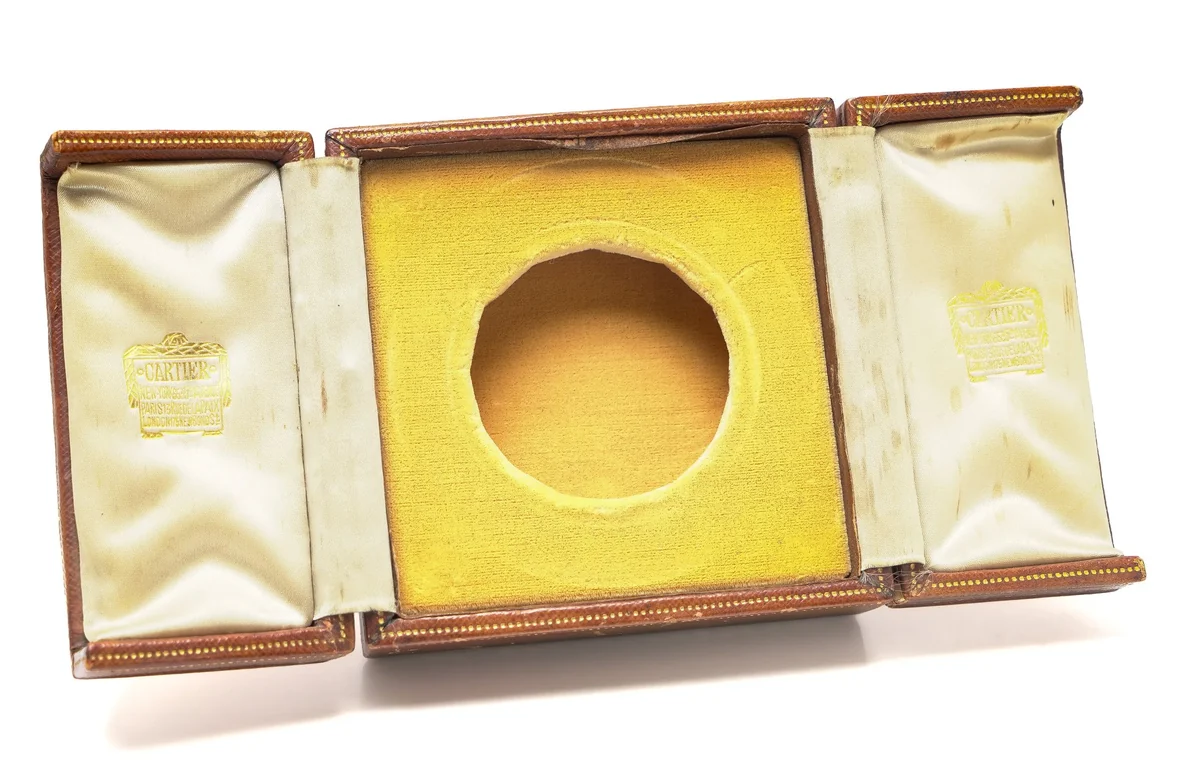
A documented history adds value: original receipts, a maker's certificate, the fitted case, the key, or a known owner.
Breguet mantel clock no. 1203 came to Bonhams in July 2025 with its original certificate, recording its sale in September 1802 to Madame de Praslin. It sold for £19,200.
Every clock is different. Send us a few photos and we will tell you what yours is worth, free and with no obligation. Ask for a free valuation.
Antique clock types: how to recognise them and what adds value
Knowing the type is the first step to knowing the value. Where we have a full guide to a type, the name links to it.
| Clock type | How to recognise it | What adds value |
|---|---|---|
| Carriage clock | Small brass case with a top handle and glass panels, usually French | A good maker's stamp on the backplate, repeat or alarm work, engraved or porcelain panel cases |
| French mantel clock | Round movement, often stamped on the backplate; gilt, marble or slate case | Fire-gilt bronze (ormolu) rather than spelter, a named Paris maker, an original matching movement |
| Longcase (grandfather) clock | Weight-driven, in a tall case with a hood and trunk door | 8-day rather than 30-hour work, a known maker, a case and dial that belong together |
| Bracket (table) clock | Spring-driven, with a carrying handle and a back door to show the movement | Early London makers, fusee movements, strike, repeat and chiming work |
| Vienna regulator | Long glazed wall case, one, two or three weights, a fine pendulum | Early fine examples, three weights for grande sonnerie striking, good veneers |
| Skeleton clock | The whole movement on show through a pierced brass frame, under a glass dome | English makers, complex frames such as cathedral designs, an intact dome |
| Atmos clock | Jaeger-LeCoultre clock under glass that winds itself from temperature changes | Early and limited models, the original box and papers, no later alterations |
| Black slate and marble | Heavy black Victorian mantel clock, often with incised gilt decoration | Calendar or moon phase work, a good movement, a complete garniture |
| Smiths, Enfield, Elliott | 20th century English factory mantel and wall clocks | Good condition and working order; these are clocks to enjoy rather than collect |
| Cuckoo and Black Forest | Carved wooden case, bellows and pipes for the cuckoo call | Fine 19th century carving rather than later souvenir work |
| American shelf clock | Wooden case with a painted glass door; Connecticut makers' labels inside | Early Eli Terry and Seth Thomas pillar and scroll clocks |
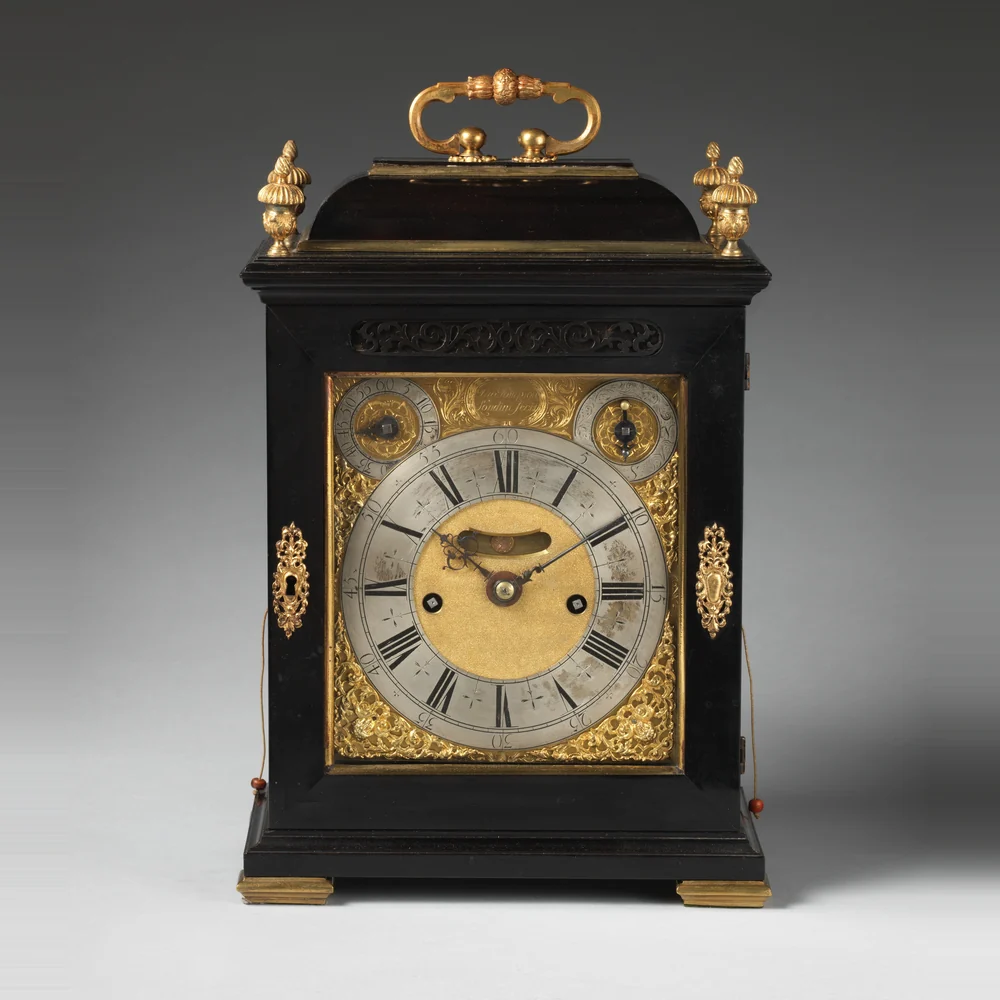
Bracket clocks
The English bracket clock is a spring-driven table clock with a carrying handle. The name comes from the wall brackets that early clocks stood on. Bonhams catalogues many as table clocks.
Value rises with age, maker and complication: a Victorian triple fusee chiming clock, a Georgian London striking clock and a late 17th century repeating clock by a great maker sit at very different levels.
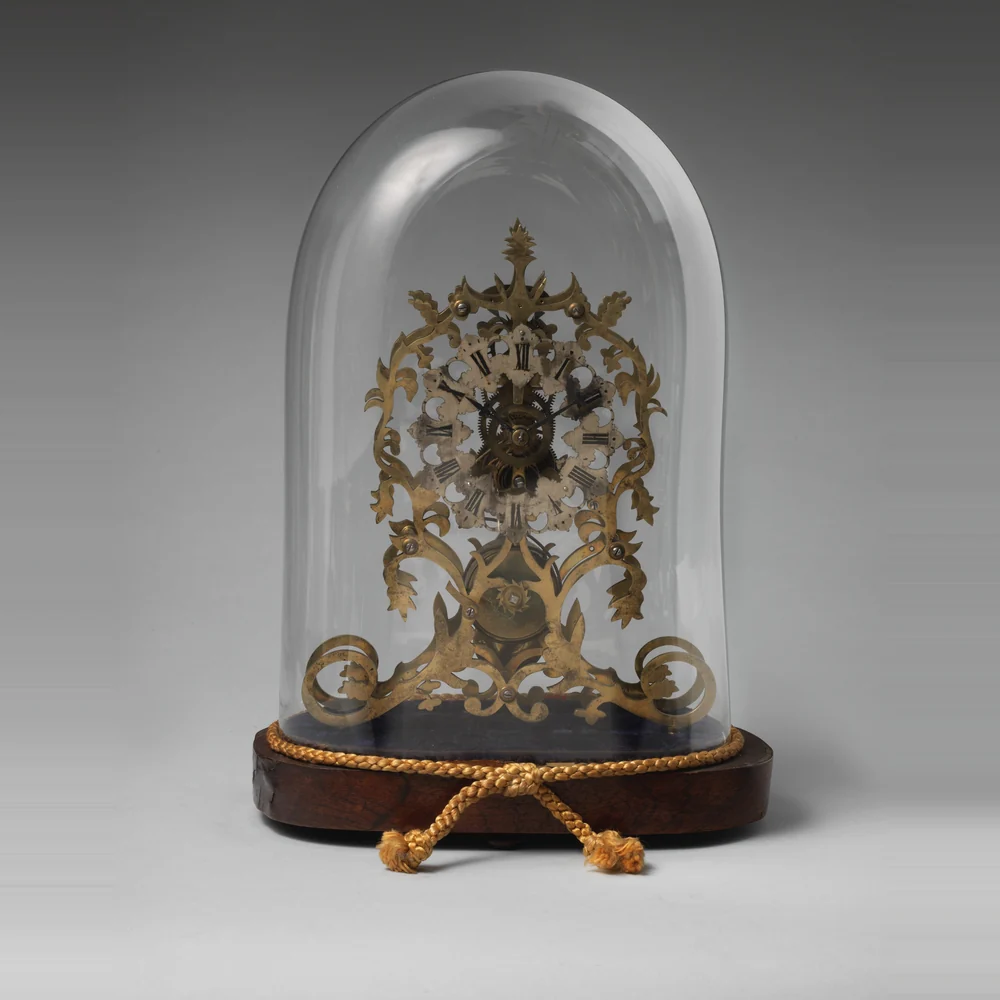
Skeleton clocks
A skeleton clock shows its whole movement through a pierced brass frame, usually under a glass dome. They were fashionable in Britain from the 1820s into the early 1900s, made by firms such as Smith of Clerkenwell and Evans of Handsworth.
Retailers often put their own names on the dial. English frames with elaborate designs, such as the York Minster pattern, are the ones collectors look for; plain later German examples are far more modest.
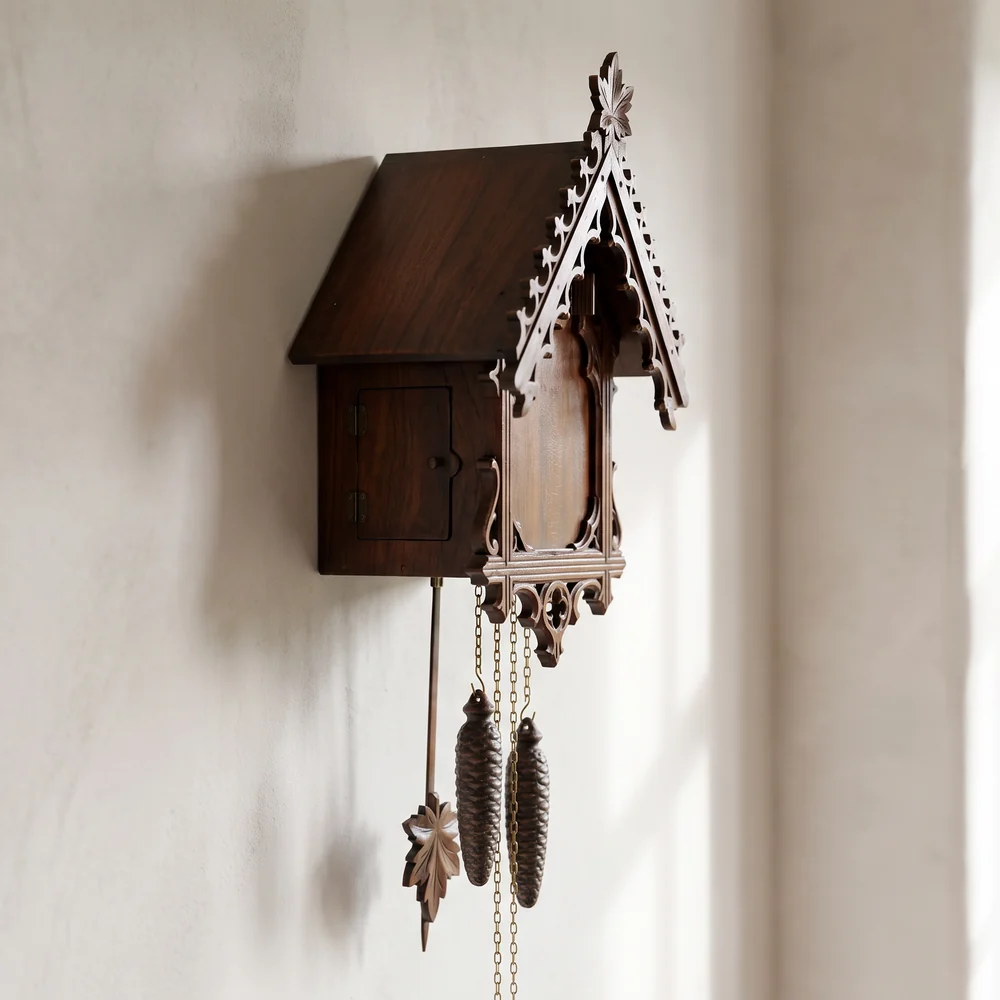
Cuckoo and Black Forest clocks
Most 20th century cuckoo clocks were made in large numbers as souvenirs, and collectors rarely compete for them. Good 19th century Black Forest clocks with fine carving are another matter.
Look at the depth and crispness of the carving, the bellows and pipes, and whether the movement is the original wooden-framed one.
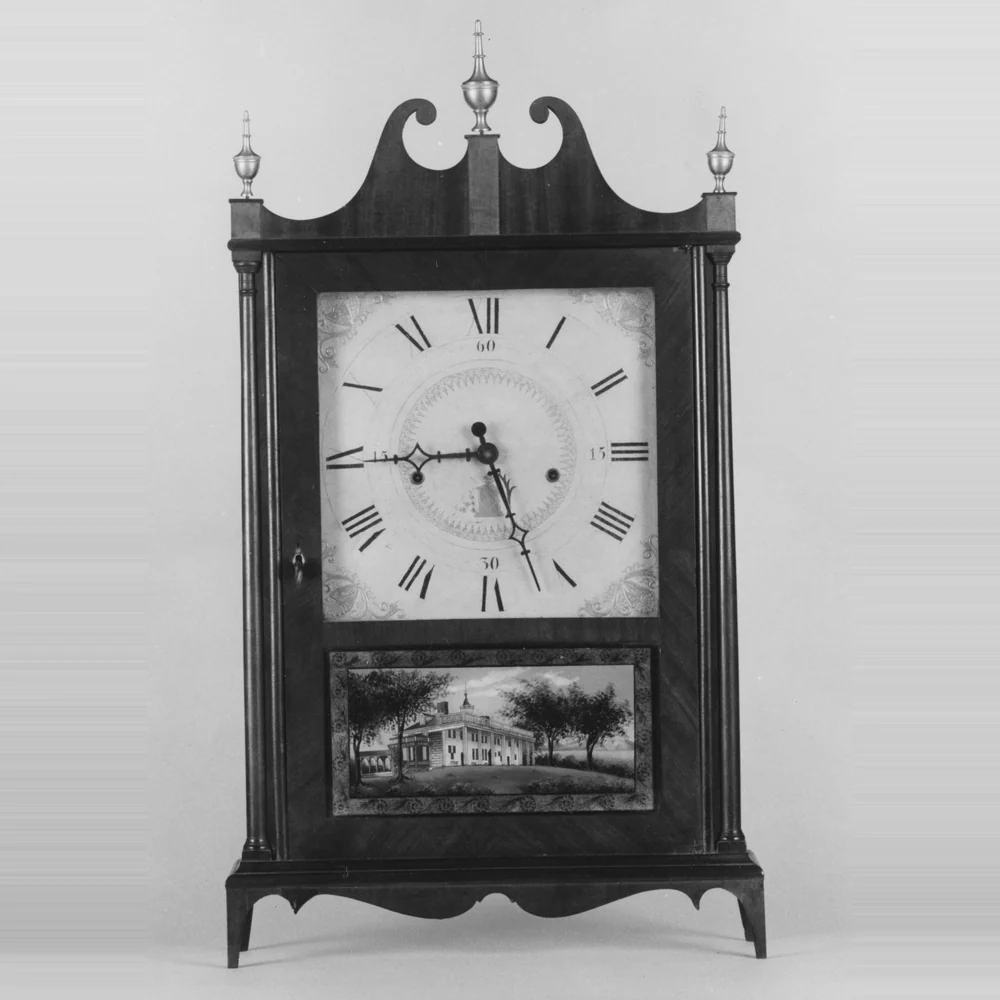
American shelf clocks
Eli Terry of Connecticut began mass-producing wooden clock movements in 1814, and his former assistant Seth Thomas became a major maker himself.
Early pillar and scroll clocks by Terry and Seth Thomas are the collectable end. Later factory clocks by Ansonia or New Haven were made in huge numbers for everyday use.
Vienna regulators, slate clocks and 20th century English clocks
- Vienna regulators: count the weights. One weight usually means a timepiece; three mean grande sonnerie striking of hours and quarters. Early, finely veneered regulators are the ones collectors want; modern "Vienna style" clocks are decorative.
- Black slate and marble: the classic Victorian mantel clock. Calendar and moon phase dials and good figural mounts lift a slate clock above the ordinary.
- Smiths, Enfield and Elliott: 20th century English factory clocks, made for everyday use. Condition and working order matter most.
Are old clocks worth anything? What makes a clock worth little
Many are worth less than people hope, and age is no guarantee: plenty of 18th and 19th century country clocks are modest. These are the usual reasons a clock is worth little:
The original movement swapped for a battery unit. What is left is a case, not a collector's clock.
A movement and dial from one clock in the case of another, often betrayed by a dial that does not fit the hood, or plugged holes.
Clocks made later "in the style of" an earlier period, such as modern Vienna-style wall clocks.
Later American shelf clocks and 20th century English mantel clocks were made in large numbers for everyday use.
No pendulum, weights, key, bell, gong or finials, or a replaced dial.
Over-polished gilding, refinished cases and repainted dials.
None of this means a clock is worthless to you; a working, honest clock is still a pleasure to own. It is also why a photo valuation is worth having: one original detail can change the picture entirely.
Not sure what your clock is? Send photos for a free valuation
Free antique clock valuation from photos
Which photos to send
We value clocks free from photographs and tell you plainly what yours is and what it is worth. There is no obligation.
Good light and sharp focus matter more than an expensive camera. The form takes three photos; send the rest by WhatsApp.
- The whole clock, front on
Straight on, in good light, with nothing in front of it.
- Both sides and the back
So we can see the case construction and any back door.
- The dial close up
Any name, numbers and the hands, in sharp focus.
- The movement
Open the back door and photograph the backplate, with any stamps, names or numbers.
- Underneath and inside the case
Labels, marks and how the movement is fixed.
- The extras
Pendulum, weights, key, case, receipts or inscriptions, and its height in cm.
Tell us whether it runs and strikes, and anything you know of its history. Never post a clock to anyone before it has been valued from photos.
Send them with the form below, call 01376 334482, WhatsApp us or book a visit to 47 Maddox Street, Mayfair (by appointment) or Braintree, Essex.
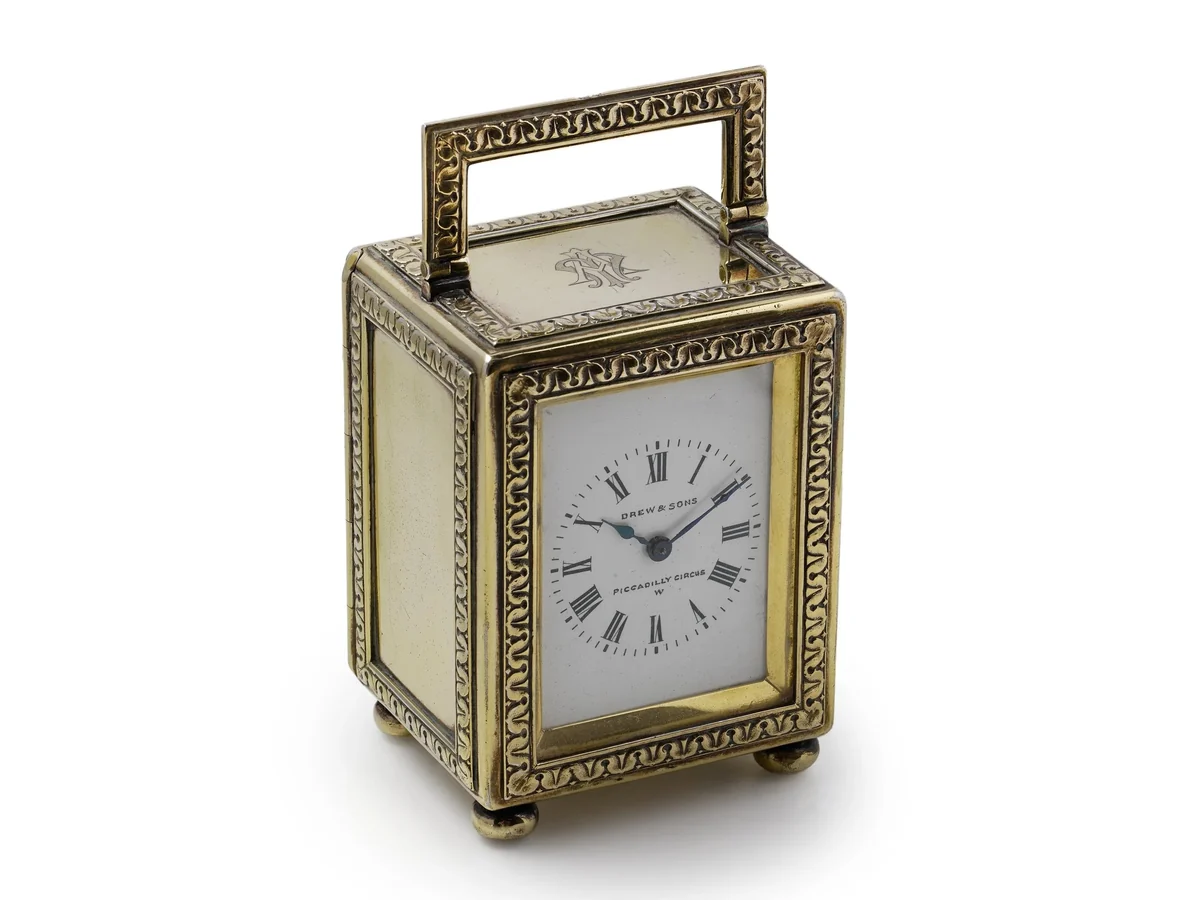
Buying? See the Drew & Sons carriage clock in our silver, the Cartier clock case among our antique boxes, and our watches and pocket watches. Changing a clock this month? See how to change a clock when the clocks go back.
Request a free clock valuation
- Age alone does not make a clock valuable; type sets the ceiling.
- Maker, movement, originality, case, condition and provenance decide where a clock sits.
- Quartz conversions, marriages and reproductions are the usual reasons a clock is worth little.
- Send photos of the front, sides, back, dial and movement for a free valuation.
Questions we are asked
How much are antique clocks worth?
It depends on the type, the maker, the movement, originality and condition far more than on age. Everyday clocks are modest; fine early clocks by great makers can reach six figures. Send photos and we will tell you what yours is worth, free and with no obligation.
Are old clocks worth anything?
Many are worth less than people expect, especially quartz conversions, marriages, reproductions and 20th century factory clocks. Type, maker, movement, originality and condition decide the value, not age alone.
What is my clock worth?
Identify the type, look for a maker's name on the dial and backplate, and check it is original and complete. Then send photos of the front, sides, back, dial and movement for a free valuation.
Does a clock need to be working to have value?
No, but a clock that does not run is worth less, because a buyer allows for the cost of repair. Mention whether it runs and strikes when you ask for a valuation.
Does a quartz conversion ruin the value of an antique clock?
It removes most of the collector value. Collectors pay for the original movement, so a clock with a battery unit in place of its works is valued mainly as a decorative case.
What are the most valuable types of antique clock?
Early English bracket and longcase clocks by makers such as Tompion, Knibb and Quare, top French carriage and ormolu clocks, and rare complicated pieces. A Tompion longcase in its own case made £114,700 at Bonhams in 2023.
Are cuckoo clocks worth anything?
Most 20th century cuckoo clocks were made as souvenirs and are worth little. Good 19th century Black Forest clocks with fine, crisp carving are a different matter.
Can I get an antique clock valued for free?
Yes. Send photos of the front, sides, back, dial, movement and any extras, and we will tell you what it is and what it is worth, free and with no obligation.
Find out what your clock is worth
Send photos of the clock, dial, back and movement for a free valuation and honest advice, or visit us in Mayfair or Braintree.
- Free valuation from photos
- Honest advice, no obligation
- Appointments in Mayfair and Braintree
New pieces reach our list first: join the Mozeris list.