Why Has My Clock Stopped? Seven Checks for an Antique Clock
A calm, step-by-step checklist for an antique clock that has stopped, strikes the wrong hour or limps out of beat, and when to hand it to a restorer.
Why has my clock stopped? In most cases, one of these:
- Run down: wind every winding hole until the key meets firm resistance.
- Out of level or out of beat: the tick-tock must be even. A tiny tilt usually fixes it.
- Pendulum or hands: the pendulum must hang freely from an intact suspension spring, and the hands must not touch each other or the glass.
- Fully wound but stopped? You cannot overwind a clock. It needs a clean, not oil or WD-40.

In this article
- Start here: what is your clock doing?
- Seven checks, in order
- Carriage clocks, Atmos and other clocks without a pendulum
- Clock striking the wrong hour
- Chimes out of sync
- What not to do
- When to stop and call an accredited restorer
- Why a quartz conversion destroys value
- Thinking of buying or selling a clock?
- Questions
Start here: what is your clock doing?
Most antique clocks that stop are not broken. The cause is usually one of a handful of simple things, and you can check most of them in ten minutes without a tool. Find your symptom, then work through the checks below in order.
| What you notice | Most likely cause | Go to |
|---|---|---|
| Stopped a week (or a day) after winding | It has simply run down | Check 1 |
| Ticks for a few minutes, then stops | Out of level or out of beat | Check 2 |
| Uneven tick-tock: tick-tock ... tick-tock | Out of beat | Check 2 |
| Pendulum wobbles or swings in an oval | Bent or broken suspension spring | Check 3 |
| Stops at about the same time each day | A hand catching the other hand, dial or glass | Check 4 |
| Stopped after a move or a clean of the room | Level, beat or pendulum disturbed | Check 5 |
| Fully wound but will not run | Old oil and dust, not overwinding | Checks 6 and 7 |
| Key spins with no resistance | Broken mainspring or click | Check 7 |
Nothing on an antique clock should need force. If a hand, key or door resists, stop.
Set the time with the minute hand, turning it forwards and pausing for every strike or chime.
Never spray or oil a stopped clock to free it. It makes the real problem worse.
Seven checks, in order
Is it fully wound? (all of it)
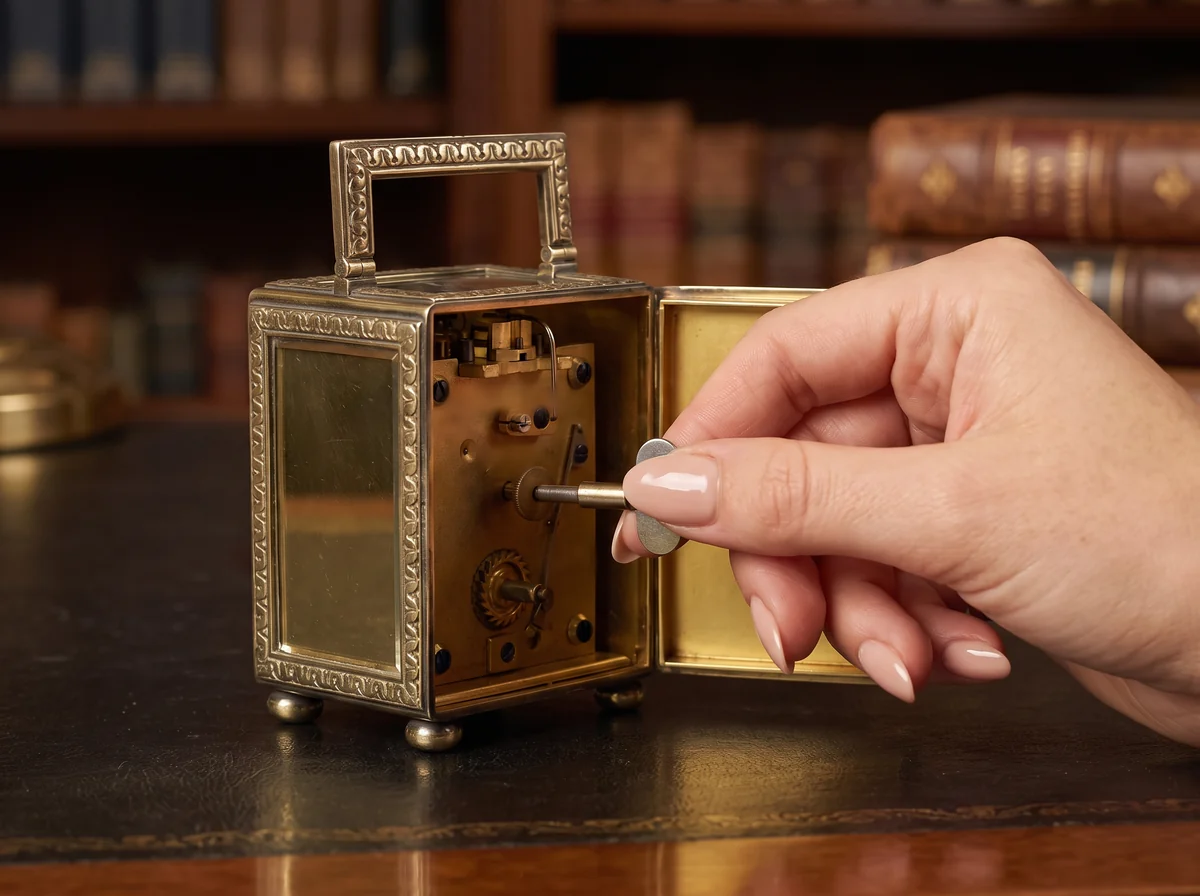
It sounds obvious, but it is the first thing every restorer checks.
- One hole per job. Each winding hole drives one train: one for the time, a second for the strike, a third for the chime. Wind every one.
- Turn until it stops. Wind steadily until the key meets firm resistance. That is fully wound, and it is meant to be.
- Weight-driven clocks run until the weights reach the bottom of the case.
- Carriage clocks are usually wound from the back, through a small door.
Is it level and in beat?
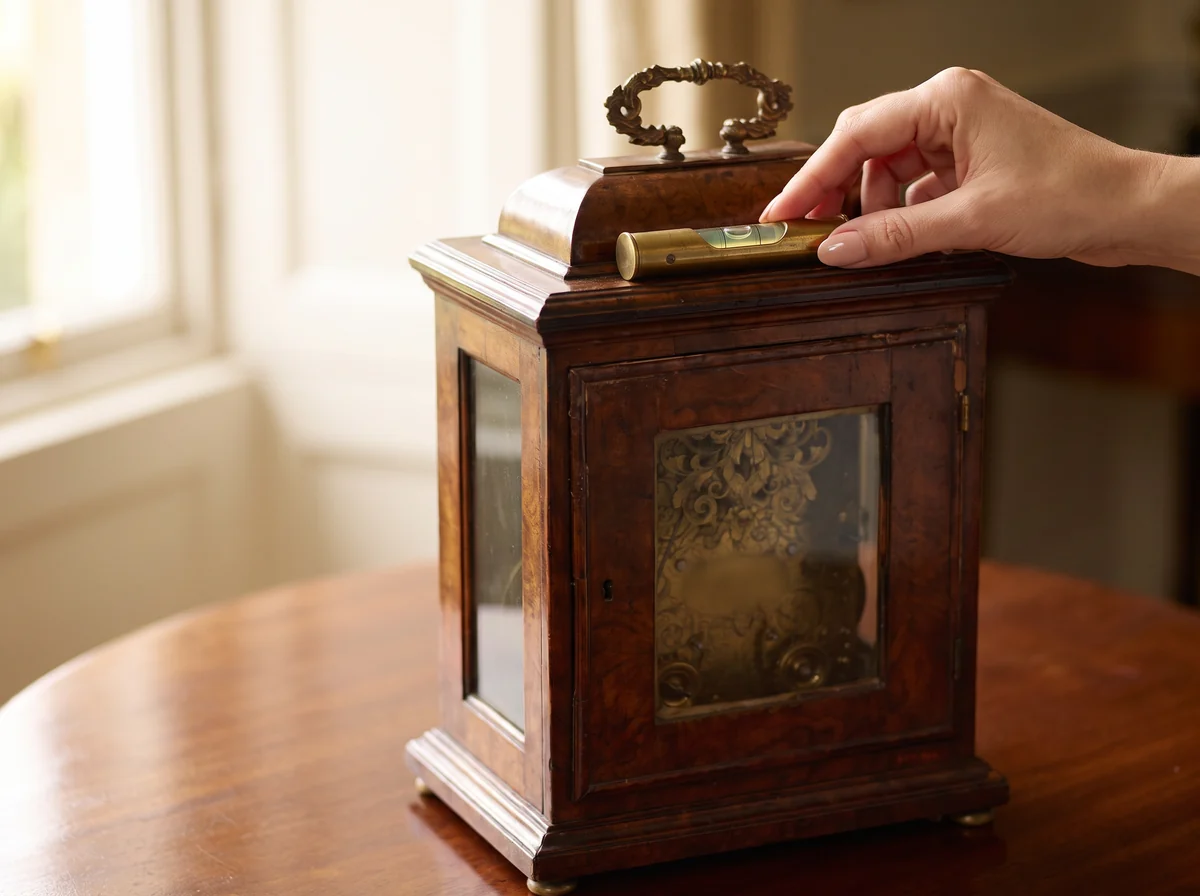
A pendulum clock needs an even tick ... tock ... tick ... tock. If it limps (tick-tock ... tick-tock), it is out of beat and will often run a few minutes, then stop.
How to set the beat by ear, safely
- Listen closely
Stand near the clock in a quiet room, or rest one end of a pencil on the case and the other near your ear to hear it better.
- Try a tiny tilt
Slip a folded card under one side of the base and listen again. If the beat evens out, leave it there. If it gets worse, try the other side.
- Restart and wait
Give the pendulum a small swing and listen for a minute. An even beat often matters more than a perfect spirit-level reading.
If no tilt evens it out, the crutch needs a small adjustment. On some clocks that means bending a rod, on others sliding a friction joint: a quick job for a restorer.
Sources: Wikipedia, Pendulum clock, Antique Vintage Clock, beat guide.
Is the pendulum hung correctly, and is the suspension spring intact?

The pendulum hangs from a short, thin steel ribbon called the suspension spring. Just below it, the crutch, an arm from the escapement, holds the rod and keeps it swinging.
- On its hook: the pendulum should hang straight and be held by the crutch fork, not loose beside it.
- Swinging freely: it must not brush the case, the weights, the chime rods or the back of the movement.
- Straight spring: a pendulum that wobbles or swings in an oval usually has a bent or kinked suspension spring. A new one is a small part, fitted by a restorer.
Sources: Wikipedia, Pendulum clock, The Clock Depot.
Are the hands touching each other, the dial or the glass?
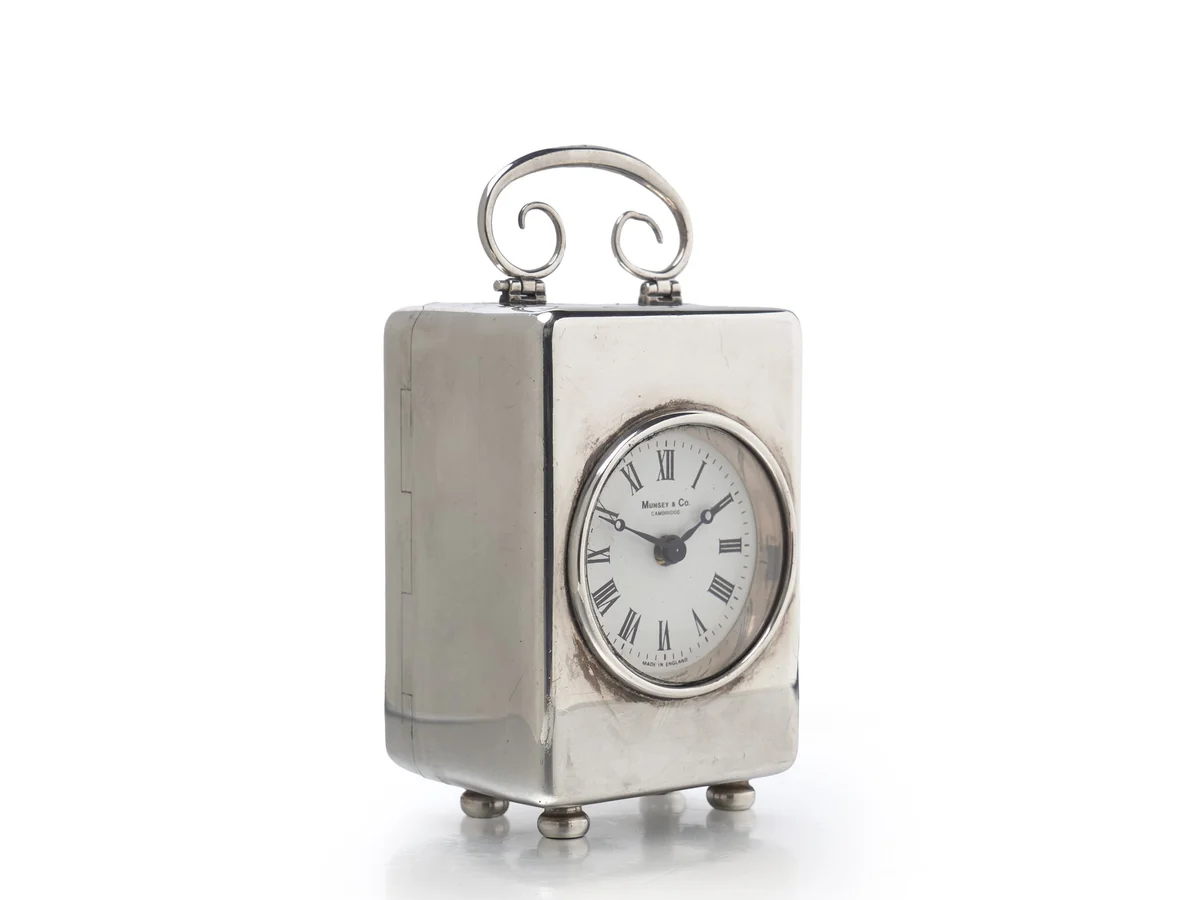
The hands sit in a very small space. If the minute hand catches the hour hand, drags on the dial or rubs the inside of the glass, the clock stops.
- Look from the side: there should be a visible gap between the two hands and between the minute hand and the glass.
- If the clock stops at about the same time each day, check where the hands are when it does.
- A hand that has been knocked or bent is a quick adjustment. Do not bend it with your fingers.
Sources: Antique Vintage Clock, The Clock Depot.
Has it been moved recently?
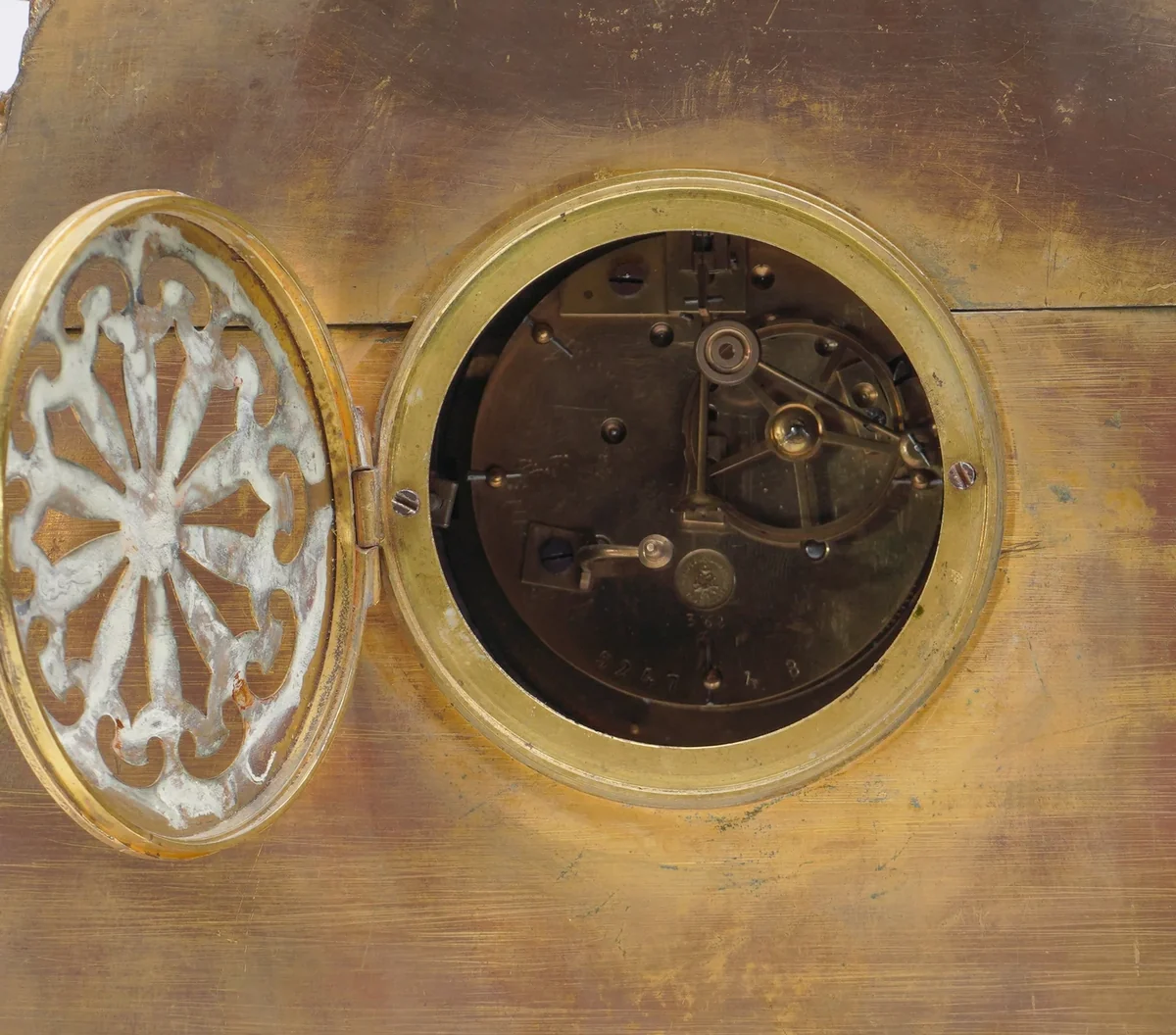
A move, a new shelf, even a vigorous dusting can stop a clock that ran for years.
- New surface: no shelf or floor is perfectly level, so go back to check 2 and set the beat again.
- Pendulum: if it was not taken off for the move, check it is still on its hook and the suspension spring is straight (check 3).
- Longcase clocks: each weight must go back on its own pulley. See our grandfather clock guide.
Dust and old oil
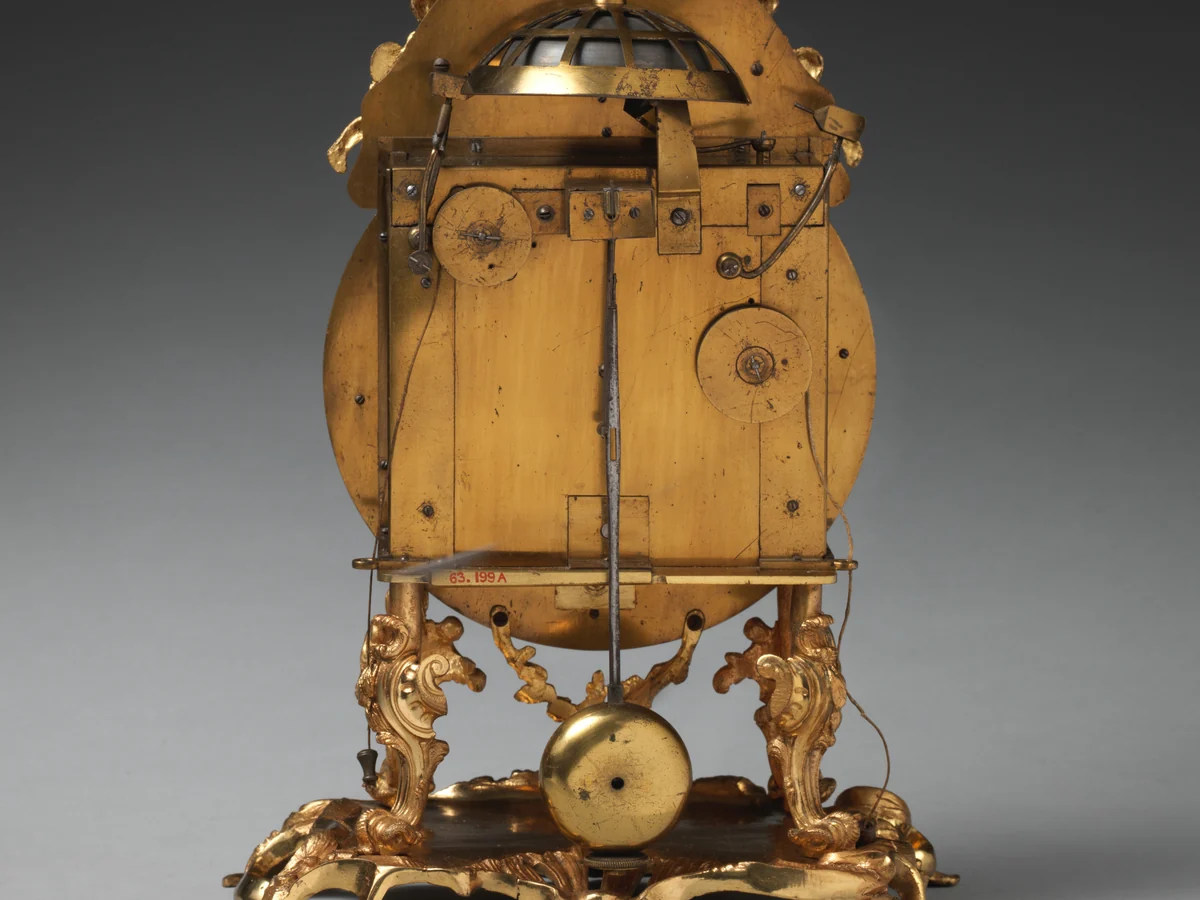

If checks 1 to 5 are fine and the clock still stops, the usual cause is the movement itself. Old oil thickens, collects dust and turns into a sticky paste that robs the pendulum of its power.
- A clock that has stood for years is the classic case: the oil has gone thick.
- The Clock Depot, a US retailer, suggests a clean and oil every five to seven years for a grandfather clock.
- The cure is a clean and service by a restorer, with the movement taken apart. Adding oil on top of old oil does not fix it.
Sources: Antique Vintage Clock, The Clock Depot.
Broken mainspring, or the 'overwound' myth?
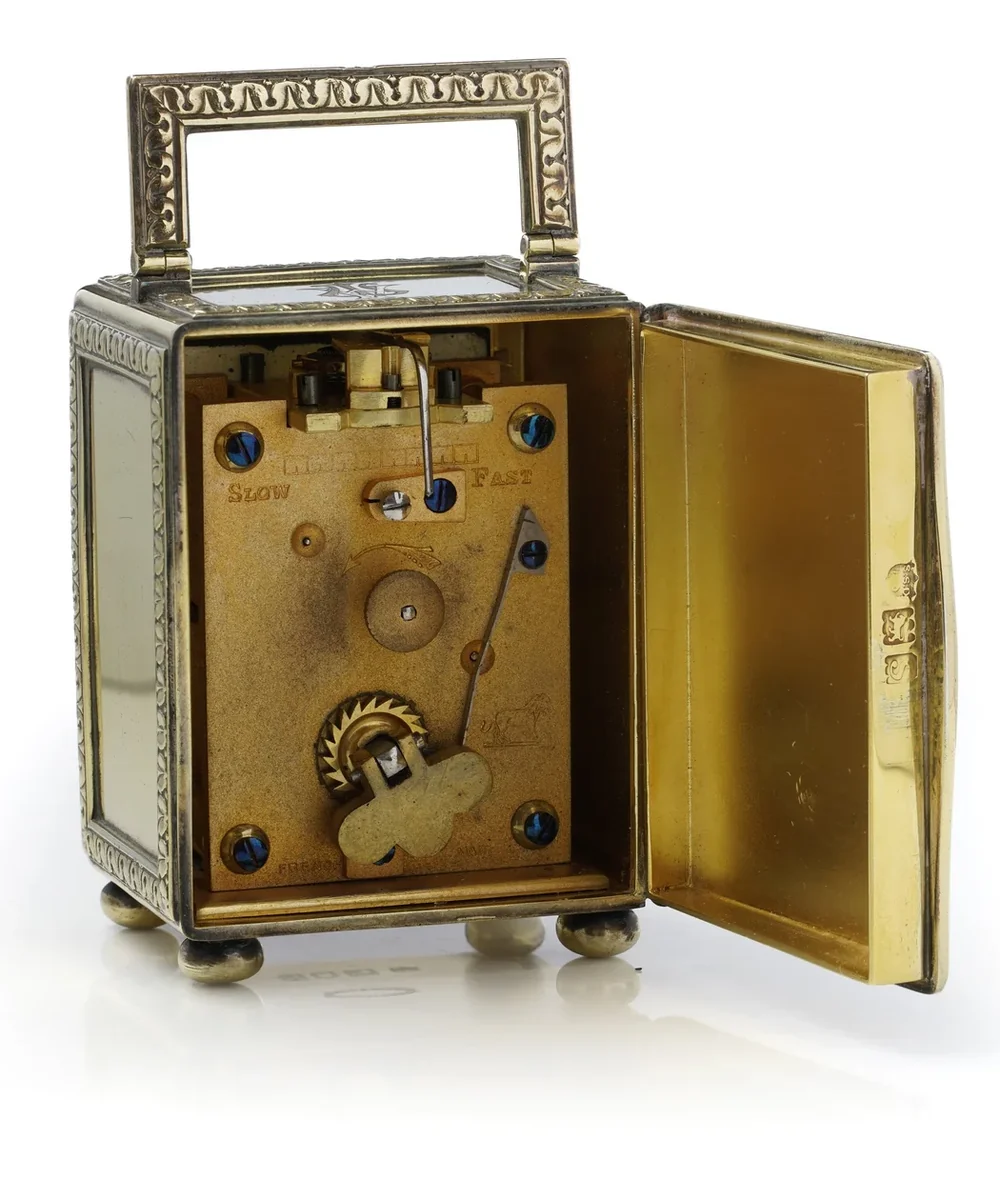
You cannot overwind a clock. Clocks are designed to be wound all the way up. A clock found stopped with a fully wound spring was not damaged by winding: it stopped first, usually because dirt and old oil left the spring without the strength to drive it.
- Fully wound, will not go: it needs a clean (check 6), not unwinding.
- Key spins freely, no resistance: the mainspring has broken or come off its winding arbor.
- Runs fewer days than it used to: an old spring can tire, or 'set', and lose force.
A mainspring stores a lot of power. Never take a spring-driven movement apart yourself. The same myth applies to watches: see how to wind a pocket watch.
Sources: Wikipedia, Mainspring, Master Clock Repair, Prestige Clock Repair.
Found something interesting in the family? Send photos for a free valuation
Carriage clocks, Atmos and other clocks without a pendulum
A carriage clock keeps time with a small balance wheel in the platform on top of the movement, so checks 2 and 3 do not apply. If it is wound, the hands are clear and it still will not run, the platform or movement needs a restorer. For types and values, see our carriage clock value guide.
Atmos clocks have their own rules for locking, levelling and starting: see our Atmos clock guide.
Clock striking the wrong hour
A clock that strikes four when the hands say three is running, but its strike has lost step with its hands. It is rarely serious. How it happens depends on the kind of striking work inside.
A notched wheel counts the blows on its own, separate from the hands. If the strike runs down before the time side, or a strike is missed, it drifts. Common on French clocks and older English ones.
The number of blows is read from a cam that turns with the hour hand, so it rarely goes wrong unless the hour hand has slipped or been moved on its own.
Wind the strike side first. Most wrong strikes begin with a strike that ran down while the time side kept going.
First, wind the strike fully: a run-down strike is the most common cause. Then put it back in step with the simple hour-hand method in our guide how to change an antique clock when the clocks go back, which works for either system.
Sources: Wikipedia, Striking clock.
Chimes out of sync
On a quarter-chiming clock, the chime is a third train with its own winding hole.
- Chime stopped or weak: wind the chime side fully. It usually runs down first.
- Odd tunes just after setting the time: let it run for an hour. On many chiming clocks the quarters sort themselves out within the hour.
- Always exactly one quarter out (the full hour tune at a quarter past): the minute hand sits on its square in the wrong position. Refitting it is a small job for a restorer, especially on an antique where the hand may be pinned.
Sources: The Clock Depot, chime off by a quarter hour.
What not to do
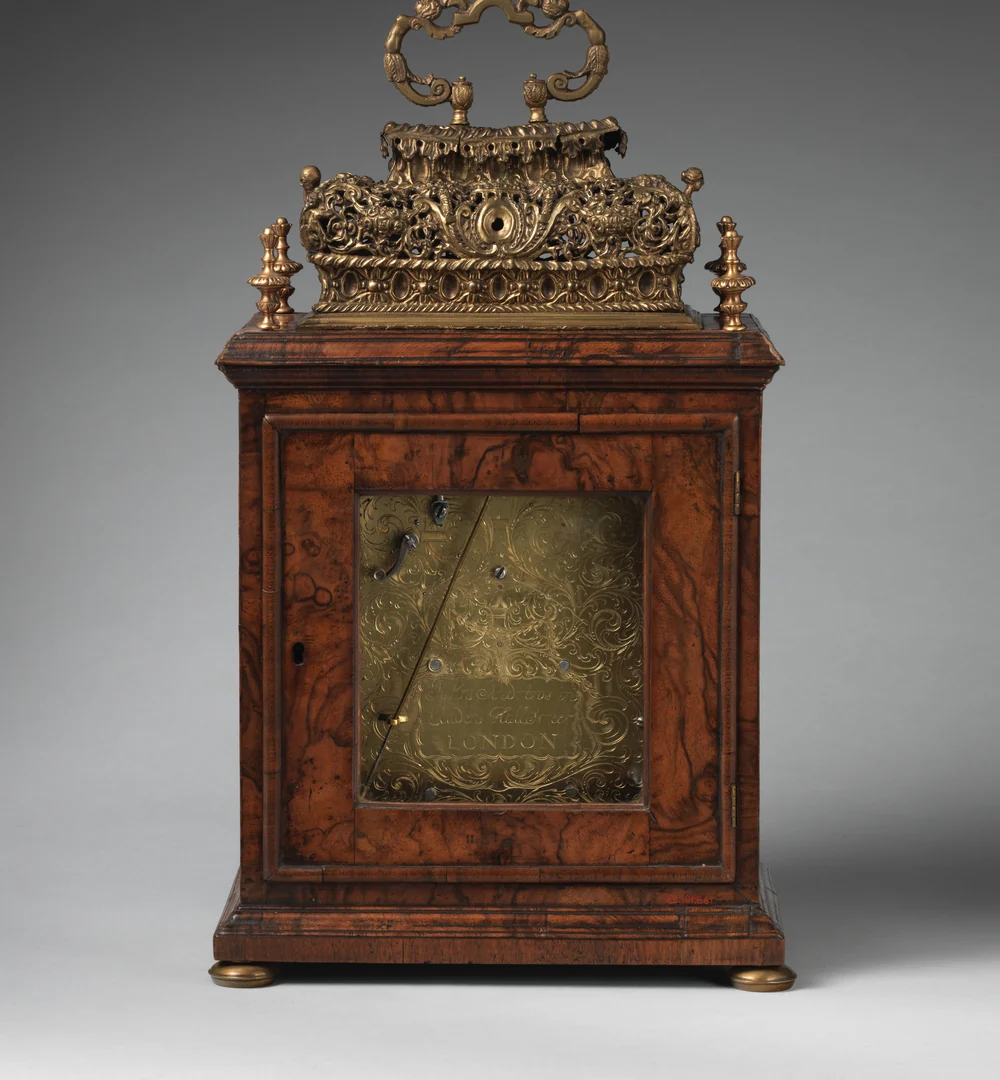

A good antique movement can run for centuries with careful handling, and a well-meant home fix can undo that in minutes. What not to do matters as much as the checks.
- No WD-40 or household oil. WD-40 is a water dispersant, not a clock oil, and spray attracts dust and grime.
- Do not oil everything. Clock oil goes on pivots in tiny amounts, never on gear teeth. Leave it to a restorer.
- No paraffin or kerosene tricks. You end up with a clock that smells of paraffin and attracts dust.
- Do not force the hands backwards. Many older clocks cannot be set backwards safely. Move the minute hand forwards only.
- Never move a hand while it strikes or chimes, and never move the hour hand on its own except to correct the strike.
- Do not take the movement apart or let down a mainspring yourself.
Sources: Antique Vintage Clock, How to oil your clock, Master Clock Repair.
When to stop and call an accredited restorer
We are antique dealers, not restorers, and the honest advice is to stop at the first sign of any of these:
- The key spins with no resistance.
- The clock is fully wound, level and in beat, and still stops within a day.
- The suspension spring is bent or broken, or the pendulum will not hang straight.
- A hand, key or door needs force, or the strike runs on without stopping.
- It has not run for years. It needs a clean before it is run again.
The British Horological Institute keeps a searchable register of accredited repairers, by type of work and by county and town. Accreditation means the repairer holds the institute's own qualifications.
Sources: British Horological Institute, accredited repairers.
Why a quartz conversion destroys value
When an old clock keeps stopping, someone will suggest swapping the movement for a battery one. For an antique, please do not.
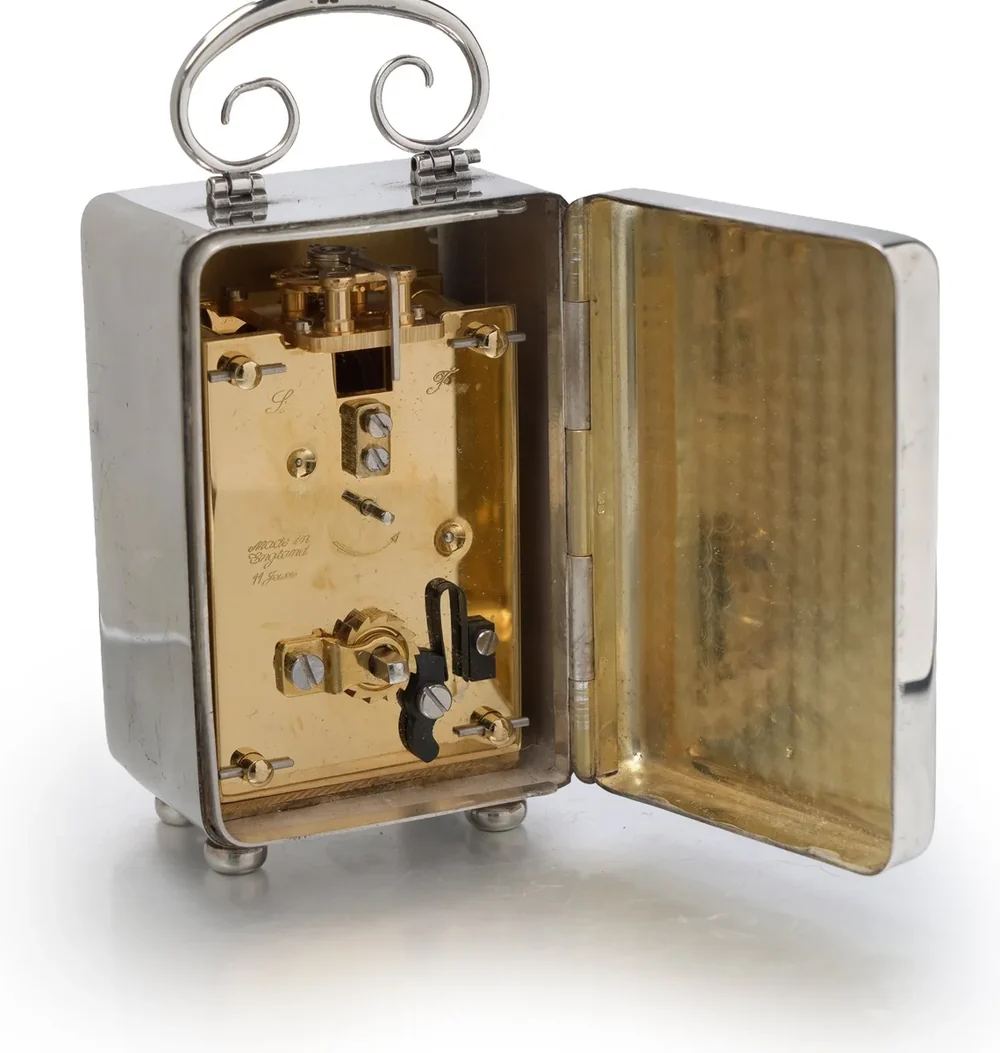
- The movement is the antique. Take it out and what is left is a case with a modern insert.
- Even the sellers agree. Clockworks, which sells quartz movements: "If the clock has high historical or collector value, preserving the original movement is usually best." ClockParts.com advises keeping the original movement stored safely.
- Restorers too. Antique Clock Repair Shop in Bristol notes that most mechanical clocks are worth repairing to maintain their value, and that a conversion loses the tick and gives a smooth, sweeping seconds hand.
A stopped clock with its original movement is a clock that can be restored. Have the original serviced instead.
Sources: ClockParts.com, Antique Clock Repair Shop, Clockworks, How to install a quartz movement in an antique clock case.
Thinking of buying or selling a clock?
We are antique dealers in Mayfair (47 Maddox Street, by appointment) and Braintree, Essex. If you have an antique clock, stopped or running, and want to know more about it or what it is worth, send us photos of the dial, the case and the movement for a free valuation and honest advice.
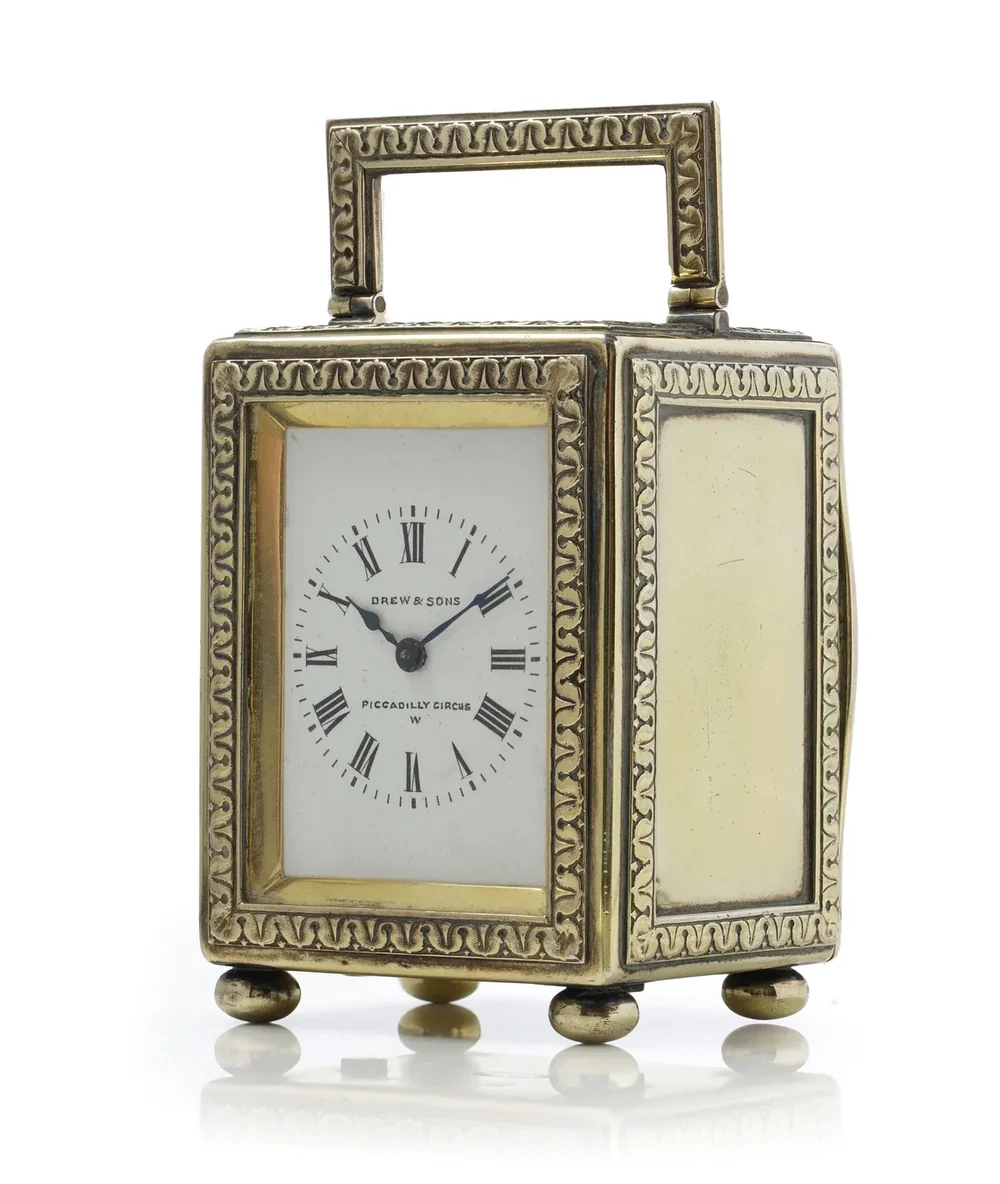
Buying? See our Edwardian silver-gilt carriage clock by Drew & Sons and the rest of our antique silver.
- Free valuation
Use the form below, call 01376 334482, message us on WhatsApp, or use our contact page.
- Know your clock
Read our guides to French mantel clocks, carriage clocks and grandfather clocks.
- Pocket watches too
See our pocket watches in stock or sell your pocket watch.
Request a free valuation
- Wind it fully, then check level and beat: those two explain most stopped clocks.
- Check the pendulum hangs freely from a straight suspension spring and the hands are clear.
- You cannot overwind a clock. Fully wound and stopped means it needs a clean.
- No WD-40, no oil, no forcing hands backwards, and never a quartz conversion on an antique.
Questions we are asked
Why has my clock stopped?
Usually for a simple reason: it has run down, it is out of level or out of beat, the pendulum is not hanging freely, or a hand is catching. Check those first. If it is fully wound and still stops, it needs a clean.
Can you overwind a clock?
No. Clocks are designed to be wound all the way. A clock that stops fully wound has a different problem, usually dirt and old oil, so it needs a clean, not unwinding.
Why does my pendulum clock keep stopping after a few minutes?
Most often it is out of beat: the tick and the tock are uneven. Tilt the clock very slightly to one side with a folded card under the base until the beat sounds even.
Why did my clock stop after I moved it?
A new shelf or floor changes the level, which upsets the beat. The pendulum may also have come off its hook or bent its suspension spring in the move.
Can I use WD-40 on a clock?
No. WD-40 is a water dispersant, not a clock oil, and it attracts dust. Clocks need tiny amounts of proper clock oil on the pivots, best left to a restorer.
Why is my clock striking the wrong hour?
Its strike has lost step with the hands, often because the strike ran down or a hand was moved during a strike. Wind it fully, then reset it with the hour hand.
How do I know if the mainspring is broken?
The key turns with no resistance at all: it just spins. A mainspring stores a lot of power, so take the clock to a restorer rather than opening it.
Should I put a battery movement in my antique clock?
Not if it has any age or quality. Removing the original movement takes away what makes it an antique clock, and it rarely goes back. Have the original serviced instead.
An antique clock you would like valued?
Send photos for a free valuation and honest advice, or see the silver-gilt carriage clock in our collection.
- Free valuation from photos
- Honest advice, no obligation
- Appointments in Mayfair and Braintree
New pieces reach our list first: join the Mozeris list.