
Buying Ancient Jewellery: What Provenance Actually Means
Every so often an ancient piece appears on a red carpet and the same question follows: should anyone be wearing that? Ancient jewellery can be owned and worn perfectly legally: but only if its history is documented, and that's the bit most buyers never think to ask for.
Provenance is the documented ownership history of an object. For ancient material the key date is 1970, the year of the UNESCO convention on illicit trafficking of cultural property. A piece evidenced in a documented collection before that date is generally treated as clean. A piece with no history before last month is the one to walk away from.
Quick answer: is it legal to own ancient jewellery?
Yes: provided it was lawfully removed from its country of origin and isn't a "tainted" object. Documented provenance is what demonstrates that.
The benchmark the trade works to is 1970. If a piece can be evidenced in a collection, sale catalogue or publication before then, it's treated as legitimately in circulation.
Antique, ancient and archaeological are not the same thing
The words get used loosely, and the legal position is very different for each.
| Term | What it means | Special rules? |
|---|---|---|
| Antique | Conventionally 100 years old or more: a Victorian brooch | No. Ordinary goods. |
| Ancient | Classical antiquity or earlier: Roman, Greek, Egyptian, Etruscan, Byzantine | Legal and widely traded, but provenance matters. |
| Archaeological | Excavated from the ground | Export licences, patrimony laws and reporting obligations apply. |
Most Roman rings on the market are ancient AND archaeological: they came out of the ground at some point. The question is when, where, and whether it was recorded.
The 1970 line
The 1970 UNESCO Convention on the Means of Prohibiting and Preventing the Illicit Import, Export and Transfer of Ownership of Cultural Property is the reference point the trade works to. The UK acceded in 2002.
In practice, reputable dealers, auction houses and museums treat 1970 as a threshold. It isn't a magic date in law: it's an evidentiary standard the market has adopted, and standards continue to tighten. Two pieces of UK law sit alongside it:
- Dealing in Cultural Objects (Offences) Act 2003: it is a criminal offence to dishonestly deal in a "tainted" cultural object, meaning one removed unlawfully from a monument or excavation.
- Treasure Act 1996 (England, Wales, NI), finds meeting the legal definition of treasure must be reported to the coroner. Scotland operates separately under bona vacantia.
What good provenance actually looks like
Provenance is a chain, and the strength of the chain is the strength of the piece.
| Evidence | How strong |
|---|---|
| Named pre-1970 collection with catalogue or publication reference | Strongest |
| Dated auction-house sale record naming the lot | Strong |
| Portable Antiquities Scheme record or Treasure case number | Strong for British finds |
| Export licence from the country of origin | Strong |
| Old collection labels, invoices, correspondence | Supporting |
| "From an old English collection": no names, no dates | Weak: means very little on its own |
| No history at all | Walk away |
Inheritance is itself part of a chain. If you inherited a piece, write down who owned it and roughly when and where they acquired it: that family history is genuinely useful evidence.
Red flags
- Soil still on it. A freshly-excavated look isn't romantic, it's a problem. Long-collected pieces have been cleaned and handled for generations.
- A seller who's vague about origin, or irritated that you asked. Any legitimate dealer expects the question.
- Multiples of the same "unique" find. Several near-identical "Roman" rings from one seller usually means reproductions.
- Total-export-ban source countries (Egypt, Turkey, Italy, Greece and others) with no paperwork whatsoever.
- A price far below market. Ancient gold has a floor. A cheap "Roman gold ring" is usually neither.
Ancient, or a Victorian piece that looks ancient?
Provenance and authenticity are separate problems. A piece can have clean paperwork and still be a 19th-century revival copy, ancient-style jewellery was made in enormous quantities during the Victorian archaeological revival and the Grand Tour trade. Those pieces are highly collectable in their own right, but they're Victorian, not Roman, and priced accordingly.
Below: the first piece is a genuinely ancient Roman carnelian intaglio, reset in a gold ring. The others are 19th and early-20th-century revival pieces: Roman cameo, Egyptian Revival, Grand Tour micromosaic. Seeing them together is the fastest way to learn the difference:
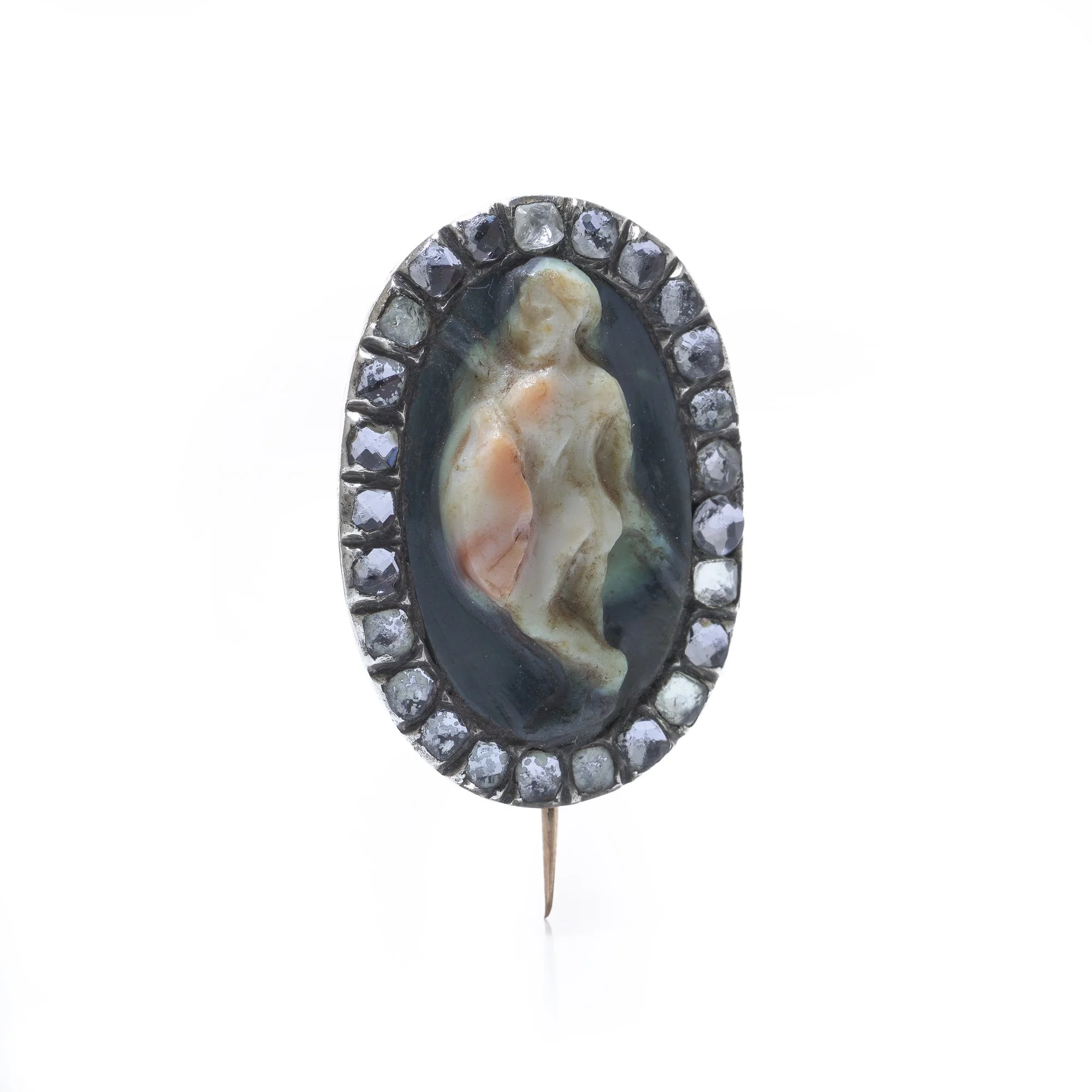
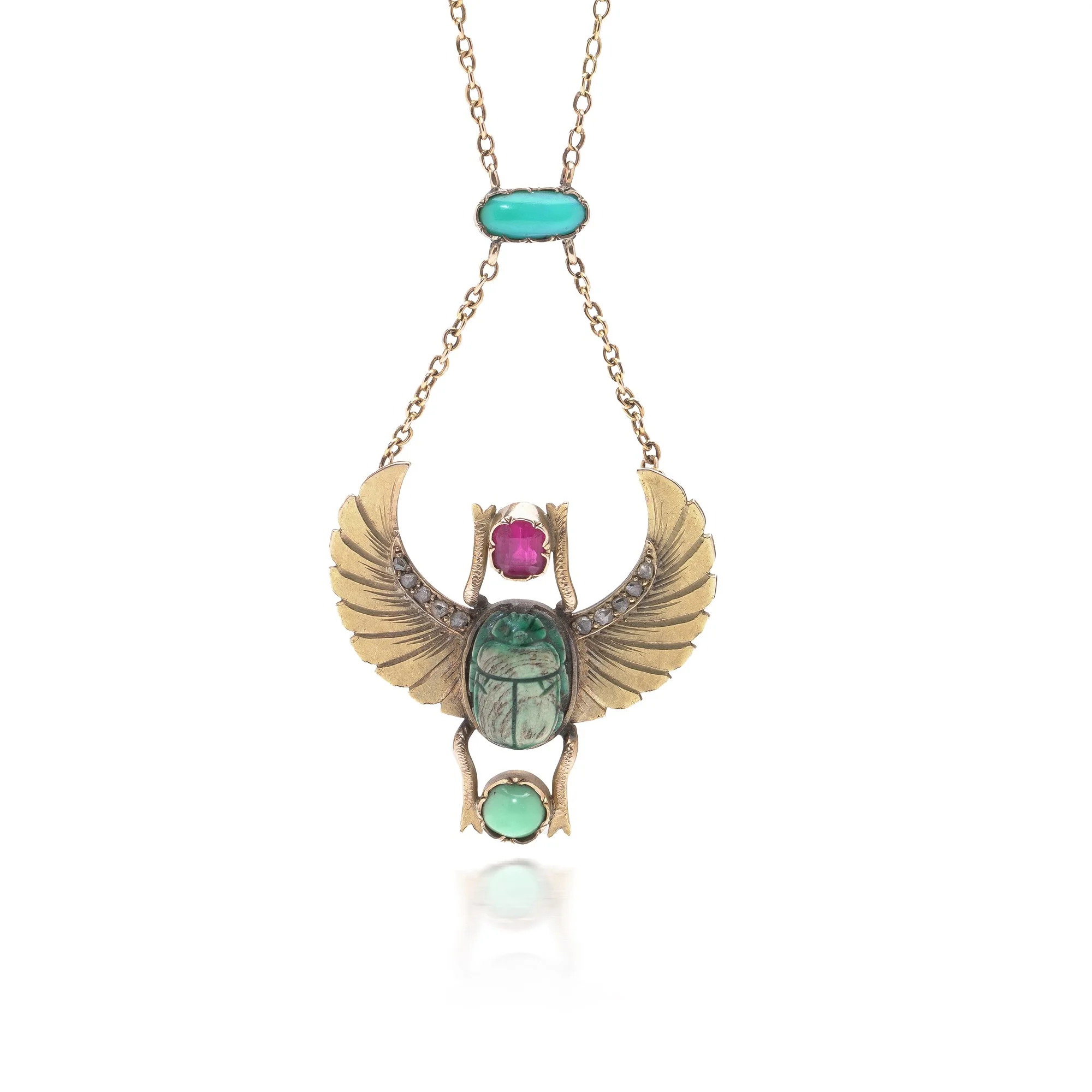

Signs to weigh: wear in the wrong places, casting bubbles where there should be hammer and file marks, machine-perfect symmetry, and modern solder repairs. Carved intaglios are the classic grey areaRoman intaglios covers how carving styles differ by period.
Where we stand
We sell ancient and Roman-period pieces, so this is our own standard rather than a neutral opinion: we buy only where ownership history can be evidenced, we say plainly when a piece is attributed rather than certain, and we describe a Victorian revival piece as Victorian even when it would sell for more described as ancient. Where documentation exists, it goes to the buyer with the piece.
Think you own one? Find out what it’s worth.
Have an ancient or unusual piece and want a straight opinion on what it actually is? Send photographs: we'll tell you honestly, including when the answer is "we can't be certain".
✓ Free expert valuation in 24h ✓ Same-day payment ✓ 10,000+ items traded · 5★ rated
Explore Further
Frequently Asked Questions
Ancient jewellery and provenance, answered.
Is it legal to own ancient jewellery in the UK?
Yes, provided it was lawfully removed from its country of origin and isn't a "tainted" object under the Dealing in Cultural Objects (Offences) Act 2003. Documented provenance is what demonstrates this.
Why does 1970 matter?
It's the year of the UNESCO convention on illicit trafficking of cultural property. The trade treats evidence of a pre-1970 collection history as the benchmark for clean material. The UK acceded in 2002.
Can I wear a 2,000-year-old ring every day?
Legally yes. Practically, ancient gold is often high-carat and soft, and stone settings can be fragile. Most collectors wear them occasionally rather than daily.
What if I inherited something ancient with no paperwork?
Inheritance is itself part of a provenance chain. Write down what you know: who owned it, roughly when and where they acquired it. That family history is genuinely useful evidence.
How can I tell an ancient piece from a Victorian revival?
Look for hand-work: hammer and file marks rather than casting bubbles, slight asymmetry rather than machine perfection, and wear in places that make sense for how it was used. Revival pieces are usually crisper and more uniform.
Is a Victorian revival piece worth less than an ancient one?
Not necessarily, fine Grand Tour micromosaics and archaeological-revival gold can be worth more than a modest ancient fragment. They're just different things, and should be described accurately.
What paperwork should a dealer give me?
Whatever exists: collection history, prior sale records, PAS or Treasure references, export licences, old invoices or labels. If none exists, the dealer should say so plainly rather than using vague phrases like "from an old collection".