Antique and Vintage Necklace Clasp Identification: A Journey through Time
Twelve necklace clasp types, drawn and photographed, with the years each was in use and what a clasp tells you about the age and value of a necklace.
Most necklaces fasten with a spring ring, lobster claw, box clasp, barrel, fish hook, toggle or magnetic clasp. Clasp designs changed every few decades, so the clasp is often the quickest clue to age:
- Bolt ring: introduced in the 1840s, so the clasp cannot be Georgian.
- Box clasp with a safety catch: the standard on good pearl and gem necklaces from the Victorian period to today.
- Fish hook: most common on pearl strands of the 1920s to the 1950s.
- Lobster claw: the usual clasp from the 1970s. On an older necklace it almost always means a replacement.
- The clasp dates the clasp, not always the necklace. Check the hallmarks and construction too.
Identify your clasp
- Hook and eyeGeorgian and earlier
- Box claspVictorian to today
- Tube claspc.1850 to 1915
- Padlock claspVictorian
- Bolt ring / spring ring1840s to today
- Dog clip (swivel)Victorian watch chains
- Barrel (screw) claspMostly 20th century
- Fish hook claspPeak 1920s to 1950s
- Concealed screw clasp20th century
- Toggle claspLate 20th century on
- Lobster claw1970s to today
- Magnetic clasp1964 to today
Tap a clasp to jump to how to recognise it, when it was used and what it means for value.
In this article
How to date a necklace by its clasp
A clasp gives you a boundary, not a birthday. It tells you the earliest date the fastening can have been made and when it was most likely made. Four steps get you most of the way.
- Name the mechanism
Match your clasp to the chart above. The mechanism gives a clasp its name, not the decoration: a diamond-set box clasp is still a box clasp.
- Place it on the timeline
Each type had a period of common use, shown below. A bolt ring cannot be earlier than the 1840s. A lobster claw on fine jewellery is almost always from the 1970s or later.
- Look for marks
On British necklaces the tongue of a box clasp, the bolt ring or a small tag beside the clasp is often the only part that is hallmarked. A 15 or 12 carat gold mark dates the metal to between 1854 and 1932, the only years those standards were legal.
- Decide whether the clasp is original
Compare its colour, wear and workmanship with the chain or strand. Bright metal and crisp edges on a worn necklace, or a newer jump ring holding it on, usually mean a replacement.
Necklace clasp timeline
When each clasp was in general use on British and European jewellery. Treat it as a guide rather than a rule: clasps were made long after their heyday, and old necklaces are often refitted.
Main period of useEarlier, rarer or revival use
Dates are drawn from dated and hallmarked pieces and from published research, including navette jewellery's series on antique clasps.
Clasps on antique necklaces, before 1900
These are the fastenings on Georgian and Victorian necklaces. Several are still made today, so the workmanship matters as much as the type.
Hook and eye (S-hook)
- Looks like
- A hook, often S-shaped, that passes through a ring or loop on the other end.
- In use
- The oldest fastening here, usual on Georgian chains, and revived in the archaeological revival jewellery of the later 1800s.
- Tells you
- A hand-made hook with slight irregularity supports an early date. Machine-perfect symmetry on a supposedly Georgian piece is worth questioning.
Georgian hooks were made by hand, so the curve is rarely perfectly even and file marks show under a loupe. Hook fastenings returned in the second half of the 19th century, when jewellers copied ancient Greek, Roman and Etruscan work, so a hook alone does not prove a Georgian date.
Box clasp (tongue and box)
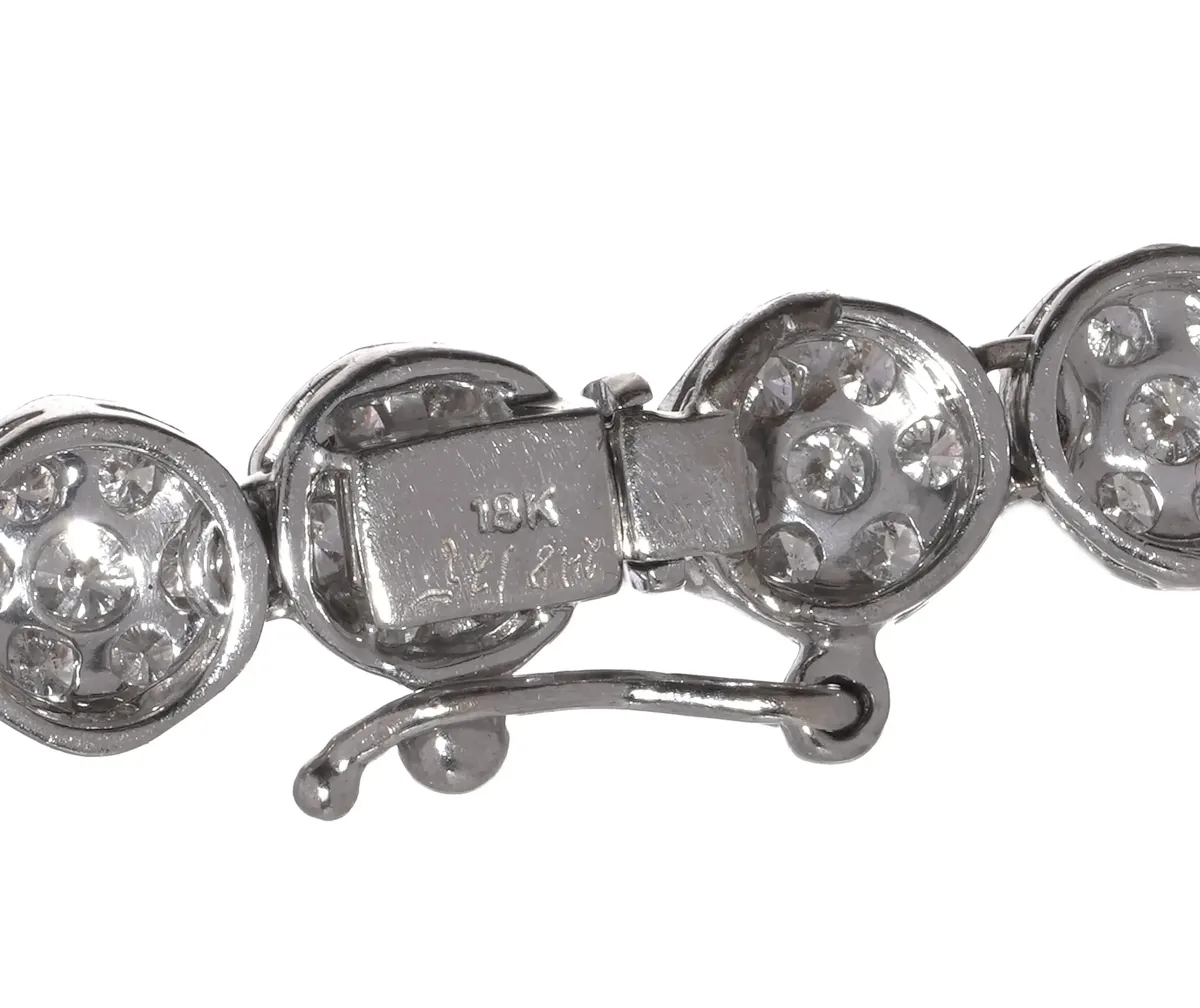
- Looks like
- A folded, sprung tongue that clicks into a hollow box. Press the tongue to release it.
- In use
- Known since antiquity, standard on good necklaces from the Victorian period, and still made today.
- Tells you
- The clasp of better pearl, bead and diamond necklaces. Often marked, sometimes gem set, occasionally the most valuable part.
Victorian jewellers enclosed the box fully, and many clasps carry a second lock: a figure-of-eight catch or a side lever like the one above. On a multi-strand necklace, count the loops on each side of the box. An empty loop means a strand has been lost or removed.
Tube clasp
- Looks like
- A slim tube with a thin tongue that slides inside, often with a small catch on top.
- In use
- From about the mid 19th century into the Edwardian period.
- Tells you
- A slimmer relation of the old barrel and tongue clasp, used on fine chains and necklets. Rarely seen on later jewellery, so a period example supports a 19th or early 20th century date.
Padlock clasp
- Looks like
- A small padlock opened by a latch at the side, with the chain hanging from the shackle.
- In use
- Common throughout the Victorian period, on chains, collars and bracelets.
- Tells you
- A good Victorian indicator, especially in engraved gold. Often decorative as well as practical.
Bolt ring and spring ring
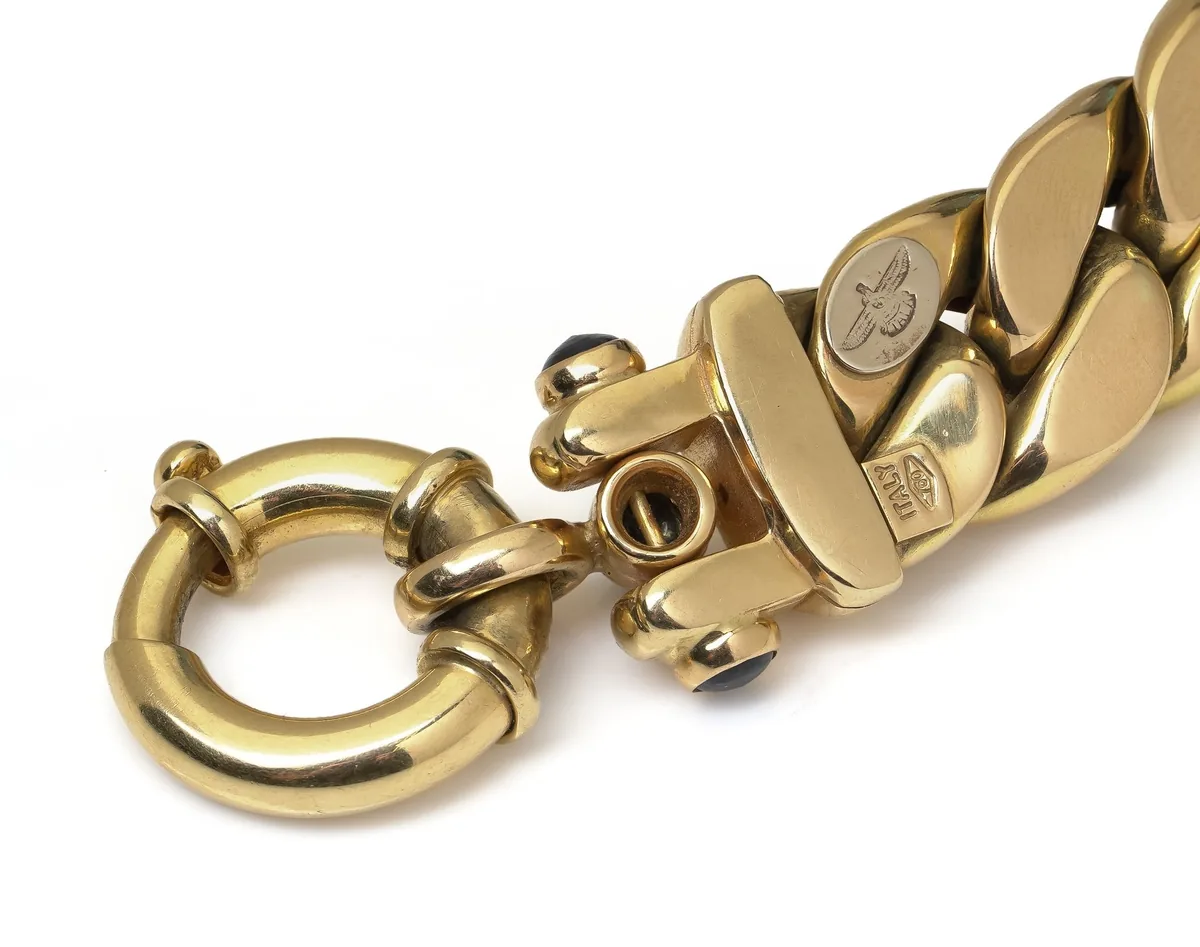
- Looks like
- A hollow ring with a small sprung bolt, opened by a lever or knob you push with a thumbnail.
- In use
- The bolt ring appeared in the 1840s as a separate, detachable ring. It developed into the spring ring fixed to one end of the chain, still the commonest clasp on fine chain.
- Tells you
- A useful earliest date: a necklace with its original bolt ring is not Georgian. On its own it says little about value.
In Britain the two names are used loosely, and many jewellers call any spring ring a bolt ring. The difference that matters for dating is the knob: small and fiddly on early rings, larger on later ones.
Dog clip (swivel)
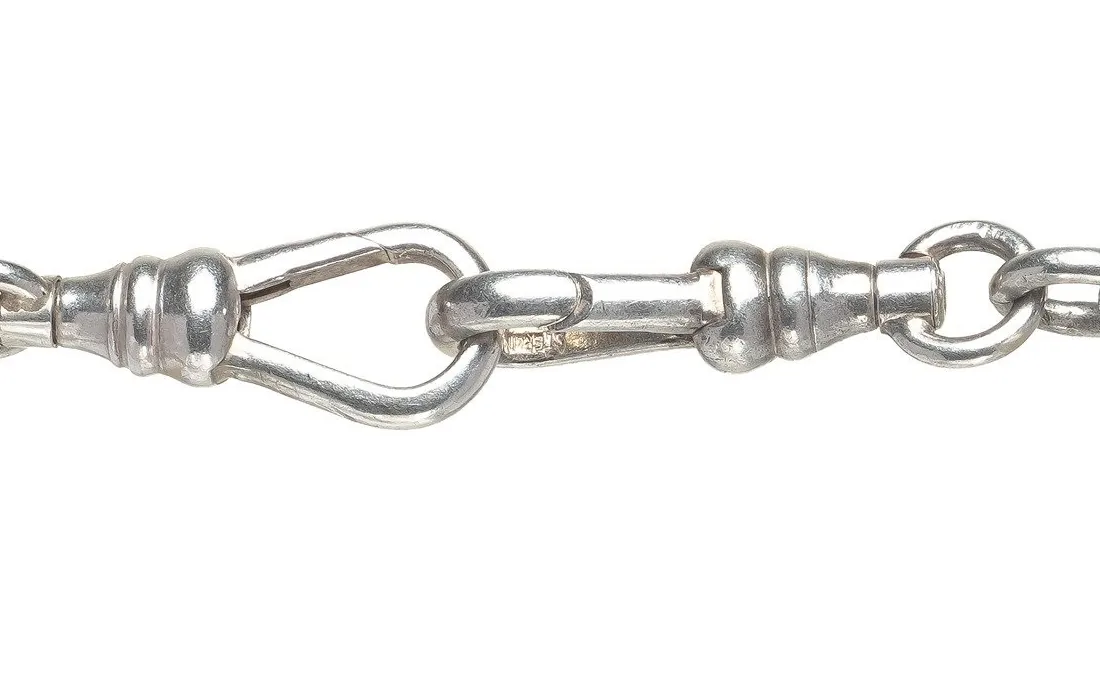
- Looks like
- An elongated hook closed by a sprung gate, usually on a swivel.
- In use
- Victorian and Edwardian watch chains, where it held the pocket watch.
- Tells you
- Almost always an Albert or guard chain, often now worn as a necklace. The clip, bar or rings usually carry the hallmark.
See our guide to pocket watch chain fittings and the history and value of Albert chains.
20th-century clasps
New mechanisms arrived quickly in the 20th century, many of them patented. These are the ones you meet on vintage necklaces.
Barrel (screw) clasp
- Looks like
- Two halves of a small cylinder that screw together. Also called a torpedo clasp.
- In use
- Seen on 19th century pieces, but most common on 20th century beads, pearls and costume jewellery.
- Tells you
- A plain barrel adds little value. Worn threads that no longer hold are a normal repair, not a fault that condemns the piece.
Fish hook clasp
- Looks like
- A flat, sprung hook that slides into an oval box and catches on a bar inside.
- In use
- Most common on pearl necklaces from the 1920s to the 1950s, and still used on cultured pearls.
- Tells you
- On a better strand the box is gold and may be marked on the back, sometimes with filigree or small stones.
Concealed screw clasp
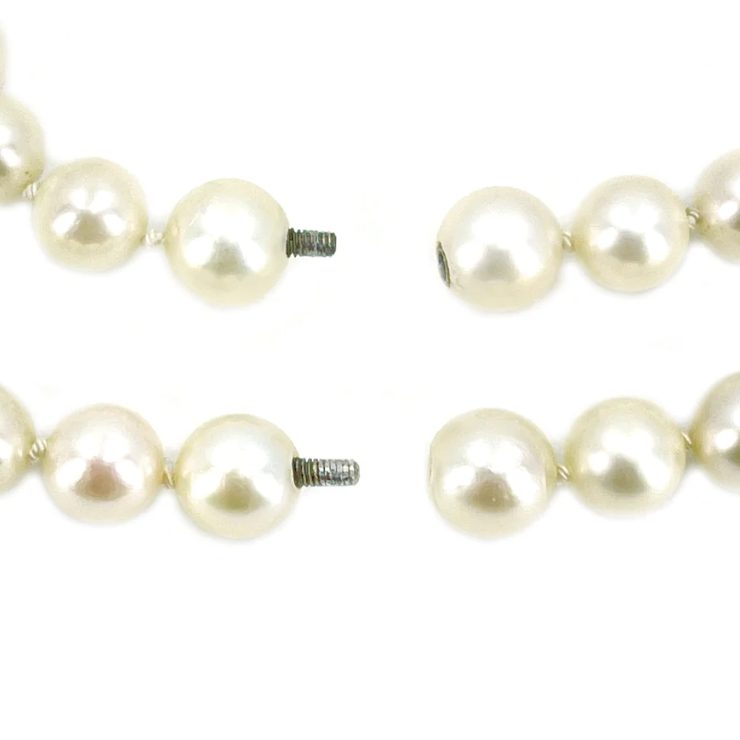
- Looks like
- No visible fastening. A threaded post inside one bead or pearl screws into the next.
- In use
- 20th century, mainly on pearl and bead necklaces.
- Tells you
- More work to make, so it signals a considered piece. Check it screws fully home: worn threads can let go.
Modern clasps, 1960s onwards
If one of these is on an old necklace, it is almost certainly a later addition. That is a repair, not a reason to doubt the rest of the piece.
Lobster claw and trigger clasps
- Looks like
- A sprung claw shaped like a lobster's pincer, opened with a small lever. The trigger or parrot clasp works the same way.
- In use
- Lang Antiques credits Cartier with bringing this snap hook to jewellery. It has been the standard clasp on fine chain from the 1970s.
- Tells you
- On an antique or early vintage necklace it almost always means a replacement.
Toggle clasp
- Looks like
- A bar on one end that passes through a ring on the other and lies across it.
- In use
- An ancient idea. Its modern popularity dates from the late 20th century.
- Tells you
- Weak dating evidence on its own, so judge the workmanship. It needs weight to stay closed, which is why it suits heavier chains.
Magnetic clasp
- Looks like
- Two halves that pull together and hold by magnetism.
- In use
- First patented for jewellery in 1950. Modern round and oval magnetic clasps date from 1964.
- Tells you
- Never original on an antique necklace. Often fitted for easier wear, so if the original clasp survives, keep it with the piece.
Pearl necklace clasps
Pearl strands use more clasp types than any other necklace, and the clasp is often the best clue to both age and quality. A good strand is knotted between every pearl and finishes in a clasp to match.
| Clasp | What it suggests on a pearl necklace |
|---|---|
| Gold box clasp with a safety catch | The traditional clasp for good strands, from the 19th century to today. Often set with pearls or diamonds, and usually marked. |
| Fish hook | Typical of strands from the 1920s to the 1950s. Check the hook still springs firmly. |
| Concealed screw | 20th century. The fastening is hidden inside the end pearls. |
| Barrel or spring ring | Economical clasps, common on costume and simulated pearls, and on restrung strands. |
| Lobster claw | A later replacement on any old strand, often fitted at restringing. |
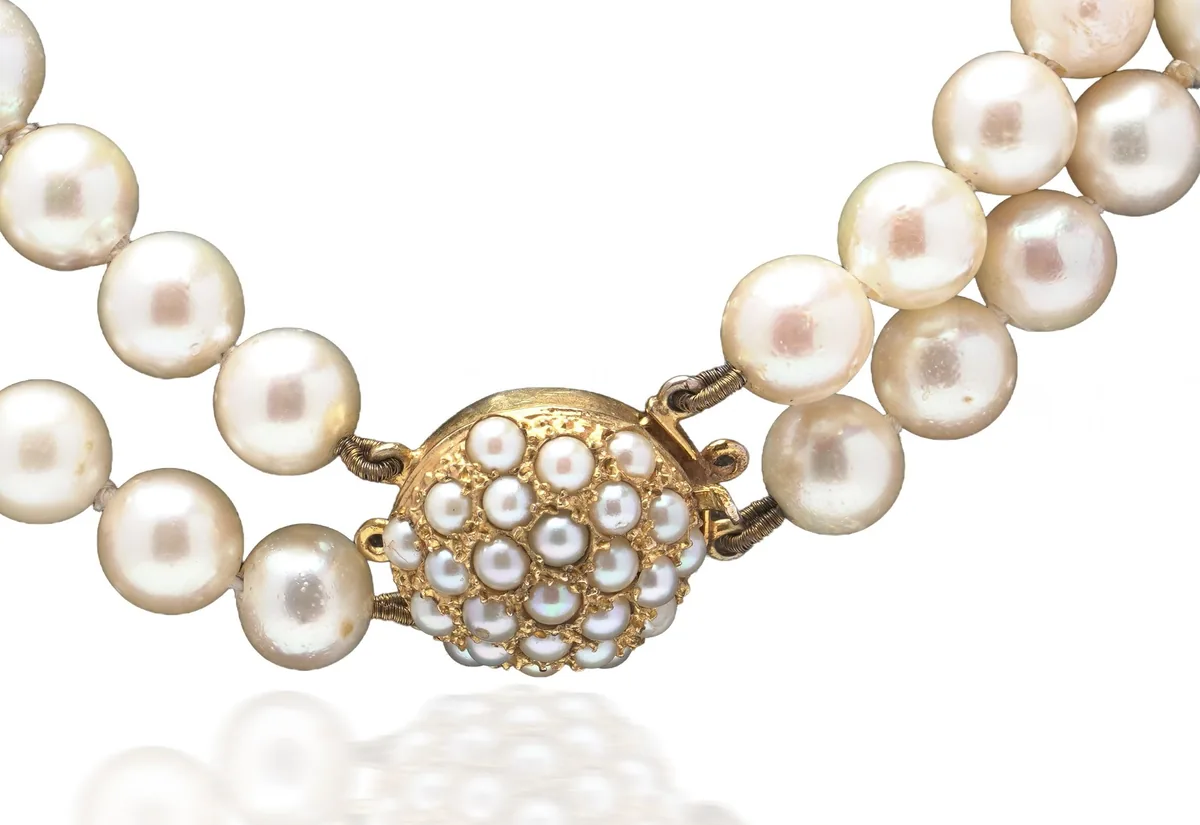
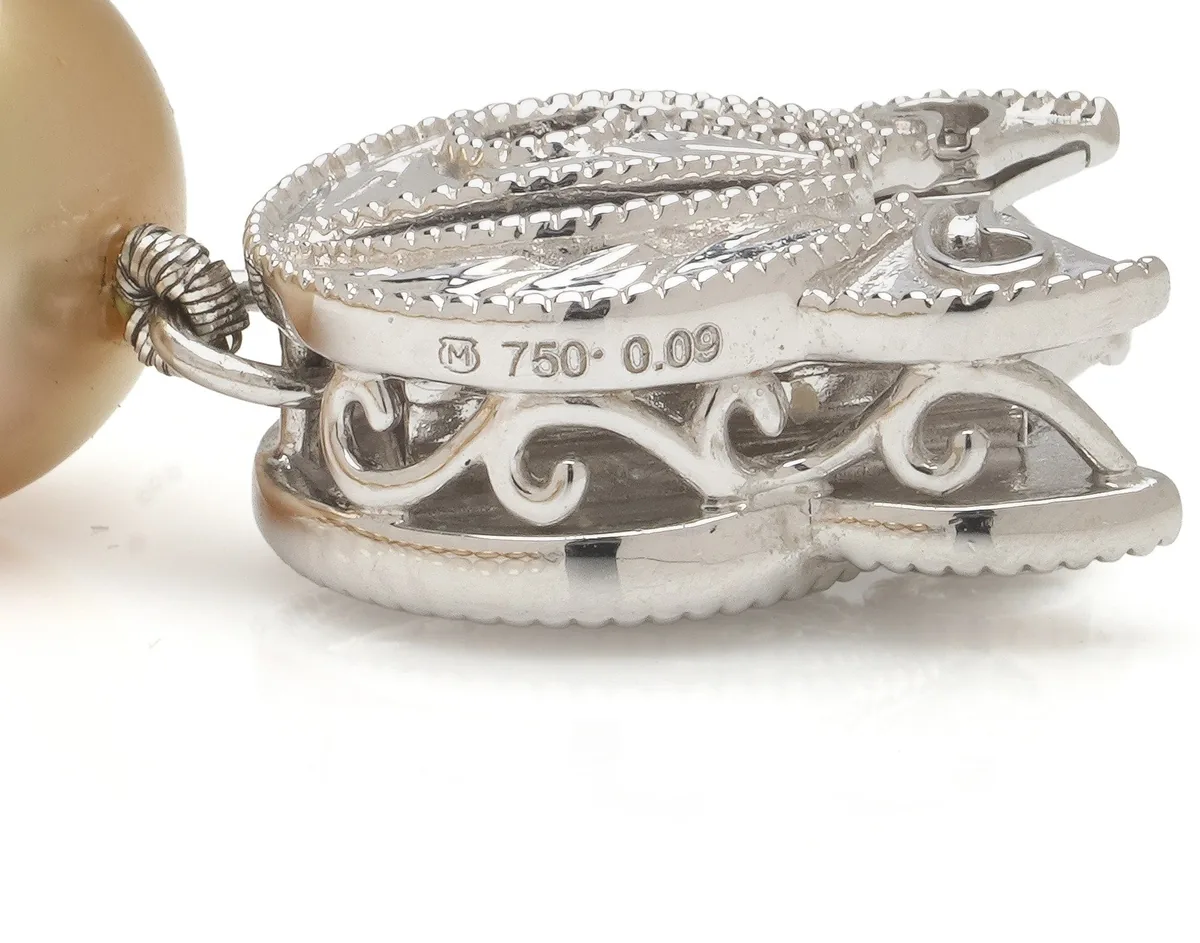
Look at the clasp for a maker's mark. Leading pearl houses sign their clasps: Mikimoto clasps carry an M mark, as below, next to the gold standard. Our Mikimoto pearls guide covers the marks in more detail.
Whether the pearls are natural or cultured matters far more to value than the clasp does. Our guide to natural and cultured pearl values explains how to tell, and seed pearls have their own history.
When the clasp is worth more than the necklace
Victorian and Edwardian jewellers often put their finest work into the clasp. On a strand of cultured pearls or glass beads, a gold clasp set with diamonds can be the most valuable part.
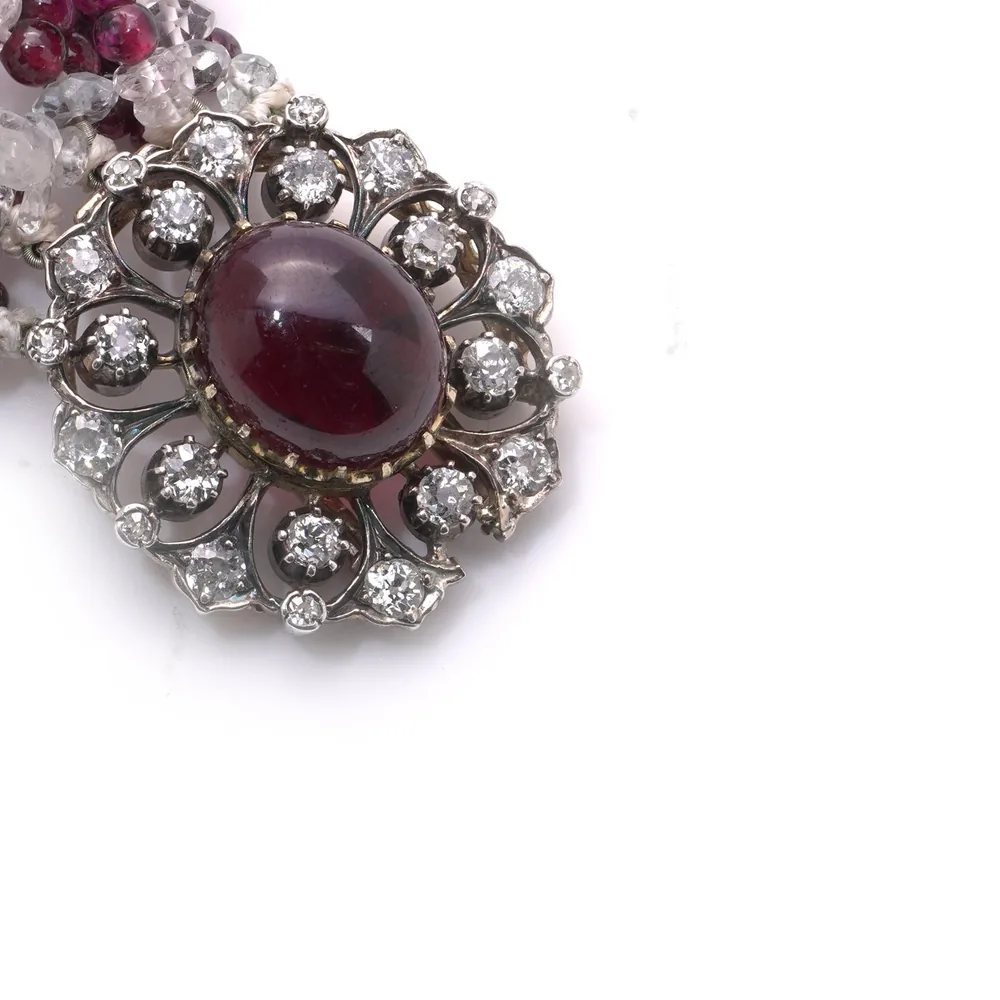
What adds value to a clasp:
- Gold or platinum, hallmarked or tested
- Diamonds or coloured stones, especially old cuts
- A maker's mark from a known house
- Original to the piece, undamaged and still closing securely
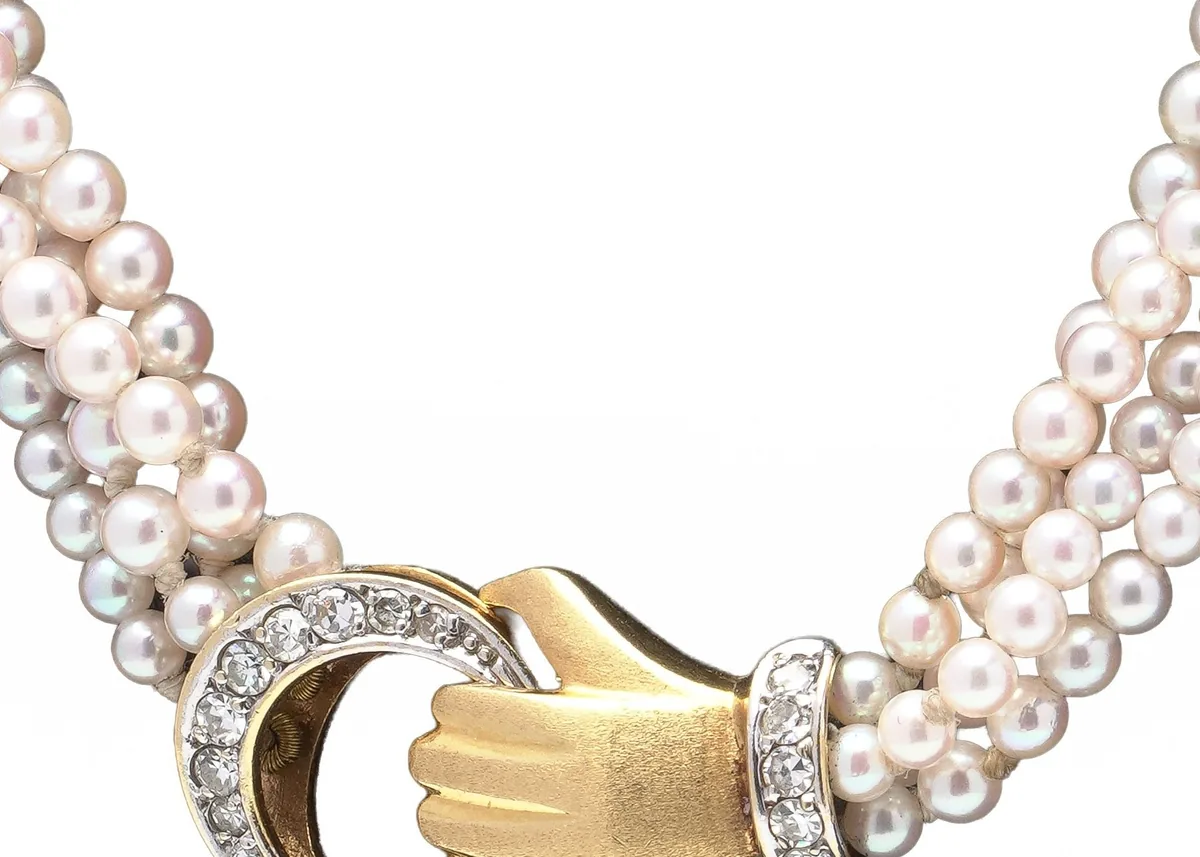
When a necklace comes to us we examine the clasp on its own: the metal, the marks, the stones and whether it belongs to the piece. A good clasp on a tired strand can carry real value, so never throw one away.
The mistake we see most often
The clasp is the moving part, so it is the part that wears out and gets replaced. A modern clasp on an old necklace usually means a repair, not a modern necklace. Selling an antique chain for scrap because of its clasp is an expensive mistake.
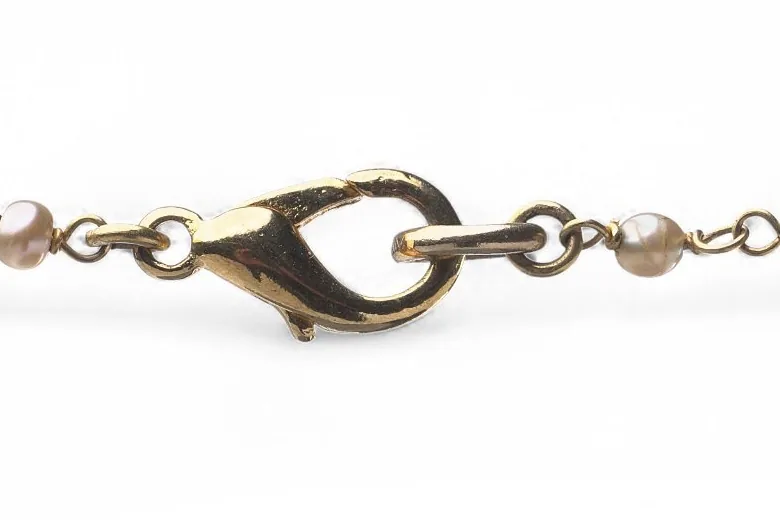
Signs a clasp is a replacement:
- Brighter or differently coloured metal from the chain
- Sharp, unworn edges on an otherwise worn piece
- A jump ring or crimp that looks newer than everything around it
- A type that postdates the necklace, such as a lobster claw on a Victorian chain
If you still have the original clasp, keep it with the necklace. An original period clasp supports the date, and usually the value.
Where to find the hallmark on a necklace
British necklaces are rarely marked on every link. Look here first:
- The tongue or back of a box clasp
- The bolt ring or spring ring itself
- A small oval tag or plate beside the clasp
- The end links or jump rings on some chains
Then read the marks with our gold hallmarks guide, silver hallmarks guide or platinum hallmarks guide. Stamps such as 750 or 18K are explained in hallmarks and makers' marks.
- A clasp gives you an earliest date and a likely period, not a final answer.
- Bolt rings date from the 1840s, fish hooks peak in the 1920s to 1950s, lobster claws belong to the 1970s onwards.
- A modern clasp on an old necklace is usually a repair. Judge the whole piece.
- Gem-set and signed clasps can carry real value. Keep original clasps with the necklace.
Questions we are asked
What is the clasp on a necklace called?
The general term is a clasp or fastening. The specific name comes from the mechanism: box clasp, bolt ring or spring ring, lobster claw, barrel, fish hook, toggle, hook and eye, tube, padlock or magnetic clasp.
What are the most common types of necklace clasps?
On chains, the spring ring and the lobster claw. On pearls and beads, the box clasp, fish hook and concealed screw. Barrel, toggle and magnetic clasps are common on costume and modern jewellery, while hook, tube and padlock clasps belong mainly to antique pieces.
How can I date a necklace from its clasp?
Use the clasp to set a boundary, not an exact date. A bolt ring means the clasp is no earlier than the 1840s. Fish hook clasps are most common on pearl strands of the 1920s to the 1950s. A lobster claw usually means the 1970s or later. Always read the clasp alongside the hallmarks, the construction and the stones, because clasps are often replaced.
Does a modern clasp mean my necklace is not antique?
No. A replaced clasp is the most common repair in antique jewellery, because the clasp is the part that wears out. A Victorian chain with a lobster claw is usually a Victorian chain that has been repaired.
What is the most secure necklace clasp?
For a valuable necklace, a box clasp with a safety catch or figure-of-eight, because it needs two actions to open. A lobster claw is secure on everyday chains. Toggles and magnetic clasps are the least secure on heavy or valuable pieces.
What clasp is best for a pearl necklace?
A gold box clasp with a safety catch, on a strand knotted between each pearl. Fish hook and concealed screw clasps are traditional too, but check that the hook still springs and the threads still hold.
Are some necklace clasps valuable on their own?
Yes. Victorian and Edwardian box clasps were often gold and set with diamonds, pearls or coloured stones, and on some strands the clasp is the most valuable part. Plain barrel and spring ring clasps carry little value beyond their metal.
Should I replace a broken clasp before selling?
Usually not. Bring the necklace as it is, with the original clasp if you have it. A replacement that does not suit the period can reduce what a piece is worth.
How do I tell an antique clasp from a reproduction?
Look at the finish. Hand-made clasps show slight asymmetry, file marks and hand-worked solder. Cast reproductions are uniform, with softer detail and often a seam. Genuine wear also makes sense: it concentrates where fingers touch the clasp.
Thinking of selling an antique necklace?
Send us photos of the clasp, the marks and the whole piece. We buy antique and vintage jewellery directly, and the valuation is free and without obligation.
- We buy directly
- Free valuation from photos
- Appointments in Mayfair and Braintree
- Insured postage or collection
New pieces reach our list first: join the Mozeris list.