Part of: Sell designer jewellery
Mikimoto Pearls: Value and How to Sell
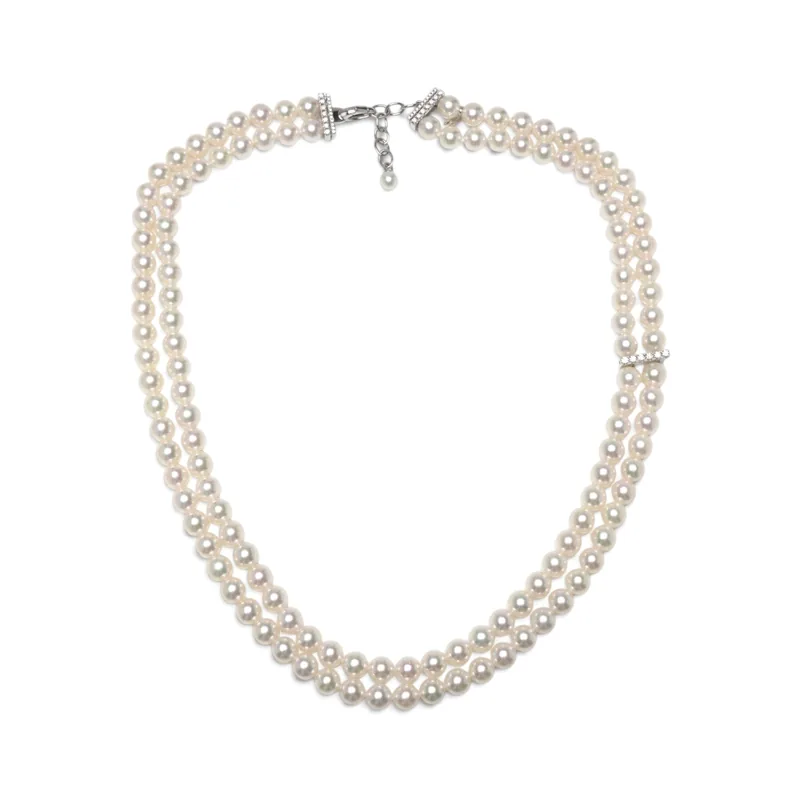
Mikimoto pearls are valued on the pearls themselves, their lustre, surface, size and matching, and on proof that they are Mikimoto: the signed clasp, the box and the certificate. Kokichi Mikimoto cultured his first pearls in 1893, and the house is best known for Akoya pearl strands. This guide shows how to tell a genuine Mikimoto piece and what decides its value.
Thinking of selling Mikimoto pearls?
Free, no obligation, returned at our cost if you decline.
- Read our Google reviews (opens Google)
- Free, no obligation
- A reply within one working day
- Paid the same day after inspection
From Toba, 1893
Kokichi Mikimoto produced his first cultured pearls in 1893, near Toba in Japan. They were half-round; fully round cultured pearls followed in the early 1900s. In 1899 he opened his first shop in the Ginza district of Tokyo. Mikimoto still makes pearl jewellery today, so strands from many decades come to the market.
- 1893First cultured pearls (half-round)
- Early 1900sRound pearls
- 1899Ginza shop
- Today


The pearls Mikimoto uses
- Akoya. The classic white Japanese pearl, with a sharp, mirror-like lustre. Most Mikimoto strands are Akoya.
- South Sea. Larger white and golden pearls.
- Black South Sea. Dark pearls with green, blue or aubergine overtones.
- Other pieces. Earrings, rings, pendants, bracelets and brooches, in gold or silver mounts.

How to tell a genuine Mikimoto piece
For every house we buy, see how we check designer jewellery.
- 1"m" logo
- 2Metal mark
- 3Knots either side
0 of 4 checked
1The clasp
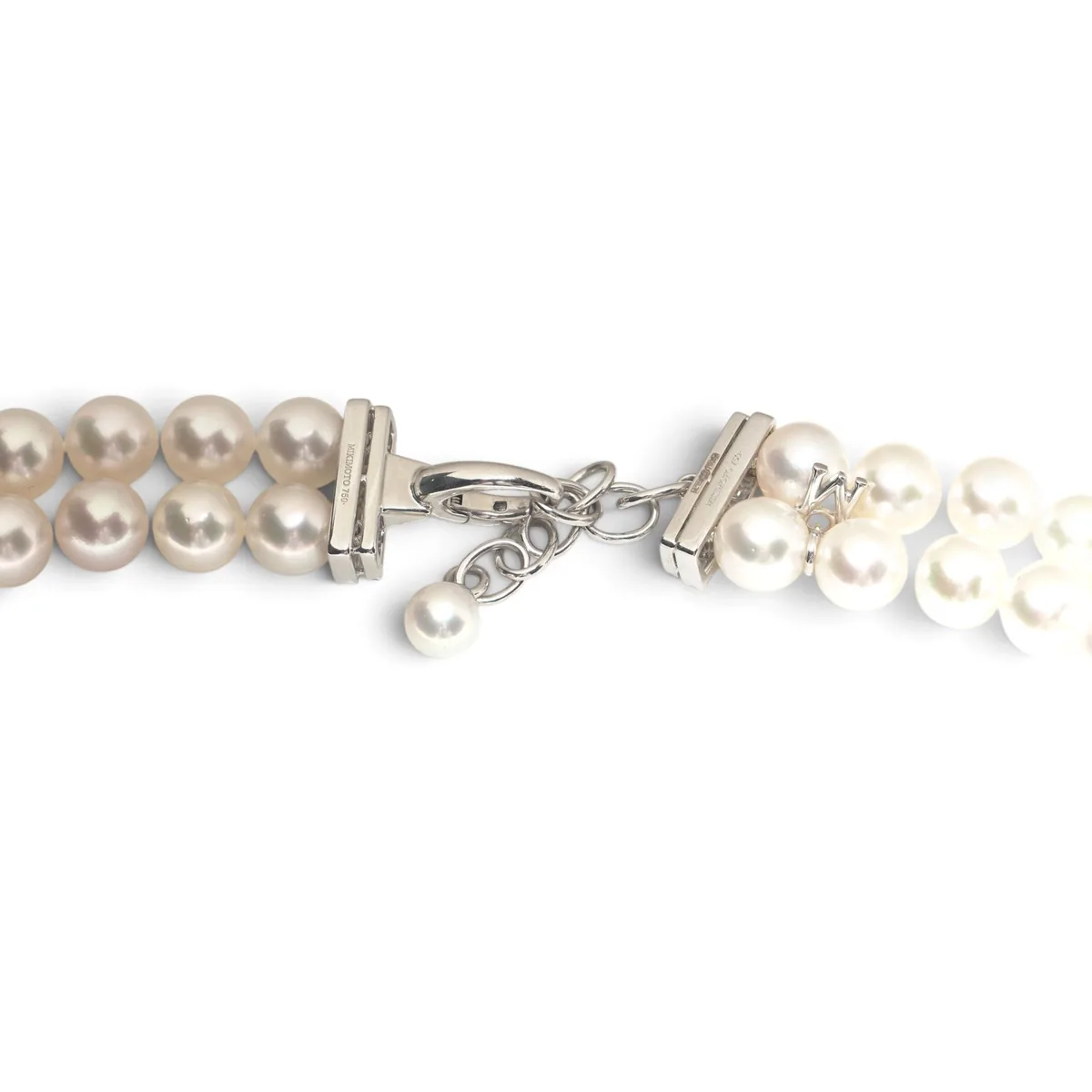
The Mikimoto "M" logo or name, crisply struck and centred, with a metal mark: usually 750 or K18 on gold, or a silver mark.
2The pearls
Bright, even lustre and close matching along the strand.
3The stringing
A small knot between every pearl.
4The box and certificate,
The box and certificate, checked against the piece.
Why the clasp is not the whole story
0 of 3 checked
1A strand can be restrung
A strand can be restrung, and a clasp can be moved from one strand to another.
2So a signed clasp supports a Mikimoto
So a signed clasp supports a Mikimoto piece but does not prove the pearls are the ones it left with.
3We look at the pearls as well
We look at the pearls as well: their type, lustre, matching and size, which should suit the clasp and the age of the piece.
Checked the clasp? Send a photo of the clasp and the full strand in daylight for a free, honest check.
Free, no obligation, returned at our cost if you decline.
Red flags
- A blurred, off-centre or oddly shaped "M".
- No metal mark on the clasp.
- Pearls with a dull, chalky or painted look.
- Pearls that are all identical and perfectly smooth, like glass or plastic.
- No knots between the pearls on a fine strand.
- A box and card that look better than the pearls.
Genuine
- Crisp m and bright lustre
Warning signs
- Blurred m and flat, painted pearls
What are my Mikimoto pearls worth?
Mikimoto pearls are valued on the pearl type, size, lustre and surface, how well the strand matches, its length, the clasp and its metal, the condition of the silk, whether you have the box and certificate, and current demand. We never publish figures, because two strands that look alike can differ a great deal.
Free, no obligation, and returned at our cost if you decline.
Read our Google reviews (opens Google)
- Type
- Size
- Lustre
- Matching
- Length
- Clasp
- Condition
- Box and papers
Looking after pearls before you sell
Do not clean pearls with anything but a soft, dry cloth: chemicals, perfume and ultrasonic cleaners damage the surface. If the silk is stretched or grubby, that is normal and does not stop a sale; do not have them restrung first, so we can see the original stringing and clasp together.
Do
- Soft dry cloth
- Store flat
Don’t
- Chemicals
- Ultrasonic cleaners
- Restringing before you sell
How selling works
- 1
Send photographs
of the full strand in daylight, the clasp close up, and any box or certificate.
- 2
Free value inspection
We reply within one working day with an estimate, subject to inspection. If our offer differs, you can decline and we return it at our cost.
- 3
Paid the same day after inspection
by bank transfer or in cash, in Mayfair, at our Braintree office, by post or by free collection.
Insured up to £10,000 per parcel when you send to us.
Questions people ask
How do I know my pearls are Mikimoto?
Look at the clasp for the Mikimoto "M" logo or name, crisply struck, with a metal mark such as 750 or K18. A box and certificate help. But clasps can be moved when pearls are restrung, so the pearls must suit the clasp too. Send clear photographs of both and we will tell you what we see, free.
Do you buy pearls that are not Mikimoto?
Yes. We buy fine cultured and natural pearls by other makers too, as strands, earrings, rings and brooches, and older pearl jewellery. A signed Mikimoto clasp is one thing we look for, but the pearls themselves, their lustre, size and matching, decide most of the value. Send photographs for a free value inspection.
How much are Mikimoto pearls worth?
It depends on the pearl type, size, lustre and surface, how well the strand matches, its length, the clasp and metal, the condition and whether you have the box and certificate, together with current demand. We do not publish prices. Send photographs of the strand in daylight and the clasp close up for a free value inspection.
Are Mikimoto pearls valuable?
Whether Mikimoto pearls are valuable comes down to the pearls themselves, their lustre, surface, size and matching, then the length, the signed clasp, the condition and the box and certificate. Mikimoto has made cultured pearls since 1893, so buyers know the name. A free value inspection tells you where yours sit.
Do Mikimoto pearls hold their value?
It comes down to lustre, matching, size, condition and completeness; a signed clasp, box and certificate help. Strands in good condition, unrestrung or restrung with care, are the easiest to sell. Dull, damaged or mismatched pearls are worth less, whatever the clasp says. A free value inspection tells you where yours sit.
Where can I sell Mikimoto pearls?
To a buyer who looks at the pearls as well as the clasp, in person, before paying. We buy Mikimoto pearls directly: a free value inspection from photographs, then an appointment in Mayfair or at our Braintree office, Special Delivery post or free collection. You are paid the same day after inspection, by bank transfer or in cash.
Should I restring my pearls before selling?
No need to restring: we value them as they are. Restringing can separate the pearls from their original clasp and hides how the strand was made, which we want to see. Stretched or grubby silk is normal and does not stop a sale. Send them as they are, with photographs first, for a free value inspection.
Related guides
Selling Mikimoto pearls?
Send a photograph of the strand in daylight and the clasp close up for a free value inspection, with no obligation.
Free, no obligation, returned at our cost if you decline.
Thinking of selling? Find out how to sell antique jewellery with a free valuation from photographs.