Treasure Finds by County: Britain's Treasure Map
Every county's reported treasure cases from the official statistics, where Essex ranks, and the stories behind the most famous finds.
Reported treasure finds in England, Wales and Northern Ireland, from the official DCMS figures:
- 1,540 cases in 2024 (provisional), the highest since records began, against 1,343 in 2023.
- Norfolk is top: 138 cases in 2024, then Hampshire 110, North Yorkshire 109, Essex 107 and Suffolk 85.
- East of England: 388 cases, a quarter of the total.
- Metal detecting found 95% of 2023's cases.
- Next figures: due November to December 2026; we will update this page.

In this article
- Treasure finds by county: the league table
- Treasure by region, Wales and Northern Ireland
- Essex treasure finds: fourth in England in 2024
- What counts as treasure, in one paragraph
- What happens to treasure finds, and how they are found
- Famous treasure finds, county by county
- Scotland: treasure trove counts every find
- Found something that is not treasure? We value it free
- Questions
Treasure finds by county: the league table
Every year the Department for Culture, Media and Sport (DCMS) publishes how many treasure cases were reported in each county of England, Wales and Northern Ireland, from records kept by the Portable Antiquities Scheme (PAS) and the British Museum. The latest release, published on 6 November 2025, gives final figures for 2023 and provisional figures for 2024.
The top ten counties, 2024 against 2023
Gold bars: 2024 (provisional). Green bars: 2023 (final).
Norfolk has topped the table in 12 of the 13 years since 2012. The exception was 2019, when Hampshire reported 104 cases to Norfolk's 88. Over those 13 years Norfolk reported 1,447 cases, followed by Suffolk (924), Essex (901) and Hampshire (874).
Every English county
| 2024 rank | County | 2024 cases (prov.) | 2023 cases | 2023 rank | Change |
|---|---|---|---|---|---|
| 1 | Norfolk | 138 | 108 | 1 | +30 |
| 2 | Hampshire | 110 | 92 | 2 | +18 |
| 3 | North Yorkshire (incl. York) | 109 | 69 | 5 | +40 |
| 4 | Essex | 107 | 85 | 3 | +22 |
| 5 | Suffolk | 85 | 63 | 7 | +22 |
| 6 | Wiltshire and Swindon | 79 | 66 | 6 | +13 |
| 7 | Lincolnshire | 76 | 74 | 4 | +2 |
| 8 | Somerset1 | 51 | 34 | 11 | +17 |
| =9 | Kent (incl. Medway) | 49 | 44 | 9 | +5 |
| =9 | Dorset | 49 | 24 | 16 | +25 |
| 11 | Shropshire | 39 | 31 | =12 | +8 |
| 12 | Devon | 38 | 27 | 14 | +11 |
| 13 | Oxfordshire | 32 | 60 | 8 | −28 |
| 14 | Gloucestershire, Bristol, South Glos, Bath and NE Somerset, North Somerset1 | 29 | 41 | 10 | −12 |
| 15 | Northamptonshire | 28 | 20 | 21 | +8 |
Show all 47 English counties (ranks 16 to 47)
| 2024 rank | County | 2024 cases (prov.) | 2023 cases | 2023 rank | Change |
|---|---|---|---|---|---|
| 16 | Staffordshire | 26 | 31 | =12 | −5 |
| 17 | Cambridgeshire and Peterborough | 25 | 19 | =22 | +6 |
| =18 | Herefordshire | 24 | 16 | 29 | +8 |
| =18 | Isle of Wight | 24 | 9 | =36 | +15 |
| =20 | Buckinghamshire and Milton Keynes | 22 | 22 | =17 | 0 |
| =20 | Northumberland | 22 | 19 | =22 | +3 |
| =22 | Hertfordshire | 21 | 22 | =17 | −1 |
| =22 | West Sussex | 21 | 15 | 30 | +6 |
| 24 | Warwickshire (incl. Coventry) | 20 | 25 | 15 | −5 |
| =25 | Cheshire and Merseyside | 19 | 21 | 20 | −2 |
| =25 | Cumbria | 19 | 18 | =25 | +1 |
| 27 | Berkshire (incl. Reading, Windsor & Maidenhead and Wokingham) | 18 | 9 | =36 | +9 |
| =28 | Worcestershire | 16 | 18 | =25 | −2 |
| =28 | Cornwall | 16 | 13 | =32 | +3 |
| 30 | East Sussex | 15 | 13 | =32 | +2 |
| 31 | Leicestershire | 14 | 18 | =25 | −4 |
| 32 | East Yorkshire | 13 | 22 | =17 | −9 |
| =33 | Surrey | 12 | 8 | 38 | +4 |
| =33 | Bedfordshire | 12 | 6 | =40 | +6 |
| 35 | Lancashire | 11 | 19 | =22 | −8 |
| 36 | Durham and Darlington | 9 | 13 | =32 | −4 |
| =37 | Nottinghamshire | 8 | 18 | =25 | −10 |
| =37 | Greater London | 8 | 14 | 31 | −6 |
| =37 | Derbyshire | 8 | 12 | 35 | −4 |
| =37 | West Yorkshire | 8 | 6 | =40 | +2 |
| 41 | South Yorkshire | 7 | 7 | 39 | 0 |
| 42 | Rutland | 5 | 4 | =42 | +1 |
| 43 | North and North East Lincolnshire | 4 | 4 | =42 | 0 |
| =44 | West Midlands | 0 | 4 | =42 | −4 |
| =44 | Teesside, Redcar & Cleveland | 0 | 1 | =45 | −1 |
| =44 | Tyne and Wear | 0 | 1 | =45 | −1 |
| =44 | Greater Manchester | 0 | 0 | 47 | 0 |
1 Until 2022 Somerset included Bath and North East Somerset and North Somerset; from 2023 DCMS counts them with Gloucestershire and Bristol. A case can be a single ring or a hoard of thousands of coins: the 1,343 cases of 2023 held 32,768 objects and coins.
DCMS has announced its next release, with final figures for 2024 and provisional figures for 2025, for November to December 2026 (provisional date). We will update this page when it is published.
Treasure by region, Wales and Northern Ireland
Treasure reporting rose to 1,540 cases in 2024, the highest since records began, from 1,343 in 2023 and 990 in 2012. England reported 1,446 cases, Wales 85 and Northern Ireland 9.
| Region | 2024 (prov.) | Share of 2024 | 2023 |
|---|---|---|---|
| East of England | 388 | 25% | 303 |
| South East | 303 | 20% | 272 |
| South West | 262 | 17% | 205 |
| Yorkshire and the Humber | 141 | 9% | 108 |
| East Midlands | 139 | 9% | 146 |
| West Midlands | 125 | 8% | 125 |
| North West | 49 | 3% | 58 |
| North East | 31 | 2% | 34 |
| London | 8 | 1% | 14 |
| Wales | 85 | 6% | 77 |
| Northern Ireland | 9 | 1% | 0 |
The East of England, which takes in Norfolk, Suffolk and Essex, reported 388 cases in 2024: a quarter of the total. London reported 8.
Wales
Wales reported 85 cases in 2024, against 77 in 2023 and 25 in 2012. Powys led with 21, followed by the Vale of Glamorgan (16), the Isle of Anglesey (7) and Ceredigion (6).
Show all 22 Welsh counties
| 2024 rank | County | 2024 cases (prov.) | 2023 cases | 2023 rank | Change |
|---|---|---|---|---|---|
| 1 | Powys | 21 | 13 | 1 | +8 |
| 2 | Vale of Glamorgan | 16 | 9 | 2 | +7 |
| 3 | Isle of Anglesey | 7 | 8 | =3 | −1 |
| 4 | Ceredigion | 6 | 3 | 8 | +3 |
| =5 | Denbighshire | 4 | 8 | =3 | −4 |
| =5 | Pembrokeshire | 4 | 6 | 7 | −2 |
| =5 | Gwynedd | 4 | 2 | =9 | +2 |
| =5 | Newport | 4 | 0 | =20 | +4 |
| =9 | Flintshire | 3 | 2 | =9 | +1 |
| =9 | Swansea | 3 | 2 | =9 | +1 |
| =9 | Wrexham | 3 | 2 | =9 | +1 |
| =12 | Monmouthshire | 2 | 7 | 6 | −5 |
| =12 | Bridgend | 2 | 1 | =13 | +1 |
| =12 | Rhondda Cynon Taf | 2 | 1 | =13 | +1 |
| =15 | Carmarthenshire | 1 | 8 | =3 | −7 |
| =15 | Blaenau Gwent | 1 | 0 | =20 | +1 |
| =17 | Caerphilly | 0 | 1 | =13 | −1 |
| =17 | Cardiff | 0 | 1 | =13 | −1 |
| =17 | Conwy | 0 | 1 | =13 | −1 |
| =17 | Merthyr Tydfil | 0 | 1 | =13 | −1 |
| =17 | Torfaen | 0 | 1 | =13 | −1 |
| =17 | Neath, Port Talbot | 0 | 0 | =20 | 0 |
Northern Ireland
Northern Ireland reported 9 cases in 2024: 6 in County Down, 2 in Londonderry and 1 in Fermanagh. None were reported in 2023.
Essex treasure finds: fourth in England in 2024
.jpg)
Our home county
Essex reported 107 treasure cases in 2024, fourth in England, up from 85 in 2023, when it was third. It was second in 2012, 2013, 2014 and 2017, and its 114 cases in 2017 remain its highest.
Across 2012 to 2024 Essex reported 901 cases, third behind Norfolk and Suffolk.
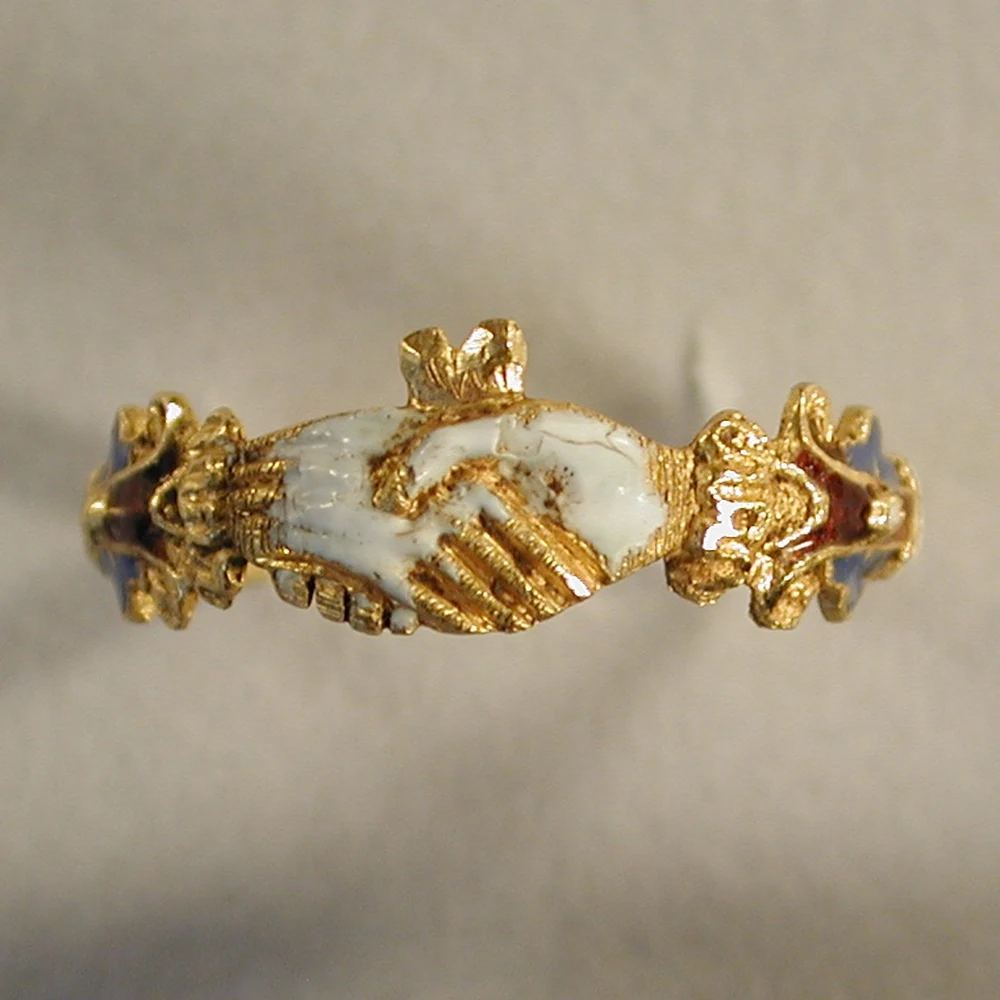
This ring was found near Chelmsford: two clasped hands in white enamel, inscribed inside “THINKE OF ME”.
Many Essex finds stay in the county. From 2012 to 2023 Colchester and Ipswich Museums Service acquired or received 217 treasure cases, second only to Norwich Castle Museum with 251. In 2024 a Roman gold pendant or earring found near Radwinter was donated to Saffron Walden Museum, and a medieval silver pendant from East Mersea went to Mersea Island Museum.
The Great Baddow Hoard
.jpg)
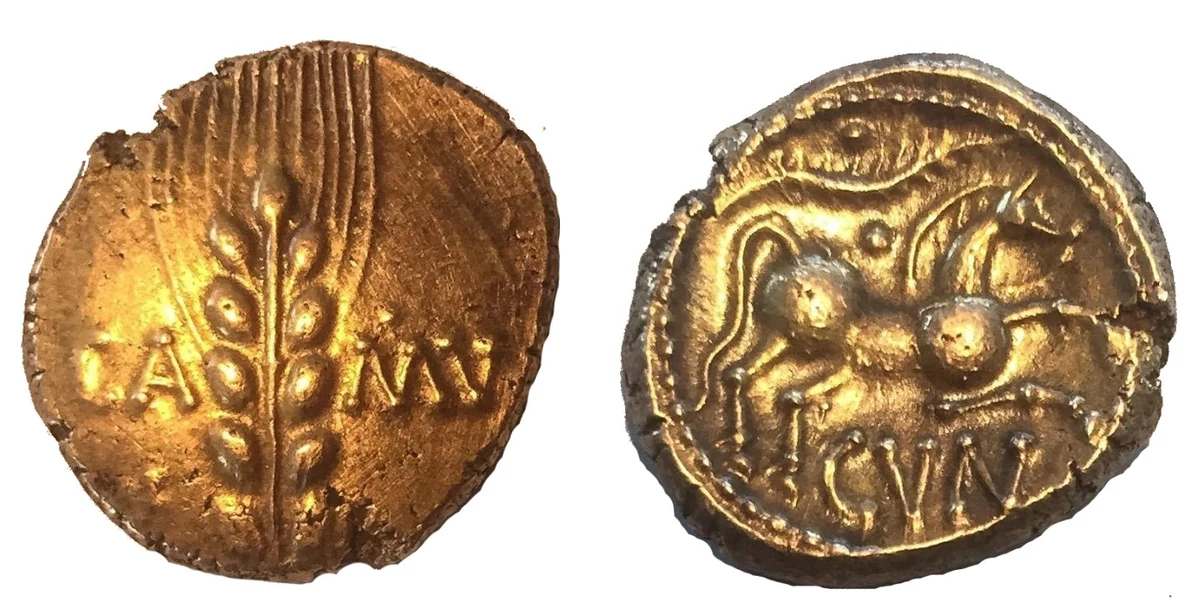
Iron Age Essex had its own gold coinage: Cunobelin's staters were struck at Camulodunon, now Colchester. Older still is the Great Baddow Hoard: 933 gold coins dating to 60 to 20 BC, found near Chelmsford in 2020. Chelmsford City Council describes it as the largest recorded hoard of Iron Age gold coins found in Britain.
It is also a warning. The detectorist had no permission to search the land and at first did not declare the find under the Treasure Act 1996. The Museum of Chelmsford acquired the hoard in May 2025, with a temporary exhibition from summer 2026 and permanent display from spring 2027.
We are in Braintree. If you detect in Essex and have finds that are not treasure, or old gold and silver, we value them free: see selling gold in Braintree, Chelmsford, Colchester and where to sell gold in Essex.
Detecting in Essex? Get a free valuation
What counts as treasure, in one paragraph
In England, Wales and Northern Ireland the Treasure Act 1996 covers, in the main: objects other than coins over 300 years old with at least 10% gold or silver; two or more such coins, or ten or more coins of any metal over 300 years old, from one find; prehistoric metalwork; and, since 30 July 2023, metal objects over 200 years old of exceptional historical significance. Finders must report treasure to the coroner within 14 days, usually through their local Finds Liaison Officer. Our guide to finding buried treasure in the UK explains the law, rewards, landowners and what to do in full.
What happens to treasure finds, and how they are found
More than half of the cases reported in 2023 were disclaimed: no museum wished to acquire them, so they went back to the finder and landowner. About a quarter were acquired, or a museum had expressed an interest by the time the figures were compiled.
- Disclaimed: 728 (54%)
- Acquired, or a museum interested: 328 (24%)
- Donated: 50 (4%)
- Not treasure: 68 (5%)
- Still to be decided: 169 (13%)
- Method: 1,274 of the 1,343 cases of 2023 (94.9%) were found by metal detecting. Archaeologists found 53, chance finds made 12 and mudlarks 3.
- Period: post-medieval finds made up 37% of cases and medieval finds 23%. There were 114 Bronze Age object cases and 170 Roman cases, objects and coins together.
- Objects or coins: 1,091 cases (81%) were objects such as rings, brooches and mounts, and 252 (19%) were coins.
The PAS finds database
Treasure is a small share of what detectorists record. In 2024 the Portable Antiquities Scheme recorded 79,616 finds, a record, up from 74,506 in 2023. Most are not treasure and are recorded voluntarily in England and Wales, and 94% were found by metal detectorists. Anyone can search the PAS finds database.
| County | PAS finds recorded, 2024 |
|---|---|
| Norfolk | 7,120 |
| Suffolk | 5,410 |
| Lincolnshire | 5,133 |
| Gloucestershire | 5,034 |
Famous treasure finds, county by county
The league table counts cases. These five show what a single case can be.
Norfolk: the Snettisham Great Torc
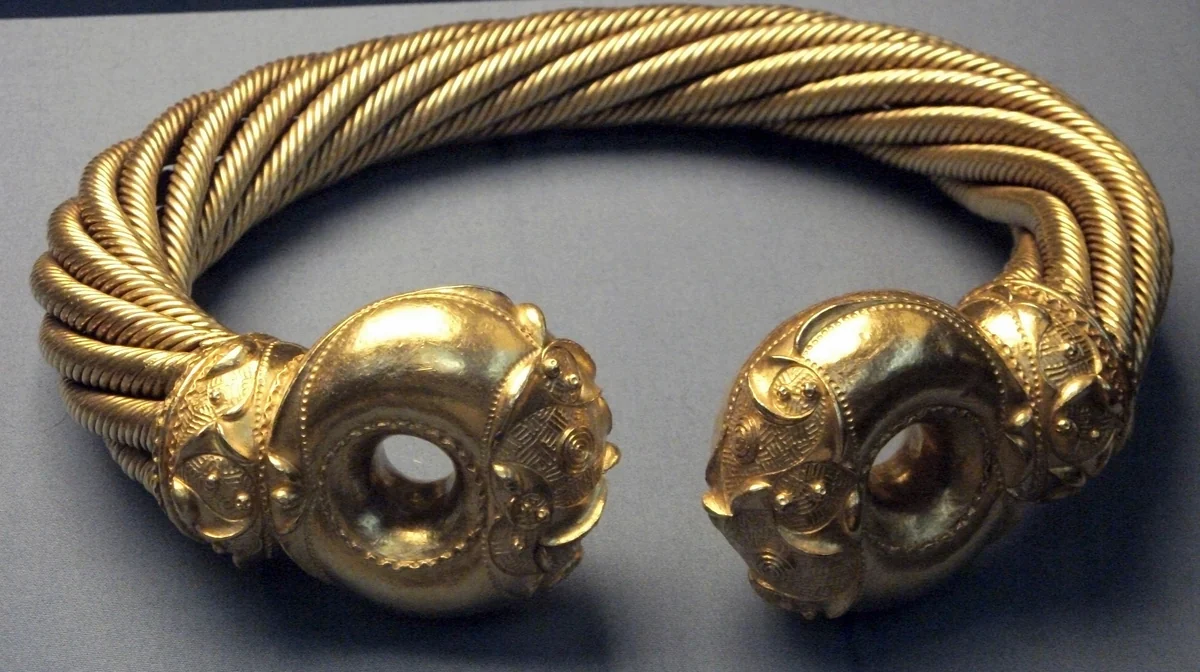

In 1950 a farmer ploughing a field at Ken Hill, near Snettisham in north-west Norfolk, turned up a gold neck ring. Made in about 100 to 75 BC from 64 threads twisted into ropes, it weighs just over a kilo, mostly gold with a little silver. It is in the British Museum.
Suffolk: the Hoxne Hoard
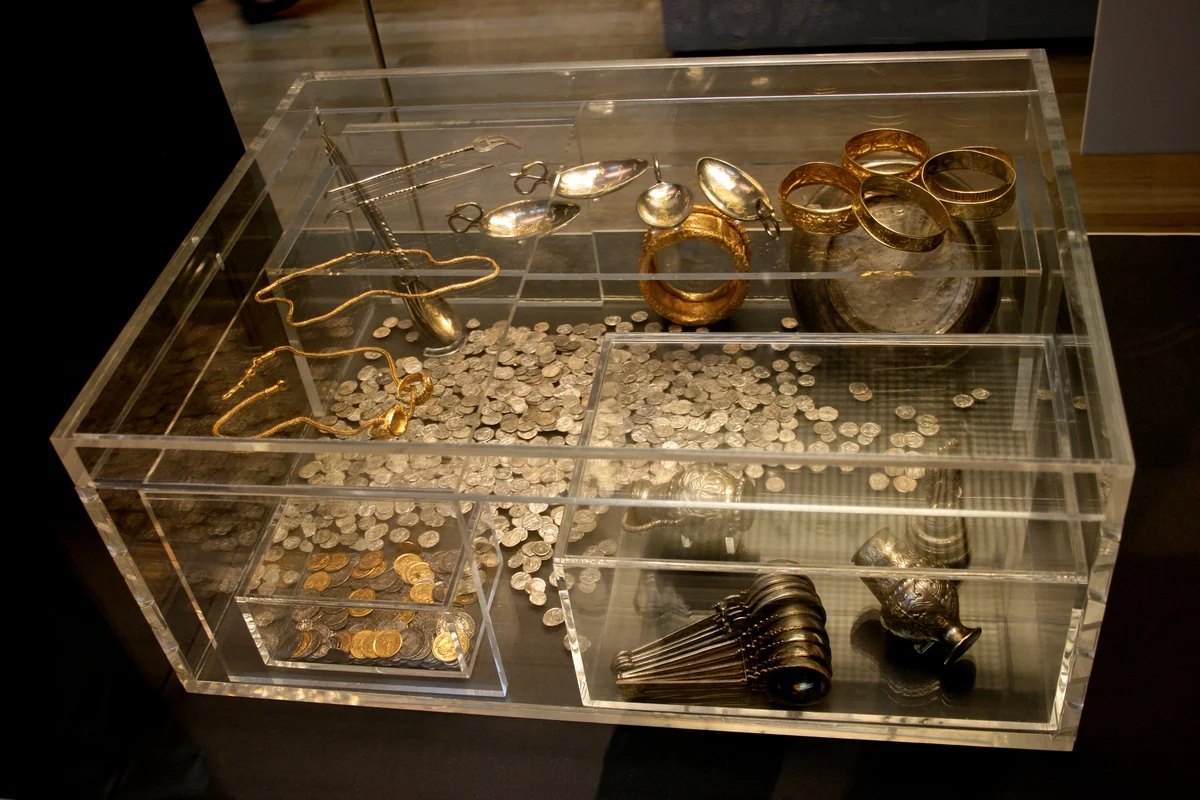

On 16 November 1992 Eric Lawes was helping a farmer at Hoxne look for a lost hammer. He found 14,865 Roman coins and about 200 pieces of silver tableware and gold jewellery, buried after AD 407. He reported it at once, and archaeologists lifted it intact the next day. The find influenced the Treasure Act 1996.
Staffordshire: the Staffordshire Hoard
.jpg)
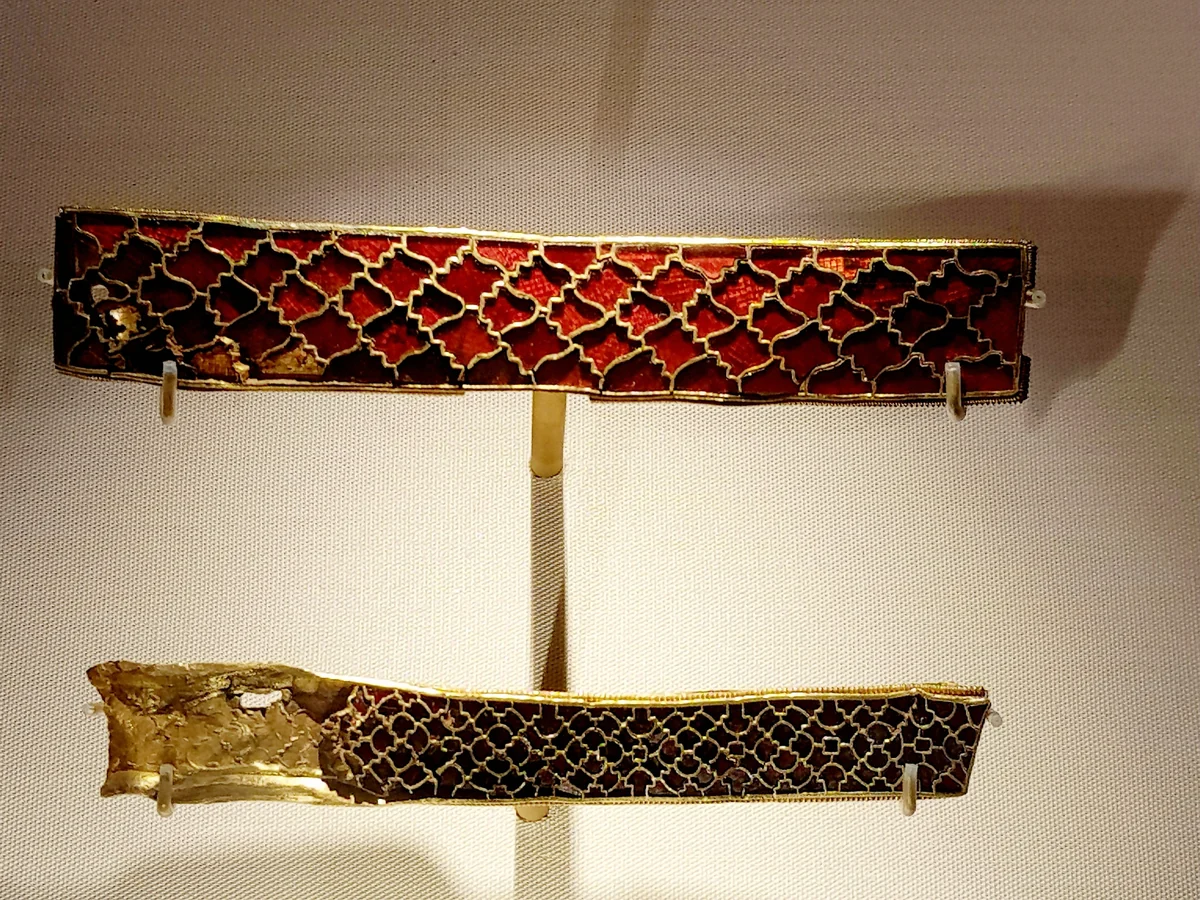
On 5 July 2009 Terry Herbert detected a ploughed field near Hammerwich, Lichfield, and found the largest Anglo-Saxon hoard of gold and silver yet known: almost 4,600 items and fragments, with about 5 kg of gold and 3,500 garnets. The Treasure Valuation Committee valued it at £3.285 million, and Birmingham Museum and the Potteries Museum bought it jointly.
Warwickshire: the Tudor Heart pendant
.jpg)
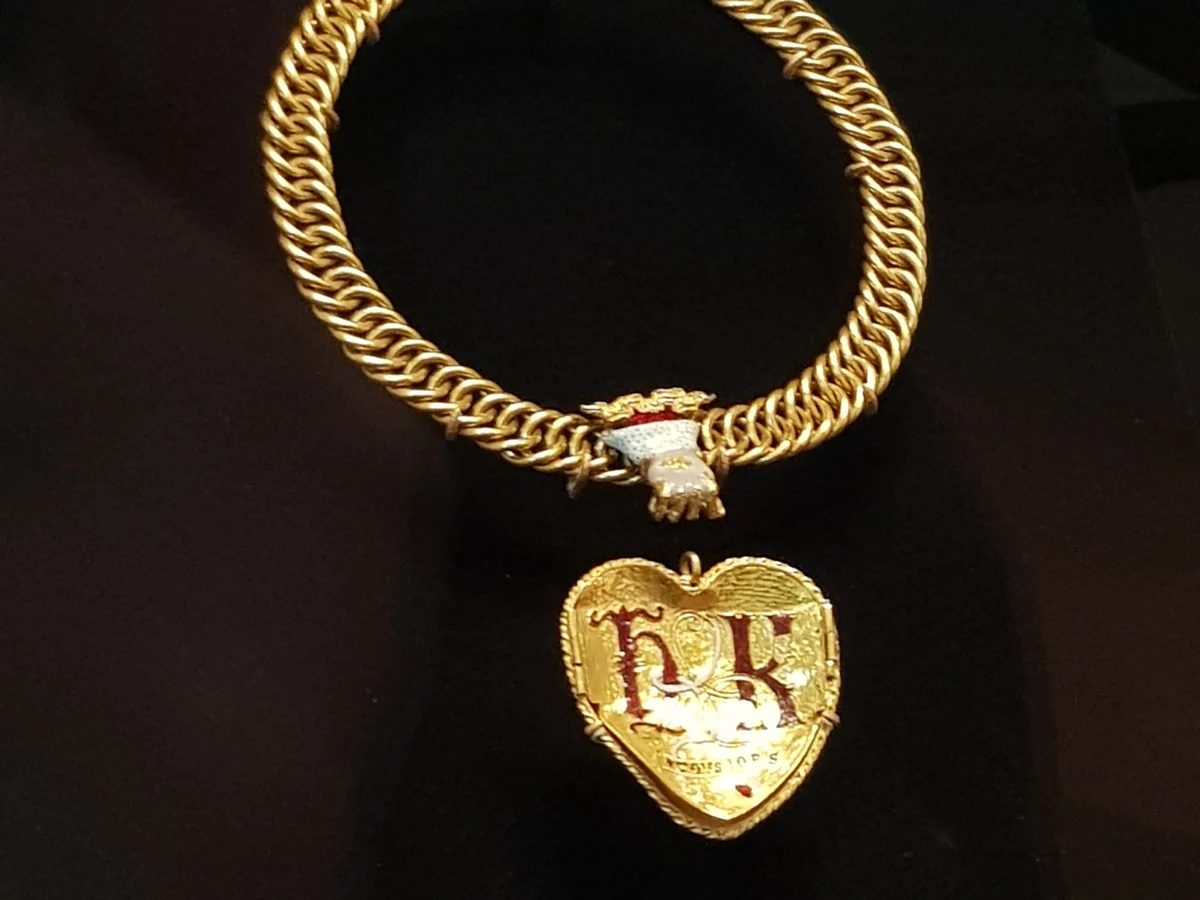
On 13 December 2019 Charlie Clarke, who had been detecting for about six months, found a gold heart pendant in a Warwickshire field. Its initials H and K stand for Henry VIII and Katherine of Aragon. Valued at £3.5 million, it was acquired by the British Museum after an appeal that closed in February 2026, with gifts from more than 45,000 people.
Somerset: the Frome and Chew Valley hoards
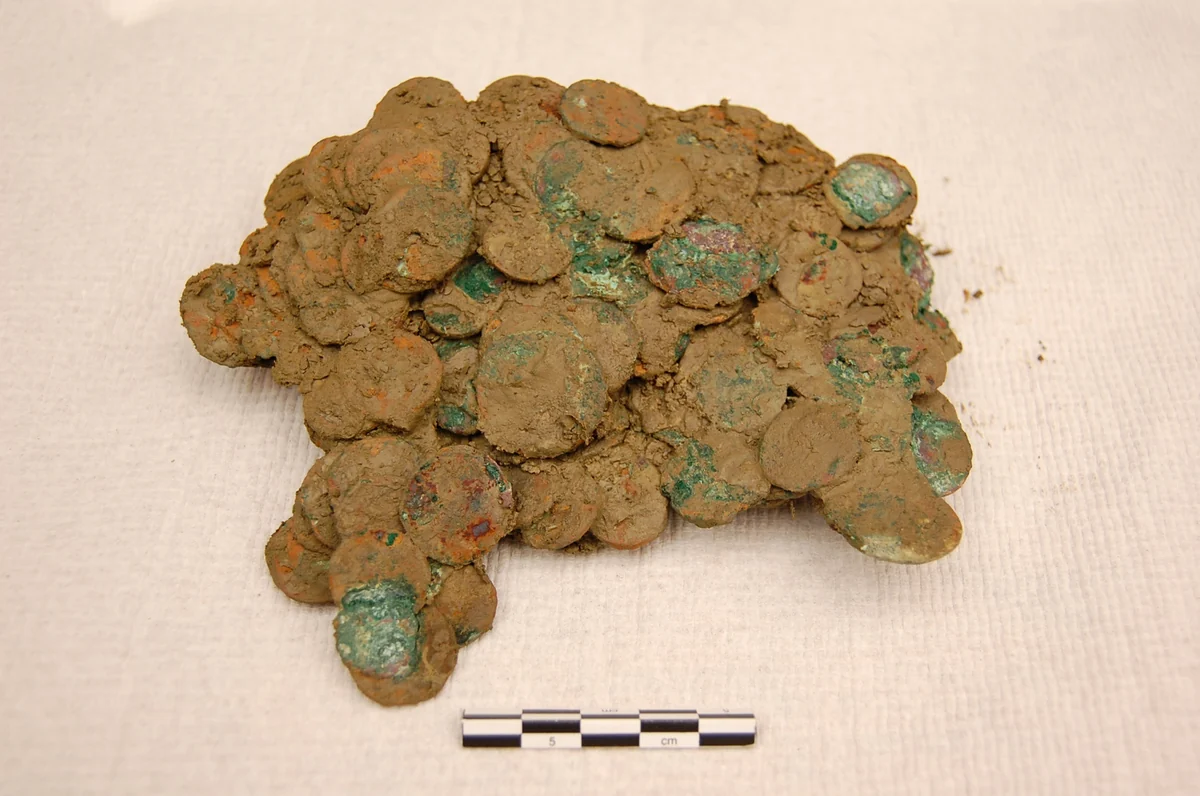

On 11 April 2010 Dave Crisp found the top of a pot near Frome. He stopped digging and reported it, so archaeologists could lift 52,503 Roman coins of AD 253 to 305, including the largest group of coins of Carausius, the first Roman emperor to strike coins in Britain.
In the Chew Valley in 2019 seven detectorists found 2,584 silver pennies of Harold II and William I. Valued at £4.3 million, it is the highest-value find recorded under the Treasure Act.
Scotland: treasure trove counts every find
Scotland is not in the DCMS figures. It has its own law, treasure trove, under which archaeological finds are reported to the Treasure Trove Unit, not just gold and silver. Its yearly report counts finds, so its totals cannot be compared with the county cases above.
- 2024-25: 5,844 finds reported to the Treasure Trove Unit, plus 463 recorded remotely and 888 processed by a freelance specialist.
- 2023-24: 7,434 finds, the post-Covid high.
- Covid years: 2,217 in 2019-20 and 1,245 in 2020-21.
The 2024-25 report was launched at the National Museum of Scotland on 19 September 2025. We will add the 2025-26 figures when they are published.
Found something that is not treasure? We value it free
Most detecting finds are not treasure, and a disclaimed find goes back to the finder and landowner. Where a piece is yours to sell, we will tell you what it is worth.
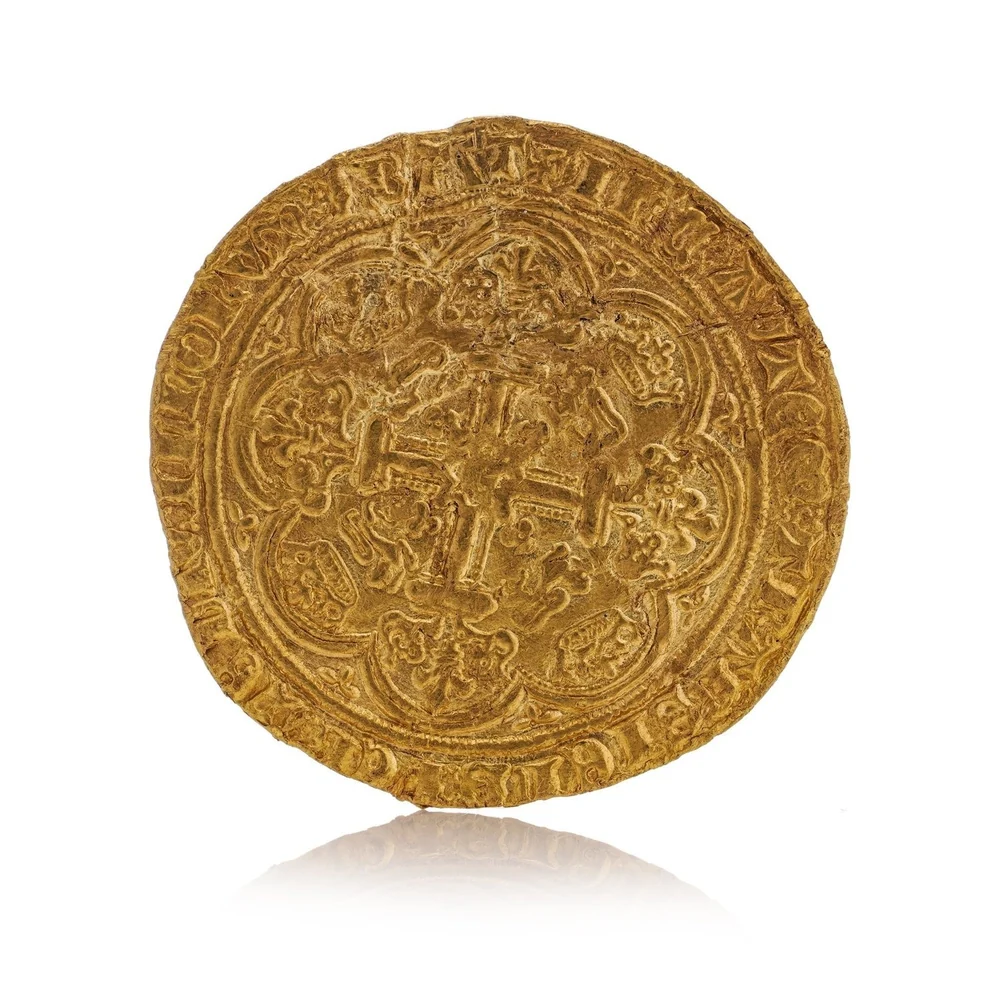
Hammered and gold coins
A single coin found on its own is not treasure, even a gold one, unless it meets the 2023 significance test or belongs with other finds. Read the story of the Edward III gold noble.
We also buy gold sovereigns: see sovereign value by year.
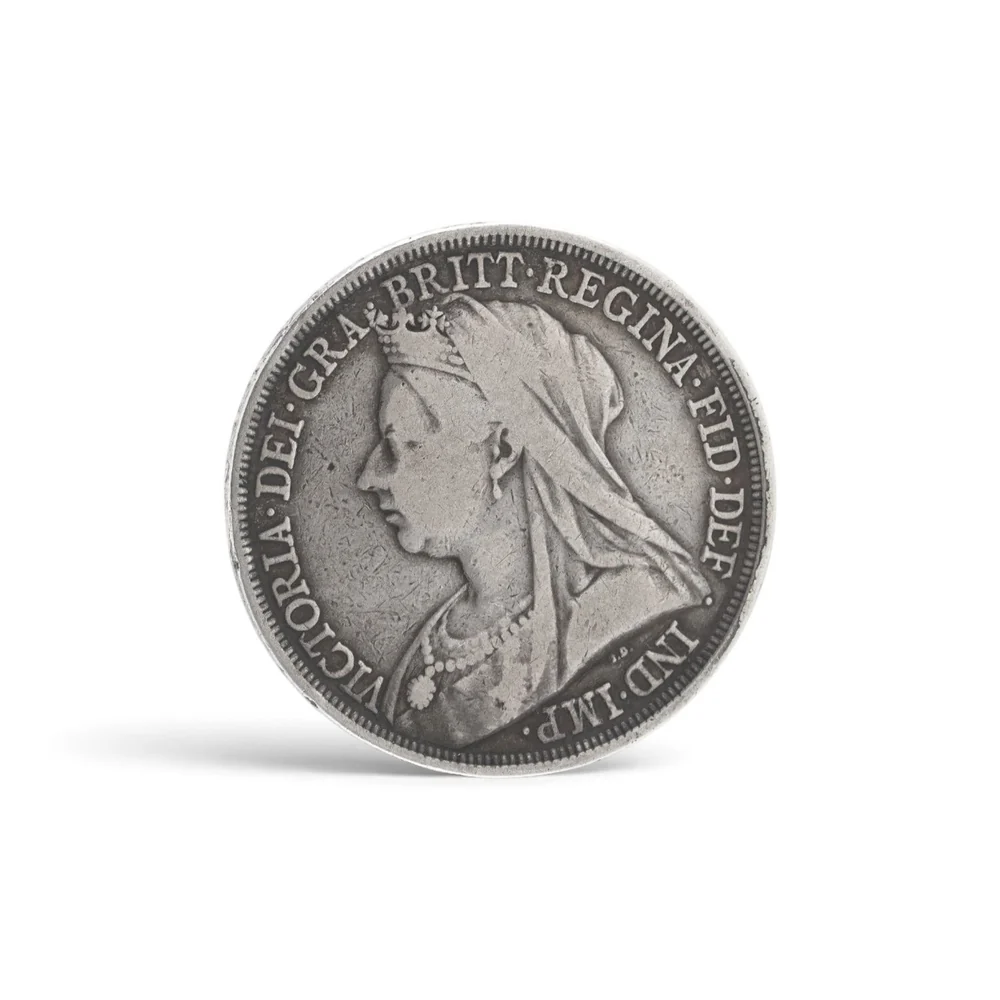
Old silver coins and jewellery
Silver coins turn up in every field. See pre-1920 silver coins, pre-1947 silver coins and Maundy money.
For gold and silver jewellery see sell your gold, broken gold and silver jewellery.
For Roman and ancient pieces, papers matter: read our provenance guide, Roman intaglios and the Roman and ancient collection. Things found at home rather than in a field are covered in attic finds and inherited jewellery.
- Photograph
Both sides of the find, with its PAS record number or the coroner's disclaimer letter if it has one.
- Send
Use the form below, call 01376 334482 or WhatsApp us.
- Visit
47 Maddox Street, Mayfair (by appointment) or Braintree, Essex. Contact us.
Request a free valuation
- 1,540 treasure cases were reported in 2024 (provisional), the most on record.
- Norfolk leads the county table, ahead of Hampshire, North Yorkshire and Essex.
- Essex was fourth in 2024 and third in 2023, and third over 2012 to 2024.
- Most cases are found by detectorists, and more than half are disclaimed.
- We value finds that are yours to sell free, from photos.
Questions we are asked
Which county has the most treasure finds?
Norfolk. It reported 138 treasure cases in 2024 (provisional) and 108 in 2023, and has been top in 12 of the 13 years since 2012. Hampshire was top in 2019.
How many treasure finds were reported in 2024?
1,540, a provisional figure and the highest since records began: 1,446 in England, 85 in Wales and 9 in Northern Ireland. The final figure for 2023 was 1,343.
Where does Essex rank for treasure finds?
Fourth in England in 2024 with 107 cases, and third in 2023 with 85. From 2012 to 2024 Essex reported 901 cases, third behind Norfolk and Suffolk.
When are the next treasure statistics published?
DCMS has announced its next release, with final 2024 and provisional 2025 figures, for November to December 2026 (provisional date). We will update this page when it is out.
How are most treasure finds made?
By metal detecting: 1,274 of the 1,343 cases reported in 2023, or 94.9%. Archaeologists found 53, chance finds made 12 and mudlarks 3.
What happens to most treasure finds?
In 2023, 54% of cases were disclaimed and went back to the finder and landowner, 24% were acquired or had a museum interested, 4% were donated and 5% turned out not to be treasure.
Is Scotland included in the treasure statistics?
No. Scotland has its own treasure trove system. Its Treasure Trove Unit received 5,844 finds in 2024-25, but it counts finds, not treasure cases, so the figures cannot be compared.
Can you value my metal detecting finds?
Yes. Send photos of finds that are yours to sell, such as coins, rings or disclaimed treasure, and we will tell you what they are worth, free and with no obligation.
Value your detecting finds
Send photos of your coins, rings or disclaimed finds for a free valuation, or visit us in Mayfair or Braintree.
- We buy directly
- Free valuation from photos
- Appointments in Mayfair and Braintree
- Insured postage or collection
New pieces reach our list first: join the Mozeris list.