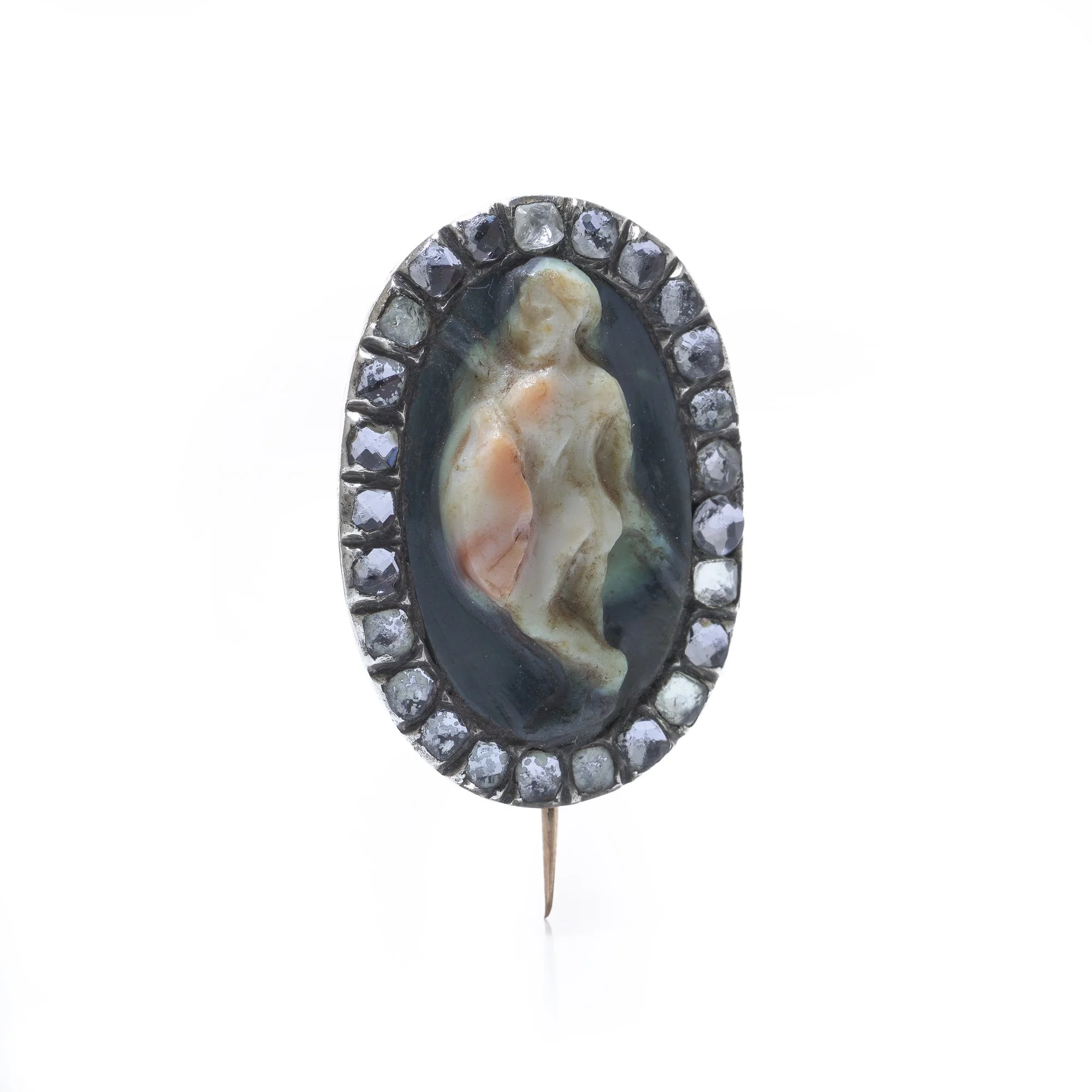
Cameos: The Complete Guide to Types, History, Age & Value
Everything about the cameo — what it is, how shell, hardstone and lava cameos differ, how to tell a genuine carved cameo from a moulded fake, how to date one, and what antique cameos are really worth.
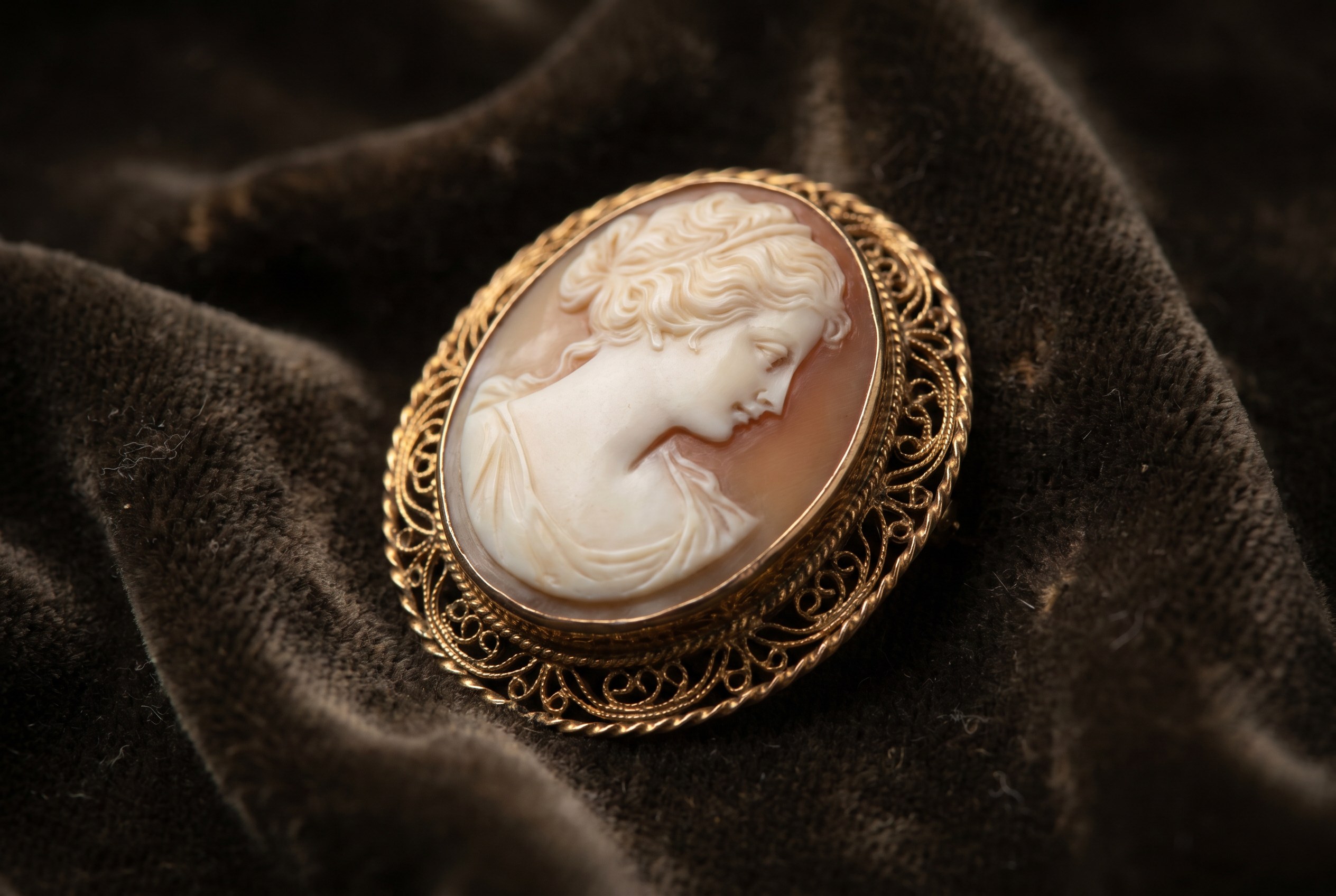
A cameo is one of the oldest and most personal forms of jewellery — a miniature relief carving, usually a portrait, cut from shell or stone so the design stands proud of a contrasting background. We handle antique cameos every week, and this guide covers everything owners and collectors ask: the types, the history, how to spot a fake, how to date one, and what a cameo is actually worth.
Quick answer: what is a cameo?
A cameo is a design — most often a woman’s profile — carved in raised relief from a material with naturally contrasting layers, so the pale carving sits against a darker ground. The reverse technique, where the design is cut into the surface, is an intaglio.
Most antique cameos are carved shell (fast, warm-toned, translucent) or hardstone such as agate and onyx (slower to carve, crisper, more valuable). Genuine antique cameos are hand-carved; modern fakes are moulded plastic or resin — the test is below.
A short history of the cameo
The cameo begins in the ancient world. Carvers in Ancient Greece and Rome cut portraits of gods, emperors and heroes into layered agate and sardonyx — some of the finest, like the Gemma Augustea, are among the greatest surviving Roman artworks. The technique never quite died: it revived in the Renaissance courts, again in the Georgian era's Grand Tour (travellers brought lava and shell cameos home from Naples and Pompeii as souvenirs), and reached its absolute peak in the Victorian period.
Queen Victoria adored cameos and wore them constantly, and the fashion followed her: for half a century virtually every well-dressed woman in Britain owned at least one cameo brooch. That Victorian boom is why so many survive today — and why most cameos you'll inherit or find are Victorian shell carvings in gold or pinchbeck frames. Our earlier piece on Victorian cameos covers that era in detail; this hub covers the whole field.
Cameo materials and types
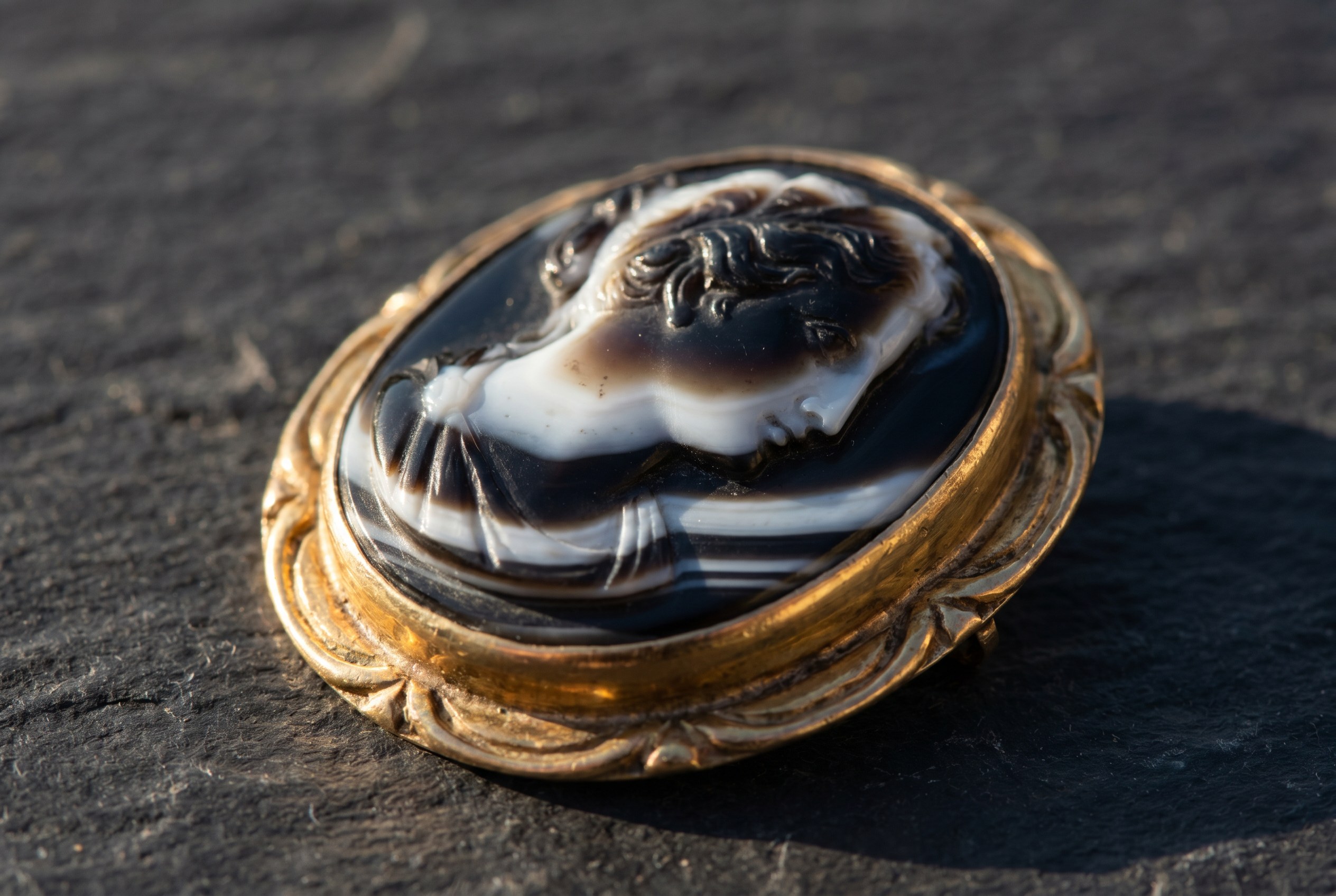
Shell cameo
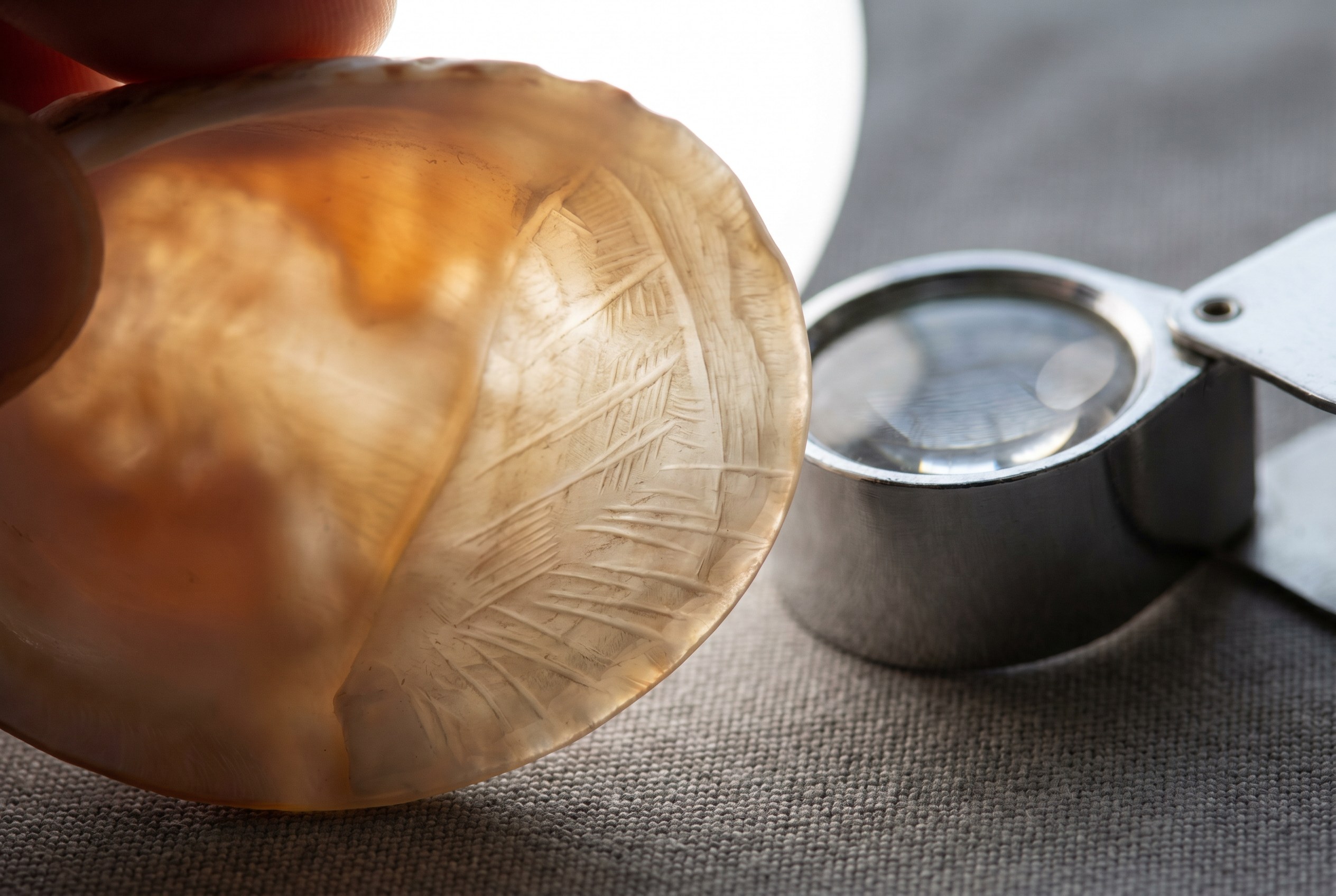
The classic. Carved from cornelian helmet or queen conch shell — warm cream-on-peach tones, slightly translucent held to light, with a gently curved back. The majority of Victorian cameos.
Hardstone cameo
Carved from banded agate, onyx or sardonyx. Crisper detail, cold to the touch, flat back, far slower to carve — and correspondingly more valuable.
Lava cameo
Carved from soft Vesuvian lava in matte grey, olive or buff. Grand Tour souvenirs from Naples, often carved in unusually high relief. Very collectable.
Coral, jet & Wedgwood
Coral cameos (often Italian) are prized — see our coral guide. Jet suited mourning wear. Wedgwood's jasperware 'cameos' are moulded ceramic, collectable as Wedgwood rather than as carvings.
Two related techniques are worth knowing. A cabochon is a smooth, unfaceted dome of polished stone — no carving at all. And pietra dura builds a picture from inlaid coloured stones rather than carving relief. Both turn up in the same Victorian collections as cameos.
How to tell a real cameo from a fake
This is the question we're asked most. Moulded plastic, resin and glass "cameos" have been made in huge numbers since the late 19th century, and at a glance they can fool anyone. Five checks separate the genuine article:
- Look at the carving direction. A hand-carved cameo shows fine, slightly irregular tool marks under a loupe — tiny scratches that follow the forms. A moulded piece is uniformly smooth, often with faint rounded edges where crisp lines should be.
- Check the back. Shell cameos have a gently concave back with subtle growth lines; hardstone backs are flat and cold. A moulded fake is often flat, waxy and may show a seam line or tiny bubbles.
- Hold it to the light. Shell is translucent — light glows softly through the thin areas. Plastic can mimic this, but combined with the other tests it's telling.
- The temperature test. Stone and shell feel cool against the lip or cheek; plastic and resin warm quickly.
- The hot-pin myth — don't. You'll read that a heated pin melts plastic. It does — and it also scars a genuine cameo's mount and can crack shell. Never test destructively; if in doubt, ask a specialist.
How to date a cameo
Three things date a cameo: the subject, the setting and the findings (the pin and catch on a brooch).
- Subject. Classical gods, muses and scenes (Rebecca at the Well, Bacchante with grapes) dominate Georgian and early Victorian work. The 'pretty anonymous lady' profile is high Victorian onwards. A woman with a diamond necklace carved in (an habillé cameo) is usually late Victorian or 20th century. Very upturned 'pert' noses and short hair usually signal 20th-century work.
- Setting. Georgian frames are hand-made, high-carat gold or pinchbeck, often with foiled closed backs. Victorian frames run from heavy gold to gilt metal, frequently with twisted-rope borders. Marked 9ct frames are post-1854; '925' or white metal usually 20th century.
- Findings. A long pin extending past the brooch edge with a simple C-clasp is Victorian or earlier. A modern safety-roll catch means late enough to be careful — though catches do get replaced on genuinely old pieces.
Subjects and symbolism
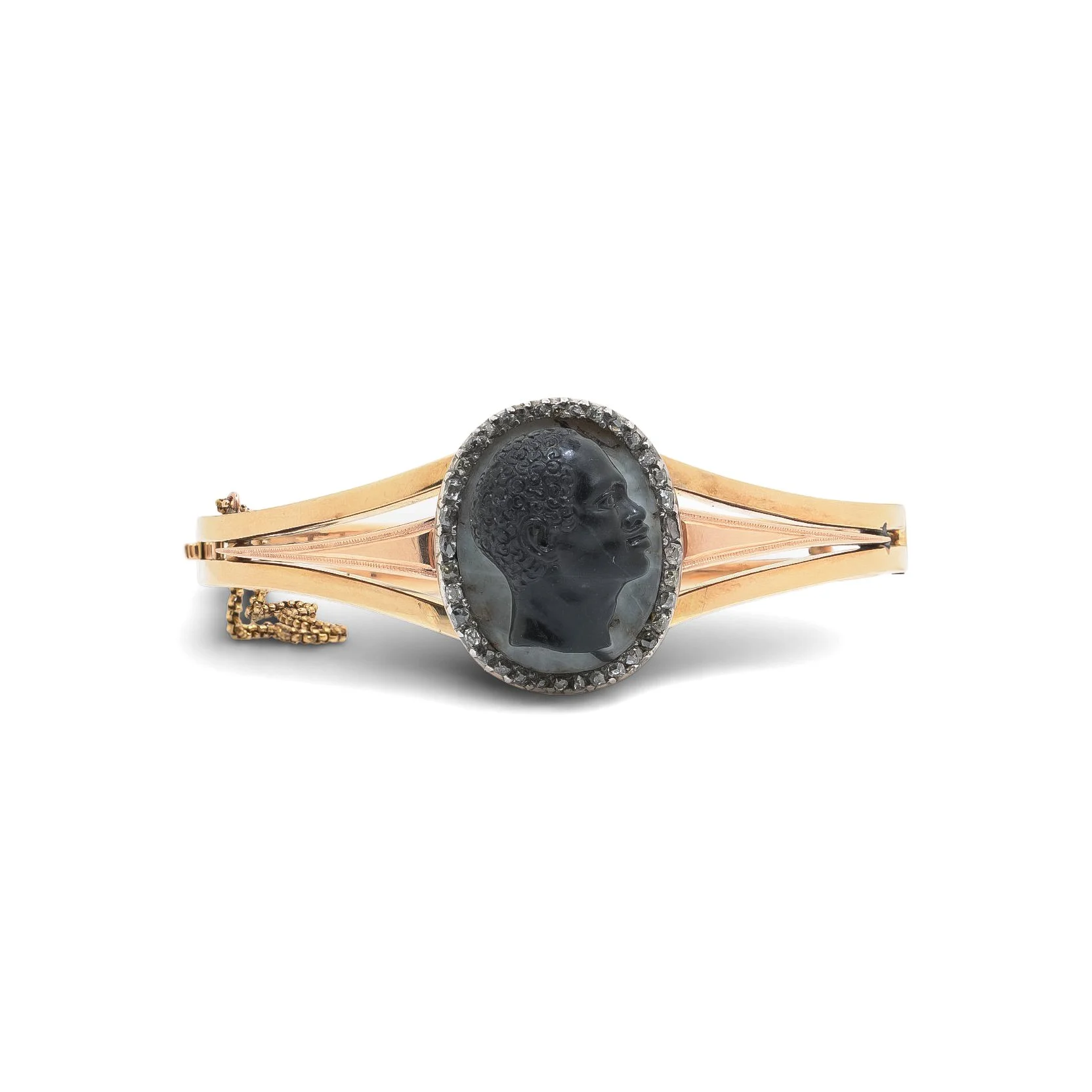
Cameo subjects carry meaning, and collectors pay for the rarer ones. Classical profiles of Athena, Diana, Apollo or Zeus reflect the era's reverence for antiquity. Bacchantes wreathed in grape vines symbolise pleasure and abundance. Rebecca at the Well — a bonneted figure by a well, hugely popular in the 19th century — signals faith and domestic virtue. Anonymous beauties are the most common and most affordable. Rarer and more valuable: gentlemen's profiles, black figures (Blackamoor cameos), mythological scenes with multiple figures, and habillé cameos set with real diamond jewellery.
What antique cameos are worth
Honest ranges, from handling these weekly. A pleasant late-Victorian shell cameo brooch in a gilt or low-carat frame: roughly £80–£300. A good shell cameo in a solid gold frame: £300–£800. Fine hardstone cameos, unusual subjects, signed carvings or diamond-set frames: £800 to several thousand. Exceptional pieces — museum-grade carving, important signatures, Georgian survivors in original mounts — go well beyond. What drives the price: material (hardstone > shell > moulded), carving quality, subject rarity, the frame's metal and craftsmanship, condition (no cracks or repairs), and provenance.
Think you own one? Find out what it’s worth.
Antique cameos are often worth far more than people expect — and modern buyers frequently underpay for them, pricing a fine hardstone carving as costume jewellery. Send us a photo for a free, no-obligation valuation from a specialist who trades cameos every week.
✓ Free expert valuation in 24h ✓ Same-day payment ✓ 10,000+ items traded · 5★ rated
Cameos from our collection
A live selection of the genuine antique cameos and related pieces we currently have in stock:
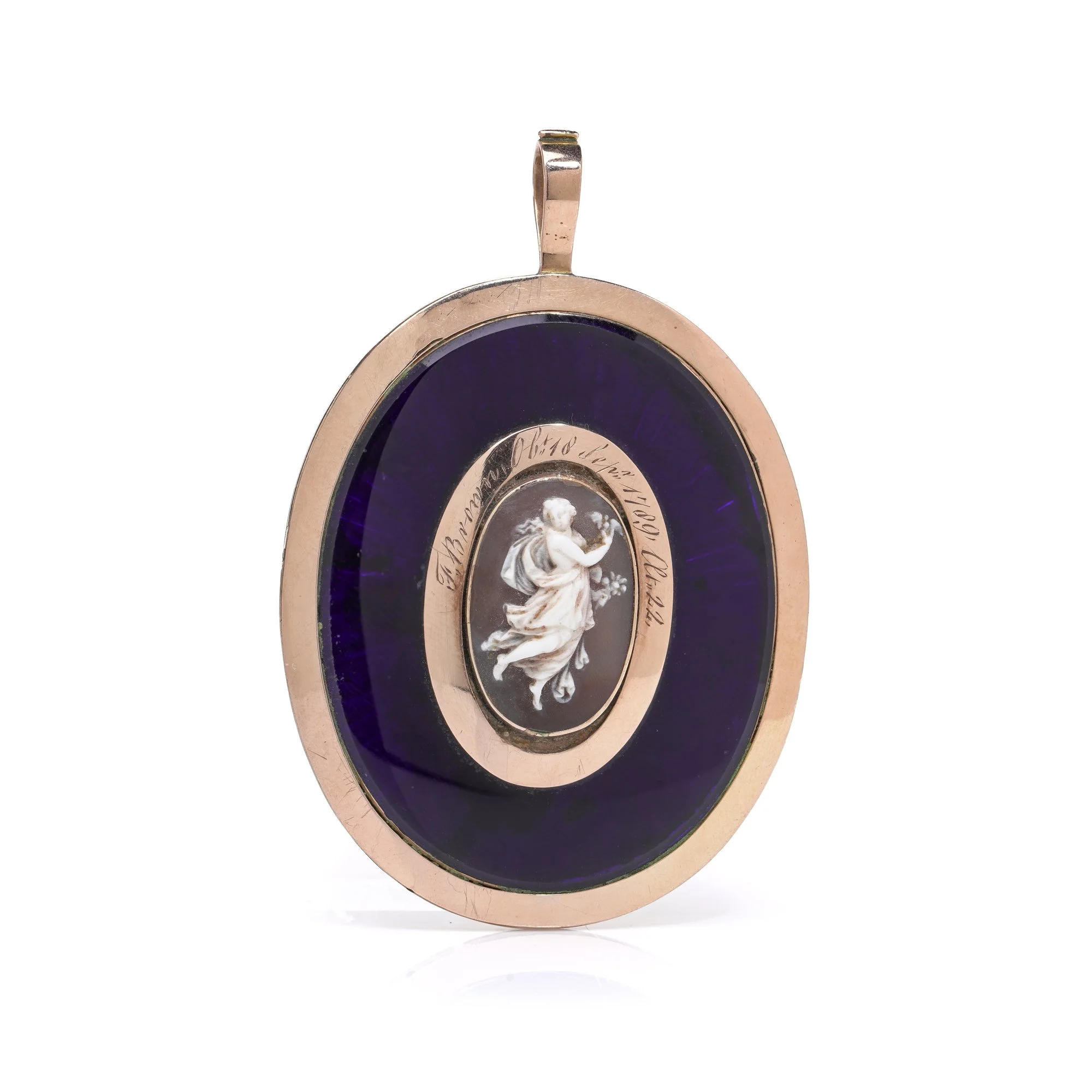
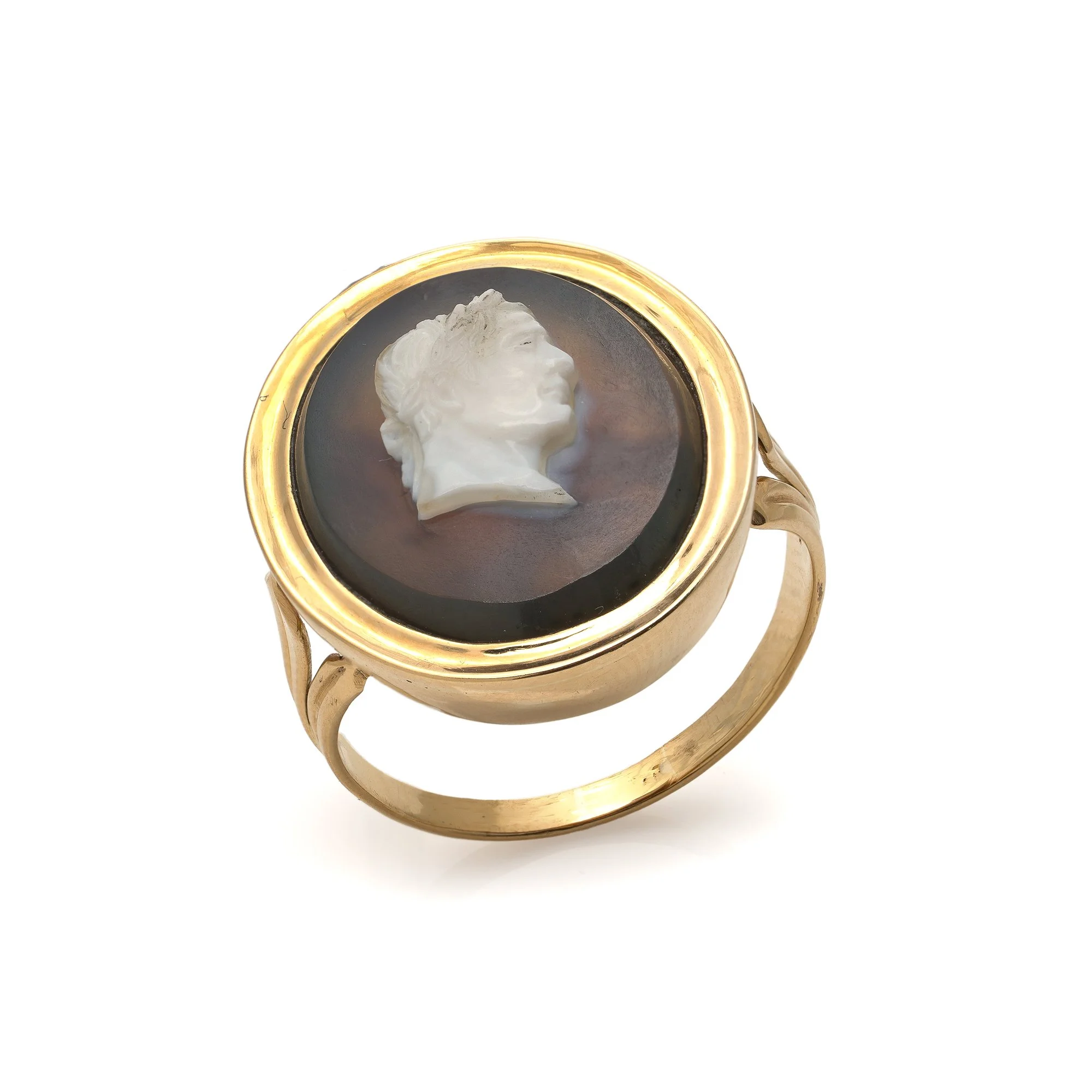
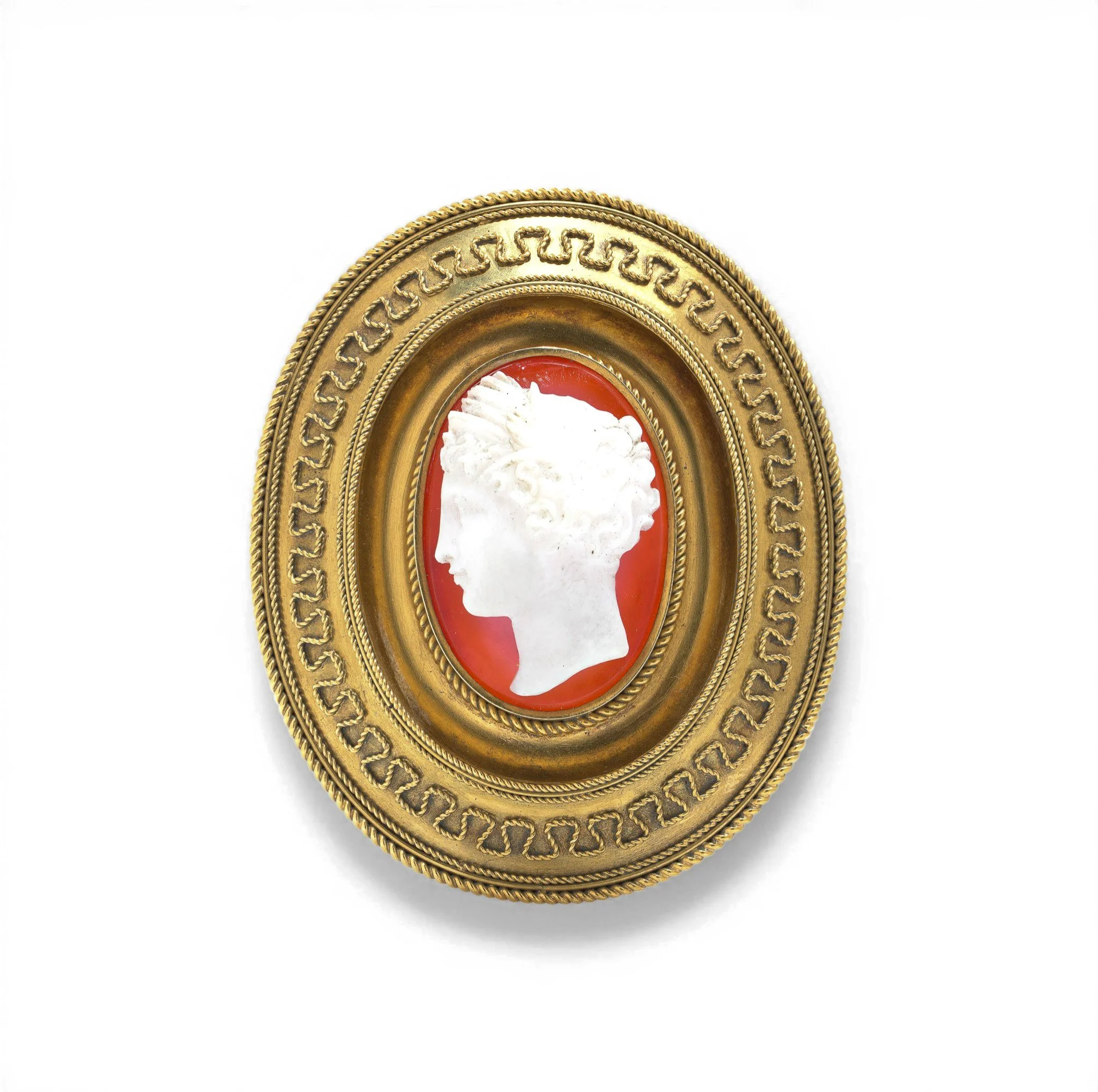
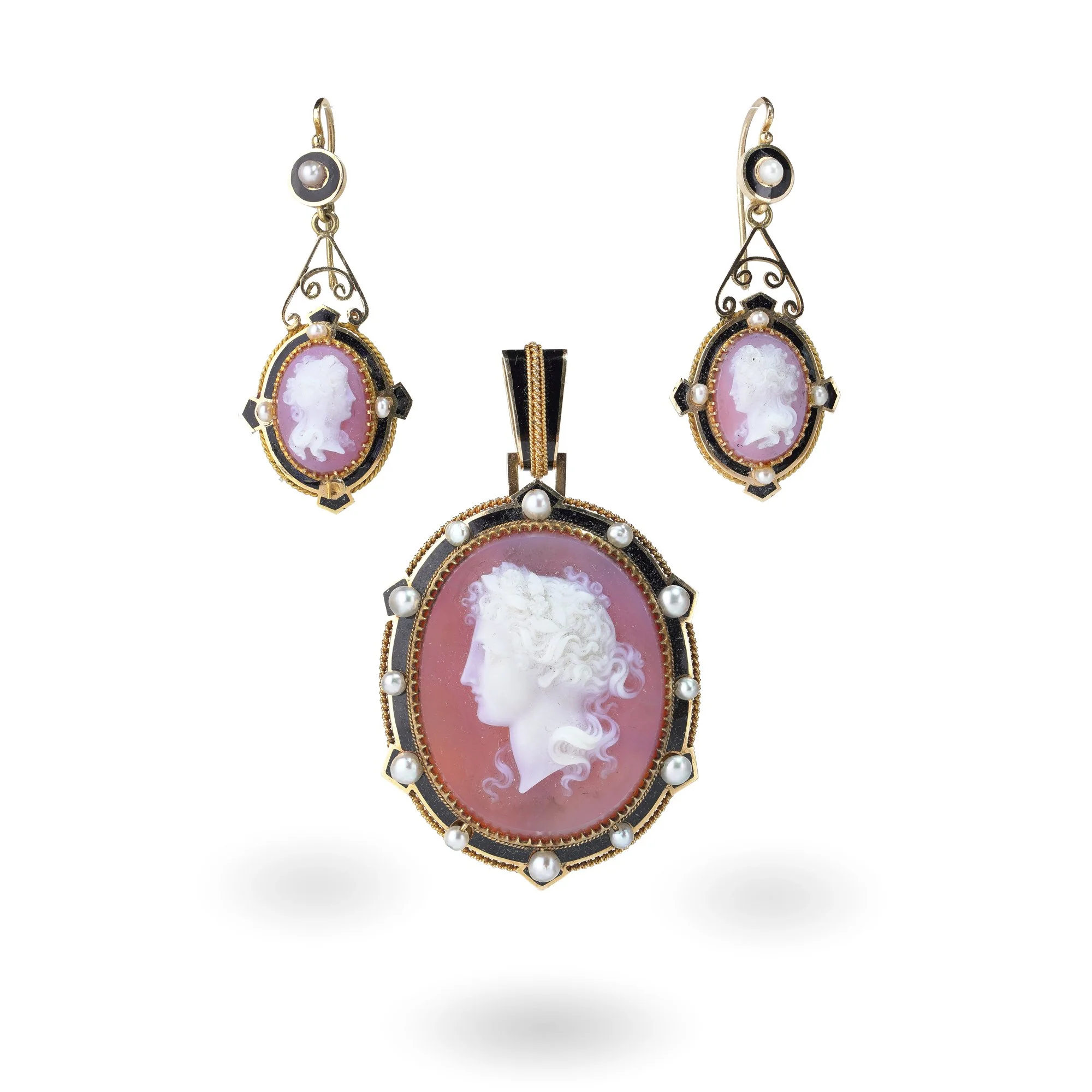
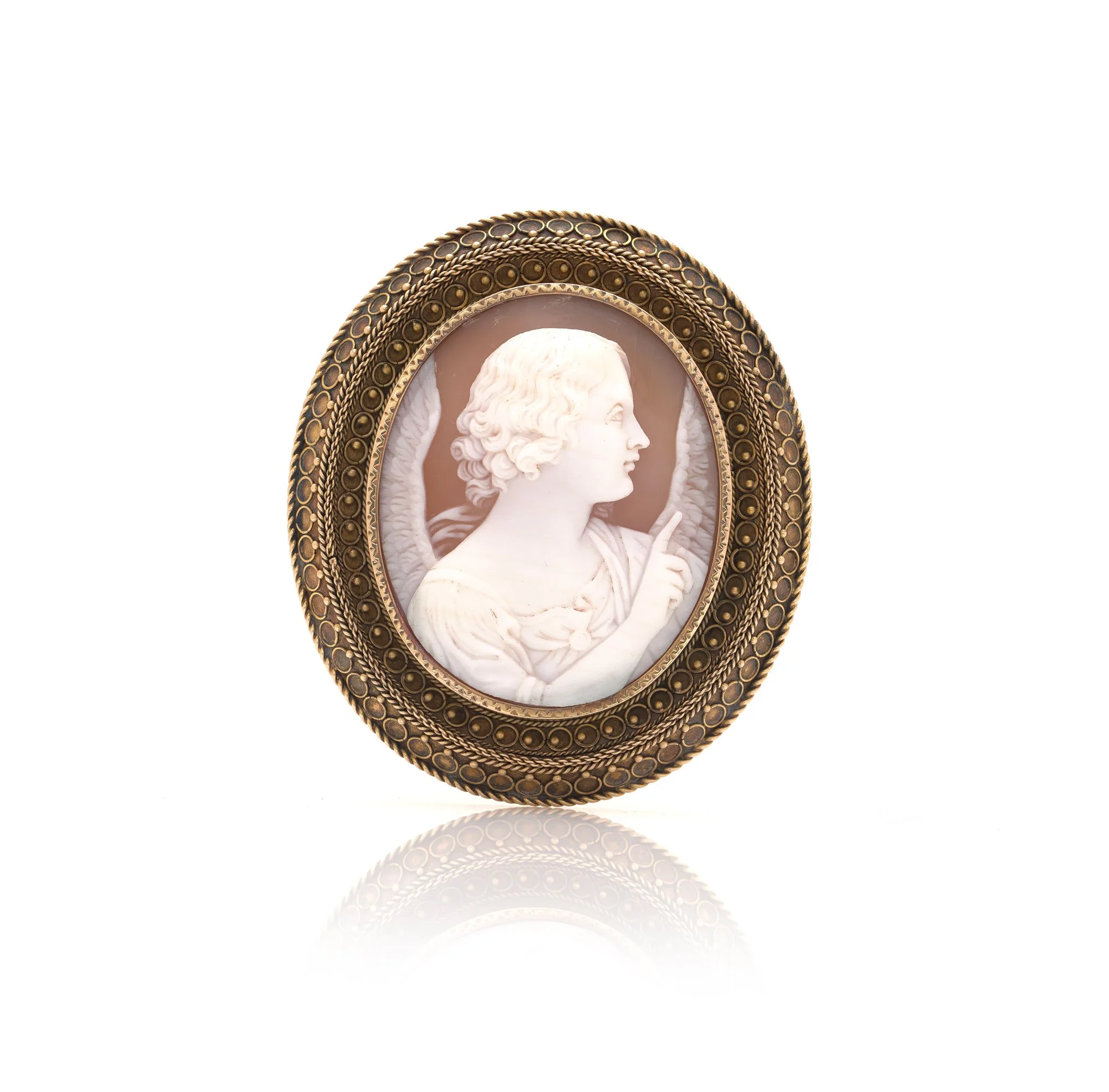
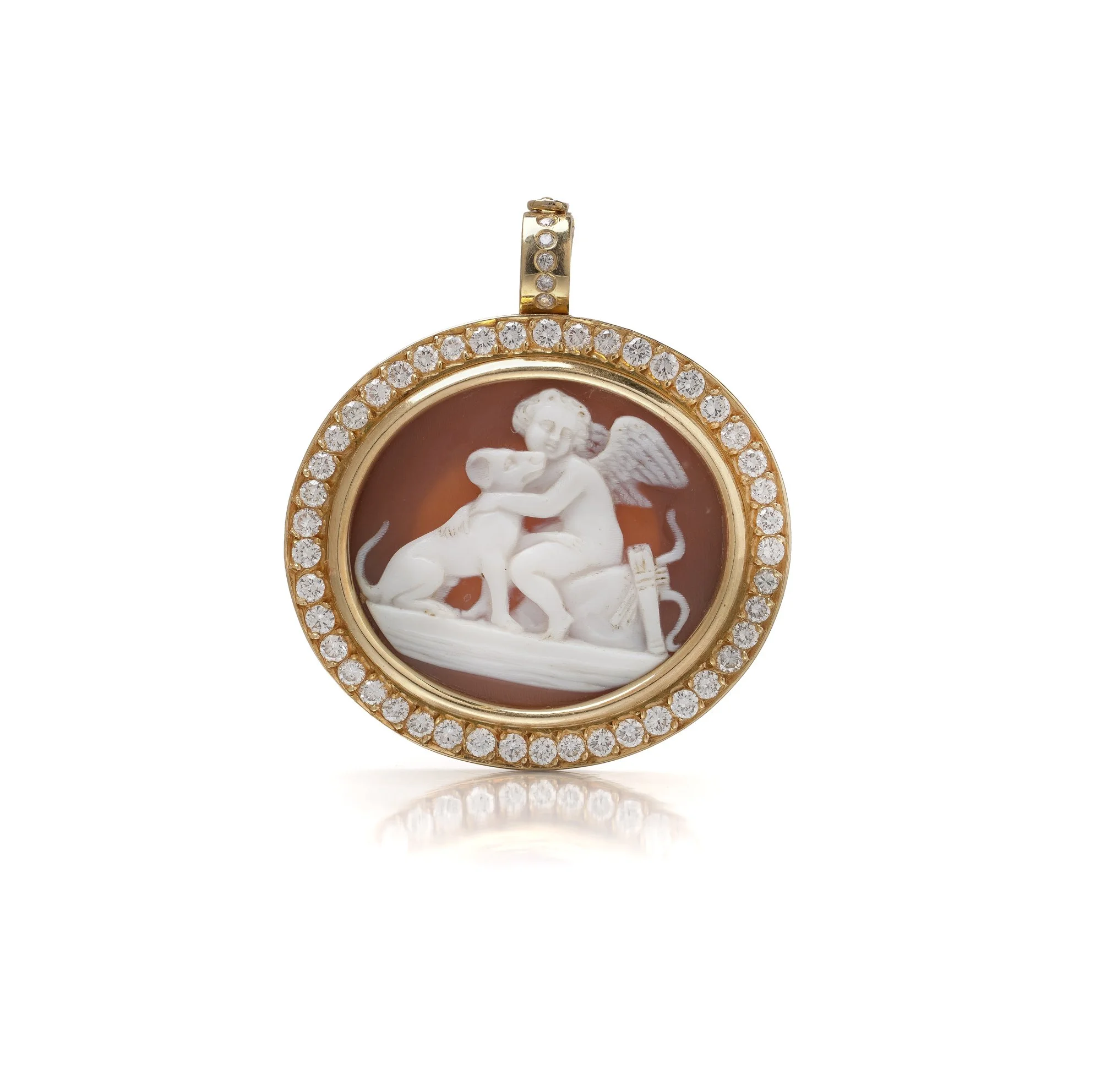
Explore more in antique & vintage brooches, Victorian jewellery and the full antique jewellery collection.
Caring for cameos
- Keep shell cameos away from heat and dryness — central heating and sunlight can crack shell over time. Store in a stable, slightly humid environment.
- Clean gently with a soft brush and, at most, a barely damp cloth. Never soak, never ultrasonic.
- Check the frame and catch periodically — a fine carving in a loose bezel is how heartbreaks happen.
- Handle by the frame, not the carving, and store flat and separate so nothing rubs the relief.
Explore Further
Frequently Asked Questions
Identifying, dating and valuing cameos.
What exactly is a cameo?
A cameo is a design carved in raised relief from a layered material — usually shell or hardstone like agate — so a pale carving stands against a darker background. The opposite technique, cut into the surface, is called an intaglio.
How can I tell if my cameo is real?
Look for fine, slightly irregular hand-carving marks under a loupe, a concave translucent back on shell (flat and cold on hardstone), and a cool feel against the skin. Moulded plastic fakes are uniformly smooth, warm quickly and may show seams or bubbles. Avoid destructive tests like hot pins — get a specialist opinion instead.
How old is my cameo?
Date it by subject, setting and findings. Classical scenes and closed-back high-carat frames suggest Georgian or early Victorian; anonymous pretty profiles with C-clasp pins are high Victorian; upturned noses, safety catches and '925' marks usually mean 20th century.
What is an antique cameo worth?
Typical UK ranges: £80–£300 for a pleasant Victorian shell cameo in a gilt frame, £300–£800 in solid gold, and £800 to several thousand for fine hardstone, signed or diamond-set examples. Material, carving quality, subject, frame and condition drive the price — a free specialist valuation gives you the exact figure.
Are cameos back in fashion?
Yes — cameos are riding the same 2026 antique revival as brooches, with heirloom jewellery searches up sharply. Victorian shell and hardstone cameos are being worn on lapels, chokers and chains by a new generation.
Do you buy cameos?
Yes. We buy genuine antique cameos — shell, hardstone, lava and coral — individually or as collections, at fair prices with same-day payment. Send a photo via the form or WhatsApp for a free valuation.