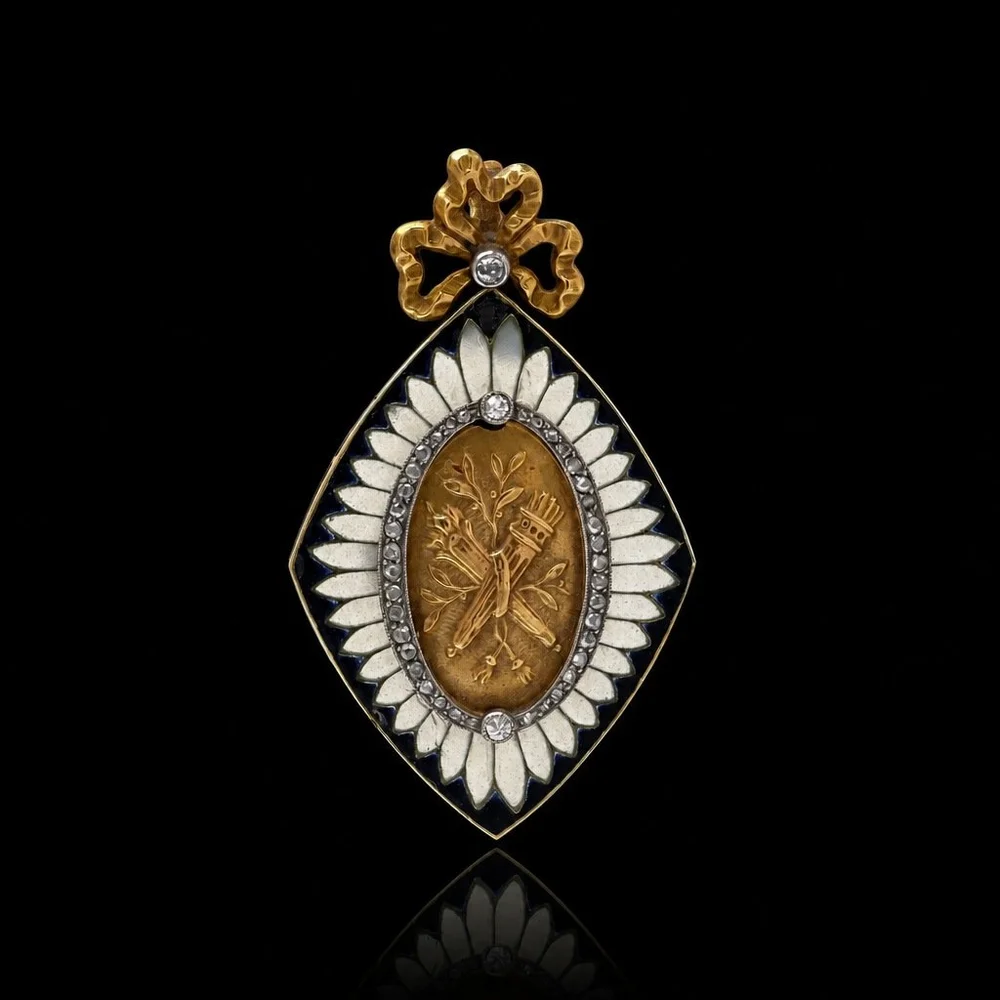
The main kinds of sentimental jewellery
| Kind | What it is | Period |
|---|---|---|
| Lover's eye | A miniature painting of a single eye, so only the giver and wearer knew whose it was | About 1785 to 1830 |
| Acrostic jewellery | Stones whose initials spell a word, such as Ruby, Emerald, Garnet, Amethyst, Ruby, Diamond for REGARD | Early 19th century onwards |
| Hair jewellery | A lock of hair behind glass, or hair woven into bracelets, brooches and chains | Georgian and Victorian |
| Lockets | Pendants opening to hold a portrait, photograph or hair | Georgian to Edwardian |
| Posy and gimmel rings | Rings inscribed inside with a motto, or made of linked hoops | 16th to 18th century |
| Mourning jewellery | Pieces worn in memory of the dead, often with black enamel or jet | Georgian and Victorian |
Read more on posy rings, gimmel rings, antique lockets and mourning jewellery.
Lover's eyes and acrostic jewels
Lover's eyes are miniatures of a single eye, painted on ivory and set in brooches, rings and pendants, so that only the giver and wearer knew whose eye it was. The fashion is linked to the Prince of Wales, later George IV, who sent Maria Fitzherbert a miniature of his eye in the 1780s (Wikipedia).
Acrostic jewellery spells a message in the initials of its stones. A REGARD ring sets a ruby, emerald, garnet, amethyst, ruby and diamond; a DEAREST ring a diamond, emerald, amethyst, ruby, emerald, sapphire and topaz. The idea began in France in the early 19th century and spread to England, where it remained popular through the Victorian era (Lang Antiques).
Hair, hearts, hands and other motifs
- Hair: kept behind glass in lockets and rings, or woven into bracelets, watch chains and brooches, as a token of love or remembrance.
- Hearts: single, double or crowned hearts for love; a padlock or key for a love kept safe.
- Hands: clasped hands for faithfulness, as in fede rings; a hand holding a wreath or flower.
- Snakes: a serpent biting its tail for eternal love.
- Forget-me-nots: small blue flowers, often in turquoise, asking to be remembered.
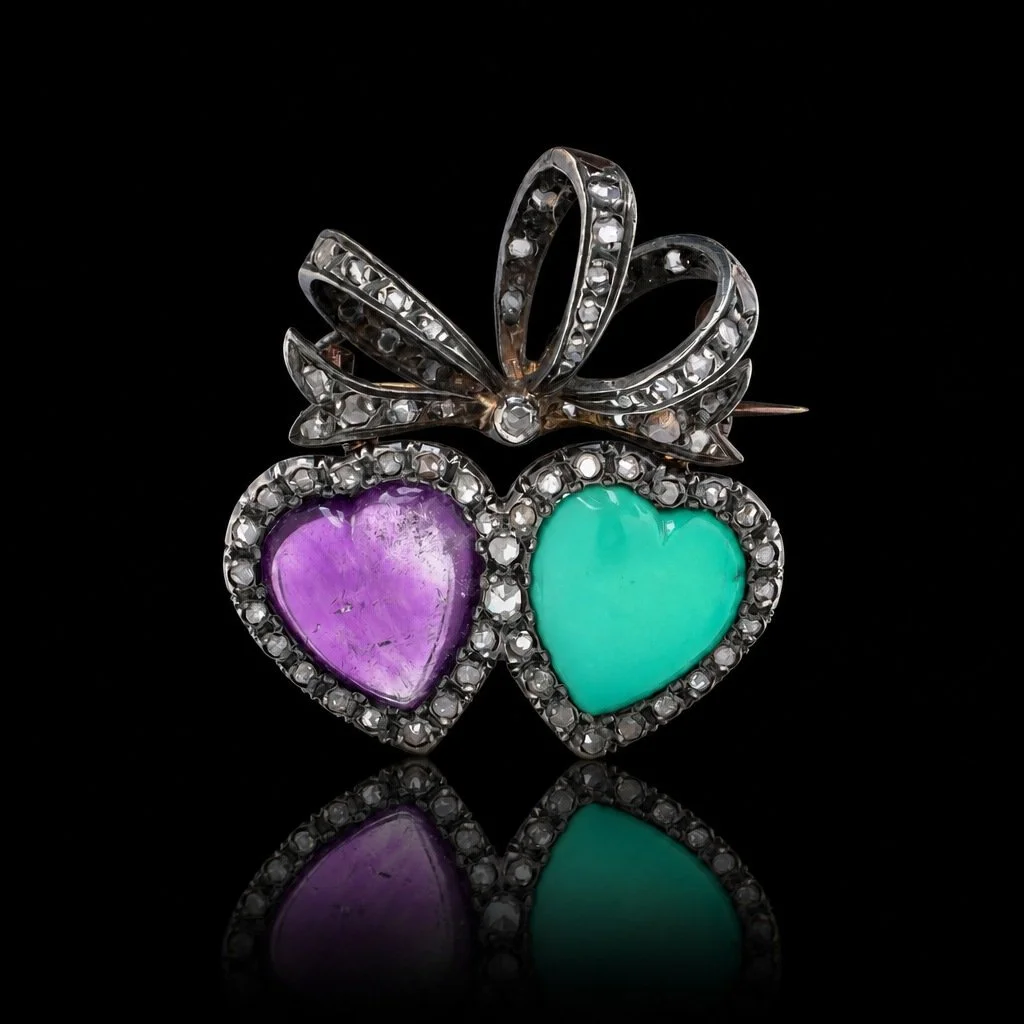
Hearts
Our Victorian double heart brooch and the Victorian sentimental locket carry the language of love.
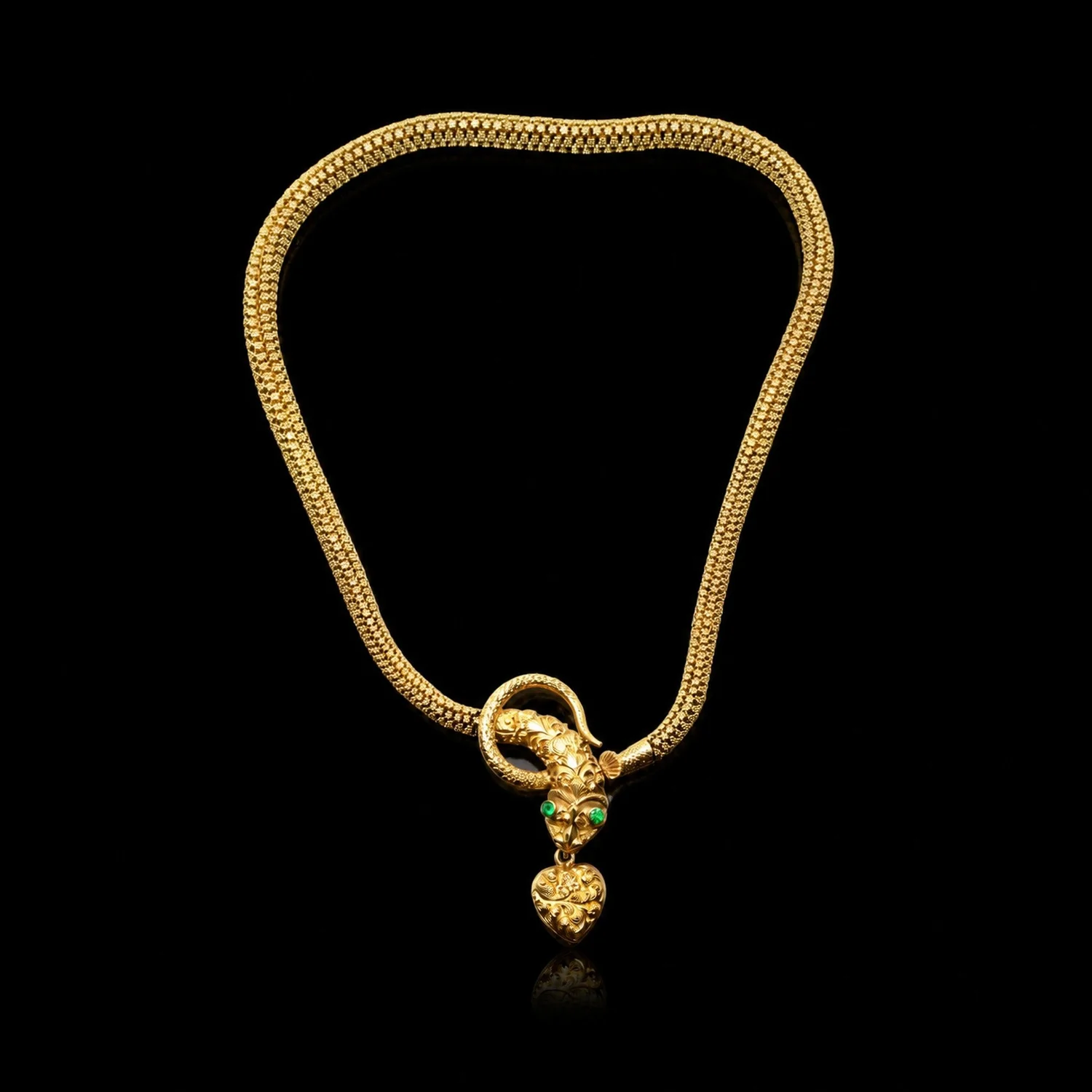
Snakes and lockets
The Georgian snake necklace with heart locket joins two symbols, eternity and love; see snake jewellery.
Georgian and Victorian jewellery in stock
Shop all 80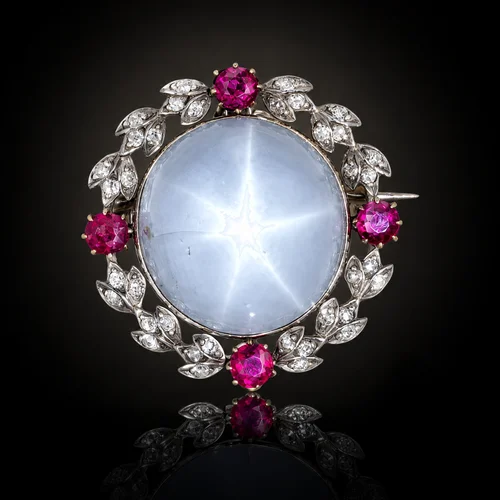
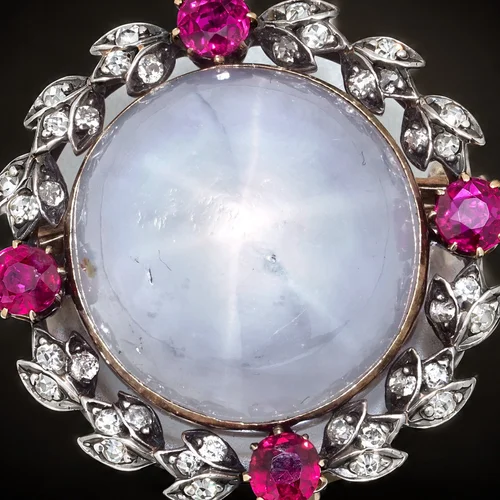 Victorian 20 ct Star Sapphire, Ruby and Diamond Wreath Brooch£5,950
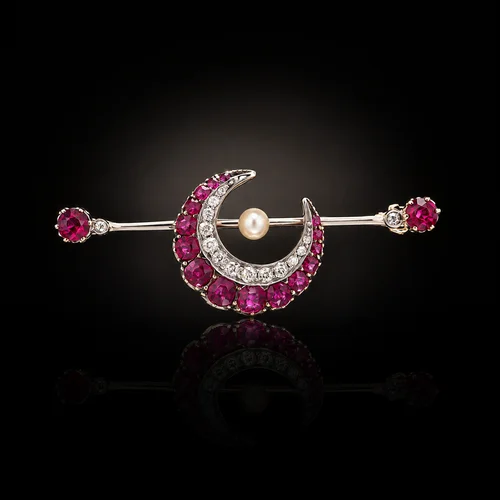
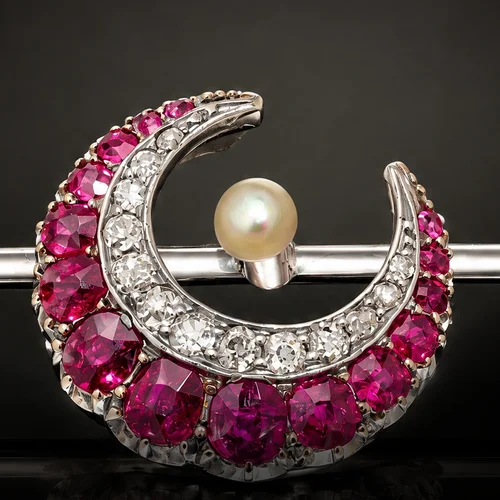 Victorian Natural Ruby, Diamond and Pearl Crescent Bar Brooch£4,950
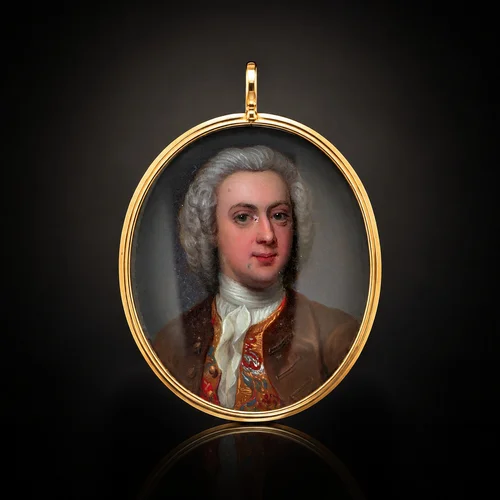
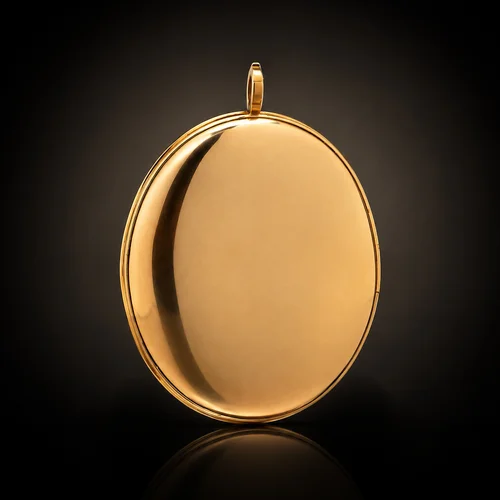 19th Century 20KT Gold Portrait Miniature Pendant in Original Case£2,985
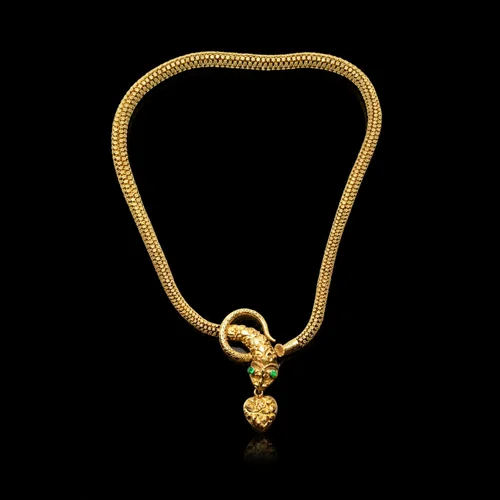
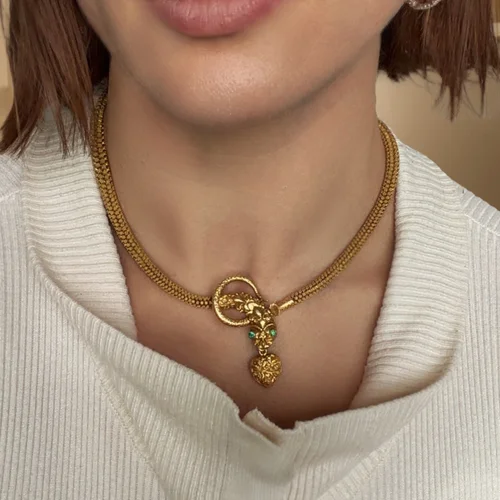 Georgian 22KT Gold Snake Necklace with Heart Locket£26,850
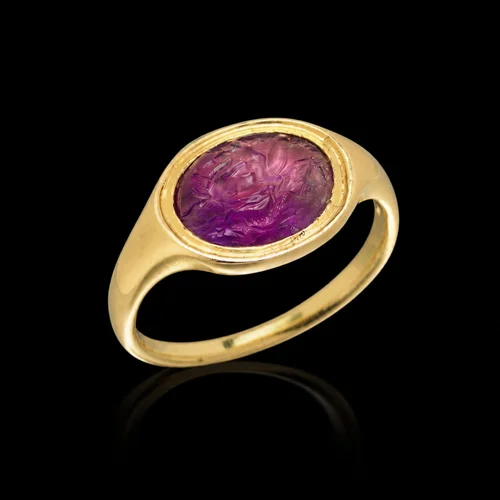
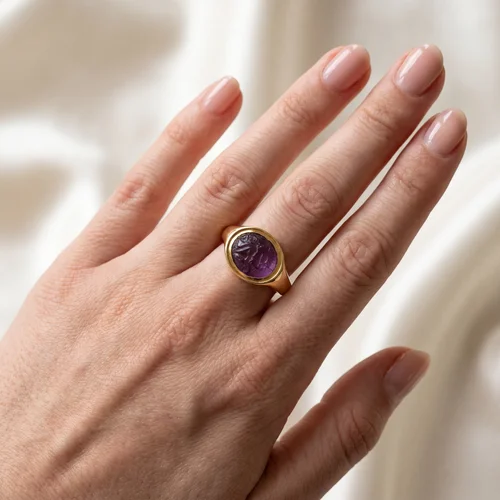 19th Century 18KT Gold Carved Amethyst Cameo Ring, Bearded Classical Head£15,950
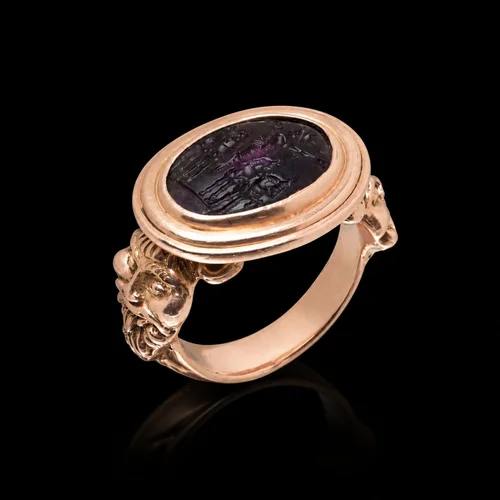
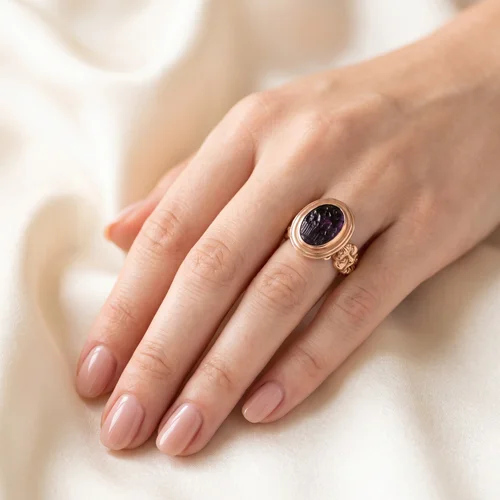 19th Century 10KT Rose Gold Amethyst Intaglio Ring of Helios in a Quadriga£14,950
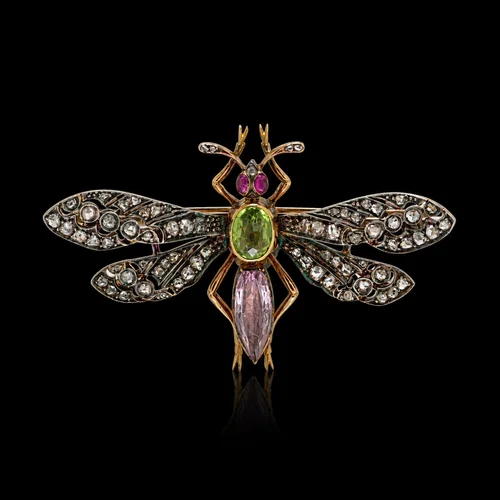
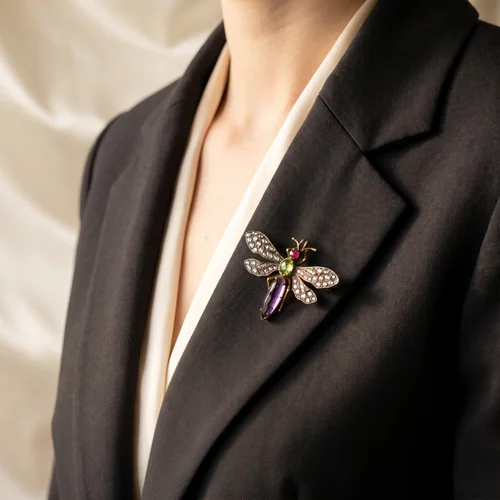 Victorian 9KT Gold and Silver Wasp Brooch, Peridot, Amethyst, Ruby and Diamonds£3,950
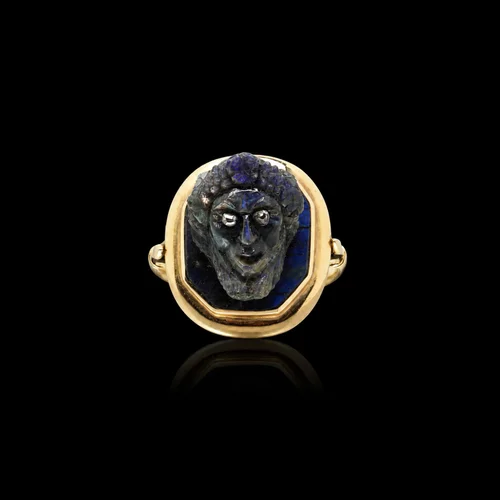
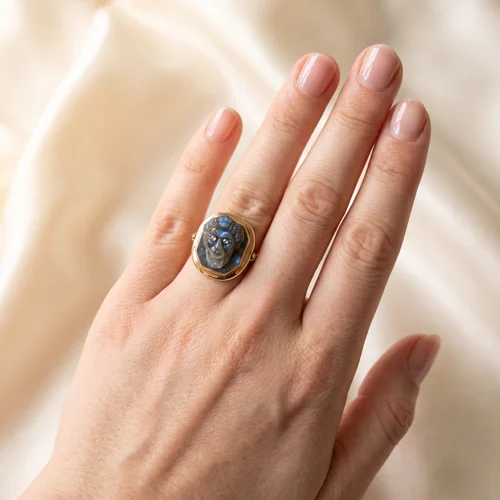 18KT Gold Carved Labradorite Satyr Ring with Diamond Eyes£9,850
Buying sentimental jewellery
- Read the inscription
Names, dates and mottoes inside rings and on the backs of lockets add history; check that they are original, not later engraving.
- Check the glass
Hair compartments and miniatures sit behind glass or crystal; cracked or replaced glazing should be described.
- Confirm the stones
In acrostic pieces, check that every stone is present and of the right kind; paste was sometimes used in place of gems.
- Keep it dry
Hairwork and painted miniatures must not get wet; clean only the metal with a dry cloth.
Browse Georgian and Victorian jewellery.
Selling sentimental or mourning jewellery? Send photographs for a free valuation. Post it to us by Royal Mail Special Delivery or book a free insured FedEx collection, or bring it to an appointment in Mayfair, London, or Braintree, Essex. You are paid the same day after inspection, by bank transfer.