Film and TV Props: What Makes a Screen-Used Prop Valuable
Why there is more than one Shining axe, what screen-used really means, and the paperwork that turns a studio object into a lot at Propstore or Bonhams.
A film prop's auction value depends on five things:
- The scene and the star. Pieces seen in famous scenes draw the most interest.
- The version. Hero, stunt, special effects or background: productions make several.
- Screen-matching. Matching its own marks to frames of the film is the strongest proof.
- Provenance. Studio letters, crew paperwork, tags and an unbroken chain of ownership.
- Condition. Leave wear from filming alone; cleaning and repainting destroy evidence.
.jpg)
In this article
- Latest: Kubrick's archive at Bonhams and a Bond suit at Propstore (October 2026)
- Why there is more than one Shining axe
- Screen-used, production-made or replica: the words that decide value
- Screen-matching: the strongest proof
- Provenance: the paperwork that proves it
- When the prop is a watch or a piece of jewellery
- Red flags: fakes, replicas and stories without paper
- Screen-worn costumes and wardrobe
- Have a crew gift or a studio item? What to do
- Questions
Latest: Kubrick's archive at Bonhams and a Bond suit at Propstore (October 2026)
On 6 October 2026 Bonhams announced that it will sell items from Stanley Kubrick's personal archive, the first time they have come to auction. The sale is in London on 3 February 2027, after a free exhibition at Bonhams New Bond Street from 18 January, with an online sale closing on 4 February.
- The Star Child from 2001: A Space Odyssey, the headline lot, estimated at £600,000 to £800,000.
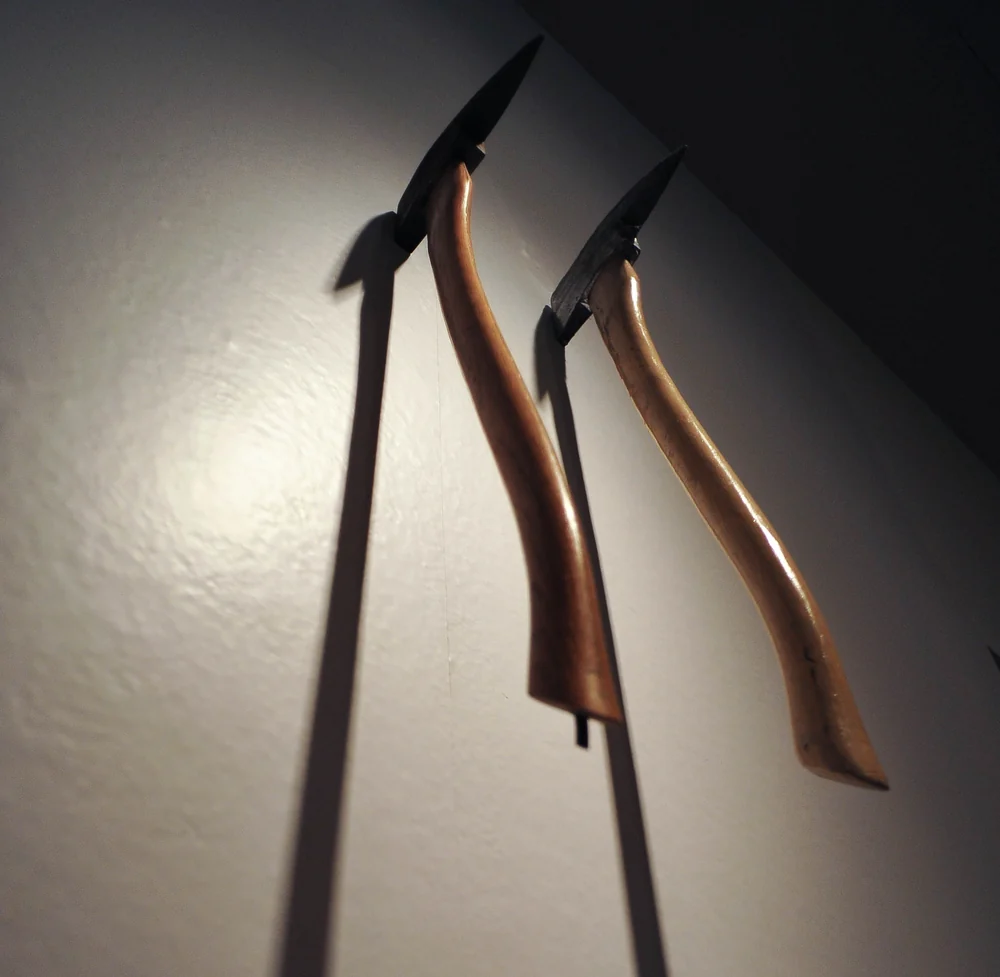
- The special effects axe Jack Nicholson used in The Shining, estimated at £30,000 to £50,000.
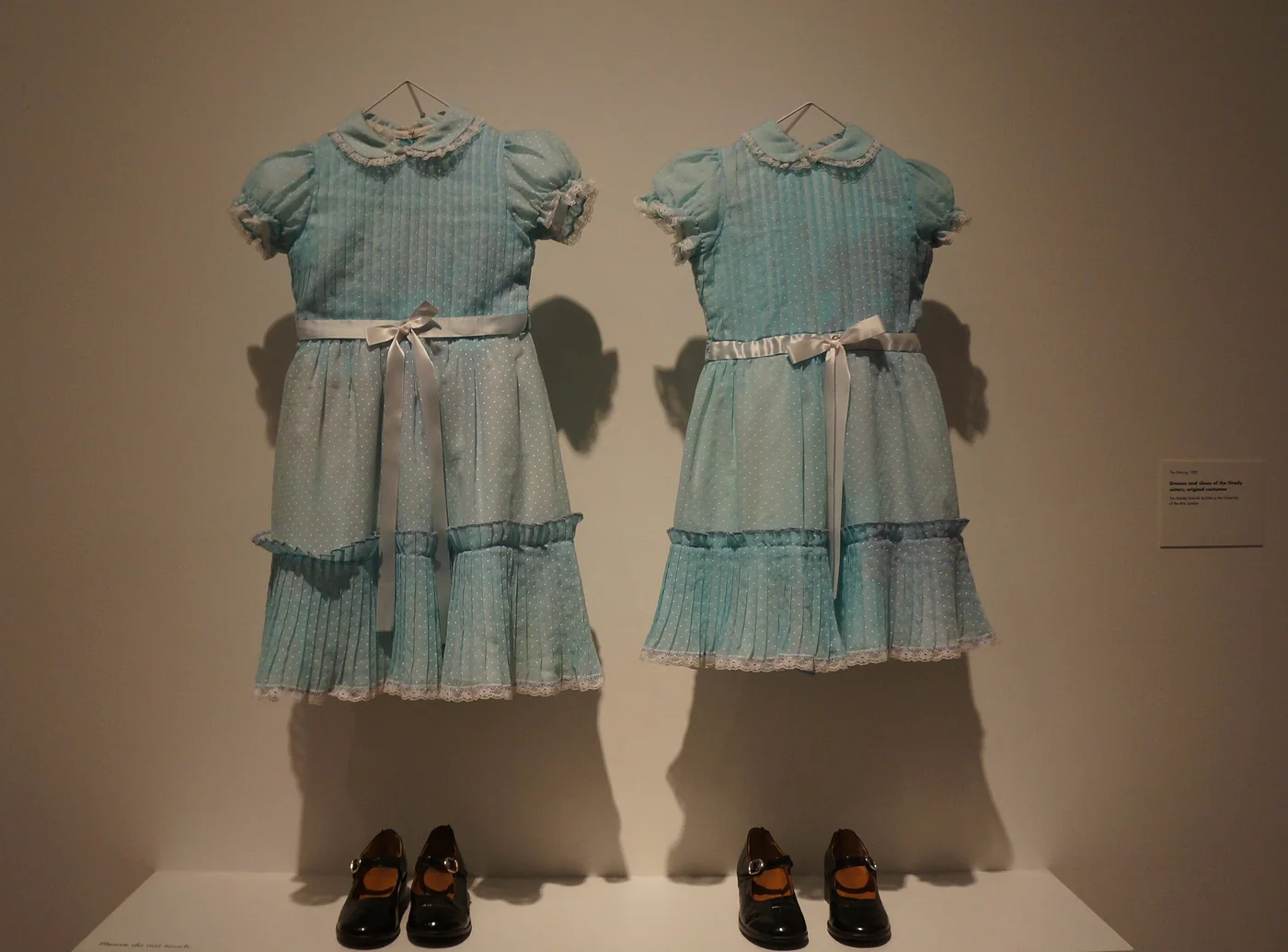
- The twins' blue dresses from The Shining, £40,000 to £60,000, alongside annotated scripts and his director's chair.
The same week Propstore opened an online James Bond sale of 400 lots, bidding until 27 October 2026. It is led by the custom grey Tom Ford suit Daniel Craig wore for the opening chase across Istanbul in Skyfall, with its shirt, tie and cufflinks, estimated at £20,000 to £40,000.
Both sales raise the questions this guide answers: why there is more than one of almost everything, what makes a prop screen-used, and what proof a buyer needs.
Why there is more than one Shining axe
.jpg)
Hero, stunt and special effects
Propstore puts it plainly: “The filmmaking process requires that multiples be made of all principal props and costumes.” A star's weapon usually exists as a hero version for close-ups, safer stunt versions and versions rigged for an effect.
The Shining shows how far that goes. At least four axes from the film have been offered for sale in seven years, and each can be genuine.
- The wooden hero axe
A custom-made fire axe, strong enough to break through the doors. A crew member bought it at a sale of the film's assets after filming, meaning to chop wood with it, and kept it unused for decades. Propstore sold it in London in 2019 for £172,200.
- The lightweight axe
Polyfoam, faux wood and a metallised blade, made so Nicholson could carry it safely for long takes during the final rampage. It sold at Propstore on 5 December 2025 for £176,400, a little more than the hero.
- A blood-effect axe
McTear's in Glasgow offered a special effects axe in June 2026, built to burst hidden blood bags in one scene: one of three effects axes made for the film, its listing said.
- Kubrick's own
The special effects axe in the director's archive, now at Bonhams.
Collectors usually rank hero pieces above stunt ones, but the lighter axe made slightly more than the wooden one: what a prop did in the famous scenes counts, not only how well it was made.
Screen-used, production-made or replica: the words that decide value
Catalogues use a precise vocabulary, and not every seller uses it the same way. Find out which of these a piece really is.
| Term | What it means | What to ask |
|---|---|---|
| Hero | The best, most detailed version, made for close-ups and the star | Which scenes, and how it is documented |
| Stunt or special effects | A safer or rigged version: rubber, foam, breakaway or fitted with an effect | Which shots it was made for |
| Background | Made quickly and cheaply for the edge of the frame or for extras | Whether it can be placed in the film at all |
| Made for production | Made for the film, but possibly a spare or never used | Whether it was used, or only made |
| Screen-used | Filmed and in the final cut. Often used loosely | What proves it |
| Screen-matched | Its unique marks have been matched to frames of the film | The frames and the marks |
| Replica | A copy, licensed or fan-made, often cast from an original | Who made it, and when |
_(cropped).jpg)
When the prop is something you can buy in a shop
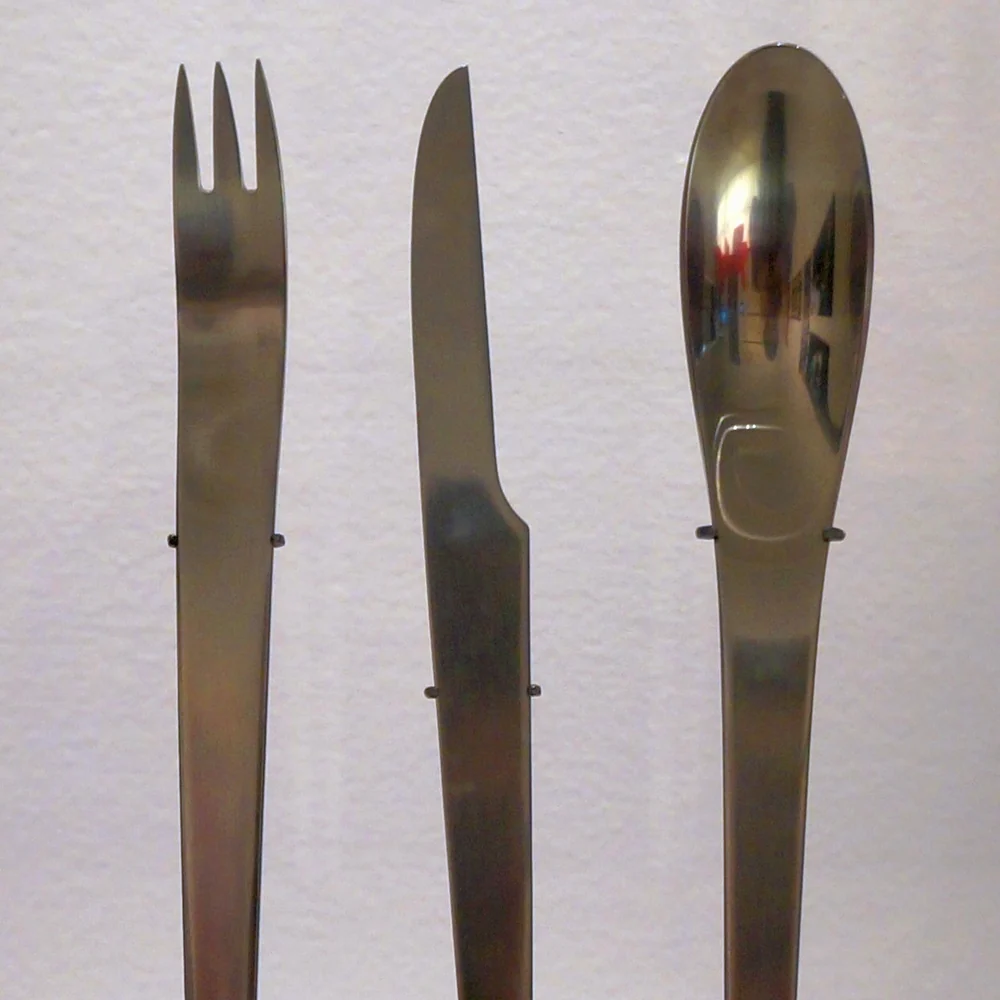
The space travellers in 2001 eat with cutlery Arne Jacobsen designed in 1957 for the SAS Royal Hotel in Copenhagen. Georg Jensen still makes it.
That is the problem with bought-in props: furniture, clothes, cars and tableware exist in thousands of identical copies. Nothing on the object can prove it was the film's. Only paperwork and an unbroken chain of ownership can.
Screen-matching: the strongest proof
Screen-matching means finding the object's own marks in frames of the finished film: the grain of the wood, a chip in the paint, a scratch, a stain. Propstore gives the examples of wood grain on a pistol grip and sweat stains on a hat. Close-ups make it possible; wide shots, dark scenes and digital effects make it harder.
.jpg)
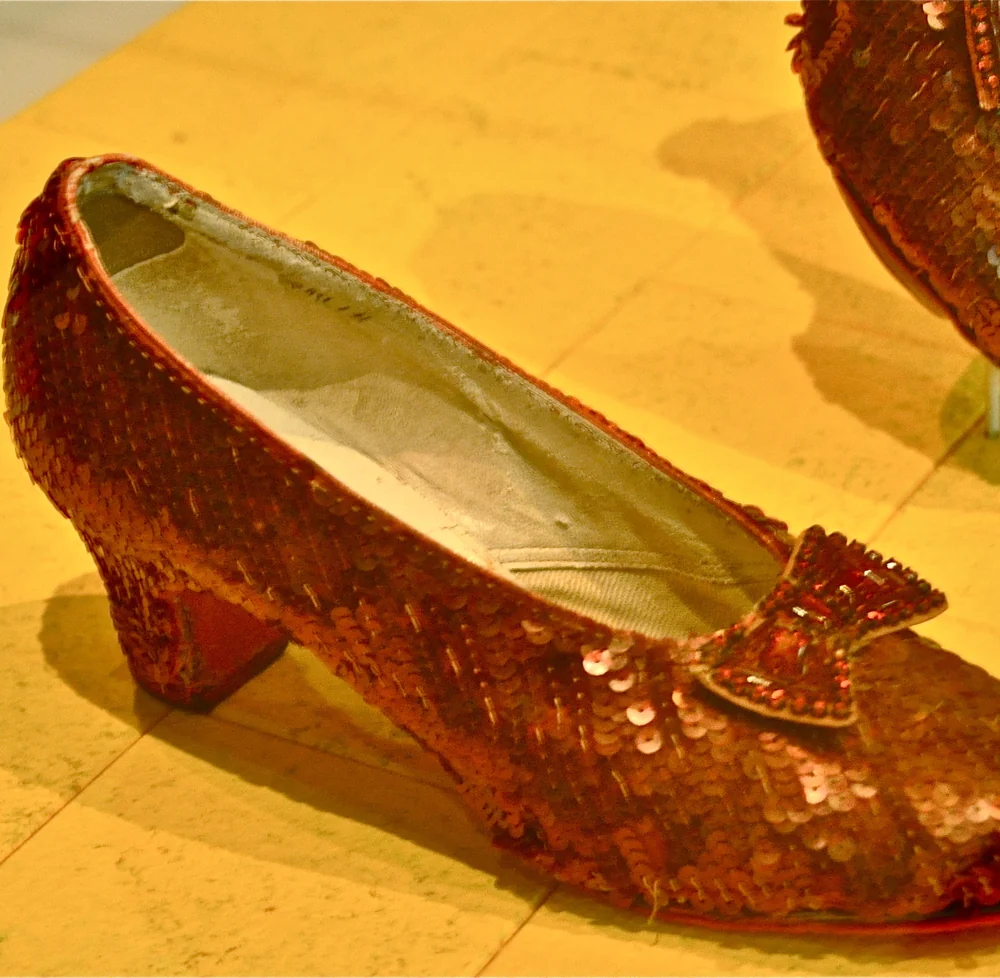
The ruby slippers: four pairs, two of them swapped
The Smithsonian's label calls its pair “one of several pairs used during filming”. Another pair was stolen from the Judy Garland Museum in Minnesota in 2005 and recovered by the FBI in 2018.
The museum's conservator, Dawn Wallace, compared them for two days. The Smithsonian's own pair turned out to be mismatched, a 5C and a 5BC, and the recovered shoes were their mates. As she noted, eighty years of ageing is hard to fake.
On 7 December 2024 the recovered pair sold at Heritage Auctions in Dallas for $32.5 million, one of four surviving pairs Judy Garland wore in the 1939 film. Guinness World Records lists it as the most expensive pair of shoes from a film ever sold at auction.
Provenance: the paperwork that proves it
Most props cannot be screen-matched, so their history has to be proved on paper. Specialists weigh the evidence roughly like this:
Unique marks on the object found in frames of the finished film.
Studio release letters, wardrobe or asset tags, rental records.
Bought at the studio sale, kept by the crew member, or from the family archive.
A director, star, designer or prop master writing about this exact piece.
Only as strong as the firm that issued it and the evidence behind it.
Worth writing down, but on its own it proves nothing.
Documents that help
- Studio or production letters releasing or gifting the item.
- Crew paperwork: call sheets, crew lists, contracts or payslips that prove the owner worked on the production.
- Tags and labels: wardrobe tags naming the actor, character or scene, and asset tags on props.
- Photographs of the item on set, or with the crew member at the time.
- Rental records: armourers' agreements list each gun by serial number.
The chain matters as much as the paper. Several pairs of ruby slippers left MGM around its 1970 sale of costumes and memorabilia; the hero axe came from a sale of the film's assets.
A certificate of authenticity is only as good as whoever issued it. Propstore notes that there are no universally accepted third-party authentication services for props and costumes, and a studio certificate counts most in the hands of its first owner.
Every piece is different. If your film or TV item is jewellery or a watch, send us a few photos and we will tell you what it is worth, free and with no obligation.
Own a piece with screen history? Get a free valuation
When the prop is a watch or a piece of jewellery
.jpg)
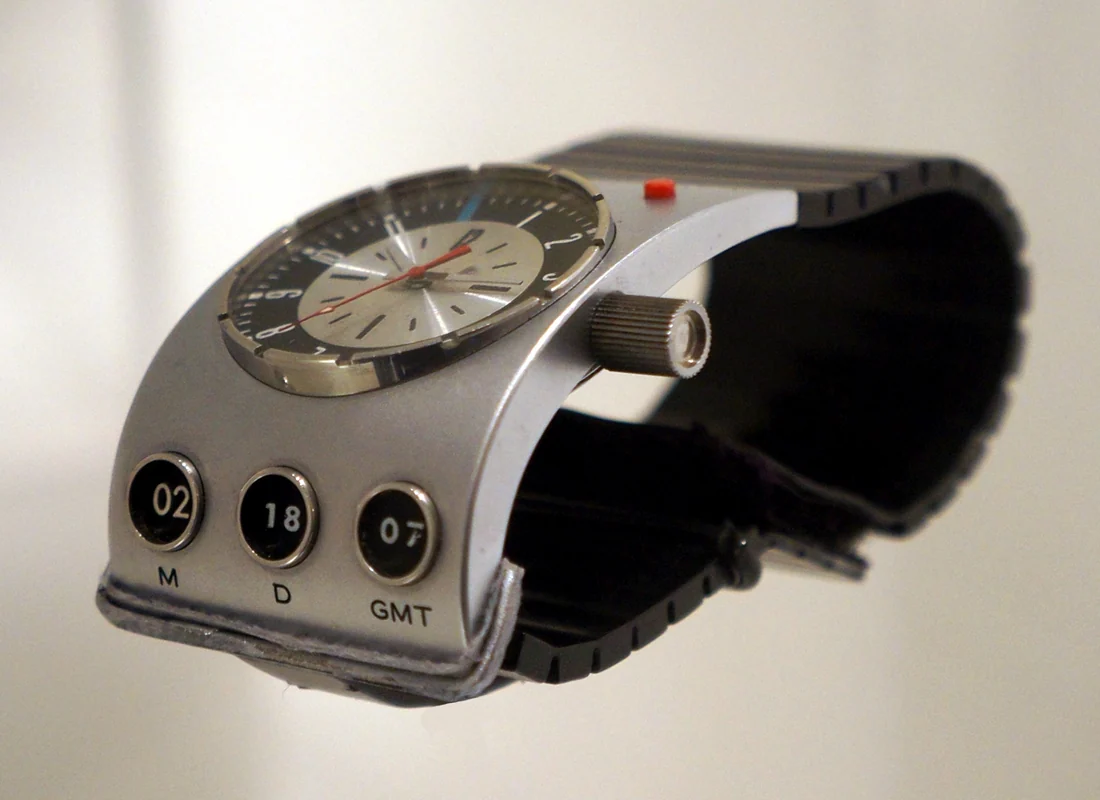
Kubrick asked Hamilton to create futuristic clocks and watches for 2001. The designs were too complex to produce at the time, Hamilton says, so “even those seen in the film are only prototypes”. About forty years later the company made the watch for sale, limited to 2,001 pieces.
That is the line between a prop and a product. The same applies to any watch or jewel seen in a film: owning the same model is not owning the one on screen, unless the paperwork says so.
We value and buy jewellery, watches, gold and silver, with or without a film story. See our watches, selling a vintage watch and the Rolex value guide; for jewellery, read about signed jewellery and how to tell costume jewellery from real.
Red flags: fakes, replicas and stories without paper
The famous titles are the ones most copied. Start, as experienced collectors do, by assuming a piece is not original until the evidence proves it is.
- A certificate with nothing behind it
Anyone can print a certificate. Ask who issued it, what it rests on and whether that firm still stands behind it.
- A replica that has become “original”
Replicas are often cast from original props and are sometimes passed off as the real thing.
- Loose words
“Screen-used” is often used without proof, and “production made” can include replicas. Ask what the evidence is.
- An autograph added later
A signature added at a convention or by post does not make a prop screen-used, and famous signatures are widely forged: see how to spot fake autographs.
- Fresh paint or new parts
Repainting, cleaning and repairs remove the scratches and wear a screen-match depends on.
- A one-off with no history
A unique piece with unknown origins and no chain of ownership is the classic warning sign.
Screen-worn costumes and wardrobe
.jpg)
More than twenty suits for one chase
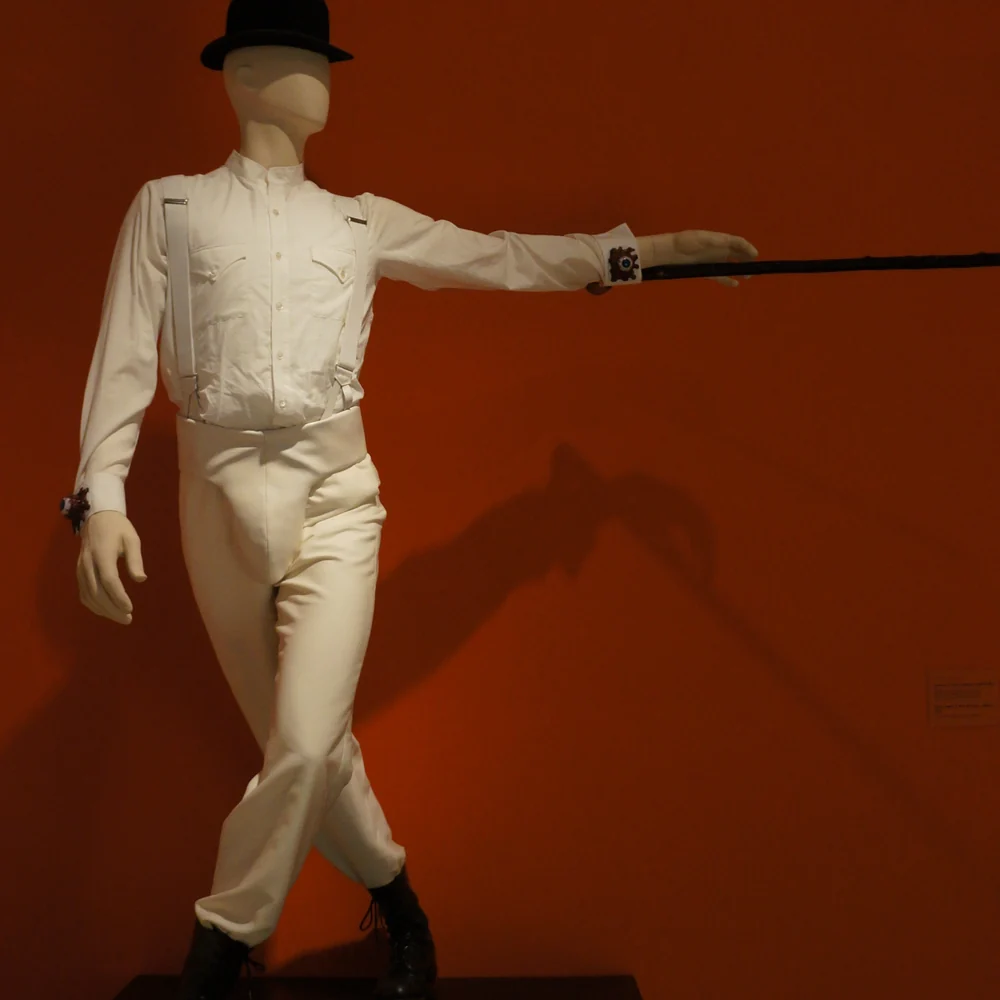
Costumes are made in multiples too. When Christie's sold a grey Tom Ford suit from the Skyfall pre-title chase in 2022, its catalogue said more than twenty suits were needed for that sequence, in different states of damage. The one it sold was worn near the start and was fairly unscathed.
Its embroidered tag read “Daniel Craig Bond 23”. Tags like that, alterations that fit the actor and wear that matches the screen are what specialists look for.
Keep a costume together, as the Propstore suit is, with its shirt, tie and cufflinks. Do not clean, alter or repair anything, and keep every label, however scruffy.
Have a crew gift or a studio item? What to do
Crew gifts are things a production made to thank its cast and crew: jackets, caps, mugs, framed prints. They are collectable, but they are not props. For a prop or costume that went home with a crew member, the paperwork decides what it is.
- Leave it as it is
Do not clean, repaint, repair, re-sign or reframe anything before a specialist has seen it.
- Photograph everything
Every side, every tag and label, every mark and scratch, in daylight.
- Gather the paper
Letters, call sheets, crew lists, contracts, payslips, photographs on set, and any receipt from a studio sale.
- Write the story down
Who had it, which production, which scene, and how it left the studio, while people who remember are still around.
- Ask a specialist
Specialist entertainment auction houses such as Propstore offer a no-obligation valuation form, and Bonhams has a popular culture department.
See also our attic finds guide, rock and pop memorabilia, royal memorabilia value and selling through a dealer or at auction.
How we can help
Collections with film pieces often hold other things of value. We give free valuations and buy directly: antique jewellery, gold, watches, silver and graded Pokémon cards. For an estate, see inherited jewellery: what to do and our probate guide.
- Send photos for a free valuation, or call 01376 334482.
- WhatsApp us pictures of the piece.
- Visit by appointment at 47 Maddox Street, Mayfair, or in Braintree, Essex: contact us to book.
Request a free valuation
- Productions make several versions of every principal prop and costume, so more than one can be genuine.
- Screen-matching and production paperwork are the strongest proof; a certificate alone is not.
- Leave wear, tags and labels alone; cleaning and repainting remove evidence.
- We value jewellery, watches, gold and silver free from photos, film story or not.
Questions we are asked
What makes a film prop valuable?
The film and the scene it appears in, the version (hero, stunt or background), how well its history is documented, whether it can be screen-matched, and its condition. Paperwork can matter as much as fame.
What is the difference between screen-used and production-made?
Screen-used means the piece was filmed and appears in the final cut. Production-made or made for production means it was made for the film, but it may have been a spare that was never used, and some sellers use the term for replicas too. Ask what the evidence is.
Why are there several versions of the same prop?
Productions make multiples of every principal prop and costume: a detailed hero version for close-ups, safer stunt versions and versions rigged for effects, plus spares. That is why more than one Shining axe has been sold.
How do you authenticate a film prop?
Specialists look for a screen-match, production paperwork, a direct chain of ownership from the source and letters from named crew. There is no universal third-party authentication service for props, so two independent kinds of evidence are much stronger than one.
Is a certificate of authenticity enough?
Not on its own. A certificate is only as strong as the firm that issued it and the evidence behind it. A studio certificate counts most for the first owner.
Is a crew gift worth anything?
Crew gifts such as jackets and caps are collectable, but they are not props. Keep any letter or paperwork that came with them, photograph them and ask a specialist.
Do you buy film props?
We value and buy jewellery, watches, gold, silver and graded Pokémon cards. If a film or TV piece is one of those, or a collection includes them, send photos for a free valuation.
Value a piece with a screen story
Send photos of jewellery, watches, gold, silver or graded cards, with any paperwork, for a free valuation, or visit us in Mayfair or Braintree.
- We buy directly
- Free valuation from photos
- Appointments in Mayfair and Braintree
- Insured postage or collection
New pieces reach our list first: join the Mozeris list.