Part of: Sell designer jewellery
Caring for Designer Gold Jewellery
Designer gold jewellery needs little care: gentle cleaning, careful storage and an occasional check of clasps and settings. The risks come from harsh cleaners, ultrasonic baths used on the wrong stones, and pieces rubbing together in a drawer. This guide shows how to clean, store and look after it safely, and what to leave alone.
Thinking of selling?
Free, no obligation, returned at our cost if you decline.
- Read our Google reviews (opens Google)
- Free, no obligation
- A reply within one working day
- Paid the same day after inspection
Cleaning plain gold
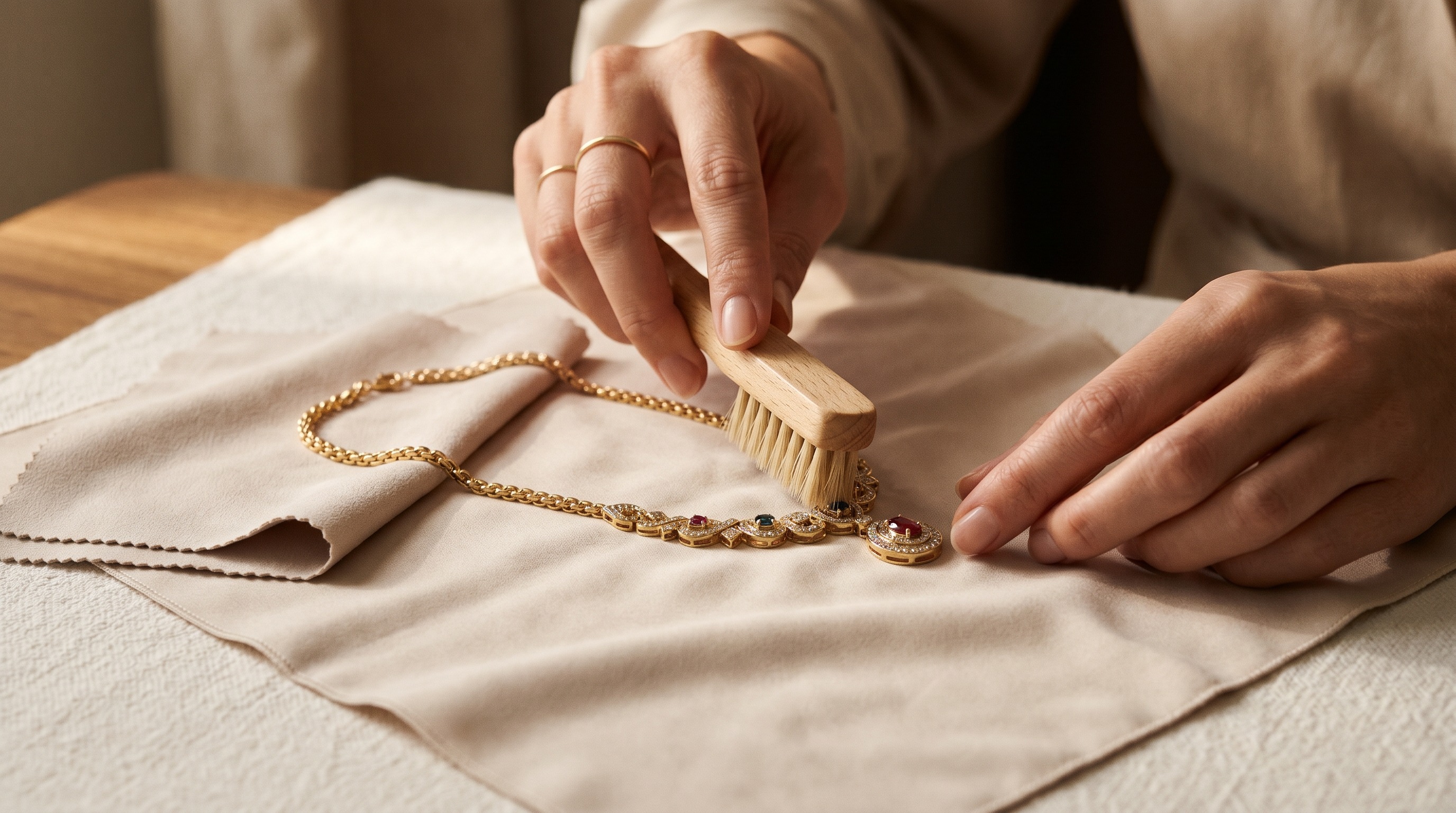
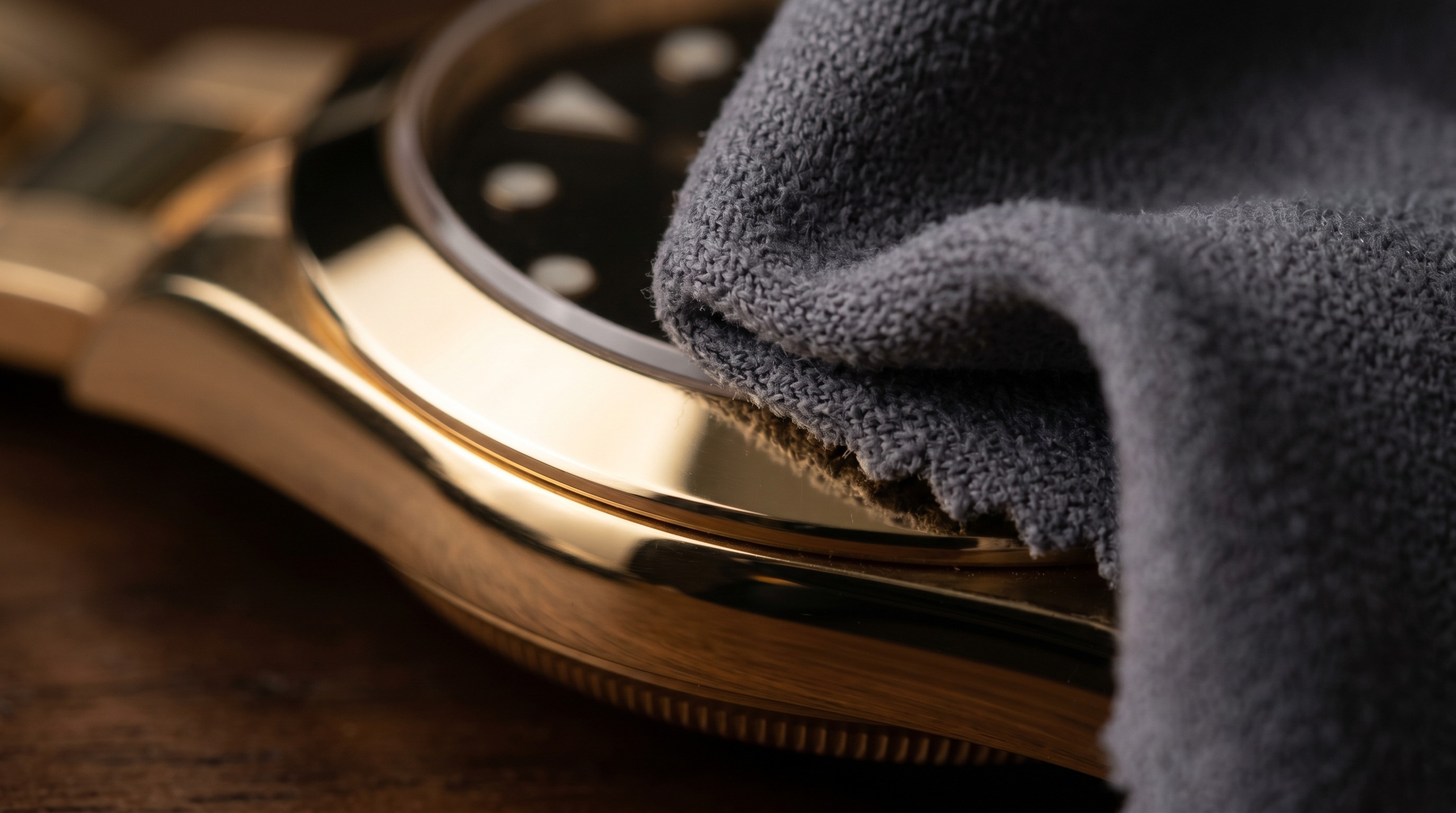
Use warm water with a drop of mild washing-up liquid. Brush gently with a soft toothbrush around the settings, rinse, and pat dry with a soft, lint-free cloth. A jewellery polishing cloth brings back the shine. Never use toothpaste, bicarbonate of soda or scourers: they scratch.
- 1Soak
- 2Brush
- 3Rinse
- 4Pat dry
What to keep away
- Chlorine and bleach. Remove pieces before swimming or cleaning.
- Ultrasonic and steam cleaners. Never on enamel, pearls, emeralds, opals, turquoise or coral.
- Perfume and hairspray. Put jewellery on last.
- Sport and heavy work. Take it off first.
Stones, enamel and pearls
Pearls, enamel, mother-of-pearl, onyx and other soft stones need only a wipe with a soft, damp cloth, then drying flat. Keep them out of water and away from cleaning products. If in doubt, leave cleaning to a jeweller.
Storing and checking
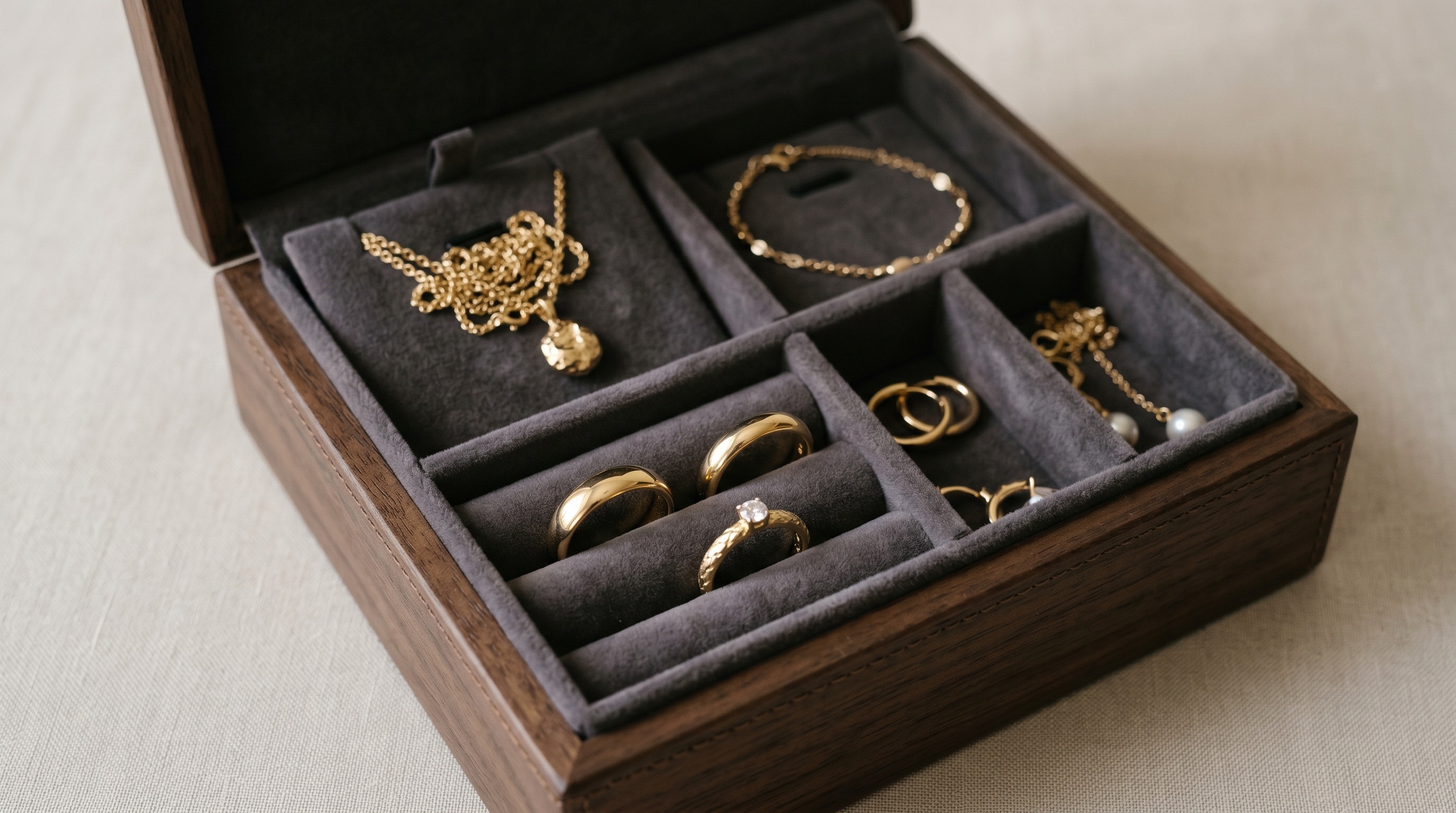
Store each piece separately in a soft-lined box or its own pouch, so hard stones and gold do not scratch each other, and fasten chains to stop tangles. Keep boxes, certificates and receipts together. Have clasps, claws and settings checked by a jeweller now and then, especially on pieces worn daily.
- 1Compartment box with a piece in each section
- 2Papers in the lid
0 of 4 checked
1Separate storage
Each piece in a soft-lined box or its own pouch.
2Chains fastened
To stop tangles.
3Papers together
Boxes, certificates and receipts kept together.
4Clasps, claws and settings
Checked by a jeweller now and then, especially on pieces worn daily.
Selling a piece you have looked after?
Whether a designer piece holds its value comes down to the maker and design, the stones, its condition and whether you have the box and papers. If you plan to sell, do not polish or repair it first: send it as it is. No box or papers? We still buy it. We never publish figures.
Free, no obligation, and returned at our cost if you decline.
Read our Google reviews (opens Google)
- Maker
- Design
- Condition
- Papers
How selling works
- 1
Send photographs
of the piece, its signature and marks, and any box or papers.
- 2
Free value inspection
We reply within one working day with an estimate, subject to inspection. If our offer differs, you can decline and we return it at our cost.
- 3
Paid the same day after inspection
by bank transfer or in cash, in Mayfair, at our Braintree office, by post or by free collection.
Insured up to £10,000 per parcel when you send to us.
Questions people ask
How do I clean gold jewellery at home?
Use warm water and a drop of mild washing-up liquid, brush gently with a soft toothbrush around the settings, rinse and pat dry with a soft cloth. A jewellery polishing cloth restores the shine on plain gold. Never use toothpaste, bleach or scourers, and keep soft stones and pearls out of water.
Can I use an ultrasonic cleaner?
Not on enamel, pearls, emeralds, opals, turquoise, coral or any treated stone, because the vibration and heat can crack or dull them and loosen settings. If you are not sure what the stones are, do not use one. A jeweller can clean the piece safely for you.
How should I store designer jewellery?
Keep each piece separately in a soft-lined box or its own pouch, so stones and gold do not scratch one another. Fasten chains to stop them tangling. Keep the original boxes, certificates and receipts together and somewhere safe: they help if you ever sell.
Should I polish a piece before selling it?
No. Polishing removes a thin layer of gold, can soften engraving and edges, and can wear away maker’s marks. Send the piece as it is, with photographs first. We value it on its condition, and the next owner can decide on any polishing.
How often should I have jewellery checked?
Pieces worn every day, such as rings and bracelets, are worth having checked by a jeweller about once a year: claws and settings can wear, and clasps can loosen. A quick check now and then can stop a stone from being lost.
Can you advise on a damaged piece?
Yes. Send photographs of the piece and the damage, and we will tell you whether we would buy it as it is and how the condition affects the value. Please do not have it repaired elsewhere first if you are thinking of selling.
Related guides
Thinking of selling a piece?
Send a photograph and its marks for a free value inspection, with no obligation.
Free, no obligation, returned at our cost if you decline.