Part of: Van Cleef & Arpels: Collections and History
Van Cleef Alhambra: A Collector Guide
Whether a Van Cleef & Arpels Alhambra piece holds its value comes down to four things: its line, its stone, the number of motifs and its condition. The design has barely changed since 1968 and the house still makes it, so buyers know it well. This guide explains each, and how to tell a genuine piece.
Thinking of selling your Alhambra?
Free, no obligation, returned at our cost if you decline.

- Read our Google reviews (opens Google)
- Free, no obligation
- A reply within one working day
- Paid the same day after inspection
A clover from 1968
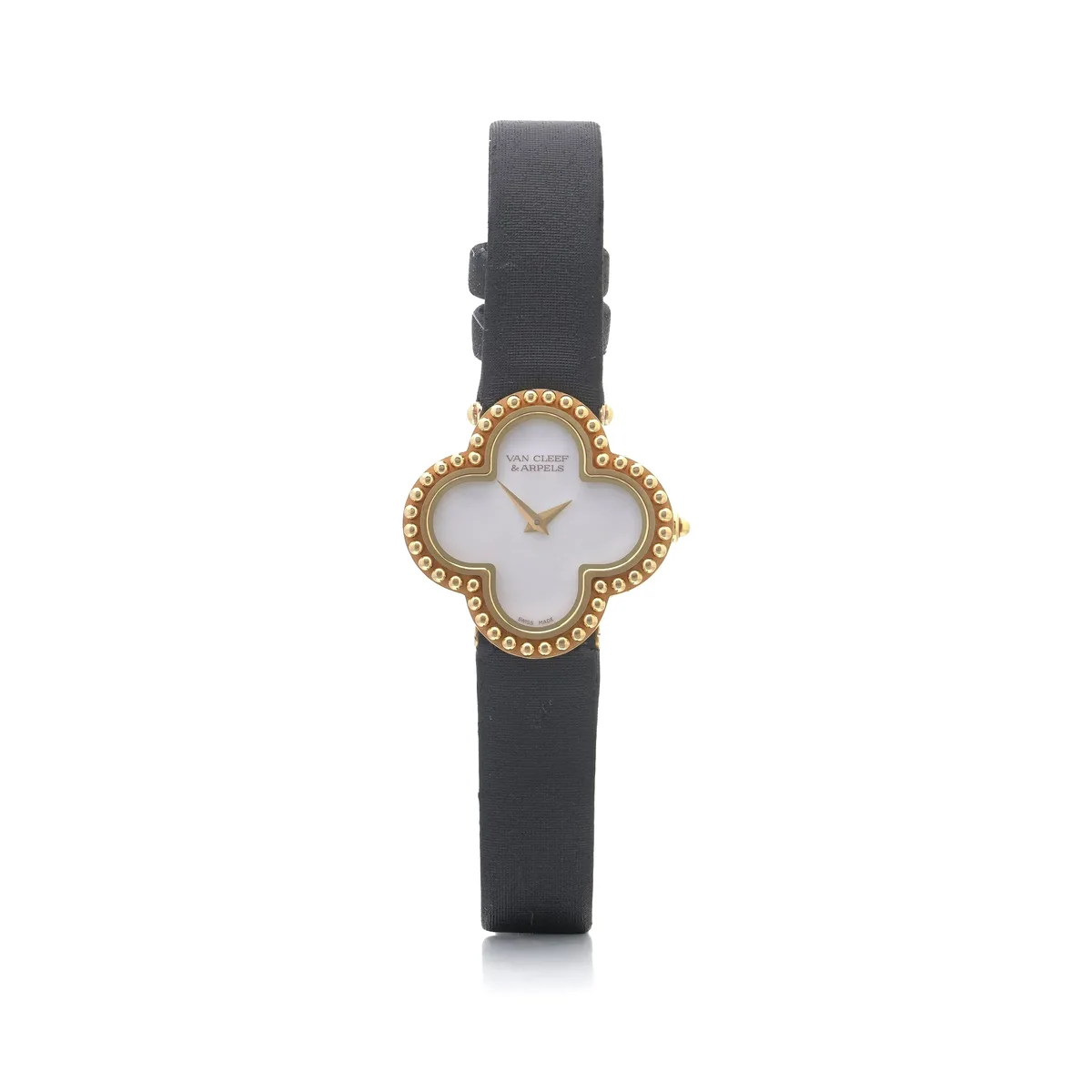
Van Cleef & Arpels introduced Alhambra in 1968, as a long necklace of four-leaf clover motifs, each framed in a border of tiny gold beads. The name recalls the Alhambra palace in Granada. The clover has been made ever since, in new sizes and stones, which is why a 1970s piece and a new one sit side by side today.
- 1968First Alhambra long necklace
- LaterMagic Alhambra, larger motifs
- 2007Sweet Alhambra, smaller motif
- TodayNew stones each season


The lines, side by side
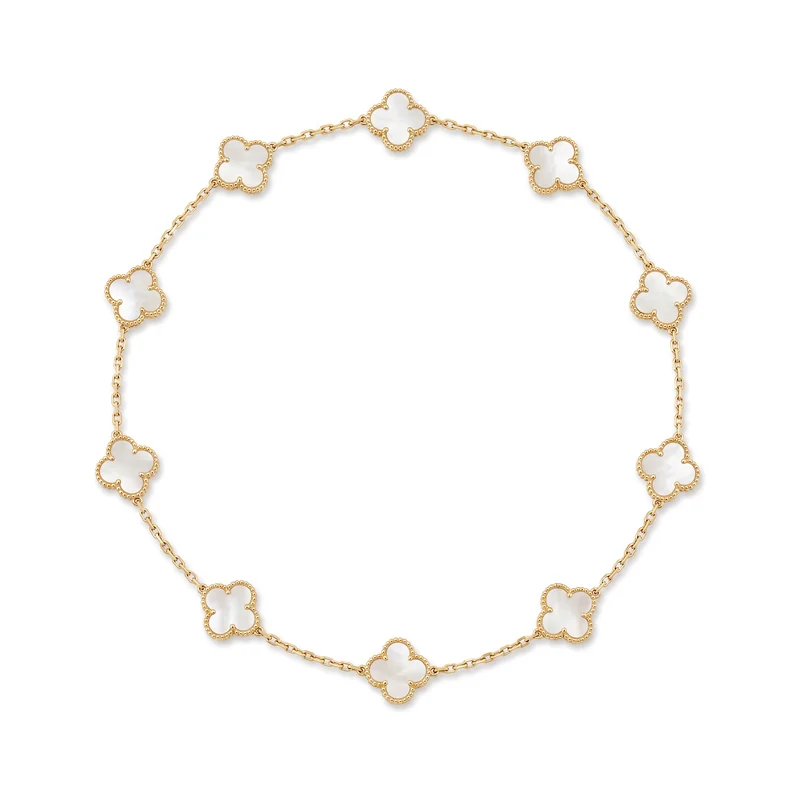
- Vintage Alhambra. The classic motif, as pendants, five-motif bracelets, earrings, rings and ten or twenty-motif necklaces.
- Sweet Alhambra. A smaller motif, launched in 2007, often as bracelets, earstuds and pendants.
- Magic Alhambra. Larger motifs, and necklaces that mix motif sizes on one chain. Our Magic Alhambra guide covers it in detail.
- Other lines. Pure Alhambra and Byzantine Alhambra, among others.
Stones and materials
Each motif is either a cut stone or gold set into the beaded frame. The most common are mother-of-pearl, onyx, malachite, carnelian, tiger’s eye, chalcedony and turquoise. Others are guilloché gold or pavé diamonds. The material changes the look, the demand and the value, so it is one of the first things we note.
- Mother-of-pearl
- Onyx
- Malachite
- Carnelian
- Tiger's eye
- Chalcedony
- Turquoise
- Guilloché gold
- Pavé diamonds
Count the motifs: the number tells you the piece
Alhambra is sold by motif count, and the count tells you the piece:
- 1 motif: pendant or ring.
- 2 motifs: a pair of earrings.
- 5 motifs: the classic bracelet.
- 10 motifs: the shorter long necklace.
- 16 motifs: a Magic Alhambra long necklace with mixed motif sizes.
- 20 motifs: the full-length sautoir, often worn doubled.
- 1Pendant or ring
- 2Earrings
- 5Bracelet
- 10Long necklace
- 16Magic long necklace
- 20Sautoir
Check yours: turn it over
Copies are made in large numbers, so we read the back of a piece first:
For every house we buy, see how we check designer jewellery.
0 of 4 checked
1Signature and serial
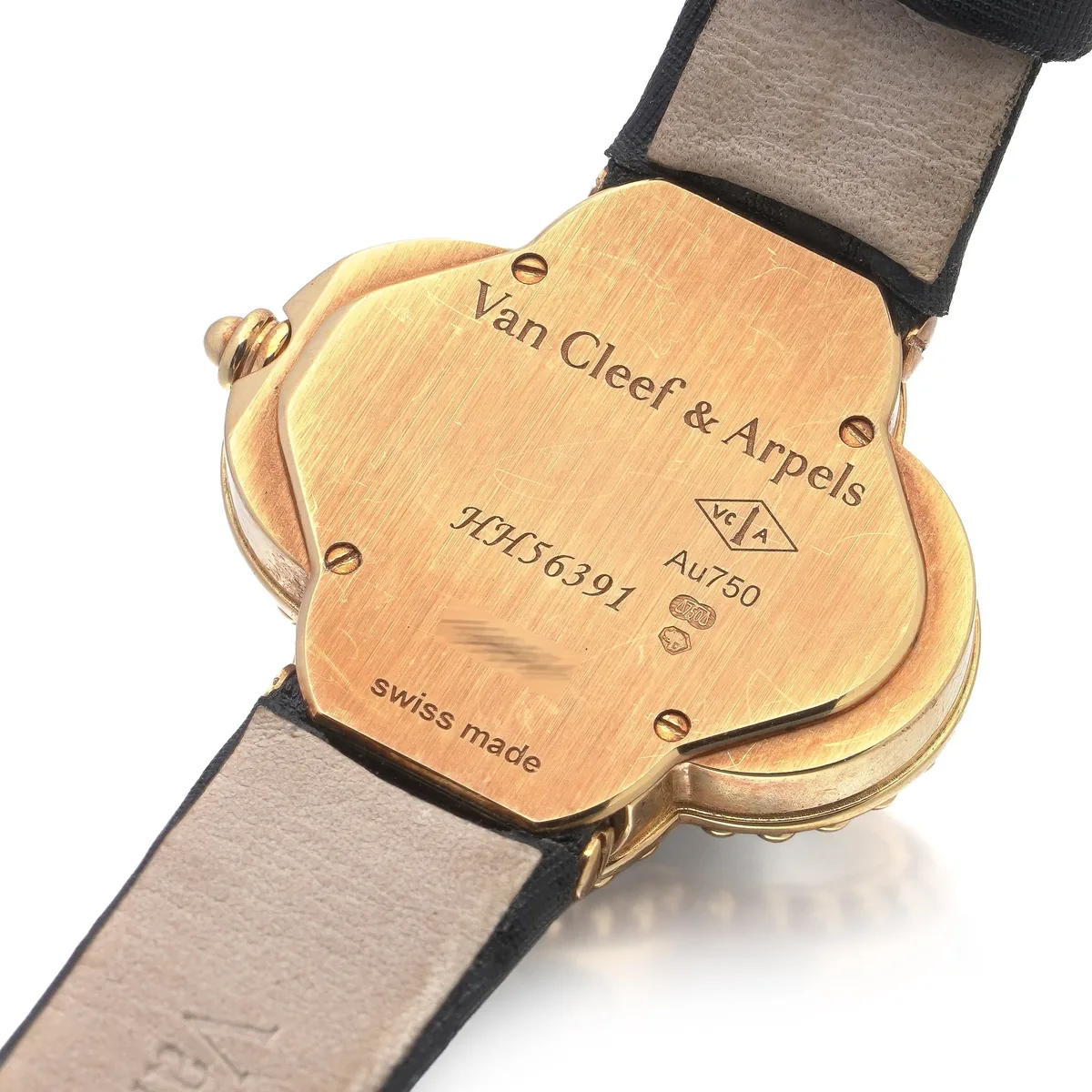
Signature and serial "VCA", an individual serial number and the gold mark, on the back of a motif or on the clasp tag.
- 1VCA signature
- 2Individual serial number
- 3Gold mark
- 4Eagle's head, on pieces made in France
2French marks
The eagle’s head on pieces made in France.
3The beading
Round, even beads, crisply set, all the way round.
What a genuine one shows
Warning sign
4The inlay
Stone flush in its frame, with no glue line or gap.
What a genuine one shows
Warning sign
Turned it over? Send a photo of the back of one motif and the clasp for a free, honest check.
Free, no obligation, returned at our cost if you decline.
Red flags
- A signature or serial that is shallow, crooked or missing.
- Beading that is flat, uneven or blurred.
- Stone that sits proud, recessed or with a visible glue line.
- Colour that is too uniform, like dyed or plastic.
- A clasp or chain that does not match the line.
- Perfect packaging on an imperfect piece. Boxes are the easiest part to copy.
What is my Alhambra worth?
An Alhambra piece is valued on its line and motif size, the stone or material, the number of motifs, the gold colour, its condition (chips, cracks in the inlay, worn beading), whether you have the box and certificate, and current demand for that combination. We never publish figures, because two pieces that look alike can differ a great deal. No box or certificate? We still buy it.
Free, no obligation, and returned at our cost if you decline.
Read our Google reviews (opens Google)
- Line
- Stone
- Motif count
- Gold colour
- Condition
- Box and papers
- Demand
How selling works
- 1
Send photographs
of the front, the back of one motif with its signature and serial, and the clasp.
- 2
Free value inspection
We reply within one working day with an estimate, subject to inspection. If our offer differs, you can decline and we return it at our cost.
- 3
Paid the same day after inspection
by bank transfer or in cash, in Mayfair, at our Braintree office, by post or by free collection.
Insured up to £10,000 per parcel when you send to us.
Questions people ask
How do I tell if my Alhambra is genuine?
Turn it over. A genuine piece is signed VCA with an individual serial and the gold mark, usually on the back of a motif or the clasp, with the eagle’s head on French-made pieces. The beading should be round and even, and the stone flush in its frame. Send clear photographs and we will check them, free.
Can I sell an Alhambra without the box or certificate?
Yes. Many genuine Alhambra pieces have lost their box or certificate, and we buy them all the same. We check the piece itself: the signature, serial, marks, beading and inlay. A certificate whose serial matches the piece supports the value, but its absence never stops a sale.
Does Van Cleef Alhambra hold its value?
It depends on four things: the line, the stone, the motif count and the condition. The design has changed little since 1968 and is still made, so buyers recognise it. Complete, undamaged pieces are easiest to sell; chipped inlays reduce the value. A free value inspection tells you where yours sits.
How much is a Van Cleef Alhambra worth?
It depends on the line, the motif size, the stone, the number of motifs, the gold colour, the condition and your box and certificate. A single Sweet pendant and a twenty-motif necklace are very different pieces. We do not publish prices. Send photographs of the front and the back for a free value inspection within one working day.
Where can I sell a VCA Alhambra?
To a buyer who reads the back of each motif and inspects it in person before paying. We buy Alhambra directly: a free value inspection from photographs, then an appointment in Mayfair or at our Braintree office, Special Delivery post or free collection. You are paid the same day after inspection, by bank transfer or in cash.
Which Alhambra line is most valuable?
There is no single answer. Value comes from the combination of line, motif size, stone, motif count and condition, together with current demand for that combination. Every piece is inspected individually, motif by motif. A free value inspection tells you where yours sits.
Related guides
Selling an Alhambra piece?
Send a photograph of the front and the back of one motif for a free value inspection, with no obligation.
Free, no obligation, returned at our cost if you decline.