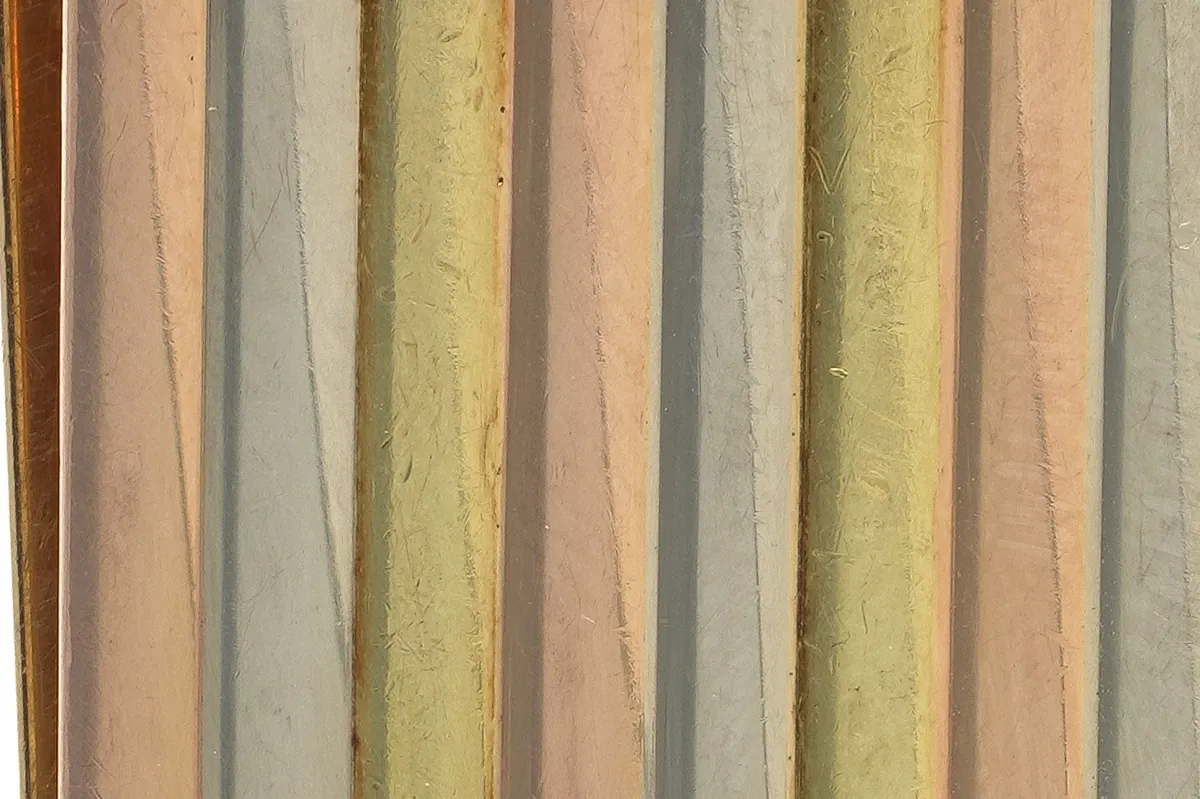
The four main types of gold are yellow, white, rose and green, and they differ only in the metals mixed with the gold. White gold is alloyed with white metals such as palladium and is usually rhodium plated; rose gold is alloyed mainly with copper. The carat can be the same: 18ct gold of any colour is 75% gold.
Yellow, white, rose and green gold explained, with real examples: what each is made of, how carats work, and what actually decides the value.
There are three ways to sort gold:
- By colour: yellow, white, rose and green, set by the metals mixed with the gold.
- By purity: 9ct, 14ct, 18ct, 22ct and 24ct, set by how much gold it contains.
- By construction: solid gold, gold plated, gold filled and vermeil.
- Colour does not change the gold value: 18ct white, yellow and rose gold hold the same gold.
In this article
Types of gold by colour
Pure gold is a rich, slightly reddish yellow and too soft for most jewellery, so it is alloyed with other metals. Those metals set the colour. The gold content, and so the carat, can be exactly the same.
Yellow gold
The traditional colour: gold alloyed with silver and copper in similar proportions. The higher the carat, the deeper the yellow, so 22ct looks richer than 18ct and 9ct is paler. It needs no plating and wears evenly.
White gold
Gold alloyed with a white metal, usually palladium or nickel. Most white gold is then plated with rhodium, a bright white metal of the platinum family, because the alloy itself is faintly warm. When the plating wears, a yellowish tint shows through: that is not a fault, it just needs replating. White gold came into use in the early 20th century, largely as a cheaper alternative to platinum.
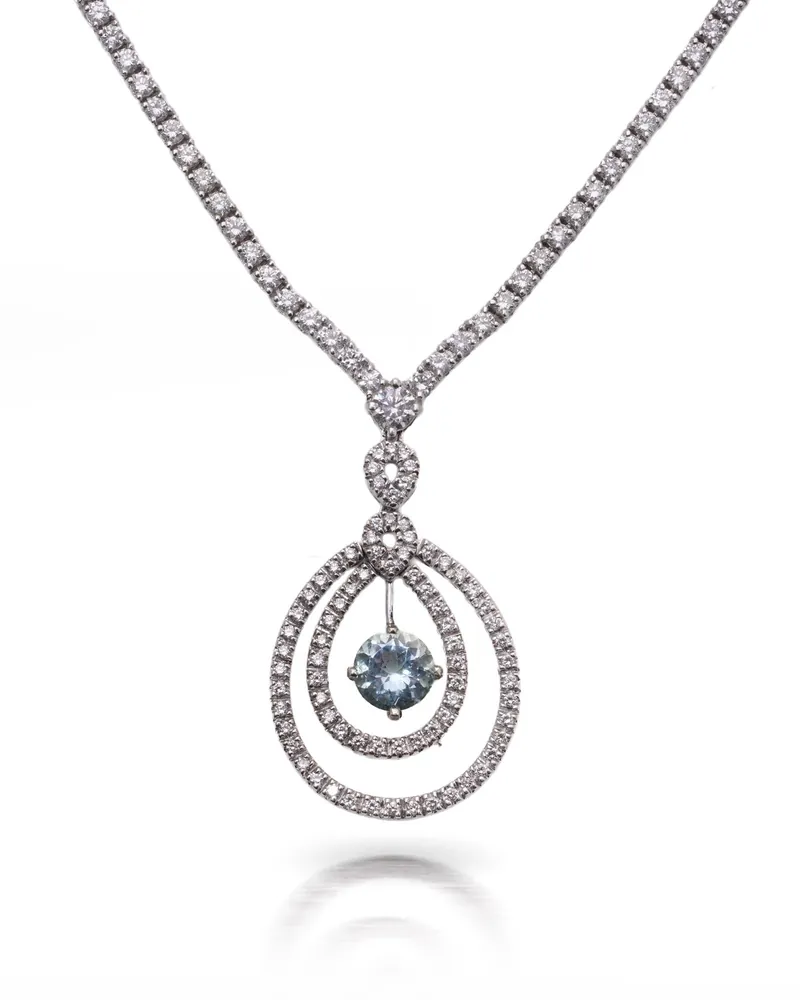
Not sure if a white ring is white gold or platinum? See platinum or white gold.
Rose, pink and red gold
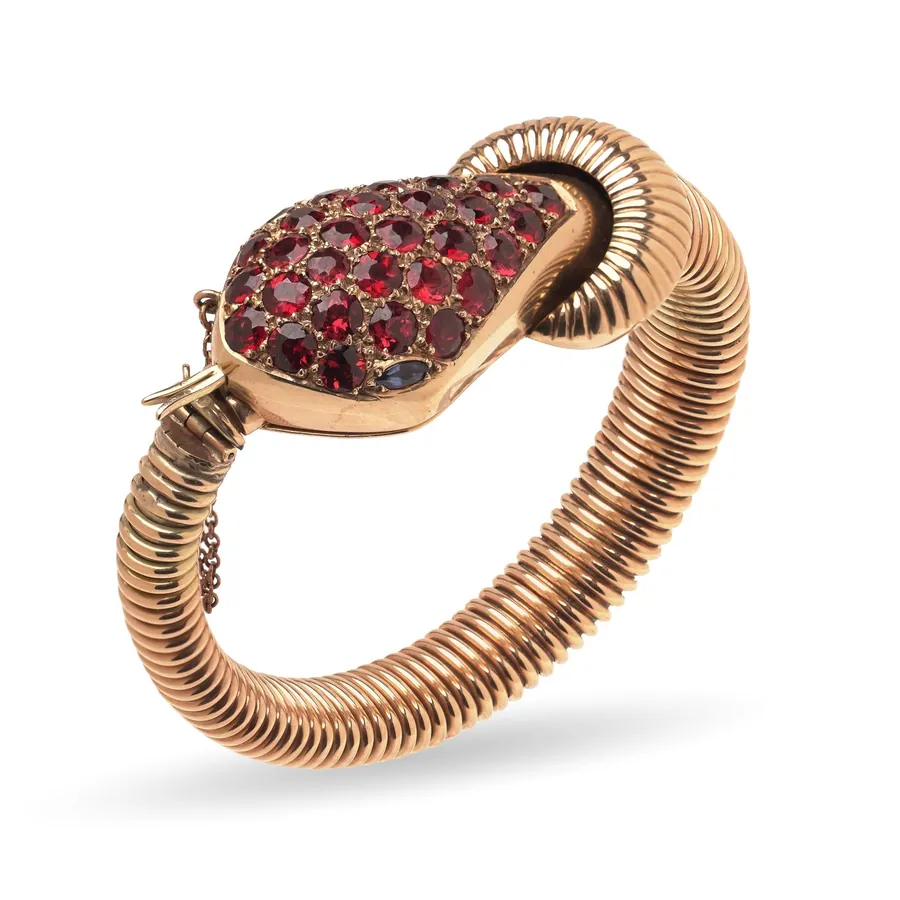
Copper does the work here: the more copper, the redder the gold. Rose gold was popular in Russia in the early 19th century and was known as Russian gold, and rosy golds were fashionable again in the 1940s.
Green gold
Gold with a high proportion of silver takes on a green-yellow cast. The natural gold and silver alloy known as electrum was used in the ancient world, and green gold was used with other colours in fine 18th and 19th century work.
Rarer colours
- Purple gold: an alloy of gold and aluminium, striking but brittle, used mainly as an inlay.
- Blue gold: gold with indium or gallium.
- Black gold: usually a surface treatment or coating, not a colour of the metal itself.
Two-tone and multicolour gold
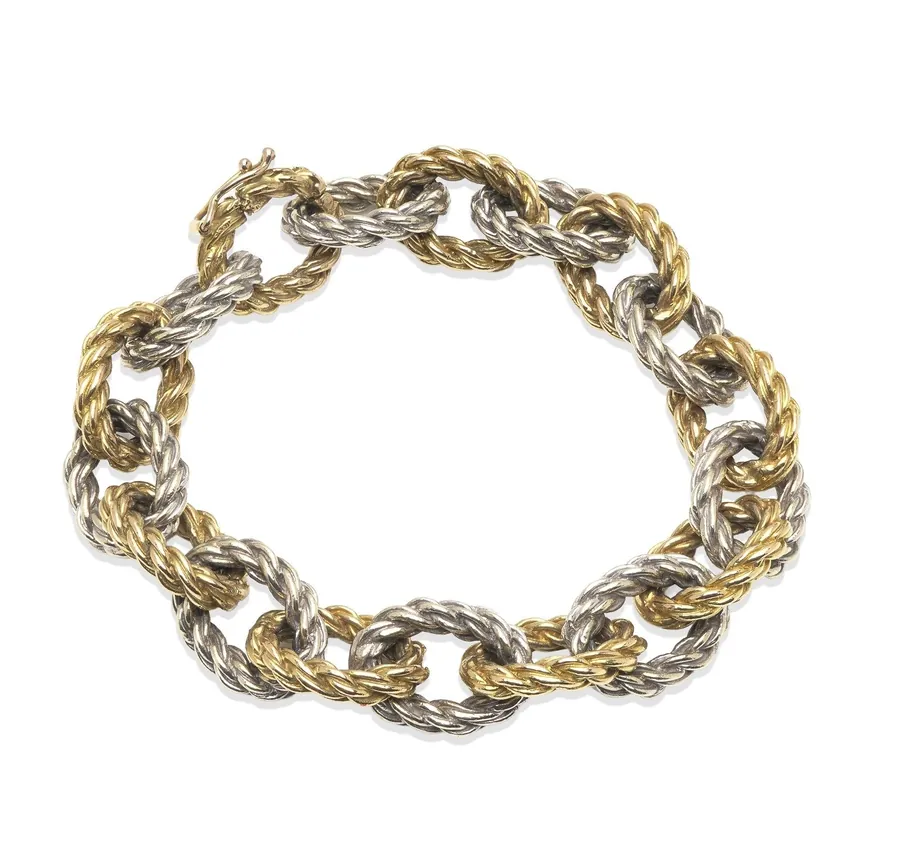
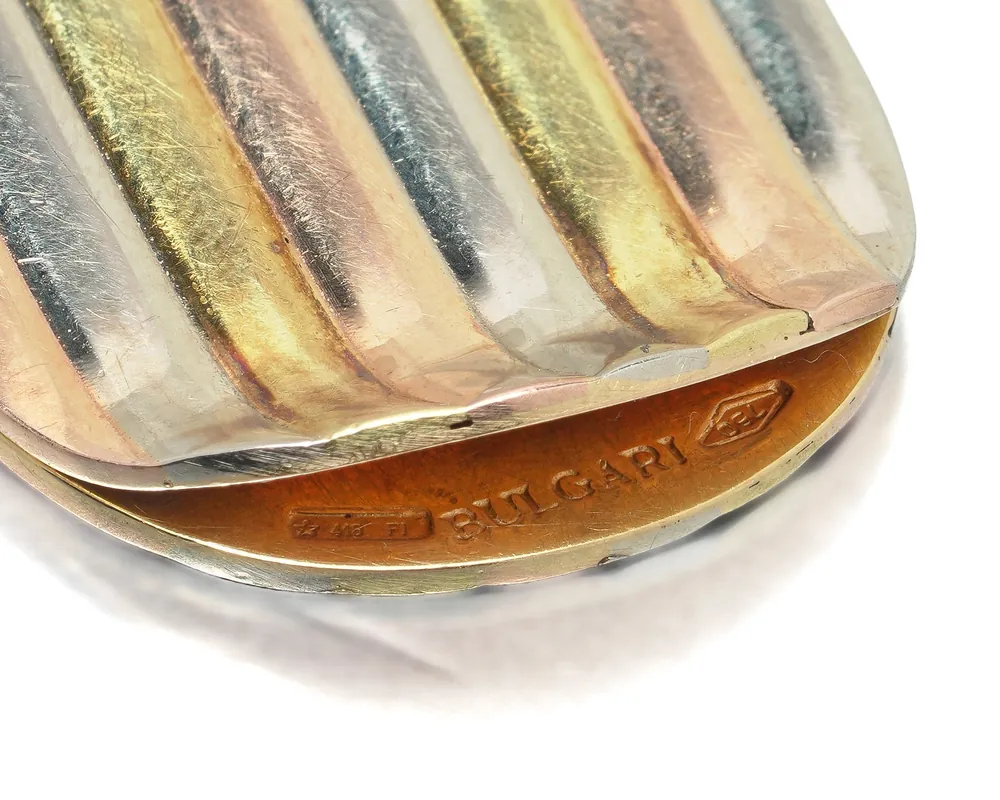
Jewellers have combined colours for centuries. French goldsmiths of the 18th century used several colours of gold on one snuffbox, Victorian jewellers set rose and yellow together, and 20th century designers made tricolour pieces a signature.
Get a free quote
Types of gold by purity
The other way to sort gold is by how much gold it contains. In the UK the hallmarked standards are:
| Carat | Pure gold | Hallmark |
|---|---|---|
| 24ct | 99.9% | 999 |
| 22ct | 91.6% | 916 |
| 18ct | 75% | 750 |
| 14ct | 58.5% | 585 |
| 9ct | 37.5% | 375 |
For how the carats compare, see 9ct vs 18ct vs 24ct gold.
Solid, plated, filled or vermeil?
The third meaning of "type of gold" is how an item is made, and it matters far more to value than colour.
| Type | What it is | Typical marks |
|---|---|---|
| Solid gold | Gold alloy all the way through | 375, 585, 750, 916 or a British hallmark |
| Gold plated | A very thin layer of gold over base metal | GP, GEP, HGE, gold plated |
| Gold filled and rolled gold | A thicker layer of gold bonded to base metal | GF, 1/20 12K, rolled gold |
| Vermeil and silver gilt | Gold over sterling silver | 925 with a gold finish |
| Pinchbeck | An 18th century copper and zinc alloy made to look like gold | Usually unmarked |
Only solid gold is valued for its gold. Plated and filled pieces are worth little as metal, and silver gilt is valued as silver. See how to tell if gold is real and how to spot fake gold jewellery.
Request a free valuation
Is one colour of gold worth more than another?
Not as metal. A buyer pays for the pure gold, so 18ct white, yellow and rose gold of the same weight are worth the same as gold. Rhodium plating adds nothing to the metal value.
What changes value is the piece itself: the maker, the design, the stones and the condition. A signed tricolour piece or an antique rose gold jewel can be worth far more than its gold.
Nickel white gold can irritate sensitive skin; palladium white gold does not. If a white gold ring looks yellowish, it usually just needs replating, not replacing.
How to tell what gold you have
- Find the mark
375, 585, 750, 916 or 999 give the carat. See the gold hallmarks guide.
- Look at worn areas
Yellow showing through white suggests worn rhodium on white gold. Brass or copper showing through suggests plating.
- Check for plating marks
GP, HGE, GF or rolled gold mean it is not solid gold.
- Have it tested
Unmarked pieces can be tested without damage.
Send us photos for a quote
- Colour comes from the alloy: silver and copper for yellow, palladium or nickel for white, copper for rose.
- Carat measures purity and is marked as 375, 585, 750, 916 or 999.
- Solid gold is valued for its gold; plated and filled gold are not.
- Colour does not change the gold value; maker, design and stones do.
Questions we are asked
What are the main types of gold?
By colour: yellow, white, rose and green gold. By purity: 9ct, 14ct, 18ct, 22ct and 24ct. By construction: solid gold, gold plated, gold filled and vermeil.
What are the 4 types of gold?
Usually yellow, white, rose and green gold, the four main colours. They differ only in the metals mixed with the gold; the carat can be the same.
Is white gold real gold?
Yes. White gold is real gold alloyed with white metals such as palladium or nickel, and usually plated with rhodium. 18ct white gold contains the same 75% gold as 18ct yellow.
Is rose gold real gold?
Yes. Rose gold is gold alloyed mainly with copper. 18ct rose gold is typically 75% gold, 22.25% copper and 2.75% silver.
Which is worth more, white or yellow gold?
As metal they are worth the same at the same carat and weight, because a buyer pays for the pure gold. Maker, design and stones make the difference.
Why is my white gold ring turning yellow?
The rhodium plating has worn and the warmer gold alloy underneath is showing. A jeweller can replate it.
What is green gold made of?
Gold with a high proportion of silver, which gives a green-yellow tint.
Selling gold of any colour?
Send photos of your pieces and their marks. We buy yellow, white and rose gold, from scrap to antique and designer jewellery, and the valuation is free.
- We buy directly
- Free valuation from photos
- Appointments in Mayfair and Braintree
- Insured postage or collection
New pieces reach our list first: join the Mozeris list.