Ten earring fittings, drawn and photographed, with the dates each one points to and what they mean for the value of a pair.
The fitting is the fastest clue to an earring's age:
- Screw back: patented in 1894, common from about 1909 to the 1950s.
- Clip-on: 1934 or later.
- Post and butterfly: patented in the 1920s, standard since pierced ears returned in the 1960s.
- Omega back: the 1960s or later.
- Hooks and hinged backs: typical of Georgian and Victorian earrings, though hooks are still made.
- Fittings are often replaced, so check the rest of the earring too.
Identify your earring fitting
- Shepherd's hookGeorgian onwards
- Kidney wireLate Victorian onwards
- French wireLate 19th century on
- Hinged backVictorian to Edwardian
- Lever backc.1900 onwards
- Screw back1894 to 1950s
- Clip-on1934 onwards
- Post and butterfly1920s onwards
- La Poussette20th century
- Omega back1960s onwards
Tap a fitting to see how to recognise it and the dates it points to.
In this article
How to date earrings in four steps
The fitting is the part of an earring most likely to have a patent date behind it, which makes it the quickest clue. It sets a boundary rather than a date, so read it with everything else.
- Name the fitting
Match it to the drawings above: the part that goes through or grips the ear gives the fitting its name.
- Pierced or not?
Fittings for unpierced ears, screw backs and clips, belong mainly to 1910 to the 1960s, when pierced ears went out of fashion. Before and after, earrings were made for pierced ears.
- Look for marks
Check the post, clip or hook for a maker's mark, a carat stamp such as 375 or 750, or a patent number. In the UK gold under 1 gram does not have to be hallmarked, so many earrings carry only a stamp or nothing at all.
- Check the fitting is original
Butterflies are replaced more than any other part, and clips and screw backs are often converted for pierced ears. A fitting in brighter metal, or soldered on with a visible seam, is probably later.
Earring fittings timeline
When each fitting was in general use. The gap in pierced-ear fittings in the middle of the 20th century is the single most useful thing to know when dating vintage earrings.
Main period of useEarlier, rarer or later use
Patent dates from navette jewellery's research on earring patents; periods of use from dated and hallmarked pieces. Old earrings are often refitted.
Fittings for pierced ears
Most antique earrings, and almost all modern ones, were made for pierced ears.
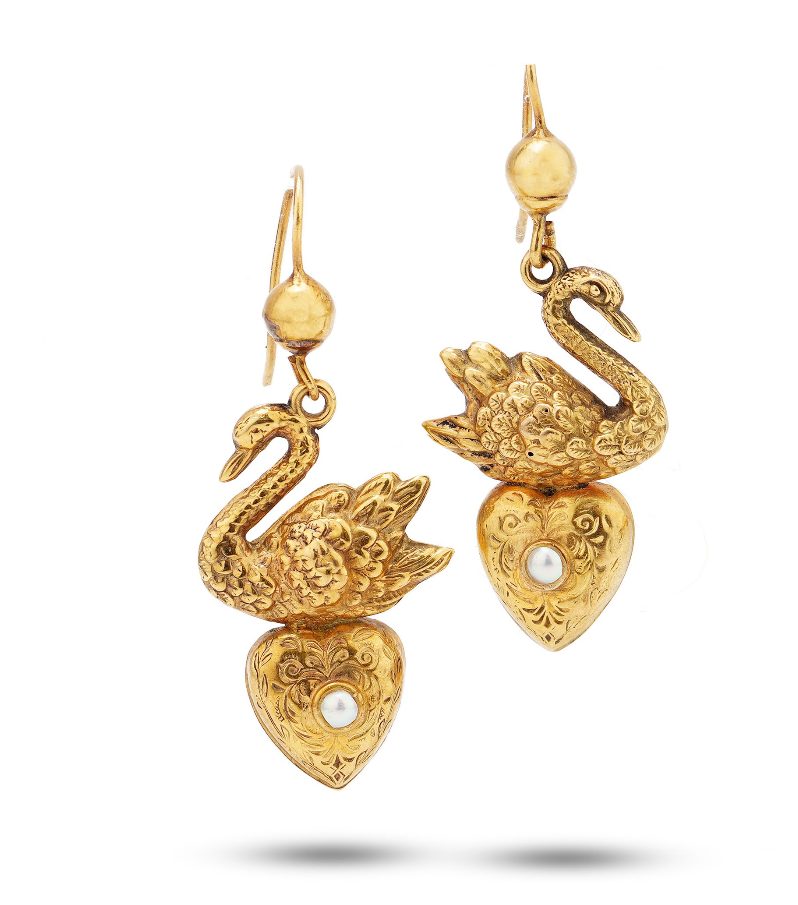
Shepherd's hook
- Looks like
- An open hook that passes through the lobe and hangs behind it.
- In use
- The usual fitting on Georgian and Victorian drop earrings, and still made today.
- Tells you
- Supports an early date when the hook is hand-made and matches the earring's gold.
Kidney wire
- Looks like
- A closed, kidney-shaped wire whose end hooks into a small catch.
- In use
- Late Victorian and Edwardian drops, and later.
- Tells you
- More secure than an open hook, so often found on better drop earrings.
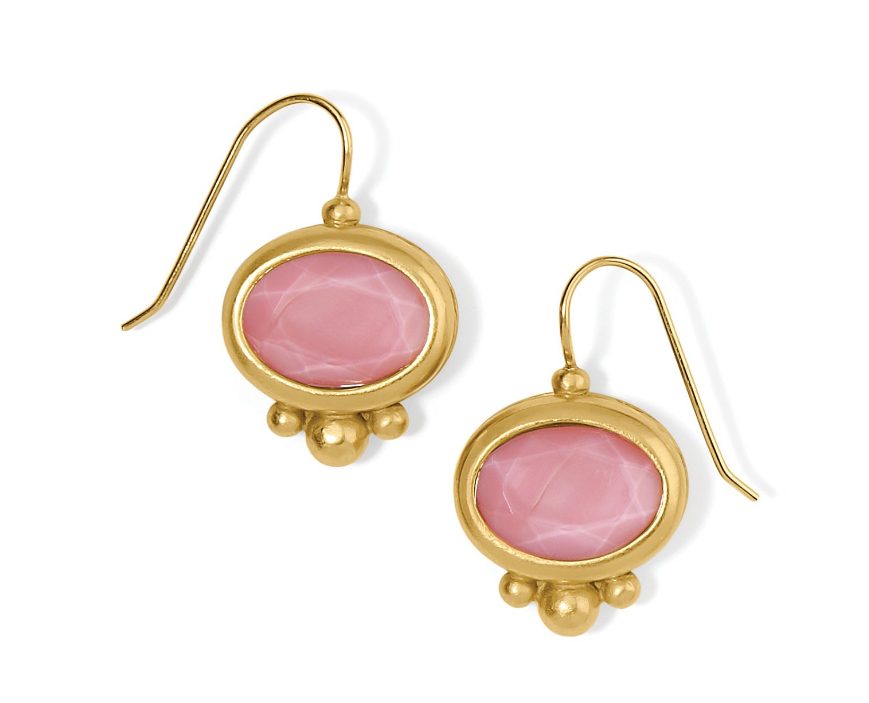
French wire (fish hook)
- Looks like
- A long curved wire, often with a small coil or bead at the front.
- In use
- From the late 19th century to today, and very common on modern earrings.
- Tells you
- Weak dating evidence on its own. Judge the workmanship of the earring.
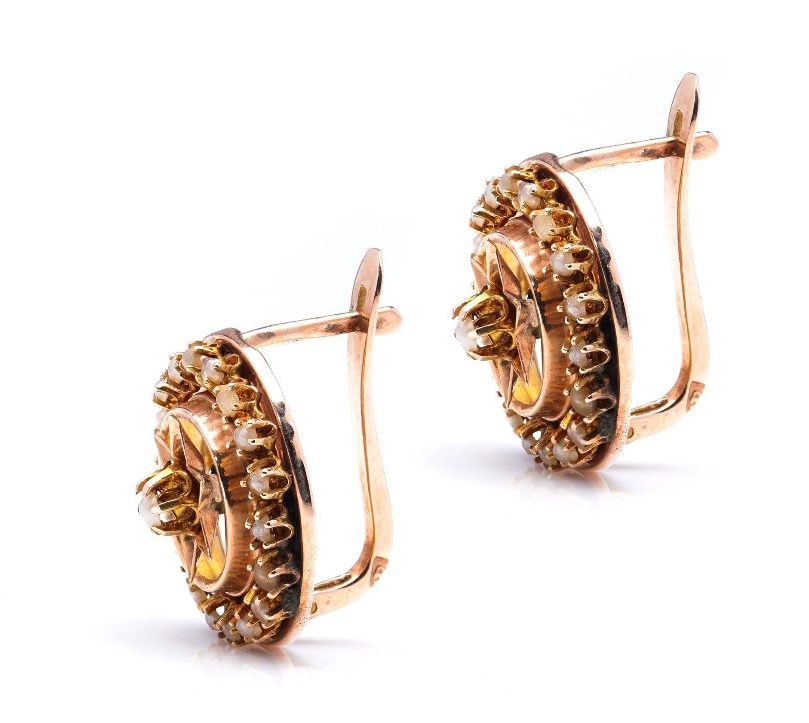
Hinged back
- Looks like
- A hinged wire that swings through the lobe and clicks into a catch on the back of the earring.
- In use
- Common on Victorian and Edwardian earrings, and still used in Continental Europe.
- Tells you
- On a piece with other period details, a good sign of 19th or early 20th century work.
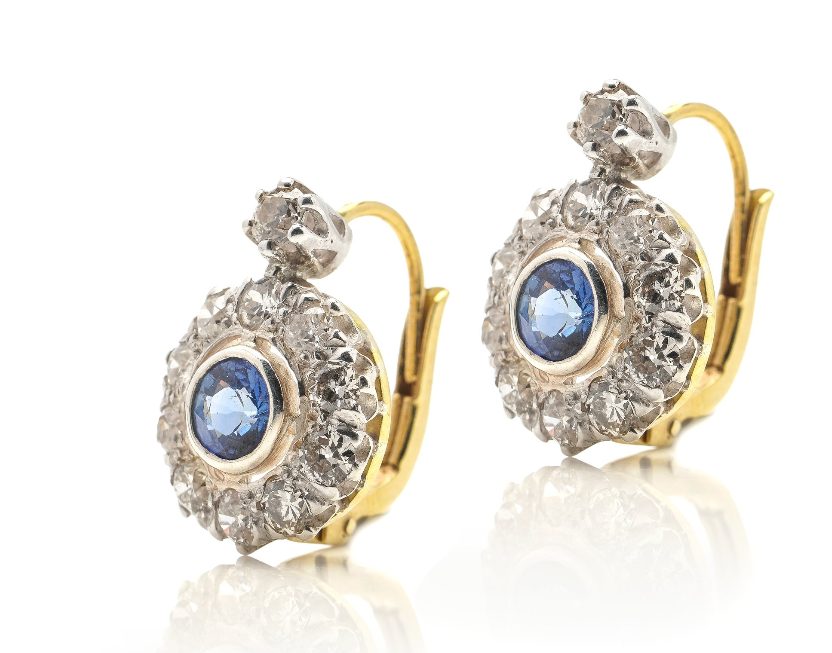
Lever back
- Looks like
- A curved wire through the ear, closed by a hinged lever at the back.
- In use
- From about 1900 to today.
- Tells you
- Secure and popular on drops and clusters. Dating depends on the rest of the piece.
Post and butterfly
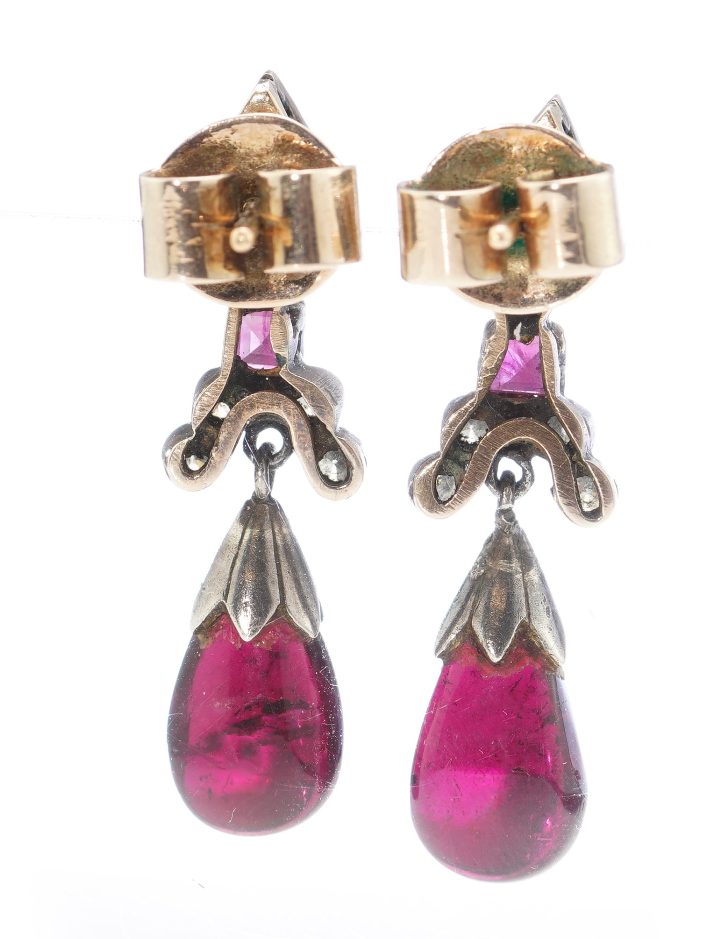
- Looks like
- A straight post through the lobe, held by a sprung butterfly or scroll that slides on behind.
- In use
- Patented in the 1920s, and the standard fitting since pierced ears returned in the 1960s.
- Tells you
- Butterflies are replaced more than any other part, so a new one says nothing about the age of the earring.
La Poussette
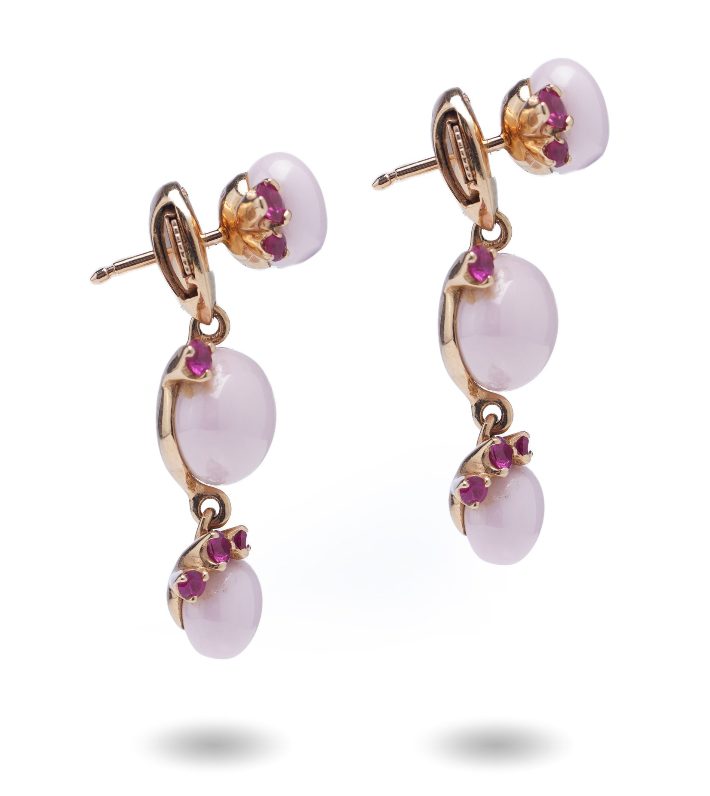
- Looks like
- A post with a sprung locking back that you release by pressing its sides.
- In use
- 20th century onwards.
- Tells you
- Far more secure than a butterfly and more costly to fit, so it tends to appear on earrings that were expensive when new.
Omega back
- Looks like
- A post plus a hinged wire shaped like the Greek letter omega, which folds up to press behind the lobe.
- In use
- From the 1960s onwards.
- Tells you
- Made for heavier earrings. An omega back dates the fitting to the 1960s or later.
Fittings for unpierced ears: screw backs and clips
From about 1910 to the 1960s pierced ears went out of fashion, and earrings were made to grip the lobe instead. These two fittings date that period better than anything else.
Screw back
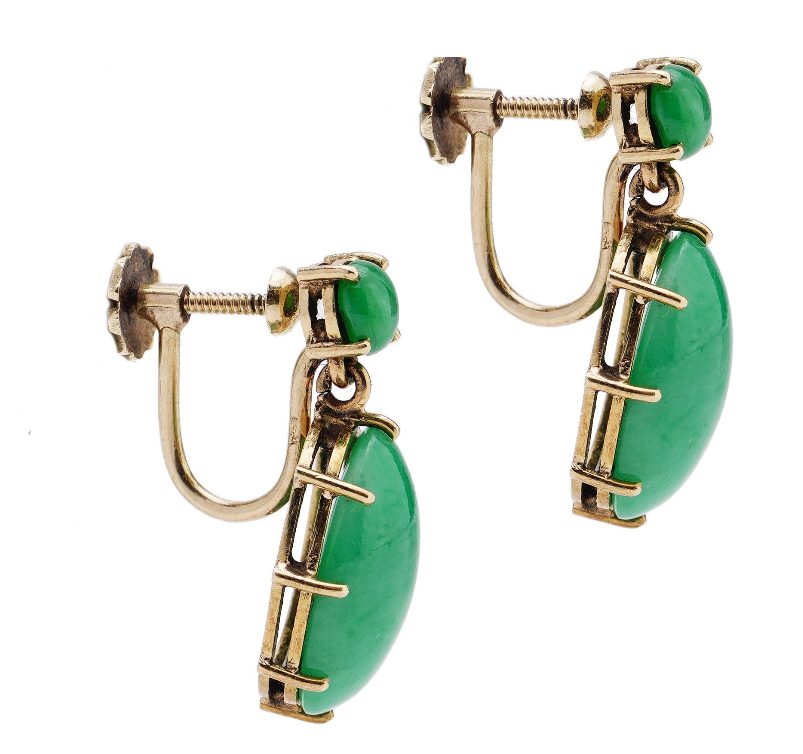
- Looks like
- A U-shaped frame behind the lobe with a small screw and pad that you tighten.
- In use
- Patented in 1894 by George Tilford and Arthur Bennett, common from about 1909 and fading through the 1950s.
- Tells you
- Places the earrings roughly between 1894 and the 1950s, unless the screws were fitted later.
Vintage screw back earrings are worth what their metal, stones and maker are worth. A gold pair set with good stones is valuable whatever its fitting; the screw back simply tells you when it was made.
Clip-on
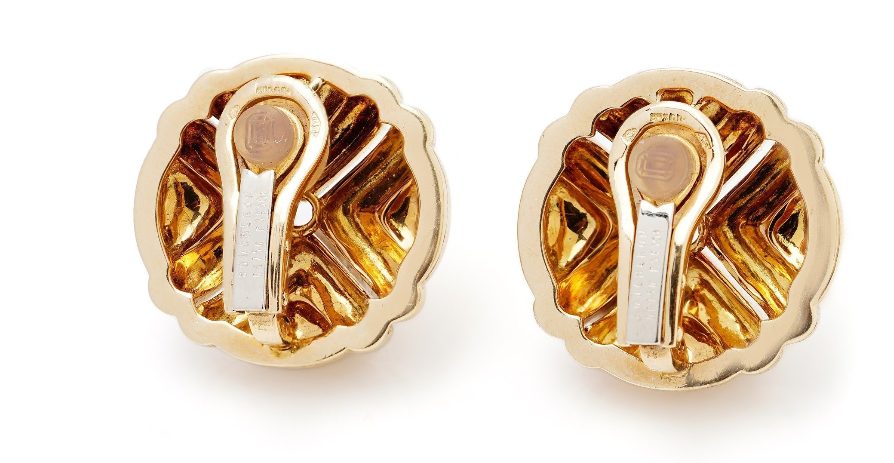
- Looks like
- A hinged paddle or clip that snaps shut against the back of the lobe.
- In use
- The paddle clip was introduced in 1934 and became the standard for unpierced ears after the Second World War.
- Tells you
- A clip-on means 1934 at the earliest, unless the clip was added later.
Early inventors tried clips long before: Louis Weed patented a finding that clipped onto the lobe in 1877, with a safety chain looped into the hair. It was the 1930s paddle clip that caught on.
When were earrings invented?
Earrings are among the oldest jewellery there is. Gold earrings were buried in the Royal Cemetery at Ur in Mesopotamia around 2600 to 2500 BC, and they have been worn in almost every culture since.
In Britain, Georgian and Victorian women wore long drops on hooks and hinged fittings. Fashion turned against piercing from about 1910, which is why the screw back and then the clip-on took over, until pierced ears came back in the 1960s and the post and butterfly became the everyday fitting it is now. For pearl drops through the periods, see pearl earrings through the eras.
Converted fittings and what they mean for value
Many vintage clip-ons and screw backs have been converted for pierced ears, and many antique hooks have been replaced with posts. A conversion is a repair, not a fault, but it matters:
- On signed or important earrings, original fittings are worth keeping. A buyer will pay more for a pair that is as made.
- A neat, reversible conversion on an everyday pair rarely changes the value much.
- Heavy solder, damaged backs or mismatched fittings between the two earrings reduce value.
- If you have the original fittings in a drawer, bring them.
If you are thinking of selling, do not convert or refit earrings first. We value the pair as it is, and the original fitting is often worth more than the convenience of a new one.
Are vintage earrings worth anything?
Often, yes. What decides it is the same as for any jewellery: the metal, the stones, the maker, the age and the condition. The fitting helps date a pair, but rarely decides the value on its own.
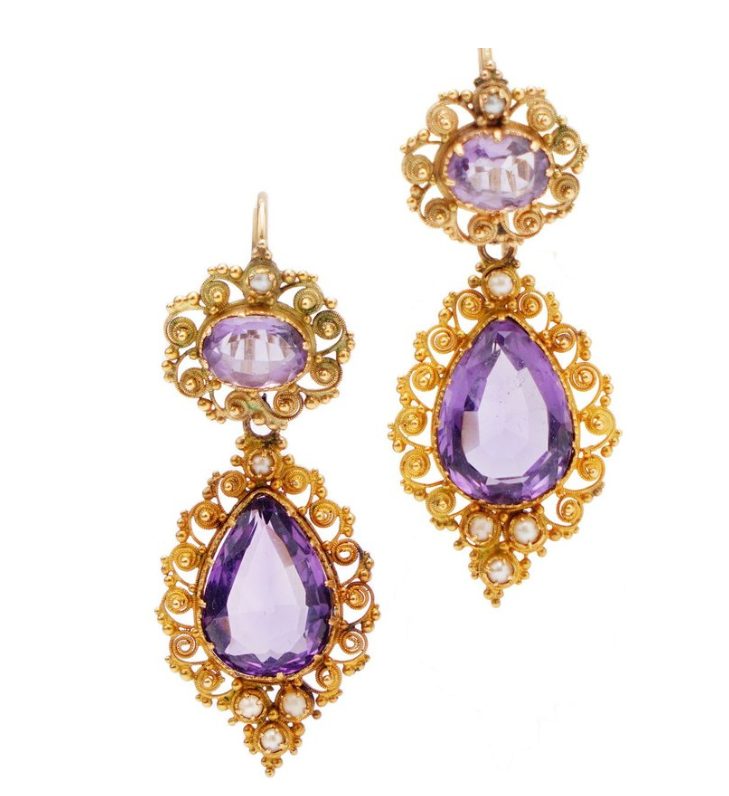
- A matched pair is worth much more than a single earring, which is usually valued on its metal and stones.
- Signed pieces from houses such as Cartier, Van Cleef & Arpels or Tiffany sell as designer jewellery, clip-ons included.
- Gold and platinum have a floor value even when the style is out of fashion.
- Costume earrings are usually worth little unless signed by a collectable maker.
For the full picture, see how to value antique jewellery.
- Screw backs point to 1894 to the 1950s, clip-ons to 1934 or later, omega backs to the 1960s or later.
- Fittings for unpierced ears belong mainly to 1910 to the 1960s.
- Butterflies and converted clips are common repairs. Judge the whole earring.
- Value comes from metal, stones, maker and a matched pair, not from the fitting.
Questions we are asked
When were clip-on earrings invented?
The paddle clip-on was introduced in 1934 and became the standard fitting for unpierced ears after the Second World War. Earlier clip designs were patented as far back as 1877, but they did not catch on.
When were screw back earrings made?
Screw backs were patented in 1894 and were common from about 1909 until the 1950s, when clip-ons took over. A screw back usually places earrings in that window, unless the screws were fitted later.
What are the different types of earring backs?
For pierced ears: shepherd's hooks, kidney wires, French wires, hinged backs, lever backs, posts with butterflies, La Poussette locking backs and omega backs. For unpierced ears: screw backs and clip-ons.
Are vintage screw back earrings valuable?
They are worth what their metal, stones and maker are worth. Gold screw back earrings set with good stones can be valuable; costume screw backs usually are not. The fitting tells you the period, not the value.
Can clip-on earrings be converted to pierced?
Yes, a jeweller can add posts. On everyday pairs a neat conversion is fine, but on signed or important earrings the original clip is worth keeping, so ask before you convert.
Why are my gold earrings not hallmarked?
In the UK gold items under 1 gram do not have to be hallmarked, and many earrings fall under that weight. Look for a stamp such as 375 or 750 on the post or clip, or have them tested.
How can I tell if my earrings are antique?
Look at the fitting, the construction and the stones together. Hand-made hooks and hinged backs, old cut diamonds and closed-back settings point to the 19th century; screw backs and clips to 1894 to the 1960s.
What is a La Poussette back?
A sprung locking back for post earrings, released by pressing its sides. It is much more secure than a butterfly and is usually found on earrings that were expensive when new.
Selling antique or vintage earrings?
Send photos of the front, the back and any marks. We buy antique, vintage and designer earrings directly, singles and pairs, and the valuation is free.
- We buy directly
- Free valuation from photos
- Appointments in Mayfair and Braintree
- Insured postage or collection
New pieces reach our list first: join the Mozeris list.
