Pearl Earrings Through the Eras: Georgian Drops to Tahitian Studs
Every era wore pearls differently — and every era's earrings are still wearable today. A shoppable walk through the pearl earring, from Victorian naturals to modern studs.
The pearl earring is the one jewel every century agreed on — and yet each era wore it in a completely different way. From the natural-pearl drops of the Victorians to the sculptural Tahitian studs of today, here is the pearl earring through time, told through pieces you can actually own.
Quick answer: are antique pearl earrings a good buy?
Yes — and they span every budget. Victorian and earlier earrings often hold rare natural pearls worth tens of thousands, while beautiful modern cultured studs start under £1,000. All are eminently wearable today.
Baroque and natural pearls are a defining 2026 trend — "not your grandmother's pearls".
The crown jewel: Victorian natural drops
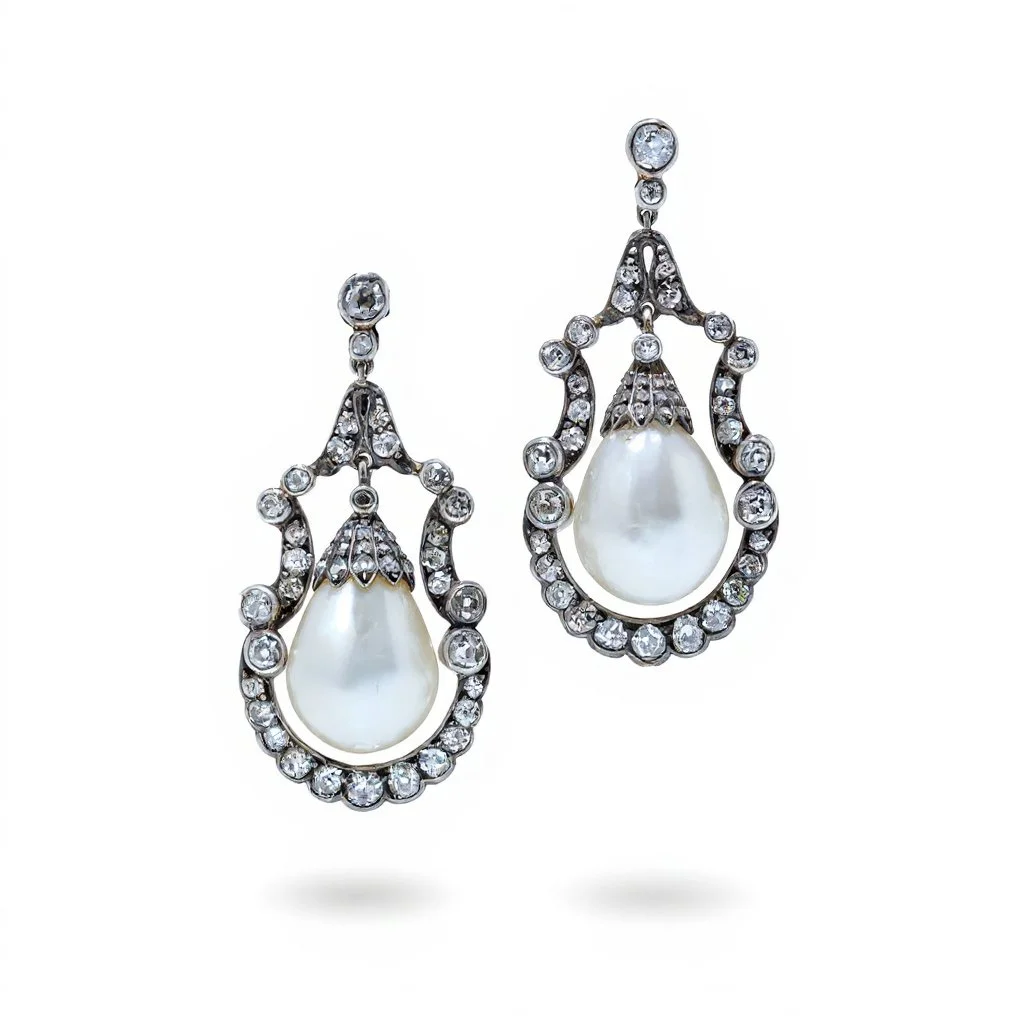
We begin at the top. Our Victorian natural pearl and diamond drop earrings (£49,500) are the crown of the collection — wild pearls that formed before pearl farming existed, suspended beneath old-cut diamonds in a classic drop. This is the pearl earring at its rarest: a natural-pearl rarity of the kind that has held its value across a century. See why in our guide to natural vs cultured pearls.

How the eras wore them
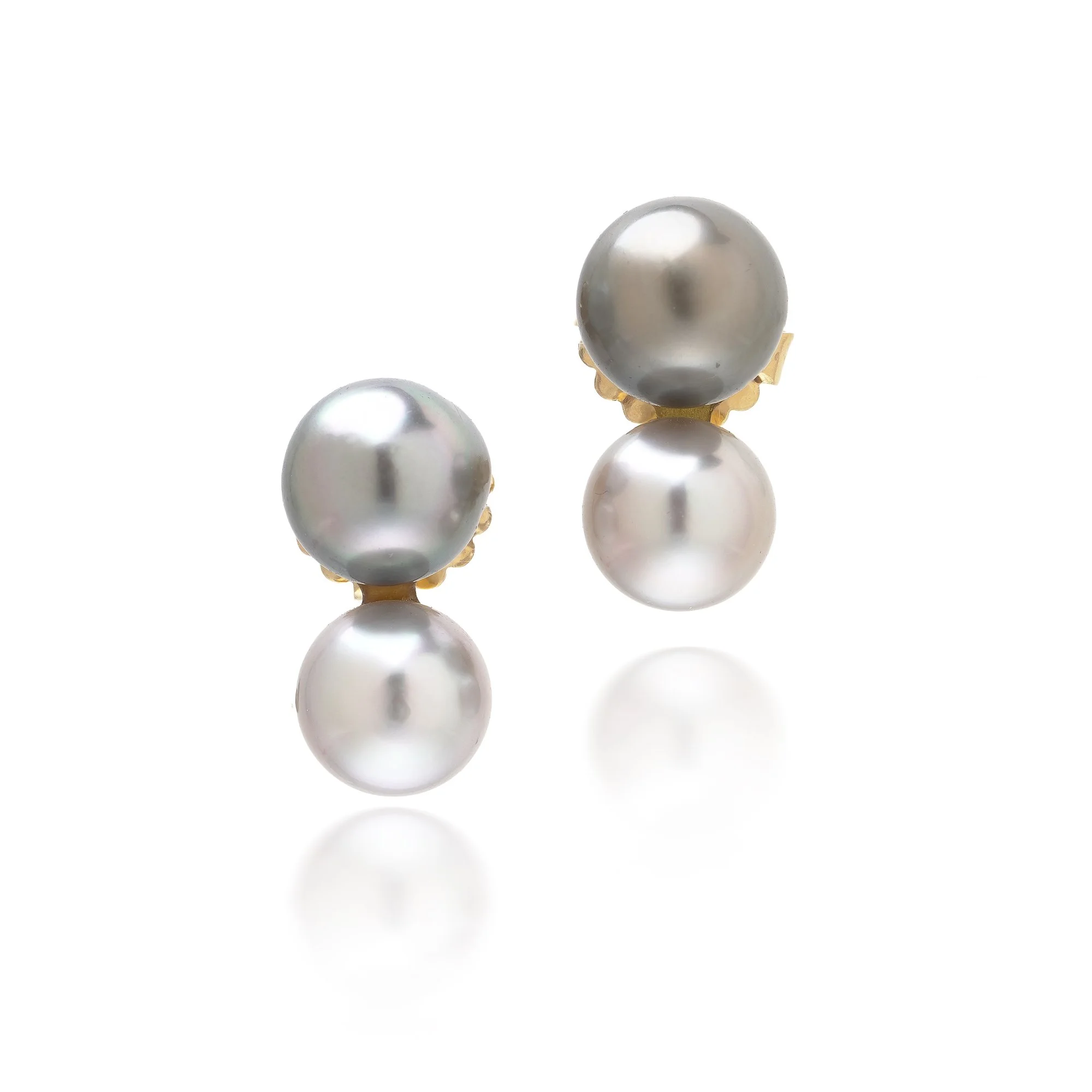
Georgian and Victorian pearls were natural, set as drops and clusters with old-cut diamonds — restrained, romantic, and now the collector's prize. Art Deco brought geometry and the natural pearl paired with platinum and calibré colour. The mid-century loosened up — think the 1970s Cartier heart-shaped pearl ring, playful and signed. And today the story is the sculptural cultured pearl: our Tahitian and South Sea studs, dark and lustrous, the accessible everyday close to the range.
Dating pearl earrings by their fittings
The fastening is often the quickest date on an earring. Long shepherd's-hook wires suggest Georgian and early Victorian; screw-back fittings arrive in the 1890s and dominate the early 20th century (and usually mean unpierced-era wear); clips appear from the 1930s; and the modern post-and-butterfly takes over mid-century. Fittings were often updated so a replaced fitting isn't damning — but an original one corroborates the date, and our guide to dating earrings by their fastenings goes deeper.
Buying antique pearl earrings: what to check
- Nacre condition: look closely around the drill holes and high points — flaking or chalky patches mean the nacre is thinning, and unlike metal it cannot be restored.
- Are the pearls original to the mounts? Colour and wear should agree with the metalwork; bright new pearls in worn Victorian fittings mean replacement — fine if priced as such.
- Matching: a true pair matches in size, tint and lustre. Check them side by side in daylight; "near pairs" married from single earrings are common and should cost less.
- Natural or cultured: for anything pre-1920 in style, ask the question — an X-ray report settles it, and on drops of any size the answer can move the price tenfold. Our natural vs cultured guide explains.
- Weight on the ear: practical but real — Georgian paste-and-pearl drops were made for light wear; check tops and hooks are sound before daily use.
Think you own one? Find out what it’s worth.
Inherited pearl earrings? They may hold rare natural pearls worth far more than expected. Send a photo for a free, no-obligation assessment.
✓ Free expert valuation in 24h ✓ Same-day payment ✓ 10,000+ items traded · 5★ rated
First look at new arrivals
Join our list to see new antique and signed jewellery before it reaches the site — one email when something worth your time arrives, nothing more.
Get first look →Caring for antique pearls
Pearls are soft and organic — keep them away from perfume and hairspray (put them on last), wipe with a soft damp cloth after wear, and store flat, apart from harder jewels. Worn regularly and kindly, antique pearls last generations. Browse more in the full pearl jewellery collection, and see our Victorian turquoise & pearl necklace and pearl & amethyst necklace.
Explore Further
Frequently Asked Questions
Antique and vintage pearl earrings.
Are antique pearl earrings durable enough to wear?
Yes, with care. Pearls are soft, so avoid perfume and knocks and store them apart from harder jewels. Well cared for, antique pearl earrings — including delicate Victorian drops — are worn beautifully today.
What's the difference between natural and cultured pearls in earrings?
Natural pearls (usually pre-1920) formed by chance in the wild and are rare and valuable; cultured pearls are farmed and accessible. In antique earrings the pearls are often natural — worth confirming, as it hugely affects value.
How should I store pearl earrings?
Flat, in a soft pouch, away from harder jewellery that could scratch them, and away from heat and dryness. Put pearls on last, after perfume and hairspray, and wipe gently after wear.