Part of: Gold purity explained
The difference between 9KT, 18KT and 24KT gold is how much pure gold each contains: 9KT is 37.5% gold, 18KT is 75% and 24KT is 99.9%. Gram for gram, the higher the carat the more gold there is, so 24KT contains the most. But a piece’s value also depends on how heavy it is, who made it, its age and any gemstones, so an antique or signed 9KT piece can be worth more than plain 18KT. The only way to know what yours will fetch is a valuation.
Selling 9KT, 18KT or 24KT gold?
Free, no obligation, returned at our cost if you decline.
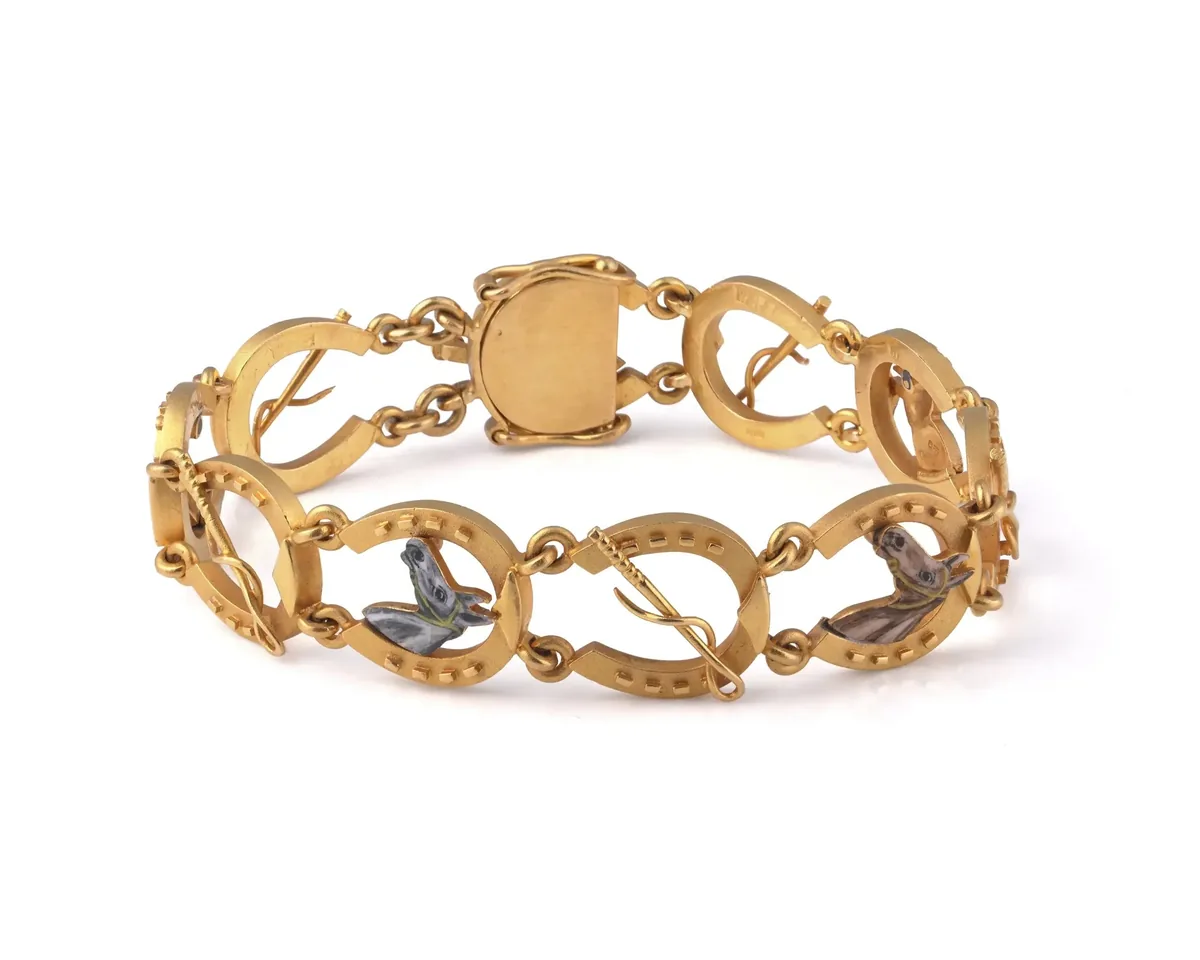
- Read our Google reviews (opens Google)
- Free, no obligation
- A reply within one working day
- Paid the same day after inspection
9KT, 18KT and 24KT compared
- Pure gold
- 9KT
- 37.5%
- 18KT
- 75%
- 24KT
- 99.9%
- Hallmark number
- 9KT
- 375
- 18KT
- 750
- 24KT
- 999
- Colour
- 9KT
- Paler yellow
- 18KT
- Rich yellow
- 24KT
- Deep, bright yellow
- Strength
- 9KT
- Hard-wearing
- 18KT
- Good balance
- 24KT
- Soft, scratches and bends easily
- Typical uses
- 9KT
- British everyday jewellery, chains, signet rings
- 18KT
- Fine jewellery, engagement rings, designer pieces, watches
- 24KT
- Bullion bars and coins
Which gold is worth the most?
Gram for gram, 24KT contains the most pure gold, then 22KT, 18KT, 14KT and 9KT. That is why higher carats are worth more by the gram. But nobody sells gold by the gram alone:
- Size matters as much as carat. A heavy 9KT chain can be worth more than a light 18KT ring.
- Craft matters. Antique, signed and gem-set pieces are valued as jewellery, often well above their gold.
- Condition and demand matter for anything sold as jewellery rather than scrap.
Is 9 carat gold good?
Yes. 9KT is genuine gold, hallmarked in the UK since 1854, and it is the most common gold in British jewellery. It is harder-wearing than higher carats, which suits chains, bracelets and rings worn every day. Its lower gold content gives it a paler colour.
What is the difference between 18KT and 24KT gold?
18KT gold is three quarters pure gold, mixed with other metals that make it hard enough for jewellery and give it its colour. 24KT is almost pure gold: richer in colour but too soft for most jewellery, which is why it is mainly used for bars and coins. The extra gold content is the whole difference between them.
How to tell which carat you have
0 of 4 checked
1Look for the number
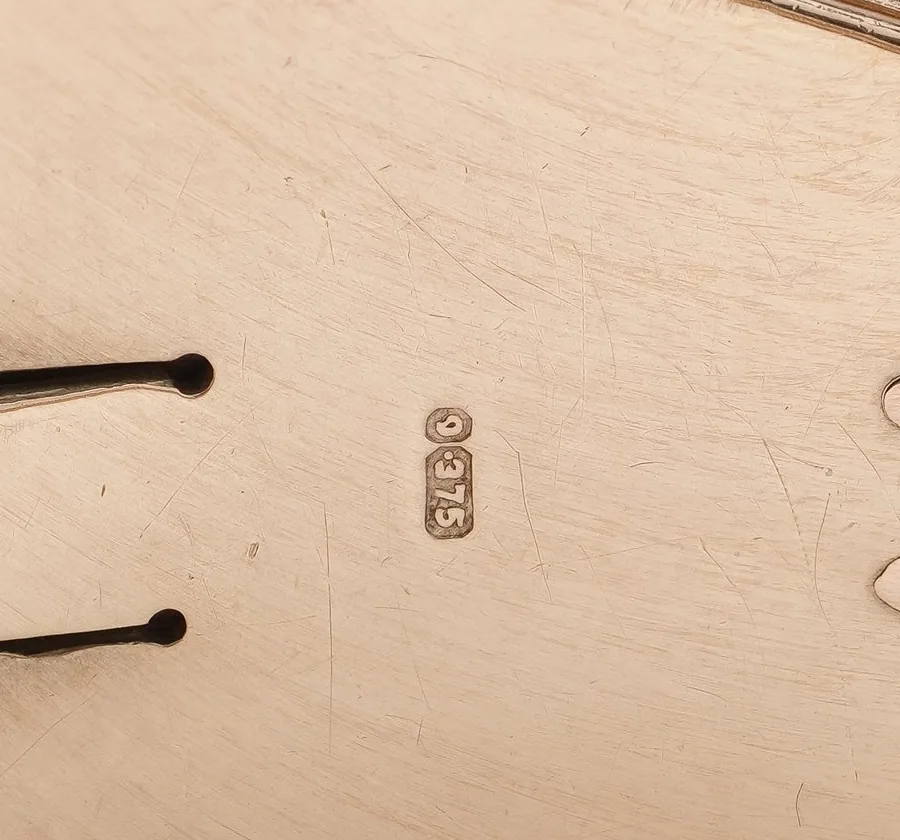
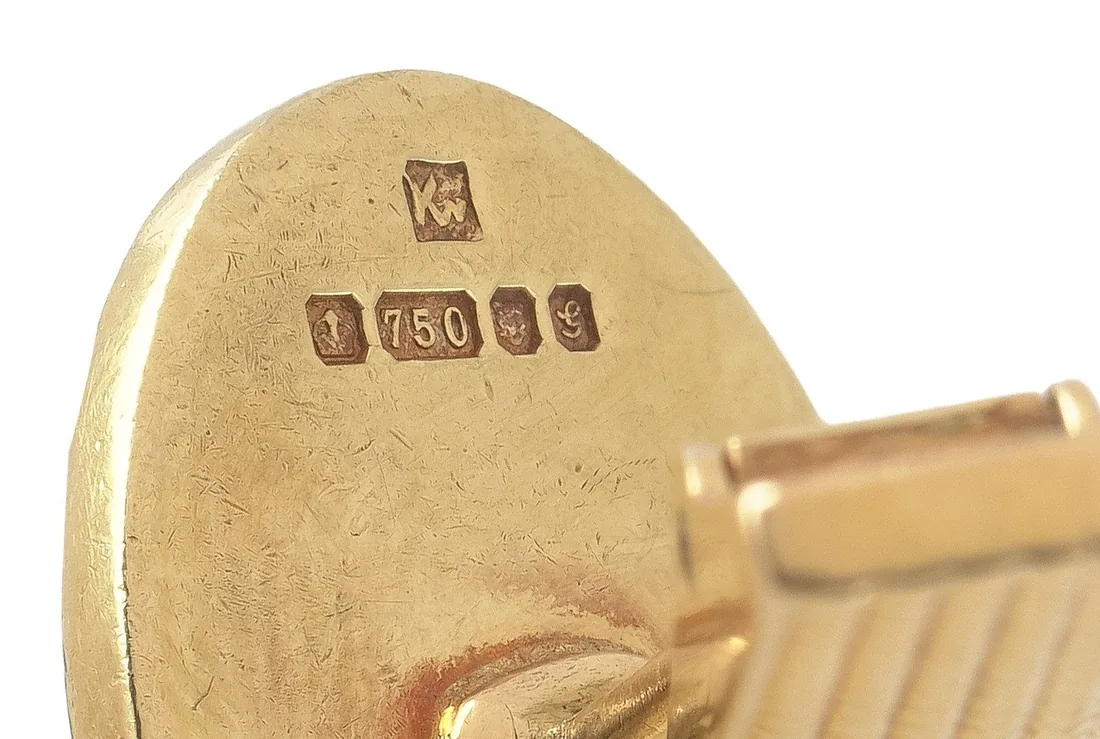
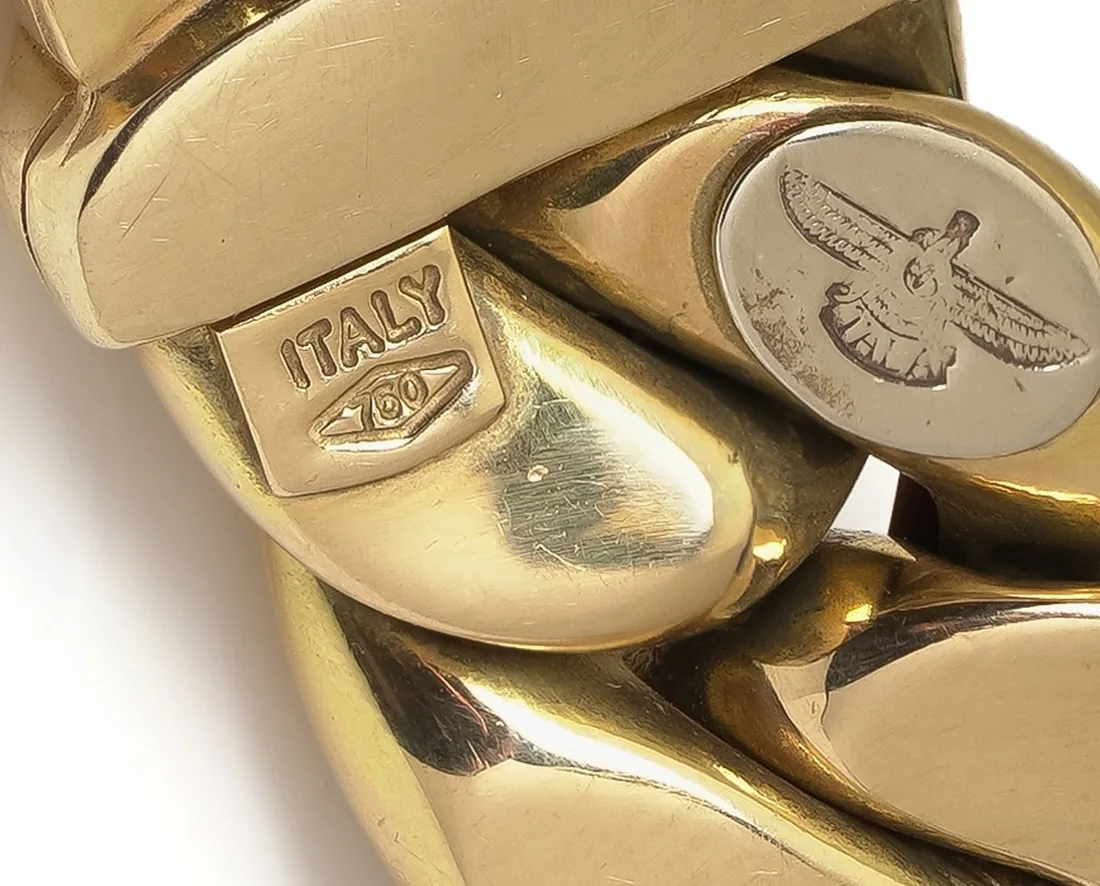
Look for the number: 375 (9KT), 585 (14KT), 750 (18KT), 916 (22KT) or 999 (24KT), inside rings, on clasps and on the backs of pendants.
2Look for a full UK hallmark
Look for a full UK hallmark: maker’s mark, fineness, assay office and usually a date letter.
3Older British gold
Older British gold may show the carat in figures, such as 9 or 18, sometimes with .375 beside it, as on the 1950s watch clasp in our photographs.
4Plating marks
Plating marks such as GP, GF or 18K GE mean the gold is only a surface layer.
Selling 9KT, 18KT or 24KT gold? Send clear photographs of the piece and its marks for a free, honest check.
Free, no obligation, returned at our cost if you decline.
What decides what a buyer will pay?
The carat and the marks, how heavy the piece is, the maker or designer, the age and style, any gemstones, the condition, and whether the piece sells as jewellery or as scrap. We never publish figures; every piece is different, so send us photographs for a free valuation.
Free, no obligation, and returned at our cost if you decline.
Read our Google reviews (opens Google)
- Carat and marks
- Maker
- Age and style
- Gemstones
- Condition
- Jewellery or scrap
Red flags when selling gold
- An offer with no breakdown of what it is based on.
- "Up to" prices that never apply to your items.
- Fees you only hear about after you have sent your gold.
- Pressure to decide on the spot.
How selling works
- 1
Send photographs
of the piece and close-ups of every mark.
- 2
Free value inspection
We reply within one working day with an estimate, subject to inspection. If our offer differs, you can decline and we return it at our cost.
- 3
Paid the same day after inspection
by bank transfer or in cash, in Mayfair, at our Braintree office, by post or by free collection.
Questions people ask
Which is worth more, 9KT, 18KT or 24KT gold?
Gram for gram, 24KT, because it holds the most pure gold, then 18KT, then 9KT. The value of a piece also depends on how heavy it is, its maker, age and condition.
Is 9 carat gold real gold?
Yes. 9KT gold is 37.5% pure gold and is hallmarked as gold in the UK.
What is the price difference between 18KT and 24KT gold?
It comes from the extra pure gold: 24KT is almost pure, 18KT is three quarters gold. For what your piece is worth, send photographs for a free valuation.
Is 22KT gold better than 18KT?
22KT holds more gold and has a deeper colour, but it is softer. 18KT is harder-wearing for rings and jewellery worn every day.
Can antique 9KT gold be worth more than modern 18KT?
Yes. Antique, signed and gem-set pieces are valued as jewellery, and their age, maker and design can matter more than the carat.
Do I need ID to sell gold in the UK?
Yes. Reputable buyers ask for photo ID and proof of address when you sell gold.
Related guides
Want to know what your gold is worth?
Send a few photographs and we will tell you what it is and what it is worth, free.
Free, no obligation, returned at our cost if you decline.