Carnelian Jewellery
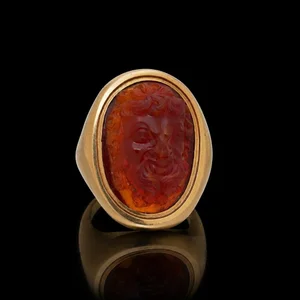
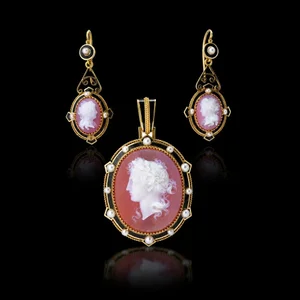
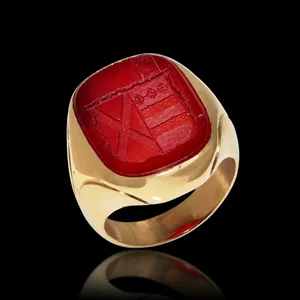
Antique carnelian jewellery in gold: an 18KT gold carnelian intaglio signet ring carved with a coat of arms, a Victorian carnelian cameo ring with a Bacchic mask, a 20KT gold carnelian cameo and pearl pendant locket, a Victorian carnelian cameo pendant and earrings suite and a 9KT gold Albert chain bracelet with a bloodstone and carnelian swivel fob.
5.0 by our buyers on Google · 4,000+ customers
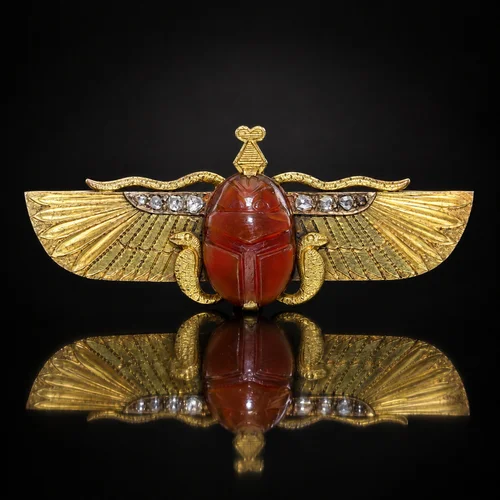
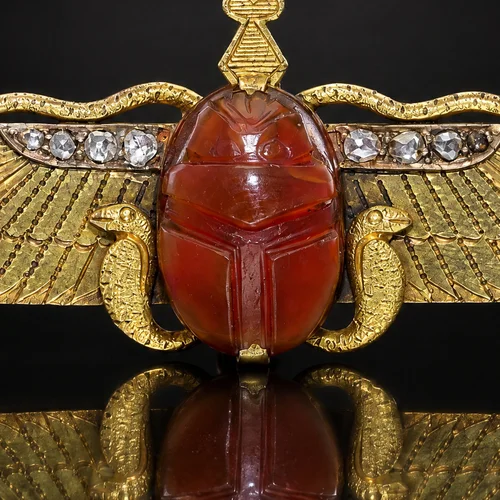 19th Century 20KT Gold Egyptian Revival Carnelian Scarab and Diamond Brooch£3,285
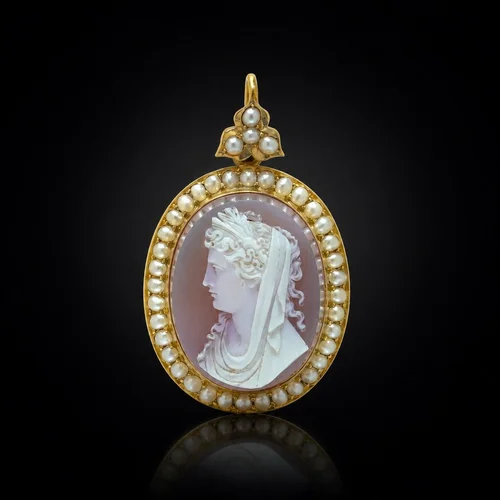
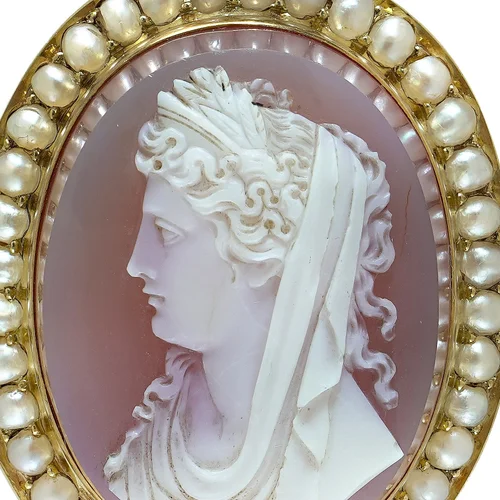 19th Century 20KT Gold Carnelian Cameo and Pearl Pendant Locket£3,850
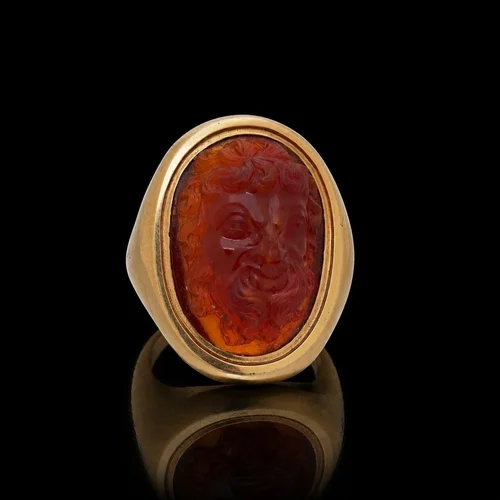
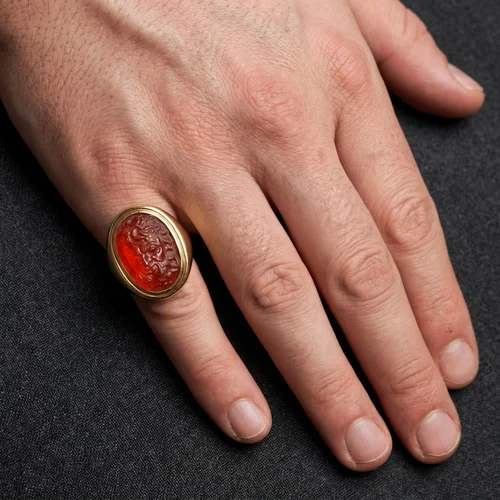 Victorian Carnelian Cameo Ring, Carved Bacchic Mask in 19th Century Gold£8,985
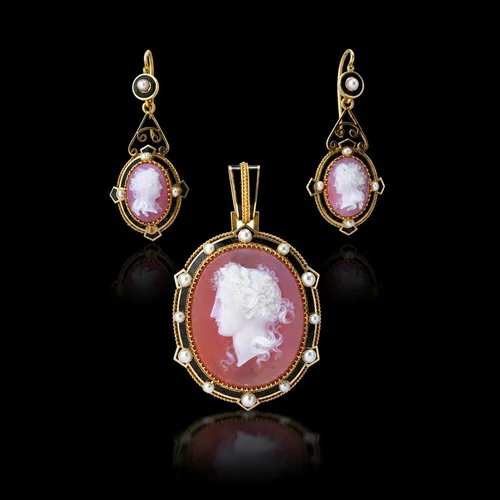
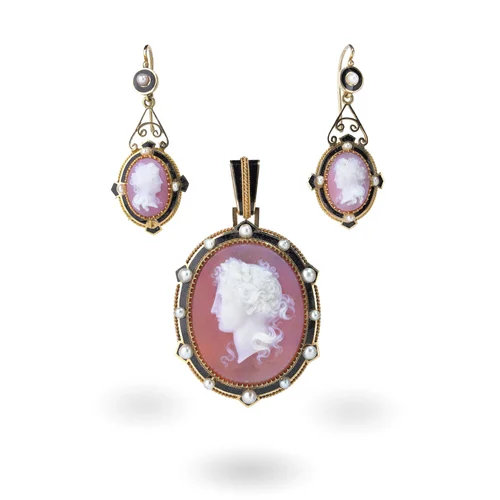 Victorian Carnelian Cameo Pendant and Earrings Suite in 18KT Gold£6,875
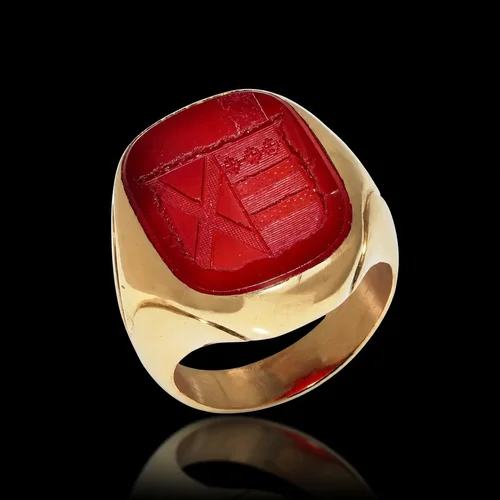
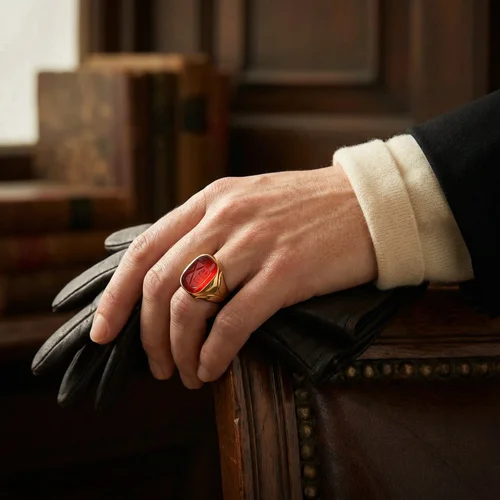 Antique Carnelian Signet Ring, 18KT Gold Intaglio with Coat of Arms£3,975
What is carnelian?
Carnelian is an orange to reddish brown variety of chalcedony, a form of quartz. It takes a fine polish and carves cleanly without chipping, which is why it has been used for seals, intaglios and cameos since antiquity.
Carnelian signet and intaglio rings
Because hot wax does not stick to it, carnelian was the classic stone for seal rings. An intaglio is carved into the stone, so it leaves a raised impression in wax. Armorial carnelian signets, carved with a family's coat of arms or crest, were made throughout the eighteenth and nineteenth centuries.
Carnelian cameos
A cameo is carved in relief, standing out from the background. Victorian jewellers set carnelian cameos of classical heads, masks and mythological figures in gold rings, pendants, brooches and matching suites.
Caring for carnelian
Carnelian is durable for everyday wear. Clean it with warm soapy water and a soft brush and dry it well; avoid harsh chemicals, which can dull the polish, and protect carved surfaces from knocks.
Questions
What colour is carnelian?
Orange to reddish brown, sometimes with lighter banding. The colour comes from iron in the stone.
Why was carnelian used for signet rings?
It carves cleanly, takes a high polish and hot sealing wax does not stick to it, so it makes crisp impressions.
What is the difference between an intaglio and a cameo?
An intaglio is carved into the stone and makes a raised impression in wax. A cameo is carved in relief, so the design stands out from the surface.
Is carnelian a precious stone?
It is a variety of chalcedony, traditionally called a semi-precious or hardstone. Its value in antique jewellery comes mostly from the carving and the gold setting.