Part of: Cameo guide
In jewellery, silhouette has two meanings. Most often it means the outline or overall shape of a piece, such as the line a necklace makes around the neck: choker, collar, princess, matinee, opera or rope. In antique jewellery it also means a silhouette portrait: a profile painted in black, or cut from black paper, and set in a ring, locket or brooch, very fashionable in the late 1700s and early 1800s. Profile cameos are close relatives, but they are carved in relief rather than painted.
Have antique portrait jewellery or cameos?
Free, no obligation, returned at our cost if you decline.

- Read our Google reviews (opens Google)
- Free, no obligation
- A reply within one working day
- Paid the same day after inspection
Silhouette as the shape of a piece
Designers use silhouette for the outline of a jewel: whether it is long or short, close or loose, geometric or flowing. A piece’s silhouette decides how it frames the face and neck and how it sits with a neckline.

The classic necklace silhouettes
- Collar
- Typical length
- About 30 to 33 cm
- How it sits
- Tight around the middle of the neck
- Choker
- Typical length
- About 35 to 40 cm
- How it sits
- Around the base of the neck
- Princess
- Typical length
- About 43 to 48 cm
- How it sits
- Just below the collarbone
- Matinee
- Typical length
- About 50 to 60 cm
- How it sits
- On the upper chest
- Opera
- Typical length
- About 70 to 86 cm
- How it sits
- At or below the bust; can be doubled
- Rope
- Typical length
- Over about 90 cm
- How it sits
- Long; often knotted or looped
- Lariat
- Typical length
- Long, with no clasp
- How it sits
- Wrapped or knotted at the front
- Bib
- Typical length
- Varies
- How it sits
- A wide, layered front
Silhouette portrait jewellery
A silhouette is a profile portrait in solid black, named after the French finance minister Étienne de Silhouette. From the 1770s to the 1830s silhouettes were a popular, affordable form of portrait, and miniature silhouettes were set in rings, lockets, brooches and bracelet clasps. They were painted on card, plaster, glass or ivory, or cut from black paper, sometimes with gold highlights. The London silhouettist John Miers was famous for miniature silhouettes made to be set in jewellery. Many were sentimental or mourning pieces, with hair or an inscription on the back.
Silhouettes and cameos
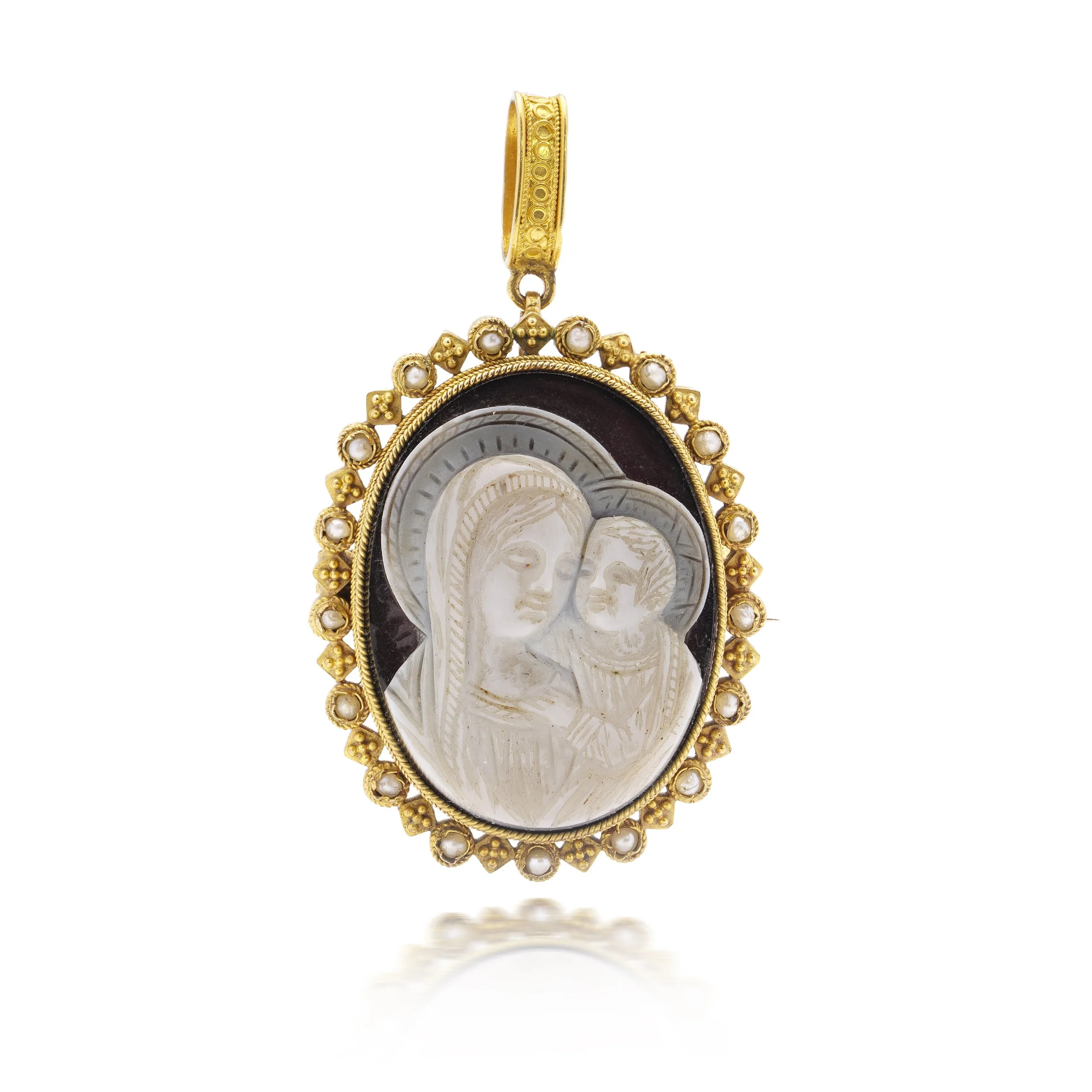
A cameo is a portrait or scene carved in relief from layered shell or stone, with the figure standing out against a background of a different colour. Cameos often show a profile, which makes them look like silhouettes, but they are carved, not painted.
How to recognise silhouette portrait jewellery
0 of 4 checked
1The image
A black profile, painted or cut, sometimes with fine gold or white details.
2The glass
Usually under a convex glass, set in gold or pinchbeck.
3The back
Look for plaited hair, initials, dates or an inscription.
4The period
Most date from about 1770 to 1840.
Have antique portrait jewellery or cameos? Send clear photographs of the front, the back and any marks for a free, honest check.
Free, no obligation, returned at our cost if you decline.
What makes portrait jewellery valuable?
The artist (a known silhouettist such as John Miers is sought after), the quality of the painting or carving, the sitter and any inscription, the metal and setting, the condition and the provenance. We never publish figures; every piece is different.
Free, no obligation, and returned at our cost if you decline.
Read our Google reviews (opens Google)
- Artist
- Quality
- Sitter and inscription
- Metal
- Condition
- Provenance
How selling works
- 1
Send photographs
of the front, the back and any inscription or marks.
- 2
Free value inspection
We reply within one working day with an estimate, subject to inspection. If our offer differs, you can decline and we return it at our cost.
- 3
Paid the same day after inspection
by bank transfer or in cash, in Mayfair, at our Braintree office, by post or by free collection.
Questions people ask
What does silhouette mean in jewellery?
The outline or overall shape of a piece, such as a necklace’s line around the neck. In antique jewellery it also means a black profile portrait set in a ring, locket or brooch.
What are the different necklace silhouettes?
Collar, choker, princess, matinee, opera, rope, lariat and bib, from closest to the neck to longest.
What is silhouette portrait jewellery?
Jewellery set with a miniature black profile portrait, painted or cut from paper, popular from the 1770s to the 1830s.
Is a cameo a silhouette?
No. A cameo is carved in relief from shell or stone. It often shows a profile, which is why the two are confused.
Where does the word silhouette come from?
From Étienne de Silhouette, a French finance minister of the 1750s whose name came to be used for cheap black profile portraits.
Who made silhouettes for jewellery?
Many artists did; John Miers of London was especially known for miniature silhouettes set in rings, lockets and brooches.
Related guides
Have a portrait jewel or cameo to sell?
Send a few photographs and we will tell you what it is and what it is worth, free.
Free, no obligation, returned at our cost if you decline.