Antique & Vintage Wedding Bands: Curved, Contour and Stacked
Two of the most photographed ring stacks of 2026 do opposite things. One sits tight against the engagement ring, the other deliberately leaves a gap. Antique bands handle both, but only if you know which shapes sit flat.
Bridal stacking is the dominant ring story of 2026. Taylor Swift has been photographed wearing a V shaped diamond band against an old cut engagement ring, and Zendaya's wedding introduced the deliberate gap, where the band sits with visible space beside the engagement ring rather than flush against it. Both looks were built on antique and antique-style rings, and both are easier to achieve with period bands than with new ones. Here is which shapes work, why, and what to check before you buy.
Quick answer: which antique band actually fits?
A band only sits flush if its profile matches the setting beside it. Against a raised old cut solitaire you need a curved, contour or V shaped band. Against a low set gypsy or flush set ring, a straight band sits perfectly.
Antique five stone and eternity bands were made in far more profiles than modern bands, which is why they solve stacking problems new bands cannot.
The three stacking looks of 2026
| Look | What it is | Band shape you need |
|---|---|---|
| Contour / fitted | Band shaped to nest against the engagement ring | Curved, V shaped or scalloped |
| The gap | Band worn with deliberate space beside the ring | Straight band, any profile |
| Full stack | Three or more bands worn together | Mixed widths, at least one narrow |
The gap look is the forgiving one. If your engagement ring has an awkward gallery or a wide basket, leaving space is easier than hunting for a band that nests perfectly.
Why antique bands solve the fit problem
Modern bands are made in a small number of standard profiles because they are produced at scale. Antique bands were made one at a time, often to sit beside a specific ring, so the surviving stock covers a much wider range of shapes.
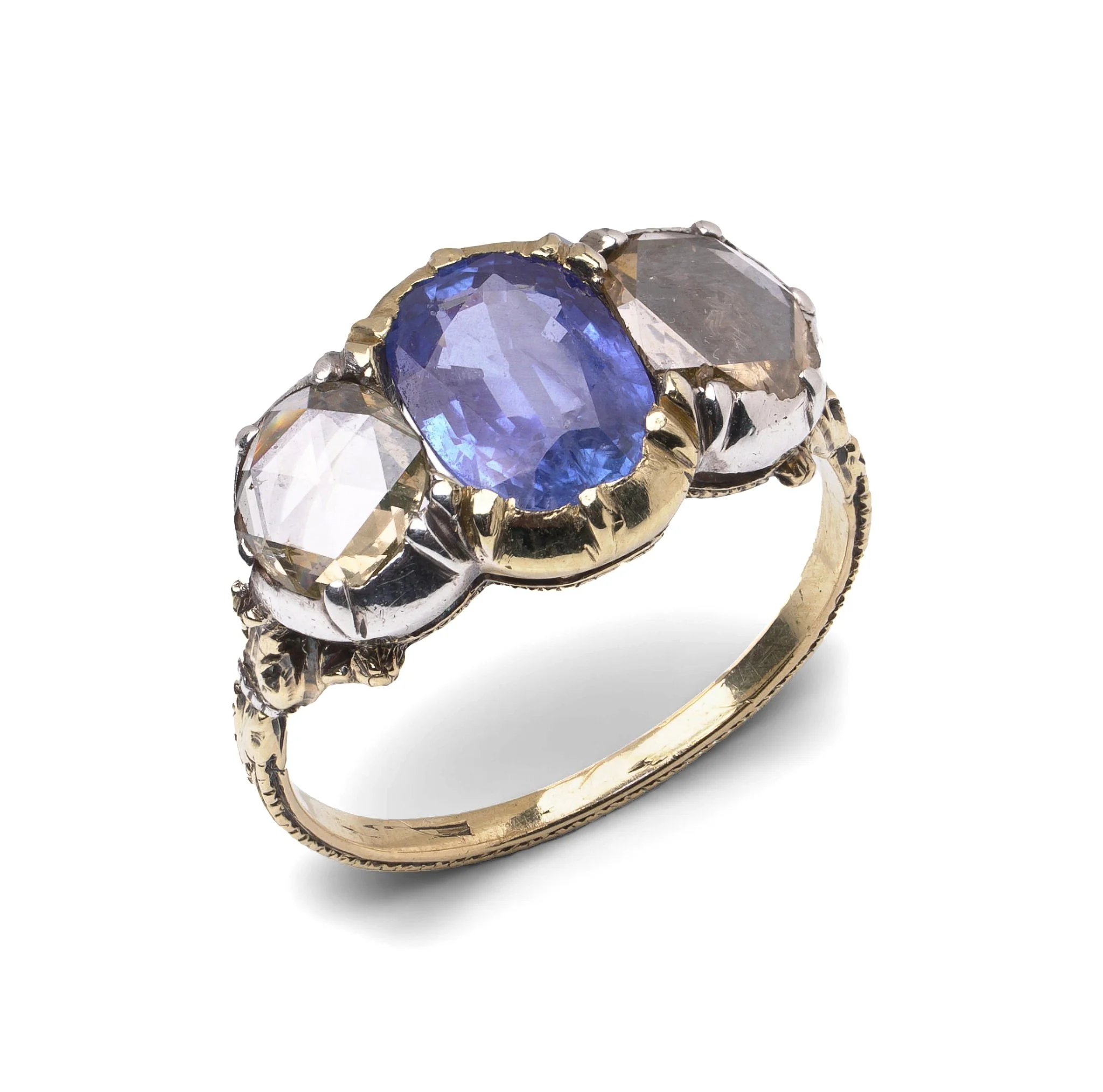
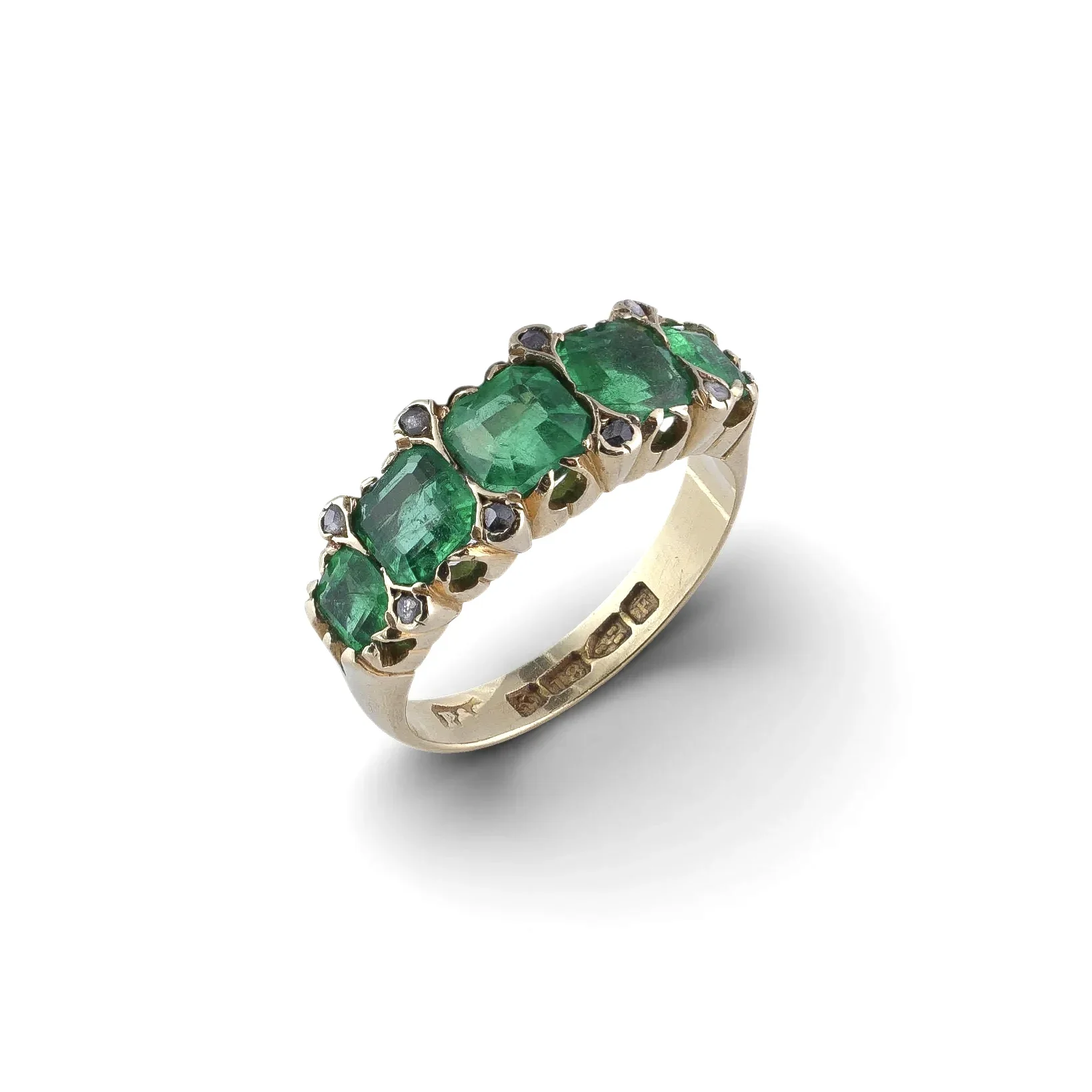
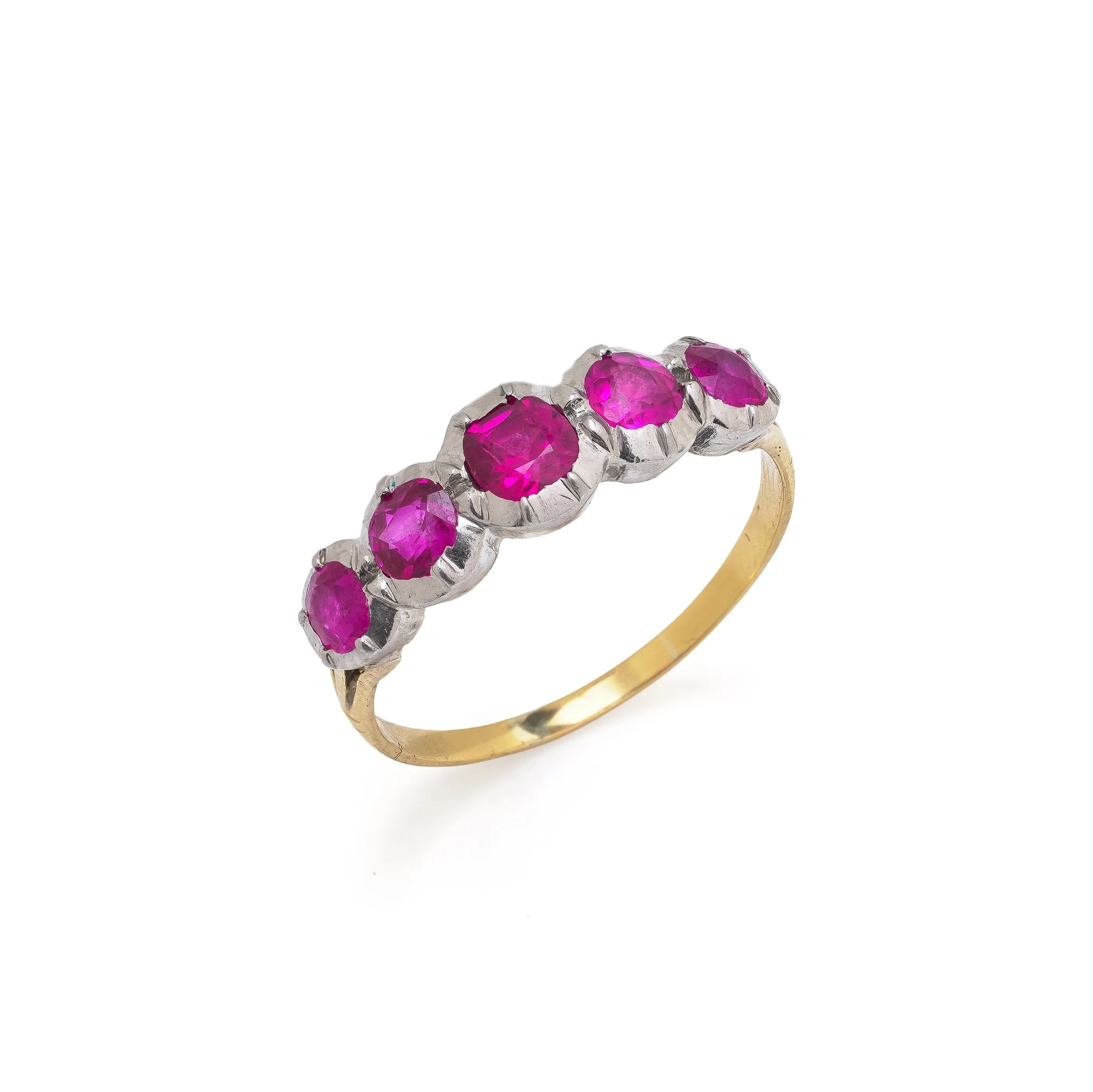
Five stone and three stone rings from the Victorian and Edwardian periods are particularly useful. They were not made as wedding bands, but their low graduated profiles sit closer to a solitaire than most modern eternity rings, and the stone sizes step down towards the shoulders, which is exactly what lets a second ring sit tight.
Gypsy and star set bands
The stones are sunk flush into the metal, so nothing protrudes. These stack under almost anything and are the safest choice for daily wear because there are no claws to catch.
Carved half hoops
Victorian and Edwardian half hoops often have shaped shoulders that curve away from the centre. Turned the other way up, that curve frequently nests against a raised setting without any alteration.
Art Deco eternity bands
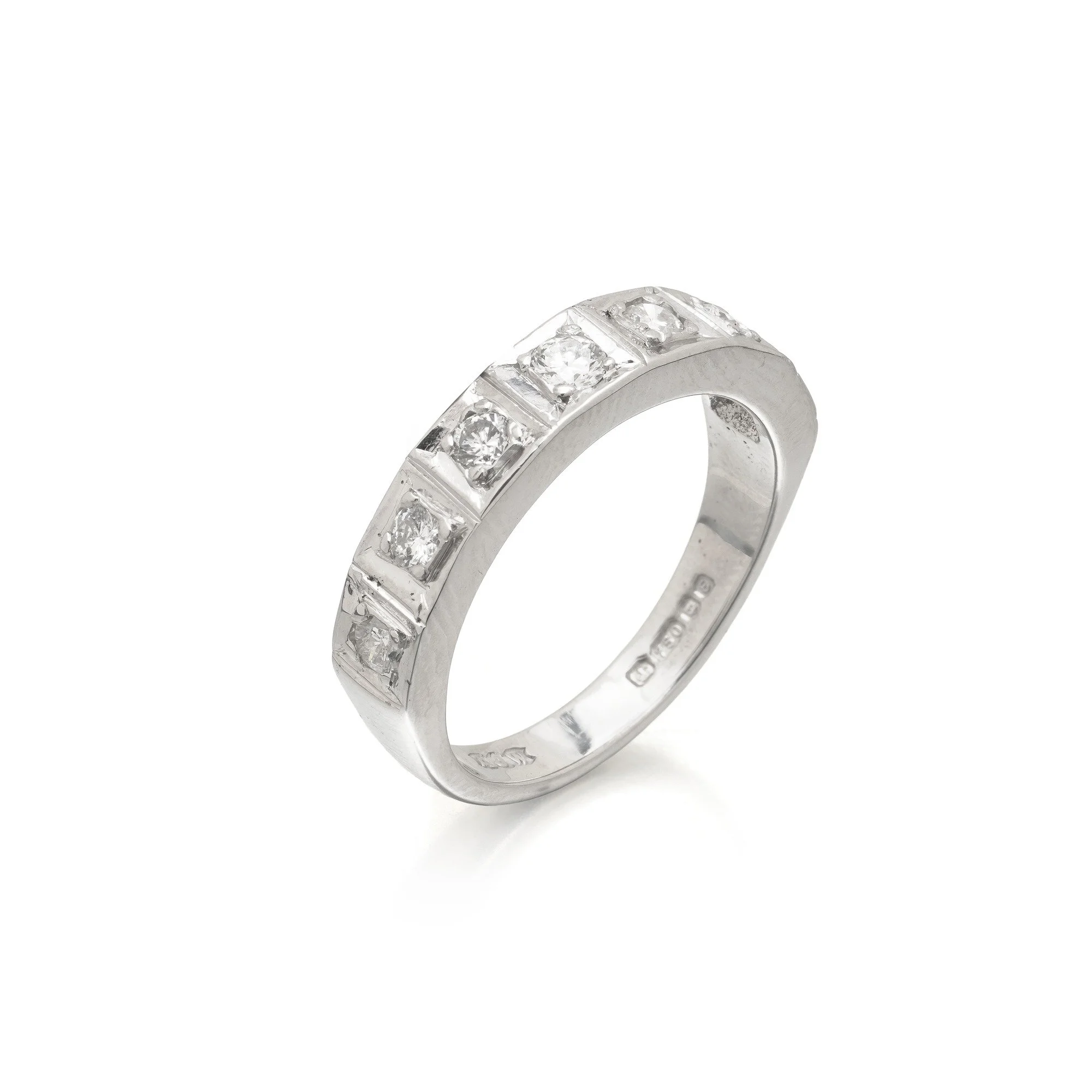
Narrow, geometric and usually platinum. They stack in multiples and sit well with both white and yellow metal, which is why they carry the mixed metal look better than most.
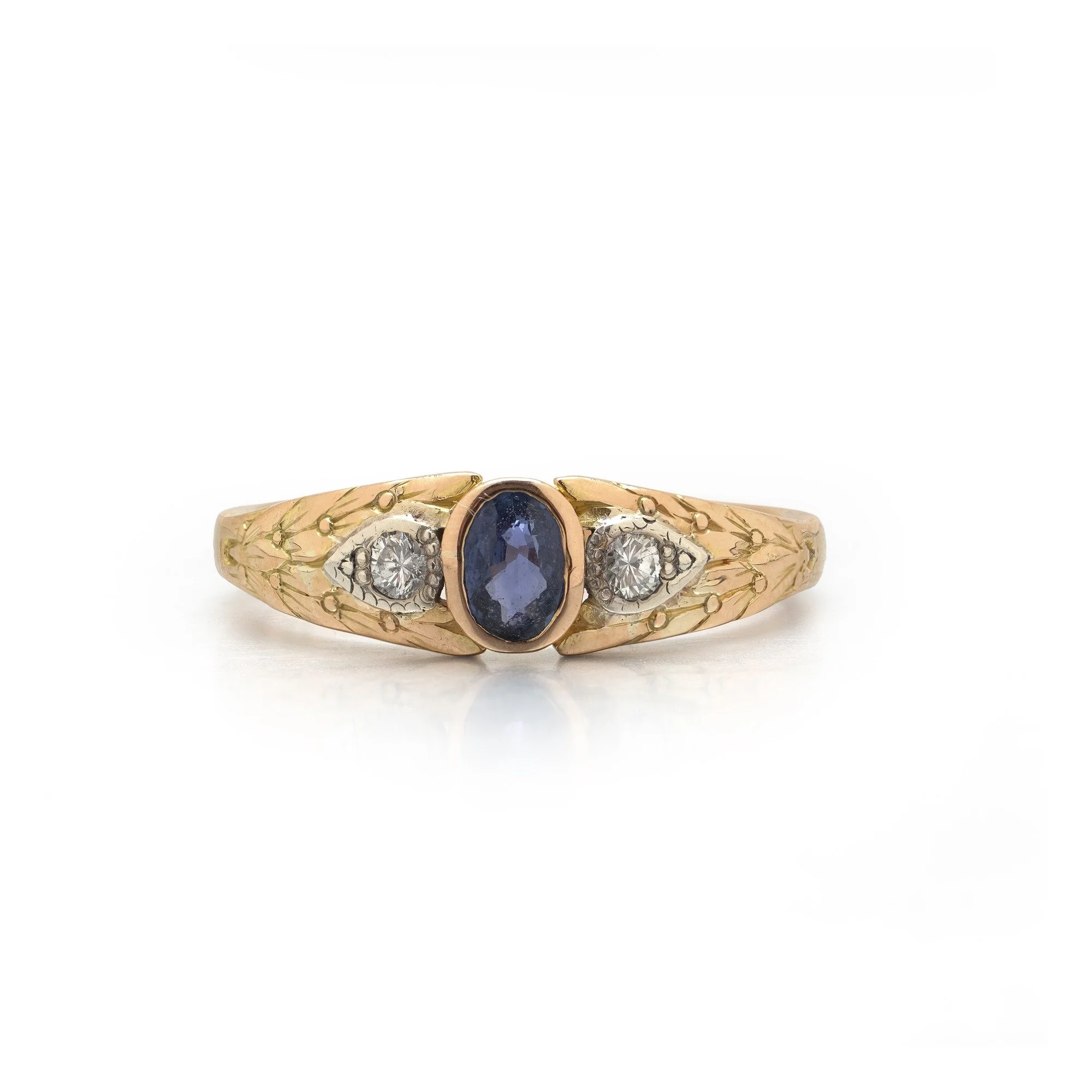
These are period bands and stacking rings from our current stock. The profiles differ, so you can see which shapes would nest and which would not:


Five things to check before you buy
- Put it flat on a table. A band that rocks has been resized badly or bent. Both are fixable, but it affects price.
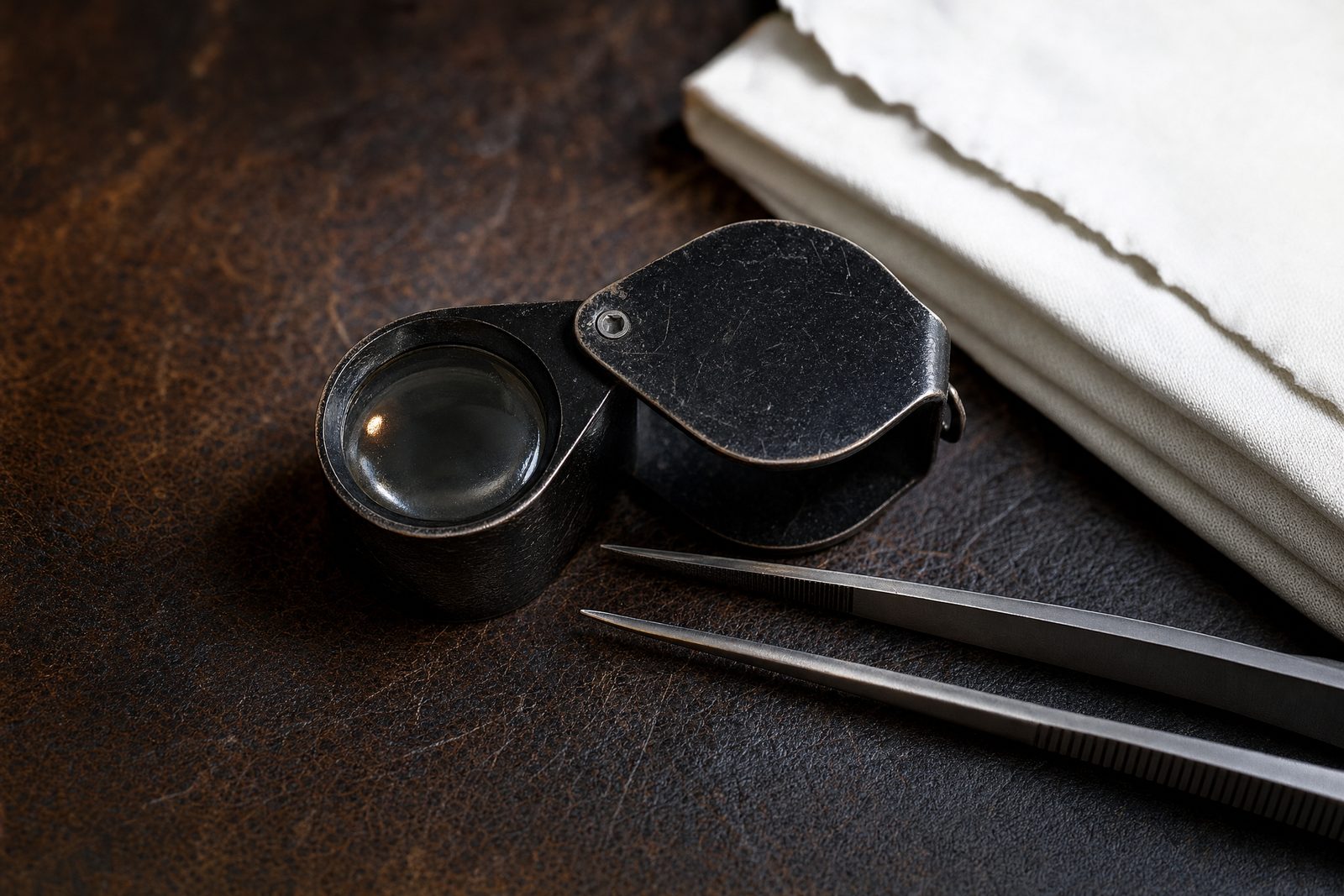
- Look at the shank underneath. A thin or dished shank under the finger means decades of wear and will eventually need rebuilding.
- Check the hallmark is complete. Resizing often cuts through the marks. A partial mark is common and not a fault, but it makes dating harder.
- Count the claws. On five stone rings, replaced claws are usually a slightly different colour of gold under a loupe.
- Try it against your own ring, not a picture. Two rings that look compatible online often will not sit flat. Any decent dealer will let you check.
Sizing, and why it matters more with antique bands
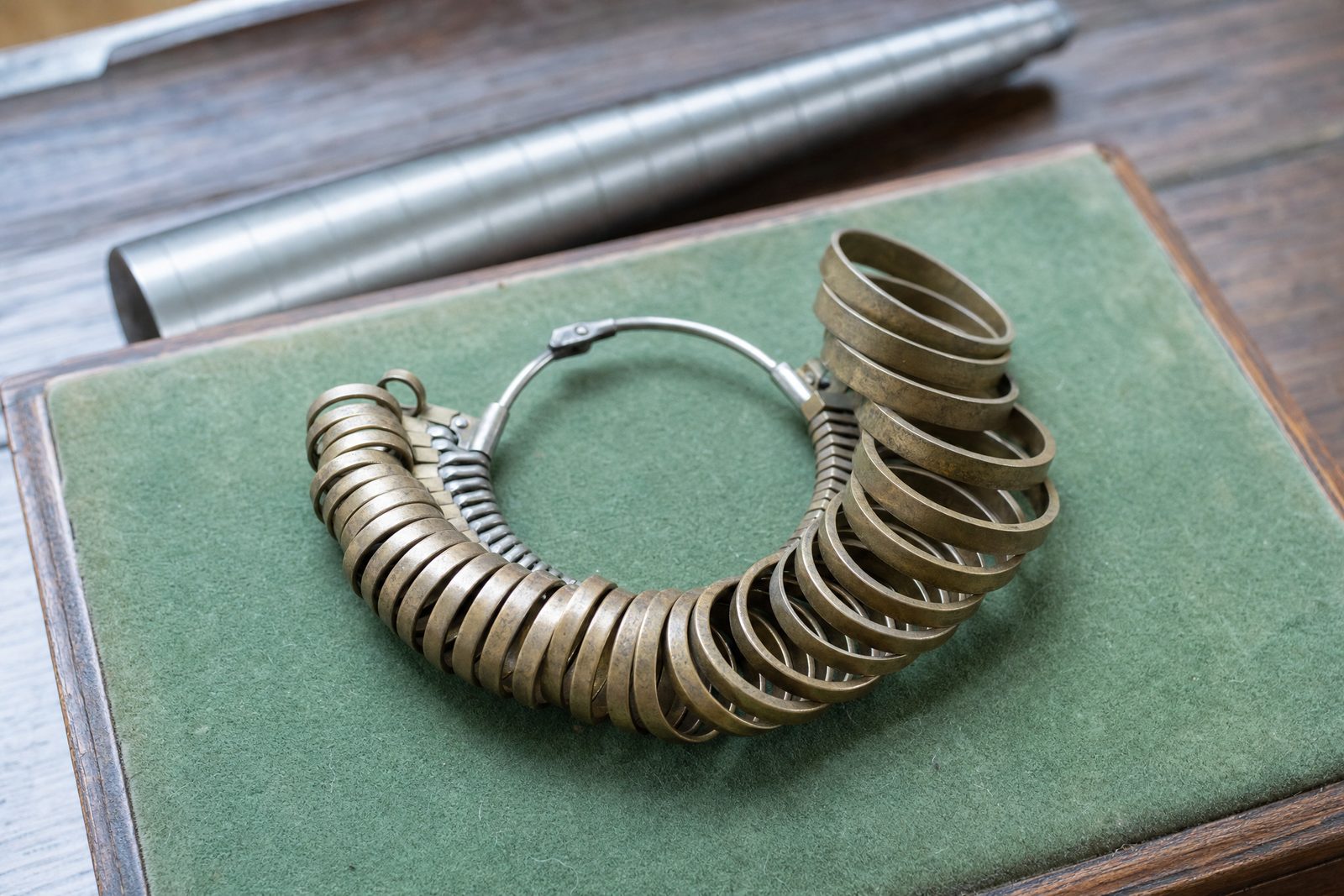
Full eternity bands and carved half hoops can only be resized within about one size in either direction before the stone spacing or the carving distorts. Buy as close to your size as possible. Straight unset bands resize freely.
UK ring sizes run by letter, so it is worth knowing the conversion when buying from abroad: UK J is US 4¾ and EU 49, UK L is US 5¾ and EU 51, UK N is US 6¾ and EU 54, UK P is US 7¾ and EU 56.
Think you own one? Find out what it’s worth.
Inherited a band and want to know what it actually is? Send photographs. Reading hallmarks, dating profiles and identifying old cut stones is routine work here, and the valuation is free.
✓ Free expert valuation in 24h ✓ Same-day payment ✓ 10,000+ items traded · 5★ rated
Explore Further
Frequently Asked Questions
Antique wedding bands, answered.
What is a contour wedding band?
A band shaped so it nests against the engagement ring rather than sitting straight across. It is also called a curved, fitted or shadow band. A V shape is the most common version and works against a raised solitaire or a pointed setting.
Can antique rings be used as wedding bands?
Yes, and Victorian and Edwardian five stone and half hoop rings are widely used this way. They were not made as wedding bands, but their low graduated profiles often sit closer against a solitaire than a modern eternity ring will.
Will a straight band sit flush against my engagement ring?
Only if the engagement ring is low set, such as a gypsy or flush setting. Against a raised solitaire a straight band leaves a gap. In 2026 that gap is a deliberate look, so it is no longer something to design around.
Can a vintage eternity ring be resized?
Full eternity rings can usually move about one size before the stone spacing distorts, and some cannot be resized at all. Half eternity rings resize more easily because the back is plain. Buy as close to your size as you can.
Is an antique band strong enough for daily wear?
Check the shank underneath first. Decades of wear thin the metal under the finger, and a thin shank will eventually need rebuilding. Gypsy and star set bands are the most robust for daily wear because the stones sit flush with no claws to catch.
What does the hallmark on an old wedding band tell me?
A full British hallmark gives the metal purity, the assay office and a date letter, so the ring can usually be dated to the year. Resizing often removes part of the mark, which is common and not a fault, but it makes precise dating harder.