
Intaglio Jewellery: What It Is, How to Identify It & Its Value
The intaglio — a design carved down into a gemstone — is jewellery's oldest art form, born as a signature pressed into wax. How intaglios work, how to spot a genuine hand-carved stone, and what they're worth.
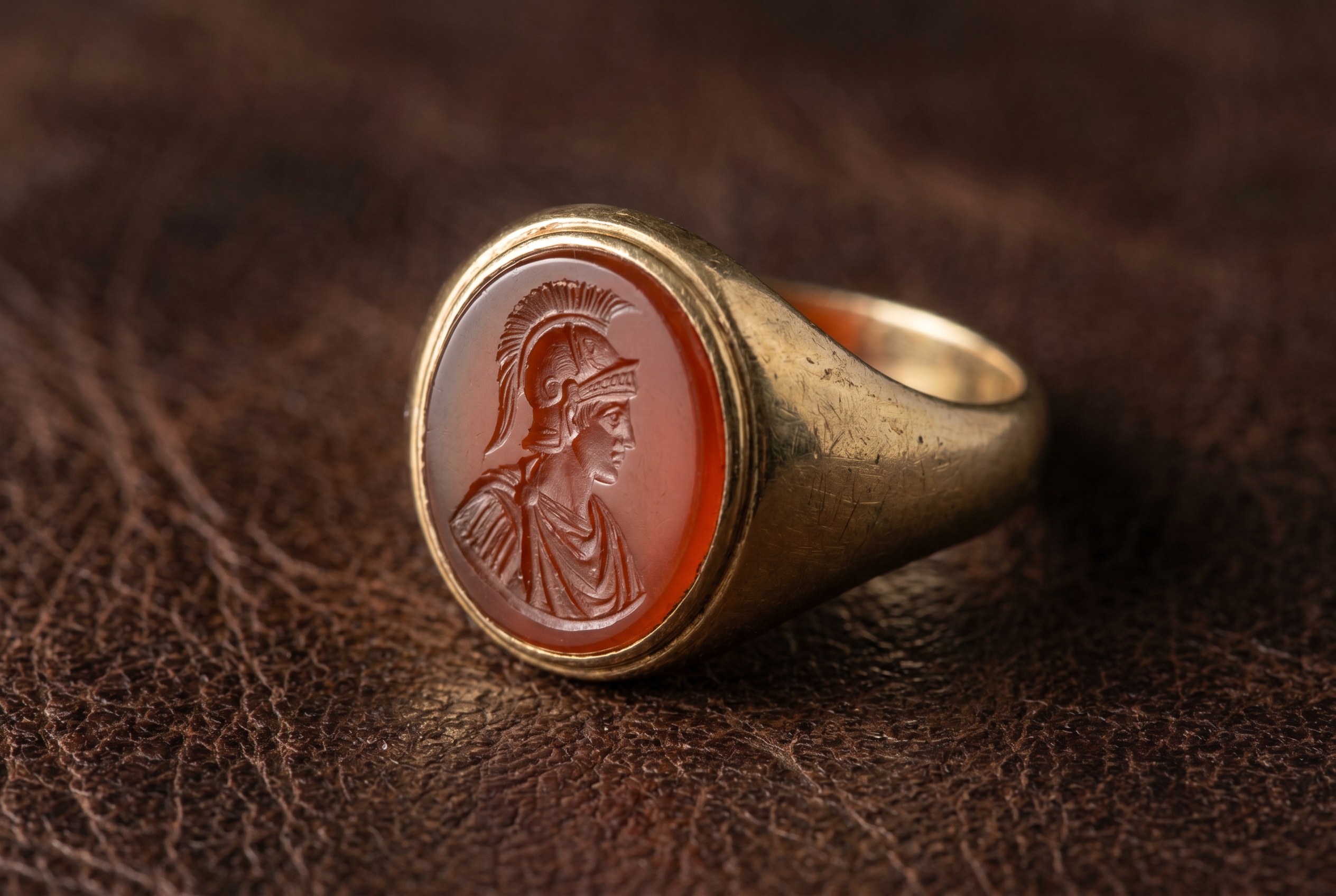
Before signatures, there were seals — and the intaglio was the seal. A design carved down into a hardstone reads in reverse until pressed into wax, where it springs up in perfect relief. Emperors signed empires with them; Georgian gentlemen hung them from watch chains; and today genuine antique intaglios are among the most characterful jewels you can wear.
Quick answer: what is an intaglio?
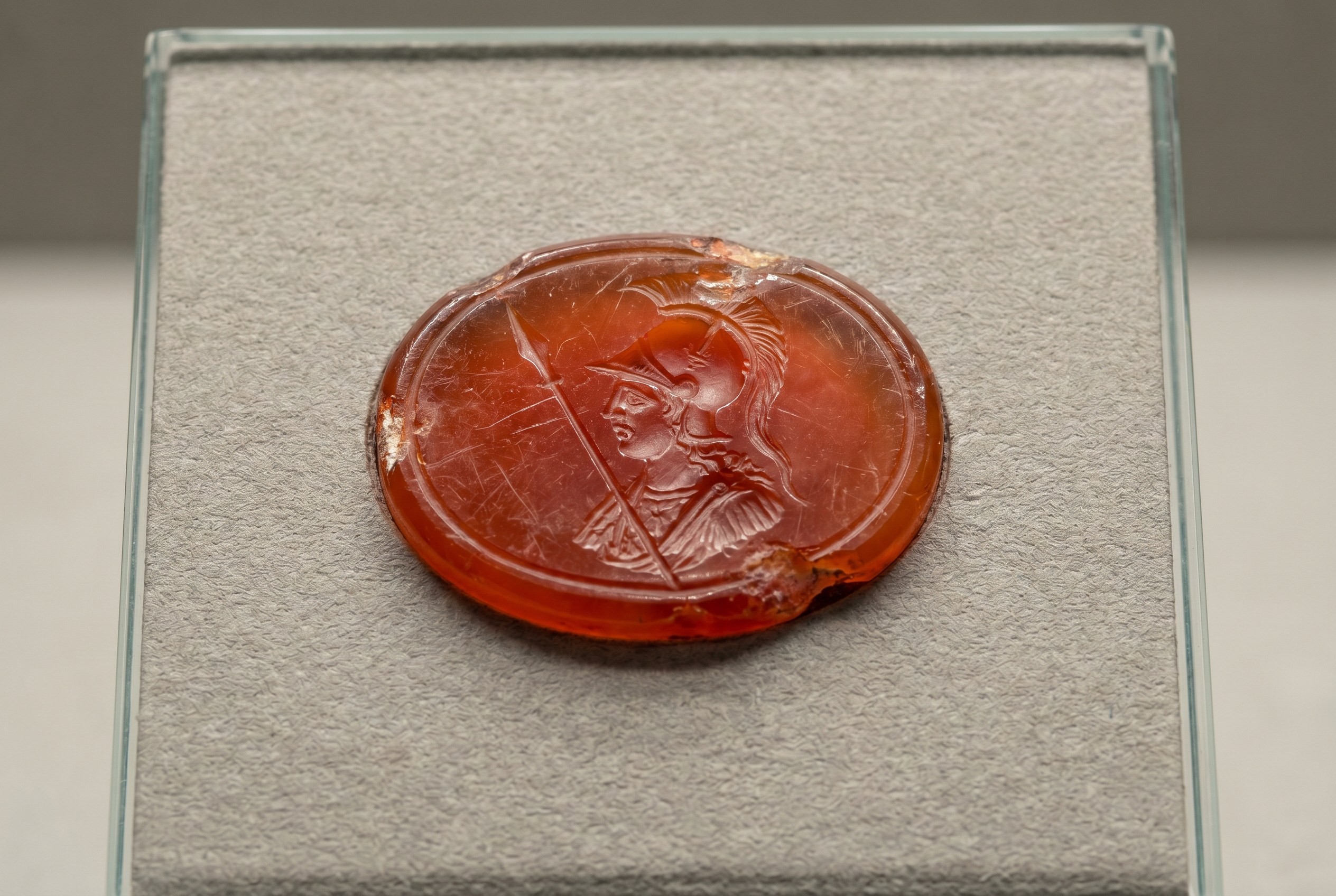
An intaglio is a design carved into the surface of a gemstone — the opposite of a cameo, where the design stands proud. Cut in reverse, it was made to be pressed into wax as a personal seal or signature.
Classic intaglio stones are carnelian, agate, bloodstone, onyx and amethyst, most often set in signet rings and watch-chain seal fobs.
A short history: from Mesopotamia to the fob seal
Engraved seals begin with Mesopotamian cylinder seals over 5,000 years ago. The Greeks and Romans perfected the gem intaglio — tiny masterpieces of gods, emperors and beasts cut into carnelian and sard, worn as rings and used to seal everything that mattered; Julius Caesar collected them. Renaissance princes competed for ancient examples, and the Georgian era brought the great revival: no gentleman was dressed without a seal fob swinging from his watch chain, carved with his crest, cipher or a classical scene. Grand Tourists brought home Roman intaglios and commissioned new ones; Victorians continued with signet rings — many set with intaglios centuries older than their mounts. The tradition survives in every crested signet worn today; our guide to what a signet ring means picks up that story.
Intaglio vs cameo
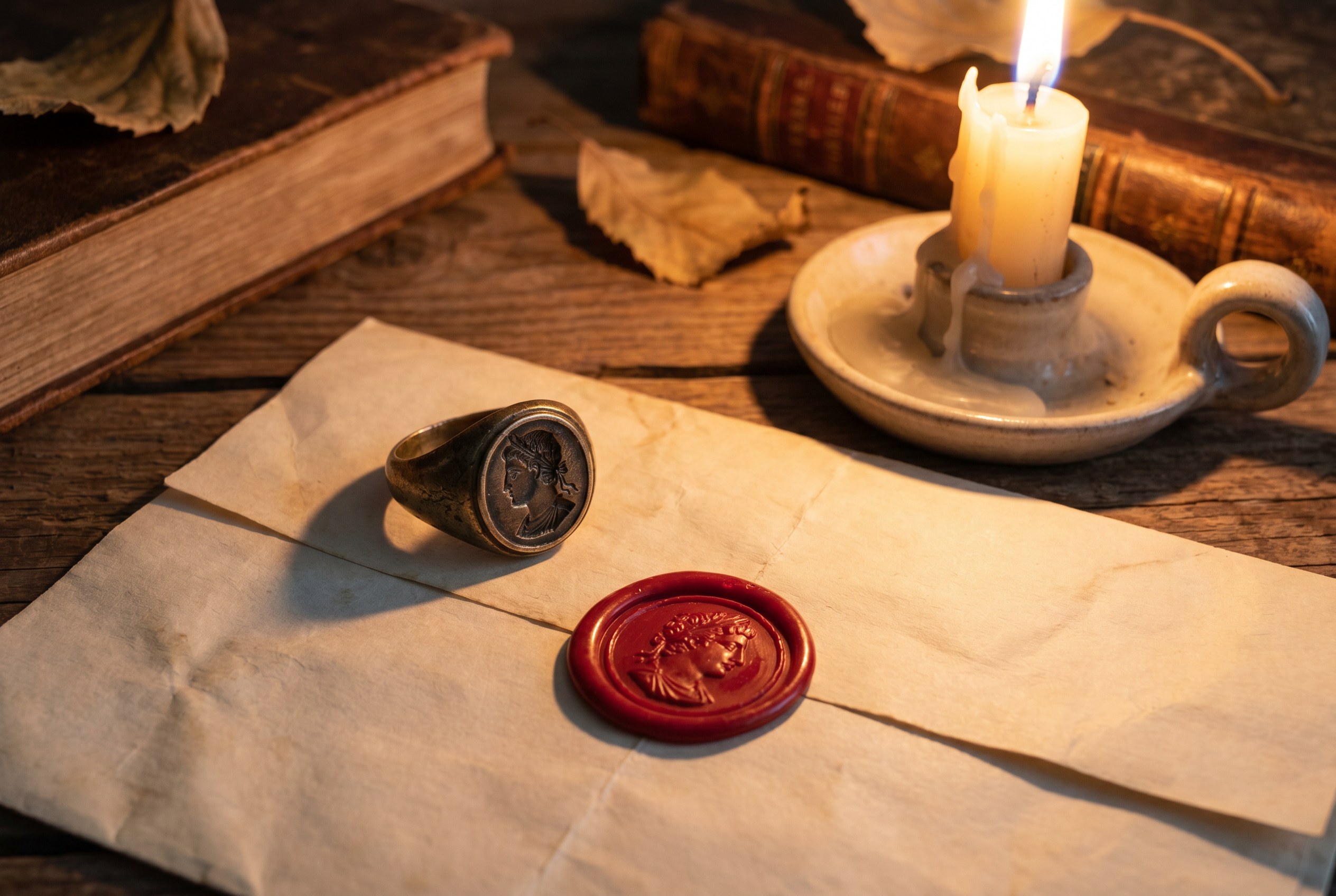
| Intaglio | Cameo | |
|---|---|---|
| Carving | Cut INTO the stone (recessed) | Carved in relief (raised) |
| Purpose | Seal — pressed into wax | Purely decorative portrait/scene |
| Reads | In reverse (correct in the wax) | Correct as seen |
| Typical stones | Carnelian, bloodstone, agate, onyx | Layered shell, agate, lava, coral |
Both are 'glyptic' arts — see our full cameo guide for that side of the family.
The full story of the raised-relief cousin is in our complete cameo guide; the smooth, uncarved dome is a cabochon.
How to identify a genuine antique intaglio
- Feel the cut. A genuine intaglio is carved — under a loupe you'll see fine wheel-cut lines and crisp, confident strokes. Moulded glass 'intaglios' (Victorian and later costume pieces) show soft, rounded detail and sometimes bubbles.
- Check the reverse logic. Crests, initials and mottos should read backwards on the stone — they were cut to read correctly in wax. A monogram reading correctly on the stone was decorative only, or is modern.
- Look for honest wear. Georgian fob seals lived on watch chains: expect softened high edges and tiny scratches. Pristine deep carving in a 'Georgian' piece deserves suspicion.
- Assess stone and mount together. Carnelian in high-carat gold with hand-made fittings suggests Georgian; a Roman stone may sit in a much later mount — genuinely ancient intaglios were remounted for centuries and that history adds value.
- Try the wax test — carefully. A soft wax impression reveals carving quality instantly; it's how collectors have judged intaglios for 300 years. Warm the wax, never the stone.
What intaglios are worth
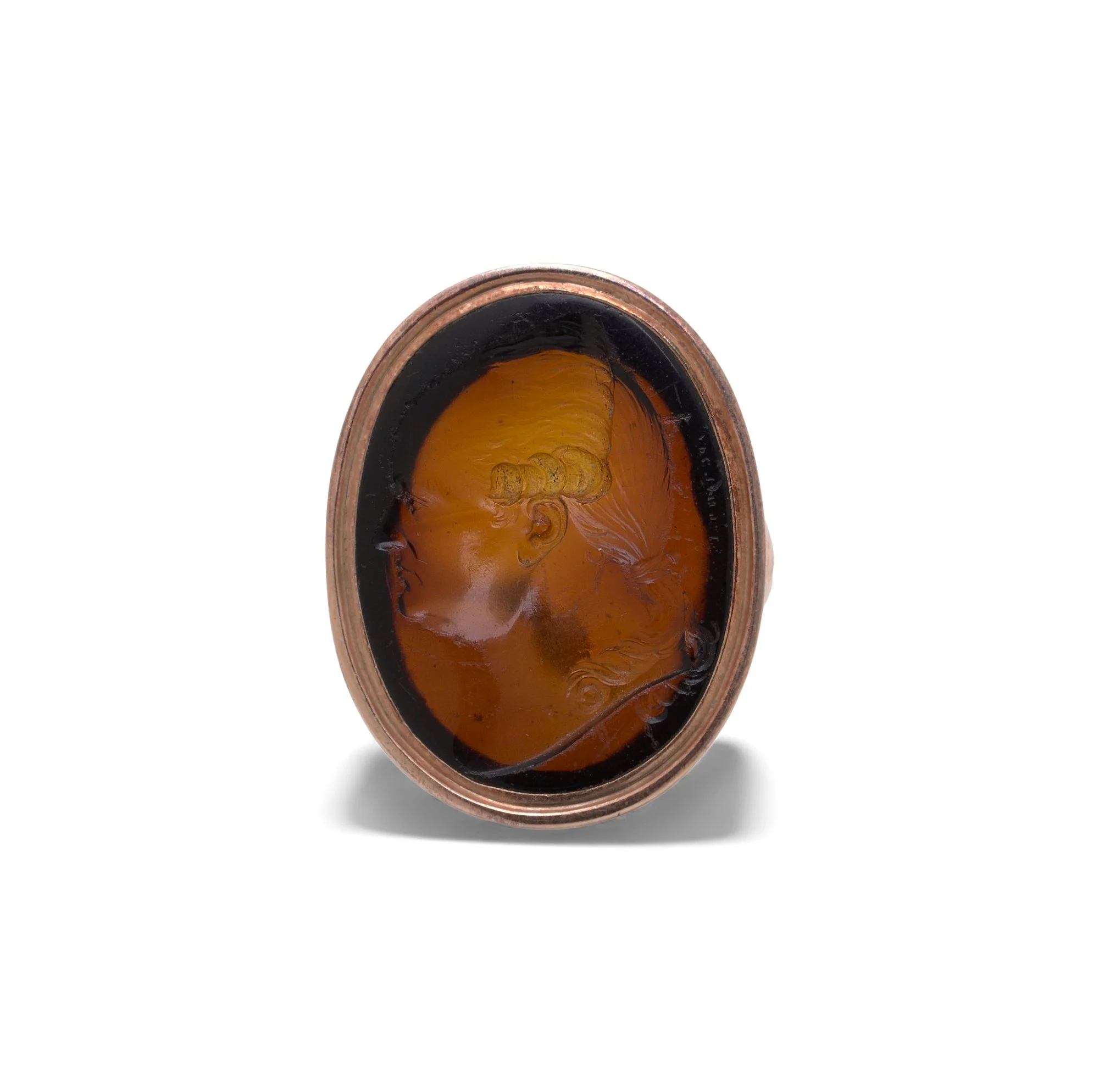
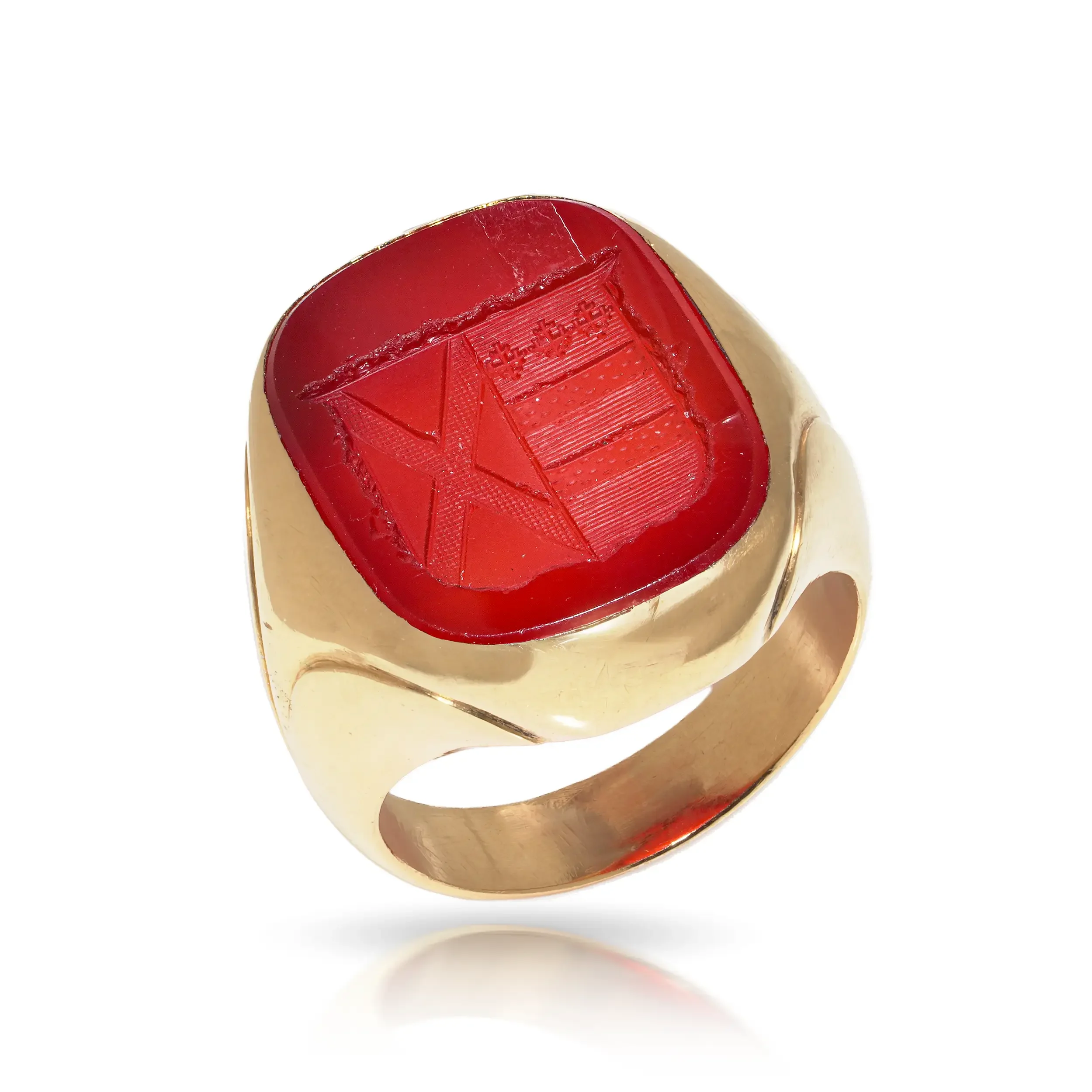
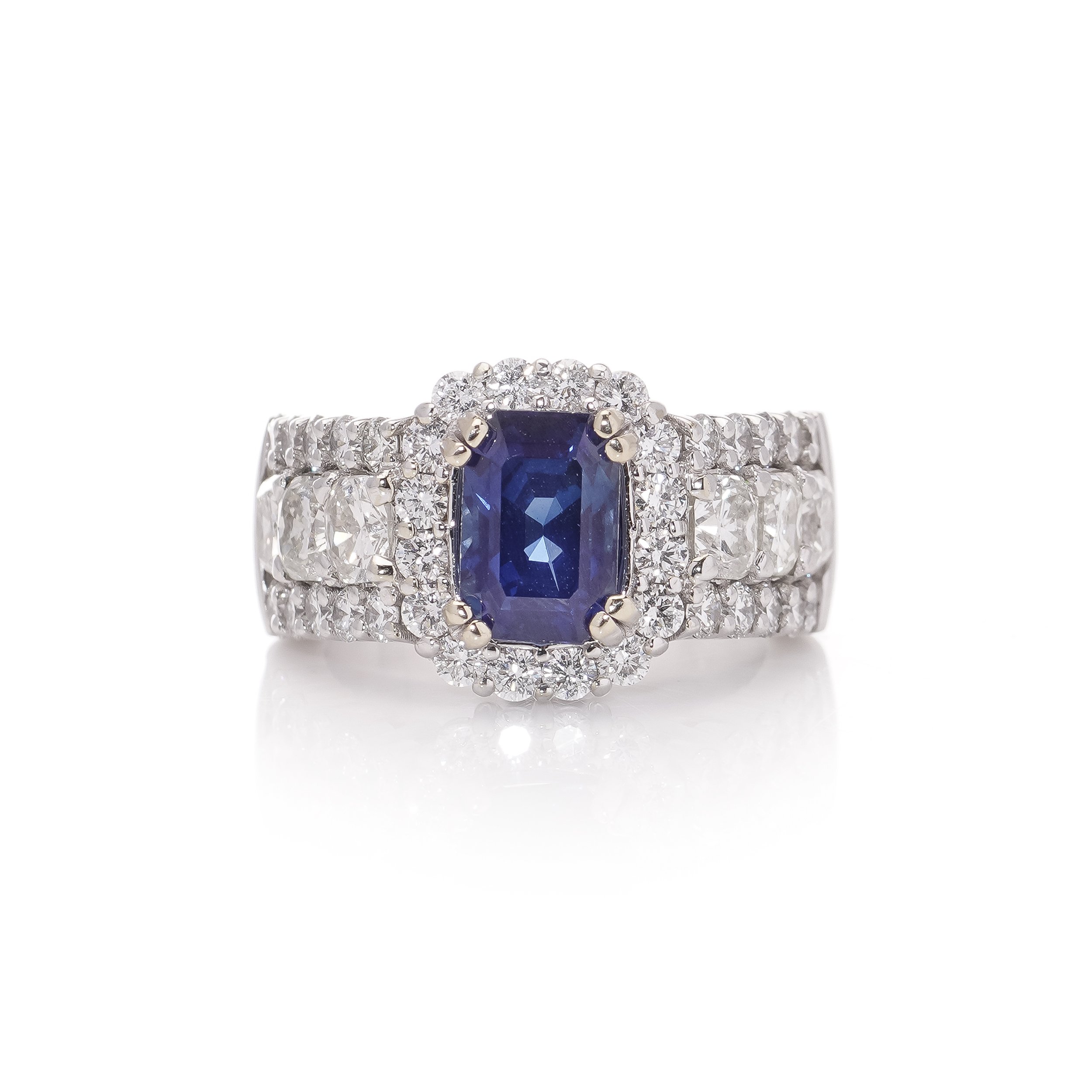
Ranges from the trade: charming Victorian carnelian signet intaglios run roughly £300–£1,500 depending on gold weight and carving quality; good Georgian seal fobs £400–£2,000+; fine armorial or documented pieces more. Genuinely ancient Roman and Greek intaglios start around £500 in later mounts and rise steeply with quality and provenance — museum-grade examples reach five figures. Value drivers: carving quality above all, then age, stone, mount, subject (heraldry, mythology and portraits lead) and provenance. Our current intaglio pieces:


Think you own one? Find out what it’s worth.
Intaglios are easy to underestimate — a 'worn old signet' can hold a Georgian or even Roman stone worth far more than its gold. Send us a photo (and a wax impression if you have one) for a free, no-obligation specialist valuation.
✓ Free expert valuation in 24h ✓ Same-day payment ✓ 10,000+ items traded · 5★ rated
Browse live examples in intaglio rings and signet rings, or the wider antique jewellery collection.
Explore Further
Frequently Asked Questions
Intaglios, identified and valued.
What is an intaglio in jewellery?
A design carved down into a gemstone's surface — the reverse of a cameo. Cut mirror-image, it was made to press a correct-reading impression into sealing wax, which is why intaglios live in signet rings and seal fobs.
What is the difference between an intaglio and a cameo?
Direction of carving. An intaglio is cut into the stone and reads in reverse; a cameo is carved in raised relief and reads correctly. Intaglios sealed documents; cameos were always decorative.
How can I tell if an intaglio is genuine?
Look for crisp hand-cut lines under a loupe (moulded glass is soft and may bubble), reversed lettering, honest wear on the high edges, and a stone-and-mount pairing that makes historical sense. A wax impression reveals carving quality immediately.
Are antique intaglios valuable?
Yes. Victorian carnelian signets typically make £300–£1,500, Georgian seal fobs £400–£2,000+, and genuinely ancient Roman stones considerably more. Carving quality, age, subject and provenance drive the price.
Do you buy intaglio jewellery?
Yes — Georgian fobs, signet intaglios and ancient stones alike. Free specialist valuation by photo, form or WhatsApp, with same-day payment on agreement.