The 1980s: bold gold and signed design
Fine jewellery of the 1980s matched the power dressing of the decade: heavy yellow gold, wide bangles and cuffs, large clip earrings for day and evening, chunky chains and coloured stones cut as cabochons. Signed pieces from the great houses were worn as everyday jewellery, and many were sold with fitted boxes and certificates that still accompany them.
Bulgari's Tubogas technique, flexible coils of gold wound without soldering, dates back to the 1940s and became a house signature in the 1970s and 1980s, joined by the modular Parentesi links (Sotheby's). At Tiffany & Co., Paloma Picasso launched her first collection in 1980, alongside Elsa Peretti's designs from the 1970s (Sotheby's).
The 1990s: cleaner lines and white metals
The 1990s moved towards simpler shapes: platinum and white gold, solitaire and three-stone diamond rings in round brilliant and princess cuts, line bracelets, small hoops, pendants on fine chains and chokers. Yellow gold stayed, but in slimmer, smoother forms.
Designer houses kept their classic lines in production, so a 1990s piece can look very like a modern one. Marks, serial numbers and boxes help to tell them apart. Read our guides to Cartier, Bulgari and Tiffany jewellery.
Designers and pieces to know
| House | Pieces of the 1980s and 1990s | Usually signed |
|---|---|---|
| Bulgari | Tubogas coils, Parentesi links, Bulgari-Bulgari double logo, coloured cabochons | BVLGARI, 750, Italian maker's mark |
| Cartier | Panther jewellery, Trinity rings, Love bracelets, cable designs | Cartier, 750 and a serial number |
| Tiffany & Co. | Paloma Picasso from 1980, Elsa Peretti from the 1970s | Tiffany & Co., the designer's name, 750 or 925 |
| Chanel | Gilt costume jewellery revived under Karl Lagerfeld from 1983 | CHANEL plaque, CC logo, Made in France |
Bulgari Tubogas
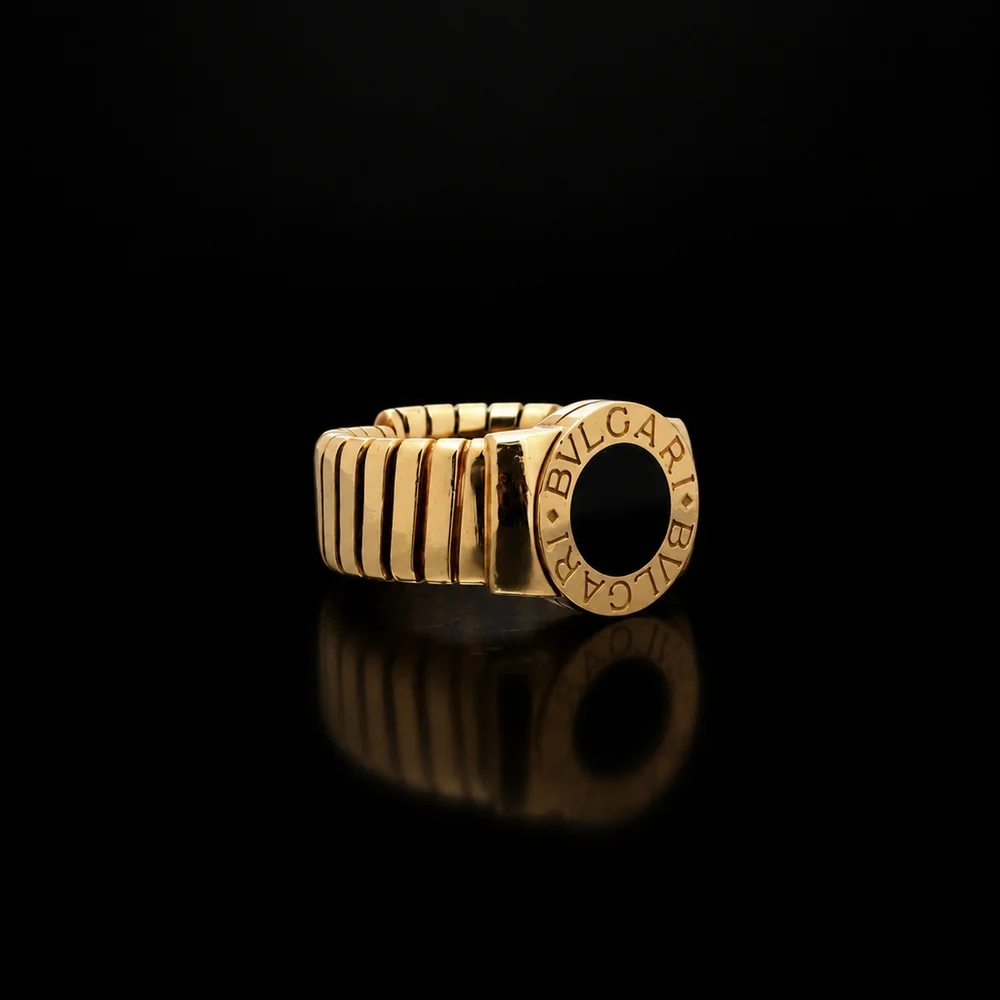
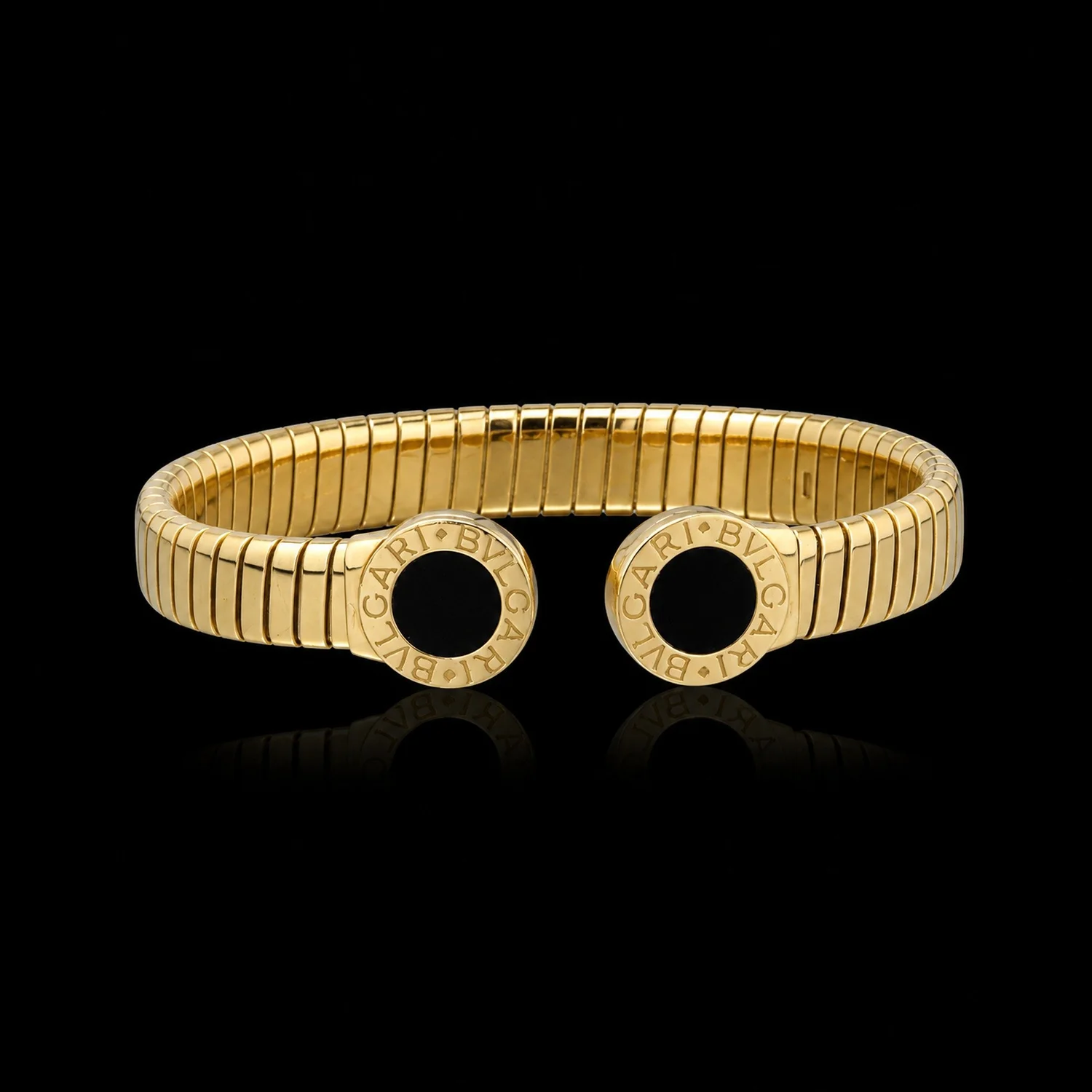
Our Bulgari Tubogas gold and onyx bangle comes with its original box, and the Tubogas onyx ring dates from the 1980s.
Cartier
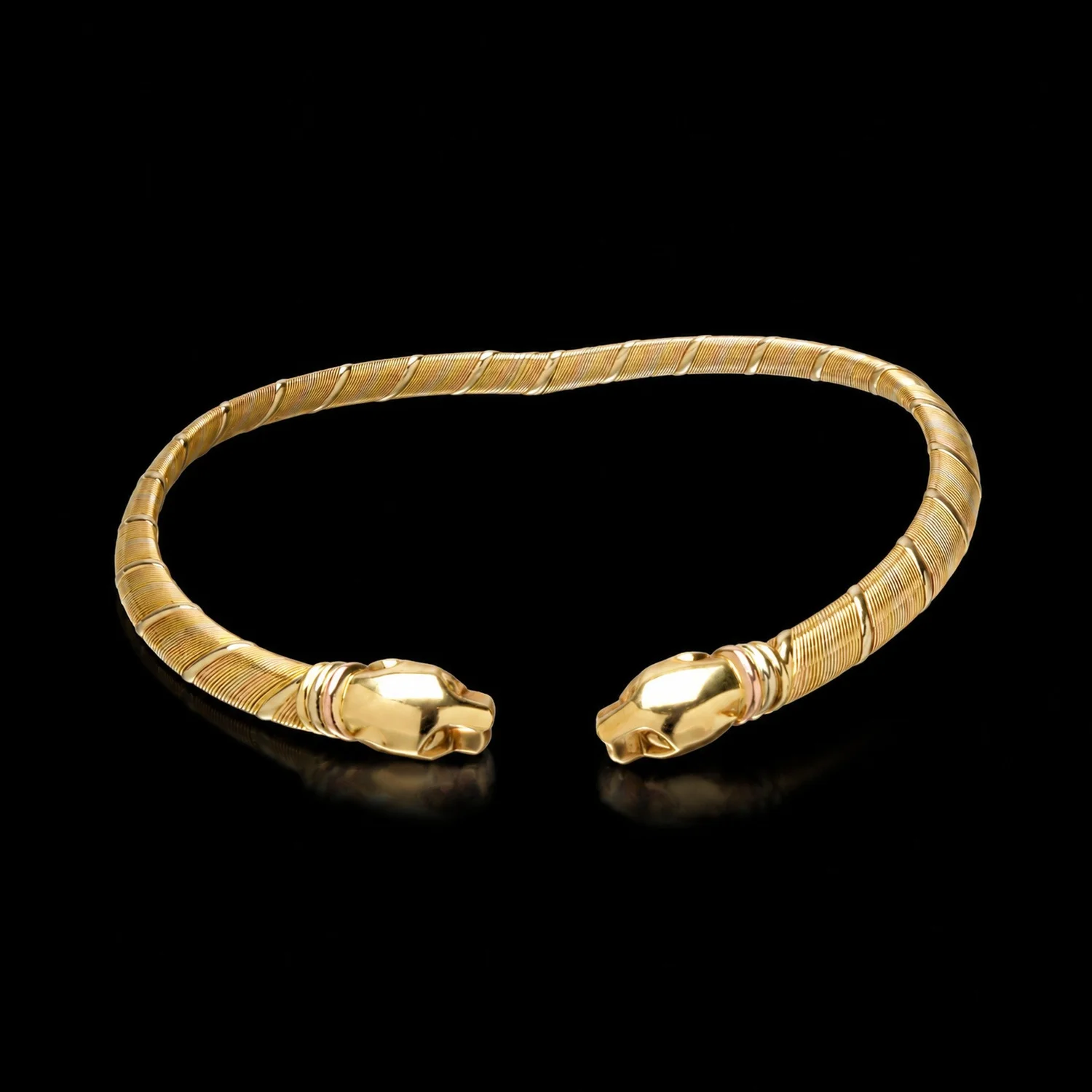
The panther has been a Cartier motif since the early 20th century, made famous by Jeanne Toussaint's panther brooch of 1948 (Wikipedia). See our Cartier Panthère tri-colour gold choker and the Cartier gold and steel cable hoop earrings of the 1980s.
Late 1990s
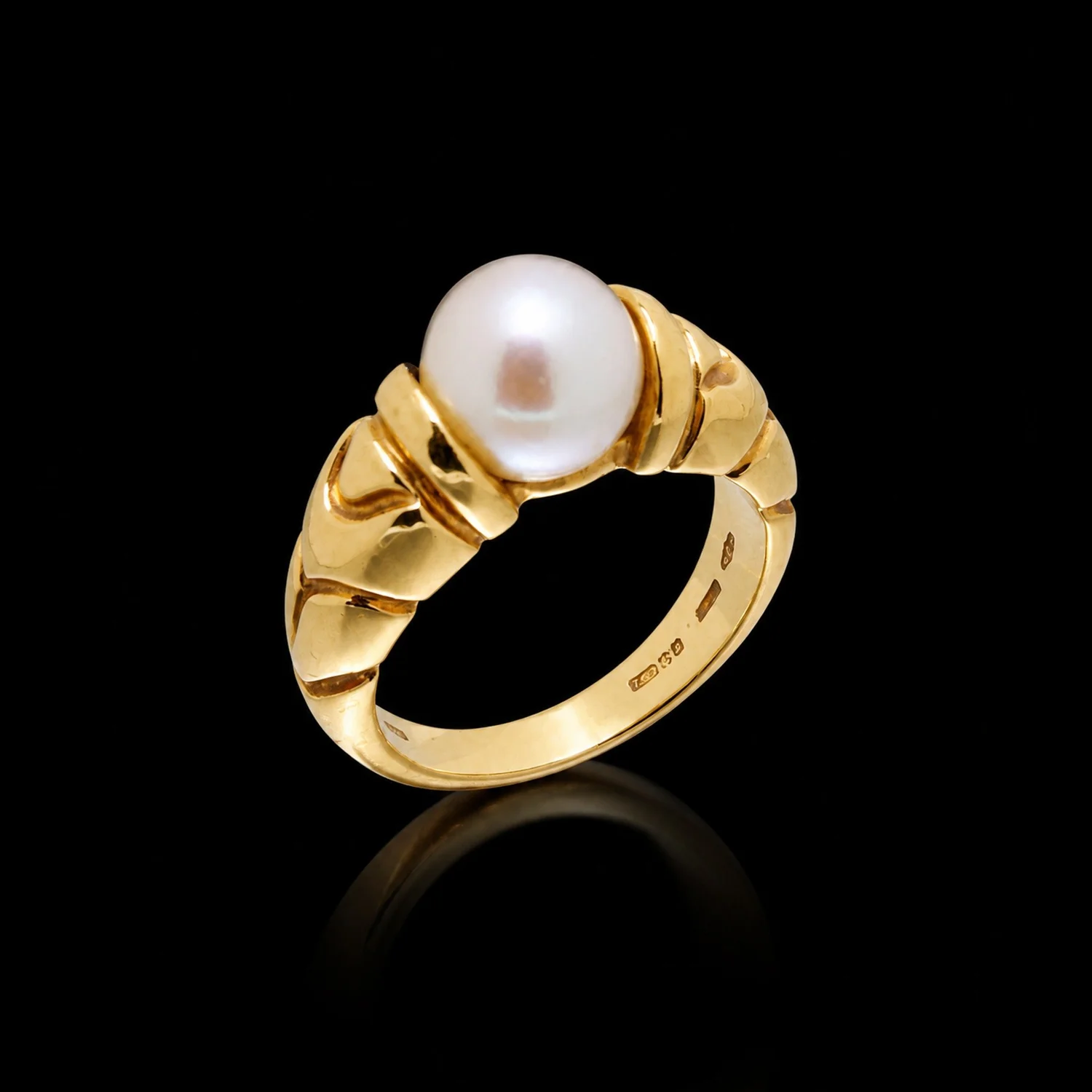
Our Bulgari Passo Doppio cultured pearl ring of 1998 shows the smoother gold of the late decade. Browse all designer jewellery.
1980s and 1990s jewellery in stock
Shop all 10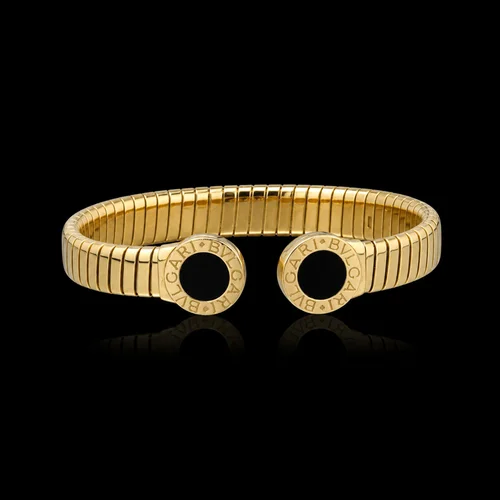
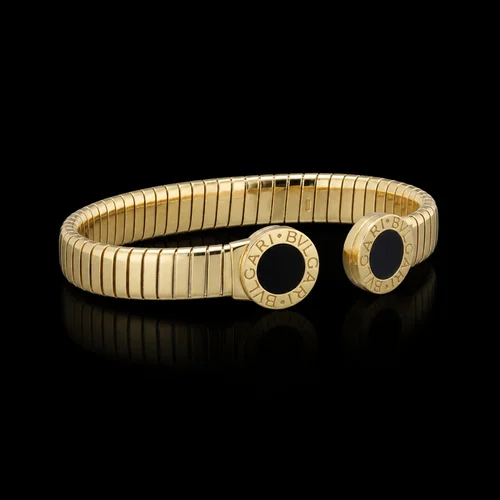 Bulgari Tubogas 18KT Gold and Onyx Bangle, Original Box£4,850
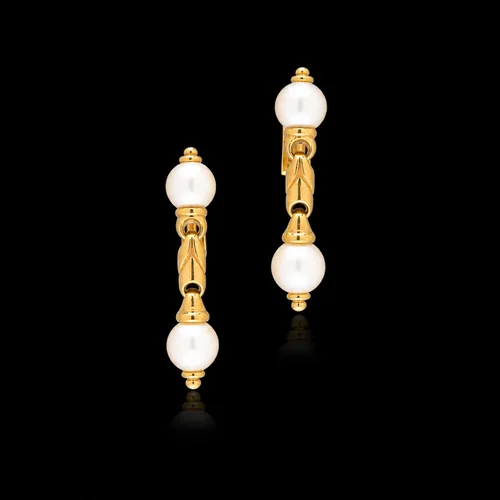
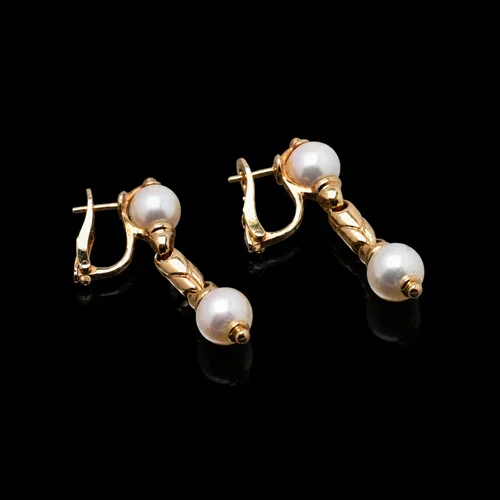 Bulgari Passo Doppio 18KT Gold and Cultured Pearl Drop Earrings£5,950
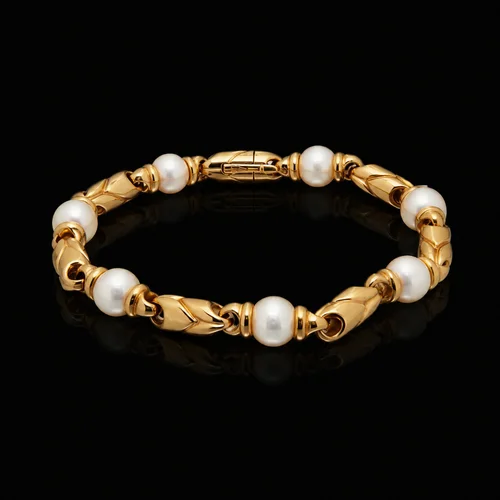
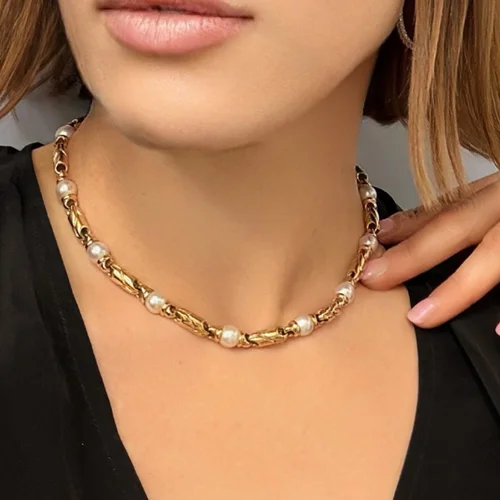 Bulgari Passo Doppio 18KT Gold and Cultured Pearl Bracelet, Original Box£8,950
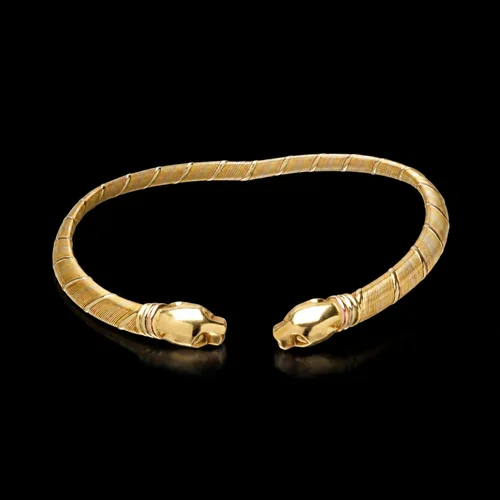
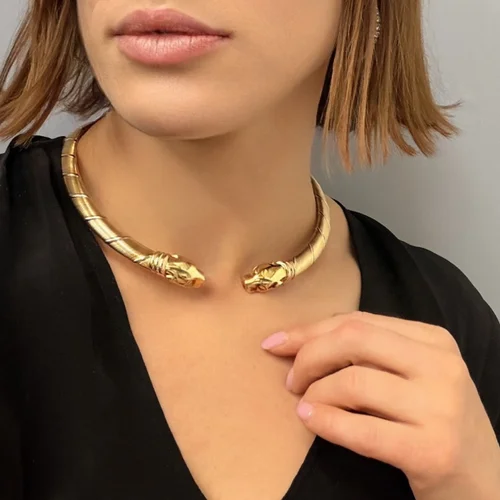 Cartier Panthère 18KT Tri-Colour Gold Choker Necklace, Original Box£24,850
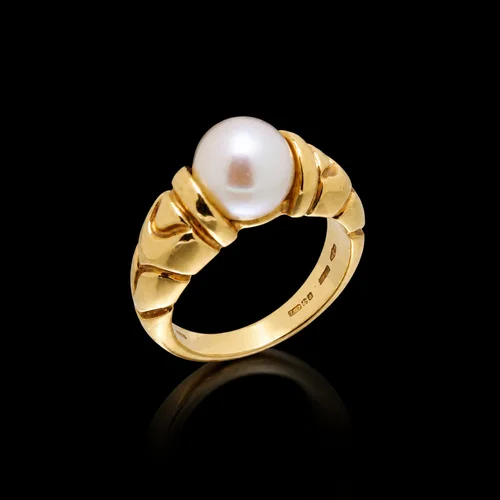
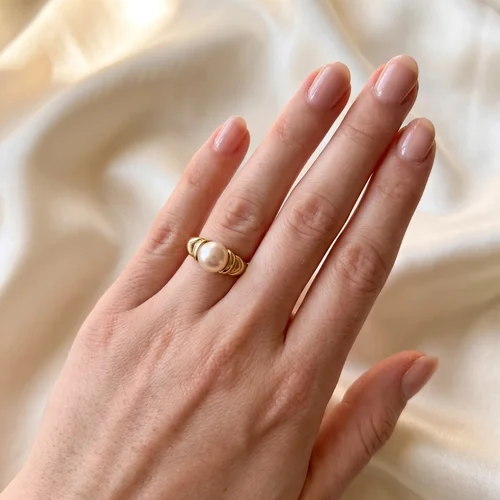 Bulgari Passo Doppio 18KT Gold Cultured Pearl Ring, 1998, Original Box£6,500
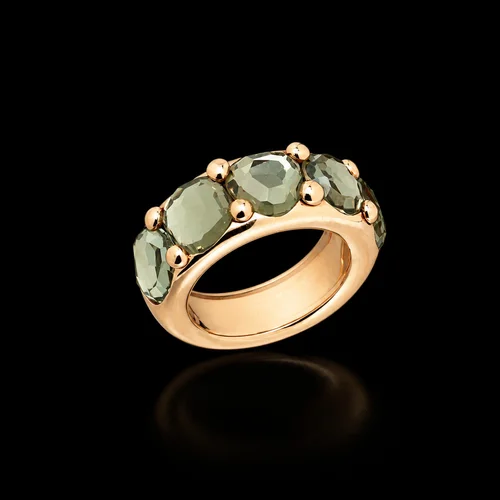
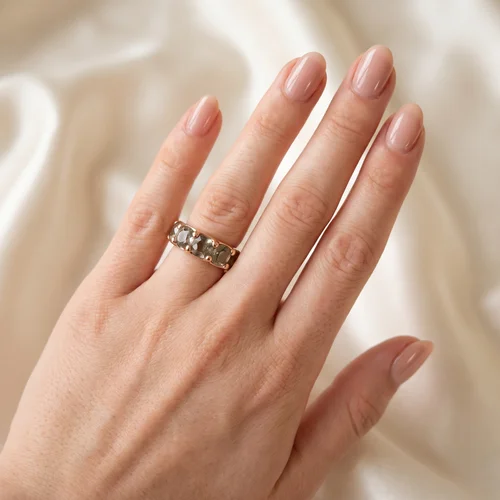 Pomellato Narciso 18KT Rose Gold Ring with Five Faceted Quartz£4,700
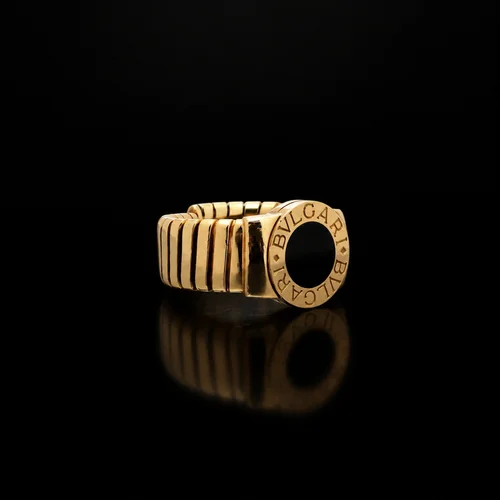
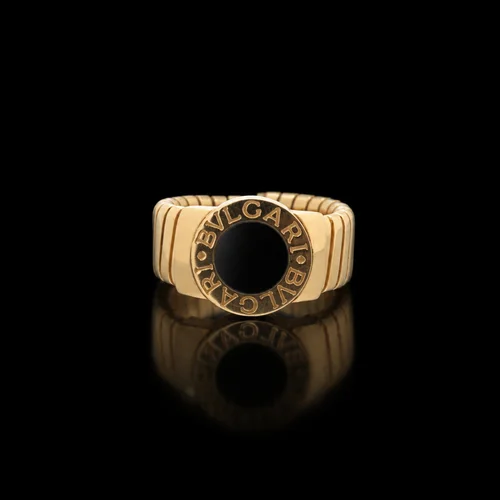 Bulgari 18KT Gold Tubogas Onyx Ring, 1980s, Boxed£3,650
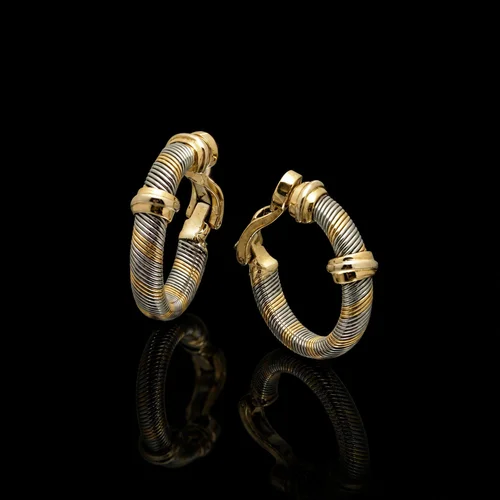
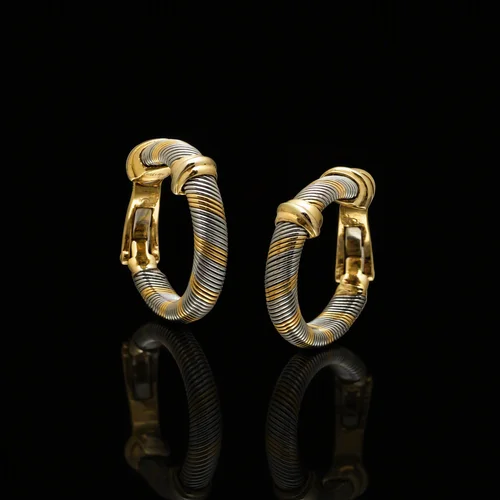 Cartier 18KT Gold and Steel Cable Hoop Clip Earrings, 1980s£3,750
How to date and check a piece
- Read the hallmark
British pieces carry a hallmark with a date letter. From 1975 the fineness appears as 375, 585, 750 or 916 for gold and 950 for platinum; from 1999 the date letter became optional.
- Find the signature
Designer pieces carry the house name, the gold mark and often a serial number, crisp and evenly struck.
- Match the model
Check that the design, size and marks match the model and decade; collections changed in detail over the years.
- Look at boxes and papers
Original boxes, certificates and receipts support a piece, but never prove it on their own.
- Check condition
Test clasps and hinges, look for stretched links and dents in hollow gold, and check that stones are original.
Costume and fashion pieces of the same years are gold-plated base metal; see is my costume jewellery real? and our Chanel jewellery guide.
Selling 1980s or 1990s jewellery? Send photographs for a free valuation. Post it to us by Royal Mail Special Delivery or book a free insured FedEx collection, or bring it to an appointment in Mayfair, London, or Braintree, Essex. You are paid the same day after inspection, by bank transfer.
Sources
- Sotheby's, Icons of design: Bulgari (Tubogas technique; Parentesi)
- Sotheby's, Tiffany by design: five history-making creations (Elsa Peretti; Paloma Picasso from 1980)
- Wikipedia, Karl Lagerfeld (creative director of Chanel from 1983)
- Wikipedia, Jeanne Toussaint (Cartier panther; 1948 brooch)
- Wikipedia, Hallmark (UK millesimal marks from 1975; date letter optional from 1999)