Pinky Rings in 2026: What They Mean and What Actually Suits the Little Finger
The pinky ring has become one of 2026's defining looks: on runways, red carpets and in every "what I'm actually wearing" column. It's one of those trends that feels brand new and is in fact about four centuries old.
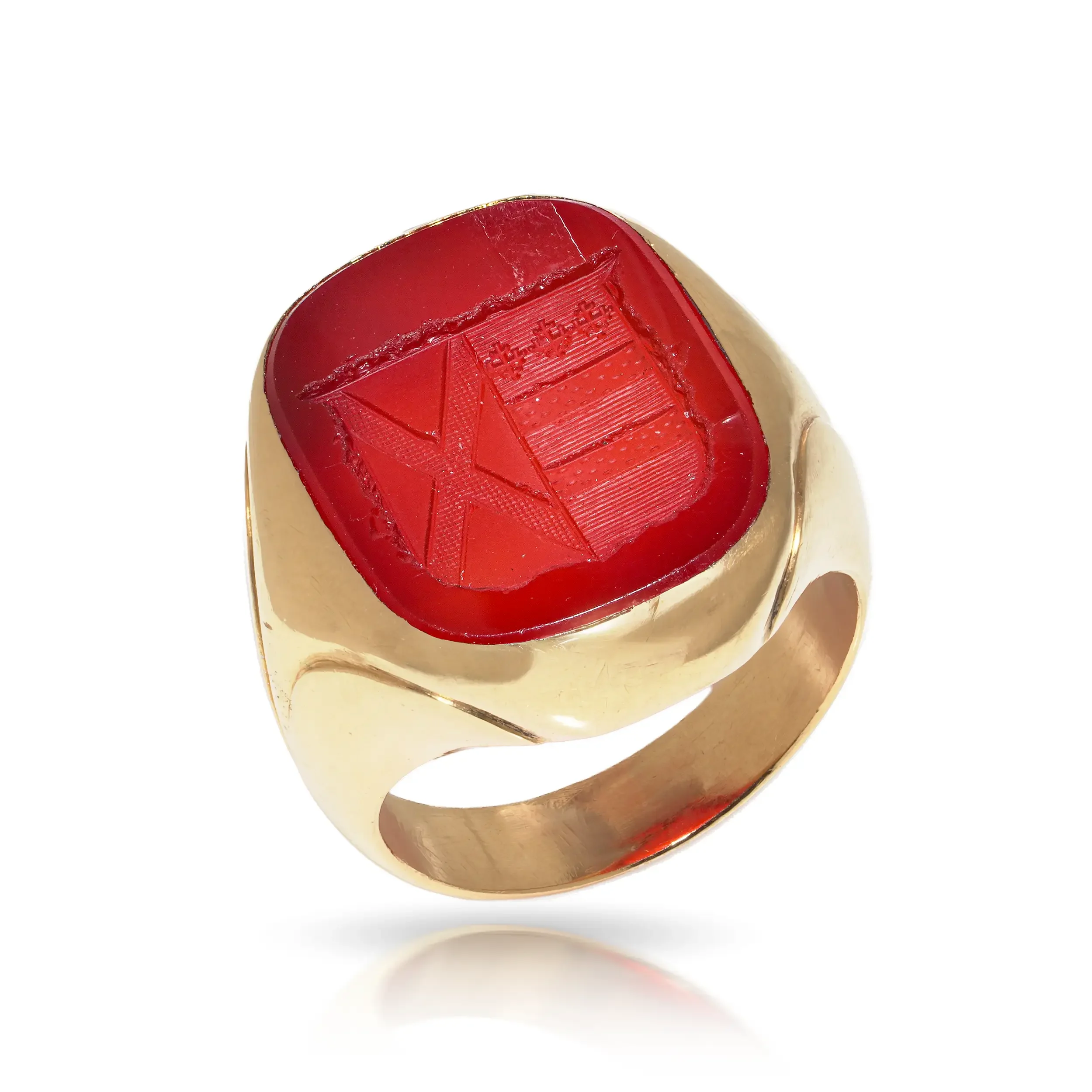
A pinky ring is a placement, not a type of ring: it simply means one worn on the little finger. But that placement used to carry real weight: a signet on the left little finger marked family identity and sealed documents. Today it's a styling choice, and the little finger happens to be the one place a bold antique ring can sit without competing with an engagement or wedding band.
Quick answer: what does a pinky ring mean?
Today, nothing binding: it's a styling choice. Historically it meant a great deal: from the 16th century a gentleman's signet was worn on the left little finger and pressed into hot wax to authenticate letters and contracts.
The practical appeal now is simple. Every other finger is spoken for, so the little finger is the one place an antique ring can make a statement on its own.
Why the little finger, and why now
The third finger carries engagement and wedding rings. The index and middle fingers make a statement ring feel formal. The little finger is the last piece of unclaimed real estate on the hand, which is exactly why stylists moved there.
A pinky ring also reads as deliberate. It's small enough to wear every day and unusual enough that people notice. If you already wear a wedding set, it's the easiest way to add an antique piece without rebalancing the whole hand.
What a pinky ring used to mean
For most of its history the pinky ring wasn't decorative at all. It was functional, and it was information.
- Sealing documents. A signet ring pressed into hot wax authenticated letters and contracts. The little finger kept the engraved face clear of the pen hand.
- Family identity. The engraved crest announced which family you belonged to: a passport, not an ornament. More in what wearing a signet ring means.
- Trade and profession. In parts of North America, engineers and some trades adopted a little-finger ring as a professional marker.
- Roman antecedents. Carved intaglio rings did the same sealing job two thousand years earlier: see Roman intaglios.
None of that is binding today. It's worth knowing because it explains why the rings that suit the little finger best are usually the ones designed for it in the first place.
Which antique rings actually suit the little finger
The little finger is shorter and narrower than the others, so proportion matters more than it does elsewhere.
| Ring type | Why it works on the little finger |
|---|---|
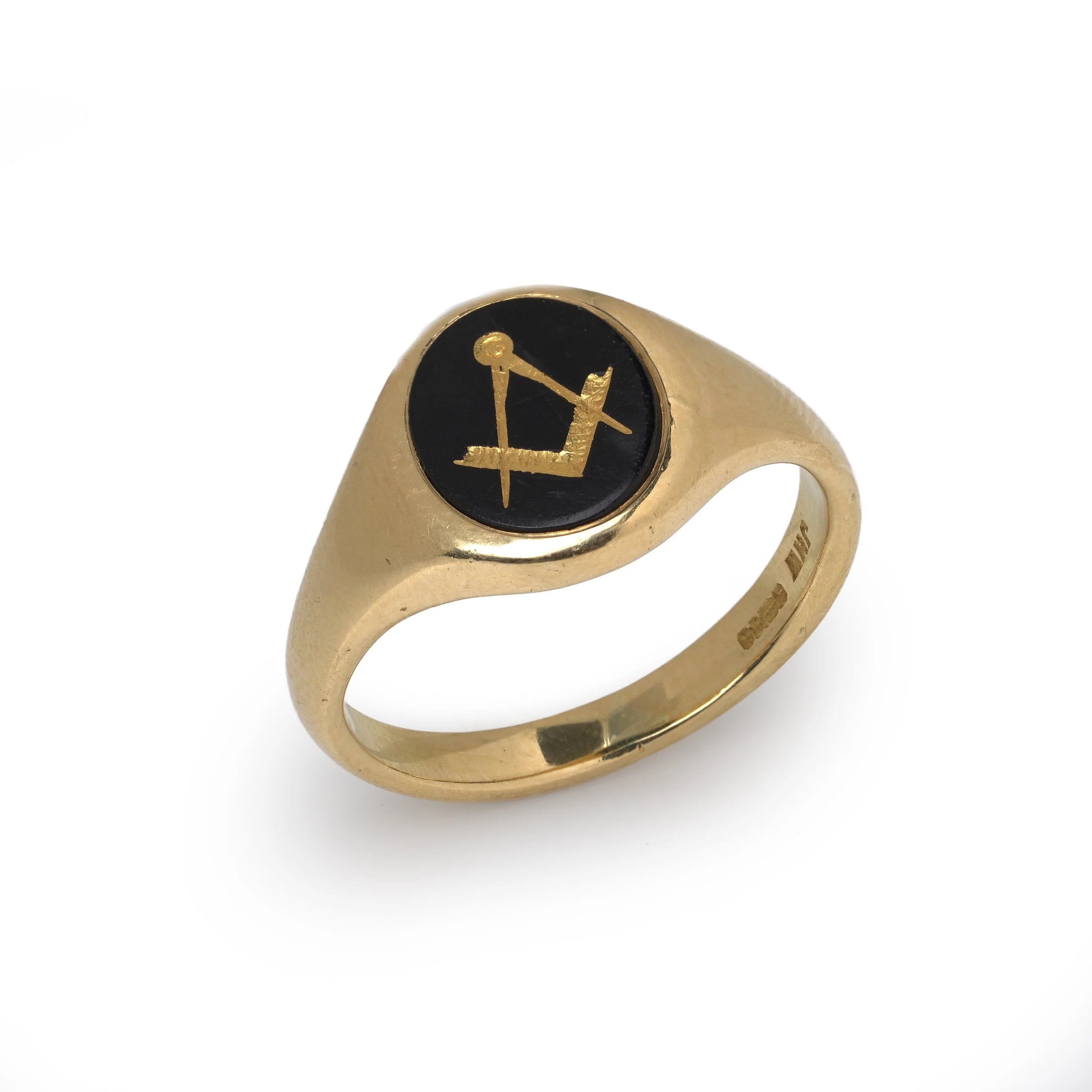
| Signet rings | Designed for it. The flat face sits flush and the shank is proportioned for a smaller size. |
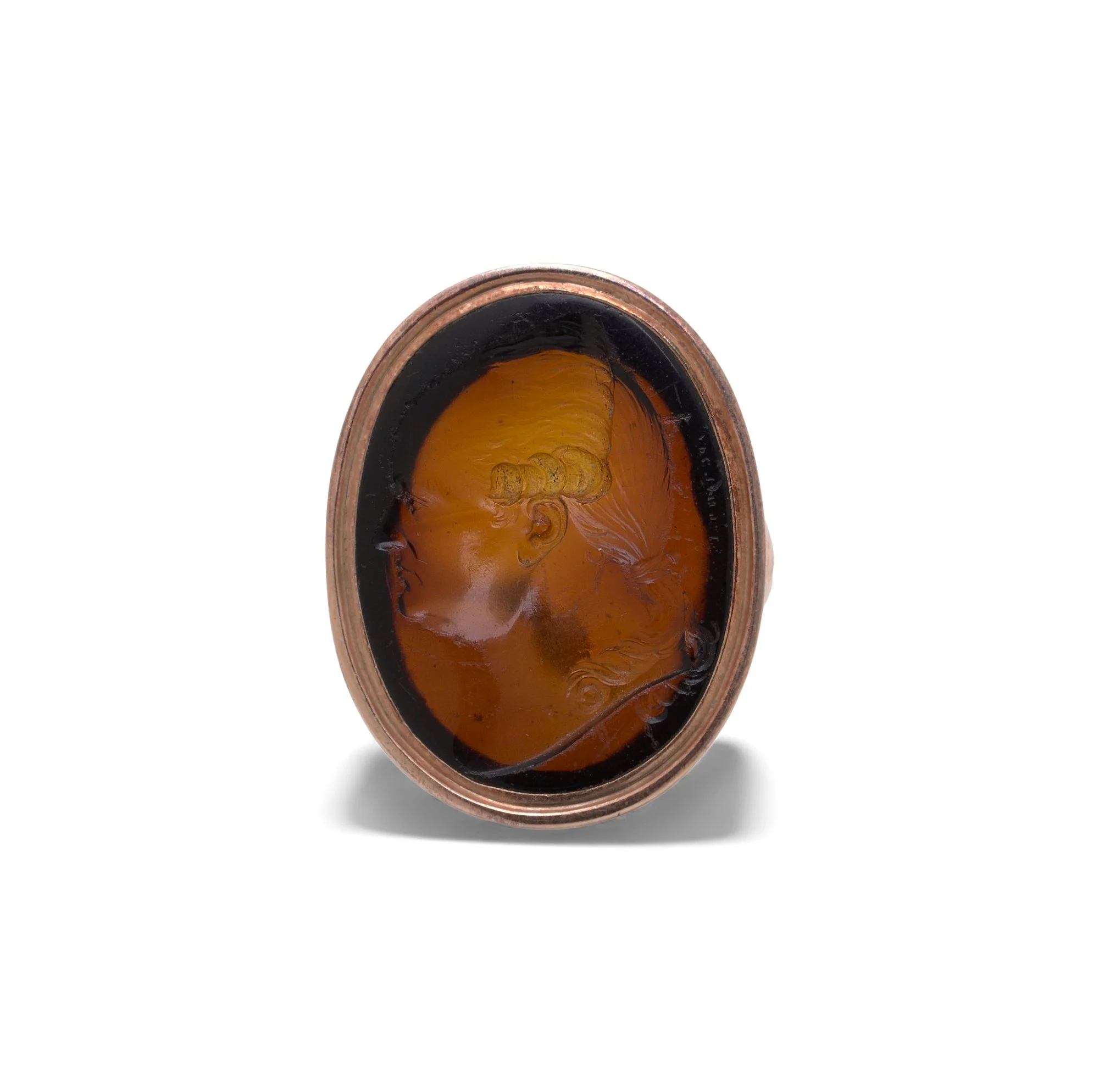
| Intaglio & hardstone rings | Carnelian, bloodstone and onyx read as substantial without sitting tall. Historically the same object as a signet. |
| Victorian gypsy-set rings | The stone is sunk flush into the metal, so nothing catches. Ideal for daily wear. |
| Narrow band rings | Chased, engraved or plain, a slim band reads elegant rather than fussy on a short finger. |
| Art Deco geometric rings | Rectangular and stepped shapes visually elongate the finger. |
What tends not to work: tall cluster rings and high-set solitaires. They catch on everything and look top-heavy on a short finger.
These are signet and intaglio rings from our current stock, the pieces that were made for the little finger in the first place:

Sizing: the part people get wrong
Little fingers are typically two to three sizes smaller than ring fingers. Two practical points:
- Don't assume an antique ring will resize. A plain gold band usually will. A ring with a carved hardstone, an engraved crest, full eternity stones or enamel around the shank often can't be resized without damage. Always ask before buying.
- Buy for the knuckle, not the base. The ring has to pass the knuckle. If it then spins, a sizing bead is a reversible fix, sizing down a decorated shank often isn't.
Left hand or right?
Traditionally the signet went on the left little finger in Britain, and that convention persists, but there's no rule now. The only practical consideration: most people are right-handed, so a ring on the right little finger takes more knocks. If the engraving matters, wear it on the left.
Does a pinky ring hold its value?
The trend doesn't create value, the piece does. A 2026 fashion ring will follow fashion. A Victorian or Georgian signet in high-carat gold with crisp original engraving holds value because of its age, metal and workmanship, and it'll still be a good ring when the trend moves to another finger.
Think you own one? Find out what it’s worth.
Inherited a signet ring and want to know whose crest it is? Send photographs: identifying crests and dating hallmarks is routine work for us, and the valuation is free.
✓ Free expert valuation in 24h ✓ Same-day payment ✓ 10,000+ items traded · 5★ rated
Explore Further
Frequently Asked Questions
Pinky rings, answered.
Is a pinky ring the same as a signet ring?
No. "Pinky ring" describes where it's worn; "signet ring" describes what it is, a ring with an engraved flat face. Most antique signets happen to be sized for the little finger, which is why the two get confused.
What does wearing a pinky ring mean today?
In Britain, nothing binding. The historic meanings (family crest, sealing authority, professional marker) are worth knowing, but nobody will read anything into it now.
Which hand should a pinky ring go on?
Traditionally the left in Britain, and that convention persists. There's no rule now. Practically, most people are right-handed, so the left takes fewer knocks, better if the engraving matters.
What size pinky ring do I need?
Usually two to three sizes smaller than your ring finger. Have it measured properly rather than guessing, and buy for the knuckle, the ring has to pass it.
Can antique signet rings be resized?
Plain gold bands usually can. Rings with carved hardstones, engraved crests, enamel or full eternity settings often can't be resized without damage. Always ask before you buy.
Can women wear signet rings?
Yes, and historically both men and women did. Victorian and Georgian signets were made across a wide range of sizes.
Does polishing a signet ring reduce its value?
Yes, significantly. Every polish removes metal and softens the engraving. A crisp, deep crest is worth more than a buffed one. Never polish before a valuation.