The Most Valuable Pokemon Cards, and What Yours Is Worth
The top of the vintage market has passed its 2021 peak. Below the headline sales there is a more useful story about which cards are actually moving, and a straightforward way to work out where yours sit.
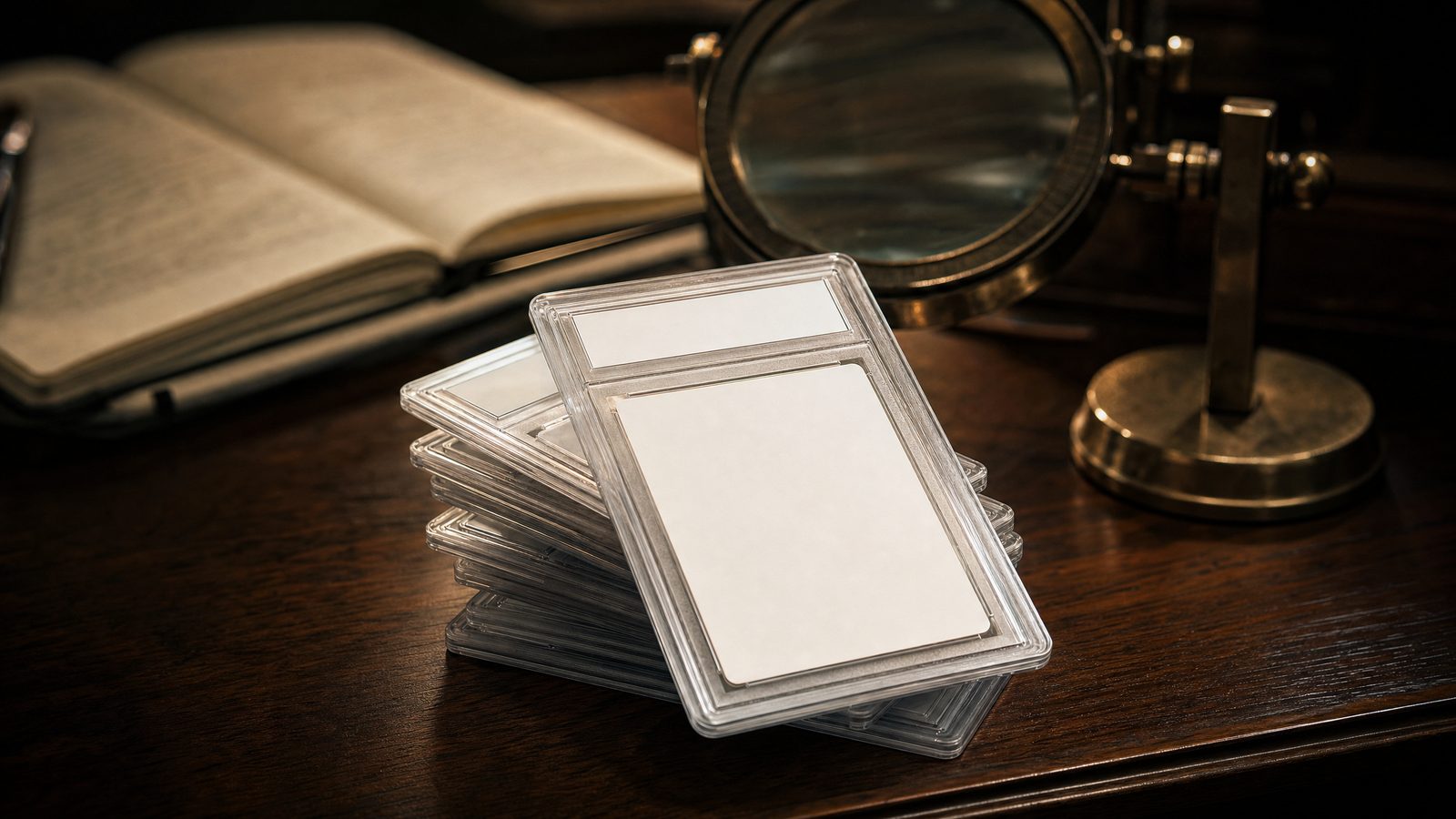
In February 2026 a Pikachu Illustrator in PSA 10 sold for 16.49 million dollars. That number tells you almost nothing useful about the card in your cupboard, but it does confirm something that matters: the top of the vintage market has now passed the levels it reached in the 2021 boom.
On this page
The short version
Grade is the single biggest multiplier. The same card in PSA 10 and PSA 8 are different assets, not the same asset at different prices.
The fastest-growing segment is not the headline vintage. Neo-era holo cards from 1999 to 2002 are moving fastest, driven by very small PSA 10 populations.
The top of the market
The Pikachu Illustrator is the card that sets the ceiling. It was never sold at retail, it was awarded in an illustration contest, and only a small number exist. That combination of provenance and absolute scarcity is what produces an eight-figure sale, and it is not a template that applies to cards from normal print runs.
The more useful signal in that sale is directional. Records confirm the top of the vintage market has surpassed 2021 levels, which was the previous high-water mark for the hobby.
What is actually growing
Two shifts are worth knowing about because they affect ordinary collections rather than record-breakers.
Neo-era holos, 1999 to 2002
This is the fastest-growing segment in the market. The driver is population: these cards were played with rather than stored, so the number that survive in genuinely gem-mint condition is very small. Tiny PSA 10 populations do more for price than fame does.
The move towards PSA 9
PSA 10s have become expensive enough that a section of the market has moved down a grade deliberately, buying PSA 9 as the value alternative. That extra demand has supported PSA 9 prices, which is a change from the period when anything below a 10 was treated as an also-ran.
The four things that set value
| Factor | What lifts value | What does not |
|---|---|---|
| Grade | PSA 10, or a 9 of a scarce reference | Ungraded cards in unverified condition |
| Population | Few high grades in existence | Common cards, however old |
| Character | Charizard, Pikachu, Mew, Eevee line | Obscure characters, however rare |
| Era and print run | First edition, shadowless, promo, contest cards | Reprints and standard modern bulk |
Age on its own is worth very little. A 1999 common in played condition is a 1999 common in played condition.
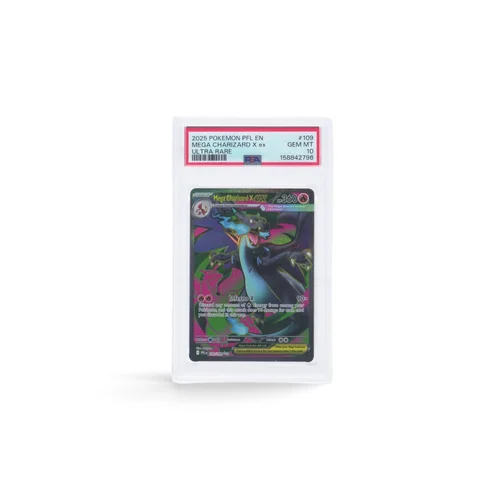
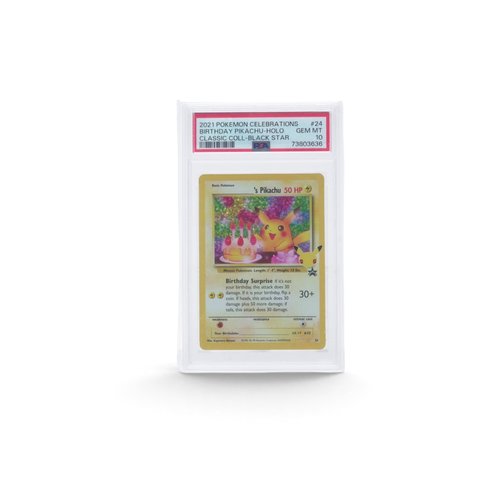
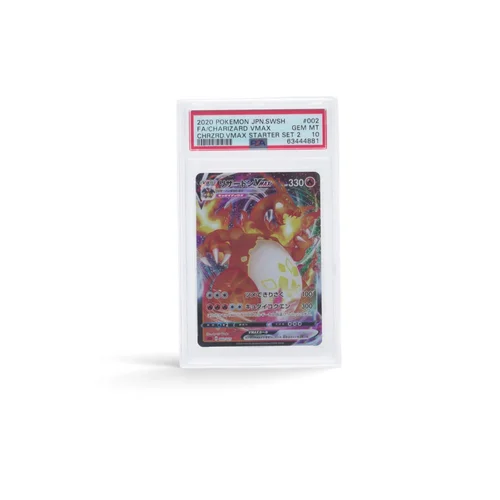
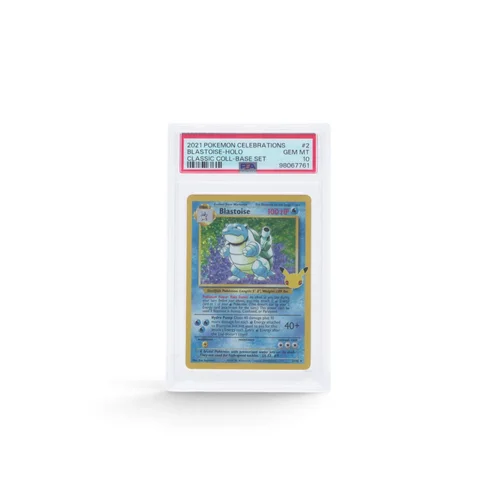
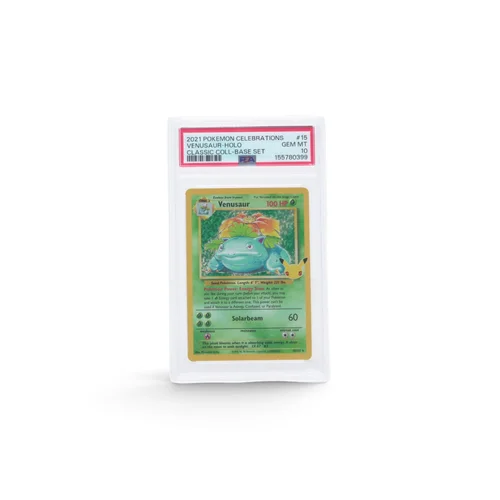
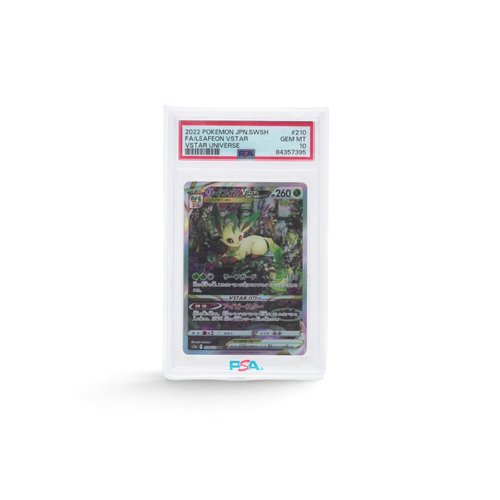
These are the strongest pieces in our current graded stock, which shows how character and grade combine in practice:
How to check your own cards
- Identify the set and card number. Bottom of the card. Without this you cannot look anything up accurately.
- Check for first edition or shadowless. A first edition stamp sits to the left of the artwork. Shadowless cards lack the drop shadow on the right of the art box.
- Assess condition honestly. Look at centring, then corners, then edges, then surface, in good daylight. Most people over-rate their own cards.
- Compare against sold prices, not asking prices. What someone lists a card for is not evidence. What one actually sold for is.
- Match the grade. A sold price for a PSA 10 tells you nothing about your raw card. Compare like for like or you will be badly out.
What we buy
We buy graded cards and complete collections outright rather than on consignment, which means you get a figure and payment rather than a wait. Photographs of the fronts and backs are enough to start, and for graded cards the certification number on the slab is enough on its own.
Find out what your cards are worth
Send photographs and we will tell you what you have, what condition it looks to be in and what it is worth. No obligation, and no charge whether you sell to us or not.