Pokemon 30th Celebration: What Lands on 16 September
The biggest anniversary release the TCG has attempted, and the first time a set has gone out worldwide on the same day. Here is what is in it, what the new rarity means, and which cards are worth sending for grading.
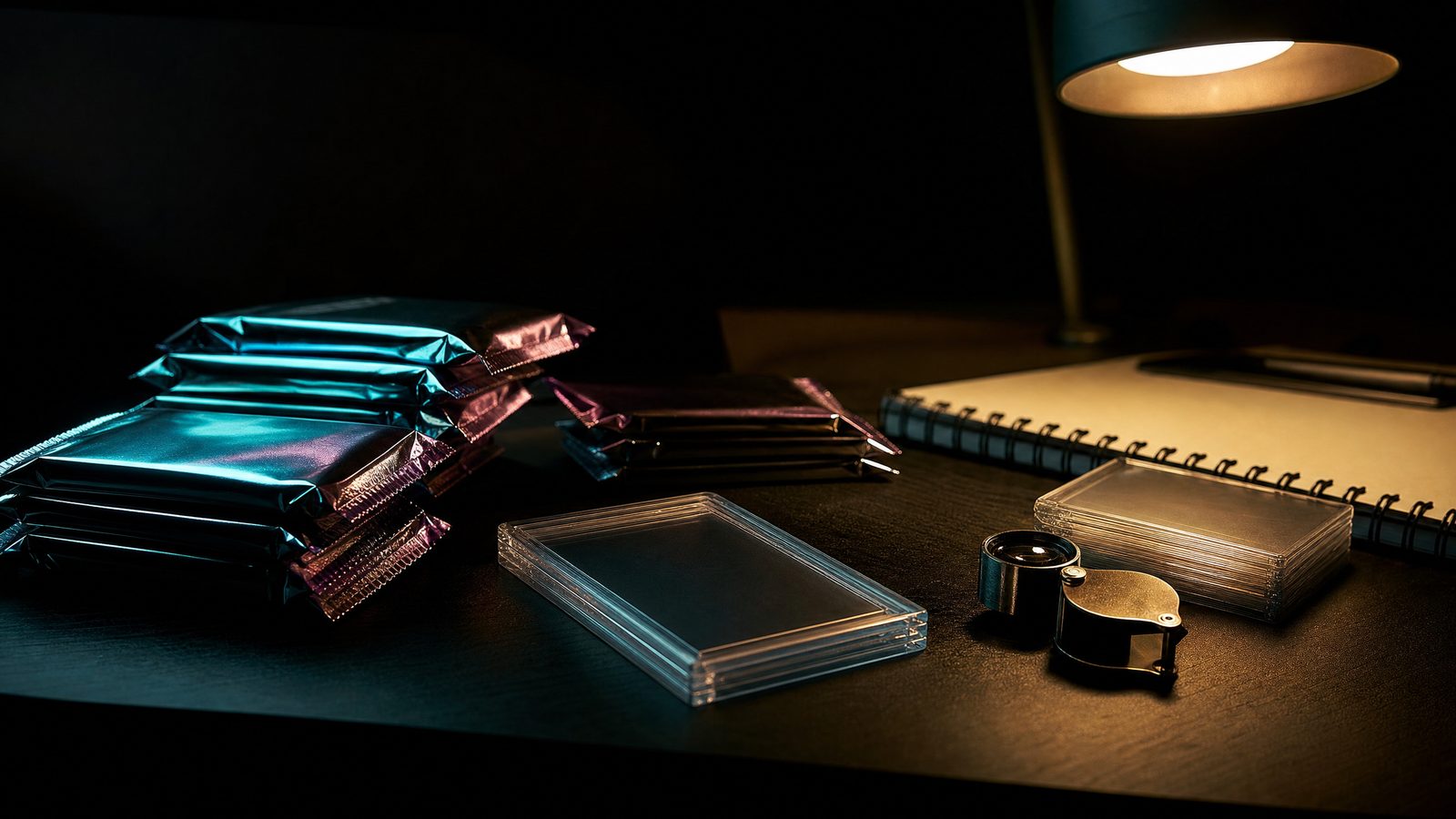
30th Celebration releases on 16 September 2026 and breaks with how the Pokemon TCG has always worked. Sets have historically launched in Japan first and reached the rest of the world months later. This one goes out everywhere on the same day, which is the first simultaneous global release in the history of the trading card game.
On this page
The short version
16 September 2026, worldwide, all at once. Every card in the set is foil, down to the basic Energy. Every pack contains a Pikachu drawn from a run of thirty.
A brand new rarity debuts on Mewtwo and Mew. The Classic Collection reprints thirty cards from across the game's history, and Base Set Charizard is confirmed among them.
What is in the set
Three things separate this from a normal main-series release. The first is that every single card is foil. Not the rares, not the holos, everything, including the basic Energy cards that normally get thrown in a bulk box. That changes what bulk from this set is worth and it changes how carefully you need to handle it.
The second is the guaranteed Pikachu. Every pack contains one, pulled from a run of thirty different Pikachu cards. That is a strong argument for buying sealed by the box rather than by the pack if you are chasing the full run.
The third is the simultaneous global release. Japanese and English product arrive together, which removes the usual months-long window where Japanese cards are the only ones available and English prices run hot on pre-orders.
The new rarity
A brand new rarity debuts in this set, appearing on Mewtwo and Mew. New rarities matter more than new artwork because they create a tier that has never been printed before, so there is no population history and no established price.
That cuts both ways. Early on, a new rarity has thin supply and heavy attention, and prices tend to be unstable rather than simply high. The population reports that eventually tell you how scarce a card really is do not exist for the first few months.
Classic Collection reprints
The Classic Collection brings back thirty cards from across the game's history. Base Set Charizard is confirmed. Reprints do not damage genuine vintage originals, because a 1999 Base Set Charizard and a 2026 reprint of it are different objects to a collector, but they do put the artwork back in front of a much wider audience.
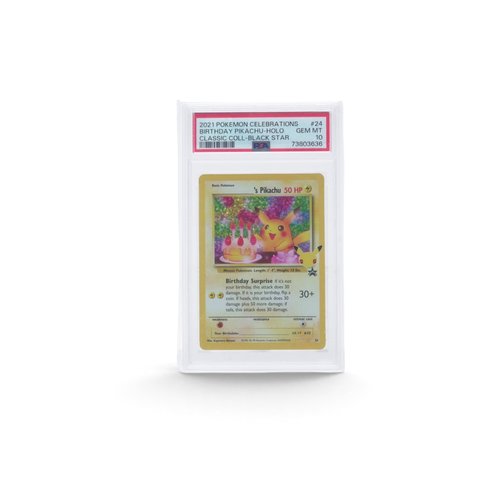
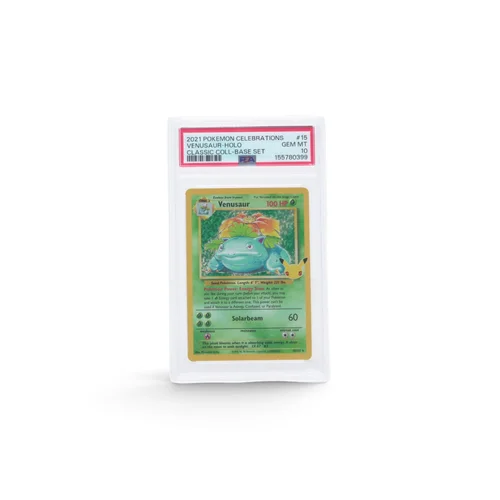
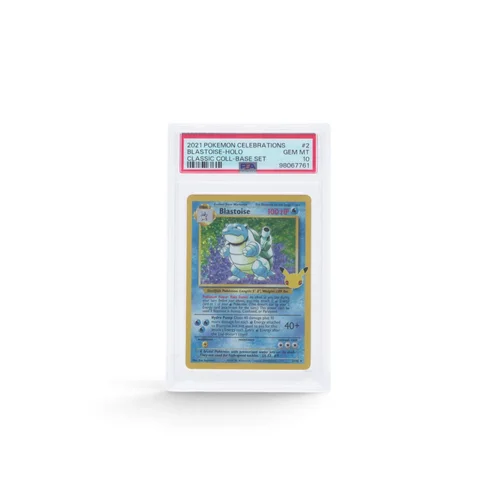
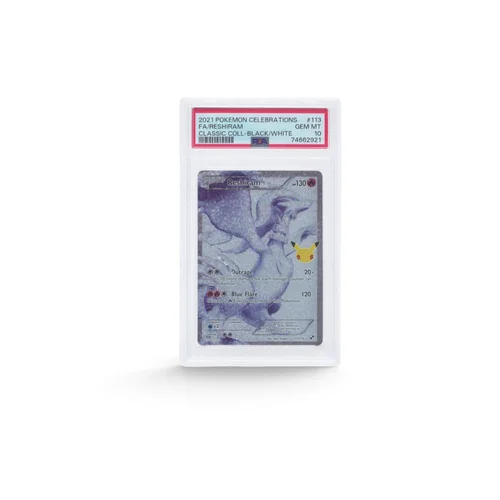
There is precedent for how this plays out. The 2021 Celebrations set did the same job for the 25th anniversary, and high grade Celebrations cards have held interest since. These are Celebrations cards from our current stock, which is the closest read available on how an anniversary Classic Collection ages:
What is worth grading
The economics of grading do not change because a set is an anniversary set. The general rule across the market holds: cards worth more than about 100 dollars raw see an average uplift of 120 to 300 percent when they come back PSA 10, while cards under about 10 dollars raw rarely gain more than 70 percent, which usually fails to cover the grading fee.
| From 30th Celebration | Grade it? | Why |
|---|---|---|
| New-rarity Mewtwo or Mew | Yes | New tier, no population data, strongest candidates in the set |
| Base Set Charizard reprint | Yes | Most recognised card in the game, deep long-term demand |
| Chase Pikachu from the run of 30 | Usually | Guaranteed pull means high supply, so only the strongest of the thirty |
| Standard foil rares | Rarely | Every card is foil, so foil alone is not scarce here |
| Foil basic Energy | No | Novel, but printed in enormous quantity |
Grading economics are general market averages, not a promise about any individual card.
How to open for grading
- Decide before you open. If a box is for grading, treat every pack as a candidate and set up before you start, rather than sorting later.
- Handle by the edges only. Surface is one of the four things graders score, and finger oil on a foil card shows under a loupe.
- Sleeve straight out of the pack. Penny sleeve first, then a semi-rigid holder. Not a top loader on its own, which lets the card slide.
- Check centring in daylight. Centring is the one fault you cannot improve and the most common reason a clean-looking card comes back a 9.
- Do not clean anything. Wiping a foil surface leaves micro-scratches that cost you the 10.
Selling into the anniversary?
If you are holding graded cards or a collection you are thinking of moving, send photographs and we will tell you what you have and what it is worth. Free, no obligation, and we buy outright rather than on consignment.