Pokemon Card Grading in the UK: What Actually Changed
PSA has opened its first grading facility on European soil and put 200 million dollars behind its global expansion. For UK and EU collectors that changes the cost, the wait and the risk of getting cards graded.
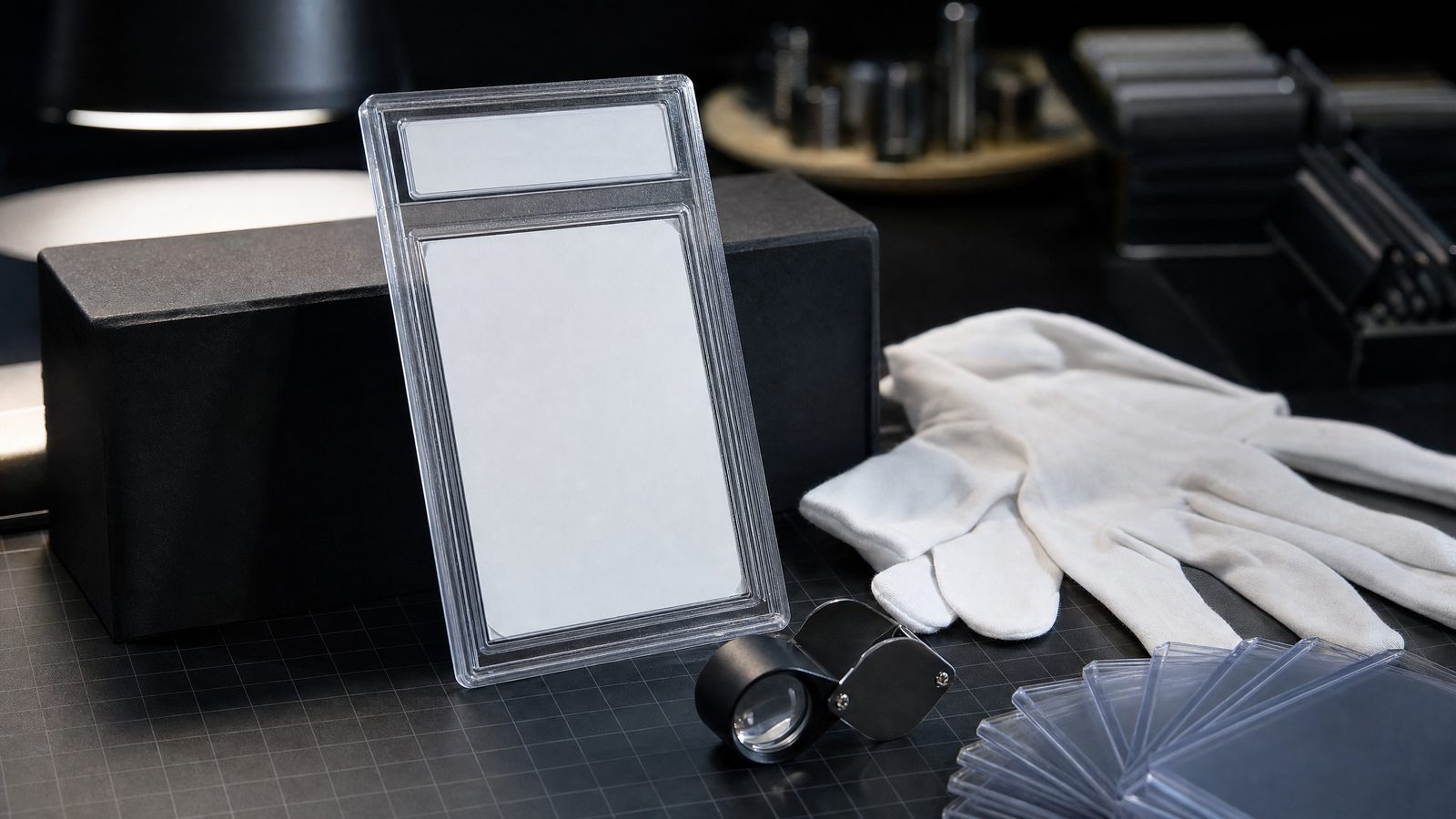
Grading has stopped being something collectors do to the best card in a collection and become the default for anything of value. People grade to authenticate, to protect the card physically, and above all to make it liquid, because a slab with a number on it sells to a stranger in a way a raw card does not.
On this page
The short version
PSA has opened its first European facility, in Frankfurt. Until now the UK office in Manchester was intake only and forwarded cards to the United States, which added 10 to 20 percent in cost once shipping, customs and insurance were counted.
Grading pays on cards worth over about 100 dollars raw, where a PSA 10 adds an average of 120 to 300 percent. Under about 10 dollars raw it rarely adds more than 70 percent.
What the graders actually score
Every major grader looks at the same four things. Understanding them tells you why a card that looks perfect on your desk comes back a 9.
| Criterion | What it means | Can it be improved? |
|---|---|---|
| Centring | How evenly the border sits front and back | No. Fixed at the printer. |
| Corners | Sharpness, whitening, any softening | No. Handle carefully. |
| Edges | Chipping, whitening, roughness along the cut | No. |
| Surface | Scratches, print lines, dents, finger oil | No, and cleaning makes it worse. |
None of the four can be repaired after the fact. Everything you can control happens before the card reaches the grader.
PSA, CGC, ACE and BGS
The graders are not interchangeable. They carry different market recognition, and that recognition is most of what you are paying for.
| Grader | Strength | Best for |
|---|---|---|
| PSA | Widest recognition and deepest resale market worldwide | Anything you intend to sell, especially high value |
| CGC | Strong on modern, detailed subgrades available | Modern cards, collectors who want subgrade detail |
| ACE | Growing recognition, competitive on modern submissions | Modern cards where turnaround matters |
| BGS | Historic prestige, black label at the very top | Cards with a genuine shot at a perfect 10 |
For pure resale liquidity PSA remains the reference. That is a statement about market depth, not about grading accuracy.
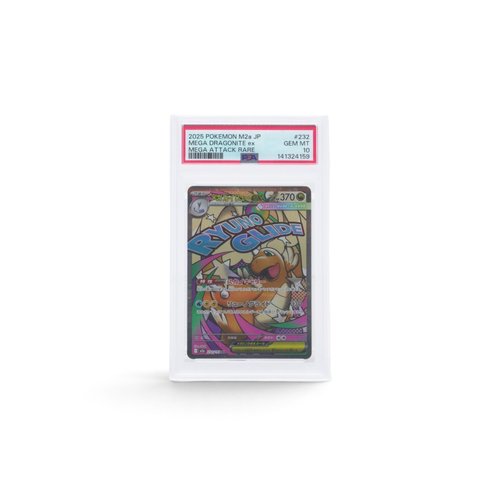
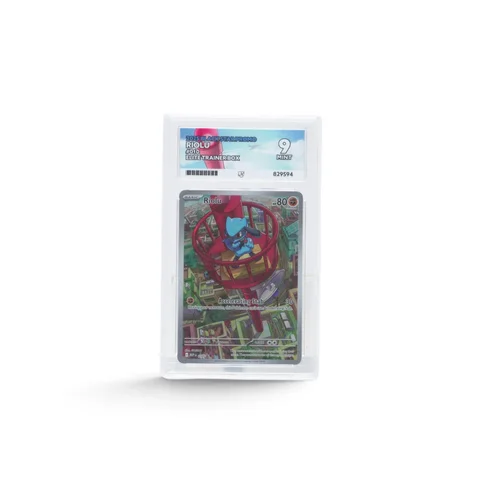
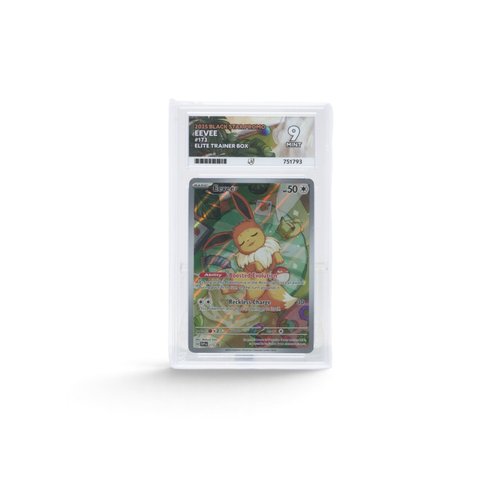
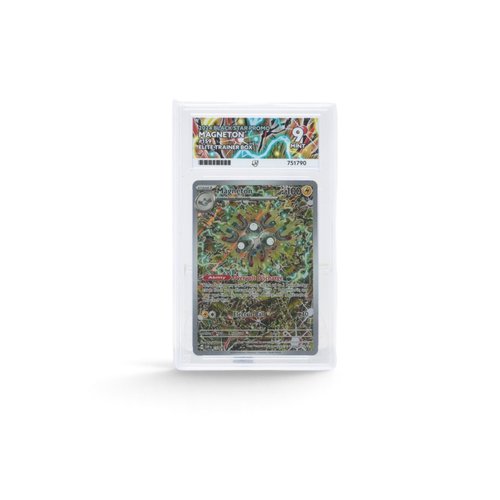
Our stock covers PSA and ACE in both gem mint and mint, which is a useful way to see how the same standard reads across graders:
What Frankfurt changes
Until recently, a UK collector submitting to PSA sent cards to the Manchester office, which was an intake operation only. The cards then travelled to the United States to be graded and travelled back. That round trip added time, and it added 10 to 20 percent to the all-in cost once cross-border shipping, customs and insurance were counted.
PSA has now opened a facility in Frankfurt, its first on European soil, as part of a 200 million dollar global expansion. For EU submissions that removes the transatlantic leg and the customs exposure that came with it, because cards move in free circulation within the EU.
Is grading worth it
The honest answer is that it depends almost entirely on the raw value of the card, and the thresholds are well established across the market.
| Raw value | Typical PSA 10 uplift | Verdict |
|---|---|---|
| Over $100 | 120 to 300 percent | Usually worth submitting |
| $30 to $100 | Varies widely | Depends on the reference and your confidence in a 10 |
| Under $10 | Rarely over 70 percent | Usually costs more than it adds |
These are market averages, not a forecast for any individual card. A card that comes back a 9 rather than a 10 changes the arithmetic completely.
There is a second reason people grade that has nothing to do with uplift. A slab authenticates the card and protects it physically. For anything genuinely rare, that alone can justify the fee.
Getting a card ready
- Assess centring first. It is the most common reason a clean card grades 9, and you can check it yourself in good light before spending anything.
- Handle by the edges. Finger oil on a foil surface shows under a loupe and counts against surface.
- Penny sleeve then semi-rigid. That is what graders expect. A top loader alone lets the card move in transit.
- Never clean a card. Wiping leaves micro-scratches. There is no cleaning method that improves a grade.
- Photograph everything before it leaves you. Front, back and both surfaces at an angle, for insurance and for your own record.
Not sure if your cards are worth grading?
Send photographs before you spend anything on submission fees. We will tell you what the cards are and whether grading makes sense, or buy them from you as they are. Free, no obligation.