JAR Jewellery: Who Joel Arthur Rosenthal Is, and Why His Jewels Are So Rare
The Paris jeweller who makes fewer than a hundred pieces a year and sells by introduction only: how to recognise JAR jewellery, how it is signed, and why provenance matters.
JAR is the Paris jewellery house of Joel Arthur Rosenthal, founded with Pierre Jeannet on the Place Vendôme in 1978:
- Rare by design: about 70 to 80 pieces a year, each made for one client, sold by introduction, with no shop window and no advertising.
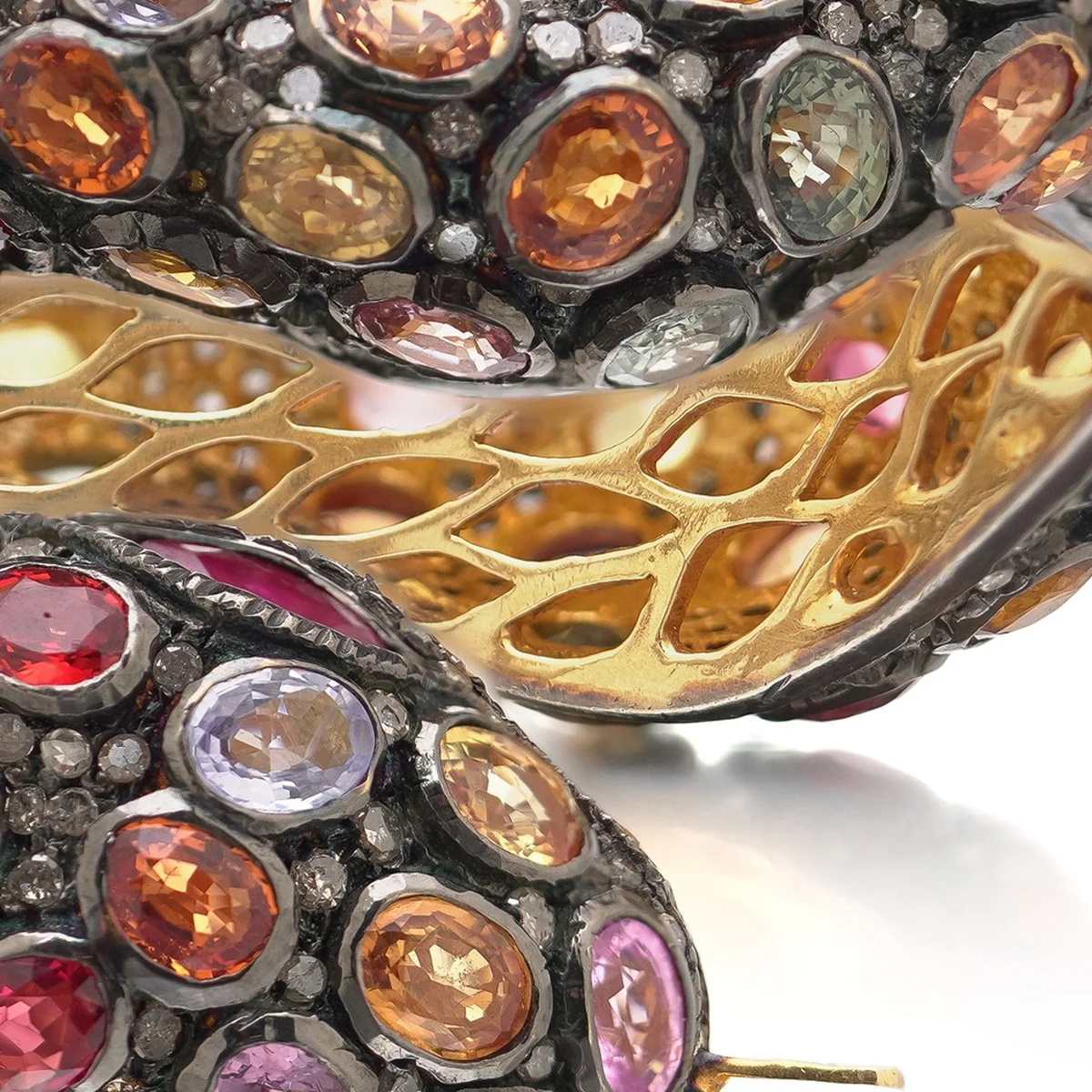
- The look: pavé of coloured stones shaded like paint, often in blackened silver over gold, with flowers, butterflies and serpents as subjects.
- The mark: auction houses describe pieces as signed “JAR” or “JAR Paris”, often with the maker's box or pouch.
- Records: a camellia brooch made $4.3 million at Christie's Geneva in 2012.
- Provenance matters more than usual, because each jewel has a traceable first owner.
In this article
- Who is Joel Arthur Rosenthal?
- Why JAR jewels are so rare
- How to recognise JAR jewellery: the design signatures
- How JAR pieces are signed
- Exhibitions: London 2002 and the Met 2013
- JAR at auction: three stories
- Provenance, and how to check a jewel is not stolen
- Valuing or selling signed high jewellery
- Questions
Who is Joel Arthur Rosenthal?
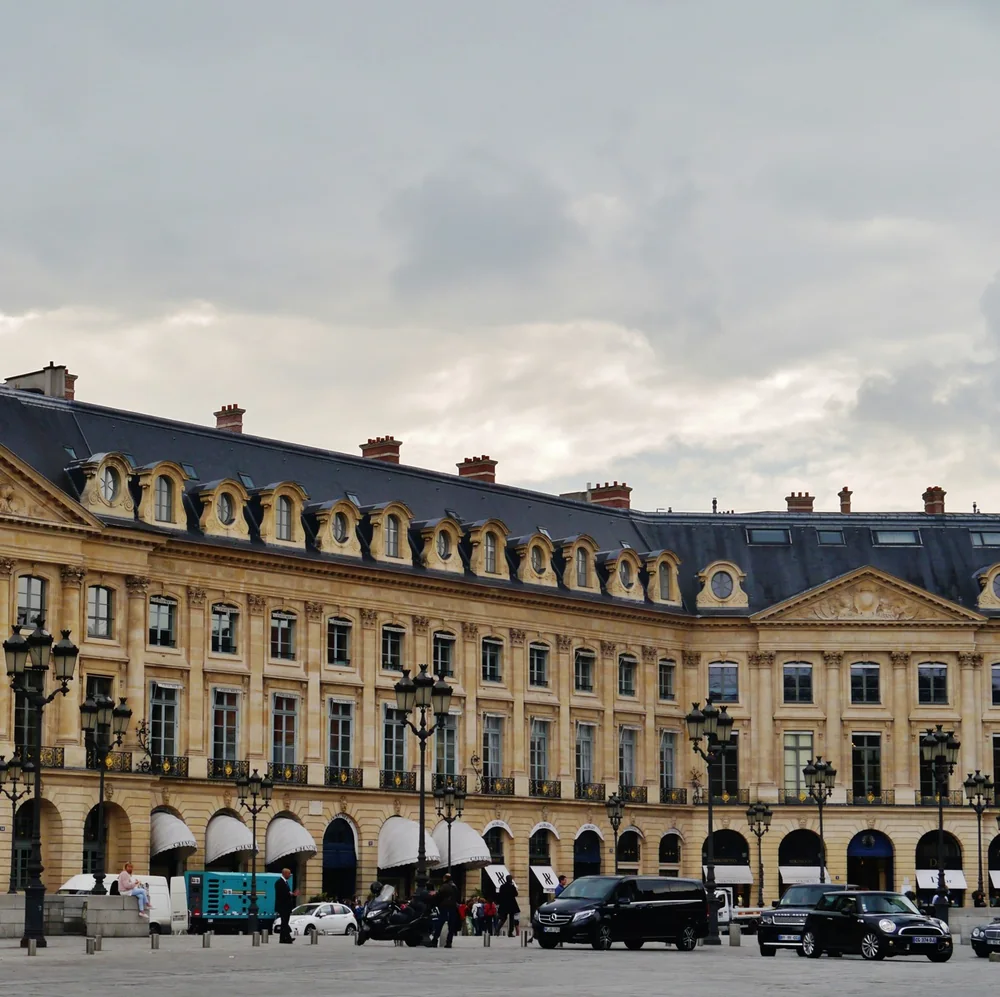

From the Bronx to the Place Vendôme
Joel Arthur Rosenthal was born in the Bronx in 1943 and grew up visiting New York's museums. He studied art history and philosophy at Harvard, graduated in 1966 and moved to Paris, where he met Pierre Jeannet.
The two opened a needlepoint shop in 1973. Clients began asking him to redesign their jewels, and after a spell at Bulgari in New York he returned to Paris and founded JAR with Jeannet on the Place Vendôme in 1978. The name is his initials.
- 1943Joel Arthur Rosenthal is born in the Bronx, New York.
- 1966Graduates from Harvard and moves to Paris, where he meets Pierre Jeannet.
- 1973Opens a needlepoint shop in Paris. It lasts eleven months.
- 1976Works at Bulgari in New York.
- 1978Founds JAR with Jeannet on the Place Vendôme.
- 1984Christie's sells a JAR jewel at auction for the first time, in New York.
- 1987JAR moves into a larger space next door.
- 2002“The Jewels of JAR, Paris” opens at Somerset House, London.
- 2013“Jewels by JAR” opens at the Metropolitan Museum of Art, New York.
Why JAR jewels are so rare
Most great jewellery houses sell from shop windows around the world. JAR works the other way round:
- A tiny output. About 70 to 80 pieces a year, according to Christie's, each made for a particular client.
- No shop window, no advertising. The salon at 7 Place Vendôme has no window and no sign. New clients come by introduction.
- Nothing leaves unless it is right. Jeannet told the Met that Rosenthal checks every stage of a piece, that rejected pieces are destroyed, and that the final test is whether the jewel suits the person who will wear it.
- Few owners. Lyon & Turnbull notes that in 2002 only about 250 people in the world were thought to own a JAR jewel.
So when a JAR piece comes to auction, it is usually the first time the public has seen it. Christie's says it has handled about two-thirds of the JAR jewels ever offered on the open market.
How to recognise JAR jewellery: the design signatures
JAR's style is consistent enough to recognise, and the techniques behind it have a history. The pieces below are from our own collection and are not by JAR: each shows one of the effects JAR is known for.
Painterly pavé of coloured stones
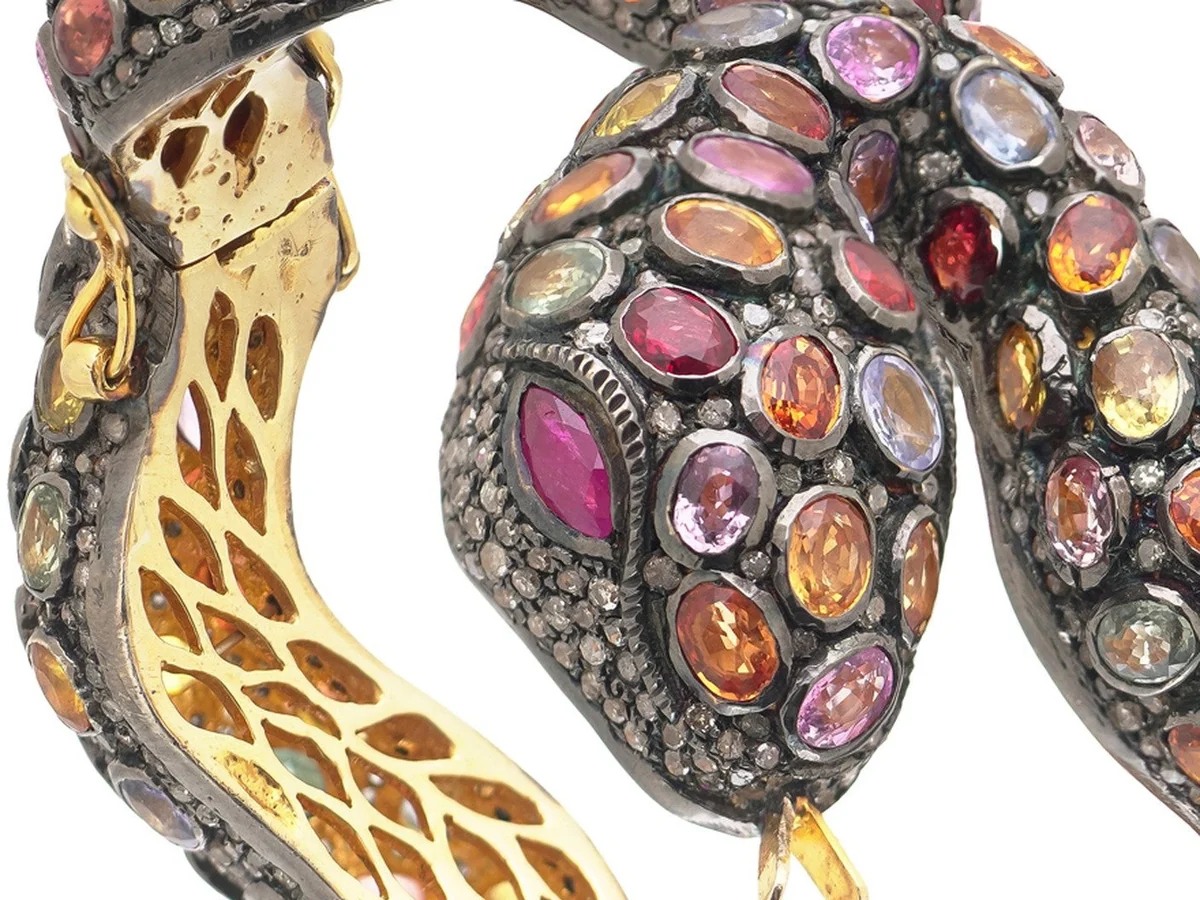
Pavé means small stones set close together so the metal almost disappears. JAR uses it like paint, grading the colour of the stones across a petal or a wing. The Met names this shading of colour, and his diamond thread work, as his signatures.
Sotheby's adds two details: single-cut diamonds, a nod to 19th-century settings, and stones set so closely that the metal seems to vanish.
Blackened silver over gold
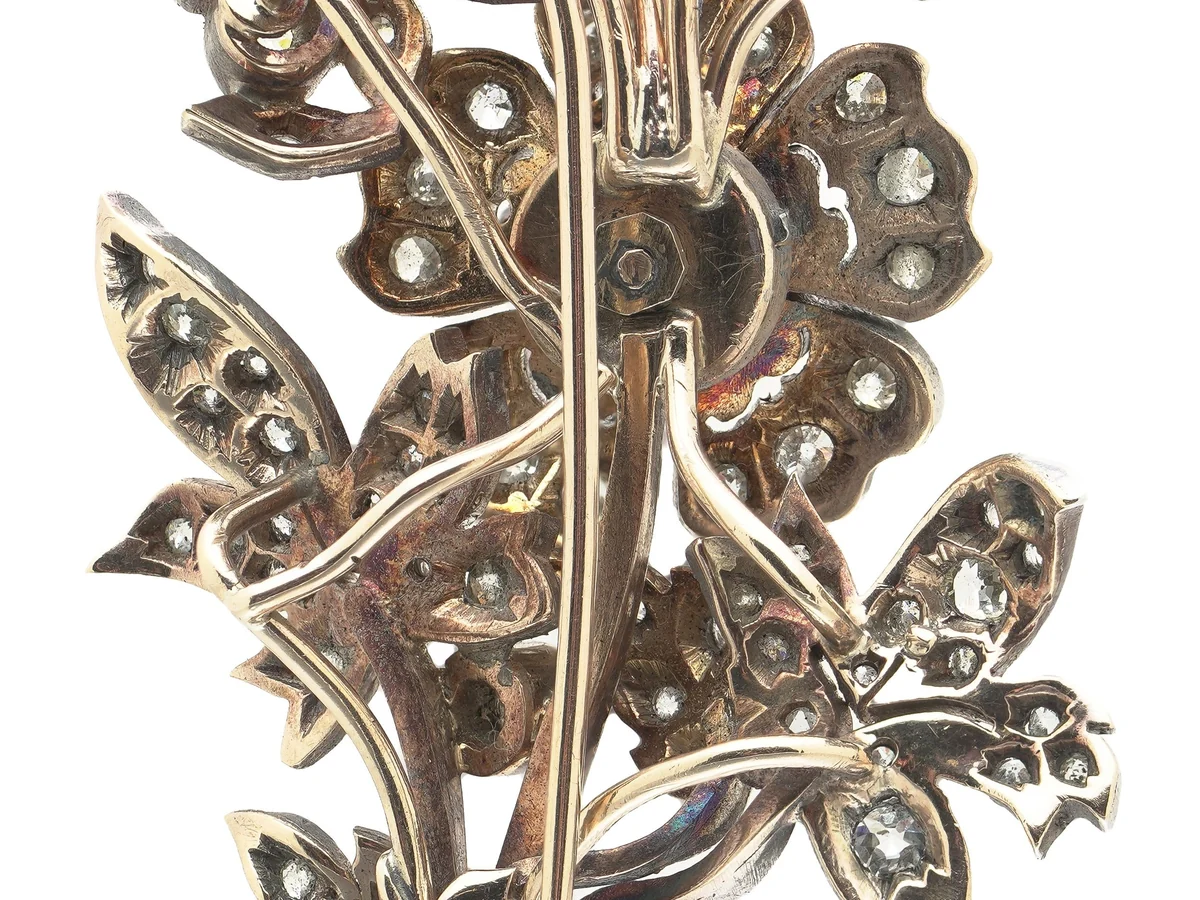
Diamonds set in silver on a gold back were the standard Victorian construction, as on the brooch shown here.
The Met credits Rosenthal with bringing silver back into fine jewellery and blackening it, so the dark metal makes coloured stones look deeper and diamonds brighter. Sotheby's describes it as oxidised silver over gold.
Flowers: camellias, pansies, tulips and blossom
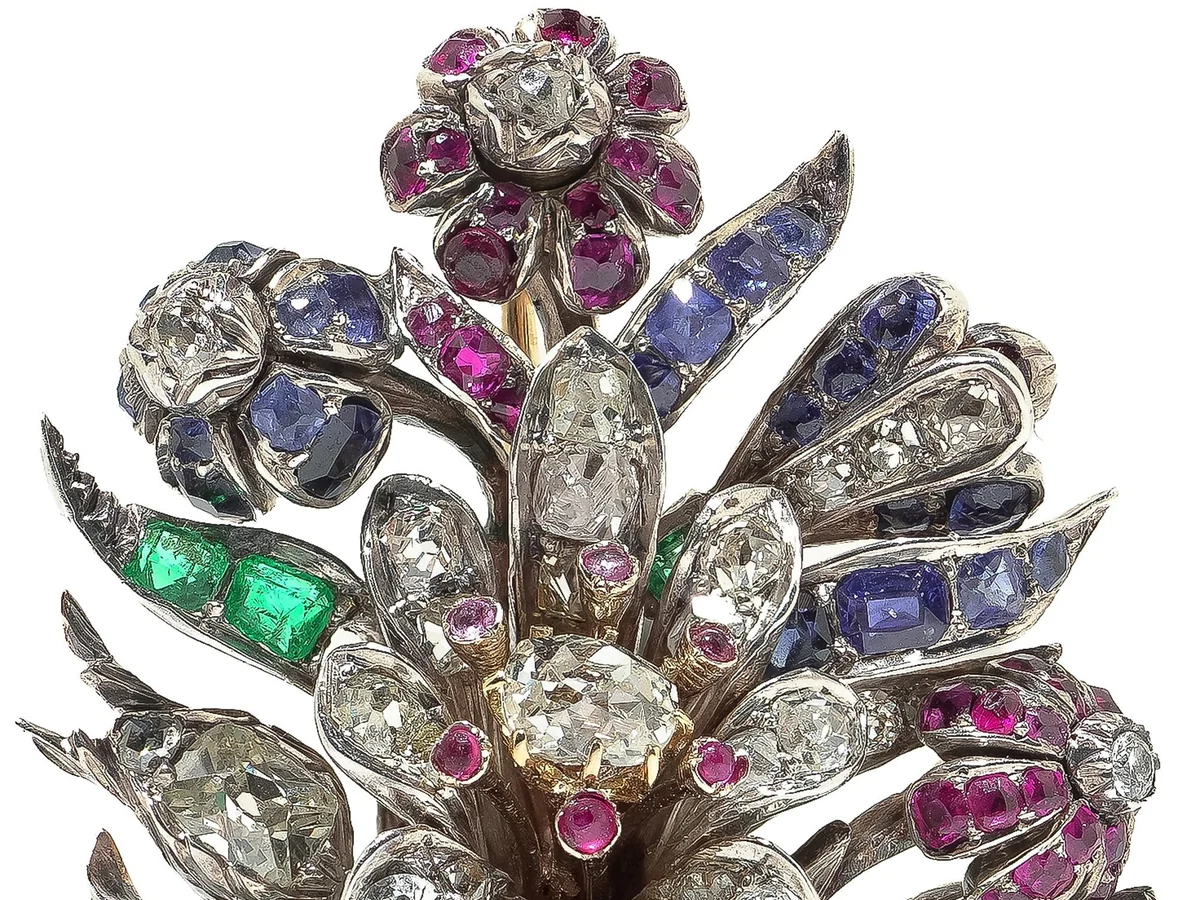
Flowers are among JAR's best known subjects. The record JAR jewel at auction is a ruby and diamond camellia brooch, and the names that recur in sale catalogues include Pansy earrings, Parrot Tulip and Apricot Blossom.
Naturalistic flower jewels have a long history; see our floral antique jewellery guide.
Butterflies, serpents and leaves
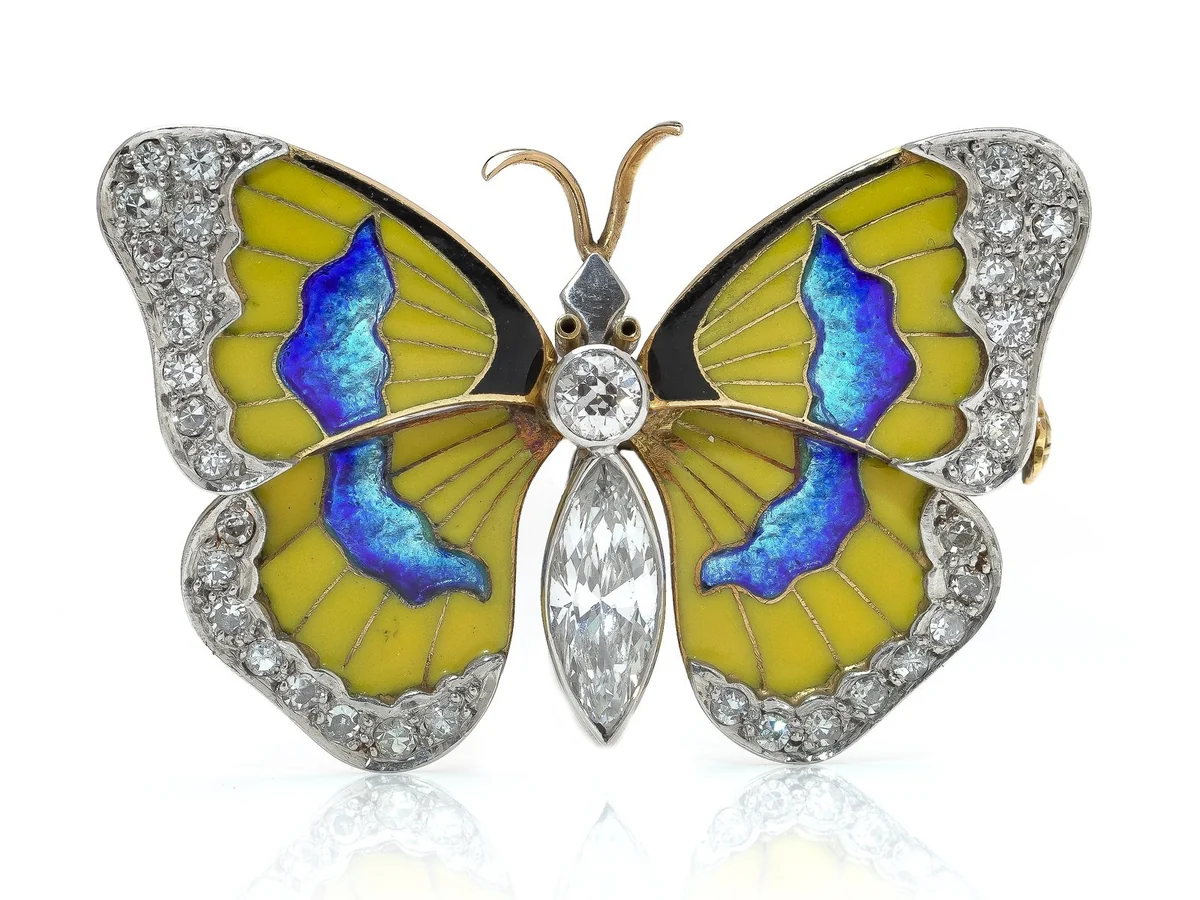
Sotheby's lists butterflies, serpents, leaves and frosted branches among his motifs, treated less as copies of nature than as something slightly surreal.
Some earrings are deliberately unmatched pairs. For the older tradition of jewelled insects, see antique insect brooches.
Unexpected colours and materials
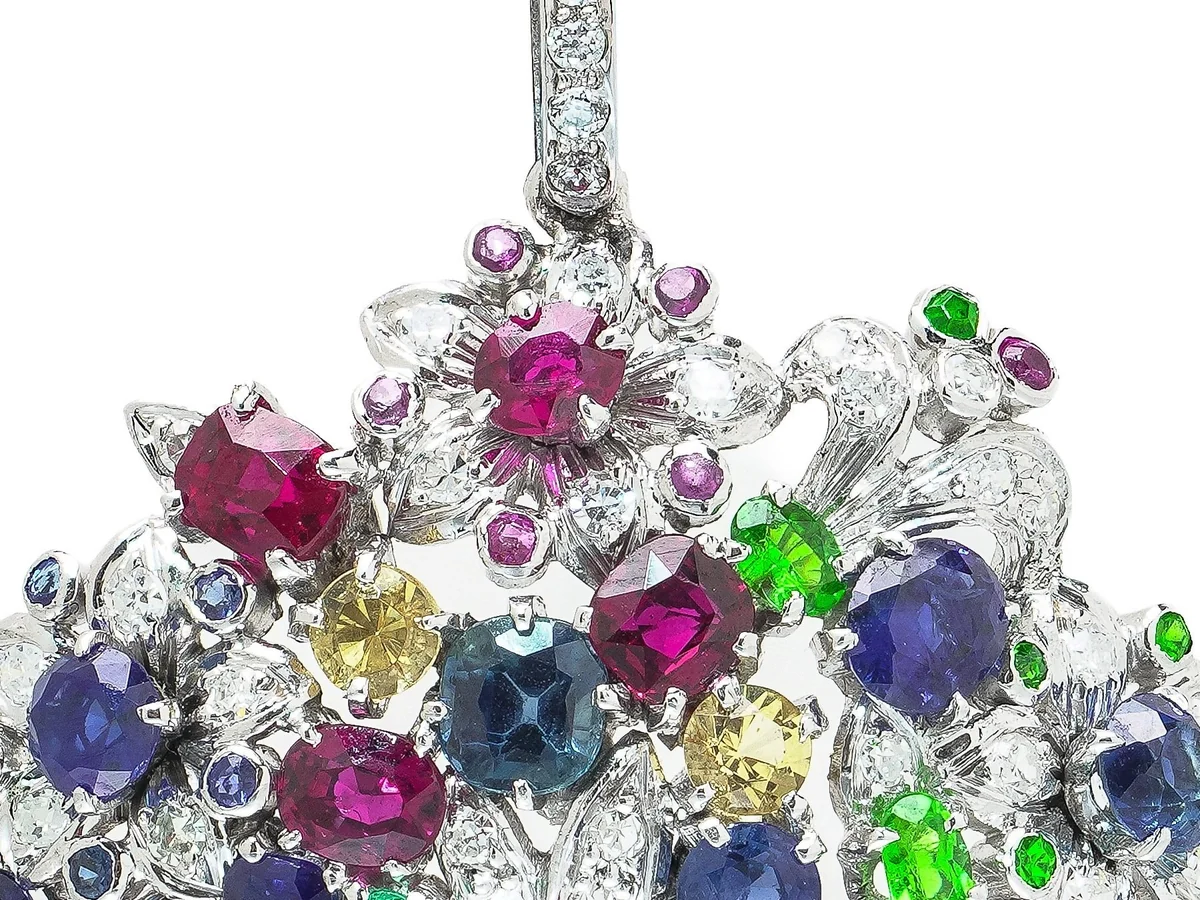
JAR puts together stones other houses keep apart. A 2025 Christie's collection ran from spinels, garnets and peridots to fire opal, with black and brown diamonds.
The metals are as unusual: aluminium, titanium and bronze as well as gold and platinum. In the Met's words, quoting Rosenthal, “we are not afraid of any materials.”
How JAR pieces are signed
The mark, and what comes with it
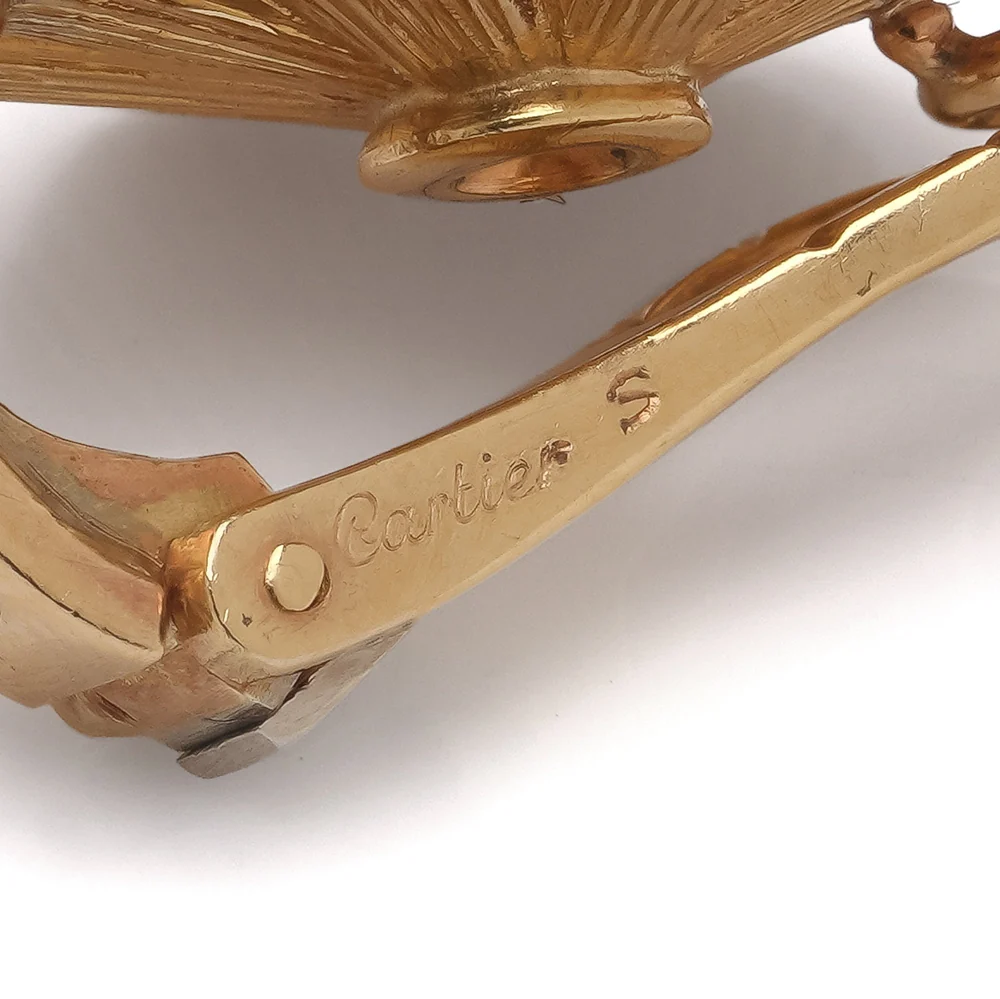
Auction houses describe JAR jewels as signed “JAR” or “JAR Paris”. Sotheby's notes that original boxes often come with them; Christie's has offered pieces in pink JAR cases, and Lyon & Turnbull earclips in the maker's pouch.
A signature on its own proves little, because a mark can be added to any jewel. Style, workmanship and a documented history have to agree with it.
See how designer jewellery is authenticated and what a signature does to value.
Exhibitions: London 2002 and the Met 2013
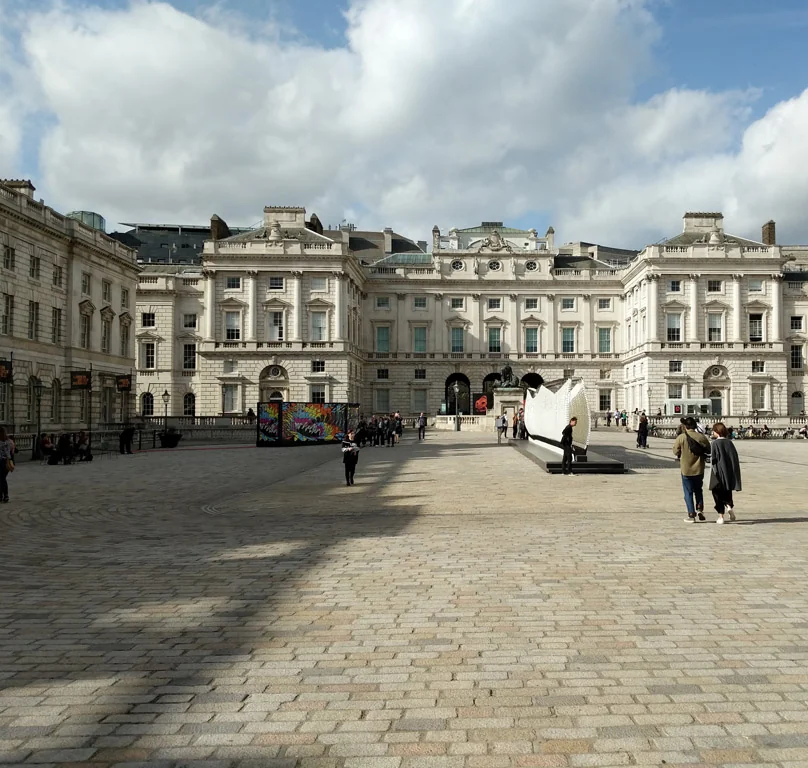

“The Jewels of JAR, Paris”, Somerset House
JAR's first public show opened at the Gilbert Collection in Somerset House in November 2002 and ran into 2003. It held 400 pieces, 145 owners lent jewels, and photography was not allowed for at least half of them.
Visitors walked through darkened rooms with torches, lighting each jewel themselves. Small aluminium and gold flower earclips were made for sale at the exhibition.
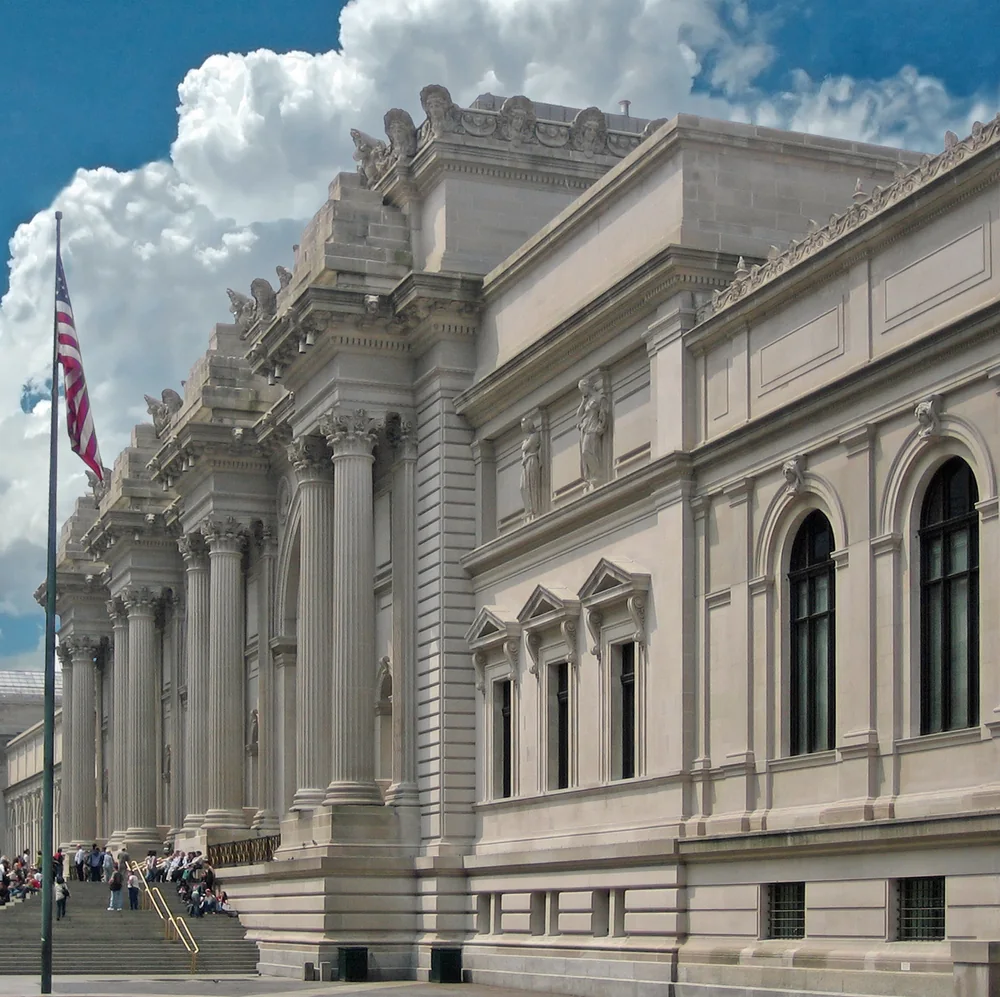

“Jewels by JAR”, the Metropolitan Museum of Art
From 20 November 2013 to 9 March 2014 the Met showed more than 400 works. It was the first retrospective of his work in the United States, and the first the Met had given to a contemporary artist of gems.
JAR also designed earrings and watches for the museum, sold only in its shops.
JAR at auction: three stories
Because so few JAR jewels change hands, each sale is news. Three stand out.
1984, New York. Christie's sells its first JAR jewel at auction: a pair of ear pendants with amethysts, sapphires, natural pearls and diamonds.
2012, Geneva. At “Jewels for Hope”, Christie's sale of Lily Safra's jewels for charity on 14 May, 18 JAR pieces sold for $11.5 million. Her ruby and diamond camellia brooch of 2003 made $4.3 million, about four times its low estimate, which Christie's still cited as the JAR record in 2025.
2025, Geneva. The Golconda Blue, a 23.24 carat fancy vivid blue diamond once owned by the Maharaja of Indore, was offered in a ring designed by JAR, estimated at up to $50 million. Weeks before the sale its owner withdrew it and chose to sell within the family.
Every signed jewel is different. Send us a few photos and we will tell you what yours is worth, free and with no obligation.
Own a signed jewel? Get a free valuation
Provenance, and how to check a jewel is not stolen
A JAR jewel is made for one person, so its history can usually be traced from the atelier onwards. That makes provenance, the record of who owned a piece and how it changed hands, part of what a buyer is paying for.
Latest: in October 2026 a JAR engagement ring was at the centre of a theft trial at Southwark Crown Court, as reported by The Independent.
If you are buying
- Ask for the history
Where did it come from, when, and from whom? Receipts, valuations, probate papers and the maker's box all count.
- Check the signature against the piece
The mark, the workmanship and the papers should all tell the same story.
- Search the stolen-art register
The Art Loss Register, set up in London in 1990, holds more than 700,000 lost and stolen items. Auction houses, dealers and pawnbrokers search it before they buy.
- Walk away if it does not add up
A missing history on an important jewel is a reason to stop.
If you own a valuable jewel
- Photograph it front, back and any marks, and keep the receipt, box and valuations together.
- If it is stolen, report it to the police, keep the crime reference and register it with the Art Loss Register, so a dealer or auction house that searches will find it.
What we ask when you sell to us
Photo ID and proof of address (see when ID is needed), how the piece came to you, and any proof of ownership: receipts, valuations, probate papers or the box. The registers and how dealers use them are covered in more detail in our guide to the Louvre jewel theft.
Valuing or selling signed high jewellery
We value signed jewels from photographs, free and without obligation, whether by JAR or by another great house. Send:
- Photograph
The front in daylight, the back, any signature or marks, and the box, pouch and papers.
- Send
Use the form below, call 01376 334482 or WhatsApp us.
- Visit
Bring it to 47 Maddox Street, Mayfair (by appointment) or to Braintree, Essex. Contact us to book.
House by house: Cartier Panthère, Van Cleef & Arpels Alhambra, Boucheron, Bulgari, Graff and Tiffany's Jean Schlumberger, or all of them in our designer jewellery guides. Deciding how to sell? Read dealer or auction and, for a family estate, selling inherited designer jewellery.
Looking to buy?
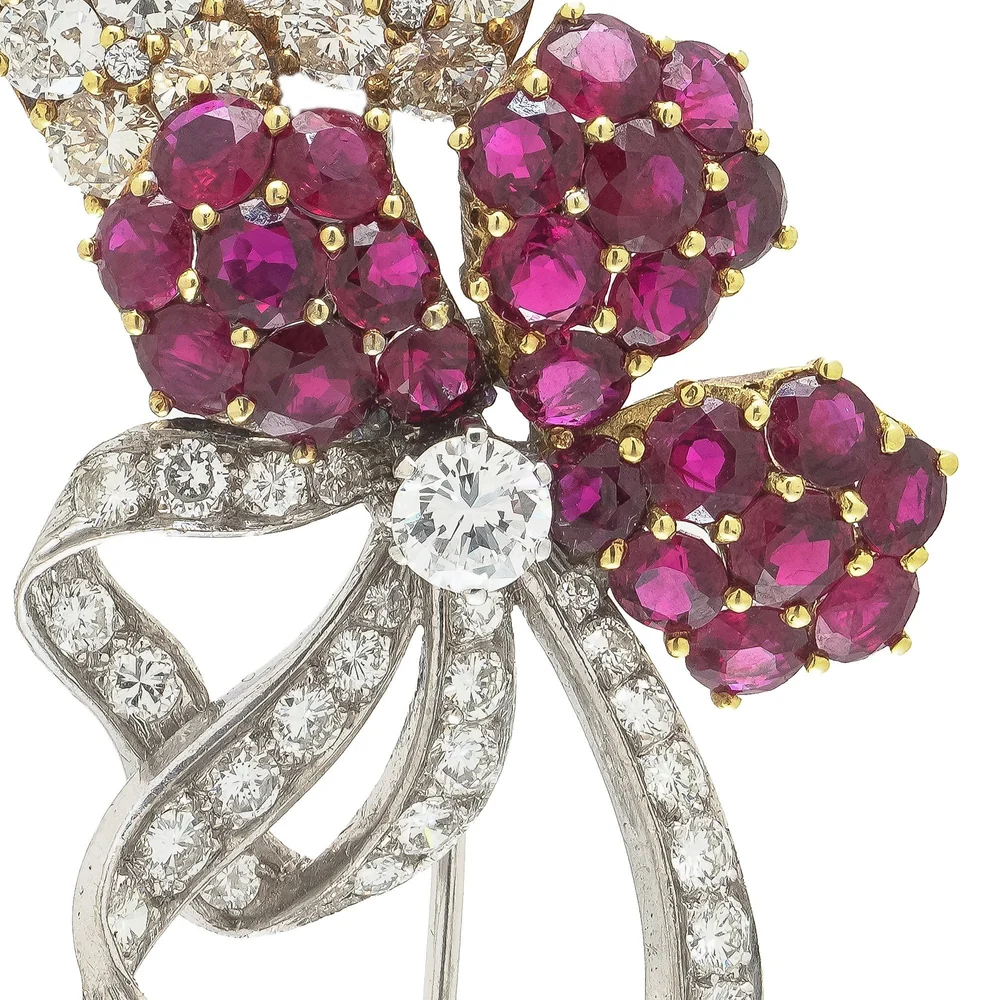
JAR rarely reaches the open market, but the flower jewel has a long history. Our collection holds signed and unsigned flower jewels from the Victorian period to the 1970s.
See the coloured stone and flower pieces in our brooches, bracelets and earrings, and where the market for coloured stones stands in coloured gemstones at auction in 2026.
Request a free valuation
- JAR is Joel Arthur Rosenthal's Paris house, founded with Pierre Jeannet on the Place Vendôme.
- Fewer than a hundred unique pieces a year, sold privately, so very few reach the open market.
- Look for coloured pavé, blackened silver over gold, natural subjects and a “JAR” or “JAR Paris” signature that agrees with the piece and its papers.
- We value signed jewels free from photos, with no obligation.
Questions we are asked
What does JAR stand for?
The initials of Joel Arthur Rosenthal, the American-born jeweller who founded the house in Paris with Pierre Jeannet. The Met gives 1978 as the year.
Where is JAR's shop?
At 7 Place Vendôme in Paris. It has no shop window or sign, does not advertise, and new clients come by introduction.
How many pieces does JAR make a year?
About 70 to 80, according to Christie's, and each is made for a particular client.
How is JAR jewellery signed?
Auction houses describe pieces as signed 'JAR' or 'JAR Paris', often with the original box or pouch. A signature alone does not prove a piece is genuine: style, workmanship and history must agree.
What is the most expensive JAR jewel sold at auction?
A ruby and diamond camellia brooch of 2003, sold for $4.3 million at Christie's Geneva in 2012, in the charity sale of Lily Safra's jewels.
Where were the JAR exhibitions?
The Gilbert Collection at Somerset House, London, from November 2002, and the Metropolitan Museum of Art, New York, from 20 November 2013 to 9 March 2014.
How do I check a piece of jewellery is not stolen?
Ask for its history and papers, check that the marks match the piece, and have it searched against the Art Loss Register, which auction houses and dealers use. If a story does not add up, do not buy.
Can you value a JAR or other signed jewel?
Yes. Send photos of the front, back, marks and any box or papers for a free valuation, or book a visit to Mayfair or Braintree. There is no obligation to sell.
Value your signed jewel
Send photos of the front, back, marks and any box or papers for a free valuation, or visit us in Mayfair or Braintree.
- We buy directly
- Free valuation from photos
- Appointments in Mayfair and Braintree
- Insured postage or collection
New pieces reach our list first: join the Mozeris list.