Part of: Natural vs cultured pearls
A conch pearl is a rare natural pearl from the queen conch, a large sea snail of the Caribbean. Unlike oyster pearls it has no nacre: it is a porcelain-like pearl in pink, orange or white, and the finest show a silky shimmer called flame structure. Conch pearls are not farmed, so every one is natural, found by chance by conch fishermen. Their value depends on colour, flame, shape, size and condition.
Have jewellery set with conch pearls?
Free, no obligation, returned at our cost if you decline.
- Read our Google reviews (opens Google)
- Free, no obligation
- A reply within one working day
- Paid the same day after inspection
What is a conch pearl?
Conch pearls form in the queen conch (Aliger gigas, formerly Strombus gigas), a marine snail found in the Caribbean, the Bahamas, Bermuda and around Florida. They are calcareous concretions: built from the same porcelain-like material as the pink inside of the conch shell, not from the layered nacre of oyster pearls. That is why they have a glossy, porcelain lustre rather than the mirror-like orient of an oyster pearl.
Why are conch pearls so rare?
- They are natural. Conch pearls have not been cultured commercially; each one forms by chance.
- Few conchs have one. Only a tiny fraction of the conchs caught for food contain a pearl, and fewer still a fine one.
- They are found by chance when fishermen clean conchs for their meat.
- The conch is protected. The queen conch is listed on Appendix II of CITES, so international trade in conch products is regulated.
Colour and flame structure
- Colour
- What to look for
- Pink is the classic colour, from pale to deep; orange, salmon, white and brown also occur
- Flame structure
- What to look for
- A silky, wavy shimmer across the surface, like watered silk; strong, even flame is the most prized
- Shape
- What to look for
- Oval and symmetrical shapes are prized; most are baroque
- Surface
- What to look for
- Smooth and glossy, without cracks or chips
Conch pearls or melo pearls?
Melo pearls come from the melo sea snail of Southeast Asia and are usually orange. Like conch pearls they are non-nacreous and natural, and they can also show flame structure. Colour and origin tell them apart, and a gemmological laboratory can confirm which is which.
Conch pearls in antique jewellery
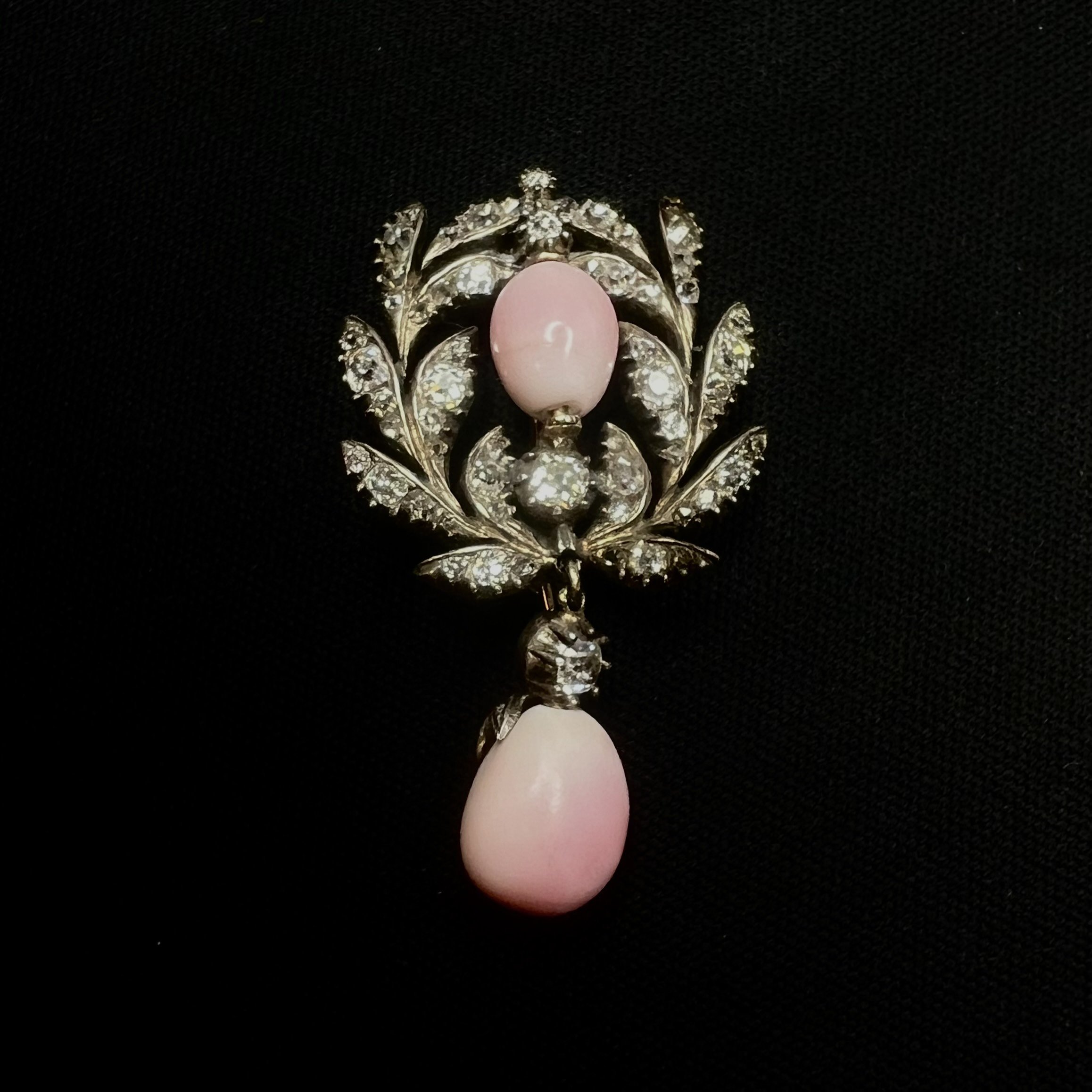
Conch pearls were fashionable around 1900, in late Victorian and Edwardian jewellery, set with diamonds in gold and silver or platinum. Brooches, pendants and rings of that period, like the brooch in our photograph, are among the most sought-after conch pearl jewels.
How to tell if a conch pearl is genuine
0 of 4 checked
1The flame
Flame structure is the sign of a genuine conch pearl; dyed shell beads and imitations lack it.
2The lustre
Porcelain-like, not the layered orient of an oyster pearl.
3No drill holes
Fine conch pearls are usually left undrilled and set in claws or cups.
4A laboratory report
For an important pearl, a report from a gemmological laboratory confirms a natural conch pearl and any treatment.
Have jewellery set with conch pearls? Send clear photographs of the front, the back and any report for a free, honest check.
Free, no obligation, returned at our cost if you decline.
How to care for conch pearls
The pink colour of a conch pearl can fade in strong light. Store it in the dark, away from direct sunlight and heat, and wipe it with a soft cloth after wearing.
What decides a conch pearl's value?
Colour (a deep, even pink is prized), the strength of the flame structure, a symmetrical shape, size, a clean surface, no fading, the jewel it is set in and a laboratory report. We never publish figures; every pearl is different, so send us photographs for a free valuation.
Free, no obligation, and returned at our cost if you decline.
Read our Google reviews (opens Google)
- Colour
- Flame
- Shape
- Size
- Surface
- Report
How selling works
- 1
Send photographs
of the pearl in daylight, the setting and any report.
- 2
Free value inspection
We reply within one working day with an estimate, subject to inspection. If our offer differs, you can decline and we return it at our cost.
- 3
Paid the same day after inspection
by bank transfer or in cash, in Mayfair, at our Braintree office, by post or by free collection.
Questions people ask
What is a queen conch pearl?
A natural, non-nacreous pearl from the queen conch, a large sea snail of the Caribbean. It is usually pink and may show a silky flame structure.
How much is a conch pearl worth?
It depends on colour, flame structure, shape, size, surface and the jewel it is set in. We never publish figures; send photographs for a free valuation.
Why are conch pearls pink?
They are made of the same material as the pink lining of the conch shell.
Can conch pearls be cultured?
They have not been cultured commercially. Conch pearls on the market are natural.
Do conch pearls fade?
Their colour can fade with long exposure to strong light, so store them in the dark.
What is flame structure?
A silky, wavy shimmer across the surface of a conch pearl, caused by its fibrous structure. Strong, even flame is the most prized.
Related guides
Have a conch pearl jewel?
Send a few photographs and we will tell you what it is and what it is worth, free.
Free, no obligation, returned at our cost if you decline.