Queen Mary's 1964 Dior Brooch, and How to Date Vintage Dior
The gilt and glass brooch the Queen of Denmark pinned to her suit on 6 October, and a dealer's guide to who made vintage Dior jewellery, how the marks date it, and what to check.
Queen Mary's Dior brooch, in brief:
- On 6 October 2026 Queen Mary wore a vintage Dior brooch to open the Danish Parliament; she first wore it in Paris in April 2025.
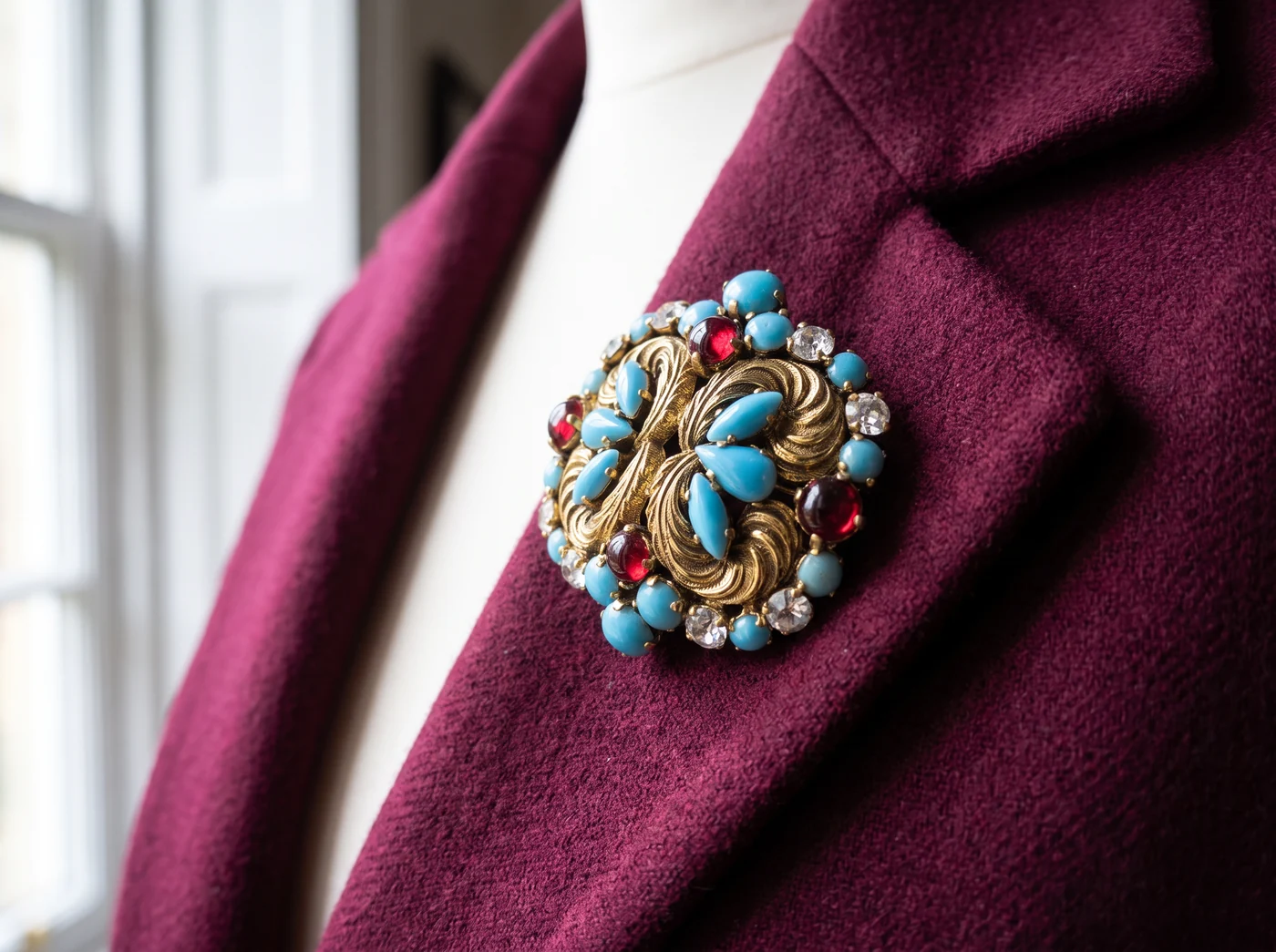
- The model is gilded metal with turquoise and red glass and rhinestones, from Dior's 1964 collection.
- From 1955 Dior jewellery was made under licence by Henkel & Grosse of Pforzheim, and their pieces are always signed.
- The plaque or tag on the back dates a piece; a mark that does not suit the design is a warning sign.
In this article
- The brooch at the opening of the Danish Parliament
- Why a couture house made glass jewellery
- Who actually made vintage Dior jewellery
- How to date a vintage Dior brooch from its mark
- What we check on a vintage Dior brooch
- What makes one vintage Dior brooch worth more than another
- Signed brooches from our collection
- How we can help
- Questions
The brooch at the opening of the Danish Parliament
On Tuesday 6 October 2026, King Frederik X and Queen Mary opened the new parliamentary year at the Folketing in Christiansborg Palace, Copenhagen. The Queen wore a deep berry suit by Roland Mouret and, pinned high on the jacket, a gilt brooch set with turquoise-blue stones, clear rhinestones and red glass cabochons.
Royal jewellery writers identified it as a vintage Christian Dior brooch from 1964. It is not new to her jewellery box: she first wore it on 2 April 2025, during the Danish state visit to France, at the Hôtel de Ville and Notre-Dame.
| When | What | Source |
|---|---|---|
| 2 Apr 2025 | First worn, on day three of the state visit to France | The Court Jeweller, Apr 2025 |
| 6 Oct 2026 | Worn again for the opening of the Folketing, with a Roland Mouret suit | HOLA!, Oct 2026 |
| The model | Gilded metal, rhinestones, turquoise and red glass paste, Dior collection 1964, 4 cm across | UFO No More |
There has been no confirmation that the Queen's brooch is the exact one that sold on the resale platform Vestiaire Collective, The Court Jeweller notes, only that a virtually identical piece did. Either way, it is a costume jewel: gilt metal and glass, made for the couture house, not a piece of gold and gemstones.
Source: The Court Jeweller, 7 October 2026; HOLA! USA, 6 October 2026
Why a couture house made glass jewellery
Jewellery for the New Look
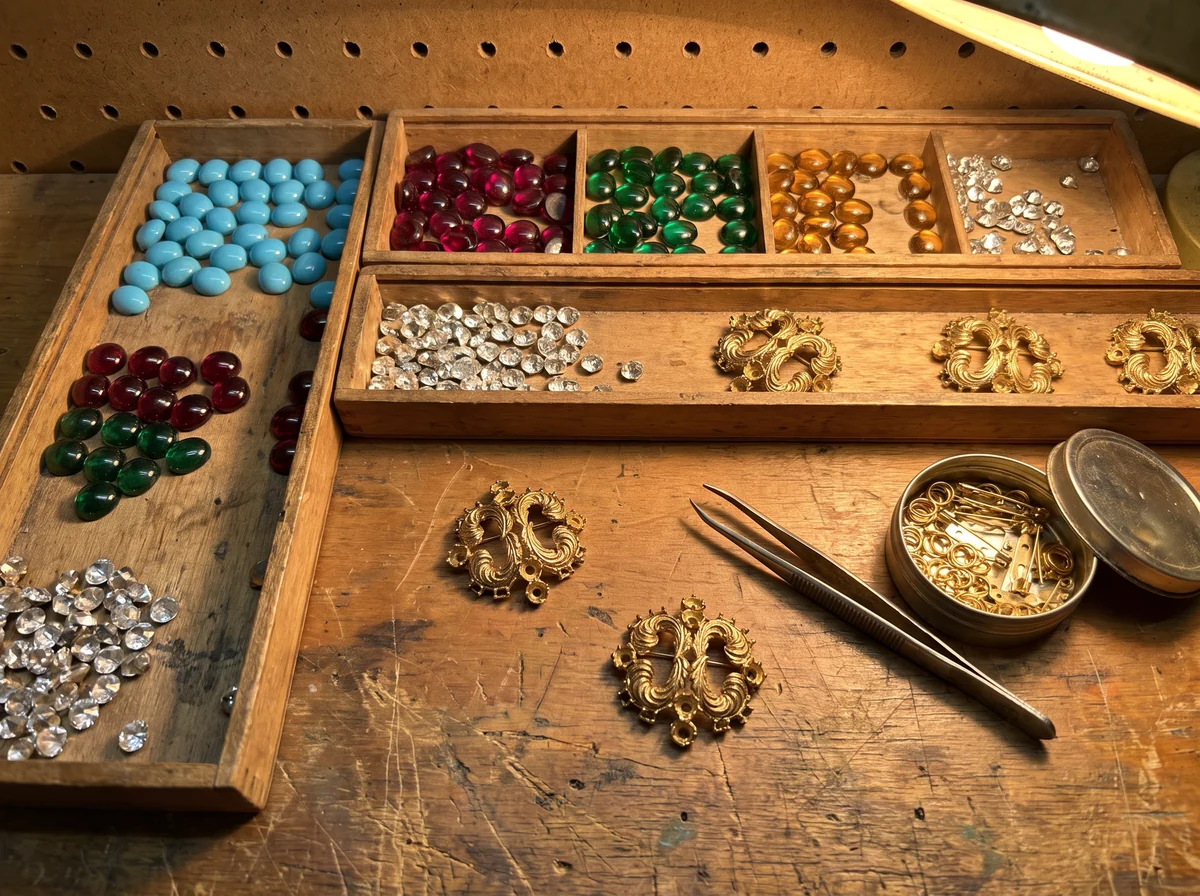
Christian Dior showed his first collection on 12 February 1947. Jewellery was part of the look from the start: made in gilt metal, glass and paste, designed to finish an outfit, not to hold its value in gold.
Dior died on 24 October 1957. Yves Saint Laurent followed him, then Marc Bohan from September 1960 to 1989, so a 1964 piece belongs to the Bohan years. Fine jewellery came much later; see our Dior Rose des Vents guide.
Source: Christian Dior; Marc Bohan
Why collectors want it now
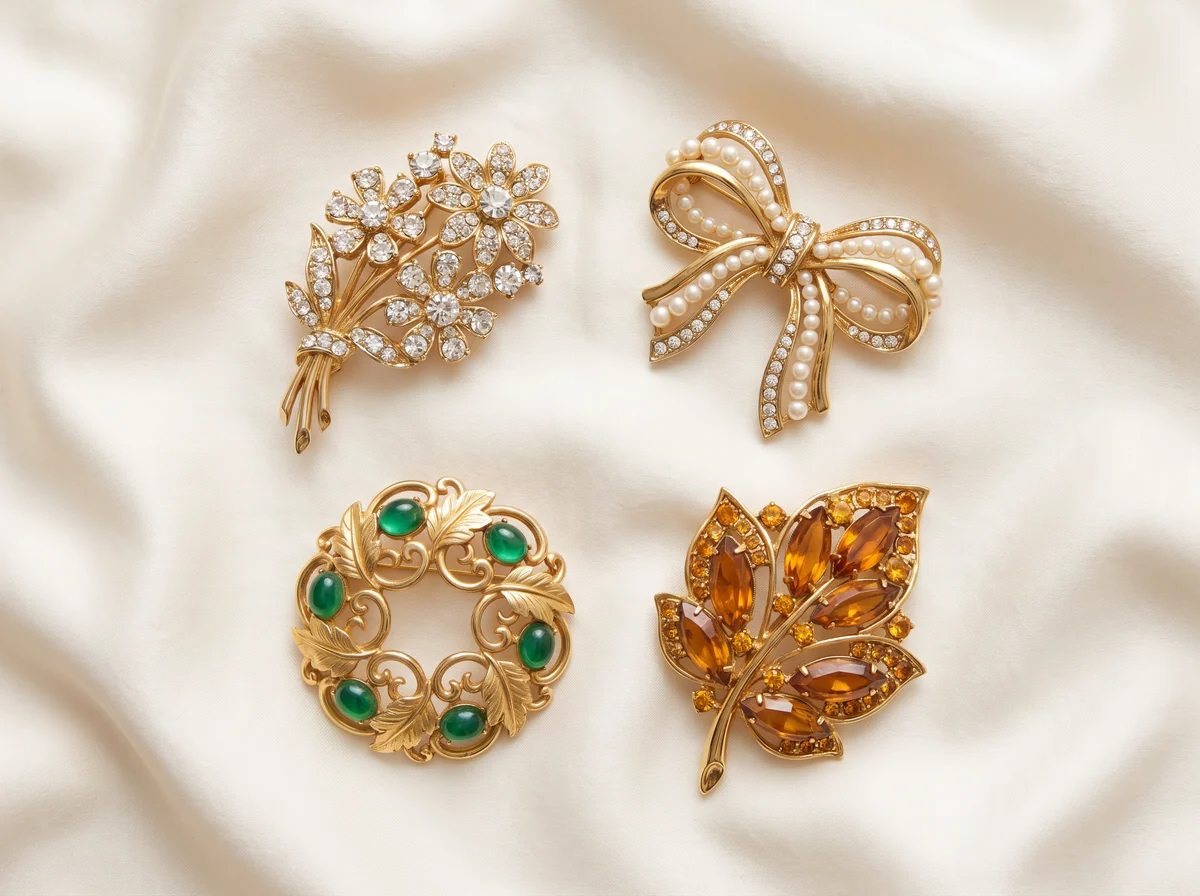
Good costume jewellery of the 1950s and 1960s was made by specialist workshops to couture standards: claw-set stones, hand-chased gilt, real weight in the hand. Signed pieces by the great houses are collected in their own right.
Brooches are back in daily wear, too, as we covered in are brooches back in fashion, and a 1964 piece worn by a queen shows how well a good one wears sixty years on.
Who actually made vintage Dior jewellery
Dior did not run its own jewellery workshop. The pieces were designed for the house and made under licence or to order by outside firms, and the maker tells you a great deal about the date.
| Maker | Where | When | How it is signed |
|---|---|---|---|
| Henkel & Grosse | Pforzheim, Germany | From 1955, for about fifty years | Always signed; plaque or tag changes by period (see below) |
| Mitchel Maer | London | 1952 to 1956 | "Christian Dior by Mitchel Maer" |
| Kramer | New York | The early 1950s, for the American market | "Christian Dior by Kramer", "Dior by Kramer" or "Kramer for Dior" |
| French paruriers | Paris | 1940s to 1960s | Often unsigned: Francis Winter, Roger Jean-Pierre, Roger Scemama, Gripoix, Goossens |
Source: Gadelles, Collecting Christian Dior vintage jewellery; DESIGN20, Henkel & Grosse; The Jewelry Stylist
- Henkel & Grosse. Founded in Pforzheim in 1907. In 1955 they became Dior's licensed producer and distributor of jewellery, and set up the Christian Dior Bijoux studio in Paris with the house. A 1964 Dior brooch with a dated plaque comes from this side of the story.
- Mitchel Maer. An American working in London, he made Dior jewellery with a Victorian feel, including musical brooches with Swiss movements; the V&A holds one from 1952 to 1953 (V&A, M.36-2018). When his firm went bankrupt in 1956, Dior had the name plaques removed from the stock that was sold off, so some genuine Maer pieces carry no Dior mark.
- Kramer. The New York firm announced in April 1951 that it would make Dior's American costume jewellery, two collections a year.
- The Paris paruriers. Workshops such as Francis Winter and Roger Jean-Pierre made jewellery for the runway. Much of it was never signed, so it is identified by design, stones and findings, and by experience.
How to date a vintage Dior brooch from its mark
Turn it over first
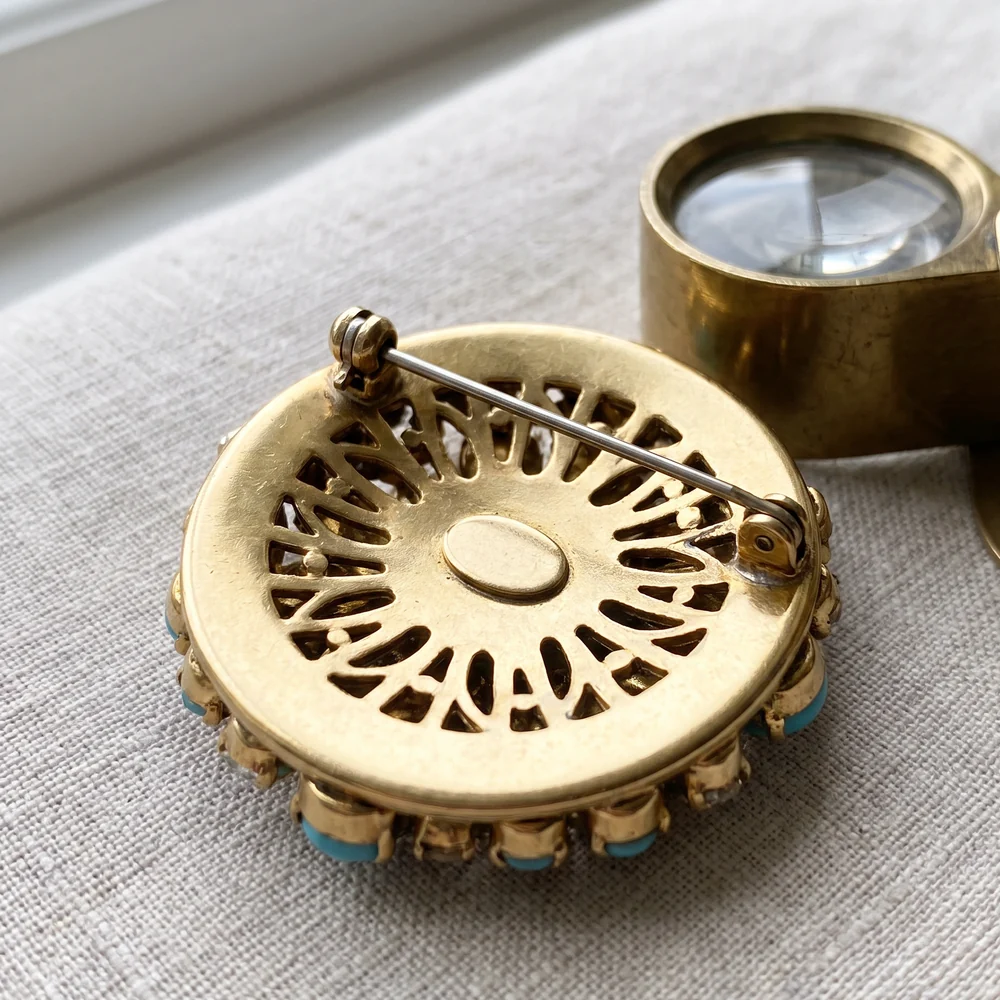
The back tells you more than the front. Henkel & Grosse pieces carry a small plaque or tag, and for most of the period the year is struck on it, which is how a brooch can be called "1964" with confidence.
Look at how the plaque is fixed, the style of the pin and catch, and whether the wear on the gilding is the same front and back.
| Period | Henkel & Grosse mark for Dior |
|---|---|
| 1950s and 1960s | Oval plaque reading "Christian Dior" with the year |
| Late 1960s to early 1970s | "Chr. Dior" with the year |
| Briefly in the 1970s | Rectangular plaque with hatched borders |
| Late 1970s and 1980s | Hanging metal tag, "Chr. Dior © Germany" |
Source: Gadelles, Collecting Christian Dior vintage jewellery
A mark that does not belong to the style of the piece is the first warning sign: a 1980s hanging tag on a brooch whose design and findings say 1950s, or a plaque that sits on top of old solder. Plaques can be moved from a damaged piece to a better one.
What we check on a vintage Dior brooch
- The mark
Is there a plaque or tag, does the wording and year match the period of the design, and is it soldered in place rather than glued?
- The stones
Glass and rhinestones of the period sit in claws or bezels. Glued-in stones, mismatched replacements or dull, foiled backs that have gone dark all count against it.
- The gilding
Rubbed high points are normal on a sixty-year-old piece. Bright, even gilding with no wear at all can mean a later replating or a later piece.
- The findings
Pin, hinge and safety catch should suit the date. A modern catch is a repair, which is fine if it is declared.
- Weight and finish
Couture costume jewellery feels solid and the chasing is crisp. Thin, light castings with soft detail are the usual sign of a copy.
For signed fine jewellery the questions are different; see designer jewellery authentication and, for a general first test of a jewellery box, is my costume jewellery real?
Own a vintage Dior or other signed brooch? Get a free valuation
What makes one vintage Dior brooch worth more than another
We never price from a photo of someone else's brooch, and a royal outing does not change what an individual piece is worth. These are the things that do:
- Maker and date. Who made it and when, settled by a dated plaque or a co-signature such as Mitchel Maer or Kramer.
- Design and size. Large, complex brooches with chased gilt and several colours of stone draw more interest than small, plain ones.
- Completeness. Every stone present and original, no lost pearls, no broken claws.
- The gilding. Original gilding in good order is worth more than wear through to the base metal, or a replated surface.
- Box, papers and story. An original Dior box or a receipt adds confidence; so does a documented history in one family.
Read more on why signed jewellery holds its value and vintage versus modern designer jewellery.
Signed brooches from our collection
We do not have a vintage Dior brooch in stock today. These signed brooches, in gold, are in our collection now and can be seen in Mayfair or Braintree by appointment.
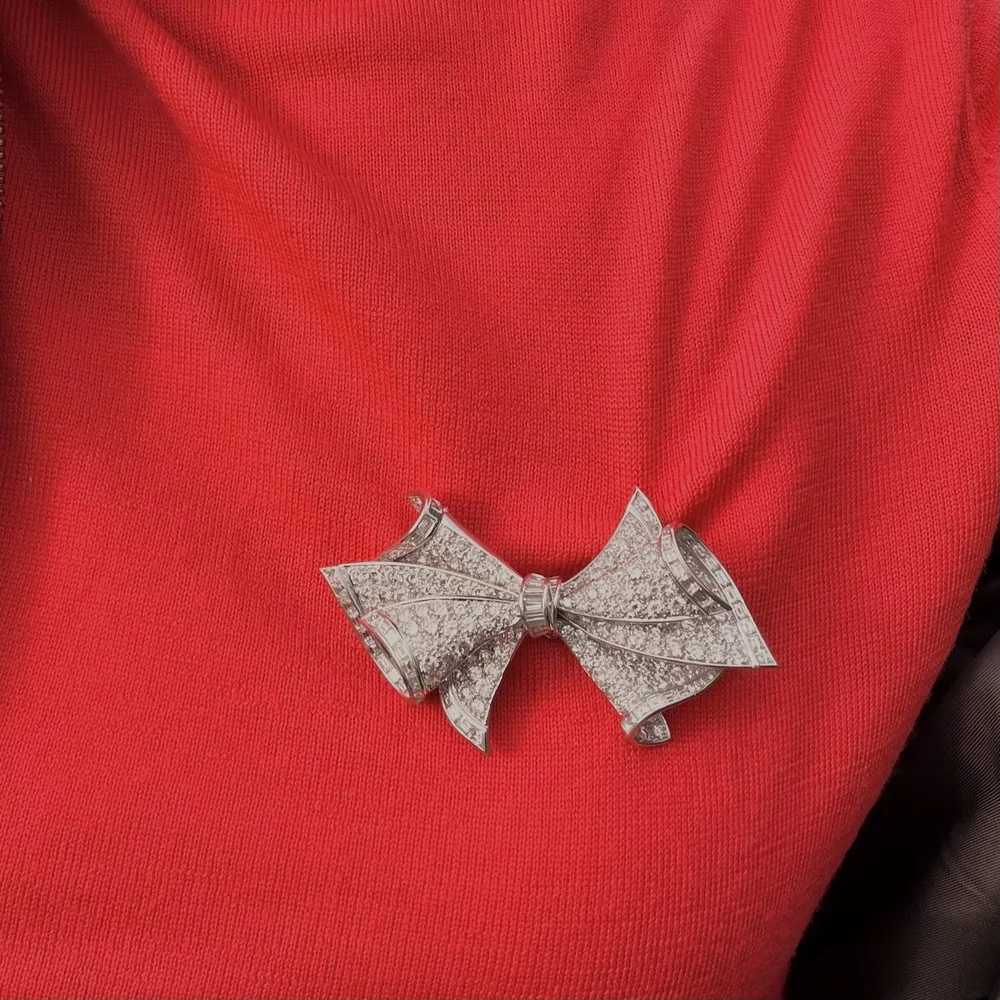
A brooch worn the Queen's way
Pinned high on a red knit, as Queen Mary wore hers: an 18KT white gold diamond bow by Adler that separates into a pair of clips. See the Adler bow brooch.
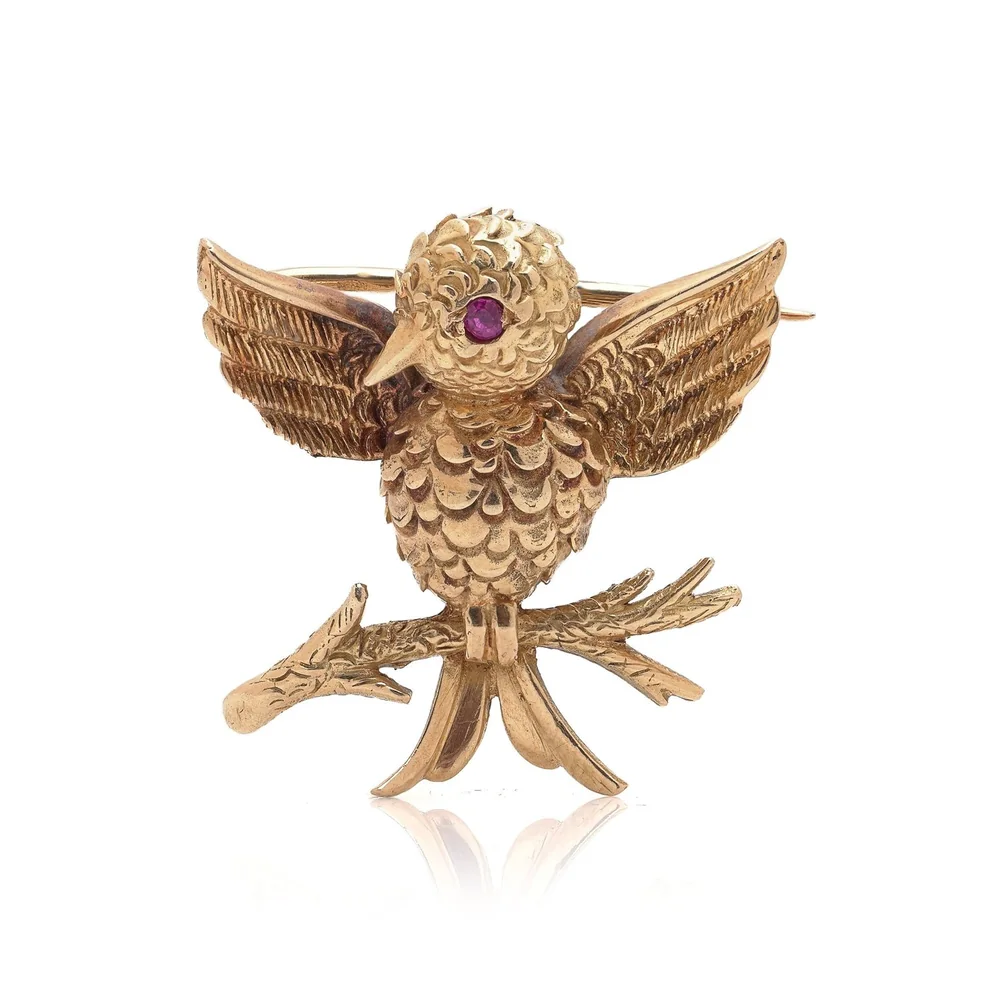 Boucheron Paris 18KT gold bird brooch, ruby eye, circa 1920s
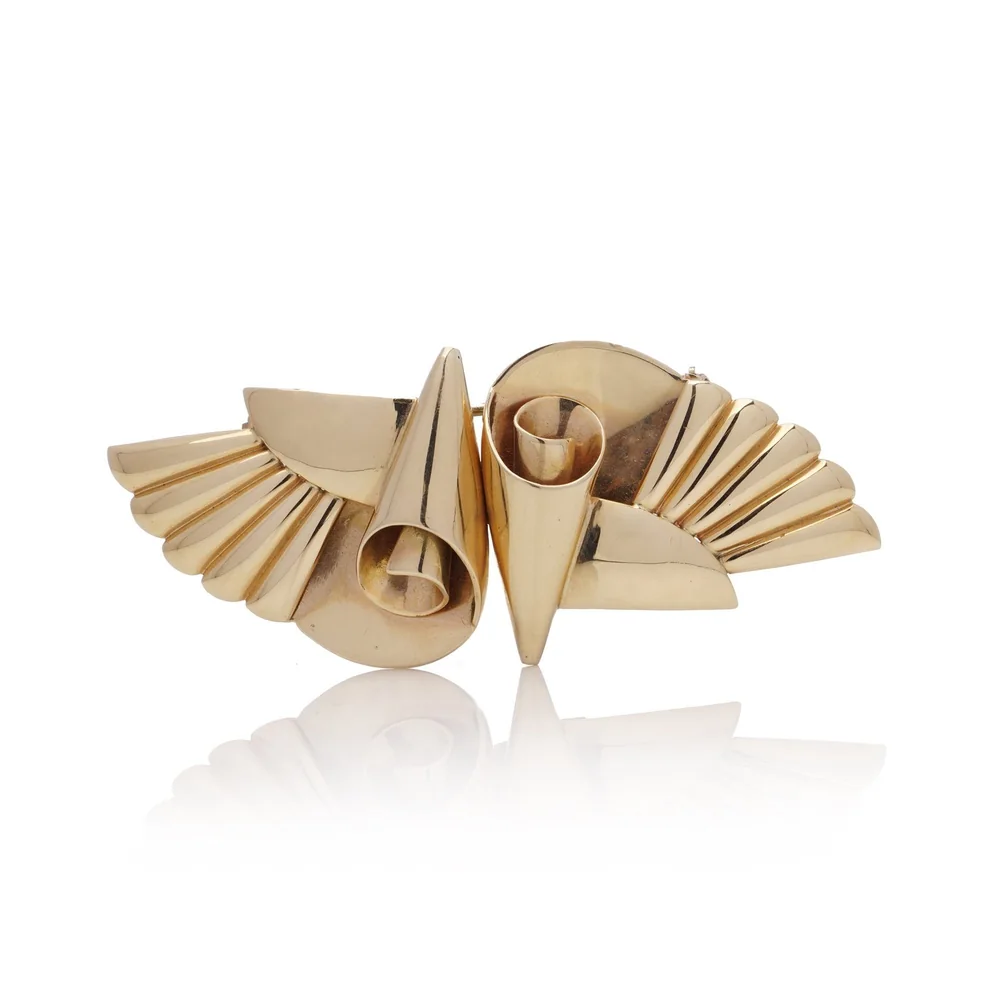 Tiffany & Co. Retro 14KT gold double clip brooch, 1940s
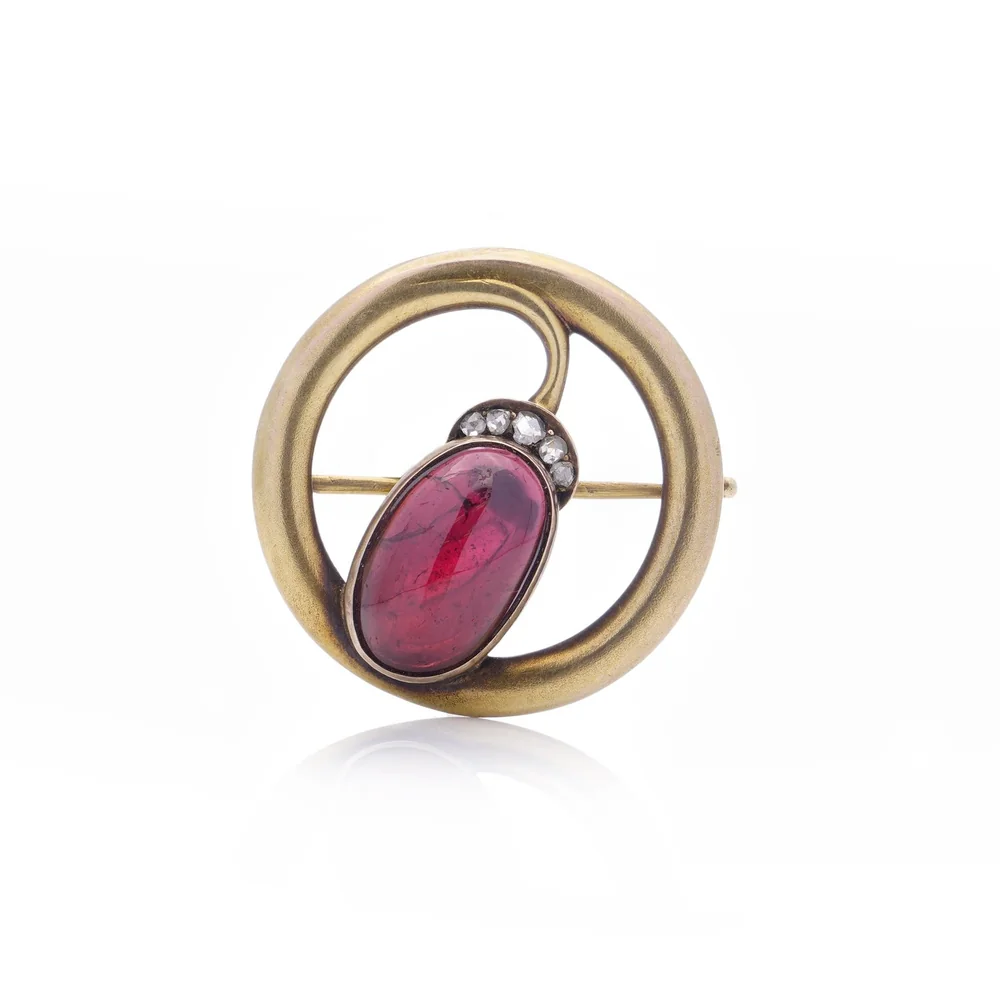 Karl Faberge 14KT gold amethyst and diamond brooch
Browse all brooches, our designer jewellery and vintage jewellery.
How we can help
- Selling vintage Dior?
Send photos of the front, the back and the mark. See selling Dior jewellery and selling vintage jewellery.
- Inherited a jewellery box?
- See it in person
Book an appointment at 47 Maddox Street, Mayfair, or in Braintree, Essex. Call 01376 334482 or WhatsApp us.
Request a free valuation
- Queen Mary's brooch is a 1964 Dior costume jewel in gilt metal and glass, worn in Paris in 2025 and in Copenhagen on 6 October 2026.
- Vintage Dior jewellery was made by outside firms: Henkel & Grosse from 1955, and earlier Mitchel Maer, Kramer and the Paris paruriers.
- The mark on the back dates a piece; the stones, gilding and findings confirm it.
- We value vintage and signed jewellery free from photos, in Mayfair and Braintree.
Questions we are asked
What brooch did Queen Mary wear at the opening of the Danish Parliament?
A vintage Christian Dior brooch in gilded metal with turquoise-blue stones, rhinestones and red glass cabochons, identified as a 1964 design. She wore it on 6 October 2026 at the Folketing in Copenhagen.
Has Queen Mary worn the Dior brooch before?
Yes. She first wore it on 2 April 2025, during the Danish state visit to France.
Is vintage Dior costume jewellery real gold?
No. Dior's costume jewellery is gilt metal set with glass, paste and rhinestones. Dior fine jewellery in gold and gemstones is a separate line that came much later.
Who made Dior jewellery in the 1960s?
Mainly Henkel & Grosse of Pforzheim, Germany, Dior's licensed jewellery maker from 1955. Earlier pieces were also made by Mitchel Maer in London and Kramer in New York, and by Paris workshops.
How can I tell the year of a vintage Dior brooch?
Turn it over. Henkel & Grosse pieces of the 1950s and 1960s carry an oval plaque reading "Christian Dior" with the year; later pieces read "Chr. Dior" with the year, and 1980s pieces carry a hanging tag.
Are unsigned Dior brooches genuine?
Some are. Paris workshops often did not sign runway pieces, and Mitchel Maer stock sold after 1956 had its Dior plaques removed. Unsigned pieces are attributed by design and construction, so expert advice matters.
What affects the value of a vintage Dior brooch?
The maker and date, the size and complexity of the design, whether every stone is original and present, the condition of the gilding, and any original box or documented history.
Do you value vintage Dior jewellery?
Yes. Send photos of the front, back and mark through the form on this page or on WhatsApp for a free valuation.
Buy and sell signed jewellery with confidence
See our signed brooches in Mayfair or Braintree, or send photos of a piece you want to sell for a free valuation.
- We buy directly
- Free valuation from photos
- Appointments in Mayfair and Braintree
- Insured postage or collection
New pieces reach our list first: join the Mozeris list.