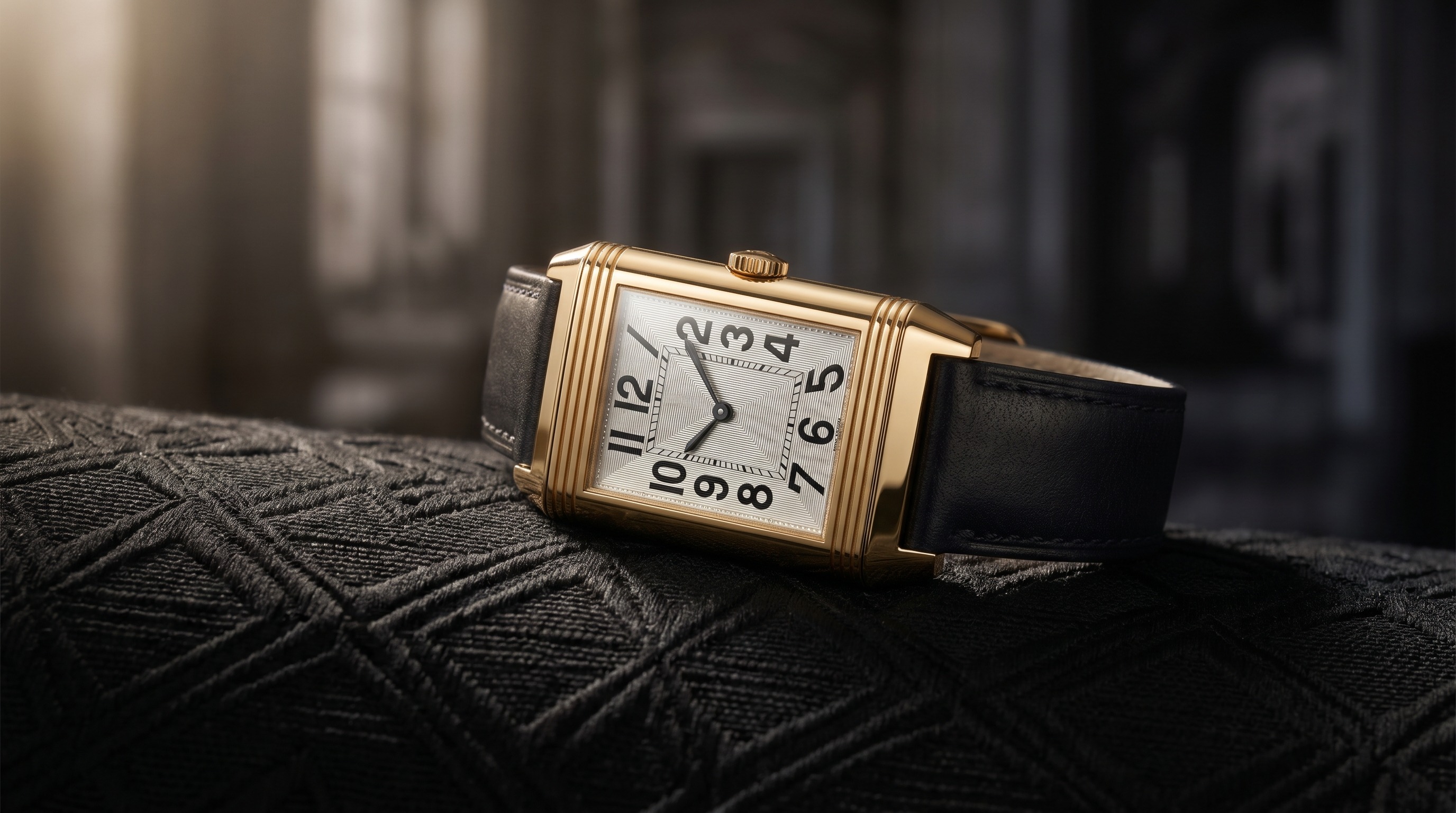
Art Deco Gold Watches: A Collector's Guide
Geometry, symmetry and unapologetic glamour — the watches of the 1920s and 30s are among the most distinctive ever made. Here's how to recognise an Art Deco gold watch, and what makes the best examples so collectable.
Not Sure What Your Watch Is Worth?
Send us a photo for a free, no-obligation valuation — or simply ask for honest advice. Our specialists reply within one working day.
Between the wars, design changed. Out went the soft curves of the Edwardian age; in came bold geometry, clean lines and a confident sense of modernity. The Art Deco watch — rectangular, stepped, symmetrical — captured that spirit perfectly, and in gold it remains one of the most instantly recognisable and desirable categories in vintage horology.
At Mozeris Fine Antiques we handle Art Deco gold watches and the jewellery of the same period regularly. This guide explains how to spot the era, what defines the best pieces, and what they realistically command.
What makes a watch "Art Deco"
Art Deco design ran from roughly 1919 to 1939, and its watches share a distinctive visual language. Learn these cues and you can place a watch in the period at a glance.
Geometric Cases
Rectangular, square, tonneau (barrel) and stepped cases replaced the round. Crisp edges, symmetry and architectural "stepped" shoulders are hallmarks of the style.
Bold Dials
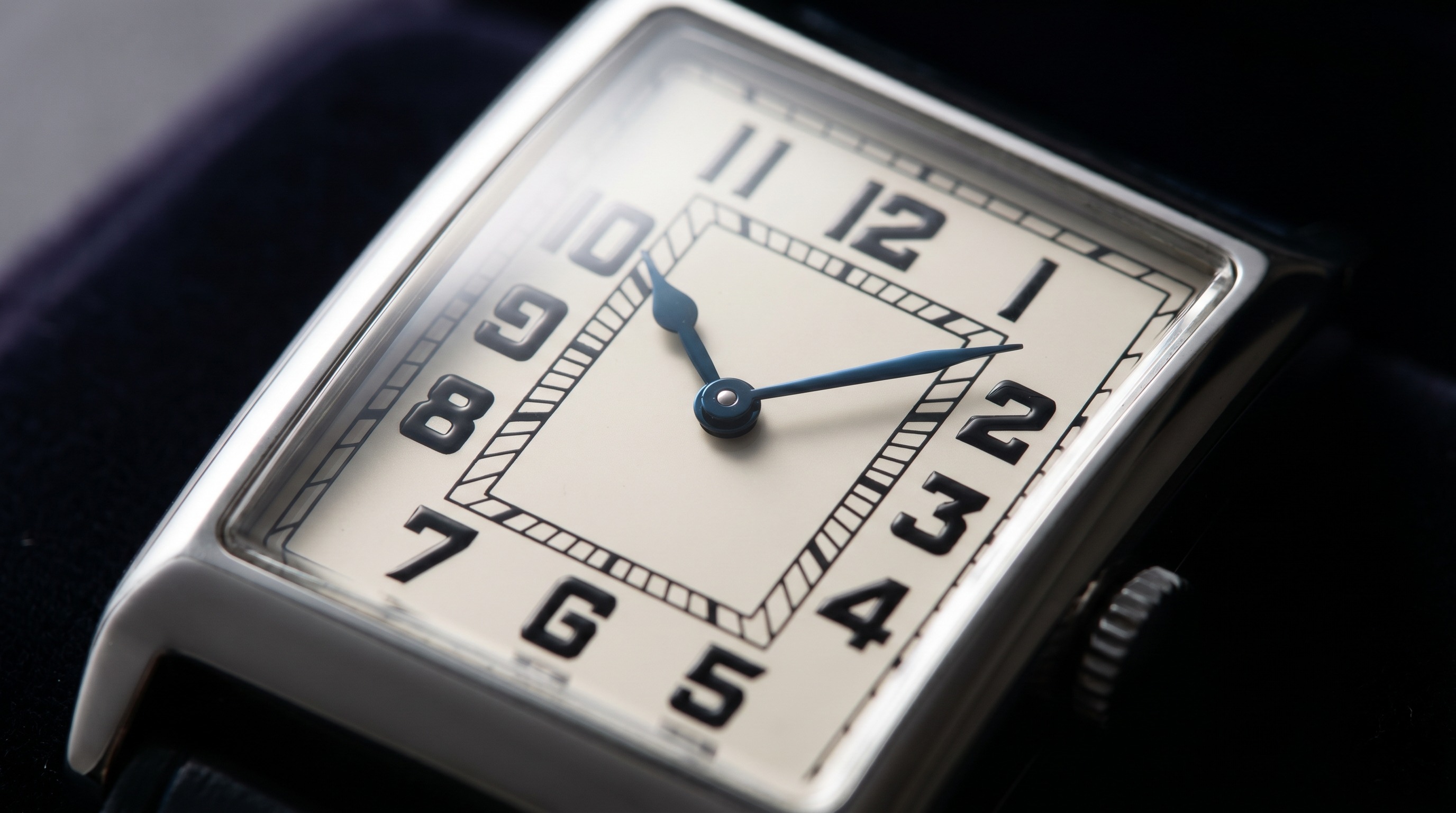
Strong Arabic numerals, sometimes stylised or "exploded", with sharp minute tracks and blued steel hands. Legibility met geometry.
Decorative Detail
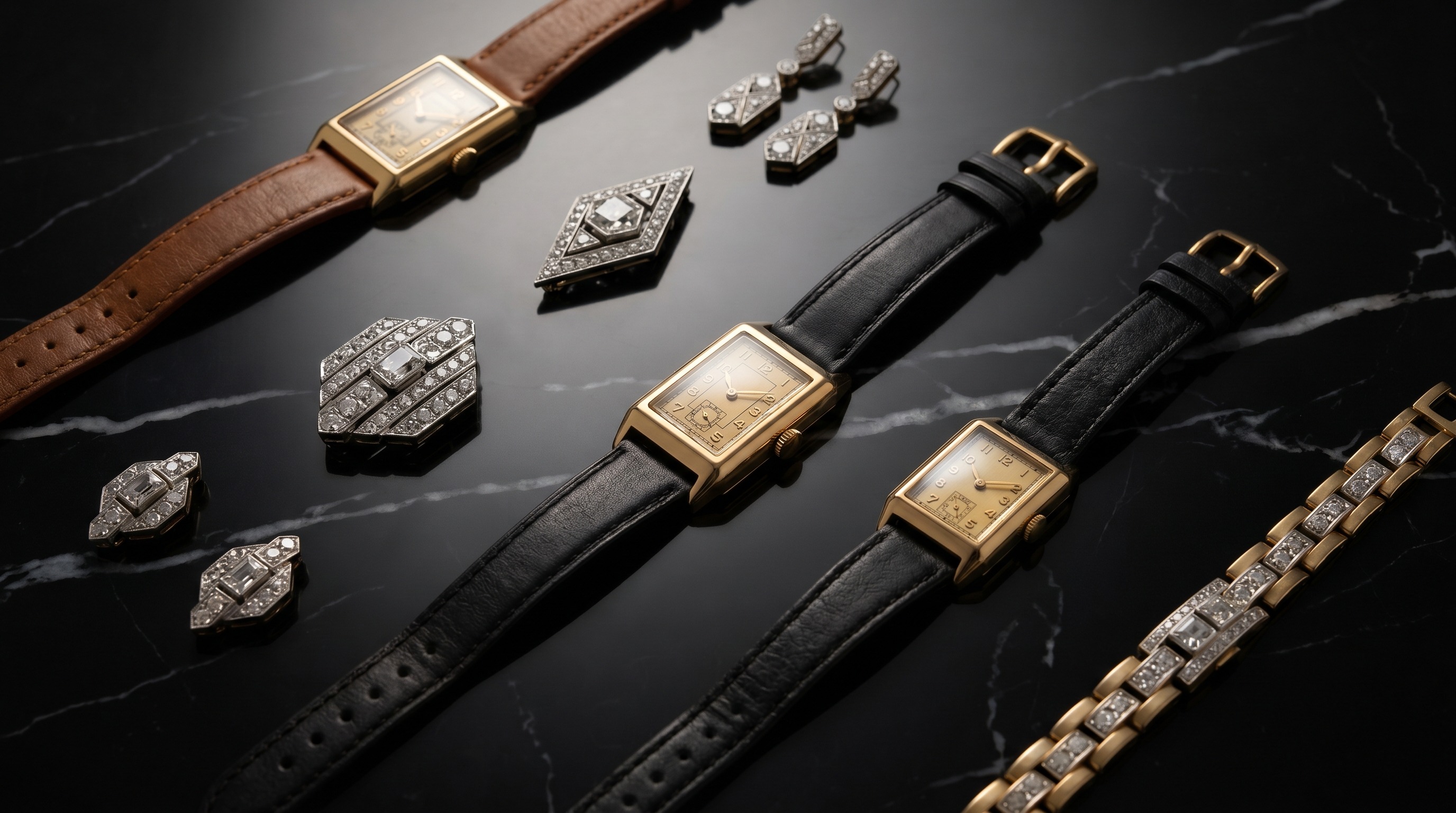
Engine-turned cases, occasional enamel accents and, on finer pieces, diamond-set bezels echoing Art Deco jewellery of the day.
Solid Gold & Platinum
9ct and 18ct gold were standard; the very best dress and cocktail watches used platinum and diamonds. The hallmark confirms the metal.
The shapes to know
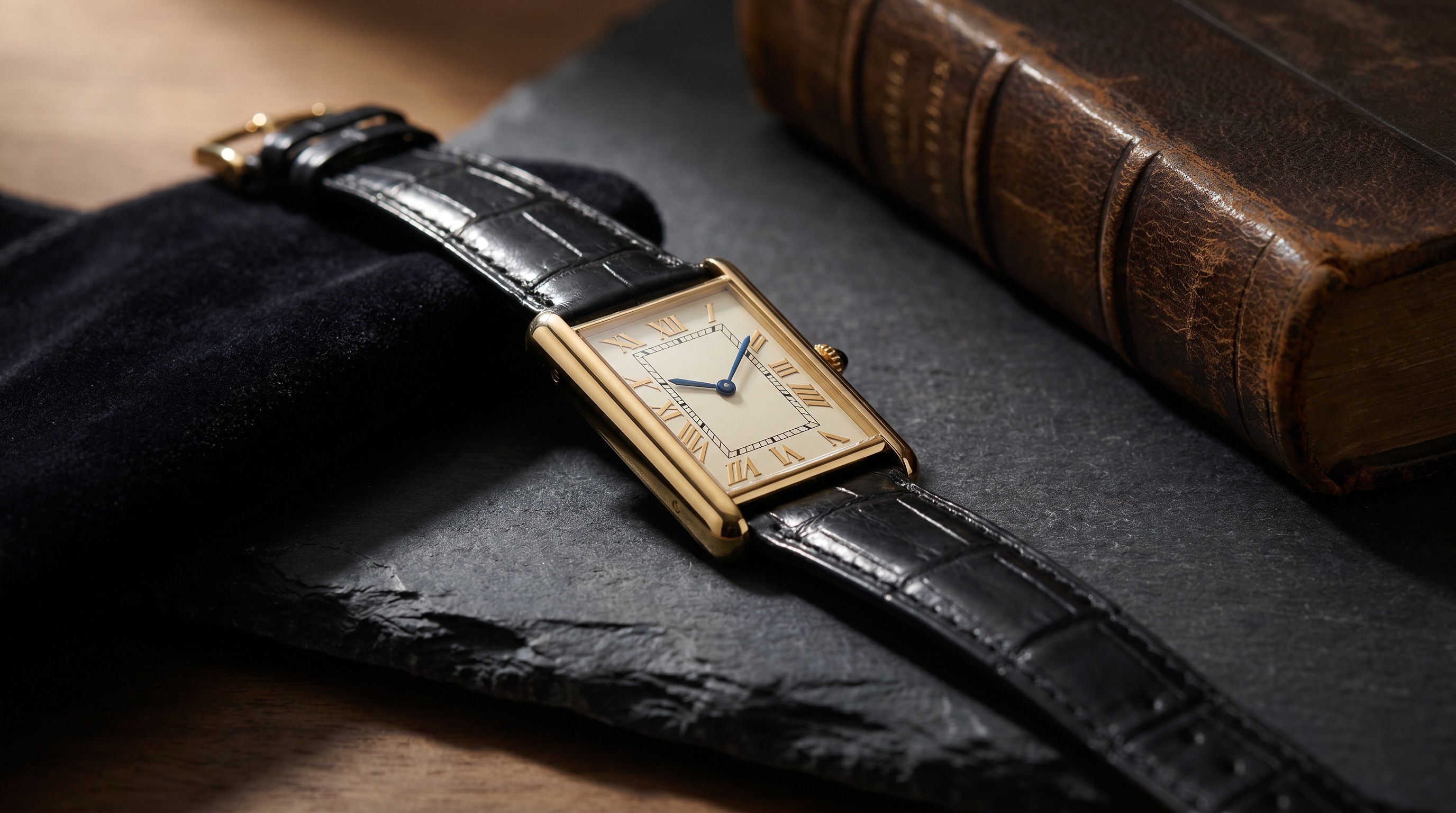
The rectangular tank case is the defining Art Deco wristwatch form — long, clean and elegant. The tonneau (barrel) curves gently to the wrist; the square and stepped cases lean fully into the geometry. Ladies' Art Deco watches often took the form of slender cocktail watches, sometimes on decorative gold or diamond-set bracelets.
What Drives the Value
Art Deco gold watches span a wide range, from charming and affordable to genuinely important. Value rests on:
- Maker — A signed piece by a great house far outvalues an unsigned case.
- Metal — 18ct over 9ct, and platinum-and-diamond pieces in a class of their own.
- Design quality — Bold, characterful Deco geometry beats a timid transitional case.
- Dial originality — An original, untouched dial is strongly preferred.
- Condition — Crisp, unworn case edges that keep the architectural lines.
- Gem-setting — Original diamond bezels and accents add real value on dress pieces.
Send us photographs and we'll tell you where your piece sits in the Art Deco market.
Dating and confirming an Art Deco gold watch
The hallmark is your anchor. A British case carries a date letter that fixes the year — and the 1920s and 30s letters line up neatly with the Deco period. Look too at the winding (keyless by this era), the geometric case and the bold dial. Together they confirm both the date and the style.
To confirm the metal, see our guide to telling solid gold from gold-plated, and to fix the exact year use our guide to dating a vintage gold watch. The same era produced extraordinary jewellery — see our guide to Art Deco jewellery — and our 1950s–60s gold dress watches guide covers what came next.
Value Your Art Deco Gold Watch
Send photographs of the dial, the case-back marks and the movement and we'll identify the period and maker and give you an honest, no-obligation valuation.
⚠️ Strictly by appointment only — no walk-ins at either showroom.
Frequently Asked Questions
Common questions about Art Deco gold watches.
What years count as Art Deco?
Art Deco runs from roughly 1919 to 1939, between the two world wars. Watches from this period favour bold geometric forms — rectangular, tonneau and stepped cases with strong Arabic numerals — over the softer curves of the Edwardian age.
How do I know if my watch is really Art Deco?
Look for a geometric case (rectangular, square, tonneau or stepped), bold geometric numerals and a hallmark date letter from the 1920s or 30s. Together these confirm both the style and the period.
Are Art Deco watches valuable?
They can be, particularly signed pieces by great makers, 18ct gold and platinum models, and watches with original diamond-set bezels. Simpler unsigned gold cases are more modest but still carry their gold value and period charm.
Is a rectangular gold watch always Art Deco?
Not necessarily — rectangular cases were made before and after the period too. The combination of case shape, dial style and hallmark date is what confirms a genuine Art Deco piece. We're happy to confirm from photographs.
Should I restore an Art Deco watch before selling?
No. Originality is highly prized, and over-restoration — especially refinishing the dial or over-polishing the case — usually reduces value. Leave it as it is and let a specialist assess it.
Send Us Your Watch Photographs
Attach photos of the dial, case-back marks and movement. We'll respond within one working day.