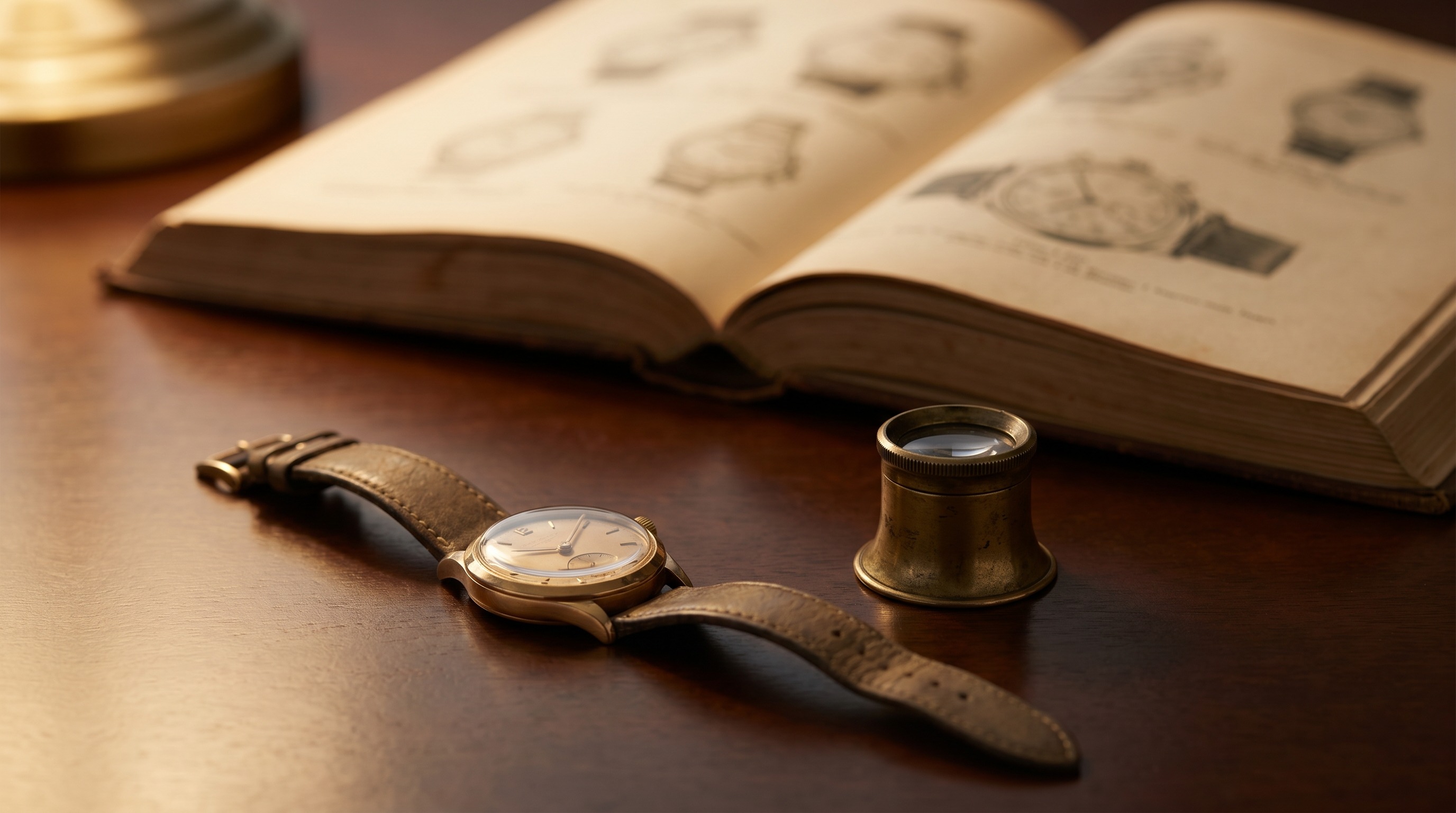
How to Date a Vintage Gold Watch
Hallmarks, serial numbers, case style and movement — four lines of evidence that together can pin a gold watch to its decade, and often to the exact year. Here's how to read them.
Not Sure What Your Watch Is Worth?
Send us a photo for a free, no-obligation valuation — or simply ask for honest advice. Our specialists reply within one working day.
A vintage gold watch is unusually generous with its secrets. Where most antiques leave you guessing at a date, a gold watch often carries a hallmark that fixes its year precisely — and when it doesn't, the serial number, the case shape and the movement combine to place it within a decade. Knowing how to read these four sources is the heart of dating any old gold watch.
At Mozeris Fine Antiques, dating a watch is the first thing we do when valuing it — age underpins everything that follows. Here is the same method, in the order a specialist uses it.
The four sources of a date
1. The Hallmark
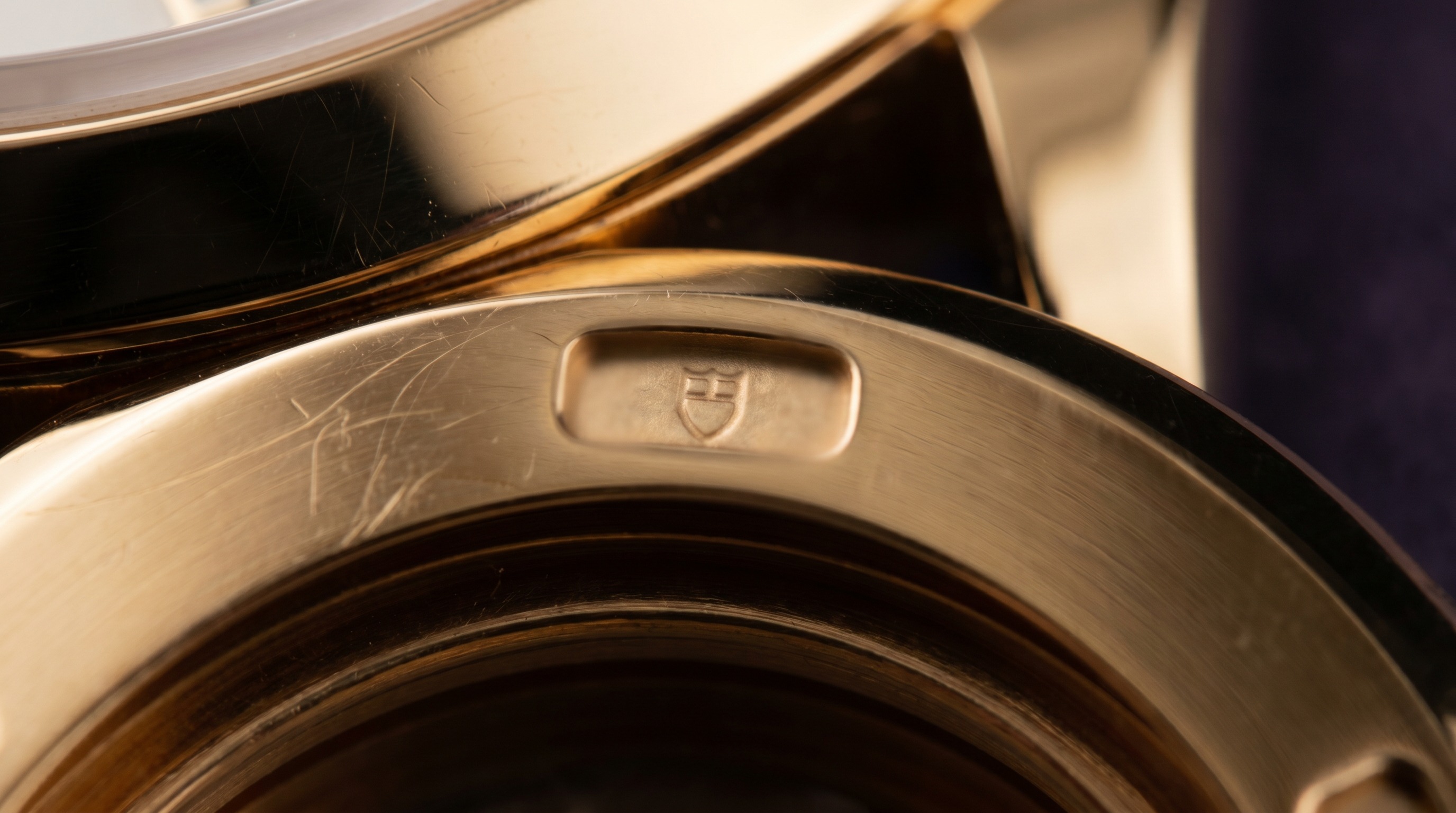
On British gold cases, the most precise clue of all. The date letter gives the exact year of assay — but you must read the assay office first, because each city used its own letter sequence.
2. The Serial Number
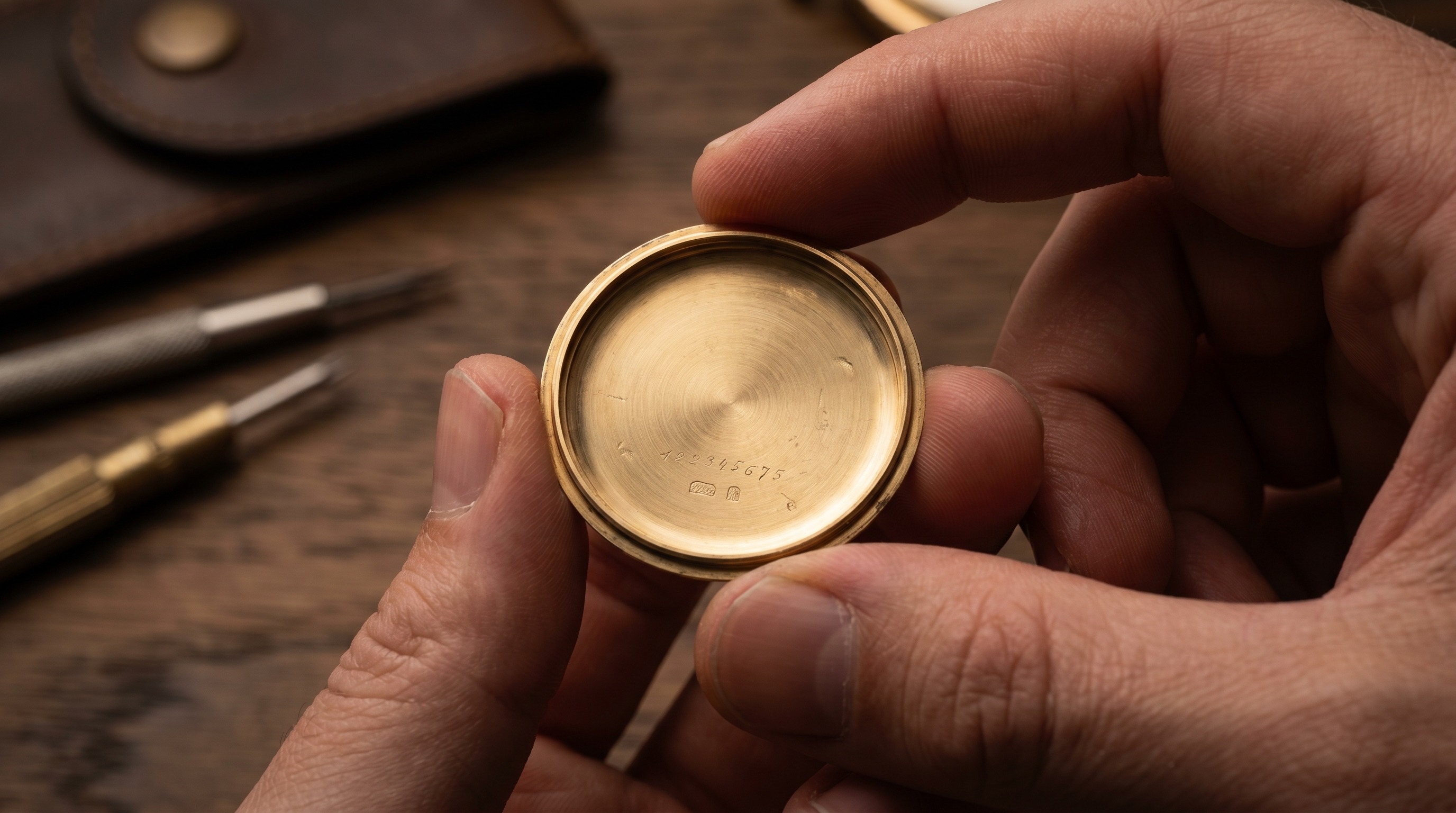
Many fine makers numbered their cases and movements sequentially. Matched against published production records, a serial can date a watch closely even with no hallmark.
3. The Case & Dial Style
Shape, lugs, dial layout and numerals all moved with fashion. Cushion and rectangular Art Deco cases, sub-seconds, baton versus Arabic numerals — each points to an era.
4. The Movement
Key-wind versus keyless winding, verge fusee versus lever escapement, manual versus automatic — the mechanism brackets the watch in time.
Reading the Hallmark Date Letter
A British hallmark is a small cluster of stamps, usually inside the case-back and on the cuvette. To date the watch:
- Find the assay office mark — leopard's head (London), anchor (Birmingham), and the marks for Chester, Sheffield, Edinburgh and Glasgow.
- Locate the date letter — a single letter in a shaped shield, the font and shield shape both significant.
- Match it to that office's chart — each assay office ran its own cycle, so the same letter means different years in different cities.
- Check the fineness mark — 750/18ct or 375/9ct confirms solid gold alongside the date.
- Note import marks — foreign cases assayed in Britain carry distinct import hallmarks and date letters.
Our full hallmark guide reproduces the assay office symbols and how the system works.
When there is no hallmark: serials, style and movement
Plenty of watches — Swiss, American and Continental cases especially — won't carry a British date letter. Here the other three sources take over. A signed maker often kept sequential serial numbers on the movement and case; matched to published records, these can date the watch to within a year or two.
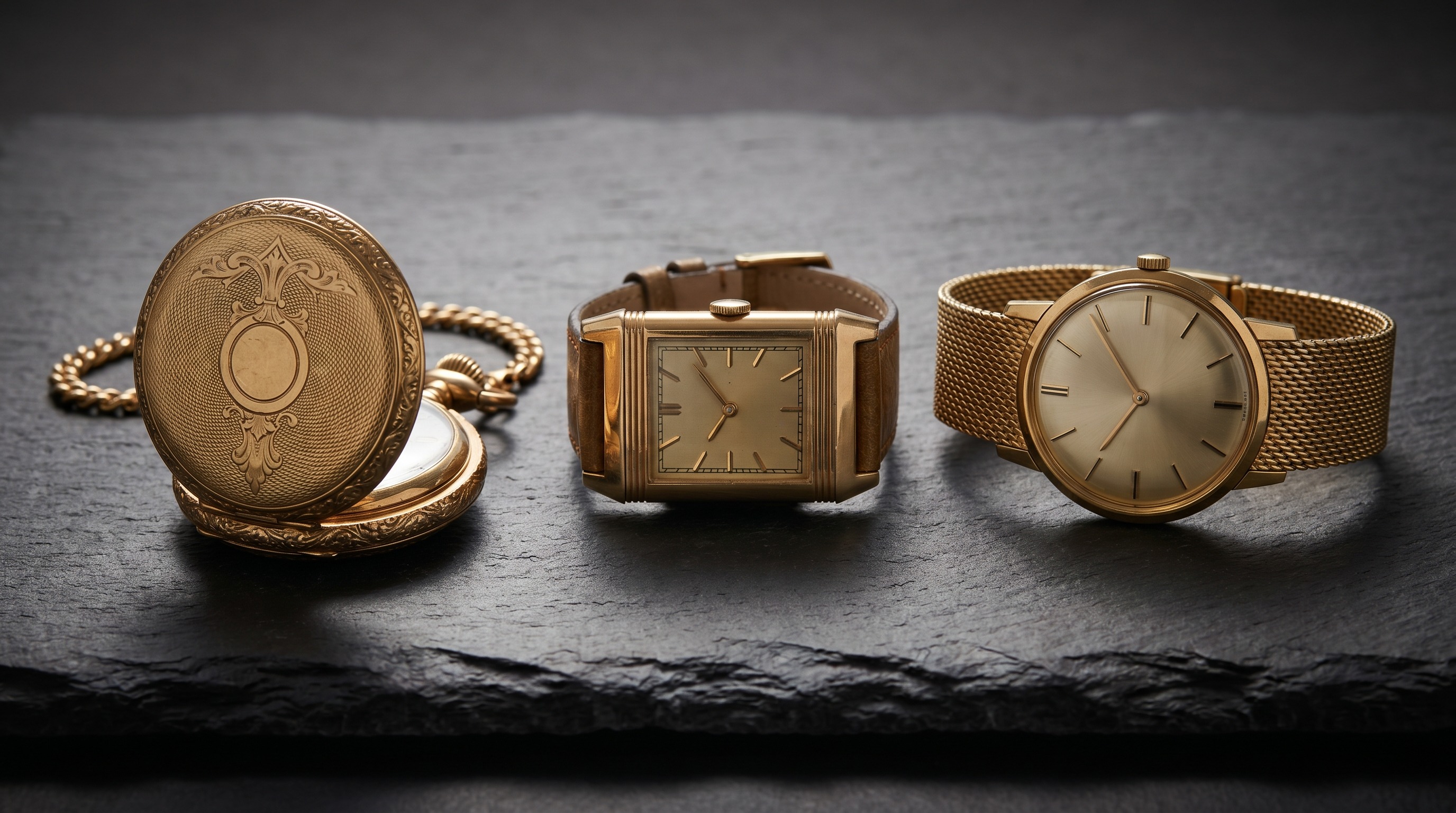
Failing that, style is a reliable guide. Pocket watches gave way to wristwatches around the First World War; key-wind movements were superseded by keyless winding from the 1870s; bold rectangular and cushion cases mark the Art Deco 1920s–30s; slim round dress watches define the 1950s–60s. The movement seals the bracket — a verge fusee is pre-Victorian, an early automatic is post-1930s.
Want to go deeper on any one source? Our guide to identifying hallmarks explains the assay system in full (the same logic applies to gold), our solid-gold-versus-plated guide confirms the metal, and our pocket watch identification guide covers older movements in detail.
Date & Value Your Watch
Send photographs of the dial, the open case-back marks and the movement, and we'll date the watch, identify the maker and give you an honest, no-obligation valuation.
⚠️ Strictly by appointment only — no walk-ins at either showroom.
Frequently Asked Questions
Common questions about dating a vintage gold watch.
Does the hallmark date letter tell me when the watch was made?
It tells you the year the gold case was assayed, which is normally the same year or very close to when the watch was made and sold. Read the assay office mark first, then match the date letter to that office's own chart — each city used a different sequence.
My watch has no hallmark — can it still be dated?
Yes. Swiss, American and Continental cases often lack a British date letter. We date these using the serial number against the maker's records, the case and dial style, and the movement type, which together usually place the watch within a few years.
Where do I find the serial number?
Usually on the movement (visible when the case-back is opened) and sometimes inside the case-back itself. On vintage wristwatches the reference and serial may be engraved between the lugs. Don't force anything open — a watchmaker or specialist can access them safely.
Can the case and movement be from different dates?
They can. Watches were sometimes re-cased, or "married" from parts, so a case date and movement date that disagree are a flag worth investigating. We always check that case, movement and dial are consistent before valuing.
Does an older watch automatically mean a more valuable one?
No. Age is one factor among many — maker, model, gold content, rarity, originality and condition all matter. A 1960s watch by a great maker can far outvalue an older but ordinary one. Dating is the first step, not the whole valuation.
Send Us Your Watch Photographs
Attach photos of the dial, the case-back marks and the movement. We'll respond within one working day.