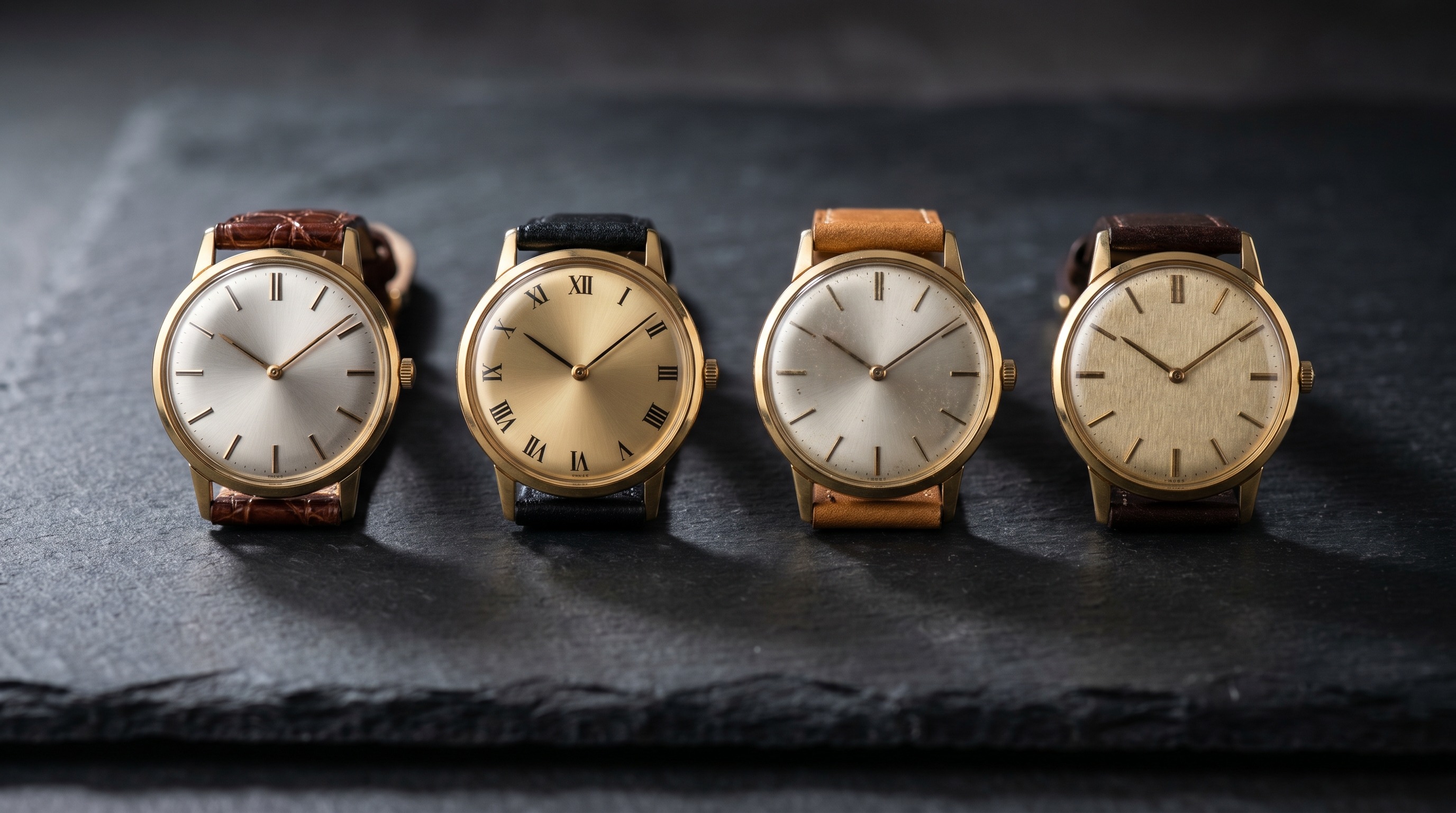
1950s & 60s Gold Dress Watches: A Collector's Era Guide
Slim, restrained and beautifully made, the gold dress watch defined mid-century elegance. Here is the era that produced them — the look, the makers, the movements, and why these quiet watches are so collectable today.
Not Sure What Your Watch Is Worth?
Send us a photo for a free, no-obligation valuation — or simply ask for honest advice. Our specialists reply within one working day.
There is a particular silhouette that says "mid-century" more clearly than almost any other object: a slim gold watch on a slim leather strap, its dial uncluttered, its case barely thicker than a coin. For perhaps two decades after the war, the gold dress watch was the standard of quiet good taste — and today it is one of the most rewarding and accessible corners of vintage collecting.
At Mozeris Fine Antiques we handle these watches constantly, from grand names to fine anonymous Swiss pieces. This guide sets the era in context: what defined the look, who made the best examples, and what to look at when judging one.
The mid-century look
The post-war dress watch was a study in restraint, and a few features recur across almost all of them. Recognise these and you can place a watch in the era at a glance.
Slimness
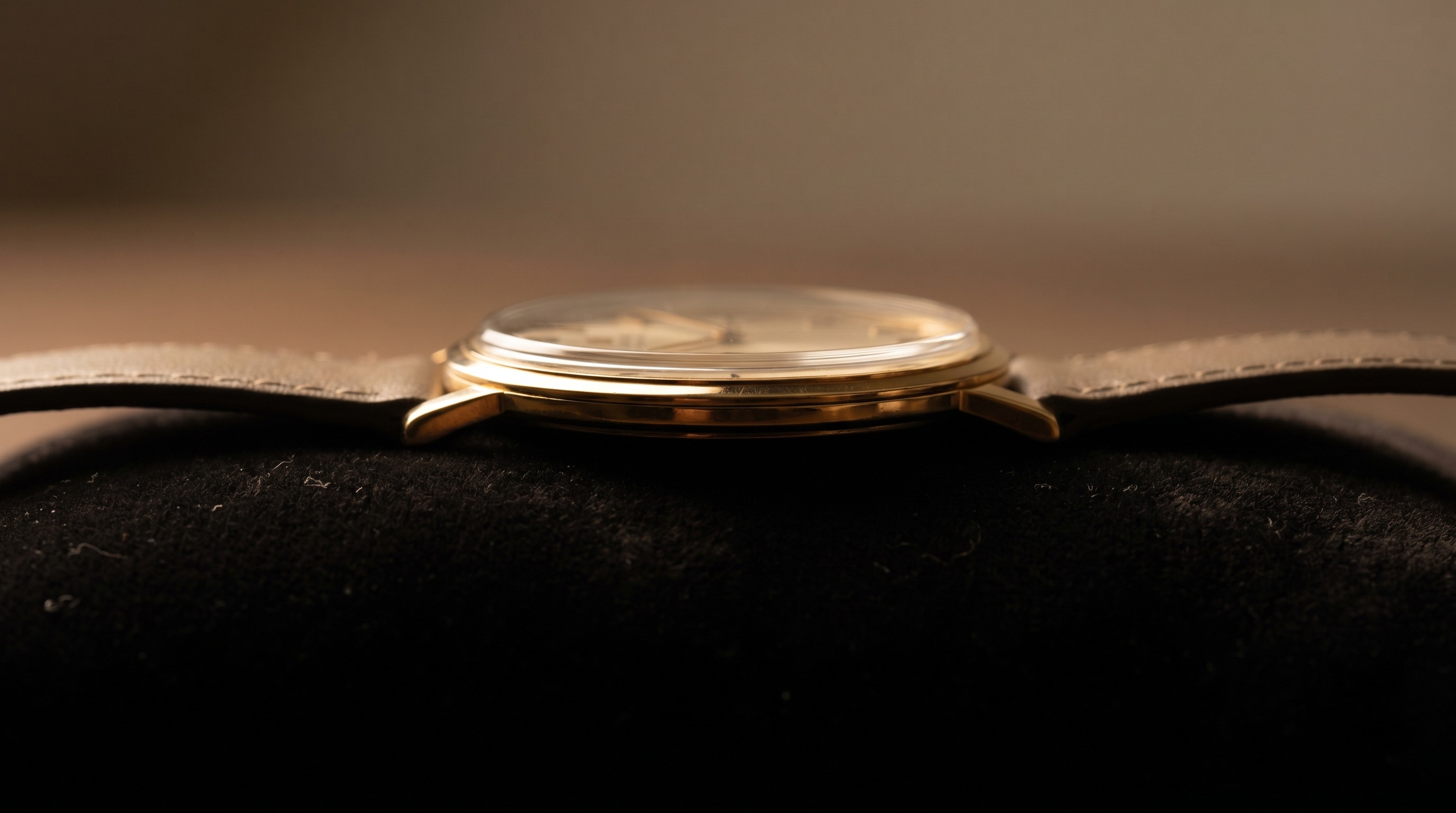
Advances in movement design let cases grow remarkably thin. A dress watch was meant to slip under a shirt cuff unnoticed — slenderness was the whole point, and the flattest examples are admired for it.
Clean Dials
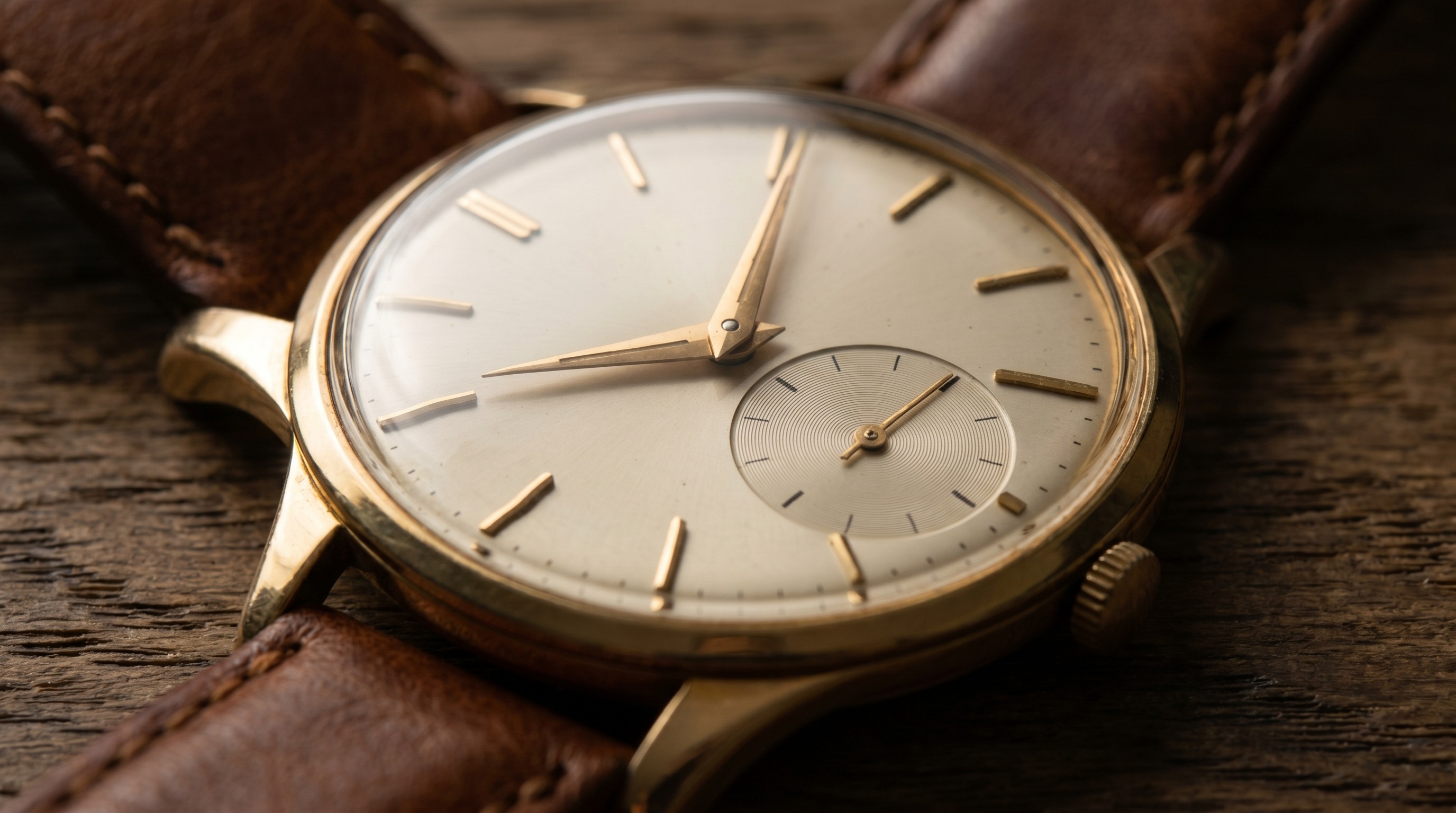
Silvered or champagne dials, applied gold baton or faceted markers, slim dauphine or leaf hands, often a small sub-seconds dial at six. Legibility and elegance over complication.
Modest Size
Cases of roughly 32–35mm were the norm — small by modern taste, but perfectly proportioned for the period and increasingly prized again for their wearability.
Solid Gold Cases
9ct in Britain, 18ct on the Continent, with gold-capped and rolled-gold versions for wider markets. The hallmark inside tells you which.
The Makers Worth Knowing
The era's finest dress watches came from a roll-call of great names — and from countless skilled Swiss makers whose anonymous pieces are quietly excellent:
- Patek Philippe — The Calatrava and Golden Ellipse, the dress watch ideal.
- Vacheron Constantin — Slim, beautifully finished gold classics.
- Jaeger-LeCoultre — High-grade in-house movements in restrained gold cases.
- Omega — De Ville and Seamaster dress models, and the gold Constellation.
- Longines — Elegant, accurate and historically important dress pieces.
- Universal Genève, IWC & fine Swiss makers — Often superb value for their quality.
A signed dial from a great maker lifts a watch well above its gold value — but a fine unsigned Swiss piece can still be a lovely thing.
Judging a mid-century gold dress watch
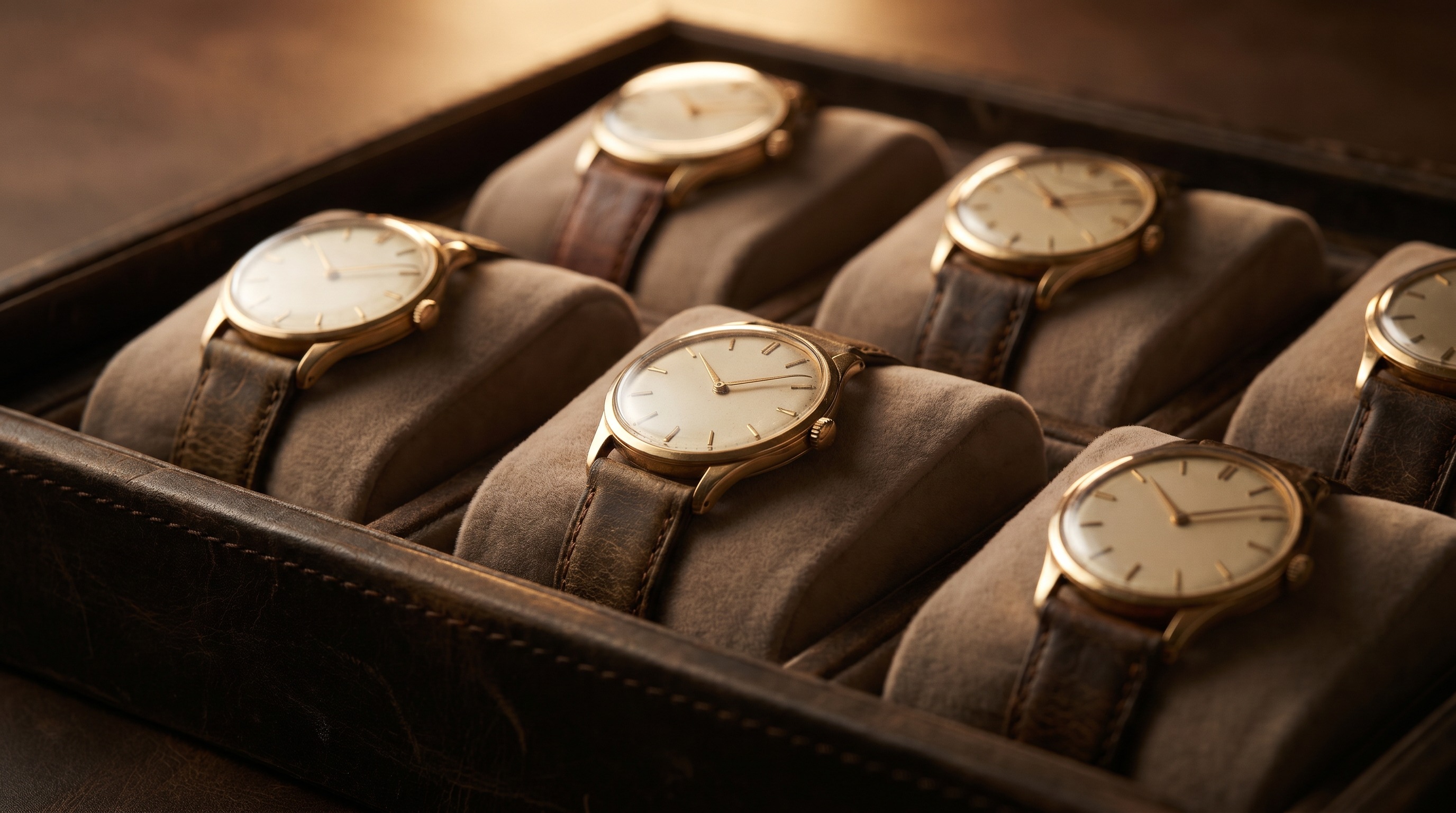
Value in this corner of the market rests on a handful of points. The maker comes first — a signed Patek, Vacheron or JLC sits in a different bracket to an unsigned case. Then the gold: solid 18ct outweighs 9ct, and both outvalue gold-capped or rolled-gold. Originality of the dial is crucial, as ever; an honest untouched dial beats a refinished one. Finally condition — crisp, unpolished cases that keep their slim original lines.
To confirm the gold first, see our guide to telling solid gold from gold-plated, and to pin down the year use our guide to dating a vintage gold watch. For the standout makers of the era, see our guides to vintage gold Jaeger-LeCoultre, the gold Omega Constellation and vintage gold Rolex.
Value Your Gold Dress Watch
Send photographs of the dial, the case-back marks and the movement and we'll identify the maker and give you an honest, no-obligation valuation.
⚠️ Strictly by appointment only — no walk-ins at either showroom.
Frequently Asked Questions
Common questions about mid-century gold dress watches.
Are small vintage dress watches still desirable given modern tastes?
Increasingly so. After years of oversized watches, collectors have rediscovered the elegance and wearability of 32–35mm mid-century dress watches. A fine slim gold watch from a good maker is very much back in favour.
Is an unsigned Swiss gold dress watch worth anything?
Yes. Much of the era's output came from skilled but anonymous Swiss makers, and a well-made unsigned gold dress watch carries both its gold value and genuine wearable charm — though a signed great-maker piece will always command more.
What does "gold-capped" mean on a dress watch?
Gold-capped means a substantial gold shell bonded over a steel case — more than plating, but not solid gold. It is marked differently from a solid case. Our solid-versus-plated guide explains how to tell them apart.
My dress watch has a sub-seconds dial — does that date it?
A small seconds sub-dial at six o'clock is very typical of the 1940s–50s, while centre-sweep seconds became more common into the 1960s. It's one useful clue among several for dating the watch.
Should I have it serviced before selling?
Generally no. A specialist buyer prefers to assess a watch in its honest, original state and will factor any servicing into the valuation. Avoid polishing the case, which removes metal and softens the crisp lines collectors prize.
Send Us Your Dress Watch Photographs
Attach photos of the dial, case-back marks and movement. We'll respond within one working day.