Guide · Designer jewellery guides

1950s, 1960s and 1970s Jewellery: A Guide to Styles and Designers

From post-war diamond sprays to the sculpted gold of London's modernist goldsmiths: how mid-century and 1970s jewellery looks, who made it and how to date it.

By the Mozeris specialistsUpdated 5 min read

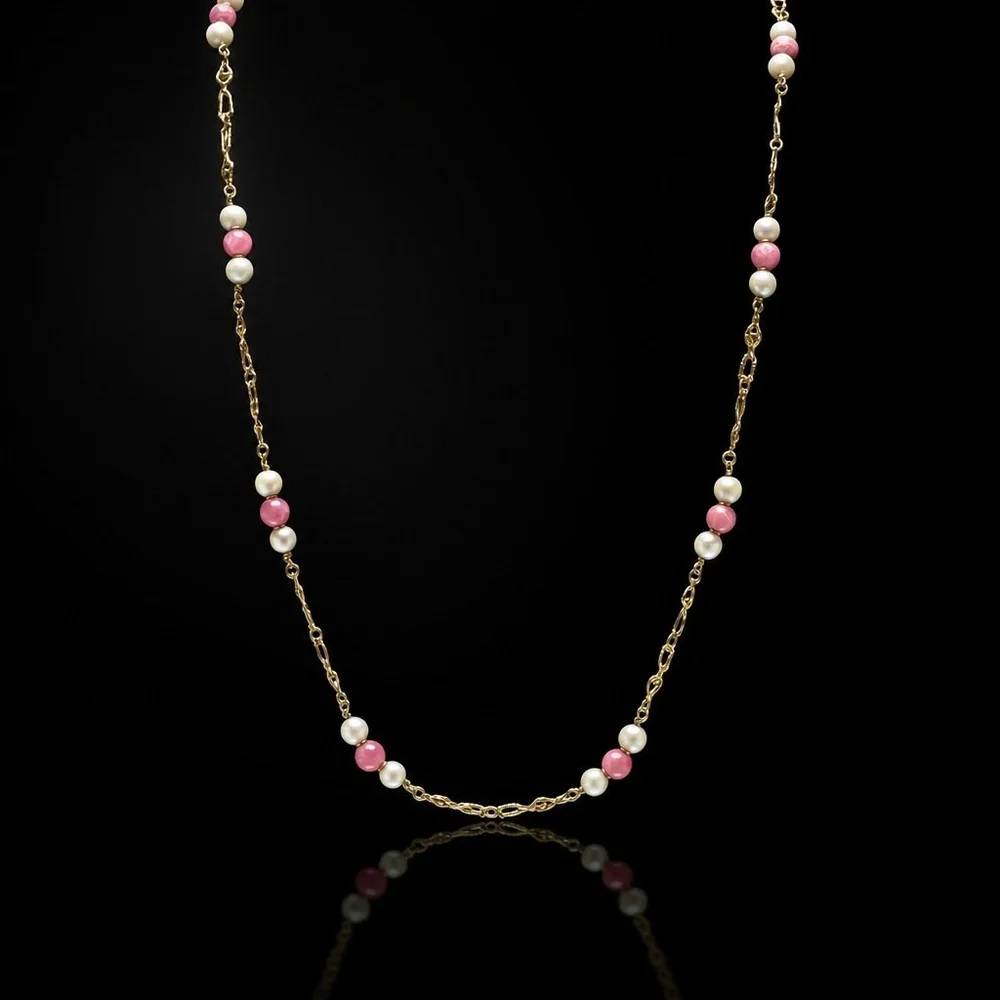
Stuart Devlin 18KT gold necklace with coral and pearl figural links, London, 1970s
Stuart Devlin 18KT gold, coral and pearl figural link necklace, London, 1970s, from our collection

The short answer

Jewellery of the 1950s is polished and feminine: platinum and diamond sprays, bows and ribbons, cocktail rings and textured yellow gold. The 1960s and 1970s turned bolder, with bark-textured and sculpted gold, large coloured stones, coral, turquoise and cabochons, and the work of modernist designers such as Andrew Grima, John Donald and Stuart Devlin.

  • 1950s: platinum and diamond sprays, bows, cocktail rings, textured gold.
  • 1960s to 1970s: sculpted and bark-textured gold, big coloured stones.
  • British modernists include Andrew Grima, John Donald, Stuart Devlin and Kutchinsky.

The 1950s: post-war glamour

After the Second World War, platinum and diamonds returned to fine jewellery. Typical 1950s pieces are diamond spray brooches with ribbons, bows and tassels, cluster and cocktail rings, and yellow gold worked into textured finishes. Italian goldsmiths such as Buccellati, known for engraved, textile-like gold, worked in this period (Wikipedia).
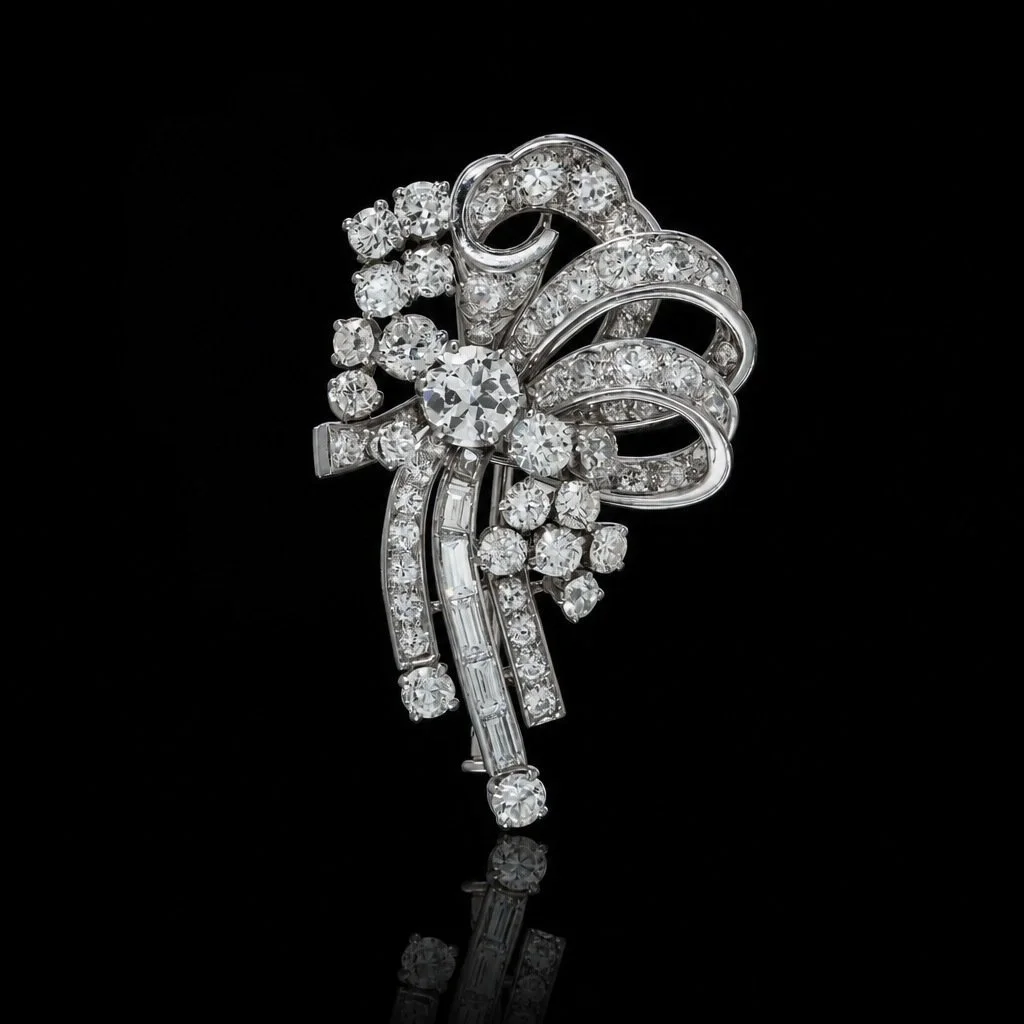
Vintage platinum diamond spray brooch with ribbons and tassels, 1950s
Vintage diamond spray brooch, platinum, 1950s, from our collection

Sprays and ribbons

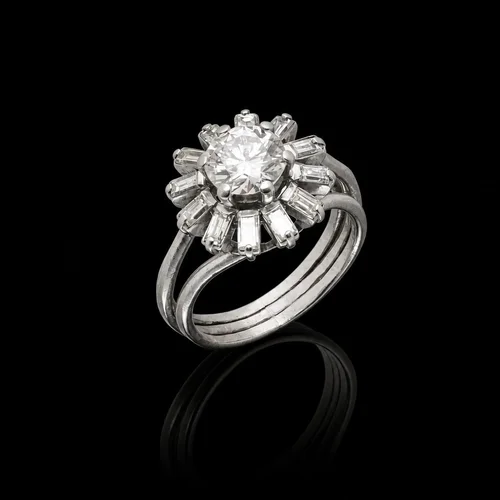
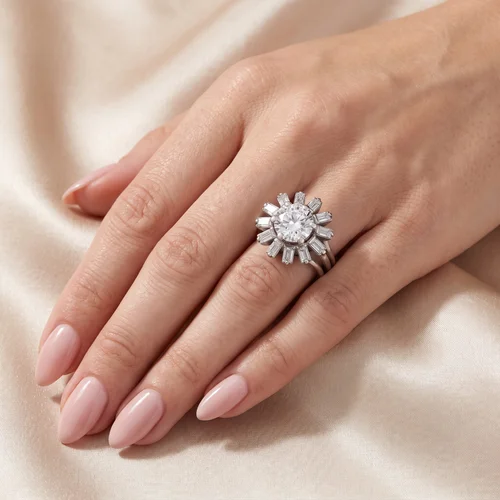
Our 1950s platinum diamond spray brooch and the 1950s platinum cluster ring with baguettes show the polish of the decade.
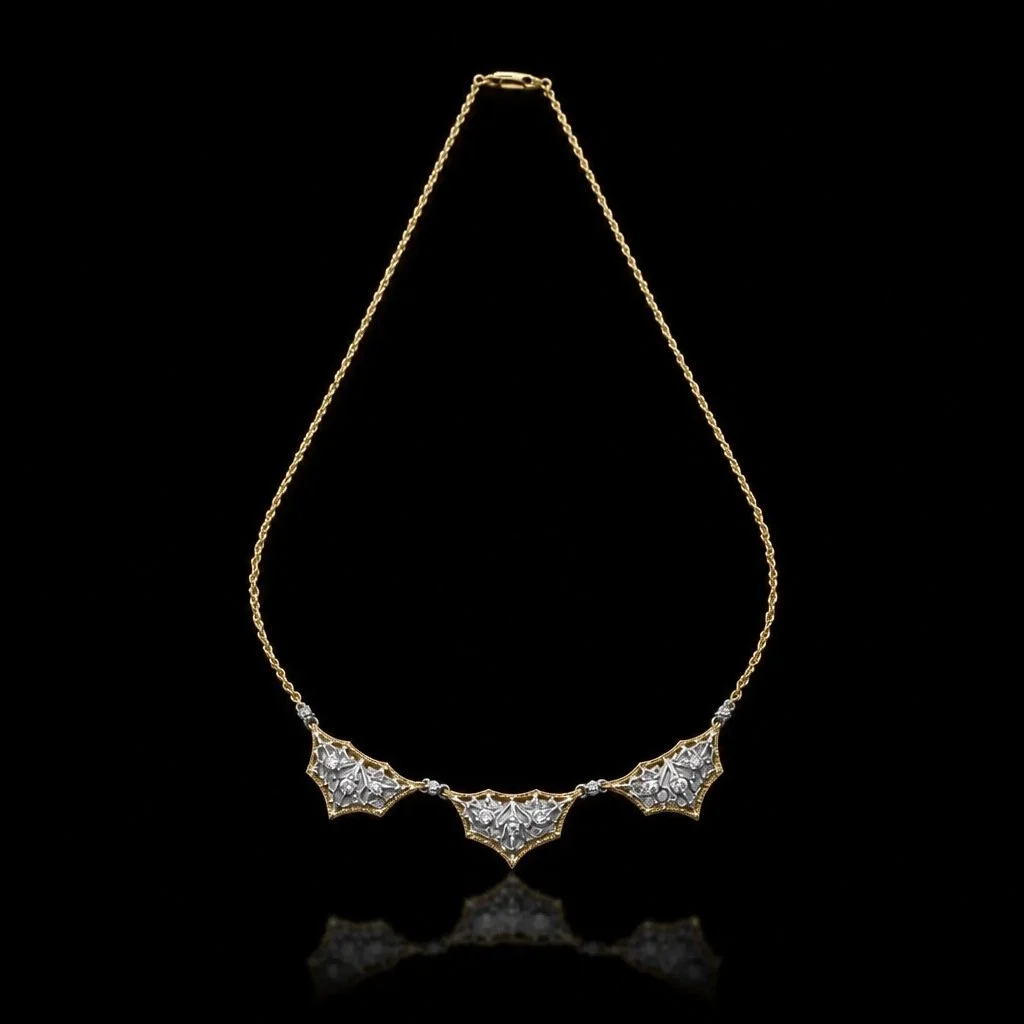
Vintage Buccellati 18KT gold openwork necklace with diamonds
Vintage Buccellati 18KT gold openwork diamond necklace, 1950s to 1960s, from our collection

The 1960s and 1970s: sculpted gold and colour

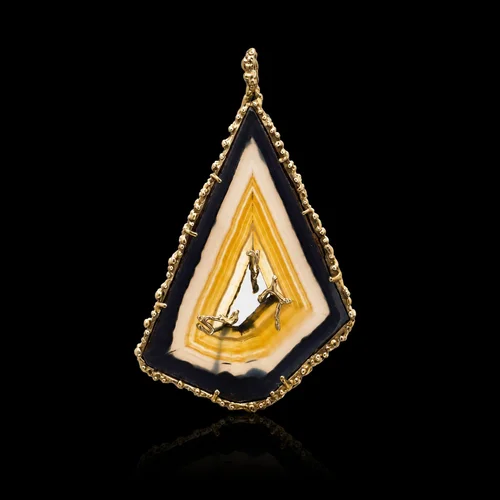
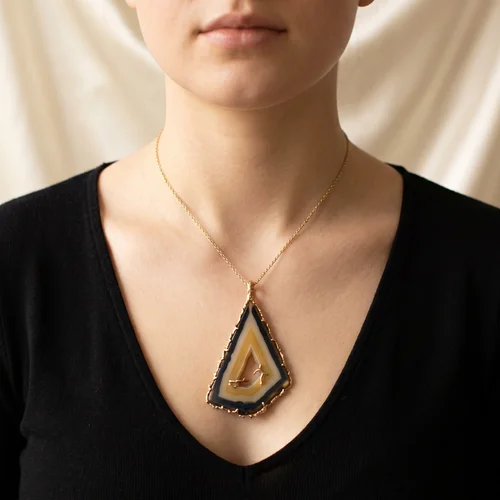
In the 1960s London became a centre of modernist jewellery. Andrew Grima, who in 1966 became the first jeweller to win the Duke of Edinburgh Prize for Elegant Design (Wikipedia), set rough crystals in textured gold; John Donald and Stuart Devlin made sculptural gold jewellery; and Kutchinsky made bold gold and gem-set pieces. Coral, turquoise, pearls, banded agate, citrine and large cabochons sat beside diamonds.

Designer houses added lasting classics: the Cartier Love bracelet of 1969, and at Tiffany & Co. the designs of Elsa Peretti and Angela Cummings.
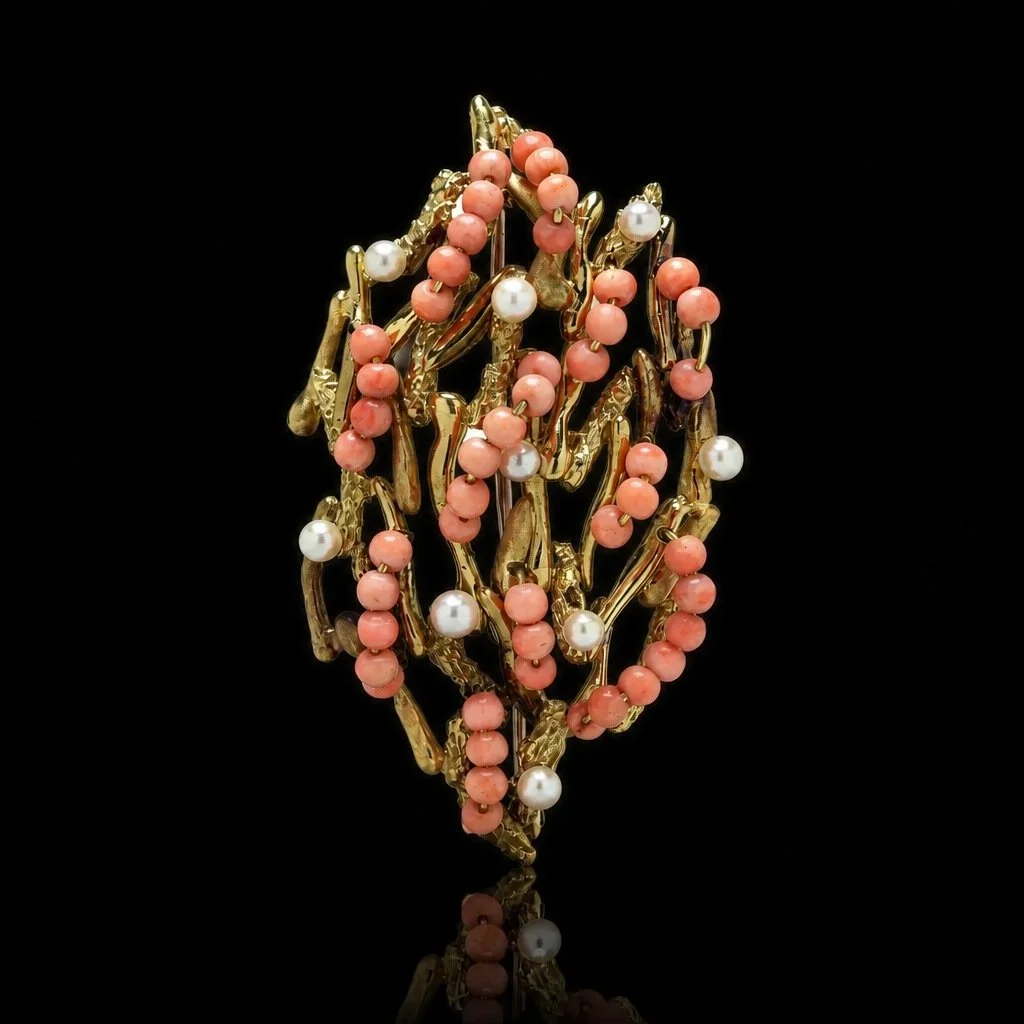
John Donald 18KT gold brooch with coral and pearls, London, 1970s
John Donald 18KT gold, coral and pearl brooch, London, 1970s, from our collection

London goldsmiths

Our John Donald coral and pearl brooch, the Stuart Devlin coral and pearl necklace and the Kutchinsky gold cufflinks are all London work of the 1970s.
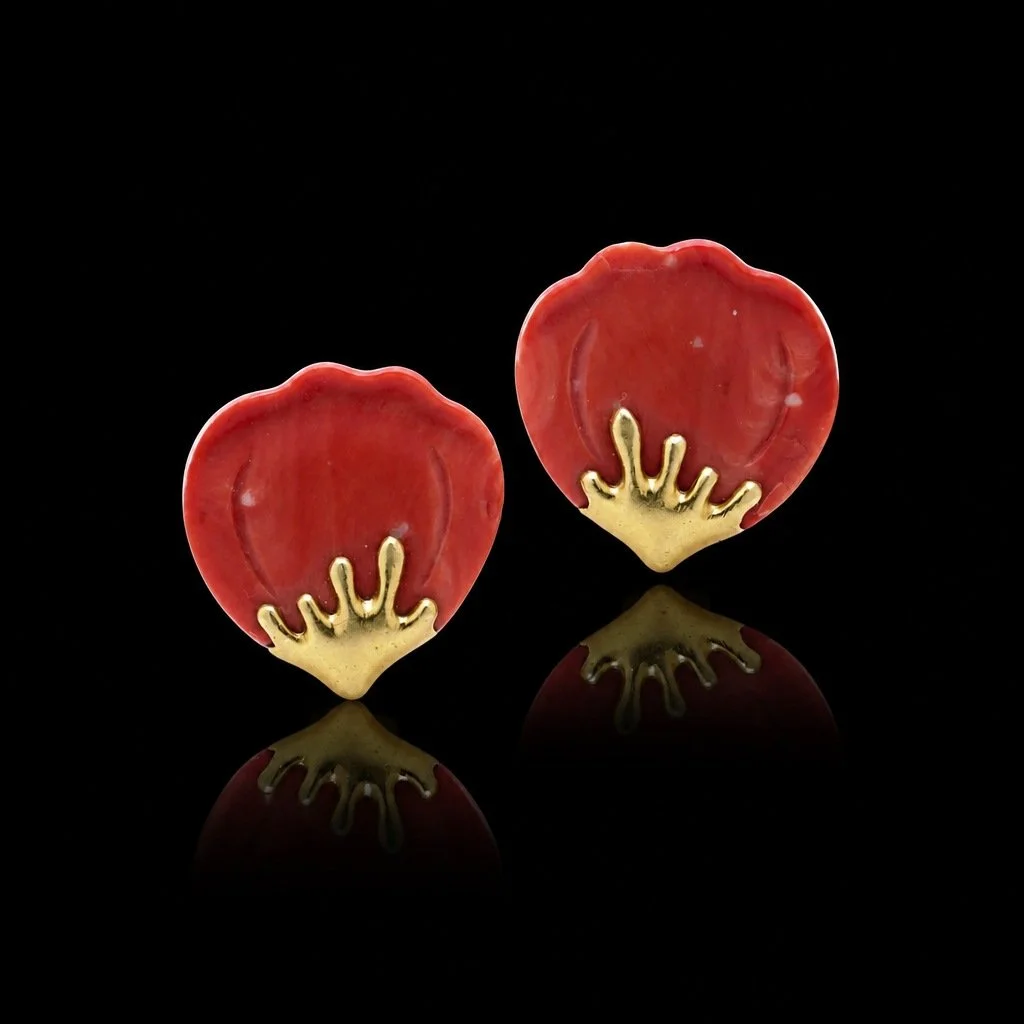
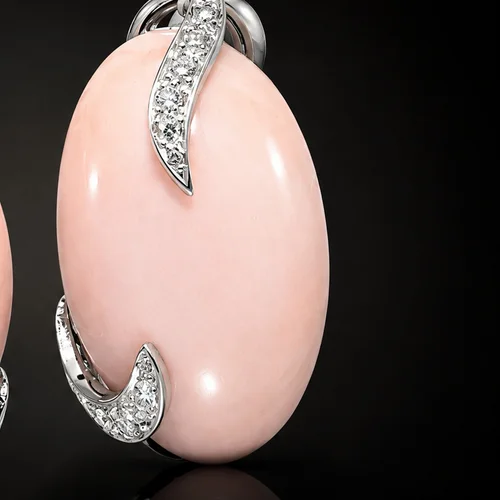
Tiffany and Co. Angela Cummings Petals earrings in 18KT gold and pink quartz, 1977
Tiffany & Co. Angela Cummings Petals earrings, 18KT gold and pink quartz, 1977, from our collection

1950s to 1970s jewellery in stock

Shop all 44
How to date a piece

  1. Read the hallmark

    British pieces carry a date letter for the year of assay. From 1975 the fineness appears as 375, 585, 750 or 916, with platinum marked 950.

  2. Find the sponsor's mark

    The maker's registered mark identifies the workshop; designers such as Grima, Donald and Devlin used their own marks.

  3. Look for signatures

    Designer houses sign their pieces and often add serial numbers; original boxes support the date.

  4. Read the style

    Polished platinum and sprays lean 1950s; sculpted, textured gold with coral or crystals leans 1960s and 1970s.

Browse vintage jewellery and designer jewellery.

Selling jewellery from the 1950s to the 1970s? Send photographs for a free valuation. Post it to us by Royal Mail Special Delivery or book a free insured FedEx collection, or bring it to an appointment in Mayfair, London, or Braintree, Essex. You are paid the same day after inspection, by bank transfer.

Sources

Questions

What does mid-century jewellery look like?

Jewellery of the 1950s is polished and feminine: platinum and diamond sprays, bows and ribbons, cocktail rings and textured yellow gold. The 1960s and 1970s turned bolder, with bark-textured and sculpted gold, large coloured stones, coral, turquoise and cabochons, and the work of modernist designers such as Andrew Grima, John Donald and Stuart Devlin.

What was 1970s jewellery like?

Fine jewellery of the 1970s is bold and tactile: textured and sculpted yellow gold, chunky chains, large cocktail rings, and natural materials such as coral, turquoise, pearls and banded agate beside diamonds. Designer pieces such as the Cartier Love bracelet of 1969 and Tiffany designs by Elsa Peretti and Angela Cummings belong to the decade.

Which British jewellery designers worked in the 1960s and 1970s?

London was a centre of modernist jewellery. Andrew Grima, who won the Duke of Edinburgh Prize for Elegant Design in 1966, set rough crystals in textured gold; John Donald and Stuart Devlin made sculptural gold jewellery; and Kutchinsky made bold gold and gem-set pieces. Their work carries registered maker's marks.

Is 1950s jewellery vintage or antique?

Vintage. Jewellery from the 1950s, 1960s and 1970s is vintage, usually defined as at least 20 to 30 years old, while antique means 100 years or more. Mid-century pieces are now around 50 to 75 years old and are collected for their design, makers and craftsmanship, especially signed and hallmarked work.

How do I date jewellery from the 1950s to the 1970s?

British pieces carry a hallmark with a date letter giving the year of assay, and from 1975 the fineness appears as 375, 585, 750 or 916, with platinum marked 950. The sponsor's mark identifies the maker, and designer signatures, original boxes and the style of the piece confirm the decade.

What is textured gold?

Textured gold has a surface worked by hand or with tools into patterns such as bark, nugget, Florentine engraving or ribbing, rather than a mirror polish. It is typical of mid-century Italian goldwork, such as Buccellati's engraved finishes, and of the sculpted gold of 1960s and 1970s British designers. Texture also hides small scratches well.

What stones were used in 1970s jewellery?

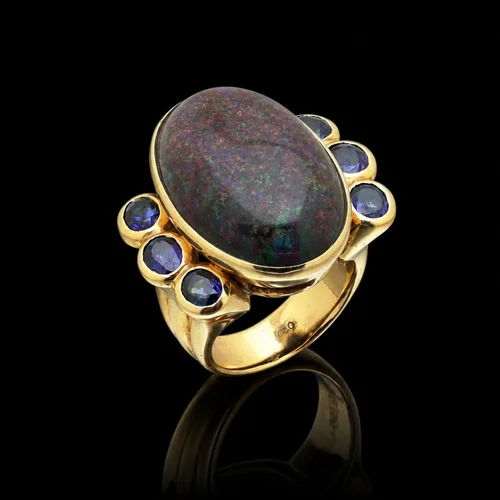
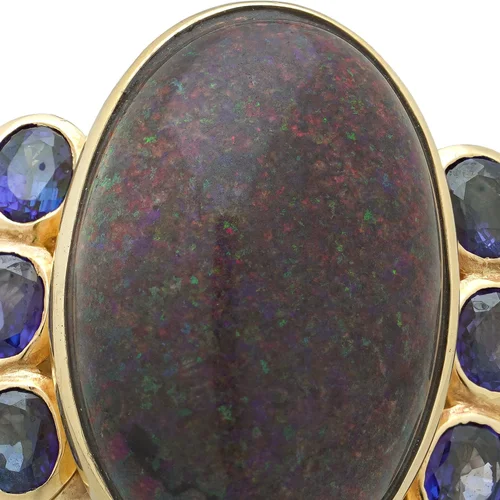
Alongside diamonds, 1970s jewellers used coral, turquoise, cultured pearls, lapis lazuli, banded agate, tiger's eye, citrine and amethyst, often as large cabochons or carved beads. Opals and aquamarines were common in rings, and rough or uncut crystals appear in modernist pieces, usually set in textured yellow gold.

Do you buy vintage jewellery from the 1950s to the 1970s?

Yes. We buy vintage jewellery from the 1950s to the 1970s, including signed and London-made designer pieces. Send photographs for a free valuation, then post it by Royal Mail Special Delivery, book a free insured FedEx collection or visit us by appointment in Mayfair or Braintree. You are paid the same day after inspection, by bank transfer.