What is 15KT gold?
Gold purity is measured in carats out of 24. 15KT gold holds 15 parts of pure gold to 9 parts of other metals, usually silver and copper, which makes it 62.5% gold. In fineness terms that is 625 parts per 1,000, which is why British pieces are marked .625 beside the 15 (Antique Jewellers).
Britain added three lower gold standards, 15, 12 and 9 carat, in 1854. On 1 January 1932 the 15 and 12 carat standards were abolished and replaced by a single 14 carat standard of 58.5%, while 9KT stayed. That short life makes 15KT one of the easiest standards to date.
| Standard | Pure gold | British mark before 1975 | Legal in Britain |
|---|---|---|---|
| 9KT | 37.5% | 9 and .375 | Since 1854 |
| 12KT | 50% | 12 and .5 | 1854 to 1932 |
| 14KT | 58.5% | 14 and .585 | Since 1932 |
| 15KT | 62.5% | 15 and .625 | 1854 to 1932 |
| 18KT | 75% | 18 | Before 1854 to today |
| 22KT | 91.6% | 22 | Before 1854 to today |
Read more on modern marks such as 375, 585 and 750 in our guide to gold hallmarks.
How to date and identify 15KT gold
A full British hallmark for 15KT shows the maker's mark, 15 and .625, an assay office mark and a date letter. The lower standards introduced in 1854 were marked with these figures rather than the crown used on 18KT and 22KT. Because the standard ended in 1932, a British 15KT hallmark places a piece between 1854 and 1932, and the date letter narrows it to a single year.
Hallmarking was not a legal requirement for most jewellery until the Hallmarking Act of 1973; gold wedding rings had to be hallmarked from 1855 (Berganza). As a result, many 15KT brooches, bangles, lockets and necklaces carry only a maker's stamp such as 15ct, 15c or 625, or no mark at all, and old marks can wear away. A stamp alone is the maker's claim, not an assay, so a specialist confirms the gold with an XRF analyser, which leaves no mark, or a discreet acid test.
For more on dating from marks, stone cuts and fittings, see how to date antique jewellery.
Where you find 15KT gold
15KT was the everyday fine gold of Victorian and Edwardian jewellers. It appears in bangles, brooches, stick pins, lockets, necklaces and rings, often set with seed pearls, turquoise, garnets, sapphires and old cut diamonds. Its warm yellow colour suits the engraved and applied goldwork of the period.
Necklaces and bangles
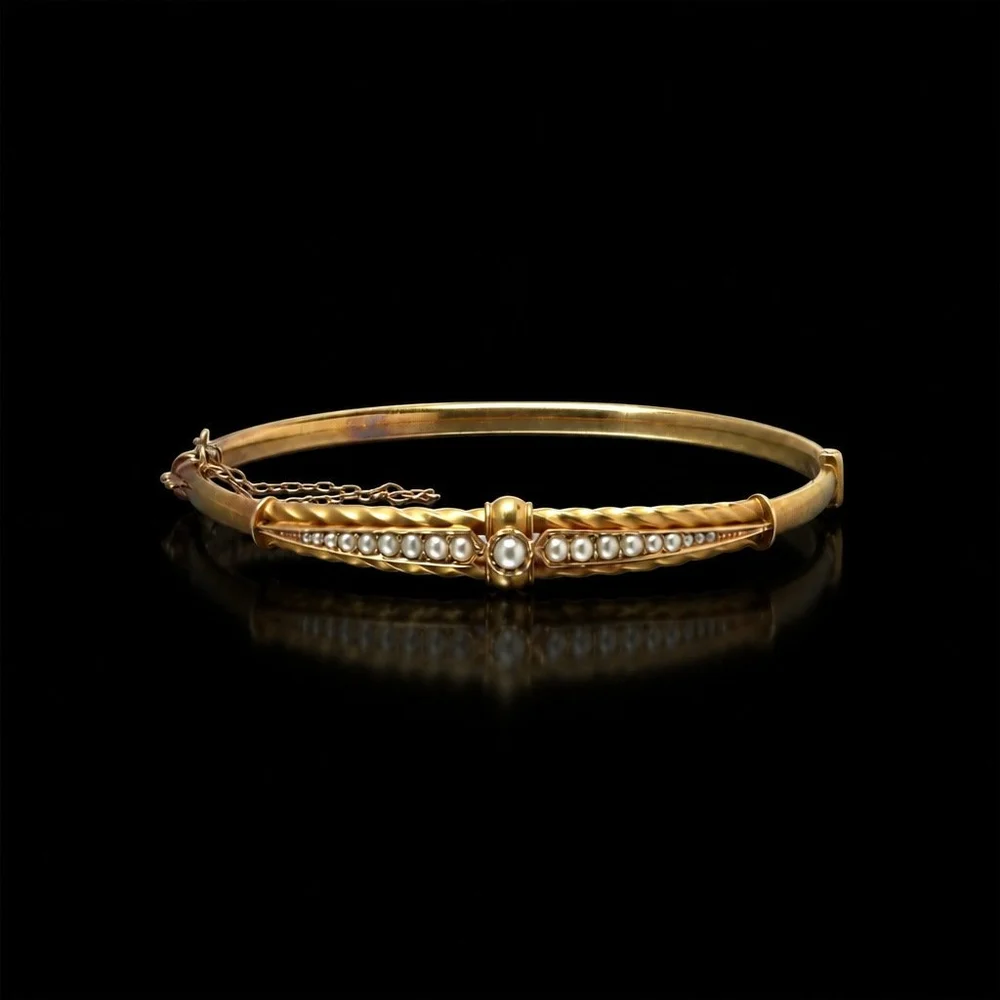
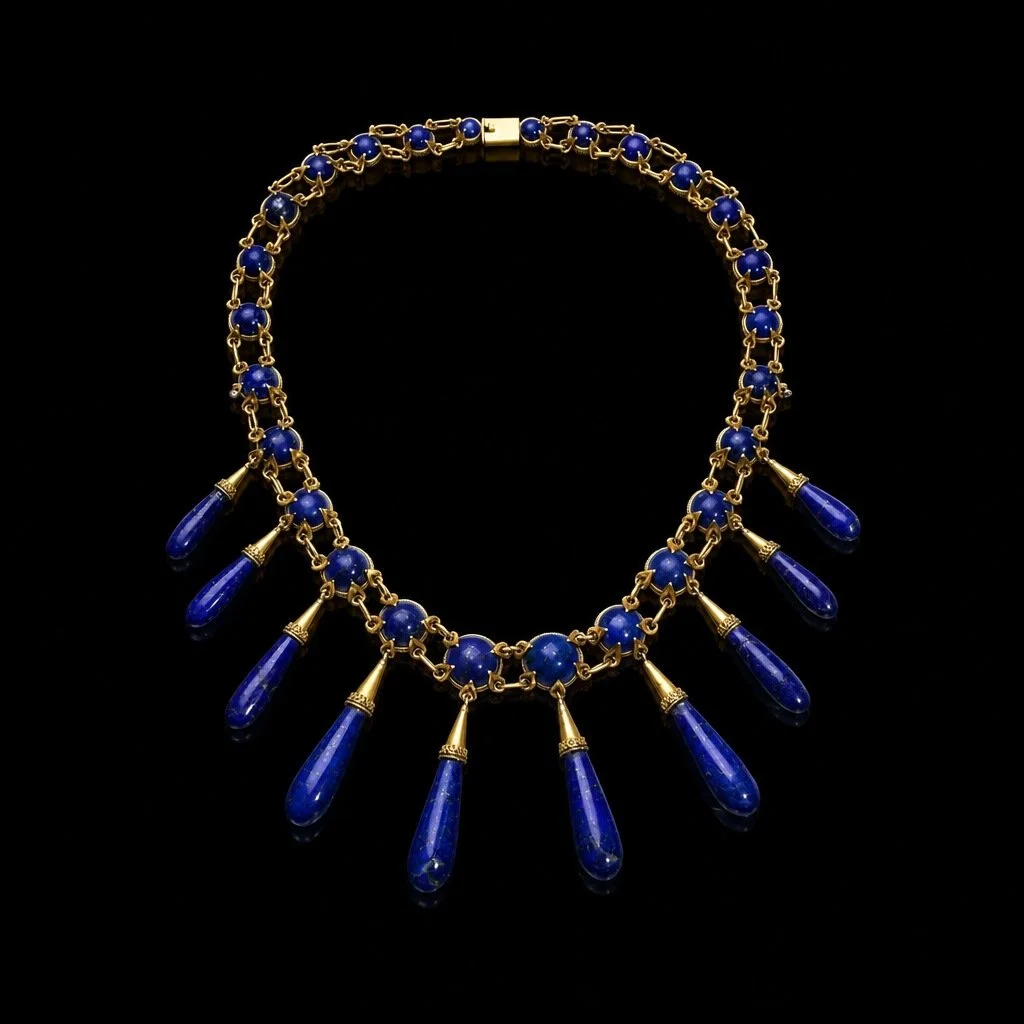
Fringe necklaces and hinged bangles show 15KT at its most typical. Our Victorian 15KT gold lapis lazuli fringe necklace and seed pearl hinged bangle are both in stock.
Browse necklaces and pendants and bracelets.
Rings
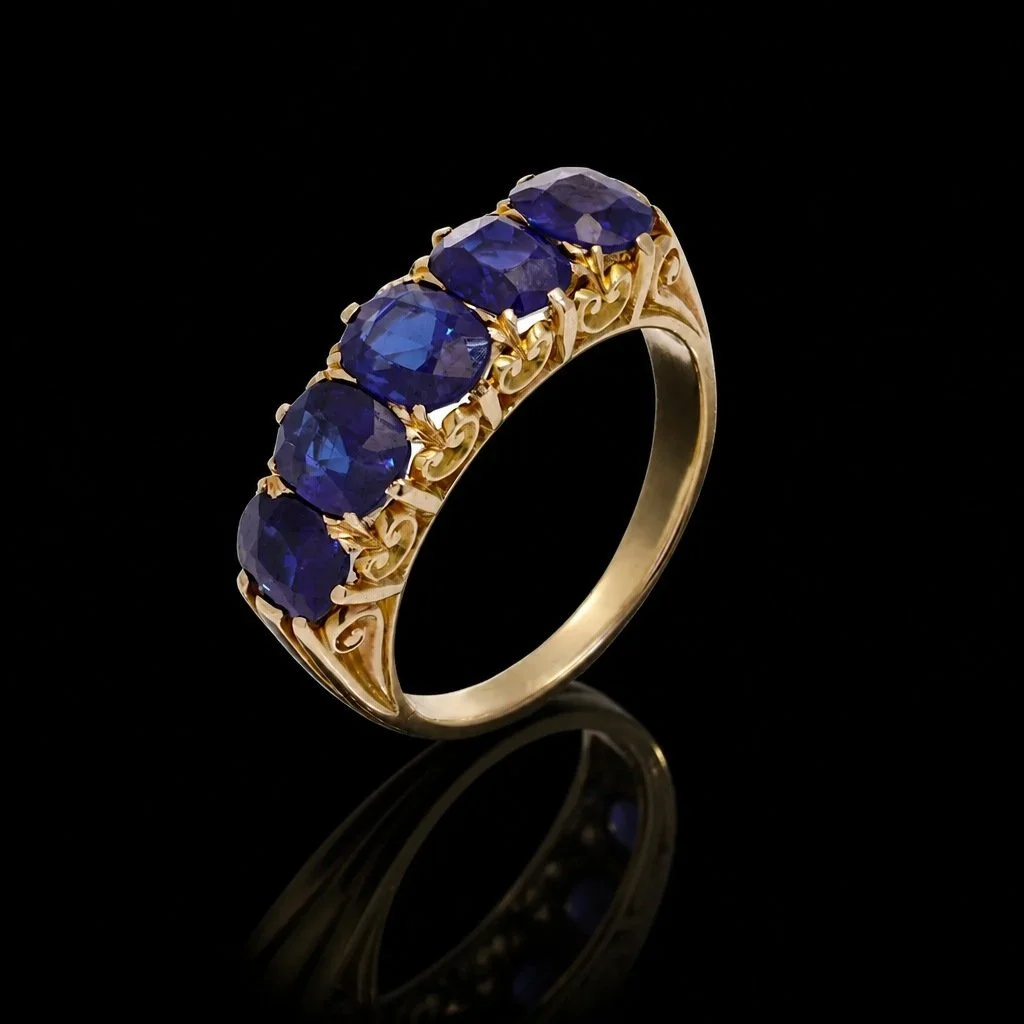
Half-hoop and cluster rings were often made in 15KT. See our Victorian 15KT five-stone sapphire ring and the banded agate marquise ring with reeded shoulders.
Browse all antique rings.
Brooches and pins
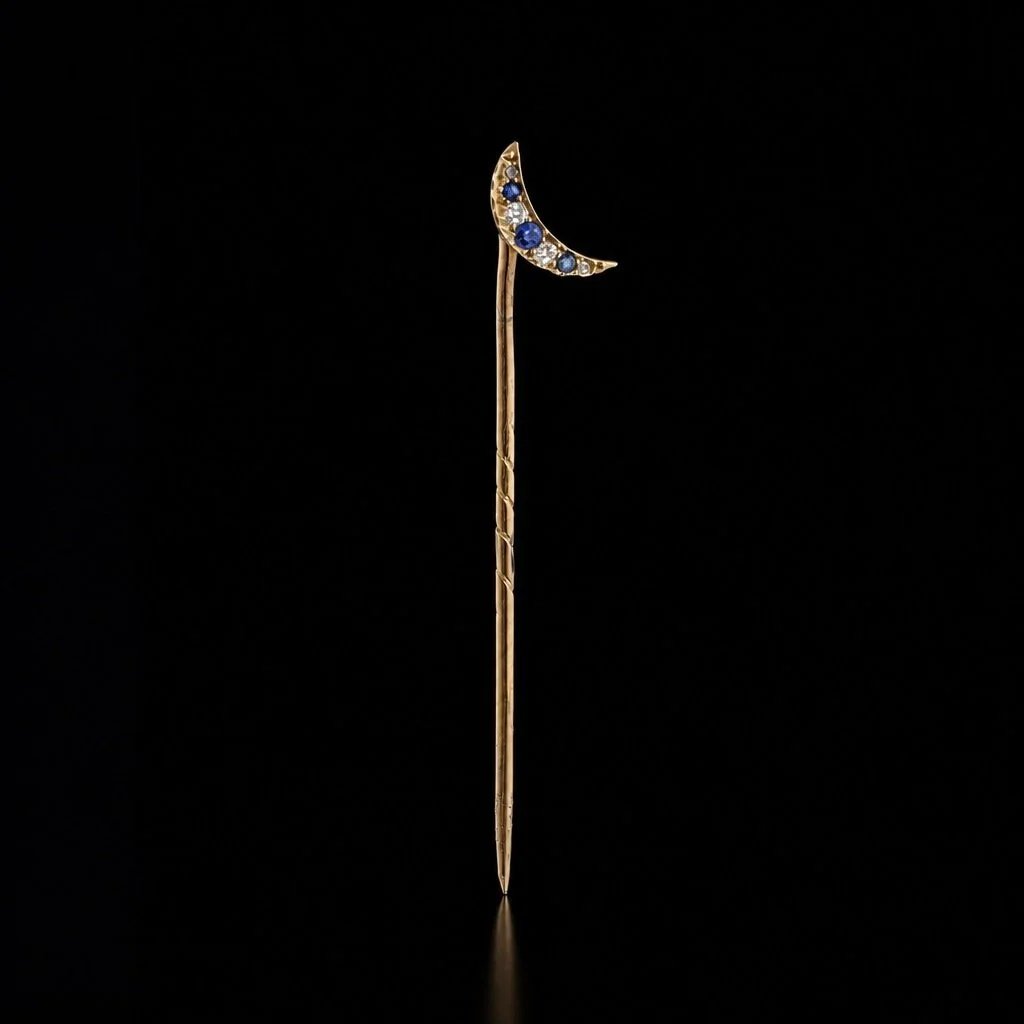
Crescents, bars and stick pins were made in 15KT in large numbers in the 1880s and 1890s. Our sapphire and diamond crescent stick pin is one example; see all brooches and pins.
15KT gold jewellery in stock
Shop all 10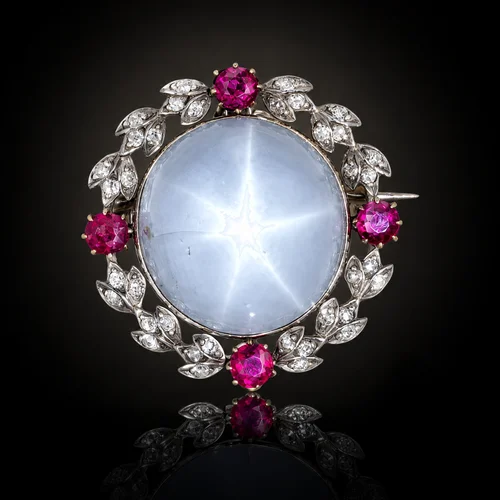
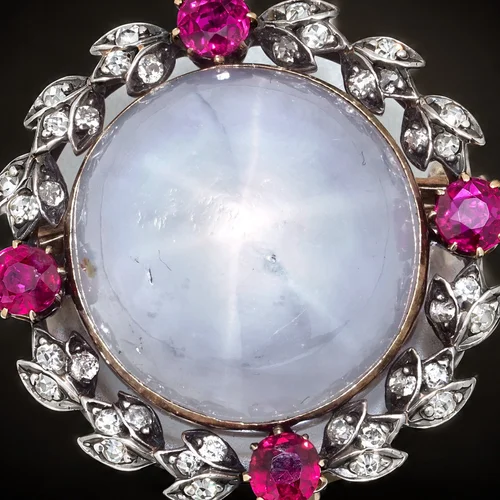 Victorian 20 ct Star Sapphire, Ruby and Diamond Wreath Brooch£5,950
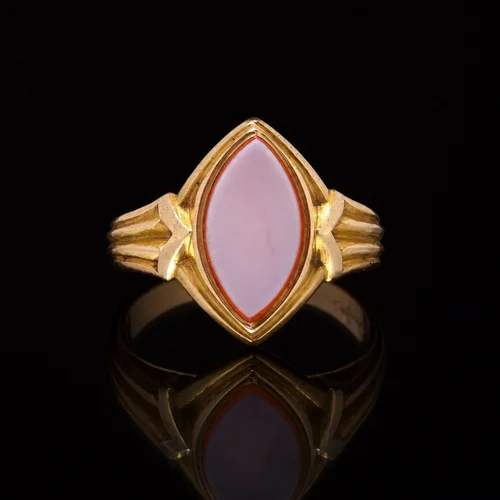
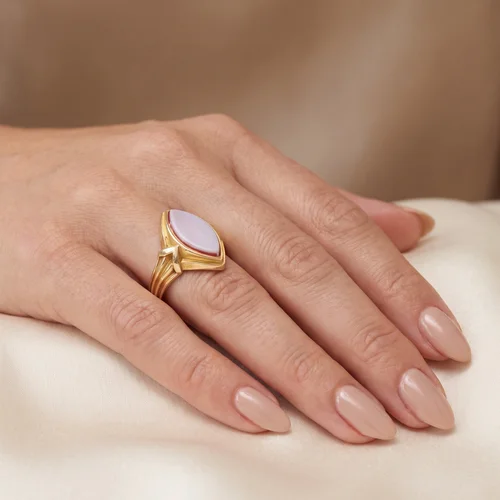 Antique 15KT Gold Banded Agate Marquise Ring, Reeded Chevron Shoulders£2,300
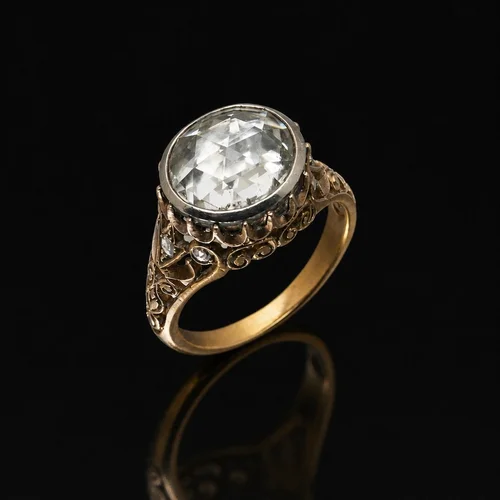
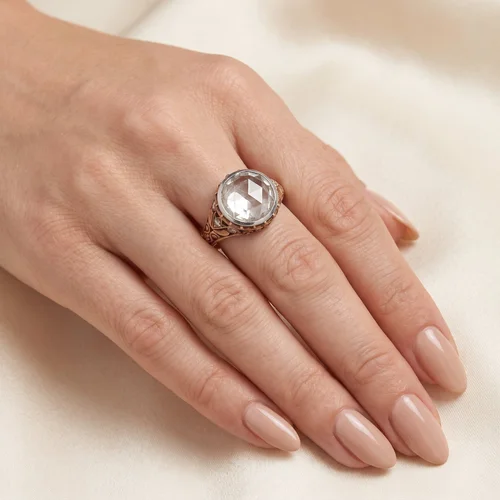 Georgian Rose Cut Diamond Ring, 4.40 Carats, Victorian 15KT Gold Shank£19,875
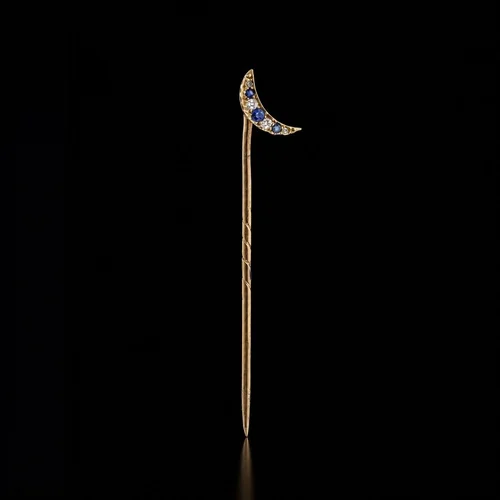
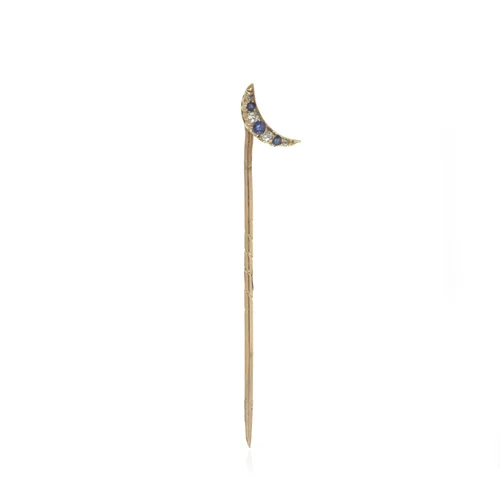 Victorian 15KT Gold Sapphire and Diamond Crescent Stick Pin, 1880s£650
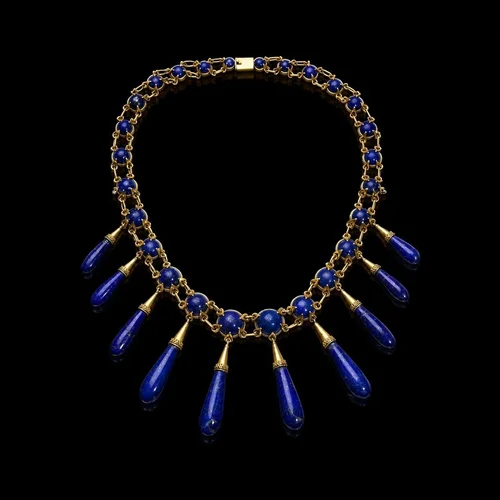
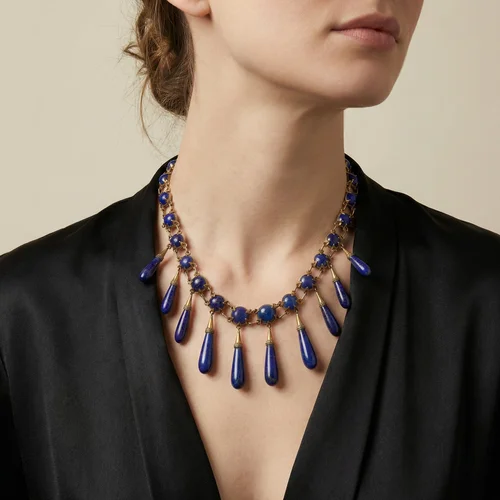 Victorian 15KT Gold Natural Lapis Lazuli Fringe Necklace£12,985
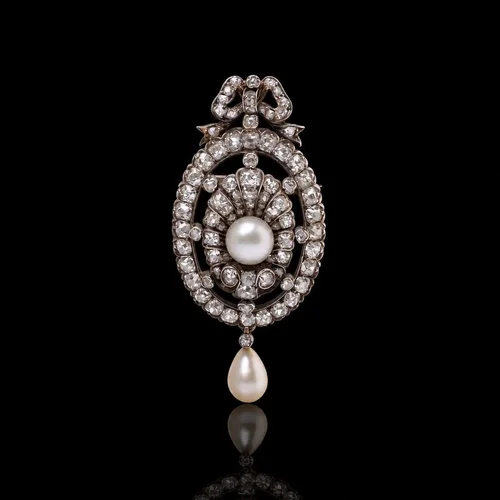
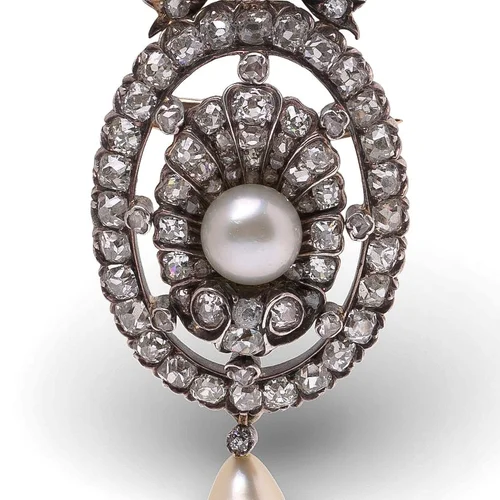 Victorian 15KT Gold & Silver Diamond and Pearl Pendant£9,850
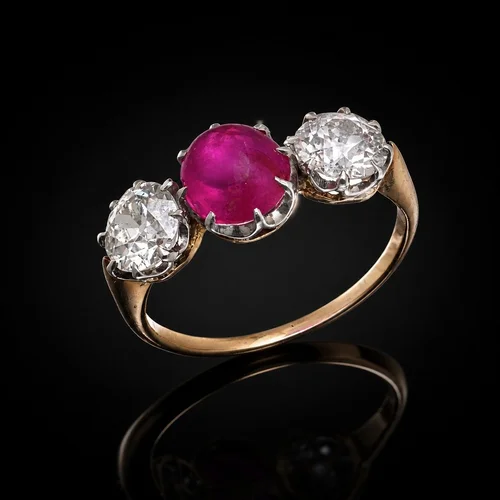
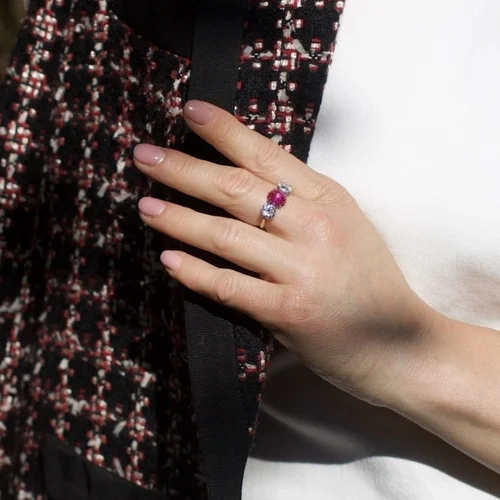 15KT Gold and Platinum Three-Stone Diamond and Natural Ruby Ring£8,950
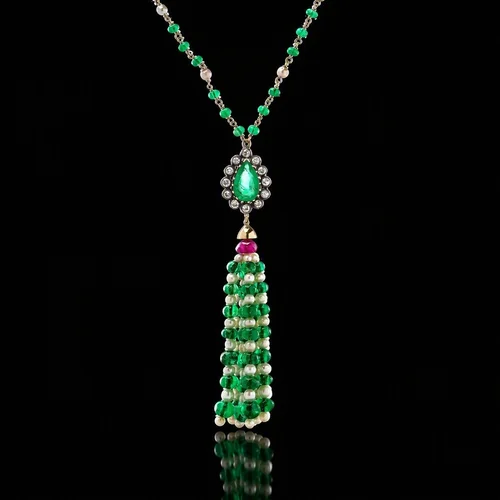
 15KT Gold and Silver Emerald, Ruby, Pearl and Diamond Necklace£7,500
Buying antique 15KT jewellery
- Read the marks
Use a loupe. A full British hallmark dates the piece; a lone 15ct stamp is the maker's statement, so ask how the gold was confirmed.
- Look for repairs
Check shanks, joints, catches and pins for solder of a different colour. Replaced pins and catches are common on brooches and should be described.
- Judge the wear
Thin ring shanks, softened engraving and worn rope or bead work show a century of use. Ask whether a ring shank is original.
- Confirm the stones
Seed pearls, turquoise and garnets are typical; check settings for loose or replaced stones. Synthetic ruby has been made since 1902, so important rubies deserve a gem test.
- Ask about size
Rings are listed as UK / US / EU sizes, for example UK N / US 6¾ / EU 54. Most 15KT rings can be resized in gold of a matching colour.
Pieces we list are described with their gold standard, marks, measurements and date. Browse yellow gold jewellery or the Victorian collection.
Value, care and selling
The value of an antique 15KT piece comes from its design, its stones, its maker, its condition and its date as well as its gold. A complete hallmark, an original fitted box and untouched condition all count.
Clean 15KT gold with warm water, a drop of mild soap and a soft brush, then dry it well. Keep pearls and turquoise away from water and chemicals. Our guide to cleaning jewellery covers each stone.
Selling 15KT gold jewellery? Send photographs for a free valuation. Post it to us by Royal Mail Special Delivery or book a free insured FedEx collection, or bring it to an appointment in Mayfair, London, or Braintree, Essex. You are paid the same day after inspection, by bank transfer.
Sources
- Antique Jewellers, the 15 carat standard (legal standard 1854 to 1932; 15 and .625 marks; no crown; replaced by 14ct on 1 January 1932)
- Berganza, a brief history of English hallmarks (9, 12 and 15 carat from 1854; 14 carat from 1932; wedding rings hallmarked from 1855; jewellery hallmarking compulsory from the 1973 Act)
- Lang Antiques, synthetic corundum (Verneuil flame fusion announced 1902)
- Wikipedia, Hallmark (British standards and the Hallmarking Act 1973)