Omega Speedmaster · identification and value
The Speedmaster in your drawer may not be the one you think it is.
Two Speedmasters can look almost identical from across a room and sit a long way apart on a dealer’s valuation. The difference is in details most owners have never been told to look for. This guide shows you where they are.
The short answer
The name on the dial tells you very little. Value is decided by which Speedmaster family you hold, which movement is inside it, and how much of it is still the way it left the factory. A Speedmaster with its original dial, hands and bezel, and a case that has not been polished soft, is the one collectors compete for.
If you want a figure rather than a checklist, send us three photographs for a free valuation. If you want to understand what you own first, read on.
Which Speedmaster do you have?
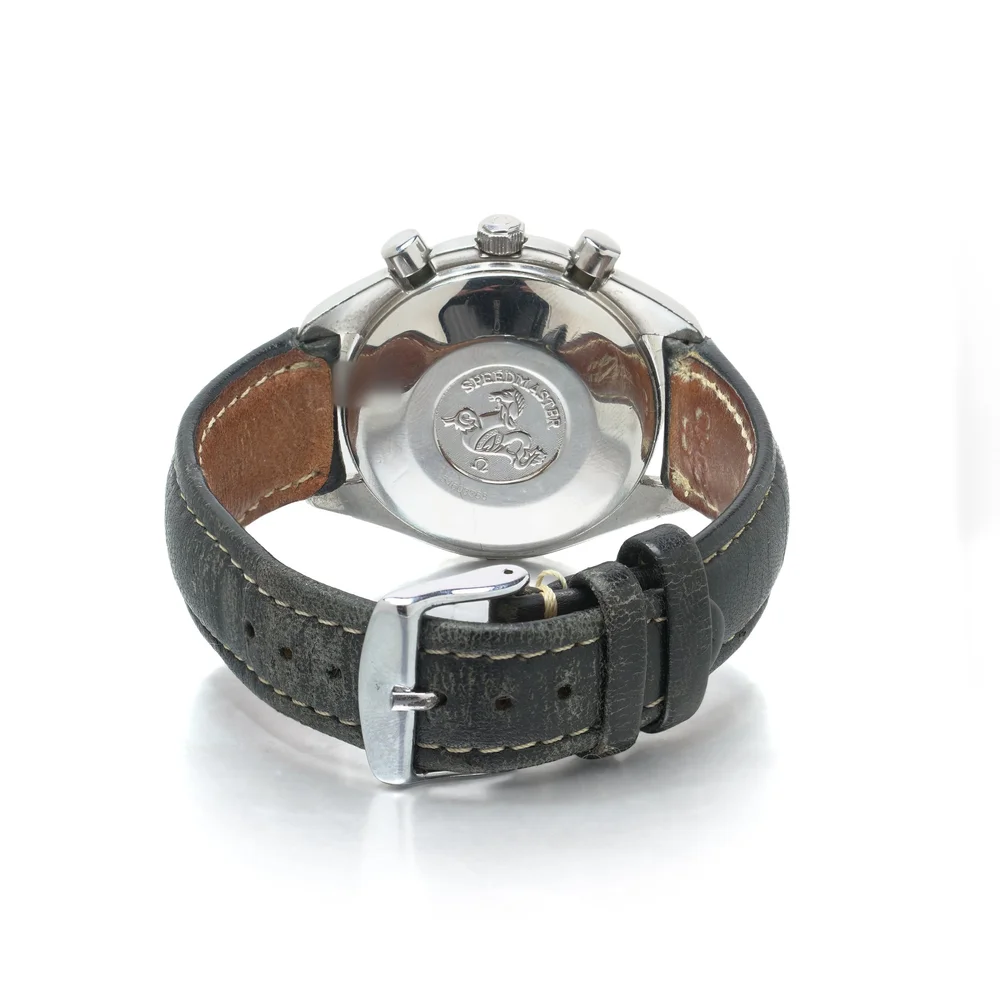
Omega has made the Speedmaster continuously since 1957, and the family has grown several branches. Before anything else, place yours on the tree. Turn the watch over: the case back and the movement are more honest than the dial.
| Family | How to spot it | What collectors look at |
|---|---|---|
| Early and pre-Moon | Manual wind, made before the 1969 Moon landing | Calibre 321, original dial and bezel, case shape |
| Professional (Moonwatch) | Manual wind, 42mm, “Professional” on the dial | Movement generation, bezel, bracelet, papers |
| Reduced and Automatic Date | Smaller, about 39mm, automatic | Dial colour, condition, box and papers |
| Speedmaster 38 | A modern 38mm model from Omega’s current range | Completeness, service history, condition |
| Mark series and specials | Different case shapes, limited editions | Originality, edition papers, rarity |
Searches for the Speedmaster 38 rose sharply over the summer of 2026, and many of the people typing it own a modern watch bought new. That is a different conversation from a manual-wind watch made in the 1960s, and both are worth knowing about before you sell.
The movement is the first fork in the road
Early Speedmasters were built around the calibre 321, a column-wheel chronograph movement. Omega replaced it with the calibre 861 at the end of the 1960s, and the later 1861 carried the Moonwatch forward for decades. The modern Moonwatch uses the Master Chronometer calibre 3861.
For an older watch, the 321 is the one collectors look for first. It is also the one most often misdescribed, so the movement needs to be seen, not assumed from the date of manufacture.
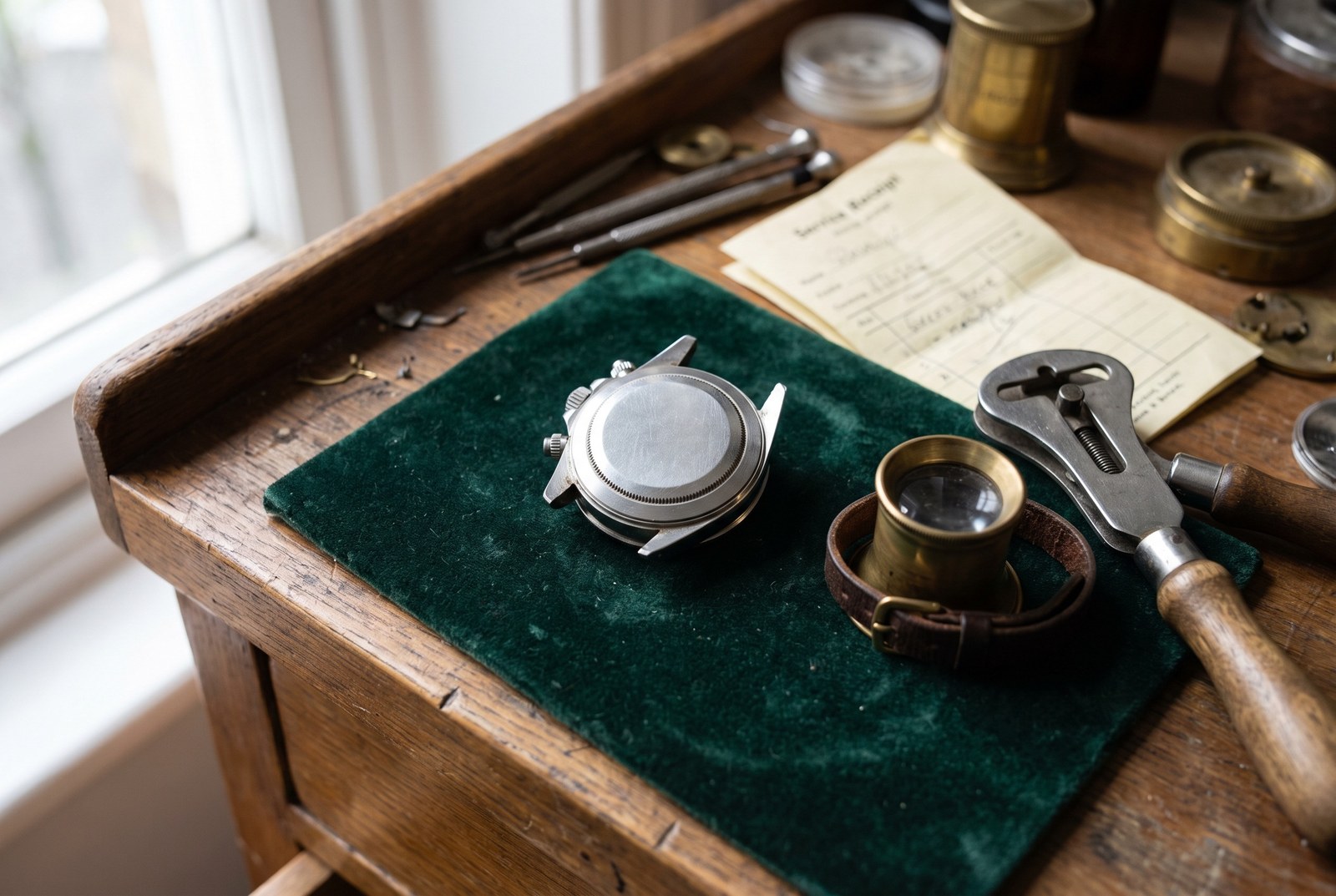
A column wheel is visible through the movement once the case back is open. If a seller cannot show you the movement, the calibre is a claim, not a fact.
Check yours in 60 seconds
How many value signals does your Speedmaster have?
Tick what is true of your watch. This does not produce a price, and it is not meant to: it shows you what a dealer will be looking at, in the order they look.
Tick what applies and the track fills in.
Dial, hands and bezel: where value hides
Most of the difference between a good Speedmaster and an exceptional one sits on the front of the watch. Collectors look for a dial that has aged evenly and was never refinished, luminous hands that match the dial’s lume, and the bezel the watch was sold with.
Why a service can cost you money
Service centres have long replaced dials, hands and bezels as routine. The watch comes back running perfectly and looking new, and a collector sees a watch that has lost its original parts. If your Speedmaster was serviced and you still have the old parts in an envelope, keep them with the watch. They matter.
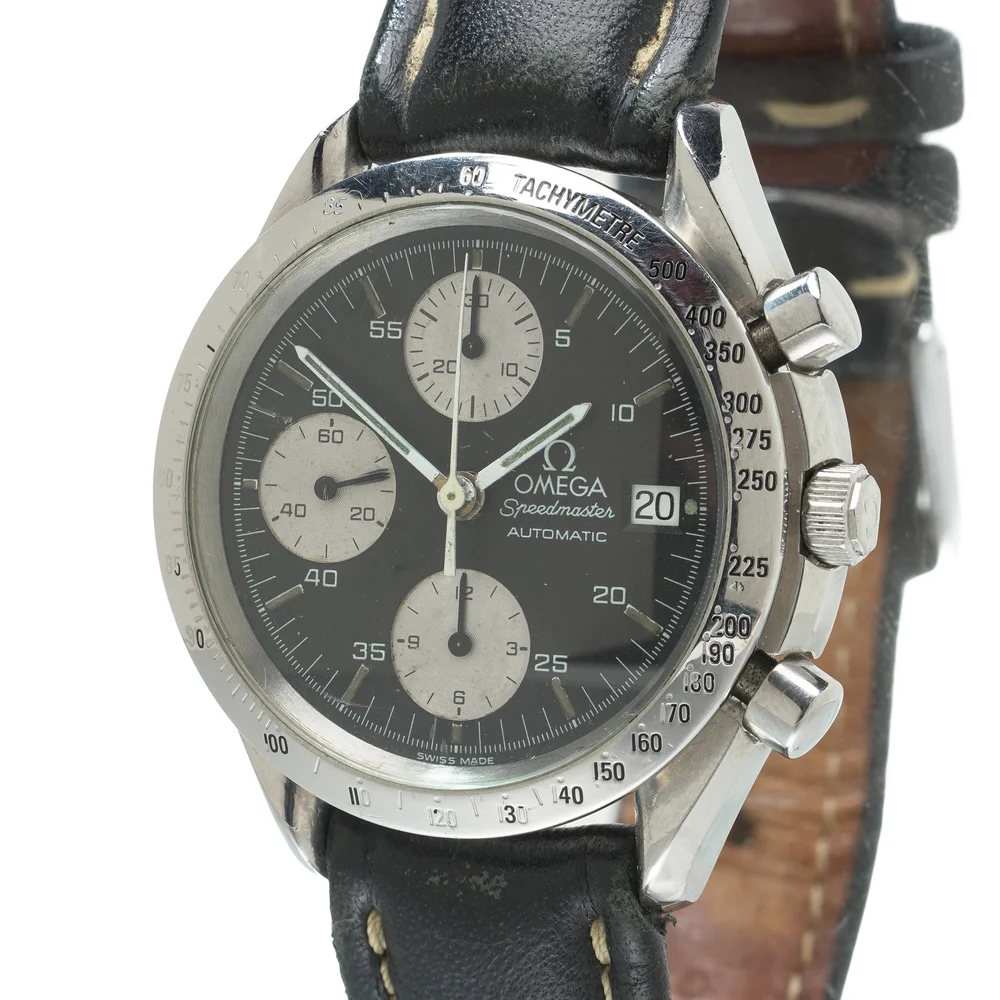
The reverse panda
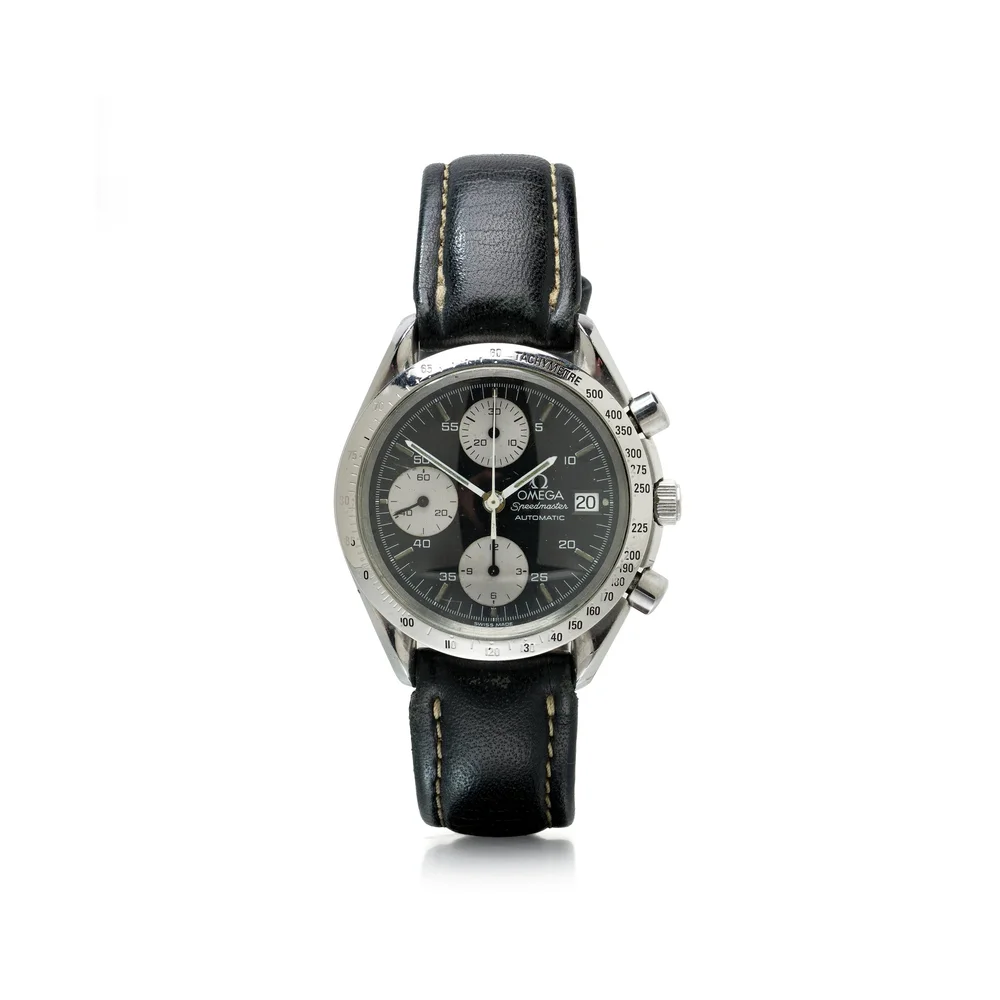
A black dial with white sub-dials is known as a reverse panda. The Speedmaster Date in our stock, reference 3511.50, is one: a later, automatic member of the family in a 39mm case.
Case, bracelet, box and papers
The Speedmaster case has sharp bevels along the lugs. Heavy polishing softens them, and once gone they cannot be put back. A case that still shows crisp edges, even with scratches, is preferred to one that has been buffed to a shine.
Original bracelets, the box, the guarantee and service receipts all add to a Speedmaster. Paperwork is how a buyer proves the watch’s story, so a complete set tends to sell faster and with fewer questions.
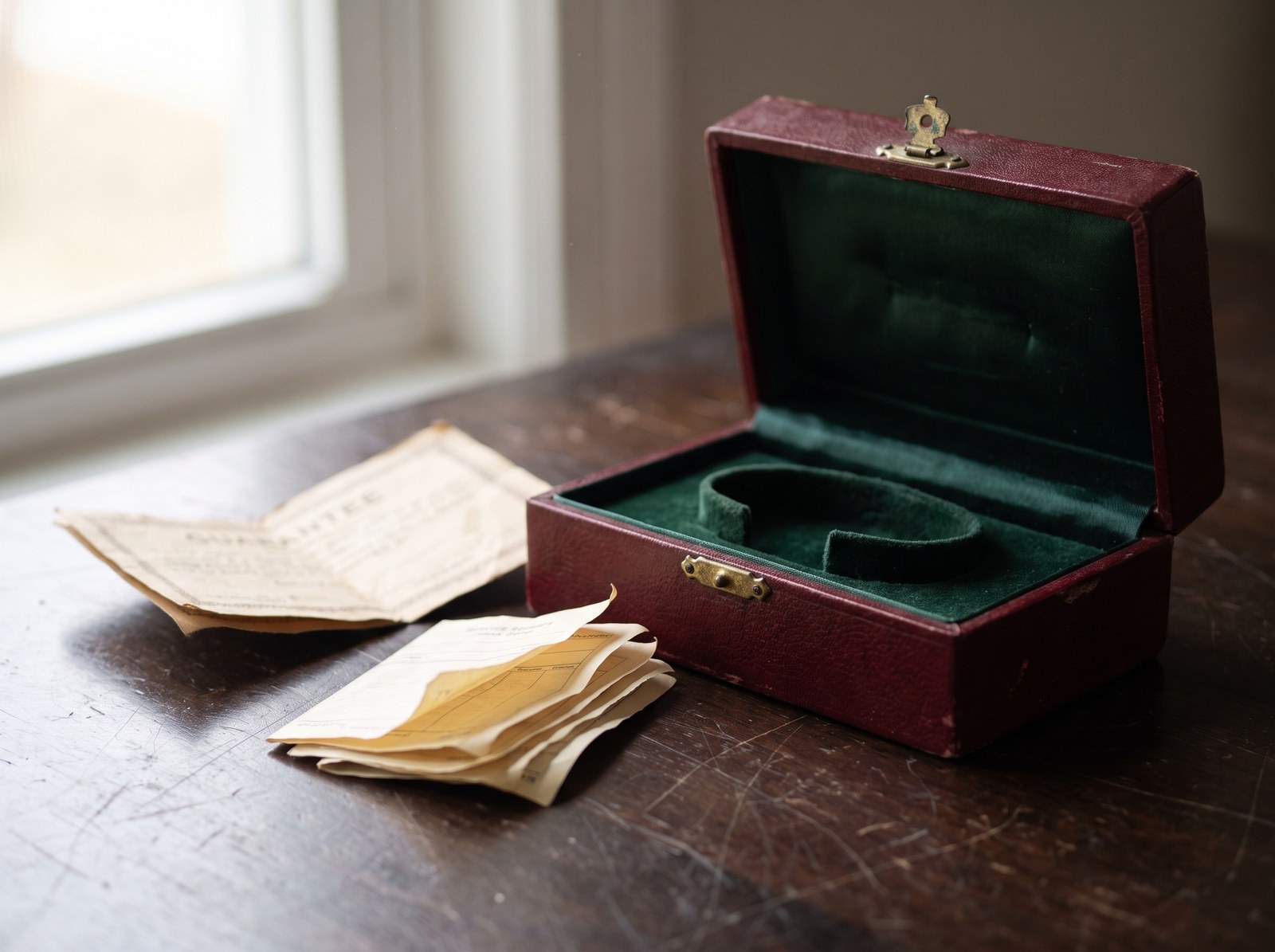
Not sure which paperwork counts? Our guide to where to sell a watch covers what buyers ask for.
In the cabinet now
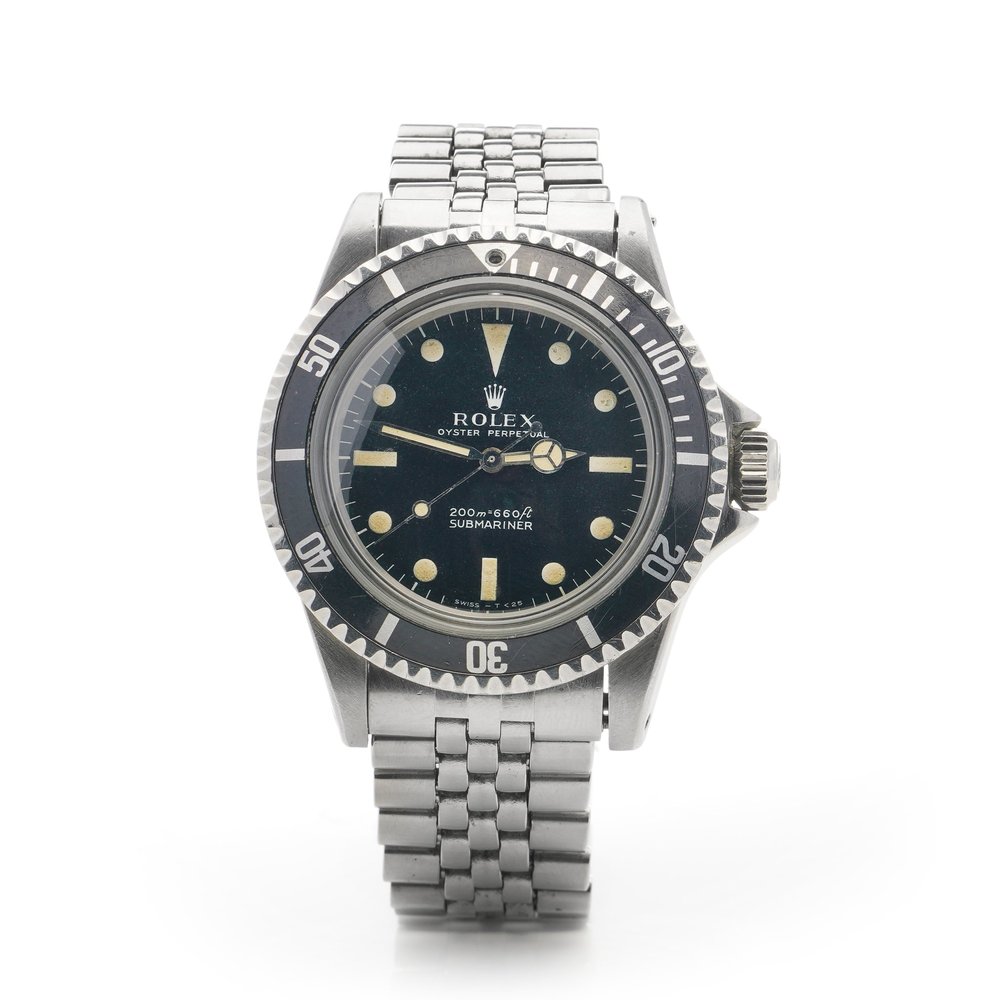
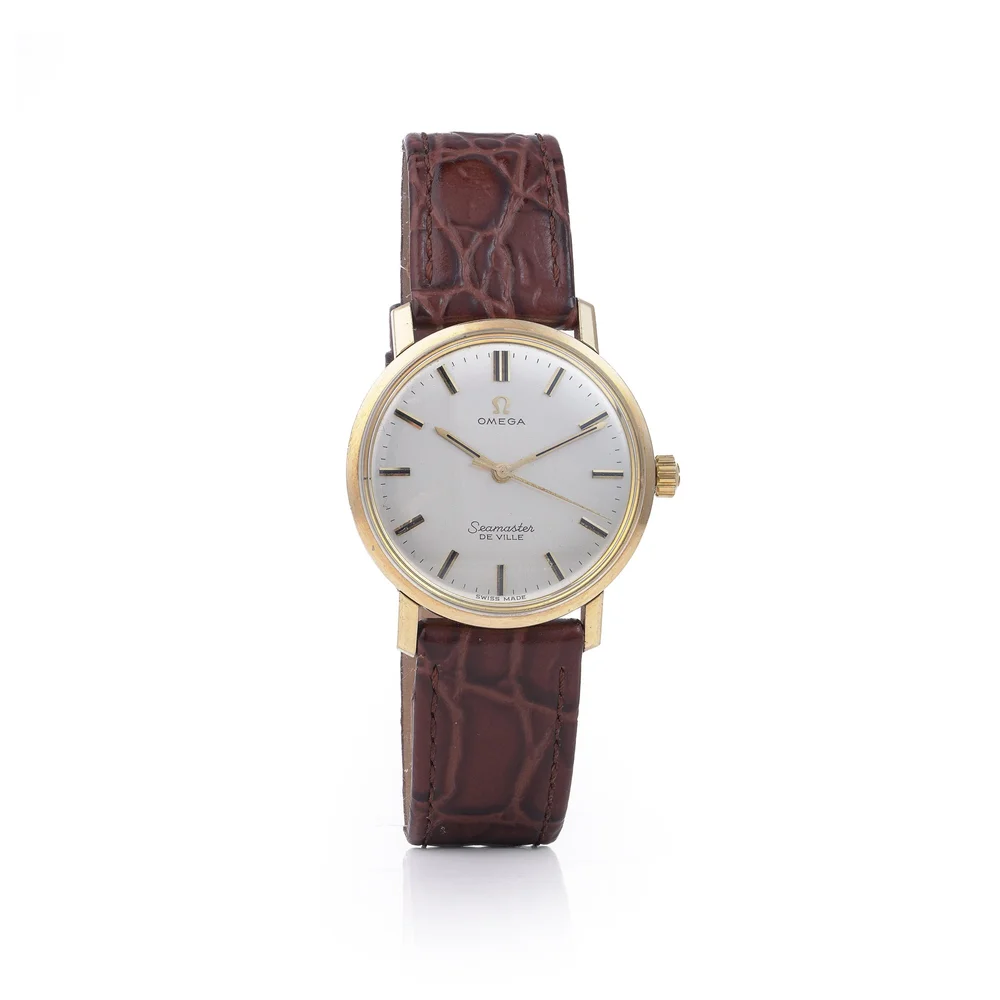
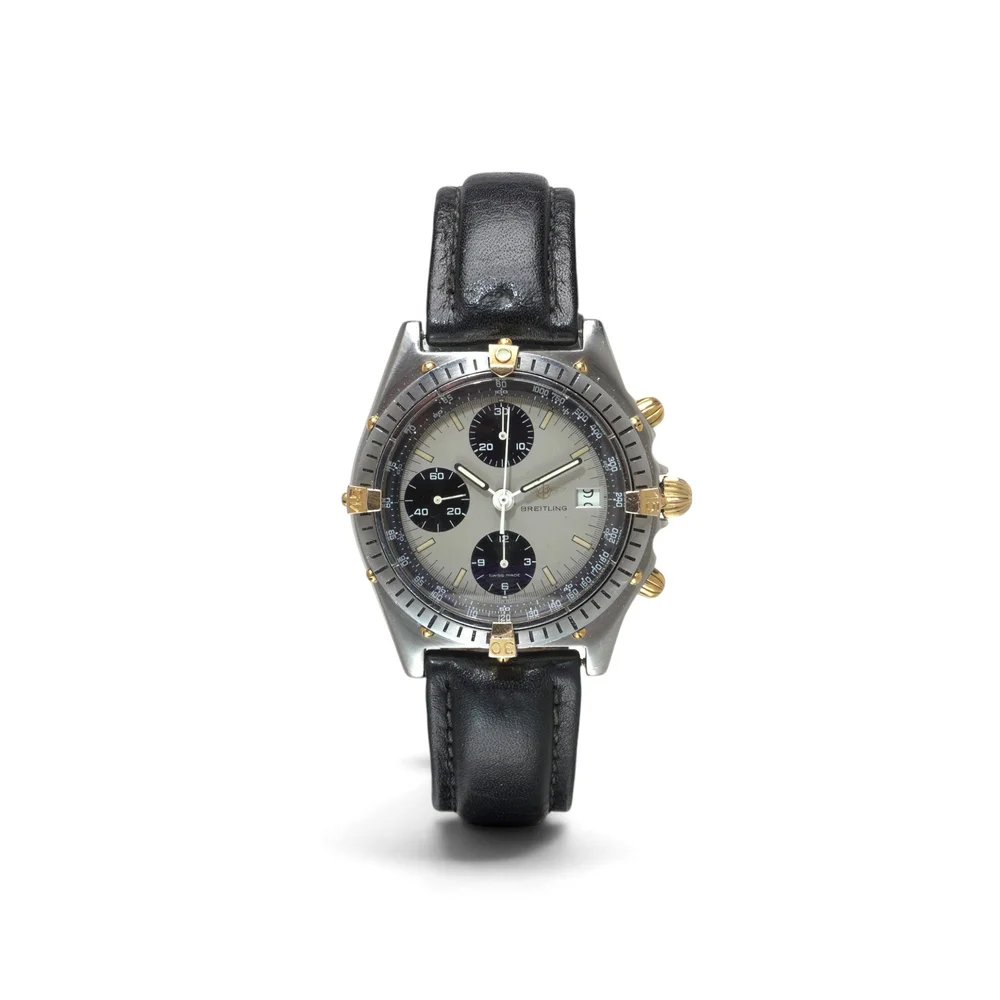
Watches in the cabinet now
Every watch here has been through the same checks this guide describes. Each links to its full listing with every photograph.
Selling a Speedmaster without leaving money behind
Do not polish it, do not have it serviced first, and do not separate it from its paperwork. Each of those feels like it should help, and each can reduce what the watch is worth to a collector.
Photograph the dial straight on, the case back, and anything that came with the watch. Then ask for a free valuation. We buy Speedmasters outright and pay on the day, and we are happy to explain what we see even if you decide to keep it. If you have other watches to value at the same time, our sell your watch page explains how it works.
- Omega more widely: Omega value and selling guide
- Why Omega is in demand: the Omega resurgence
- Gold Omegas: vintage gold Constellation guide
Five things owners tell us, and what we usually find
A fresh service always adds value.
On an older Speedmaster it can remove value, if original parts are swapped and thrown away.
Polishing makes it easier to sell.
Collectors prefer honest scratches over soft, rounded edges that cannot be restored.
All Speedmasters are Moonwatches.
The family has many branches. The Moonwatch is one of them, and the calibre inside matters.
Without the box it is worth nothing extra.
The watch carries most of the value. Paperwork adds confidence and speed, but its absence is not a dead end.
Newer is always worth less.
Condition and completeness can put a modern Speedmaster ahead of a tired older one.
Keep going
Frequently asked
How do I know which Speedmaster I have?
Is a calibre 321 Speedmaster worth more?
Should I service my Speedmaster before selling it?
What is a reverse panda dial?
Do you buy Speedmasters without box and papers?
How quickly do you pay?
Next step
Find out which Speedmaster you really have.
Three photographs, the dial, the case back and anything that came with it, are enough for a first opinion. No obligation, and we will tell you what we see.
New stock reaches our list before it reaches the site. Join the Mozeris list.