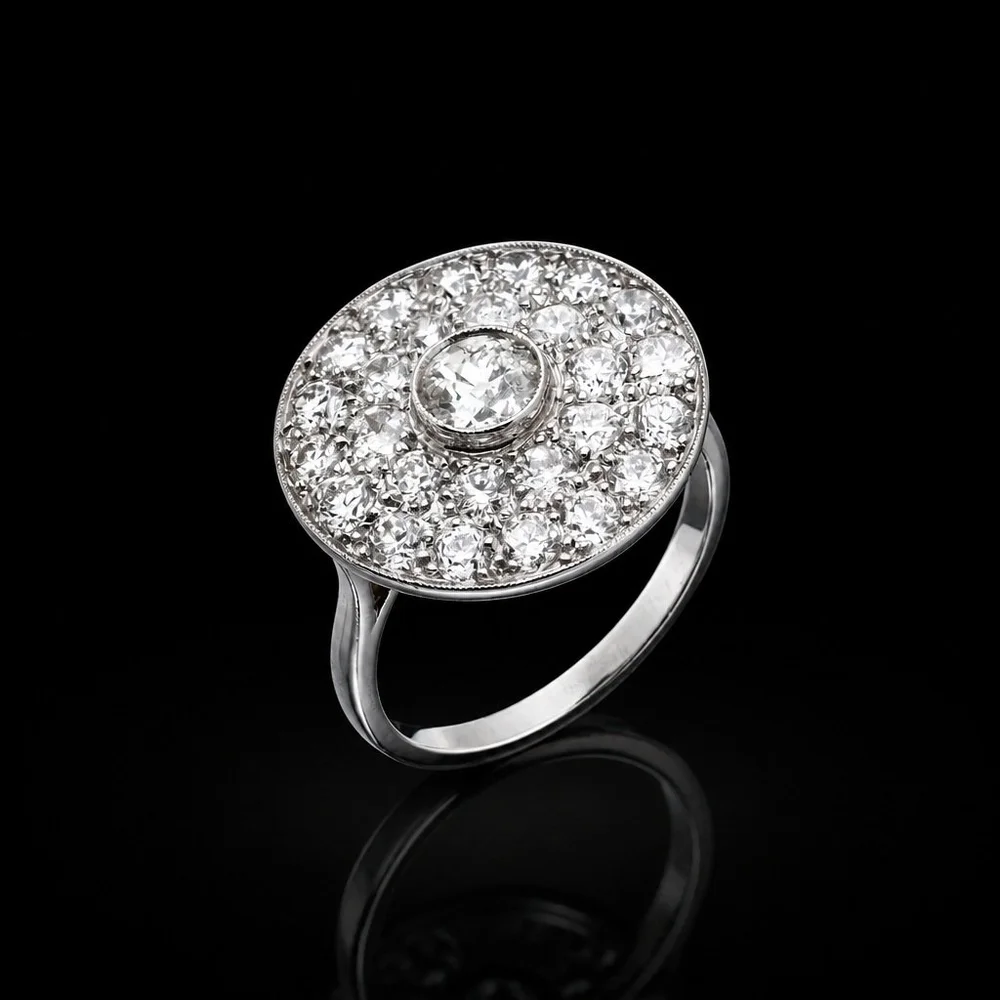
How a halo and a cluster are built
Both designs surround or group stones, and both have a long history. The difference lies in proportion: in a halo the centre stone dominates and the frame is a thin line of small stones; in a cluster the stones are closer in size and read together as one larger gem or flower. GIA lists both among the common ring settings (GIA 4Cs).
| Feature | Halo | Cluster |
|---|---|---|
| Centre stone | Dominant; the frame stones are much smaller | Similar in size to the surround, or only slightly larger |
| Surround | One or two rows of small pavé or claw-set stones | Larger stones set as petals or rows that form the shape |
| Effect | Makes the centre look bigger | Reads as one large gem or flower |
| Period | Mostly modern; mid 20th-century rings with a small frame are forerunners | Georgian to modern; typical of antique rings |
Antique cluster styles
- Daisy or flower cluster: a centre stone ringed by petal stones of similar size; Victorian, Edwardian and mid 20th century.
- Navette or marquise cluster: a long, pointed oval of stones along the finger; Georgian and Victorian, and again in the mid 20th century.
- Target cluster: concentric rings of stones around a centre; typical of Art Deco platinum rings.
- Coloured centre cluster: a sapphire, ruby, emerald or aquamarine framed by diamonds; every period.
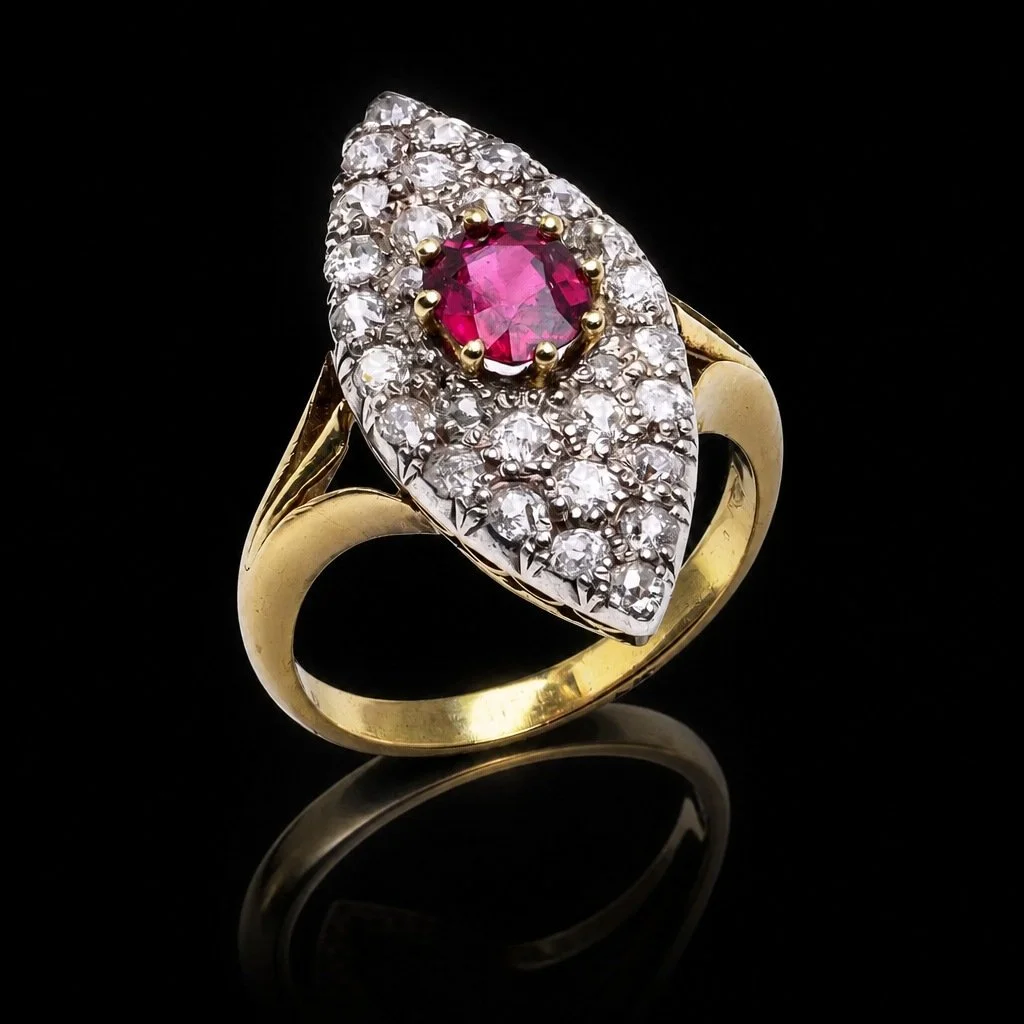
Navette clusters
Our Victorian marquise ruby and diamond cluster ring shows the long navette outline, and the Edwardian ruby and old European cut diamond cluster a rounder head.
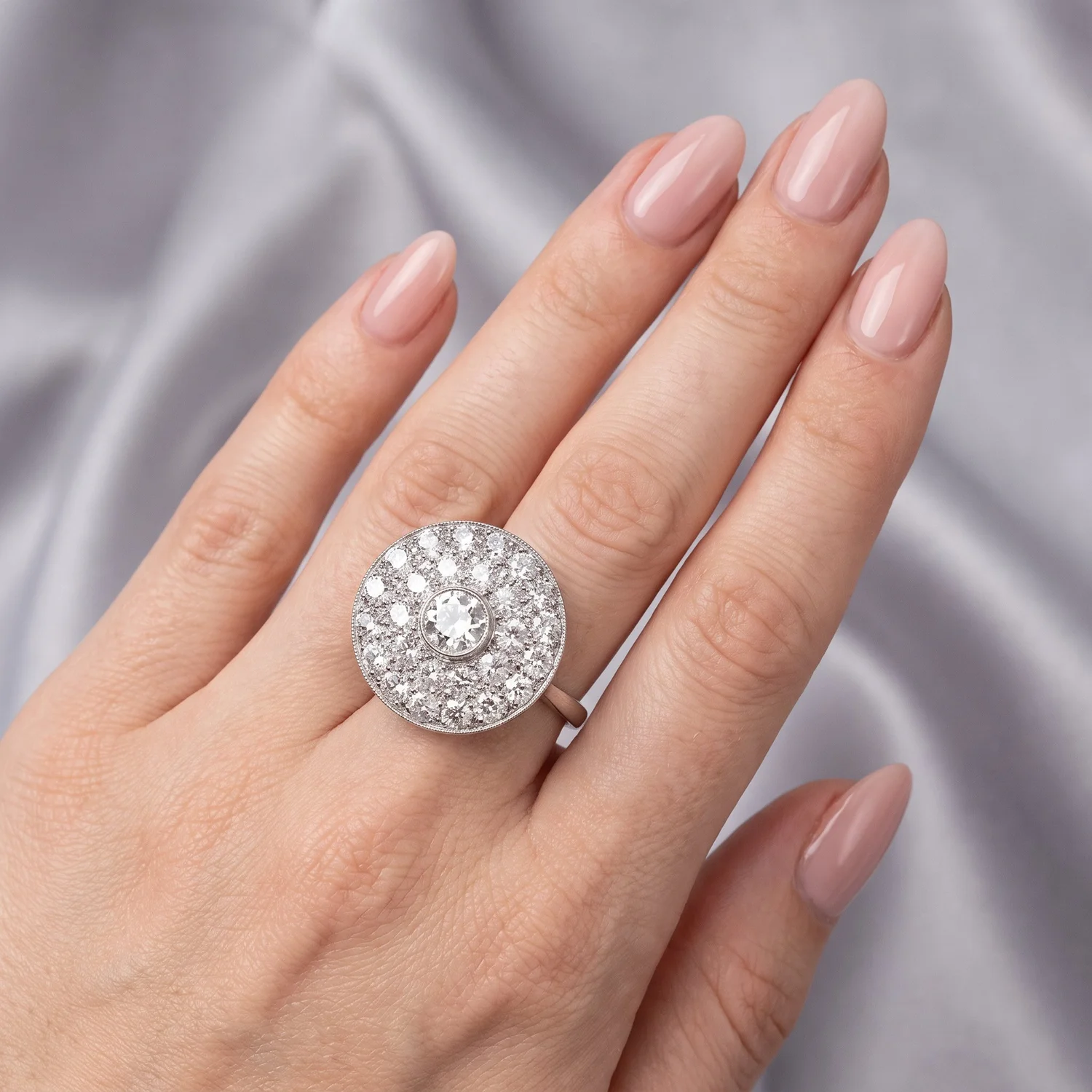
Target clusters
Concentric rings of diamonds give the Art Deco target cluster ring its flat, round face, which sits close to the finger.
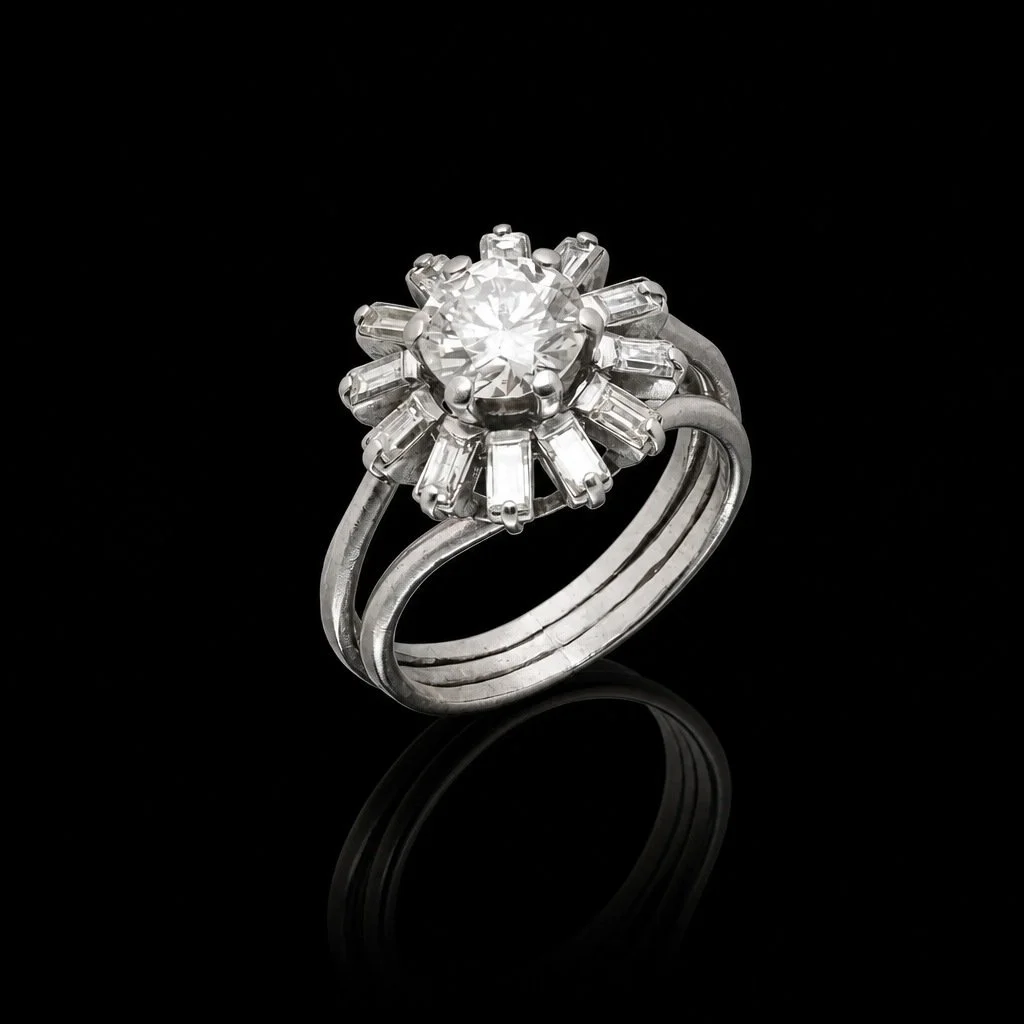
Halo forerunners
Mid-century rings such as our 1950s platinum cluster ring and the 1970s aquamarine and diamond cluster ring frame a dominant centre with smaller stones, close to the modern halo.
Cluster rings in stock
Shop all 61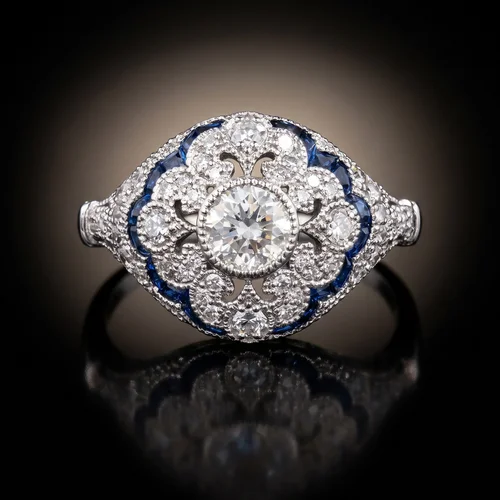
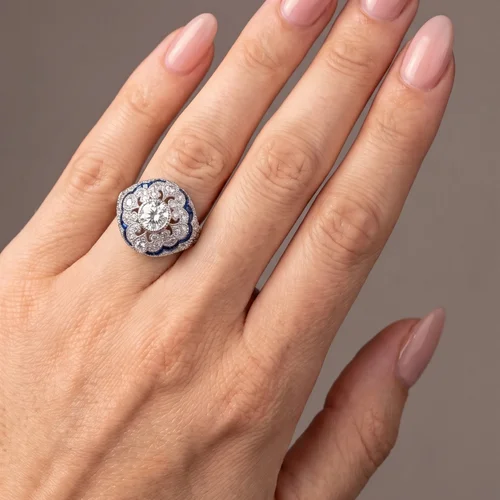 Art Deco Style Platinum Diamond and Sapphire Round Cluster Ring, 0.50 ct Diamond£4,965
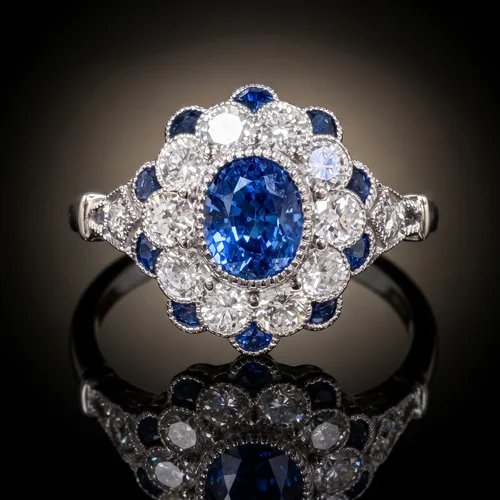
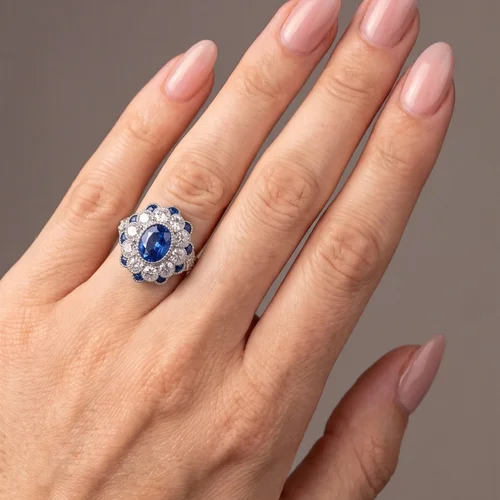 Art Deco Style Platinum Sapphire and Diamond Flower Cluster Ring, 1.27 ct Sapphire£1,925
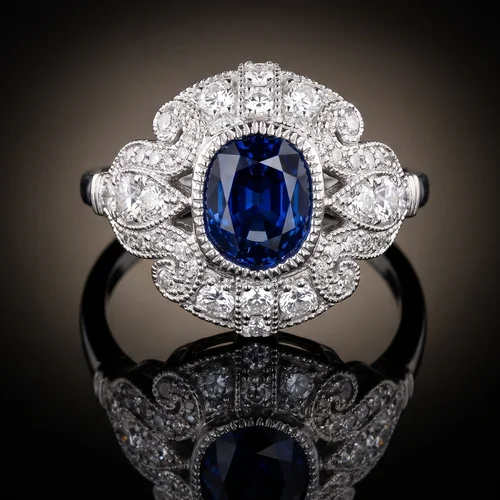
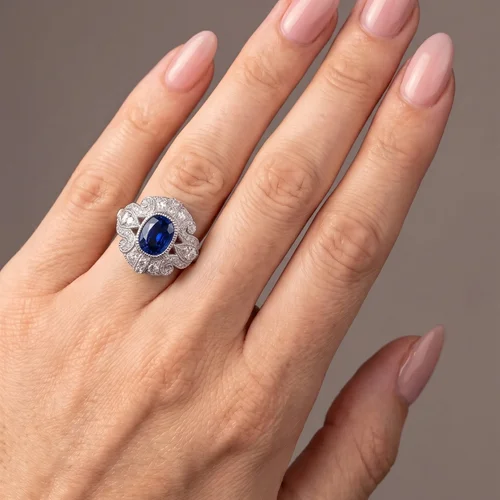 Art Deco Style Platinum Sapphire and Diamond Oval Cluster Ring, 1.11 ct Sapphire£2,610
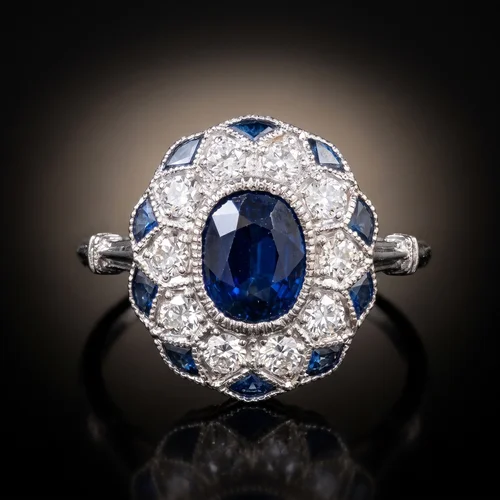
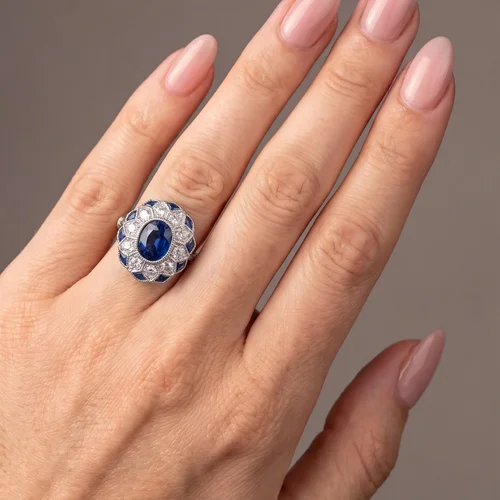 Art Deco Style Platinum Sapphire and Diamond Scalloped Cluster Ring, 1.29 ct Sapphire£2,130
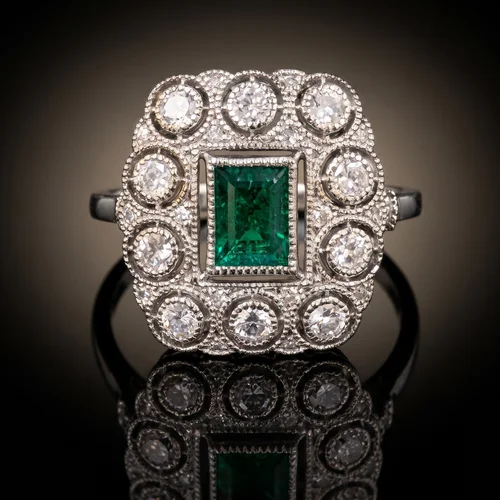
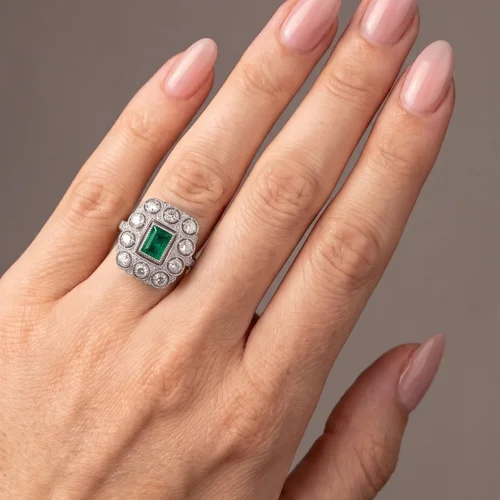 Art Deco Style Platinum Emerald and Diamond Cluster Ring, 0.68 ct Emerald£1,875
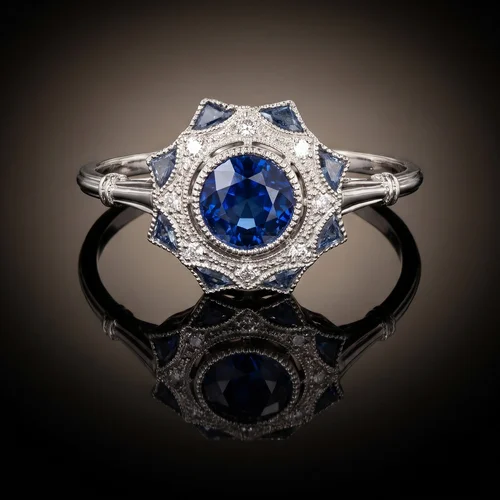
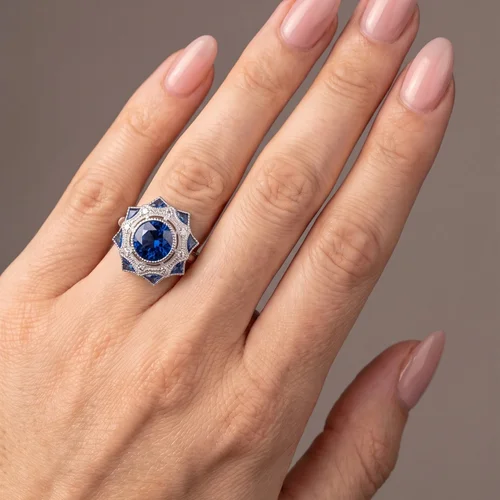 Art Deco Style Platinum Sapphire and Diamond Star Cluster Ring, 1.22 ct Sapphire£1,635
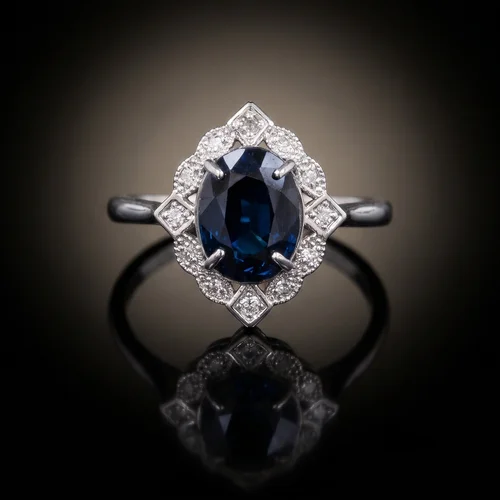
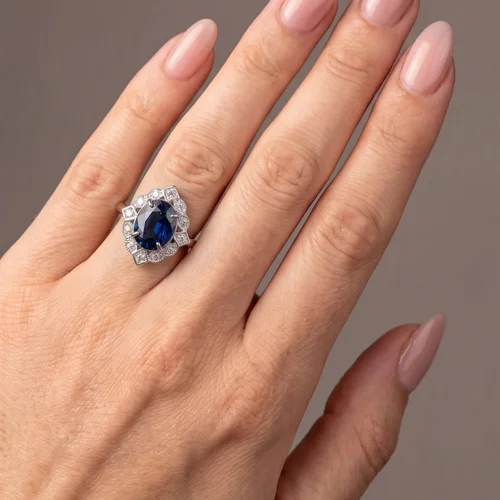 Art Deco Style Platinum Sapphire and Diamond Pear Shaped Cluster Ring, 2.35 ct Sapphire£1,860
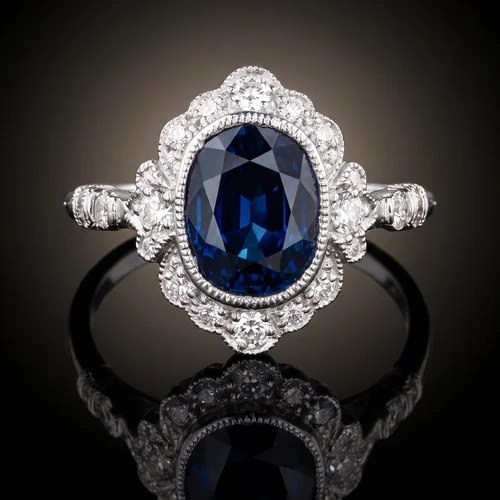
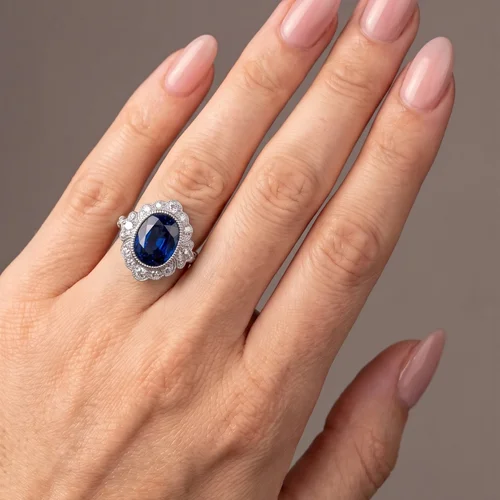 Art Deco Style Platinum Sapphire and Diamond Scalloped Cluster Ring, 2.24 ct Sapphire£2,270
What to check before you buy
- Small claws
Each small stone has its own claws or beads. Look for flattened or missing claws and loose stones.
- Matching stones
The surround stones should match in colour and cut; a brighter or whiter stone among old cuts may be a replacement.
- The centre stone
Check that the centre sits level and firm, and that its claws are not worn thin.
- Height
A tall head catches on clothing; a lower cluster suits everyday wear.
- Resizing
Clusters usually resize easily, because the head sits on the shank; stones set down the shoulders need more care.
Browse diamond cluster rings, emerald cluster rings and all rings.
Which should you choose?
Choose a halo if you want one centre stone to look as large as possible, and a cluster if you want a bigger face made of several stones or the character of an antique ring. Both pair well with a plain or diamond band; check that the band sits close beside the head.
For more on settings, see our guide to the rubover setting and the gypsy setting.
Selling a cluster or halo ring? Send photographs for a free valuation. Post it to us by Royal Mail Special Delivery or book a free insured FedEx collection, or bring it to an appointment in Mayfair, London, or Braintree, Essex. You are paid the same day after inspection, by bank transfer.